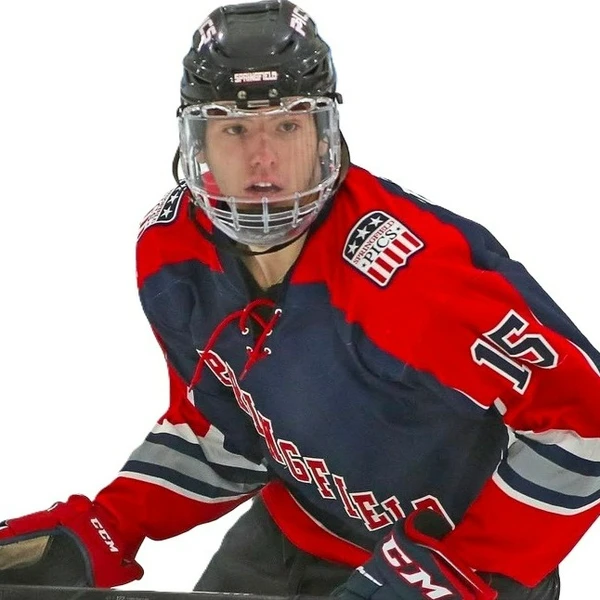
Hobbies and interests
Ice Hockey
Golf
James Delaney
1x
Finalist
James Delaney
1x
FinalistBio
I’m the second oldest of seven kids, with two biological brothers and four adopted sisters, so there’s always been a lot going on in my house. I’ve been playing ice hockey since I was two, and ever since I can remember, my dream has been to play at the college level. Sports have always been a huge part of my life, not just playing but helping out too—I’ve spent a lot of my free time assisting my dad while he coached my little brother’s soccer team and my youngest sister’s softball team.
For the past four summers, I’ve worked full‑time as a YMCA camp counselor, and during the school year I’ve been working part‑time as a substitute paraprofessional. I’m really looking forward to Fall 2026, when I’ll finally get the chance to attend college full‑time, play hockey, and work toward my degree in elementary education. That’s something I’ve wanted for a long time.
Being one of seven kids, though, means money is tight. Next fall, my sister and I will both be starting college at the same time, and my dad will be finishing his master’s degree. With all of those tuition payments overlapping, the financial pressure on my family is pretty heavy. Receiving scholarship support would make a huge difference—it would take a lot of stress off my family and allow me to focus on my goals both in the classroom and on the ice.
Education
Holyoke Community College
Associate's degree programMajors:
- Education, General
Miscellaneous
Desired degree level:
Bachelor's degree program
Graduate schools of interest:
Transfer schools of interest:
Majors of interest:
- Education, Other
Career
Dream career field:
Education
Dream career goals:
Councilor
YMCA2022 – Present4 yearsSubstitute Paraprofessional
Belchertown Highschool2024 – Present2 years
Sports
Ice Hockey
Varsity2019 – 20234 years
Awards
- Hobey Baker
Public services
Volunteering
Belchertown recreation — Assistant Coach2025 – 2025Volunteering
Palmer soccer association — Coach2021 – 2025
Special Needs Advocacy Inc. Kathleen Lehman Memorial Scholarship
As the second oldest of seven children, four of whom are adopted, I grew up in a home where patience, empathy, and responsibility weren’t optional — they were part of everyday life. My siblings came from a different background and carried different emotional and educational challenges and supporting them taught me early on that people grow when someone consistently shows up for them. That understanding shaped the way I see the world and why I have chosen early education as my future career.
My experiences working with kids strengthened that purpose. One moment that changed me happened at the YMCA summer camp with a camper. Who exploded in anger and chased another camper, I stepped in, calmed him, and took him for a walk. As he opened, I realized he wasn’t just acting out — he was overwhelmed, misunderstood, and carrying more than most kids his age. When he told me he was in foster care, everything made sense. He didn’t need punishment; he needed someone who saw him and cared enough to listen. That moment showed me how powerful it is when a child feels supported, and it made me realize I wanted to spend my life helping kids like him.
These experiences — at home, coaching soccer, and working at camp — showed me the impact one person can make. They also helped me understand the importance of community based work that focuses on kids who don’t always get the support they deserve. That’s why I’m drawn to roles that allow me to advocate for children, support families, and strengthen the systems that help them thrive.
I plan to continue this work by becoming an elementary school teacher. I want to create a classroom where kids feel safe, understood, and valued, especially the ones who don’t always get that at home. My goal is to build an environment where students can experience success in ways that match their strengths, not just traditional expectations. I want to be the adult who listens, who notices the small things, and who helps kids believe in themselves — just as my teachers, coaches, and even campers like Jeremiah have shaped me.
In the long run, I hope my work contributes to stronger, more supportive communities. Whether I’m working directly with children, supporting families, or helping build programs that give kids a fair chance, my mission stays the same: to show up, to listen, and to help people feel seen. I’ve witnessed how one person’s presence can change the direction of a child’s life. I want to be that person — and I want my career to reflect that commitment every day.
Our Destiny Our Future Scholarship
Helping others has always been a natural part of my life. As the second oldest of seven children, four of whom are adopted, I grew up in a home where patience, empathy, and responsibility weren’t optional — they were part of everyday life. My siblings came from different backgrounds and carried their own emotional and educational challenges. Supporting them taught me early that people grow when someone consistently shows up for them. That understanding shaped the way I see the world and the kind of work I want to do.
My experiences working with kids strengthened that purpose. One moment that changed me happened at the YMCA summer camp with a camper named Jeremiah. When he exploded in anger and chased another camper, I stepped in, calmed him, and took him for a walk. As he opened up, I realized he wasn’t just acting out — he was overwhelmed, misunderstood, and carrying more than most kids his age. When he told me he was in foster care, everything made sense. He didn’t need punishment; he needed someone who saw him and cared enough to listen. That moment showed me how powerful it is when a child feels supported, and it made me realize I wanted to spend my life helping kids like him.
These experiences — at home, coaching soccer, and working at camp — showed me the impact one person can make. They also helped me understand the importance of community‑based work that focuses on kids who don’t always get the support they deserve. That’s why I’m drawn to roles that allow me to advocate for children, support families, and strengthen the systems that help them thrive.
I plan to continue this work by becoming an elementary school teacher. I want to create a classroom where kids feel safe, understood, and valued, especially the ones who don’t always get that at home. My goal is to build an environment where students can experience success in ways that match their strengths, not just traditional expectations. I want to be the adult who listens, who notices the small things, and who helps kids believe in themselves — the same way my teachers, coaches, and even campers like Jeremiah have shaped me.
In the long run, I hope my work contributes to stronger, more supportive communities. Whether I’m working directly with children, supporting families, or helping build programs that give kids a fair chance, my mission stays the same: to show up, to listen, and to help people feel seen. I’ve witnessed how one person’s presence can change the direction of a child’s life. I want to be that person — and I want my career to reflect that commitment every day.
Stephan L. Wolley Memorial Scholarship
My hockey coach asked me for my report card when I was in fourth grade, and I couldn’t understand why. When I told my mom, she explained that because I was playing above a rec level, the coaches wanted us to understand that academics mattered just as much as the sport. At the time, it didn’t feel important—but now, as I prepare to live my dream of playing NCAA hockey, I understand exactly what they meant.
Getting here wasn’t simple. I struggled with reading comprehension and had an IEP from fifth through twelfth grade. Then freshman year, COVID hit, and everything moved online. My raised hand wasn’t always seen, and typing questions in the chat didn’t work for me—I typed too slowly, and by the time I finished, the class had already moved on. I was easily distracted and constantly felt behind. That year ended up being Pass/Fail, which helped me get through it.
Sophomore year began online as well, but this time we were graded normally. Spanish II was the breaking point. I was already struggling with remote learning, and now everything was in another language. My IEP didn’t translate well to virtual school. I was supposed to get extra time on assignments, but my teacher interpreted that as “in-class work only,” and since everything was technically homework, I didn’t receive the accommodations I needed. I fell behind quickly, and by the time I told my parents, my first semester grade couldn’t be saved.
My parents advocated for me, and with my advisor’s help, I switched classes. Even though the change helped, the damage was done. Still, that experience taught me something important: falling behind doesn’t define me—how I respond does. That lesson prepared me for challenges I didn’t expect.
Two weeks into senior year, I developed severe stomach pain. After two ER visits, I was admitted to Baystate Children’s Hospital. My liver wasn’t functioning properly, and no one knew why. Four days later, I was diagnosed with Gilbert Syndrome, a condition that can’t be treated—only managed.
When I returned home, I was already four days behind. I remembered how sophomore year spiraled and refused to let it happen again. I stayed after school for extra help, worked closely with my teachers, and stayed up late to finish homework. Staying up late wasn’t ideal with my condition, but being one of seven kids meant quiet time was rare. I shared a room with my brothers, so I waited until everyone went to bed and did my homework in the living room. Through all of it, one message stayed with me: my education mattered.
At the same time, I was playing elite hockey in the USPHL, competing for my high school team, helping my dad coach my younger brothers’ soccer team, and working as a YMCA camp counselor. For years, I thought I’d go into accounting, but working with kids and seeing the compassion my teachers showed me inspired me to pursue early education instead.
After graduation, I thought my hockey career had peaked—until Phillips Andover Academy offered me a post‑grad year with a full scholarship. It didn’t go as planned, but my parents encouraged me to play one more year of juniors while taking community college classes. That season, my team went to nationals and finished as first runner‑up. Then American International College, close to home, offered me a spot.
Next year, I’ll be an NCAA Division II athlete earning my bachelor’s degree in education, playing in the same rink where I grew up. Every challenge—academic, athletic, and personal—shaped the student and athlete I am today.
STLF Memorial Pay It Forward Scholarship
I want to pursue a career centered around serving my community because helping others has been a constant part of my life. As the second oldest of seven children, four of whom are adopted, I grew up in a home where patience, empathy, and responsibility weren’t optional — they were part of everyday life. My siblings came from different backgrounds and carried different emotional and educational challenges and supporting them taught me early on that people grow when someone consistently shows up for them. That understanding shaped the way I see the world and the kind of work I want to do.
My experiences working with kids strengthened that purpose. One moment that changed me happened at the YMCA summer camp with a camper named Jeremiah. When he exploded in anger and chased another camper, I stepped in, calmed him, and took him for a walk. As he opened, I realized he wasn’t just acting out — he was overwhelmed, misunderstood, and carrying more than most kids his age. When he told me he was in foster care, everything made sense. He didn’t need punishment; he needed someone who saw him and cared enough to listen. That moment showed me how powerful it is when a child feels supported, and it made me realize I wanted to spend my life helping kids like him.
These experiences — at home, coaching soccer, and working at camp — showed me the impact one person can make. They also helped me understand the importance of community based work that focuses on kids who don’t always get the support they deserve. That’s why I’m drawn to roles that allow me to advocate for children, support families, and strengthen the systems that help them thrive.
I plan to continue this work by becoming an elementary school teacher. I want to create a classroom where kids feel safe, understood, and valued, especially the ones who don’t always get that at home. My goal is to build an environment where students can experience success in ways that match their strengths, not just traditional expectations. I want to be the adult who listens, who notices the small things, and who helps kids believe in themselves — the same way my teachers, coaches, and even campers like Jeremiah have shaped me.
In the long run, I hope my work contributes to stronger, more supportive communities. Whether I’m working directly with children, supporting families, or helping build programs that give kids a fair chance, my mission stays the same: to show up, to listen, and to help people feel seen. I’ve witnessed how one person’s presence can change the direction of a child’s life. I want to be that person — and I want my career to reflect that commitment every day.
Future Nonprofit Leaders Award
As the second oldest of seven children, four of whom are adopted, I grew up in a home where patience, empathy, and responsibility weren’t optional — they were part of everyday life. My siblings came from different backgrounds and carried different emotional and educational challenges and supporting them taught me early on that people grow when someone consistently shows up for them. That understanding shaped the way I see the world and the kind of work I want to do. I want to pursue a career centered around serving my community because helping others has been a constant part of my life.
My experiences working with kids strengthened that purpose. One moment that changed me happened at the YMCA summer camp with a camper named Jeremiah. When he exploded in anger and chased another camper, I stepped in, calmed him, and took him for a walk. As he opened, I realized he wasn’t just acting out — he was overwhelmed, misunderstood, and carrying more than most kids his age. When he told me he was in foster care, everything made sense. He didn’t need punishment; he needed someone who saw him and cared enough to listen. That moment showed me how powerful it is when a child feels supported, and it made me realize I wanted to spend my life helping kids like him.
These experiences — at home, coaching soccer, and working at camp — showed me the impact one person can make. They also helped me understand the importance of community based work that focuses on kids who don’t always get the support they deserve. That’s why I’m drawn to roles that allow me to advocate for children, support families, and strengthen the systems that help them thrive.
I plan to continue this work by becoming an elementary school teacher. I want to create a classroom where kids feel safe, understood, and valued, especially the ones who don’t always get that at home. My goal is to build an environment where students can experience success in ways that match their strengths, not just traditional expectations. I want to be the adult who listens, who notices the small things, and who helps kids believe in themselves — the same way my teachers, coaches, and even campers like Jeremiah have shaped me.
In the long run, I hope my work contributes to stronger, more supportive communities. Whether I’m working directly with children, supporting families, or helping build programs that give kids a fair chance, my mission stays the same: to show up, to listen, and to help people feel seen. I’ve witnessed how one person’s presence can change the direction of a child’s life. I want to be that person — and I want my career to reflect that commitment every day.
RonranGlee Special Needs Teacher Literary Scholarship
It’s the moment a child realizes I belong here. I can do this. I am seen. To me, “experiencing a sense of their own presence” means helping students—especially those with special needs—recognize that they matter, that their voice has weight, and that they have control over their own learning and emotions. For many students in special education, that feeling doesn’t come automatically. It must be built through trust, consistency, and opportunities to succeed in ways that fit who they are.
I learned this firsthand through my experiences working with kids and growing up as the second oldest of seven, including four adopted siblings. My siblings came from different backgrounds and carried different challenges—trauma, learning delays, emotional regulation struggles. Supporting them taught me early on that every child needs something different to feel grounded and confident. That understanding only deepened when I volunteered as a YMCA camp counselor.
One moment that shaped my mission happened with a camper named Jeremiah. When he exploded in anger and chased another camper, I stepped in, calmed him, and took him for a walk. As he talked, I realized he wasn’t just angry, he was overwhelmed, misunderstood, and carrying more than most kids his age. When he later told me he was in foster care and opened up about why he reacted the way he did, I understood how important it is for kids like him to feel safe enough to express themselves. He didn’t need punishment; he needed presence, patience, and someone who believed in him.
That experience showed me what “presence” looks like for a child with special needs:
• Feeling safe enough to express emotions without fear
• Knowing an adult will listen before judging
• Having tools to understand and manage their feelings
• Experiencing success in ways that match their strengths
• Being valued for who they are, not compared to others
My mission as a future special education teacher is to create that environment every day. I want my classroom to be a place where students feel grounded in who they are and confident in what they can become. To accomplish this, I plan to:
• Build strong relationships so students know they are seen and supported
• Use individualized strategies that match each student’s learning style and emotional needs
• Teach self regulation skills through modeling, calm communication, and structured routines
• Celebrate small victories so students experience success consistently
• Create predictable, safe spaces where students can reset without shame
• Encourage student voice by giving choices, asking for their input, and validating their feelings
My goal is not just to teach academics to help students understand themselves, trust themselves, and feel proud of who they are. Kids like Jeremiah, and even my own siblings, taught me that presence is powerful. When a child feels grounded and valued, everything else—learning, confidence, growth—becomes possible. That’s the kind of teacher I want to be, and the mission I plan to carry with me throughout my career.
Carla M. Champagne Memorial Scholarship
Jeremiah jumps over a table in pursuit of Junior, and I know instantly this isn’t normal camp play. Junior sprints away in fear while Jeremiah follows with pure rage on his face. I get up, cut them off, and send Junior into the front barn, telling him to lock himself in the office. I block the door so Jeremiah can’t reach him. After giving him a minute to breathe, I took him for a walk to calm down and figure out what happened. In that moment, watching him struggle to control emotions he didn’t fully understand, I saw my younger self. I knew exactly what that kind of anger felt like.
Being the second oldest of seven kids, four of them are adopted, has shaped who I am more than anything else. Growing up in a big family taught me patience, responsibility, and how to support kids who come from different backgrounds and carry different kinds of hurt. My adopted siblings have faced challenges that most people never see, and being part of their lives taught me early on that helping others isn’t optional; it’s something you show up for every day.
My volunteering experiences built on that foundation. I started by helping my dad coach my younger brother’s soccer team. At first, I was just there to set up cones and help run drills, but I quickly realized how much I enjoyed working with kids. I liked being someone they could look up to, someone who could explain things in a way that made sense or help them shake off a bad moment. Later, I worked as a YMCA camp counselor, and that’s where everything clicked. The more time I spent with kids, the more I felt that spark—the feeling that this was meaningful, that I was making a difference.
That summer with Jeremiah is what turned the spark into a clear direction. After the incident, he came to me whenever he felt himself losing control. He told me he was in foster care and that Junior had said something about his mother topic that cut deep. Hearing him open up reminded me of conversations I’ve had with my own siblings when they were hurting. I realized he didn’t just need discipline; he needed someone who understood him, someone who cared enough to listen. In that moment, I knew I wanted to spend my life helping kids like him.
From volunteering and working with children, I’ve learned that helping others isn’t about having all the answers. It’s about patience, empathy, and consistency. It’s about being the person who shows up, even when things get messy or difficult. It’s about giving kids the tools to understand themselves and the confidence to believe they can grow.
I plan to continue this work by becoming an elementary school teacher. I want to create a classroom where kids feel safe, supported, and understood, especially those who don’t always get that at home. My experiences with my siblings, coaching, and volunteering have shown me the impact one person can make. I want to be that person for my future students, helping them navigate challenges, build confidence, and discover their own spark.
Ed and Flora Pellegri Scholarship
Growing up with an IEP from fifth through twelfth grade, I learned early what it feels like to struggle, fall behind, and need support you don’t always know how to ask for. When COVID pushed school online, my accommodations didn’t follow me. My raised hand wasn’t seen, I couldn’t type fast enough to keep up, and my Spanish II grade collapsed. That experience taught me something I’ve never forgotten: inclusion isn’t automatic. It takes awareness, advocacy, and people who are willing to step in. My parents and advisor did that for me, and ever since, I’ve tried to be that person for others.
I first understood the impact of that support the summer I worked as a YMCA camp counselor. One camper, Jeremiah, struggled with anger and often felt misunderstood. I recognized pieces of myself in him—the frustration, the fear of being judged, the feeling of being different. Instead of disciplining him, I listened. When I learned he was in foster care, everything clicked. He needed someone who saw him fully. That connection changed me. It was the moment I realized I wanted to become a teacher who creates a safe, inclusive space for kids who need it most.
My commitment to community shows up in my own family too. I helped my dad coach my younger brothers’ soccer team while balancing elite hockey, schoolwork, and a part‑time job. At the start of senior year, I was hospitalized with liver issues and missed four days of school. I refused to fall behind again. I stayed after for extra help, worked late at night in the only quiet room in a house with seven kids, and communicated closely with my teachers. I learned how to advocate for myself, stay disciplined, and keep moving forward even when things get hard. Those are the same skills I use when helping younger athletes, classmates, and campers who need someone steady in their corner.
My path after high school wasn’t straightforward. I thought my hockey career had peaked, but then I earned a full scholarship for a post‑grad year at Phillips Andover. When that year didn’t go as planned, I considered walking away from the sport. Instead, I took a year to play juniors, take community college classes, and refocus. My team went to nationals and finished as first runner‑up, and then American International College offered me a spot on their newly reclassified Division II team. Next year, I’ll be an NCAA athlete playing in the same rink I grew up in while earning my bachelor’s degree in education.
Every challenge—academic, athletic, and personal—shaped the student, athlete, and mentor I am today. They’ve also shaped the teacher I want to become. Because I know what it feels like to be overlooked, I want my future students to feel seen. Because I know what it feels like to fall behind, I want to help students catch up without shame. Because I know what it feels like to have someone believe in me, I want to be that person for kids like Jeremiah—and for kids who haven’t yet found someone to trust.
College will give me the training and mentorship to turn that commitment into a career. Hockey will continue teaching me leadership, teamwork, and resilience. Strengthening a community isn’t about grand gestures. It’s about showing up, listening, and helping people feel understood. That’s the kind of educator, teammate, and community member I strive to be—now, in college, and long after I leave the rink.
Sandy Jenkins Excellence in Early Childhood Education Scholarship
Jeremiah launches himself over a table after Junior, and it hits me right away that this isn’t just camp rough housing anymore. Junior bolts, terrified, and Jeremiah’s face is nothing but rage. I jump up, cut them off, and send Junior into the front barn. I tell him to lock himself in the office and block the door so Jeremiah can’t get to him. Then I give Jeremiah a minute to breathe before taking him on a walk to cool down and talk. Watching him, I see a younger version of myself—a kid drowning in anger with no clue how to control it. I used to be the same way.
For most of my life, I thought my path was already picked out for me. I figured I’d take the “comfortable” route—the one that made sense on paper. I was good with numbers, so I assumed I’d follow my dad into banking, or my grandfather into accounting. It was logical, stable, and something everyone around me would’ve been proud of. But it never had that spark. It didn’t light anything in me.
That spark showed up somewhere completely different: teaching.
I’d had little moments before—helping my dad coach my younger brother’s soccer team, working summer jobs with kids—but I didn’t realize those experiences were pointing me toward something bigger. When I got a job as a YMCA camp counselor, everything clicked. Being around kids, helping them figure out life, being someone they could trust… that’s where the spark started to grow.
Later that same summer, Jeremiah came to me when he couldn’t control his anger. I wanted him to know I was there for him, no matter what. At some point, I realized he saw me as a role model. I wasn’t trying to “fix” him; I just recognized the look in his eyes because I’d had it too. That feeling that no one understands you. That you’re alone in whatever you’re carrying. But I did understand, so I asked him to be honest with me, and I’d be honest with him.
He eventually told me what happened. He was in a foster home, and the kid he was chasing said something about his mom. For kids like him, parents are a sensitive topic—I knew that from my own foster sisters. Hearing his story made something shift in me. I realized I wanted to help kids like him. I wanted to be someone who made a real impact.
That was the moment the spark turned into a flame. I knew I was going to be a teacher. The way my teachers and coaches shaped my life—that’s what I wanted to give back.
Marie Humphries Memorial Scholarship
Jeremiah launches himself over a table after Junior, and it hits me right away that this isn’t just camp roughhousing anymore. Junior bolts, terrified, and Jeremiah’s face is nothing but rage. I jump up, cut them off, and send Junior into the front barn. I tell him to lock himself in the office and block the door so Jeremiah can’t get to him. Then I give Jeremiah a minute to breathe before taking him on a walk to cool down and talk. Watching him, I see a younger version of myself—a kid drowning in anger with no clue how to control it. I used to be the same way.
For most of my life, I thought my path was already picked out for me. I figured I’d take the “comfortable” route—the one that made sense on paper. I was good with numbers, so I assumed I’d follow my dad into banking or my grandfather into accounting. It was logical, stable, and something everyone around me would’ve been proud of. But it never had that spark. It didn’t light anything in me.
That spark showed up somewhere completely different: teaching.
I’d had little moments before—helping my dad coach my younger brother’s soccer team, working summer jobs with kids—but I didn’t realize those experiences were pointing me toward something bigger. When I got a job as a YMCA camp counselor, everything clicked. Being around kids, helping them figure out life, being someone they could trust… that’s where the spark started to grow.
Later that same summer, Jeremiah came to me when he couldn’t control his anger. I wanted him to know I was there for him, no matter what. At some point, I realized he saw me as a role model. I wasn’t trying to “fix” him; I just recognized the look in his eyes because I’d had it too. That feeling that no one understands you. That you’re alone in whatever you’re carrying. But I did understand, so I asked him to be honest with me, and I’d be honest with him.
He eventually told me what happened. He was in a foster home, and the kid he was chasing said something about his mom. For kids like him, parents are a sensitive topic—I knew that from my own foster sisters. Hearing his story made something shift in me. I realized I wanted to help kids like him. I wanted to be someone who made a real impact.
That was the moment the spark turned into a flame. I knew I was going to be a teacher. The way my teachers and coaches shaped my life—that’s what I wanted to give back.
Philip and Jacqueline Benincasa Education Scholarship
Jeremiah launches himself over a table after Junior, and it hits me right away that this isn’t just camp roughhousing anymore. Junior bolts, terrified, and Jeremiah’s face is nothing but rage. I jump up, cut them off, and send Junior into the front barn. I tell him to lock himself in the office and block the door so Jeremiah can’t get to him. Then I give Jeremiah a minute to breathe before taking him on a walk to cool down and talk. Watching him, I see a younger version of myself—a kid drowning in anger with no clue how to control it. I used to be the same way.
For most of my life, I thought my path was already picked out for me. I figured I’d take the “comfortable” route—the one that made sense on paper. I was good with numbers, so I assumed I’d follow my dad into banking or my grandfather into accounting. It was logical, stable, and something everyone around me would’ve been proud of. But it never had that spark. It didn’t light anything in me.
That spark showed up somewhere completely different: teaching.
I’d had little moments before—helping my dad coach my younger brother’s soccer team, working summer jobs with kids—but I didn’t realize those experiences were pointing me toward something bigger. When I got a job as a YMCA camp counselor, everything clicked. Being around kids, helping them figure out life, being someone they could trust… that’s where the spark started to grow.
Later that same summer, Jeremiah came to me when he couldn’t control his anger. I wanted him to know I was there for him, no matter what. At some point, I realized he saw me as a role model. I wasn’t trying to “fix” him; I just recognized the look in his eyes because I’d had it too. That feeling that no one understands you. That you’re alone in whatever you’re carrying. But I did understand, so I asked him to be honest with me, and I’d be honest with him.
He eventually told me what happened. He was in a foster home, and the kid he was chasing said something about his mom. For kids like him, parents are a sensitive topic—I knew that from my own foster sisters. Hearing his story made something shift in me. I realized I wanted to help kids like him. I wanted to be someone who made a real impact.
That was the moment the spark turned into a flame. I knew I was going to be a teacher. The way my teachers and coaches shaped my life—that’s what I wanted to give back.