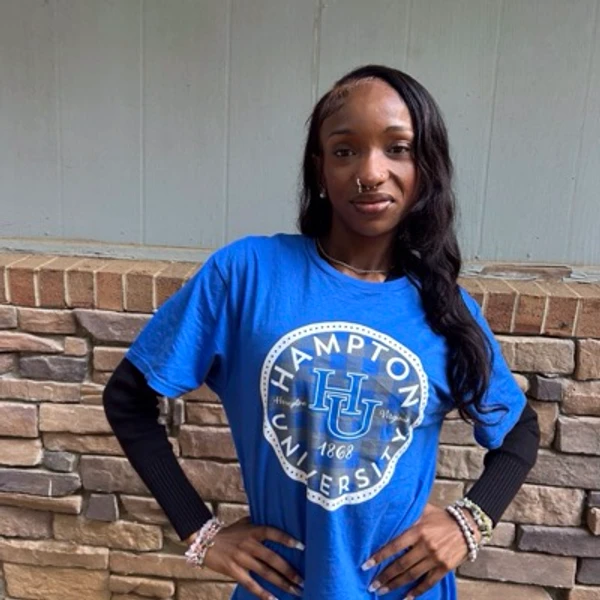
user profile avatar

Jameeyah Adams-Smith

1x

Finalist

General information

Hobbies & Interests

  • Poetry
  • Criminal Justice
  • Dance
  • Exploring Nature And Being Outside
  • Law
  • Makeup and Beauty
  • Mental Health
  • National Honor Society (NHS)
  • Philosophy
  • Politics and Political Science

Reading

  • Law
  • Philosophy
  • Politics

I read books daily.

Bio

I plan to use my college education as another source of knowledge. Perhaps it would be fun to boast about attending a school with such a reputation, but without my knowledge, I am nothing. Given the state our nation is in, now it is one of the most important times to be fully aware of what is going on.

Education

Hampton University

Bachelor's degree program

2026 – 2030

Majors:
  • Criminology
Minors:
  • Criminology

Forsyth Technical Community College

Associate's degree program

2025 – Present

Mount Tabor High School

High School

2022 – 2026

Miscellaneous

Desired degree level:
Doctoral degree program (PhD, MD, JD, etc.)
Majors of interest:
Political Science and Government, Criminal Justice and Corrections, General
Desired degree modality:
In-Person
Medical school interest:
No

Career

  • Cashier

    Retail · Golf Galaxy

    Jan 2024 – Present

Miscellaneous

Dream career field:
Legislative Office
Work experience:
2 years
Has nursing license:
No

Future Interests

  • Advocacy
  • Politics
  • Volunteering
  • Philanthropy
  • Entrepreneurship
Our Destiny Our Future Scholarship
Impact James Baldwin once asserted, " To be a Negro in this country and to be relatively conscious is to be in a rage almost all the time. " Personally, those words are a testament to my experience as a Black woman in the United States. While some say knowledge provides strength, I would argue that for Black Americans it only fuels innermost frustrations. Rather than waiting for a legislator to bring forth justice, I have taken matters into my own hands. I use my poetry and the pursuit of a career as an attorney as a platform to advocate towards the bigger picture : providing Black Americans with inclusion, representation, and generational wealth. I am bringing this drive to Hampton University, where I will major in Criminal Justice. I knew my Blackness would be an academic obstacle when I started to take more advanced courses. The lack of diversity made conditions difficult, as every AP classroom was predominantly White . When I walked into my first class during my sophomore year, I felt the room’s energy shift. I received stares from classmates that read, "You don't belong here.” Every class, I had this fear that my every step was measured by a stereotype. There were times I feared my hairstyles were too "big" and outfits too "ghetto.” I reflect deeply on how silenced those moments made me feel. Then I begin to think of my people and how others have felt the same, if not worse. How many token minorities in past AP classes were treated differently and felt that there was nothing to do about it? Will the cycle end with me? Not if I use my "way with words" to do something about it. I stopped being an observer of stagnancy and took up space by performing a poem about my experiences with microaggressions. At the district poetry competition, I won first place. In the years that followed my win, I have performed my poetry at local Black History Month showcases, introducing uncomfortable conversation through rhyme and reason. My platform towards advocacy is one of a kind because no one can deny the truth of my words. Upon entering Hampton, I will finally know how it feels to be accepted. To be young, gifted, and Black, surrounded by others who embody that same standard of excellence will encourage me further to pursue my studies without fear of being silenced. As a student, I will lead extracurriculars that apply my expertise to evoke criminal justice reform. These include the political science club, student government, and summer internships at local firms-the sky is the limit. My education plays a significant role in my future as it determines how much I can contribute to the cause. In spite of life’s changes, I am consistent in applying my “poetry voice” into my activism as a future attorney. I am producing the framework for the lawyer I will become—one that is fearless and loyal to the cause. I will become the change I want to see
Jennifer Kelley Memorial Scholarship
James Baldwin once asserted, " To be a Negro in this country and to be relatively conscious is to be in a rage almost all the time. " Personally, those words are a testament to my job and life experience as a Black woman in the United States. I use my love for poetry, work experience, and the pursuit of a career as an attorney as a platform to advocate towards the bigger picture: providing Black Americans with inclusion, representation, and generational wealth. I am bringing this drive to Hampton University, where I will major in Criminal Justice. My presence as a Black employee in a predominantly White space has strengthened my awareness of my community ' s struggles and provided me with the tools to combat them. At age 16, I began working at Golf Galaxy as a cashier-the only Black female on staff. Ultimately, I learned what accompanied being the only Black person present- to coworkers, I was a representative of all Black individuals. I felt pressured to be the best I could be. As a result, I worked extremely hard, even winning an award for "most valuable cashier. " Through class and eloquence, I simultaneously defied negative stereotypes about the "angry Black woman" while saving for my tuition. Ultimately, I resigned from working there, nonetheless my experience working at Golf Galaxy acted as a catalyst to my drive towards reclaiming my voice. I began working towards challenging the very system that produced the stereotypes I encountered. I knew my Blackness would be an academic obstacle when I started to take more advanced courses. The lack of diversity made conditions difficult, as every AP classroom was predominantly White. Every class, I had this fear that my every step was measured by a stereotype. I reflect deeply on how silenced those moments made me feel. Then I begin to think of my people and how others have felt the same, if not worse. How many token minorities in past AP classes were treated differently and felt that there was nothing to do about it? Will the cycle end with me? I stopped being an observer of stagnancy and took up space by performing a poem about my experiences with microaggressions. At the district poetry competition, I won first place. In the years that followed my win, I have performed my poetry at local Black History Month showcases, introducing uncomfortable conversation through rhyme and reason. My platform towards advocacy is one of a kind because no one can deny the truth of my words. Upon entering Hampton, I will finally know how it feels to be accepted. To be young, gifted, and Black, surrounded by others who embody that same standard of excellence will encourage me further to pursue my studies without fear of being silenced. However my most cherished HBCU peer is my dear older sister Armani who, two years prior, was the first in our family to graduate high school. She is currently enrolled at North Carolina Central University, and has flourished. She is proof of how far education can take me, and I am very grateful for her support. My education plays a significant role in my future as it determines how much I can contribute to the cause. This scholarship will help by allowing me to thrive academically without fear of financial repercussions. In spite of life's changes, I am consistent in applying my "poetry voice" into my activism as a future attorney. I will become the change I want to see.
TRAM Purple Ribbon Scholarship
Still Here My legal career began the moment I stepped into a 99-cent store. As a young kid from Brooklyn, New York, I was unaware racism still existed; However, racism was more prevalent than ever. I entered the discount store with my mother and as I walked to the toy section, an Asian-American cashier found me suspicious. Thankfully, my mother saw, took me to the exit, and explained the situation. Eventually, I learned there were levels to discrimination and we had it the worst. My motivation to become a criminal justice attorney is growing up Black, poor, and traumatized. Through life’s experiences, I have acquired a hunger for knowledge and resilience that no one can capture. I knew my blackness would be an academic obstacle when I moved to North Carolina. The lack of diversity made the move difficult as every AP classroom was predominantly white. The worst part, however, was the way I modified my personality because I did not want to be perceived as the “angry black woman” stereotype. I was silent in class discussions about race when I should have been the loudest. When I became a Sophomore, I realized that taking up space was more important than making my classmates uncomfortable. I performed a self-written poem about my experiences with microaggressions in my AP classes. At the district competition, I won first place. My family´s troubled past serves as a catalyst for my academic ambition. One night, while my sister and I slept, my father arrived home drunk and began assaulting my mother. In self-defense she grabbed a knife for protection, accidentally stabbing him. My father died en route to the hospital. As the police arrested my mother, my grandmother took my sister and me in. Two years later, my mom was released and our lives changed forever. I mourn the financial and mental stability that I was robbed of because of the mistakes of my family. At times, I blame the criminal justice system, which did nothing to prevent the abuse my mother experienced before my father’s death. Perhaps I aspire to be a criminal justice attorney because the criminal justice system failed me. Beneath my desire to become a successful attorney is the fear of stagnancy. Every single day, I prove to my peers that this kid from the block predicted to end up homeless, incarcerated, or dead, still managed to make it in the same room as them. Perhaps what distinguishes me from my peers is my ambition. Knowledge is a powerful tool that can not only enhance my environment, but also help others around me. I am deserving of this scholarship because I will use it for the benefit of my community. Funding my education would mean funding a future lawyer, one who will work towards criminal justice reform. For so long my Blackness felt like a curse. I now realize it is a blessing. The accomplishments I have earned feel beyond satisfying because mentally and physically, I had to work twice as hard.
Dr. Christine Lawther First in the Family Scholarship
I am nothing without what I have been through. Being a first generation student means making the struggles of my ancestors, relatives and peers mean something. It is an enormous responsibility that I use as fuel for my academic pursuits because it serves as a reminder of how hard I fought to get to where I am today. As a second generation immigrant, mixed with Antiguan, St Vincent and Brooklyn roots I pride myself in who I am. I was raised in the neighborhood of Bed-ford Stuyvesant in Brooklyn, New York and although my childhood was fortuneless, I gained substantial knowledge. Losing a parent to domestic violence taught me that the system fails to listen to warning signs and through experiencing microaggressions in predominantly white spaces, I found the light that said systems tried to dim. As a student, I use my poetry and the pursuit of a career as an attorney as a platform to advocate towards the bigger picture: providing Black Americans with inclusion, representation, and generational wealth. I am bringing this light to Hampton University, where I will major in Criminal Justice. I knew my Blackness would be an academic obstacle when I started to take more advanced courses. The lack of diversity made conditions difficult, as every AP classroom was predominantly White. Every class, I had this fear that my every step was measured by a stereotype. I reflect deeply on how silenced those moments made me feel. Then I begin to think of my people and how others have felt the same, if not worse. How many token minorities in past AP classes were treated differently and felt that there was nothing to do about it? Will the cycle end with me? I stopped being an observer of stagnancy and took up space by performing a poem about my experiences with microaggressions. At the district poetry competition, I won first place. In the years that followed my win, I have performed my poetry at local Black History Month showcases, introducing uncomfortable conversation through rhyme and reason. My platform towards advocacy is one of a kind because no one can deny the truth of my words. Upon entering Hampton, I will finally know how it feels to be accepted. To be young, gifted, and Black, surrounded by others who embody that same standard of excellence will encourage me further to pursue my studies without fear of being silenced. My education plays a significant role in my future as it determines how much I can contribute to the cause. This scholarship will help by allowing me to thrive academically without fear of financial repercussions. In spite of life's changes, I am consistent in applying my "poetry voice" into my activism as a future attorney. I am producing the framework for the lawyer I will become-one that is fearless and loyal to the cause. I will become the change I want to see.
Larry Darnell Green Scholarship
I am nothing without what I have been through. Being a first generation student means making the struggles of my ancestors, relatives and peers mean something. It is an enormous responsibility that I use as fuel for my academic pursuits because it serves as a reminder of how hard I fought to get to where I am today. As a second generation immigrant, mixed with Antiguan, St Vincent and Brooklyn roots I pride myself in who I am. I was raised in the neighborhood of Bed-ford Stuyvesant in Brooklyn, New York and although my childhood was fortuneless, I gained substantial knowledge. Losing a parent to domestic violence taught me that the system fails to listen to warning signs and through experiencing microaggressions in predominantly white spaces, I found the light that said systems tried to dim. As a student, I use my poetry and the pursuit of a career as an attorney as a platform to advocate towards the bigger picture: providing Black Americans with inclusion, representation, and generational wealth. I am bringing this light to Hampton University, where I will major in Criminal Justice. I knew my Blackness would be an academic obstacle when I started to take more advanced courses. The lack of diversity made conditions difficult, as every AP classroom was predominantly White. Every class, I had this fear that my every step was measured by a stereotype. I reflect deeply on how silenced those moments made me feel. Then I begin to think of my people and how others have felt the same, if not worse. How many token minorities in past AP classes were treated differently and felt that there was nothing to do about it? Will the cycle end with me? I stopped being an observer of stagnancy and took up space by performing a poem about my experiences with microaggressions. At the district poetry competition, I won first place. In the years that followed my win, I have performed my poetry at local Black History Month showcases, introducing uncomfortable conversation through rhyme and reason. My platform towards advocacy is one of a kind because no one can deny the truth of my words. Upon entering Hampton, I will finally know how it feels to be accepted. To be young, gifted, and Black, surrounded by others who embody that same standard of excellence will encourage me further to pursue my studies without fear of being silenced. My education plays a significant role in my future as it determines how much I can contribute to the cause. This scholarship will help by allowing me to thrive academically without fear of financial repercussions. In spite of life's changes, I am consistent in applying my "poetry voice" into my activism as a future attorney. I am producing the framework for the lawyer I will become-one that is fearless and loyal to the cause. I will become the change I want to see.
Bick First Generation Scholarship
I am nothing without what I have been through. Being a first generation student means making the struggles of my ancestors, relatives and peers mean something. It is an enormous responsibility that I use as fuel for my academic pursuits because it serves as a reminder of how hard I fought to get to where I am today. As a second generation immigrant, mixed with Antiguan, St Vincent and Brooklyn roots I pride myself in who I am. I was raised in the neighborhood of Bed-ford Stuyvesant in Brooklyn, New York and although my childhood was fortuneless, I gained substantial knowledge. Losing a parent to domestic violence taught me that the system fails to listen to warning signs and through experiencing microaggressions in predominantly white spaces, I found the light that said systems tried to dim. As a student, I use my poetry and the pursuit of a career as an attorney as a platform to advocate towards the bigger picture: providing Black Americans with inclusion, representation, and generational wealth. I am bringing this light to Hampton University, where I will major in Criminal Justice. I knew my Blackness would be an academic obstacle when I started to take more advanced courses. The lack of diversity made conditions difficult, as every AP classroom was predominantly White. Every class, I had this fear that my every step was measured by a stereotype. I reflect deeply on how silenced those moments made me feel. Then I begin to think of my people and how others have felt the same, if not worse. How many token minorities in past AP classes were treated differently and felt that there was nothing to do about it? Will the cycle end with me? I stopped being an observer of stagnancy and took up space by performing a poem about my experiences with microaggressions. At the district poetry competition, I won first place. In the years that followed my win, I have performed my poetry at local Black History Month showcases, introducing uncomfortable conversation through rhyme and reason. My platform towards advocacy is one of a kind because no one can deny the truth of my words. Upon entering Hampton, I will finally know how it feels to be accepted. To be young, gifted, and Black, surrounded by others who embody that same standard of excellence will encourage me further to pursue my studies without fear of being silenced. My education plays a significant role in my future as it determines how much I can contribute to the cause. This scholarship will help by allowing me to thrive academically without fear of financial repercussions. In spite of life's changes, I am consistent in applying my "poetry voice" into my activism as a future attorney. I am producing the framework for the lawyer I will become-one that is fearless and loyal to the cause. I will become the change I want to see.
The Concrete Rose Scholarship Foundation
James Baldwin once asserted, " To be a Negro in this country and to be relatively conscious is to be in a rage almost all the time. " Personally, those words are a testament to my experience as a Black woman in the United States. I am a second generation immigrant, mixed with Antiguan, St Vincent and Brooklyn roots, and while some say knowledge provides strength, I would argue that for Black Americans it only fuels innermost frustrations. Rather than waiting for a legislator to bring forth justice, I have taken matters into my own hands. I use my poetry and the pursuit of a career as an attorney as a platform to advocate towards the bigger picture : providing Black Americans with inclusion, representation, and generational wealth. I am bringing this drive to Hampton University, where I will major in Criminal Justice. I knew my Blackness would be an academic obstacle when I started to take more advanced courses. The lack of diversity made conditions difficult, as every AP classroom was predominantly White . When I walked into my first class during my sophomore year, I felt the room's energy shift. I received stares from classmates that read, "You don't belong here." Every class, I had this fear that my every step was measured by a stereotype. There were times I feared my hairstyles were too "big" and outfits too "ghetto." I reflect deeply on how silenced those moments made me feel. Then I begin to think of my people and how others have felt the same, if not worse. How many token minorities in past AP classes were treated differently and felt that there was nothing to do about it? Will the cycle end with me? Not if I use my "way with words" to do something about it. I stopped being an observer of stagnancy and took up space by performing a poem about my experiences with microaggressions. At the district poetry competition, I won first place. In the years that followed my win, I have performed my poetry at local Black History Month showcases, introducing uncomfortable conversation through rhyme and reason. My platform towards advocacy is one of a kind because no one can deny the truth of my words. Upon entering Hampton, I will finally know how it feels to be accepted. To be young, gifted, and Black, surrounded by others who embody that same standard of excellence will encourage me further to pursue my studies without fear of being silenced. As a student, I will lead extracurriculars that apply my expertise to evoke criminal justice reform. These include the political science club, student government, and summer internships at local firms-the sky is the limit. My education plays a significant role in my future as it determines how much I can contribute to the cause. This scholarship will help by allowing me to thrive academically without fear of financial repercussions. In spite of life's changes, I am consistent in applying my "poetry voice" into my activism as a future attorney. I am producing the framework for the lawyer I will become-one that is fearless and loyal to the cause. I will become the change I want to see.
Bright Lights Scholarship
Impact James Baldwin once asserted, " To be a Negro in this country and to be relatively conscious is to be in a rage almost all the time. " Personally, those words are a testament to my experience as a Black woman in the United States. While some say knowledge provides strength, I would argue that for Black Americans it only fuels innermost frustrations. Rather than waiting for a legislator to bring forth justice, I have taken matters into my own hands. I use my poetry and the pursuit of a career as an attorney as a platform to advocate towards the bigger picture : providing Black Americans with inclusion, representation, and generational wealth. I am bringing this drive to Hampton University, where I will major in Criminal Justice. I knew my Blackness would be an academic obstacle when I started to take more advanced courses. The lack of diversity made conditions difficult, as every AP classroom was predominantly White . When I walked into my first class during my sophomore year, I felt the room’s energy shift. I received stares from classmates that read, "You don't belong here.” Every class, I had this fear that my every step was measured by a stereotype. There were times I feared my hairstyles were too "big" and outfits too "ghetto.” I reflect deeply on how silenced those moments made me feel. Then I begin to think of my people and how others have felt the same, if not worse. How many token minorities in past AP classes were treated differently and felt that there was nothing to do about it? Will the cycle end with me? Not if I use my "way with words" to do something about it. I stopped being an observer of stagnancy and took up space by performing a poem about my experiences with microaggressions. At the district poetry competition, I won first place. In the years that followed my win, I have performed my poetry at local Black History Month showcases, introducing uncomfortable conversation through rhyme and reason. My platform towards advocacy is one of a kind because no one can deny the truth of my words. Upon entering Hampton, I will finally know how it feels to be accepted. To be young, gifted, and Black, surrounded by others who embody that same standard of excellence will encourage me further to pursue my studies without fear of being silenced. As a student, I will lead extracurriculars that apply my expertise to evoke criminal justice reform. These include the political science club, student government, and summer internships at local firms-the sky is the limit. My education plays a significant role in my future as it determines how much I can contribute to the cause. This scholarship will help by allowing me to thrive academically without fear of financial repercussions. In spite of life’s changes, I am consistent in applying my “poetry voice” into my activism as a future attorney. I am producing the framework for the lawyer I will become—one that is fearless and loyal to the cause. I will become the change I want to see.
Dr. Mozell Haymon Memorial Scholarship
The most difficult challenge in having an addiction is admitting you have one. My earliest experiences with marijuana were in ninth grade, where I vicariously sneaked in my stepfather's licensed stash and consumed edibles. It became a way for me to escape the world, to escape the darkness of my mind. Junior year, the "cart epidemic" reached its peak, and the minute I got my hands on one, my addiction exacerbated. Over the course of two years, my addiction to weed vape pens resulted in my estrangement from loved ones, deterioration of my self-esteem, and hyperdependence on substances. Although my addiction to marijuana has put a strain on my mental and physical health, I am taking positive steps towards recovery. My addiction does not define who I am, my determination does. A typical day on substance abuse encompasses smoking in the morning, afternoon, and night. Although constantly under the influence in high school, I did not let my addiction interfere with my academic studies, having maintained a 4.0 GPA throughout. However, my addiction most significantly affected my physical and emotional health. As a result of my daily use, I developed cannabinoid hyperemesis syndrome, characterized by loss of appetite and persistent nausea. I refused to quit my addiction and ended up losing over 60 pounds in weight over the course of two years. At first the weight loss was subtle. Then after a while, I began losing weight to the extent where I got accustomed to stares and inquiries about my body. For the first time in my life my appearance was the topic of conversation, and it was not for a good reason. This realization prompted me to quit my addiction, as my body was clearly fighting for help. My steps toward recovery have been very small but just as impactful. I owe the support of my family and friends, who remind me of the person I was before my addiction and the resilient person I will be afterwards. Every day, I made a promise to smoke less than the day prior. It went from a couple of puffs in the morning to no puffs at all. Instead, I have been transmuting my negative thoughts into my artistry. When my mind is running a hundred miles per minute, I steer towards my poetry. Slowly but surely, I began gaining weight back, being reminded of who 1 am in the first place. Although at times I desire marijuana, I realize that what I have more is more valuable than a temporary feeling - a support system. This fall, 1 plan on attending Hampton University, majoring in Criminal Justice. I will become a criminal justice attorney, mostly representing disregarded communities. I owe my life experiences as a Black woman in the United States for my desire to become an attorney. I have been a victim of a broken system and grew witness to its consequences. I know how it feels to yearn for justice and representation in a society that does not ensure that all their people receive it. I will be the best lawyer anyone has ever seen, not because of education, but because I know struggle like the back of my hand, in all my years, pain-ridden from trauma, I have always felt the need to be that voice for the people. I will be an advocate for all the communities I am a part of, the mentally ill, the addicts, and the people of color. I am proof that education can go a long way in helping one progress in society, and I plan on expanding that same vision.
7023 Minority Scholarship
James Baldwin once asserted, " To be a Negro in this country and to be relatively conscious is to be in a rage almost all the time. " Personally, those words are a testament to my experience as a Black woman in the United States. While some say knowledge provides strength, I would argue that for Black Americans it only fuels innermost frustrations. Rather than waiting for a legislator to bring forth justice, I have taken matters into my own hands. I use my poetry and the pursuit of a career as an attorney as a platform to advocate towards the bigger picture : providing Black Americans with inclusion, representation, and generational wealth. I am bringing this drive to Hampton University, where I will major in Criminal Justice. I knew my Blackness would be an academic obstacle when I started to take more advanced courses. The lack of diversity made conditions difficult, as every AP classroom was predominantly White . When I walked into my first class during my sophomore year, I felt the room’s energy shift. I received stares from classmates that read, "You don't belong here.” Every class, I had this fear that my every step was measured by a stereotype. There were times I feared my hairstyles were too "big" and outfits too "ghetto.” I reflect deeply on how silenced those moments made me feel. Then I begin to think of my people and how others have felt the same, if not worse. How many token minorities in past AP classes were treated differently and felt that there was nothing to do about it? Will the cycle end with me? Not if I use my "way with words" to do something about it. I stopped being an observer of stagnancy and took up space by performing a poem about my experiences with microaggressions. At the district poetry competition, I won first place. In the years that followed my win, I have performed my poetry at local Black History Month showcases, introducing uncomfortable conversation through rhyme and reason. My platform towards advocacy is one of a kind because no one can deny the truth of my words. Upon entering Hampton, I will finally know how it feels to be accepted. To be young, gifted, and Black, surrounded by others who embody that same standard of excellence will encourage me further to pursue my studies without fear of being silenced. As a student, I will lead extracurriculars that apply my expertise to evoke criminal justice reform. These include the political science club, student government, and summer internships at local firms-the sky is the limit. My education plays a significant role in my future as it determines how much I can contribute to the cause. In spite of life’s changes, I am consistent in applying my “poetry voice” into my activism as a future attorney. I am producing the framework for the lawyer I will become—one that is fearless and loyal to the cause. I will become the change I want to see.
GD Sandeford Memorial Scholarship
James Baldwin once asserted, " To be a Negro in this country and to be relatively conscious is to be in a rage almost all the time. " Personally, those words are a testament to my experience as a Black woman in the United States. While some say knowledge provides strength, I would argue that for Black Americans it only fuels innermost frustrations. Rather than waiting for a legislator to bring forth justice, I have taken matters into my own hands. I use my poetry and the pursuit of a career as an attorney as a platform to advocate towards the bigger picture : providing Black Americans with inclusion, representation, and generational wealth. I am bringing this drive to Hampton University, where I will major in Criminal Justice. I knew my Blackness would be an academic obstacle when I started to take more advanced courses. The lack of diversity made conditions difficult, as every AP classroom was predominantly White . When I walked into my first class during my sophomore year, I felt the room’s energy shift. I received stares from classmates that read, "You don't belong here.” Every class, I had this fear that my every step was measured by a stereotype. There were times I feared my hairstyles were too "big" and outfits too "ghetto.” I reflect deeply on how silenced those moments made me feel. Then I begin to think of my people and how others have felt the same, if not worse. How many token minorities in past AP classes were treated differently and felt that there was nothing to do about it? Will the cycle end with me? Not if I use my "way with words" to do something about it. I stopped being an observer of stagnancy and took up space by performing a poem about my experiences with microaggressions. At the district poetry competition, I won first place. In the years that followed my win, I have performed my poetry at local Black History Month showcases, introducing uncomfortable conversation through rhyme and reason. My platform towards advocacy is one of a kind because no one can deny the truth of my words. Upon entering Hampton, I will finally know how it feels to be accepted. To be young, gifted, and Black, surrounded by others who embody that same standard of excellence will encourage me further to pursue my studies without fear of being silenced. As a student, I will lead extracurriculars that apply my expertise to evoke criminal justice reform. These include the political science club, student government, and summer internships at local firms-the sky is the limit. My education plays a significant role in my future as it determines how much I can contribute to the cause. In spite of life’s changes, I am consistent in applying my “poetry voice” into my activism as a future attorney. I am producing the framework for the lawyer I will become—one that is fearless and loyal to the cause. I will become the change I want to see.
Sloane Stephens Doc & Glo Scholarship
James Baldwin once asserted, " To be a Negro in this country and to be relatively conscious is to be in a rage almost all the time. " Personally, those words are a testament to my experience as a Black woman in the United States. While some say knowledge provides strength, I would argue that for Black Americans it only fuels innermost frustrations. Rather than waiting for a legislator to bring forth justice, I have taken matters into my own hands. I use my poetry and the pursuit of a career as an attorney as a platform to advocate towards the bigger picture : providing Black Americans with inclusion, representation, and generational wealth. I am bringing this drive to Hampton University, where I will major in Criminal Justice. I knew my Blackness would be an academic obstacle when I started to take more advanced courses. The lack of diversity made conditions difficult, as every AP classroom was predominantly White . When I walked into my first class during my sophomore year, I felt the room’s energy shift. I received stares from classmates that read, "You don't belong here.” Every class, I had this fear that my every step was measured by a stereotype. There were times I feared my hairstyles were too "big" and outfits too "ghetto.” I reflect deeply on how silenced those moments made me feel. Then I begin to think of my people and how others have felt the same, if not worse. How many token minorities in past AP classes were treated differently and felt that there was nothing to do about it? Will the cycle end with me? Not if I use my "way with words" to do something about it. I stopped being an observer of stagnancy and took up space by performing a poem about my experiences with microaggressions. At the district poetry competition, I won first place. In the years that followed my win, I have performed my poetry at local Black History Month showcases, introducing uncomfortable conversation through rhyme and reason. My platform towards advocacy is one of a kind because no one can deny the truth of my words. Upon entering Hampton, I will finally know how it feels to be accepted. To be young, gifted, and Black, surrounded by others who embody that same standard of excellence will encourage me further to pursue my studies without fear of being silenced. As a student, I will lead extracurriculars that apply my expertise to evoke criminal justice reform. These include the political science club, student government, and summer internships at local firms-the sky is the limit. My education plays a significant role in my future as it determines how much I can contribute to the cause. In spite of life’s changes, I am consistent in applying my “poetry voice” into my activism as a future attorney. I am producing the framework for the lawyer I will become—one that is fearless and loyal to the cause. I will become the change I want to see.
Marcia Bick Scholarship
Impact James Baldwin once asserted, " To be a Negro in this country and to be relatively conscious is to be in a rage almost all the time. " Personally, those words are a testament to my experience as a Black woman in the United States. While some say knowledge provides strength, I would argue that for Black Americans it only fuels innermost frustrations. Rather than waiting for a legislator to bring forth justice, I have taken matters into my own hands. I use my poetry and the pursuit of a career as an attorney as a platform to advocate towards the bigger picture : providing Black Americans with inclusion, representation, and generational wealth. I am bringing this drive to Hampton University, where I will major in Criminal Justice. I knew my Blackness would be an academic obstacle when I started to take more advanced courses. The lack of diversity made conditions difficult, as every AP classroom was predominantly White . When I walked into my first class during my sophomore year, I felt the room’s energy shift. I received stares from classmates that read, "You don't belong here.” Every class, I had this fear that my every step was measured by a stereotype. There were times I feared my hairstyles were too "big" and outfits too "ghetto.” I reflect deeply on how silenced those moments made me feel. Then I begin to think of my people and how others have felt the same, if not worse. How many token minorities in past AP classes were treated differently and felt that there was nothing to do about it? Will the cycle end with me? Not if I use my "way with words" to do something about it. I stopped being an observer of stagnancy and took up space by performing a poem about my experiences with microaggressions. At the district poetry competition, I won first place. In the years that followed my win, I have performed my poetry at local Black History Month showcases, introducing uncomfortable conversation through rhyme and reason. My platform towards advocacy is one of a kind because no one can deny the truth of my words. Upon entering Hampton, I will finally know how it feels to be accepted. To be young, gifted, and Black, surrounded by others who embody that same standard of excellence will encourage me further to pursue my studies without fear of being silenced. As a student, I will lead extracurriculars that apply my expertise to evoke criminal justice reform. These include the political science club, student government, and summer internships at local firms-the sky is the limit. My education plays a significant role in my future as it determines how much I can contribute to the cause. In spite of life’s changes, I am consistent in applying my “poetry voice” into my activism as a future attorney. I will become the change I want to see.
Harry & Mary Sheaffer Scholarship
James Baldwin once asserted, " To be a Negro in this country and to be relatively conscious is to be in a rage almost all the time. " Personally, those words are a testament to my experience as a Black woman in the United States. What sets me apart from the rest is my anger. All my life, I have been angry. Perhaps it’s the frustrations of my ancestors fuming in my bones. While some say knowledge provides strength, I would argue that for Black Americans it only fuels innermost frustrations. Rather than waiting for a legislator to bring forth justice, I have taken matters into my own hands. I use my poetry and the pursuit of a career as an attorney as a platform to advocate towards the bigger picture: providing Black Americans with inclusion, representation, and generational wealth. I am bringing this drive to Hampton University, where I will major in Criminal Justice. I knew my Blackness would be an academic obstacle when I started to take more advanced courses. The lack of diversity made conditions difficult, as every AP classroom was predominantly White. When I walked into my first class during my sophomore year, I felt the room’s energy shift. I received stares from classmates that read, "You don't belong here.” Every class, I had this fear that my every step was measured by a stereotype. There were times I feared my hairstyles were too "big" and outfits too "ghetto.” I reflect deeply on how silenced those moments made me feel. Then I begin to think of my people and how others have felt the same, if not worse. How many token minorities in past AP classes were treated differently and felt that there was nothing to do about it? Will the cycle end with me? Not if I do something about it. I stopped being an observer of stagnancy and took up space by performing a poem about my experiences with microaggressions. At the district poetry competition, I won first place. The win was a major step in my road to authenticity. The fact that I was the first Black person to receive the title was formidable in itself. Ultimately the win felt like an accomplishment for us all. In the years that followed my win, I have performed my poetry at local Black History Month showcases, introducing uncomfortable conversation through rhyme and reason. My platform towards advocacy is one of a kind because no one can deny the truth of my words. Upon entering Hampton, I will finally know how it feels to be accepted. To be young, gifted, and Black, surrounded by others who embody that same standard of excellence will encourage me further to pursue my studies without fear of being silenced. As a student, I will lead extracurriculars that apply my expertise to evoke criminal justice reform. These include dominating the criminal justice honor society, the political science club, student government, and summer internships at local firms-the sky is the limit. My education plays a significant role in my future advocacy goals as it determines how much I can contribute to the cause. In spite of life’s changes, I am consistent in applying my “poetry voice” into my activism as a future attorney. I am producing the framework for the lawyer I will become—one that is fearless and loyal to the cause. I will become the change I want to see.
Learner Mental Health Empowerment for Health Students Scholarship
Some of the greatest minds are the craziest ones. Perhaps that best describes my mental health journey. It’s been a rollercoaster from general anxiety disorder, to social anxiety and substance abuse, and somehow, I am still here. I owe my ability to live on to my loved ones who emphasize the importance of prioritizing mental health. Mental health is important because without prioritizing it, everything else in one’s life declines. I am one to contest that invalidating my emotions and refusing to uphold boundaries has cost me my physical health and strained relationships with people I once deemed as friends. Although my experiences as a mentally-ill individual have scarred me deeply, It has provided me with a heightened self-awareness. My mental health has allowed me to deepen my understanding of my peers’ emotional state and is responsible for my remarkable sense of humor. I used to hate crying in front of people. The Brooklyn in me viewed emotions as a sign of weakness, but now I realize that it is the greatest blessing of all. I have learned that it is okay to ask for help. No one in this life has it all together, and everyone is in need of a support system. Perhaps that is why I do not mind if others need me for personal strength, because I have been there. As a student, mental health is an important issue in schools and communities because society often discourages people from expressing vulnerability. Individuals fail to realize that the people who cry a little more are the strongest, because they are comfortable putting emotions on display. Creating mental health awareness spaces is important because when left untreated, mental illnesses can have disastrous consequences. My own friend was subjecting herself to self harm. It took me begging her to confide in me, for her to realize she needs help. Sometimes your greatest enemy is you. Prior to my GAD diagnosis, I would not have been weary of the warning signs of self harm, but thanks to my experiences, I care more about mental health than ever. As a student, mental health is a major priority of mine. This fall, I plan on attending Hampton University, majoring in Criminal Justice. I will become a criminal justice attorney, mostly representing disregarded communities. Nowadays, my advocacy for mental health is spreading awareness through social media, encouraging vulnerability and emphasizing the need to take mental health days. I know how it feels to yearn for justice and representation in a society that does not ensure that all their people receive it. I will be the best lawyer anyone has ever seen, not because of education, but because I know struggle like the back of my hand, in all my years, pain-ridden from trauma, I have always felt the need to be that voice for the people. I will be an advocate for all the communities I am a part of, the mentally ill, the addicts, and the people of color. I am proof that education can go a long way in helping one progress in society, and I plan on expanding that same vision.
Ethel Hayes Destigmatization of Mental Health Scholarship
Some of the greatest minds are the craziest ones. Perhaps that best describes my mental health journey. It’s been a rollercoaster from general anxiety disorder, to social anxiety and substance abuse, and somehow, I am still here. I owe my ability to live on to my loved ones who emphasize the importance of prioritizing mental health. Mental health is important because without prioritizing it, everything else in one’s life declines. I am one to contest that invalidating my emotions and refusing to uphold boundaries has cost me my physical health and strained relationships with people I once deemed as friends. Although my experiences as a mentally-ill individual have scarred me deeply, It has provided me with a heightened self-awareness. My mental health has allowed me to deepen my understanding of my peers’ emotional state and is responsible for my remarkable sense of humor. I used to hate crying in front of people. The Brooklyn in me viewed emotions as a sign of weakness, but now I realize that it is the greatest blessing of all. I have learned that it is okay to ask for help. No one in this life has it all together, and everyone is in need of a support system. Perhaps that is why I do not mind if others need me for personal strength, because I have been there. As a student, mental health is an important issue in schools and communities because society often discourages people from expressing vulnerability. Individuals fail to realize that the people who cry a little more are the strongest, because they are comfortable putting emotions on display. Creating mental health awareness spaces is important because when left untreated, mental illnesses can have disastrous consequences. My own friend was subjecting herself to self harm. It took me begging her to confide in me, for her to realize she needs help. Sometimes your greatest enemy is you. Prior to my GAD diagnosis, I would not have been weary of the warning signs of self harm, but thanks to my experiences, I care more about mental health than ever. As a student, mental health is a major priority of mine. This fall, I plan on attending Hampton University, majoring in Criminal Justice. I will become a criminal justice attorney, mostly representing disregarded communities. Nowadays, my advocacy for mental health is spreading awareness through social media, encouraging vulnerability and emphasizing the need to take mental health days. I know how it feels to yearn for justice and representation in a society that does not ensure that all their people receive it. I will be the best lawyer anyone has ever seen, not because of education, but because I know struggle like the back of my hand, in all my years, pain-ridden from trauma, I have always felt the need to be that voice for the people. I will be an advocate for all the communities I am a part of, the mentally ill, the addicts, and the people of color. I am proof that education can go a long way in helping one progress in society, and I plan on expanding that same vision.
Sola Family Scholarship
Resilience in a Black family is not taught, it is passed down from generation to generation. Growing up with a single mother in a low income household meant growing up on my own. I did not have the privilege of a present mother. My mother spent most of my childhood at work. My sister was more of a mother than she ever was. There was no father to turn to when my sister and mother were “teamed up” against me in arguments, or to dance with at the daddy-daughter school gatherings. When my mother was gone. I practically raised myself, refusing to let the mistakes of my parents affect my destiny. I owe my career goals to my parents’ toxic relationship. My mother had my sister and I while in an abusive relationship with my father. One night, while my sister and I slept in separate rooms, my mother fatally stabbed my father in a domestic dispute. My father died en route to the hospital. As the police arrested my mother, my grandmother took my sister and me in. At age two, I did not process that I lost a pivotal part of my identity. Two years later, my mom was released, and our lives changed forever. Some would say I had it hard, I would say those experiences have molded me into the woman I am today. Who am I without my trauma and my Blackness? An empty shell of a woman. I owe the justice system’s failure to protect my mother from domestic abuse in the years prior to my fathers death to my designated goal of an attorney. The justice system might have failed my sister and I, but when I become a lawyer, I will work tirelessly to ensure history does not repeat itself. This fall, I am attending Hampton University, majoring in criminology. My path is clear, receive my bachelors, attend law school, then make a change. I will become a dedicated criminal justice attorney working to defend unrepresented communities, these include advocating for Black women and children. This vision is bigger than myself, I am doing this for the community. How many other Black children have to grow up with absent fathers, low income households and domestic violence before society does something about it? My designated path is guaranteed not because I have the skills, but because I have the experience, I know I struggle like the back of my hand. My platform towards change is one of a kind because no one can deny the truth of my experience.
Charles B. Brazelton Memorial Scholarship
James Baldwin once asserted, " To be a Negro in this country and to be relatively conscious is to be in a rage almost all the time. " Personally, those words are a testament to my experience as a Black woman in the United States. What sets me apart from the rest is my anger. All my life, I have been angry. Perhaps it’s the frustrations of my ancestors fuming in my bones. While some say knowledge provides strength, I would argue that for Black Americans it only fuels innermost frustrations. Rather than waiting for a legislator to bring forth justice, I have taken matters into my own hands. I use my poetry and the pursuit of a career as an attorney as a platform to advocate towards the bigger picture: providing Black Americans with inclusion, representation, and generational wealth. I am bringing this drive to Hampton University, where I will major in Criminal Justice. I knew my Blackness would be an academic obstacle when I started to take more advanced courses. The lack of diversity made conditions difficult, as every AP classroom was predominantly White. When I walked into my first class during my sophomore year, I felt the room’s energy shift. I received stares from classmates that read, "You don't belong here.” Every class, I had this fear that my every step was measured by a stereotype. There were times I feared my hairstyles were too "big" and outfits too "ghetto.” I reflect deeply on how silenced those moments made me feel. Then I begin to think of my people and how others have felt the same, if not worse. How many token minorities in past AP classes were treated differently and felt that there was nothing to do about it? Will the cycle end with me? Not if I do something about it. I stopped being an observer of stagnancy and took up space by performing a poem about my experiences with microaggressions. At the district poetry competition, I won first place. The win was a major step in my road to authenticity. The fact that I was the first Black person to receive the title was formidable in itself. Ultimately the win felt like an accomplishment for us all. In the years that followed my win, I have performed my poetry at local Black History Month showcases, introducing uncomfortable conversation through rhyme and reason. My platform towards advocacy is one of a kind because no one can deny the truth of my words. Upon entering Hampton, I will finally know how it feels to be accepted. To be young, gifted, and Black, surrounded by others who embody that same standard of excellence will encourage me further to pursue my studies without fear of being silenced. As a student, I will lead extracurriculars that apply my expertise to evoke criminal justice reform. These include dominating the criminal justice honor society, the political science club, student government, and summer internships at local firms-the sky is the limit. My education plays a significant role in my future advocacy goals as it determines how much I can contribute to the cause. In spite of life’s changes, I am consistent in applying my “poetry voice” into my activism as a future attorney. I am producing the framework for the lawyer I will become—one that is fearless and loyal to the cause. I will become the change I want to see.
Linda Hicks Memorial Scholarship
Growing up with a single mother in a low income household meant growing up on my own. I did not have the privilege of a present mother. My mother spent most of my childhood at work. My sister was more of a mother than she ever was. I practically raised myself, refusing to let the mistakes of my parents affect my destiny. I owe my career goals to my parents’ toxic relationship. My mother had my sister and I while in an abusive relationship with my father. One night, my mother fatally stabbed my father in a domestic dispute. As the police arrested my mother, my grandmother took my sister and me in. Two years later, my mom was released, and our lives changed forever. Some would say I had it hard, I would say those experiences have molded me into the woman I am today. Who am I without my trauma and my Blackness? An empty shell of a woman. I owe the justice system’s failure to protect my mother from domestic abuse in the years prior to my fathers death to my designated goal of an attorney. The justice system might have failed my sister and I, but when I become a lawyer, I will work tirelessly to ensure history does not repeat itself. This fall, I am attending Hampton University, majoring in criminology. I will become a dedicated criminal justice attorney working to defend unrepresented communities, these include advocating for Black women and children. This vision is bigger than myself, I am doing this for the community. How many other Black children have to grow up with absent fathers, low income households and domestic violence before society does something about it? My platform towards change is extraordinary because no one can deny the truth of my experience.
Lotus Scholarship
Growing up with a single mother in a low income household meant growing up on my own. I did not have the privilege of a present mother. My mother spent most of my childhood at work. My sister was more of a mother than she ever was. I practically raised myself, refusing to let the mistakes of my parents affect my destiny. I owe my career goals to my parents’ toxic relationship. My mother had my sister and I while in an abusive relationship with my father. One night, my mother fatally stabbed my father in a domestic dispute. As the police arrested my mother, my grandmother took my sister and me in. Two years later, my mom was released, and our lives changed forever. Some would say I had it hard, I would say those experiences have molded me into the woman I am today. Who am I without my trauma and my Blackness? An empty shell of a woman. I owe the justice system’s failure to protect my mother from domestic abuse in the years prior to my fathers death to my designated goal of an attorney. The justice system might have failed my sister and I, but when I become a lawyer, I will work tirelessly to ensure history does not repeat itself. This fall, I am attending Hampton University, majoring in criminology. I will become a dedicated criminal justice attorney working to defend unrepresented communities. This vision is bigger than myself, I am doing this for the community. How many other Black children have to grow up with absent fathers, low income households and trauma before society does something about it? My platform towards change is one of a kind because no one can deny the truth of my experience.
“I Matter” Scholarship
In a society where basic humanity is steadily declining, a supportive community becomes essential. I came to this realization Freshman year, when my dear childhood friend Taylor Jennings came to English class in tears. She explained her foster mother had removed her door, denied access to her siblings and broken her phone the morning prior. Although little me feared defending myself, my love for and hope for my friend trumped any feelings of fear. I understood that the wellbeing of my loved ones was more valuable than anything. My time advocating for Taylor’s safety inspired me to play a more active role in representing my community. I met Taylor in fifth grade, where her bright personality contrasted with my timidness. Although my girl was larger than life, she came from the struggle. Her birth mother was a drug addict who, when Taylor was an infant, set their home on fire. As a result, Taylor was left with visible burn scars across her limbs. Taylor was bullied a lot growing up which she owes to her confidence. It was her who introduced me to her large friend group and made a shy city girl feel welcome in an unfamiliar suburban town. Ever since Taylor was a baby, she’d been in and out of foster care. Her ninth grade home in particular was by far the most abusive she’s ever encountered. When Taylor approached me that day with streams of tears flowing from her face, something in me shifted. I had heard multiple stories of her mistreatment, but witnessing her light dim in real time deeply disturbed me. My Taylor was broken from a system that was in store to protect millions of people like her. If my Taylor was affected, imagine how many other foster children were. So how could I do something about this? I can extend empathy but that only goes so far. I strove to make an impact, not only so Taylor could be protected, but so that other foster children would never be put in such a situation. These children deserved to be chosen and protected by people who swore to keep them safe. Instantly upon hearing of the abuse, I briefly explained the situation to my English teacher and accompanied Taylor to the guidance counselor. Taylor, silenced by her tears, was unable to speak up about exactly what she endured. I knew that if she trusted me to share her story, she knew I could advocate for her. I took the wheel, being the loudest I had ever been, describing every detail of my friend's abuse. When the social worker arrived on campus, I recounted what I was told once again. I stayed with Taylor until her distant aunt was able to pick her up, and provide her with a safe place to stay. However, to me, that was not enough. I created a poem about the harsh realities of the US foster care system. At the district poetry competition, I won first place. In the years that followed my win, I continued to write and perform more poetry providing social commentary on society’s biggest challenges. The greatest way I can bring forth justice is by spreading awareness. My girl Taylor made me realize that! This fall, I am going to Hampton University, majoring in criminology. I will become a criminal justice attorney for unrepresented communities. I will be consistent in using my “poetry voice” to challenge injustice at all times because I know how it feels to be discriminated against. Personally my career goals are bigger than my dreams, this is for the people.
Max Bungard Memorial Scholarship
The most difficult challenge in having an addiction is admitting you have one. My earliest experiences with marijuana were in ninth grade, where I vicariously sneaked in my stepfather’s licensed stash and consumed edibles. It became a way for me to escape the world, to escape the darkness of my mind. Junior year, the “cart epidemic” reached its peak, and the minute I got my hands on one, my addiction exacerbated. Over the course of two years, my addiction to weed vape pens resulted in my estrangement from loved ones, deterioration of my self-esteem, and hyperdependence on substances. Although my addiction to marijuana has put a strain on my mental and physical health, I am taking positive steps towards recovery. My addiction does not define who I am, my determination does. A typical day on substance abuse encompasses smoking in the morning, afternoon, and night. Although constantly under the influence in high school, I did not let my addiction interfere with my academic studies, having maintained a 4.0 GPA throughout. However, my addiction most significantly affected my physical and emotional health. As a result of my daily use, I developed cannabinoid hyperemesis syndrome, characterized by loss of appetite and persistent nausea. I refused to quit my addiction and ended up losing over 60 pounds in weight over the course of two years. At first the weight loss was subtle. Then after a while, I began losing weight to the extent where I got accustomed to stares and inquiries about my body. For the first time in my life my appearance was the topic of conversation, and it was not for a good reason. This realization prompted me to quit my addiction, as my body was clearly fighting for help. My steps toward recovery have been very small but just as impactful. I owe the support of my family and friends, who remind me of the person I was before my addiction and the resilient person I will be afterwards. Every day, I made a promise to smoke less than the day prior. It went from a couple of puffs in the morning to no puffs at all. Instead, I have been transmuting my negative thoughts into my artistry. When my mind is running a hundred miles per minute, I steer towards my poetry. Slowly but surely, I began gaining weight back, being reminded of who I am in the first place. Although at times I desire marijuana, I realize that what I have more is more valuable than a temporary feeling - a support system. This fall, I plan on attending Hampton University, majoring in Criminal Justice. I will become a criminal justice attorney, mostly representing disregarded communities. I owe my life experiences as a Black woman in the United States for my desire to become an attorney. I have been a victim of a broken system and grew witness to its consequences. I know how it feels to yearn for justice and representation in a society that does not ensure that all their people receive it. I will be the best lawyer anyone has ever seen, not because of education, but because I know struggle like the back of my hand, in all my years, pain-ridden from trauma, I have always felt the need to be that voice for the people. I will be an advocate for all the communities I am a part of, the mentally ill, the addicts, and the people of color. I am proof that education can go a long way in helping one progress in society, and I plan on expanding that same vision.
Champions Of A New Path Scholarship
Opportunity “Talk yo talk” - the words I utter to myself before performing any spoken word. Art provides social and political commentary for modern-day world issues. Without music, visual arts, entertainment and literature what can people use to describe feelings, experiences and thoughts? Rather than a literature class assignment, poetry is my calling. It is my personal outlet-the platform I use to be loud when racial discrimination is louder. My ambition for poetry stems from my desire to shed light on the unheard-to make sense of a world that has never made any sense. Upon maturation, I have explored spoken word as a source of activism and strength. Sometimes one line can say more than a lengthy essay. My artistic journey flourished upon taking more advanced courses throughout high school . The lack of diversity made conditions difficult, as every AP classroom was predominantly White. When I walked into my first class during my sophomore year, I felt the room’s energy shift. I received stares from classmates that read, "You don't belong here.” Every class, I had this fear that my every step was measured by a stereotype. There were times I feared my hairstyles were too "big" and outfits too "ghetto.” I reflect deeply on how silenced those moments made me feel. Poetry became my outlet. I wrote down the frustrations I could never express in person. I stopped being an observer of stagnancy and took up space by performing a poem about my experiences with microaggressions. At the district poetry competition, I won first place. The win was a major step in my road to authenticity. The fact that I was the first Black person to receive the title was formidable in itself. Imagine how many other Black students prior to me felt the same way but never mustered up the courage to speak on it - how many of the district’s Black poets were discouraged from performing because the poet laureate had always been White. Ultimately the win felt like an accomplishment for us all. In the years that followed my win, I have performed my poem at the local Black History Month showcases, introducing uncomfortable conversation through rhyme and reason. My platform towards advocacy is one of a kind because no one can deny the truth of my words. This fall, I will be attending Hampton University, majoring in criminal justice. Although my dream career as a lawyer is different from my artistic endeavors, I would argue that there is no distinction between artistry and activism. Art allows one to personalize the complexity of human experiences. When I become a lawyer, I will apply my intricate rhymes and metaphors to get my point further across. To speak and instantly inspire is a blessing in itself - and I refuse to let it go to waste. As a student, I will continue to be an active poet, participating in poetry slams and creative writing workshops, striving to advocate for criminal justice reform. Winning this award would mean securing an opportunity to become something bigger than myself without being restricted by the fear of financial instability. Rather than working sleepless nights to afford tuition, I can spend more time organizing spoken-word events and networking with fellow poets, essentially becoming the change I would like to see in the world. I have the innovation, determination and words, and I am more than deserving of opportunity.
Robert F. Lawson Fund for Careers that Care
“Talk yo talk” - the words I utter to myself before performing any spoken word. Art provides social and political commentary for modern-day world issues. Without music, visual arts, entertainment and literature what can people use to describe feelings, experiences and thoughts? Rather than a literature class assignment, poetry is my calling. It is my personal outlet-the platform I use to be loud when racial discrimination is louder. My ambition for poetry stems from my desire to shed light on the unheard-to make sense of a world that has never made any sense. Upon maturation, I have explored spoken word as a source of activism and strength. Sometimes one line can say more than a lengthy essay. My artistic journey flourished upon taking more advanced courses throughout high school . The lack of diversity made conditions difficult, as every AP classroom was predominantly White. When I walked into my first class during my sophomore year, I felt the room’s energy shift. I received stares from classmates that read, "You don't belong here.” Every class, I had this fear that my every step was measured by a stereotype. There were times I feared my hairstyles were too "big" and outfits too "ghetto.” I reflect deeply on how silenced those moments made me feel. Poetry became my outlet. I wrote down the frustrations I could never express in person. I stopped being an observer of stagnancy and took up space by performing a poem about my experiences with microaggressions. At the district poetry competition, I won first place. The win was a major step in my road to authenticity. The fact that I was the first Black person to receive the title was formidable in itself. Imagine how many other Black students prior to me felt the same way but never mustered up the courage to speak on it - how many of the district’s Black poets were discouraged from performing because the poet laureate had always been White. Ultimately the win felt like an accomplishment for us all. In the years that followed my win, I have performed my poem at the local Black History Month showcases, introducing uncomfortable conversation through rhyme and reason. My platform towards advocacy is one of a kind because no one can deny the truth of my words. This fall, I will be attending Hampton University, majoring in criminal justice. Although my dream career as a lawyer is different from my artistic endeavors, I would argue that there is no distinction between artistry and activism. Art allows one to personalize the complexity of human experiences. When I become a lawyer, I will apply my intricate rhymes and metaphors to get my point further across. To speak and instantly inspire is a blessing in itself - and I refuse to let it go to waste. As a student, I will continue to be an active poet, participating in poetry slams and creative writing workshops, striving to advocate for criminal justice reform. Winning this award would mean securing an opportunity to become something bigger than myself without being restricted by the fear of financial instability. Rather than working sleepless nights to afford tuition, I can spend more time organizing spoken-word events and networking with fellow poets, essentially becoming the change I would like to see in the world. I have the innovation, determination and words, and I am more than deserving of opportunity.
First Generation Scholarship For Underprivileged Students
My legal career began the moment I stepped into a 99-cent store. As a young kid from Brooklyn, New York, I was unaware racism still existed; However, racism was more prevalent than ever. I entered the discount store with my mother and as I walked to the toy section, an Asian-American cashier found me suspicious. Thankfully, my mother saw, took me to the exit, and explained the situation. Eventually, I learned there were levels to discrimination and we had it the worst. My motivation to become a criminal justice attorney is growing up Black, poor, and traumatized. Through life’s experiences, I have acquired a hunger for knowledge and resilience that no one can capture. I knew my blackness would be an academic obstacle when I moved to North Carolina. The lack of diversity made the move difficult as every AP classroom was predominantly white. The worst part, however, was the way I modified my personality because I did not want to be perceived as the “angry black woman” stereotype. I was silent in class discussions about race when I should have been the loudest. When I became a Sophomore, I realized that taking up space was more important than making my classmates uncomfortable. I performed a self-written poem about my experiences with microaggressions in my AP classes. At the district competition, I won first place. My family´s troubled past serves as a catalyst for my academic ambition. One night, while my sister and I slept, my father arrived home drunk and began assaulting my mother. In self-defense she grabbed a knife for protection, accidentally stabbing him. My father died en route to the hospital. As the police arrested my mother, my grandmother took my sister and me in. Two years later, my mom was released and our lives changed forever. I mourn the financial and mental stability that I was robbed of because of the mistakes of my family. At times, I blame the criminal justice system, which did nothing to prevent the abuse my mother experienced before my father’s death. Perhaps I aspire to be a criminal justice attorney because the criminal justice system failed me. Beneath my desire to become a successful attorney is the fear of stagnancy. Every single day, I prove to my peers that this kid from the block predicted to end up homeless, incarcerated, or dead, still managed to make it in the same room as them. Perhaps what distinguishes me from my peers is my ambition. Knowledge is a powerful tool that can not only enhance my environment, but also help others around me. I am deserving of this scholarship because I will use it for the benefit of my community. Funding my education would mean funding a future lawyer, one who will work towards criminal justice reform. For so long my Blackness felt like a curse. I now realize it is a blessing. The accomplishments I have earned feel beyond satisfying because mentally and physically, I had to work twice as hard.
ESOF Academic Scholarship
My legal career began the moment I stepped into a 99-cent store. As a young kid from Brooklyn, New York, I was unaware racism still existed; However, racism was more prevalent than ever. I entered the discount store with my mother and as I walked to the toy section, an Asian-American cashier found me suspicious. Thankfully, my mother saw, took me to the exit, and explained the situation. Eventually, I learned there were levels to discrimination and we had it the worst. My motivation to become a criminal justice attorney is growing up Black, poor, and traumatized. Through life’s experiences, I have acquired a hunger for knowledge and resilience that no one can capture. I knew my blackness would be an academic obstacle when I moved to North Carolina. The lack of diversity made the move difficult as every AP classroom was predominantly white. The worst part, however, was the way I modified my personality because I did not want to be perceived as the “angry black woman” stereotype. I was silent in class discussions about race when I should have been the loudest. When I became a Sophomore, I realized that taking up space was more important than making my classmates uncomfortable. I performed a self-written poem about my experiences with microaggressions in my AP classes. At the district competition, I won first place. My family´s troubled past serves as a catalyst for my academic ambition. One night, while my sister and I slept, my father arrived home drunk and began assaulting my mother. In self-defense she grabbed a knife for protection, accidentally stabbing him. My father died en route to the hospital. As the police arrested my mother, my grandmother took my sister and me in. Two years later, my mom was released and our lives changed forever. I mourn the financial and mental stability that I was robbed of because of the mistakes of my family. At times, I blame the criminal justice system, which did nothing to prevent the abuse my mother experienced before my father’s death. Perhaps I aspire to be a criminal justice attorney because the criminal justice system failed me. Beneath my desire to become a successful attorney is the fear of stagnancy. Every single day, I prove to my peers that this kid from the block predicted to end up homeless, incarcerated, or dead, still managed to make it in the same room as them. Perhaps what distinguishes me from my peers is my ambition. Knowledge is a powerful tool that can not only enhance my environment, but also help others around me. I am deserving of this scholarship because I will use it for the benefit of my community. Funding my education would mean funding a future lawyer, one who will work towards criminal justice reform. For so long my Blackness felt like a curse. I now realize it is a blessing. The accomplishments I have earned feel beyond satisfying because mentally and physically, I had to work twice as hard.
WCEJ Thornton Foundation Low-Income Scholarship
My legal career began the moment I stepped into a 99-cent store. As a young kid from Brooklyn, New York, I was unaware racism still existed; However, racism was more prevalent than ever. I entered the discount store with my mother and as I walked to the toy section, an Asian-American cashier found me suspicious. Thankfully, my mother saw, took me to the exit, and explained the situation. Eventually, I learned there were levels to discrimination and we had it the worst. My motivation to become a criminal justice attorney is growing up Black, poor, and traumatized. Through life’s experiences, I have acquired a hunger for knowledge and resilience that no one can capture. I knew my blackness would be an academic obstacle when I moved to North Carolina. The lack of diversity made the move difficult as every AP classroom was predominantly white. The worst part, however, was the way I modified my personality because I did not want to be perceived as the “angry black woman” stereotype. I was silent in class discussions about race when I should have been the loudest. When I became a Sophomore, I realized that taking up space was more important than making my classmates uncomfortable. I performed a self-written poem about my experiences with microaggressions in my AP classes. At the district competition, I won first place. My family´s troubled past serves as a catalyst for my academic ambition. One night, while my sister and I slept, my father arrived home drunk and began assaulting my mother. In self-defense she grabbed a knife for protection, accidentally stabbing him. My father died en route to the hospital. As the police arrested my mother, my grandmother took my sister and me in. Two years later, my mom was released and our lives changed forever. I mourn the financial and mental stability that I was robbed of because of the mistakes of my family. At times, I blame the criminal justice system, which did nothing to prevent the abuse my mother experienced before my father’s death. Perhaps I aspire to be a criminal justice attorney because the criminal justice system failed me. Beneath my desire to become a successful attorney is the fear of stagnancy. Every single day, I prove to my peers that this kid from the block predicted to end up homeless, incarcerated, or dead, still managed to make it in the same room as them. Perhaps what distinguishes me from my peers is my ambition. Knowledge is a powerful tool that can not only enhance my environment, but also help others around me. I am deserving of this scholarship because I will use it for the benefit of my community. Funding my education would mean funding a future lawyer, one who will work towards criminal justice reform. For so long my Blackness felt like a curse. I now realize it is a blessing. The accomplishments I have earned feel beyond satisfying because mentally and physically, I had to work twice as hard.
Bulkthreads.com's "Let's Aim Higher" Scholarship
My legal career began the moment I stepped into a 99-cent store. As a young kid from Brooklyn, New York, I was unaware racism still existed; However, racism was more prevalent than ever. I entered the discount store with my mother and as I walked to the toy section, an Asian-American cashier found me suspicious. Thankfully, my mother saw, took me to the exit, and explained the situation. Eventually, I learned there were levels to discrimination and we had it the worst. My motivation to become a criminal justice attorney is growing up Black, poor, and traumatized. Through life’s experiences, I have acquired a hunger for knowledge and resilience that no one can capture. I knew my blackness would be an academic obstacle when I moved to North Carolina. The lack of diversity made the move difficult as every AP classroom was predominantly white. The worst part, however, was the way I modified my personality because I did not want to be perceived as the “angry black woman” stereotype. I was silent in class discussions about race when I should have been the loudest. When I became a Sophomore, I realized that taking up space was more important than making my classmates uncomfortable. I performed a self-written poem about my experiences with microaggressions in my AP classes. At the district competition, I won first place. My family´s troubled past serves as a catalyst for my academic ambition. One night, while my sister and I slept, my father arrived home drunk and began assaulting my mother. In self-defense she grabbed a knife for protection, accidentally stabbing him. My father died en route to the hospital. As the police arrested my mother, my grandmother took my sister and me in. Two years later, my mom was released and our lives changed forever. I mourn the financial and mental stability that I was robbed of because of the mistakes of my family. At times, I blame the criminal justice system, which did nothing to prevent the abuse my mother experienced before my father’s death. Perhaps I aspire to be a criminal justice attorney because the criminal justice system failed me. Beneath my desire to become a successful attorney is the fear of stagnancy. Every single day, I prove to my peers that this kid from the block predicted to end up homeless, incarcerated, or dead, still managed to make it in the same room as them. Perhaps what distinguishes me from my peers is my ambition. Knowledge is a powerful tool that can not only enhance my environment, but also help others around me. I am deserving of this scholarship because I will use it for the benefit of my community. Funding my education would mean funding a future lawyer, one who will work towards criminal justice reform. For so long my Blackness felt like a curse. I now realize it is a blessing. The accomplishments I have earned feel beyond satisfying because mentally and physically, I had to work twice as hard.
Gladys Ruth Legacy “Service“ Memorial Scholarship
“Talk yo talk” - the words I utter to myself before performing any spoken word. Art provides social and political commentary for modern-day world issues. Without music, visual arts, entertainment and literature what can people use to describe feelings, experiences and thoughts? Rather than a literature class assignment, poetry is my calling. It is my personal outlet-the platform I use to be loud when racial discrimination is louder. My ambition for poetry stems from my desire to shed light on the unheard-to make sense of a world that has never made any sense. Upon maturation, I have explored spoken word as a source of activism and strength. Sometimes one line can say more than a lengthy essay. My artistic journey flourished upon taking more advanced courses throughout high school . The lack of diversity made conditions difficult, as every AP classroom was predominantly White. When I walked into my first class during my sophomore year, I felt the room’s energy shift. I received stares from classmates that read, "You don't belong here.” Every class, I had this fear that my every step was measured by a stereotype. There were times I feared my hairstyles were too "big" and outfits too "ghetto.” I reflect deeply on how silenced those moments made me feel. Poetry became my outlet. I wrote down the frustrations I could never express in person. I stopped being an observer of stagnancy and took up space by performing a poem about my experiences with microaggressions. At the district poetry competition, I won first place. The win was a major step in my road to authenticity. The fact that I was the first Black person to receive the title was formidable in itself. Imagine how many other Black students prior to me felt the same way but never mustered up the courage to speak on it - how many of the district’s Black poets were discouraged from performing because the poet laureate had always been White. Ultimately the win felt like an accomplishment for us all. In the years that followed my win, I have performed my poem at the local Black History Month showcases, introducing uncomfortable conversation through rhyme and reason. My platform towards advocacy is one of a kind because no one can deny the truth of my words. This fall, I will be attending Hampton University, majoring in criminal justice. Although my dream career as a lawyer is different from my artistic endeavors, I would argue that there is no distinction between artistry and activism. Art allows one to personalize the complexity of human experiences. When I become a lawyer, I will apply my intricate rhymes and metaphors to get my point further across. To speak and instantly inspire is a blessing in itself - and I refuse to let it go to waste. As a student, I will continue to be an active poet, participating in poetry slams and creative writing workshops, striving to advocate for criminal justice reform. Winning this award would mean securing an opportunity to become something bigger than myself without being restricted by the fear of financial instability. Rather than working sleepless nights to afford tuition, I can spend more time organizing spoken-word events and networking with fellow poets, essentially becoming the change I would like to see in the world. I have the innovation, determination and words, and I am more than deserving of opportunity.
Dinakara Rao Memorial Scholarship
James Baldwin once asserted, " To be a Negro in this country and to be relatively conscious is to be in a rage almost all the time. " Personally, those words are a testament to my experience as a Black woman in the United States. While some say knowledge provides strength, I would argue that for Black Americans it only fuels innermost frustrations. Rather than waiting for a legislator to bring forth justice, I have taken matters into my own hands. I use my poetry and the pursuit of a career as an attorney as a platform to advocate towards the bigger picture: providing Black Americans with inclusion, representation, and generational wealth. I am bringing this drive to Hampton University, where I will major in Criminal Justice. I knew my Blackness would be an academic obstacle when I started to take more advanced courses. The lack of diversity made conditions difficult, as every AP classroom was predominantly White. When I walked into my first class during my sophomore year, I felt the room’s energy shift. I received stares from classmates that read, "You don't belong here.” Every class, I had this fear that my every step was measured by a stereotype. There were times I feared my hairstyles were too "big" and outfits too "ghetto.” I reflect deeply on how silenced those moments made me feel. Then I begin to think of my people and how others have felt the same, if not worse. How many token minorities in past AP classes were treated differently and felt that there was nothing to do about it? Will the cycle end with me? Not if I use my "way with words" to do something about it. I stopped being an observer of stagnancy and took up space by performing a poem about my experiences with microaggressions. At the district poetry competition, I won first place. In the years that followed my win, I have performed my poetry at local Black History Month showcases, introducing uncomfortable conversation through rhyme and reason. My platform towards advocacy is one of a kind because no one can deny the truth of my words. Upon entering Hampton, I will finally know how it feels to be accepted. To be young, gifted, and Black, surrounded by others who embody that same standard of excellence will encourage me further to pursue my studies without fear of being silenced. My education has always been and will continue to be my most deadly weapon. As a student, I will lead extracurriculars that apply my expertise to evoke criminal justice reform. These include the political science club, student government, and summer internships at local firms-the sky is the limit. My education plays a significant role in my future as it determines how much I can contribute to the cause. In spite of life’s changes, I am consistent in applying my “poetry voice” into my activism as a future attorney. I am producing the framework for the lawyer I will become—one that is fearless and loyal to the cause. I pray the legacy I leave will linger in my community’s success for generations. I will become the change I want to see.
HBCU LegaSeed Scholarship
James Baldwin once asserted, " To be a Negro in this country and to be relatively conscious is to be in a rage almost all the time. " Personally, those words are a testament to my experience as a Black woman in the United States. While some say knowledge provides strength, I would argue that for Black Americans it only fuels innermost frustrations. Rather than waiting for a legislator to bring forth justice, I have taken matters into my own hands. I use my poetry and the pursuit of a career as an attorney as a platform to advocate towards the bigger picture: providing Black Americans with inclusion, representation, and generational wealth. I am bringing this drive to Hampton University, where I will major in Criminal Justice. I knew my Blackness would be an academic obstacle when I started to take more advanced courses. The lack of diversity made conditions difficult, as every AP classroom was predominantly White. When I walked into my first class during my sophomore year, I felt the room’s energy shift. I received stares from classmates that read, "You don't belong here.” Every class, I had this fear that my every step was measured by a stereotype. There were times I feared my hairstyles were too "big" and outfits too "ghetto.” I reflect deeply on how silenced those moments made me feel. Then I begin to think of my people and how others have felt the same, if not worse. How many token minorities in past AP classes were treated differently and felt that there was nothing to do about it? Will the cycle end with me? Not if I use my "way with words" to do something about it. I stopped being an observer of stagnancy and took up space by performing a poem about my experiences with microaggressions. At the district poetry competition, I won first place. In the years that followed my win, I have performed my poetry at local Black History Month showcases, introducing uncomfortable conversation through rhyme and reason. My platform towards advocacy is one of a kind because no one can deny the truth of my words. Upon entering Hampton, I will finally know how it feels to be accepted. To be young, gifted, and Black, surrounded by others who embody that same standard of excellence will encourage me further to pursue my studies without fear of being silenced. My education has always been and will continue to be my most deadly weapon. As a student, I will lead extracurriculars that apply my expertise to evoke criminal justice reform. These include the political science club, student government, and summer internships at local firms-the sky is the limit. My education plays a significant role in my future as it determines how much I can contribute to the cause. In spite of life’s changes, I am consistent in applying my “poetry voice” into my activism as a future attorney. I am producing the framework for the lawyer I will become—one that is fearless and loyal to the cause. I pray the legacy I leave will linger in my community’s success for generations. I will become the change I want to see.
Maria's Legacy: Alicia's Scholarship
James Baldwin once asserted, " To be a Negro in this country and to be relatively conscious is to be in a rage almost all the time. " Personally, those words are a testament to my experience as a Black woman in the United States. While some say knowledge provides strength, I would argue that for Black Americans it only fuels innermost frustrations. Rather than waiting for a legislator to bring forth justice, I have taken matters into my own hands. I use my poetry and the pursuit of a career as an attorney as a platform to advocate towards the bigger picture: providing Black Americans with inclusion, representation, and generational wealth. I am bringing this drive to Hampton University, where I will major in Criminal Justice. I knew my Blackness would be an academic obstacle when I started to take more advanced courses. The lack of diversity made conditions difficult, as every AP classroom was predominantly White. When I walked into my first class during my sophomore year, I felt the room’s energy shift. I received stares from classmates that read, "You don't belong here.” Every class, I had this fear that my every step was measured by a stereotype. There were times I feared my hairstyles were too "big" and outfits too "ghetto.” I reflect deeply on how silenced those moments made me feel. Then I begin to think of my people and how others have felt the same, if not worse. How many token minorities in past AP classes were treated differently and felt that there was nothing to do about it? Will the cycle end with me? Not if I use my "way with words" to do something about it. I stopped being an observer of stagnancy and took up space by performing a poem about my experiences with microaggressions. At the district poetry competition, I won first place. In the years that followed my win, I have performed my poetry at local Black History Month showcases, introducing uncomfortable conversation through rhyme and reason. My platform towards advocacy is one of a kind because no one can deny the truth of my words. Upon entering Hampton, I will finally know how it feels to be accepted. To be young, gifted, and Black, surrounded by others who embody that same standard of excellence will encourage me further to pursue my studies without fear of being silenced. My education has always been and will continue to be my most deadly weapon. As a student, I will lead extracurriculars that apply my expertise to evoke criminal justice reform. These include the political science club, student government, and summer internships at local firms-the sky is the limit. My education plays a significant role in my future as it determines how much I can contribute to the cause. In spite of life’s changes, I am consistent in applying my “poetry voice” into my activism as a future attorney. I am producing the framework for the lawyer I will become—one that is fearless and loyal to the cause. I pray the legacy I leave will linger in my community’s success for generations. I will become the change I want to see.
Kristinspiration Scholarship
James Baldwin once asserted, " To be a Negro in this country and to be relatively conscious is to be in a rage almost all the time. " Personally, those words are a testament to my experience as a Black woman in the United States. While some say knowledge provides strength, I would argue that for Black Americans it only fuels innermost frustrations. Rather than waiting for a legislator to bring forth justice, I have taken matters into my own hands. I use my poetry and the pursuit of a career as an attorney as a platform to advocate towards the bigger picture: providing Black Americans with inclusion, representation, and generational wealth. I am bringing this drive to Hampton University, where I will major in Criminal Justice. I knew my Blackness would be an academic obstacle when I started to take more advanced courses. The lack of diversity made conditions difficult, as every AP classroom was predominantly White. When I walked into my first class during my sophomore year, I felt the room’s energy shift. I received stares from classmates that read, "You don't belong here.” Every class, I had this fear that my every step was measured by a stereotype. There were times I feared my hairstyles were too "big" and outfits too "ghetto.” I reflect deeply on how silenced those moments made me feel. Then I begin to think of my people and how others have felt the same, if not worse. How many token minorities in past AP classes were treated differently and felt that there was nothing to do about it? Will the cycle end with me? Not if I use my "way with words" to do something about it. I stopped being an observer of stagnancy and took up space by performing a poem about my experiences with microaggressions. At the district poetry competition, I won first place. In the years that followed my win, I have performed my poetry at local Black History Month showcases, introducing uncomfortable conversation through rhyme and reason. My platform towards advocacy is one of a kind because no one can deny the truth of my words. Upon entering Hampton, I will finally know how it feels to be accepted. To be young, gifted, and Black, surrounded by others who embody that same standard of excellence will encourage me further to pursue my studies without fear of being silenced. My education has always been and will continue to be my most deadly weapon. As a student, I will lead extracurriculars that apply my expertise to evoke criminal justice reform. These include the political science club, student government, and summer internships at local firms-the sky is the limit. My education plays a significant role in my future as it determines how much I can contribute to the cause. In spite of life’s changes, I am consistent in applying my “poetry voice” into my activism as a future attorney. I am producing the framework for the lawyer I will become—one that is fearless and loyal to the cause. I pray the legacy I leave will linger in my community’s success for generations. I will become the change I want to see.
New Light: Illuminating Your Future Scholarship
Humanism is the bare minimum. To treat another human with the same respect one would provide to themselves is basic common decency,what real change looks like. Unfortunately, not even that is a certainty in this society. People are responsible for producing social change because they have constructed a system that is in need of attention. This country was built on institutionalized oppression, stripping generations of basic human rights for centuries. As a Black woman, I have experienced the effects of systemic racism within my everyday life. I have been present for hate crimes and police brutality fatalities. I have been the victim of mistreatment at the hands of my predominantly white peers. I align with secular humanism as religion is not an effective tool at combatting oppression because it was used to justify said violence. Individuals often use religious views as a facade for their morality. The truest judgement of character is the moral superiority of a non religious individual. Remaining humane - regardless of one’s beliefs can compel individuals to act upon themselves to be the change they wish to see. Secular humanism can produce a society that is hardworking and empathetic. My passion for the betterment of society is reflected through my academic pursuits and designated career path. I will become a criminal justice attorney, as my main priority is the uplifting of Black communities through combatting systemic racism. This is especially important to me because growing up as a Black female has forced me to mature at a faster rate than my peers. Although I was cared for, I was born and raised in poverty, born to generational trauma and a teenage mother. Against all odds, I excelled in school, moved to the suburbs and demonstrated a lifelong commitment to my people. I have grown environmentally aware of how systemic inequality has deteriorated the Black community. In addition, I have faced the dilemma of navigating predominantly White classes in fear of producing negative stereotypes surrounding the “angry Black woman.” I stopped being an observer of stagnancy and took up space by performing a poem about my experiences with microaggressions. At the district poetry competition, I won first place. In the years that followed my win, I have performed my poetry at local Black showcases, introducing uncomfortable conversations through rhymes. My platform towards advocacy is one of a kind because no one can deny the truth of my words. This fall, I am bringing this fight to Hampton University, where I will be majoring in criminology. Representation in higher education and law are important to attain because there was a time when my people were discouraged from reading, writing and voting. Any minor accomplishment is an achievement for us all. In spite of life’s changes, I am consistent in applying my “poetry voice” into my activism as a future attorney. I am producing the framework for the lawyer I will become—one that is fearless and loyal to the cause. I will become the change I want to see.
Christian Fitness Association General Scholarship
1. My legal career began the moment I stepped into a 99-cent store. As an eight-year-old from Brooklyn, New York, I was unaware racism still existed; I assumed it ended in the 20th century. However, racism was more prevalent than ever. I entered the store with my mother, and as I walked to the toy section, a cashier found me suspicious. Thankfully, my mother saw, took me to the exit, and explained the situation. I remember the heartbreak I felt knowing I did nothing wrong and not being able to explain myself. Thinking back, this moment was just the first cut to my hundreds of inner wounds. The more I grew, the Blacker I became to the world. Experiencing an unjust system inspired me to pursue law, build a voice for advocacy, and relish in my Black identity. My family’s generational trauma has strengthened my awareness of minority struggles. Abuse had plagued our family for generations; emotions were disregarded, and therapy was nonexistent, a significant issue within the Black community. The cycle began with my alcoholic grandfather, who would frequently abuse my grandmother. Eventually, my mother had my sister and me while in an abusive relationship with my father. I have no memory of my father, only knowledge of his death. One night, while my sister and I slept in separate rooms, my father arrived home drunk and began assaulting my mother. In self-defense she grabbed a knife for protection, accidentally stabbing him. My father died en route to the hospital. As the police arrested my mother, my grandmother took my sister and me in. At age two, I did not process that I lost a pivotal part of my identity. Two years later, my mom was released, and our lives changed forever. I am the product of the system, unfortunately, and my story is more common than one could ever imagine. In New York, the number of children of incarcerated parents was so prevalent that there are after-school programs, such as the Children of Promise, designated to adhere to their particular needs. I was raised around so many children with incarcerated or deceased parents that our deepest traumas became icebreakers. My peers and I would take turns sharing stories of our parents’ incarcerations on the way to CPNYC. Some kids’ parents were in prison for petty crimes, some for murder, and others were there simply because they lacked adequate legal representation. My time spent at CPNYC prompted the realization hat I was not the sole victim of a failed system; countless other children and adults were, as well. My story is one of a million, but what sets me apart is that I have had the privilege of a well-rounded education, a present family, and a chance at new beginnings. I have the blessings of opportunity, and if I could give back, it would be advocating for them because they are unable to do so themselves. I knew my Blackness would be an academic obstacle when I moved to North Carolina and started to take more advanced courses. The lack of diversity made conditions difficult, as every AP classroom was predominantly white. When I walked into my first AP class ever sophomore year, I swear I felt the classroom’s energy shift. I did not have to look around to realize I was outnumbered. In a room full of white swans, I was the Black duck. I received stares from a couple of classmates that screamed, “You don’t belong here,” “Who are you?” and “You're Black and dark skinned, you do not fit in.” I knew at that moment it would be a long year. Every single class, I had this underlying fear that my every step was being monitored and measured by a stereotype. There were times I feared my hairstyles were too “big,” outfits too “ghetto,” and upbringing too different. Over time, I realized that taking up space was more important than making my classmates uncomfortable. I took up space by performing a poem about my experiences with microaggressions in my AP classes. At the district poetry competition, I won first place. The win was a major victory step on my road to authenticity. After winning, it felt satisfying to have spoken about concerns that have been disregarded for so long. Imagine how many other Black students prior to me felt the same way but never mustered up the courage to speak on it. The win felt like an accomplishment to us all. Although I was proud that my grievances were heard, I was unsatisfied about the issue at hand still not being dealt with; I wanted change, not just to speak about it. Perhaps if I could not do anything about stereotypes, I could work to defeat the system that perpetuated them in the first place. Pursuing criminal justice guarantees power to transform the law. Remaining true to my identity as a future lawyer is important because I have compassion and lived experience. In my years guilt-ridden by trauma, silenced by racism, and ignored by those meant to protect me, all I wanted was to have someone willing to help me, someone who could relate to how I felt. Therefore, I plan on being that someone. Beneath my desire to become a successful attorney is the fear of stagnancy. I want to beat the odds, and I do—I prove to my peers that this Black girl from Bed-Stuy predicted to end up homeless, incarcerated, or dead, still managed to make it in the same room as them. Contrary to what the public believes, racism is still common nowadays because it is evident in the assumptions that we are suspicious, the stares meant to make us feel unwelcome, or the gaslighting we receive when we react to mistreatment. For so long my Blackness felt like a curse. I now realize it is a blessing. The accomplishments I have earned feel beyond satisfying because mentally and physically, I had to work twice as hard.
Hines Scholarship
I am a future lawyer because I am Black. As a kid from Brooklyn, I am well aware of the struggles my people face. I have witnessed and endured systemic oppression at ages I should have been playing with dolls. At age two, my sister and I became foster children. Alcoholic disputes passed down my lineage, my grandparents’ only gift to my mother was a broken perception of love. My parents’ toxic relationship ended one disastrous night where in an act of self defense, my Mother fatally stabbed my Father. Two years later, my mom was released, and our lives changed forever. I mourn the financial and mental stability that I was robbed of because of the mistakes of my family. However the system is to blame. How many Black households consist of absent fathers? Why are liquor stores on every corner in Black neighborhoods? Society does a great job at maintaining broken systems. Experiencing an unjust system inspired me to pursue law, build a voice for advocacy, and relish in my Black identity. I am the product of the system, unfortunately, and my story is more common than one could ever imagine. Eventually my mother enrolled my sister and I at Children of Promise, an organization intended to adhere to our particular needs. I was raised around so many children with incarcerated parents that our deepest traumas became icebreakers. Some kids’ parents were in prison for petty crimes and others were there simply because they lacked adequate representation. My time spent at CPNYC prompted the realization that I was not the sole victim of a failed system; countless other children and adults were, as well. My story is one of a million, but what sets me apart is that I have had the privilege of opportunity. Perhaps if I could give back, it would be advocating for the disregarded because they are unable to do so themselves. My greatest resource is my voice. Upon moving out of the city and into the suburbs of North Carolina, I encountered predominantly White academic spaces for the first time. Every class, I had this fear that my every step was measured by a stereotype. Poetry became my outlet. I wrote down the frustrations I could never express in person. I stopped being an observer of stagnancy and took up space by performing a poem about my experiences with microaggressions. At the district competition, I won first place. In the years that followed my win, I have performed my poem at the local Black History Month showcases, introducing uncomfortable conversation through rhyme and reason. My platform towards advocacy is one of a kind because no one can deny the truth of my words. This fall, I will be attending Hampton University, majoring in criminal justice. To speak and instantly inspire is a blessing in itself - and I refuse to let it go to waste. I have the experience, determination and words, and I am more than deserving of opportunity.
Williams Academy Class of '26 Legacy Scholarship
I am a future lawyer because I am Black. As a kid from Brooklyn, I am well aware of the struggles my people face. I have witnessed and endured systemic oppression at ages I should have been playing with dolls. At age two, my sister and I became foster children. Alcoholic disputes passed down my lineage, my grandparents’ only gift to my mother was a broken perception of love. My parents’ toxic relationship ended one disastrous night where in an act of self defense, my Mother fatally stabbed my Father. Two years later, my mom was released, and our lives changed forever. I mourn the financial and mental stability that I was robbed of because of the mistakes of my family. However the system is to blame. How many Black households consist of absent fathers? Why are liquor stores on every corner in Black neighborhoods? Society does a great job at maintaining broken systems. Experiencing an unjust system inspired me to pursue law, build a voice for advocacy, and relish in my Black identity. I am the product of the system, unfortunately, and my story is more common than one could ever imagine. Eventually my mother enrolled my sister and I at Children of Promise, an organization intended to adhere to our particular needs. I was raised around so many children with incarcerated parents that our deepest traumas became icebreakers. Some kids’ parents were in prison for petty crimes and others were there simply because they lacked adequate representation. My time spent at CPNYC prompted the realization that I was not the sole victim of a failed system; countless other children and adults were, as well. My story is one of a million, but what sets me apart is that I have had the privilege of opportunity. Perhaps if I could give back, it would be advocating for the disregarded because they are unable to do so themselves. My greatest resource is my voice. Upon moving out of the city and into the suburbs of North Carolina, I encountered predominantly White academic spaces for the first time. Every class, I had this fear that my every step was measured by a stereotype. Poetry became my outlet. I wrote down the frustrations I could never express in person. I stopped being an observer of stagnancy and took up space by performing a poem about my experiences with microaggressions. At the district competition, I won first place. In the years that followed my win, I have performed my poem at the local Black History Month showcases, introducing uncomfortable conversation through rhyme and reason. My platform towards advocacy is one of a kind because no one can deny the truth of my words. This fall, I will be attending Hampton University, majoring in criminal justice. To speak and instantly inspire is a blessing in itself - and I refuse to let it go to waste. I have the experience, determination and words, and I am more than deserving of opportunity.
Students Impacted by Incarceration Scholarship
I am a future lawyer because I am Black. As a kid from Brooklyn, I am well aware of the struggles my people face. I have witnessed and endured systemic oppression at ages I should have been playing with dolls. At age two, my sister and I became foster children. Alcoholic disputes passed down my lineage, my grandparents’ only gift to my mother was a broken perception of love. My parents’ toxic relationship ended one disastrous night where in an act of self defense, my Mother fatally stabbed my Father. Two years later, my mom was released, and our lives changed forever. I mourn the financial and mental stability that I was robbed of because of the mistakes of my family. However the system is to blame. How many Black households consist of absent fathers? Why are liquor stores on every corner in Black neighborhoods? Society does a great job at maintaining broken systems. Experiencing an unjust system inspired me to pursue law, build a voice for advocacy, and relish in my Black identity. I am the product of the system, unfortunately, and my story is more common than one could ever imagine. Eventually my mother enrolled my sister and I at Children of Promise, an organization intended to adhere to our particular needs. I was raised around so many children with incarcerated parents that our deepest traumas became icebreakers. Some kids’ parents were in prison for petty crimes and others were there simply because they lacked adequate representation. My time spent at CPNYC prompted the realization that I was not the sole victim of a failed system; countless other children and adults were, as well. My story is one of a million, but what sets me apart is that I have had the privilege of opportunity. Perhaps if I could give back, it would be advocating for the disregarded because they are unable to do so themselves. My greatest resource is my voice. Upon moving out of the city and into the suburbs of North Carolina, I encountered predominantly White academic spaces for the first time. Every class, I had this fear that my every step was measured by a stereotype. Poetry became my outlet. I wrote down the frustrations I could never express in person. I stopped being an observer of stagnancy and took up space by performing a poem about my experiences with microaggressions. At the district competition, I won first place. In the years that followed my win, I have performed my poem at the local Black History Month showcases, introducing uncomfortable conversation through rhyme and reason. My platform towards advocacy is one of a kind because no one can deny the truth of my words. This fall, I will be attending Hampton University, majoring in criminal justice. To speak and instantly inspire is a blessing in itself - and I refuse to let it go to waste. I have the experience, determination and words, and I am more than deserving of opportunity.
Joe Gilroy "Plan Your Work, Work Your Plan" Scholarship
My legal career began the moment I stepped into a 99-cent store. As a young kid from Brooklyn, New York, I was unaware racism still existed; However, racism was more prevalent than ever. I entered the discount store with my mother and as I walked to the toy section, an Asian-American cashier found me suspicious. Thankfully, my mother saw, took me to the exit, and explained the situation. Eventually, I learned there were levels to discrimination and we had it the worst. My motivation to become a criminal justice attorney is growing up Black, poor, and traumatized. Through life’s experiences, I have acquired a hunger for knowledge and resilience that no one can capture. I knew my blackness would be an academic obstacle when I moved to North Carolina. The lack of diversity made the move difficult as every AP classroom was predominantly white. The worst part, however, was the way I modified my personality because I did not want to be perceived as the “angry black woman” stereotype. I was silent in class discussions about race when I should have been the loudest. When I became a Sophomore, I realized that taking up space was more important than making my classmates uncomfortable. I performed a self-written poem about my experiences with microaggressions in my AP classes. At the district competition, I won first place. My family´s troubled past serves as a catalyst for my academic ambition. One night, while my sister and I slept, my father arrived home drunk and began assaulting my mother. In self-defense she grabbed a knife for protection, accidentally stabbing him. My father died en route to the hospital. As the police arrested my mother, my grandmother took my sister and me in. Two years later, my mom was released and our lives changed forever. I mourn the financial and mental stability that I was robbed of because of the mistakes of my family. At times, I blame the criminal justice system, which did nothing to prevent the abuse my mother experienced before my father’s death. Perhaps I aspire to be a criminal justice attorney because the criminal justice system failed me. Beneath my desire to become a successful attorney is the fear of stagnancy. Every single day, I prove to my peers that this kid from the block predicted to end up homeless, incarcerated, or dead, still managed to make it in the same room as them. Perhaps what distinguishes me from my peers is my ambition. Knowledge is a powerful tool that can not only enhance my environment, but also help others around me. I am deserving of this scholarship because I will use it for the benefit of my community. Funding my education would mean funding a future lawyer, one who will work towards criminal justice reform. For so long my Blackness felt like a curse. I now realize it is a blessing. The accomplishments I have earned feel beyond satisfying because mentally and physically, I had to work twice as hard.
Redefining Victory Scholarship
Fallen "Freaks" Scholarship
Submitted via a video link,
Stevie Kirton Memorial Scholarship
The decision my parents made to have my sister and I as teenagers has impacted my family's economic stability before I came out of the womb. My youngest memories are captured in photos lost among Brooklyn homeless shelters. Scarcity impacted my family to the extent where they resort to selling contrabands just to keep our bellies full. Although my parents loved my sister and I deeply, they were young and reckless, which threatened our family's stability. Alcoholism and domestic violence have poisoned my family for generations. It started with my alcoholic abusive grandfather who harmed my grandmother. Eventually, my mother was abused by my father. This cycle culminated with the death of my father. One night, while my sister and I slept in a separate room, my father arrived home drunk and began assaulting my mother. In self-defense, she grabbed a knife for protection, accidentally stabbing him. My father died en route to the hospital. As the police arrested my mother, my grandmother took my sister and I in. Luckily, two years later, my mother was released on grounds of self-defense. My mother, sister and I were left to return to normalcy. My mother earned her GED, started attending community college, and got employed at a nice office job. Eventually, we moved to North Carolina. Having a single mother was a financial and mental strain on our family. Growing up as a student, I feared not being able to fully support myself through college. Although my mom assured me she could do everything she could, the fear always lingered. If I could describe in words the many ways my father's death has impacted my life, family and education, I would exceed the word count. With a deceased father and an imprisoned mother, my sister and I were just products of a failed system. A system unequipped and hesitant to do anything to amend the problems of the Black community. How many more Black Americans must die before law enforcement acknowledges that alcoholism and abuse have plagued society? Unfortunately, my story is one of many. However, what sets me apart is that I use what I come from as ammunition to foster change. I want to acquire so much knowledge and influence policy to ensure that what has happened to my sister and I --- and many other people of color in the United States never happens again. The least I can do is to major in criminal justice, attend law school and become a lawyer. I provide for my family by advancing in my education, making my mother proud and showcasing that I am more than a statistic. I could never consider a different outcome for my family and me. Despite our economic hardships, I believe this life was destined. Although what happened to my sister and I was devastating, I am glad that I can transmute my pain into powerful change.
Peter and Nan Liubenov Student Scholarship
James Baldwin once asserted, " To be a Negro in this country and to be relatively conscious is to be in a rage almost all the time. " Personally, those words are a testament to my experience as a Black woman in the United States. While some say knowledge provides strength, I would argue that for Black Americans it only fuels innermost frustrations. Rather than waiting for a legislator to bring forth justice, I have taken matters into my own hands. I use my poetry and the pursuit of a career as an attorney as a platform to advocate towards the bigger picture: providing Black Americans with inclusion, representation, and generational wealth. I am bringing this drive to Hampton University, where I will major in Criminal Justice. I knew my Blackness would be an academic obstacle when I started to take more advanced courses. The lack of diversity made conditions difficult, as every AP classroom was predominantly White. When I walked into my first class during my sophomore year, I felt the room’s energy shift. I received stares from classmates that read, "You don't belong here.” Every class, I had this fear that my every step was measured by a stereotype. There were times I feared my hairstyles were too "big" and outfits too "ghetto.” I reflect deeply on how silenced those moments made me feel. Then I begin to think of my people and how others have felt the same, if not worse. How many token minorities in past AP classes were treated differently and felt that there was nothing to do about it? Will the cycle end with me? Not if I use my "way with words" to do something about it. I stopped being an observer of stagnancy and took up space by performing a poem about my experiences with microaggressions. At the district poetry competition, I won first place. In the years that followed my win, I have performed my poetry at local Black History Month showcases, introducing uncomfortable conversation through rhyme and reason. My platform towards advocacy is one of a kind because no one can deny the truth of my words. Upon entering Hampton, I will finally know how it feels to be accepted. To be young, gifted, and Black, surrounded by others who embody that same standard of excellence will encourage me further to pursue my studies without fear of being silenced. As a student, I will lead extracurriculars that apply my expertise to evoke criminal justice reform. These include the political science club, student government, and summer internships at local firms-the sky is the limit. My education plays a significant role in my future as it determines how much I can contribute to the cause. In spite of life’s changes, I am consistent in applying my “poetry voice” into my activism as a future attorney. I am producing the framework for the lawyer I will become—one that is fearless and loyal to the cause. I will become the change I want to see.
Cooper Congress Scholarship
3. “Talk yo talk” - the words I utter to myself before performing any spoken word. Art provides social and political commentary for modern-day world issues. Without music, visual arts, entertainment and literature what can people use to describe feelings, experiences and thoughts? Rather than a literature class assignment, poetry is my calling. It is my personal outlet-the platform I use to be loud when racial discrimination is louder. My ambition for poetry stems from my desire to shed light on the unheard-to make sense of a world that has never made any sense. Upon maturation, I have explored spoken word as a source of activism and strength. Sometimes one line can say more than a lengthy essay. My artistic journey flourished upon taking more advanced courses throughout high school . The lack of diversity made conditions difficult, as every AP classroom was predominantly White. When I walked into my first class during my sophomore year, I felt the room’s energy shift. I received stares from classmates that read, "You don't belong here.” Every class, I had this fear that my every step was measured by a stereotype. There were times I feared my hairstyles were too "big" and outfits too "ghetto.” I reflect deeply on how silenced those moments made me feel. Poetry became my outlet. I wrote down the frustrations I could never express in person. I stopped being an observer of stagnancy and took up space by performing a poem about my experiences with microaggressions. At the district poetry competition, I won first place. The win was a major step in my road to authenticity. The fact that I was the first Black person to receive the title was formidable in itself. Imagine how many other Black students prior to me felt the same way but never mustered up the courage to speak on it - how many of the district’s Black poets were discouraged from performing because the poet laureate had always been White. Ultimately the win felt like an accomplishment for us all. In the years that followed my win, I have performed my poem at the local Black History Month showcases, introducing uncomfortable conversation through rhyme and reason. My platform towards advocacy is one of a kind because no one can deny the truth of my words. This fall, I will be attending Hampton University, majoring in criminal justice. Although my dream career as a lawyer is different from my artistic endeavors, I would argue that there is no distinction between artistry and activism. Art allows one to personalize the complexity of human experiences. When I become a lawyer, I will apply my intricate rhymes and metaphors to get my point further across. To speak and instantly inspire is a blessing in itself - and I refuse to let it go to waste. As a student, I will continue to be an active poet, participating in poetry slams and creative writing workshops, striving to advocate for criminal justice reform. Winning this award would mean securing an opportunity to become something bigger than myself without being restricted by the fear of financial instability. Rather than working sleepless nights to afford tuition, I can spend more time organizing spoken-word events and networking with fellow poets, essentially becoming the change I would like to see in the world. I have the innovation, determination and words, and I am more than deserving of opportunity.
First Generation College, First Generation Immigrant Scholarship
I am a future lawyer because I am Black. As a Brooklyn-based girl, I am well aware of the struggles my people face. I have witnessed and endured systemic oppression at ages I should’ve been playing with dolls. At age two, my sister and I became foster children. Alcoholic disputes passed down my lineage, my Caribbean grandparents’ only gift to my mother was a broken perception of love. My parents’ toxic relationship ended one disastrous night where in an act of self defense, my Mother fatally stabbed my Father. I reflect constantly on how easier life would be if I were born to an unbroken household. I mourn the financial and mental stability that I was robbed of because of the mistakes of my family. However the system is to blame. How many Black households consist of absent fathers? Why are liquor stores on every corner in Black neighborhoods, our country sure does a great job at maintaining broken systems. I simply cannot condense the most pivotal moments of my life into 250 words. To do that would be to deny the complexity of not my experiences, but of every single Black life affected by this broken system. The greatest obstacle is a society that continues to fail their people. I am a future lawyer because there is simply no other path that I have studied my entire life for. My life experiences are homework, ironically this broken system has handed me the tools to combat it.
Jameeyah Adams-Smith Student Profile | Bold.org