user profile avatar

Jalyne Beakoi

2x

Finalist

1x

Winner

Bio

I am a first-year college student majoring in English Creative Writing with a passion for telling authentic, character-driven stories. I am especially committed to creating stories with strong LGBTQ+ representation, because I know how powerful it is to see yourself on the page. My goal is to publish a novel that centers complex, resilient queer characters and gives others the kind of representation I once searched for.

Education

Ohio University-Main Campus

Bachelor's degree program
2025 - 2029
  • Majors:
    • English Language and Literature, General
  • Not planning to go to medical school
  • Career

    • Dream career field:

      Writing and Editing

    • Dream career goals:

    • sales manager

      Company
      2023 – Present3 years

    Sports

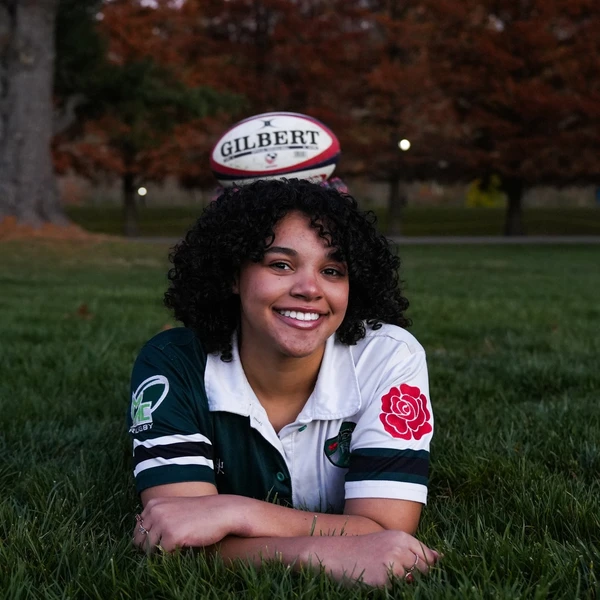
    Rugby

    Club
    2025 – Present1 year
    Patricia Lindsey Jackson Foundation - Eva Mae Jackson Scholarship of Education
    Faith plays a grounding role in my life. It is not something I view as separate from my daily experiences, but rather something that helps me navigate them. In moments of uncertainty, stress, or self-doubt, my faith reminds me to stay patient, trust my growth process, and believe that my life has purpose even when I cannot see the full path ahead. It gives me a sense of direction and calm when things feel overwhelming, especially as a college student trying to balance academics, personal responsibilities, and long-term goals. As a sophomore in college, I have learned that higher education is not only about academics, but also about personal development. There are times when school feels challenging or when I question whether I am doing enough, but my faith helps me re-center myself. It encourages me to keep going, even when progress feels slow. I believe that my efforts are not wasted and that every step forward, no matter how small, is part of a larger purpose for my life. My faith has also shaped how I treat others. It has taught me the importance of compassion, understanding, and integrity. In a world where people often move quickly and overlook others’ struggles, I try to be intentional about showing kindness and patience. I believe that leadership is not only about achievement, but also about how you treat people and the impact you leave on those around you. This mindset influences both my academic life and my future goals. In addition to faith, my motivation to pursue higher education comes from my family and personal experiences. I come from a background where education was always encouraged, but not always easily accessible or clearly mapped out. As a first-generation college student, I have had to learn how to navigate college life on my own, from financial aid to academic planning to understanding career pathways. That independence has been challenging at times, but it has also pushed me to become more responsible and determined. My desire to pursue higher education is also deeply connected to my passion for English and creative writing. I have always been drawn to storytelling because it allows people to express experiences that are often difficult to put into words. I want to use my education to grow as a writer and eventually work in editing or publishing. My goal is to help bring meaningful stories to life and support voices that deserve to be heard. I also hope to publish my own book one day, creating stories that connect with readers on an emotional level and reflect real human experiences. Beyond personal goals, I want my education to allow me to give back to my community. I understand how important encouragement and opportunity are, especially for students who may not always see people with similar backgrounds succeeding in higher education. I want to be someone who shows that it is possible to overcome obstacles and still pursue one's dreams. Whether through writing, mentorship, or future professional work, I hope to contribute positively to others’ lives. Faith, for me, is what keeps me steady while I work toward these goals. It reminds me that my journey has meaning even when it is difficult, and that I am capable of growth beyond what I can currently see. Combined with my family’s support and my personal drive, it continues to push me toward becoming a more focused, compassionate, and purpose-driven individual.
    Charles B. Brazelton Memorial Scholarship
    One of my “awkward” things is that I have often felt like I stood out in ways I did not always have the words for. Growing up as a Black lesbian in a predominantly white, conservative, Republican school environment, I rarely saw myself reflected in the people around me. That difference made me more visible in certain ways, but also sometimes made me feel like I was on the outside looking in. At school, there were moments when I felt like I had to carefully think about how I expressed myself, how I dressed, what I said, even how I reacted to things, because I was aware of being different. It was not always about open conflict, but more about subtle reminders that I did not fully “fit” into the environment around me. Over time, I became very observant. I learned how to read rooms, understand people’s reactions, and decide when it was safe to speak freely and when it was better to stay quiet. Being a Black lesbian in that space also meant dealing with assumptions from multiple directions. Sometimes I felt like people did not know how to categorize me, and that uncertainty could turn into distance or misunderstanding. There were also moments when I felt invisible in conversations about identity, representation, or belonging. Even when I was physically present, I did not always feel fully seen for who I was. But what once made me feel “different” has also shaped some of my strongest qualities. It taught me independence, awareness, and resilience. Instead of allowing those experiences to silence me, I started to use them to understand myself more deeply. I began to value authenticity in a way I might not have otherwise. If I could not always find spaces where I fully belonged, I focused on becoming more comfortable with who I am, regardless of my surroundings. Over time, I also realized that being different does not always mean being disconnected. In fact, it can create a deeper sense of empathy. Because I know what it feels like to be misunderstood or out of place, I am more intentional about how I treat others. I try to be someone who makes people feel included, especially those who might feel like they do not immediately fit into a space. Even small actions, like listening without judgment or making someone feel acknowledged, can make a difference. This experience has also influenced how I view my future. As a college student, I am pursuing English and creative writing because I want to use storytelling as a way to explore identity, emotion, and lived experience. Writing gives me a space where complexity is not something to hide, but something to express. I want to create stories that reflect people who, like me, may not always see themselves represented in the world around them. What once made me feel “awkward” has become something that gives me perspective and purpose. Being different in my environment taught me how important visibility, acceptance, and understanding truly are. It showed me that impact does not always come from fitting in; it can also come from standing firm in who you are and using your voice to create space for others.
    Olivia Rodrigo Fan Scholarship
    One lyric that has stayed with me is from Olivia Rodrigo’s drivers license: “And I just can’t imagine how you could be so okay.” That line captures the confusing stillness that comes after emotional change, when life looks normal on the outside, but internally everything feels unsettled. I relate to that feeling in my own life as I’ve gone through periods of self-doubt, growth, and learning how to understand my emotions while still keeping up with school, responsibilities, and expectations. As a sophomore in college, I’ve learned that growing up is not a clean or linear process. Olivia Rodrigo’s music reflects that reality in a way that feels honest rather than polished. In songs like Deja Vu, when she sings “I know you get déjà vu,” she captures the feeling of watching someone move on while you’re still trying to process what was lost. I’ve experienced something similar in friendships changing over time. People grow in different directions, and even when there is no clear ending, there is still a sense of grief in watching something familiar become distant. Olivia’s lyrics put language to emotions I used to struggle to explain, especially the quieter ones like confusion, comparison, and self-reflection. Another lyric that resonates with me comes from brutal: “I want it to be like I imagined it would be.” That line reflects the pressure many young people feel when reality does not match expectations. College, relationships, and personal identity often come with assumptions about how things are “supposed” to feel, but the truth is often more complicated. I’ve had moments where I questioned whether I was doing enough, achieving enough, or becoming the person I thought I would be. Olivia’s honesty about insecurity makes those feelings feel less isolating. Instead of pretending everything is fine, her music acknowledges that uncertainty is part of growing up. What makes Olivia Rodrigo’s songwriting especially impactful is the way she balances vulnerability with clarity. She does not just express emotion; she dissects it. In " Traitor, the lyric “It took you two weeks to go off and date her” reflects betrayal in a way that is specific and relatable, not abstract. That specificity is what makes her music powerful; it allows listeners to see their own experiences reflected in her words. It reminds me that emotional experiences do not need to be minimized or hidden to be valid. Even disappointment, jealousy, or heartbreak can be understood and processed in healthy ways when we give ourselves permission to feel them fully. Olivia’s music has also influenced how I view my own voice as a writer. As someone pursuing English and creative writing, I am learning that the most meaningful writing often comes from honesty rather than perfection. Her lyrics show that storytelling does not need to be complicated to be effective; it just needs to be real. That lesson has encouraged me to pay closer attention to my own emotions and experiences, even the ones I once ignored or dismissed. Overall, Olivia Rodrigo’s work reflects the emotional complexity of growing up in a way that feels authentic and relatable. Her lyrics have helped me understand that uncertainty, change, and self-doubt are not signs of failure, but part of being human. Through her music, I’ve learned to sit with my emotions instead of avoiding them, and that has made my own personal journey feel more grounded and understood.
    RonranGlee Literary Scholarship
    In Book 11 of The Odyssey, Odysseus travels to the Underworld and encounters the spirit of Achilles. During their conversation, Odysseus attempts to honor Achilles by praising his glory and reputation among the dead. Achilles responds: “No winning words about death to me, shining Odysseus! By god, I’d rather slave on earth for another man— some dirt-poor tenant farmer who scrapes to keep alive— than rule down here over all the breathless dead.” In this passage, Homer challenges the traditional heroic values celebrated throughout Greek epic poetry by revealing the emptiness of glory when separated from life itself. Although Achilles achieved eternal fame through dying honorably in battle, his words in the Underworld expose a deeper truth: human connection, mortality, and ordinary existence hold greater meaning than legendary status. Through Achilles’ rejection of heroic ideals, Homer suggests that the pursuit of honor and immortality through reputation is ultimately hollow because no amount of fame can replace the value of truly living. At first glance, Achilles’ statement appears shocking because it directly contradicts the heroic code established throughout The Iliad and The Odyssey. Greek heroes were taught that dying gloriously in battle was preferable to living a long but insignificant life. Achilles himself embodied this ideal earlier in mythology when he chose a short life filled with eternal fame over a peaceful and obscure future. Odysseus enters the Underworld expecting Achilles to feel pride in his everlasting reputation. Instead, Achilles completely dismantles the value system that defined him in life. His response is not noble or triumphant. It is bitter, honest, and deeply human. The phrase “No winning words about death to me” immediately establishes Achilles’ rejection of romanticized heroism. Odysseus attempts to comfort Achilles through praise, believing fame has compensated for his death. Achilles interrupts him almost aggressively, refusing to allow language or poetic admiration to disguise the reality of mortality. Homer’s wording matters here because Achilles does not merely disagree with Odysseus; he rejects the very idea that death can be softened through honor or storytelling. This moment becomes especially powerful because epic poetry itself often glorifies sacrifice. Homer uses Achilles, arguably the greatest Greek hero, to question the values his own genre celebrates. Achilles then compares ruling the dead to serving “some dirt-poor tenant farmer.” This comparison is intentionally extreme. In Greek society, manual labor under another man represented one of the lowest social positions imaginable, especially compared to the glory of a legendary warrior king. Yet Achilles claims even the most difficult and humiliating mortal life is preferable to death. Homer’s contrast reveals that consciousness, experience, and the ability to exist among the living carry more worth than power or prestige after death. Achilles possesses fame, remembrance, and authority in the Underworld, but these things cannot compensate for the absence of life itself. The passage also reveals an important shift in perspective that only death could produce. While alive, Achilles viewed honor as the ultimate goal because youth often creates the illusion that glory transcends mortality. However, in death, Achilles recognizes that fame is something enjoyed by the living, not the dead. The living tell stories about him, admire him, and immortalize him through poetry, but Achilles himself gains no fulfillment from this admiration. Homer suggests that humans frequently chase external validation without realizing that recognition cannot replace authentic existence. Achilles becomes tragic not because he died, but because he realizes too late that he misunderstood what mattered most. This moment also reflects one of the central themes of The Odyssey: the importance of home, endurance, and ordinary human life. Unlike Achilles, Odysseus repeatedly rejects opportunities for immortality or divine status. He turns away from Calypso’s offer of eternal life because he longs to return to Ithaca, his family, and his human identity. Achilles’ speech reinforces the wisdom of Odysseus’ choices. Through Achilles, Homer indirectly validates Odysseus’ desire for an imperfect mortal life over eternal glory. The contrast between the two heroes highlights different definitions of greatness. Achilles achieves greatness through conquest and sacrifice, while Odysseus achieves greatness through survival, love, and persistence. Another important underlying meaning in this passage is Homer’s exploration of memory and identity. Achilles’ fame survives, but the man himself exists only as a shadow in the Underworld. This creates a disturbing separation between public image and personal reality. To the world, Achilles remains glorious and eternal. Internally, however, he experiences loss and emptiness. Homer may be suggesting that identity cannot truly survive through reputation alone because fame preserves only a simplified version of a person rather than their actual humanity. Achilles has become a symbol instead of a living individual. The imagery of the Underworld strengthens this interpretation. The dead in The Odyssey are described as shadow-like and powerless, lacking the fullness they possessed in life. Even legendary heroes become diminished after death. This depiction strips glory of its permanence and exposes mortality as unavoidable. Homer does not portray the afterlife as triumphant or rewarding; instead, it feels cold and incomplete. Achilles’ words emerge from this bleak environment, making his rejection of heroic ideals feel painfully sincere. The Underworld forces both Odysseus and the audience to confront the limits of human ambition. Achilles’ speech remains relevant today because modern society still glorifies achievement, status, and public recognition. People are often taught to measure success through accomplishments, popularity, or legacy rather than fulfillment and connection. Achilles’ realization challenges this mindset by suggesting that being remembered is not the same as truly living. The passage asks readers to reconsider what they value most: external admiration or meaningful human experience. Homer’s insight feels timeless because many people spend their lives chasing goals they believe will give them significance, only to realize fulfillment cannot exist apart from genuine living. Personally, I find this passage compelling because it transforms Achilles from an untouchable mythological figure into a deeply relatable human being. His regret reveals vulnerability beneath his legendary reputation. Rather than glorifying war and conquest, Homer exposes the emotional cost of sacrificing life for abstract ideals. Achilles’ honesty makes the scene feel surprisingly modern because it confronts fears that still exist today: the fear of wasting one’s life, pursuing the wrong values, or realizing too late what truly matters. Ultimately, the underlying meaning of this passage is that mortality gives life its value, not its tragedy. Achilles believed glory would overcome death, but in the Underworld, he discovers that fame cannot replace human existence, relationships, or experience. Through this realization, Homer critiques the heroic ideal while elevating the importance of ordinary life. The passage suggests that meaning is found not in becoming legendary, but in fully living while one still can. Achilles’ regret becomes a warning against sacrificing humanity for recognition, reminding readers that even the greatest reputation cannot compare to the simple privilege of being alive.
    WCEJ Thornton Foundation Low-Income Scholarship
    Higher education represents opportunity, growth, and the chance to build a future that once felt out of reach. As a low-income and first-generation college student, pursuing a degree has not always been easy. There have been moments when financial stress and uncertainty made me question whether I could continue, but those challenges have also strengthened my determination to succeed. Attending college is important to me because it is not only an investment in my future, but also a way to create opportunities for myself, support my family, and make a meaningful impact on others. Growing up, I understood how limiting financial struggles can be. Many low-income students face difficult choices between helping support their families and continuing their education. I have experienced the pressure of balancing responsibilities while trying to pursue my goals, and it has taught me resilience, independence, and perseverance. Instead of allowing those obstacles to discourage me, they motivated me to work harder and remain focused on building a better future. College has given me the chance to expand my knowledge, develop confidence, and pursue a career that aligns with my passions. I am currently pursuing an English degree with a concentration in creative writing because writing has always been one of the most meaningful parts of my life. Stories have the ability to inspire people, create understanding, and help individuals feel less alone. Through reading and writing, I found a way to express emotions, experiences, and ideas that were difficult to put into words otherwise. My goal is to work in editing or publishing, where I can help writers share their voices and stories with the world. I am especially passionate about uplifting diverse perspectives and stories that deserve greater representation. In addition to working in publishing, one of my biggest dreams is to become a published author myself. I want to create stories that emotionally connect with readers and encourage them to feel seen, understood, and hopeful. Literature has always had a powerful impact on me, and I hope my own writing can have that same impact on others. Achieving this dream would mean more than personal success; it would represent overcoming barriers that often make higher education and creative careers feel impossible for low-income students. Attending higher education will help me achieve these goals by giving me the skills, knowledge, and opportunities necessary to grow professionally and personally. College has already helped me strengthen my writing, critical thinking, and communication skills while exposing me to new perspectives and experiences. It has also shown me the importance of community and mentorship. As I continue my education, I hope to gain experience through internships and networking opportunities that will prepare me for a career in publishing and writing. I also plan to create a positive impact by encouraging and supporting others who may feel limited by their circumstances. As someone who understands the challenges of being a low-income and first-generation student, I want to remind others that their background does not determine their potential. Whether through my writing, my future career, or mentoring younger students, I hope to inspire people to pursue their goals despite obstacles. I believe representation and encouragement matter because seeing someone with a similar story succeed can motivate others to believe they can succeed too. Higher education is helping me break cycles of limitation and create a future filled with purpose and possibility. Although the path has not been easy, every challenge has reinforced my determination to continue moving forward. I want to use my education not only to achieve personal success but also to uplift others, contribute meaningful stories to the world, and prove that perseverance can transform lives.
    Dinakara Rao Memorial Scholarship
    As a first-generation college student, my journey has been filled with both uncertainty and determination. Going to college means stepping into unfamiliar territory and learning how to navigate challenges that no one in my family has experienced before. There have been moments where I felt overwhelmed trying to balance academics, finances, and planning for my future, but those challenges have motivated me to keep pushing forward. Being first-generation is more than just earning a degree to me; it means creating opportunities, breaking barriers, and building a future that will positively impact both my family and my community. Growing up, I understood that education was one of the strongest tools for creating change and stability. Although my family supported me, there were many parts of the college process that I had to figure out independently. From applications and financial aid to understanding career paths and college expectations, I learned how to advocate for myself and stay resilient even when things felt difficult. Those experiences taught me responsibility, independence, and perseverance. They also made me realize how many students from underrepresented backgrounds face obstacles that go beyond academics. Many first-generation students carry pressure not only to succeed for themselves, but also to represent the sacrifices and hopes of their families. What motivates me most is the desire to create a life filled with purpose and creativity while also inspiring others who come from similar backgrounds. I am pursuing an English degree with a concentration in creative writing because writing has always been one of the ways I understand both myself and the world around me. Stories have the power to connect people, encourage empathy, and make individuals feel seen and understood. Reading and writing became an outlet for me, especially during times when life felt uncertain or overwhelming. Through storytelling, I discovered how powerful words can be in shaping perspectives and giving people hope. My career goal is to work in editing or publishing, where I can help writers share their voices and stories with others. I am especially passionate about supporting diverse voices and stories that may not always receive the attention they deserve. Representation in literature matters because people should be able to see themselves reflected in the stories they read. I want to contribute to an industry that encourages creativity, inclusivity, and meaningful storytelling. At the same time, one of my biggest dreams is to publish a book of my own someday. I want my writing to connect with people emotionally and remind them that their experiences and feelings matter. Achieving that dream would symbolize not only personal success but also the ability to overcome obstacles that once seemed intimidating. As a first-generation student, every accomplishment feels larger because it represents growth for both my family and me. Dinakara Rao’s story resonates with me because it reflects determination, sacrifice, and the belief that education can transform lives. Like him, I want to use my education not only to build a successful future for myself, but also to uplift others and create opportunities within my community. My journey as a first-generation student has taught me that success is not defined only by personal achievement but by the impact we leave on the people around us.
    Dr. Christine Lawther First in the Family Scholarship
    Being a first-generation college student means carrying both responsibility and hope. It means stepping into a world that no one in my family has experienced before and learning how to navigate it mostly on my own. While it can feel overwhelming at times, it is also something I take pride in because I know that earning a college degree will not only change my future, but it will also inspire the people around me and future generations in my family. Growing up, I understood how important education was, even though my family did not have firsthand experience with college life. There were many things I had to figure out on my own, from applications and financial aid to understanding what career path I wanted to pursue. Being first-generation has taught me independence, resilience, and determination. It has pushed me to work harder because I know I am building opportunities that my family never had access to before. Every class I pass and every challenge I overcome feels meaningful because it represents progress, not only for me but for my family as well. I am currently pursuing an English degree with a concentration in creative writing because writing has always been one of the most important parts of my life. Stories have a unique way of connecting people, helping them feel understood, and allowing them to see the world from different perspectives. I have always loved reading and creating stories of my own, and over time, I realized that I wanted to turn that passion into a career. My goal is to work in editing or publishing, where I can help bring stories to life and support writers in sharing their voices with the world. At the same time, one of my biggest dreams is to publish a book of my own someday. Writing is deeply personal to me because it allows me to express emotions, experiences, and ideas in a way that can connect with others. I want to create stories that make people feel seen and understood, especially those who may feel unheard. Publishing my own work would represent more than personal success; it would show that someone from my background, with determination and passion, can accomplish goals that once felt impossible. My long-term goals are centered around both personal success and making a meaningful impact on others. I want to build a stable and fulfilling career in the publishing industry while continuing to grow as a writer. I also hope to encourage other first-generation students to pursue higher education and believe in their potential, even when the path feels uncertain. Being first-generation can sometimes feel isolating, but it also creates strength because it teaches you how to persevere through challenges and create opportunities for yourself. Ultimately, obtaining a college degree means breaking barriers and creating a new future. It means proving to myself and my family that hard work and determination can open doors to opportunities we once only dreamed about. As a first-generation student, I am proud to be creating a path not only for myself but for those who will come after me.
    Tammurra Hamilton Legacy Scholarship
    One of the hardest conversations I’ve ever had was with a friend who admitted they were struggling mentally and didn’t think anyone would understand. That moment stayed with me because it reminded me how many people my age suffer in silence. Mental health and suicide prevention are important topics today because so many young people feel pressure from school, social media, family expectations, finances, and trying to figure out who they are. From the outside, someone can look perfectly fine while internally they are fighting battles no one sees. That is why bringing awareness to mental health matters so much. People deserve to feel heard, supported, and valued before they reach a breaking point. As a sophomore in college, I have seen how overwhelming life can become for students. College is exciting, but it also comes with stress, uncertainty, and pressure to succeed. Many students are balancing classes, jobs, relationships, and their future all at once. Sometimes people feel like they have to handle everything alone because they are afraid of being judged. I believe suicide prevention starts with creating environments where people feel safe enough to speak honestly about what they are going through. A simple conversation, checking in on someone, or listening without judgment can truly save a life. My experiences with mental health have shaped the way I view people and relationships. They have taught me that kindness is more important than we often realize because we never fully know what someone else is carrying. Mental health struggles can affect confidence, motivation, and the ability to feel connected to others. Because of this, I try to be someone who makes others feel seen and understood. Whether it is supporting a friend, encouraging someone to seek help, or simply being present, I believe small acts of compassion can make a lasting impact. These experiences have also influenced my career aspirations. I want a career where I can help people and make a positive difference in their lives. Mental health awareness has shown me the importance of empathy, patience, and understanding. No matter what career path I pursue, I want to create an environment where people feel respected and supported. I believe success is not only about personal achievements, but also about how you uplift others around you. In my community, I can support mental health awareness by encouraging open conversations and helping reduce the stigma around asking for help. Too many people suffer quietly because they fear being labeled as weak. I want to help normalize conversations about mental health so people understand that struggling does not make someone less valuable. Everyone deserves support, care, and access to resources that can help them heal. Tammurra Hamilton’s story is a reminder that mental health should never be ignored and that every life matters. Her dedication to education and caring for others continues to inspire students like me. By spreading awareness, supporting one another, and encouraging compassion, we can help create a generation that feels less alone and more hopeful about the future.
    Kristinspiration Scholarship
    Education is important to me because it has always been more than grades or a degree. It is freedom. It is the ability to think for myself, to question, to grow, and to choose the direction of my own life. Education has given me language for things I once felt but could not explain. It has challenged me to confront ideas that are uncomfortable and to step outside of the narrow version of the world I grew up with. Most importantly, it has helped me understand myself more clearly. This past year of college has transformed me in ways I did not expect. Through classes, conversations, and late nights spent writing, I have discovered not only what I want to study but who I am becoming. Changing my major to English Creative Writing was not just an academic decision; it was a personal one. It meant choosing authenticity over safety. It meant trusting that my voice matters. Education gave me the courage to make that shift because it exposed me to stories, professors, and peers who encouraged critical thinking and self-reflection. Education is also important to me because it creates opportunity. It opens doors that might otherwise remain closed. As someone who wants to publish a novel centered on complex LGBTQ+ characters, I see education as preparation and responsibility. The more I learn about craft, history, culture, and people, the more intentional and impactful my writing can be. Education sharpens empathy. It teaches you to listen before you speak and to understand context before forming conclusions. The legacy I hope to leave is one of representation and honesty. I want to leave behind stories that make someone feel seen for the first time. Growing up, I did not always see myself reflected in literature in a way that felt full or empowering. I hope to change that by creating narratives where queer people and people of color are not side notes or tragedies, but protagonists with depth, strength, and complexity. If even one person reads my work and feels less alone, that would mean everything to me. Beyond writing, I hope my legacy reflects courage. I want to be remembered as someone who chose growth even when it was uncomfortable, who pursued passion even when it was uncertain, and who used her education not only for personal advancement but for community impact. Education has given me the tools to build a meaningful life; I hope to use those tools to build spaces where others feel empowered to do the same. To me, education is not just about what I accomplish. It is about what I contribute. The legacy I hope to leave proves that knowledge paired with compassion can create lasting change. Best, Jalyne Beakoi.
    Anderson Women's Rugby Scholarship
    Rugby family, to me, means belonging in its most real and unfiltered form. It is not just about wearing the same jersey or practicing on the same field. It is about trust, accountability, and shared resilience. Rugby is a sport that demands connection. You cannot succeed alone. Every pass, every tackle, every phase of play depends on the people around you. That constant reliance builds something deeper than teamwork. It builds loyalty. It builds respect. It builds a family. What makes rugby different from other sports is the culture surrounding it. There is a level of grit and toughness, but also an overwhelming sense of support. You push each other physically, but you also check in mentally. When someone gets knocked down, the team pulls them back up. When someone doubts themselves, there is always another voice reminding them of their strength. Rugby family means knowing that no matter how hard practice was or how tough a loss feels, you are never carrying it alone. For me personally, rugby represents growth. It challenges me to be stronger than I think I am. It forces me to trust my instincts and my teammates. It has taught me how to communicate clearly under pressure and how to stay composed in chaotic moments. I have learned that confidence is not about being the loudest person on the field, but about being dependable. Showing up consistently. Doing the hard work when no one is watching. My rugby family has shown me that strength and vulnerability can exist at the same time. This past year of my life has been transformative in many ways. I have grown into myself more fully, gained confidence in my identity, and learned the importance of surrounding myself with people who uplift and challenge me. Rugby feels like an extension of that growth. It is empowering to be in a space where strong, driven women support each other and compete fiercely without tearing one another down. Being part of a rugby family means celebrating each other’s victories and pushing through setbacks together. As I continue playing rugby in college, I have both personal and team-oriented hopes. Personally, I want to elevate my game. I want to become faster, stronger, and more technically skilled. I want to study the strategy behind the sport and understand the flow of the game on a deeper level. I hope to step into leadership roles over time, not just through words, but through effort and example. For the team, I hope to contribute to a culture that values discipline, inclusivity, and resilience. I want to help create an environment where every player feels seen and supported, whether they are a seasoned veteran or brand new to the sport. College rugby is competitive and demanding, and I am excited by that challenge. I want to compete at a high level while also building friendships that last long after college has finished. Ultimately, rugby family means commitment to the game, to growth, and to each other. In college, I hope to honor that commitment by giving everything I have on and off the field, and by becoming someone my team can always rely on. Sincerely, Jalyne Beakoi.
    Alexandra Rowan Voices of Tomorrow Scholarship
    The first time I noticed her, she was arguing with a barista about oat milk. “It’s not the same,” she said, completely serious, hands wrapped around a ceramic mug like it personally offended her. “Almond milk tastes smooth.” I laughed before I could stop myself. She turned, eyebrows raised. “You disagree?” “No, I completely agree,” I said, a chuckle escaping with a smile. That was how it started. Her name was Maya. She had paint on her hands half the time and wore silver rings. We kept running into each other at the little bookstore café off campus. First, it was shared tables because there were no seats left. Then it was “accidentally” saving each other's chairs. Then it was planned. I told myself I just liked talking to her. What do you want to write about? What scares you? What would you do if no one expected anything from you? No one had ever asked me that last one before. One afternoon, we walked through the park behind the café, leaves crunching under our shoes. The air smelled like early fall, cool and sharp. She was telling me about a mural she wanted to paint someday, something bold and impossible to ignore. “Do you ever feel like you’re waiting for your life to start?” she asked. “All the time,” I said. That night, lying in bed, I let myself imagine it, her hand in mine, her laugh close to my ear, her name written next to mine in the margins of my notebook. The image didn’t feel forced. It felt natural and terrifying. Because liking her meant admitting something I had avoided for so long. It meant I couldn’t pretend anymore. A week later, we were back at the café. It was crowded, warm, and loud. She slid into the seat across from me and smiled like I was the best part of her day. “I have a question,” she said. “Okay.” “Why do you look at me like you’re about to say something and then don’t?” I froze. There it was. The moment. The choice. I could laugh it off. Change the subject. Or I could risk it. “I think I’m tired of pretending,” I said quietly. “Pretending what?” I swallowed. My heart was pounding so loud I was sure she could hear it. “That I don’t like you.” The noise of the café didn’t disappear like it does in movies. Cups still clinked. Someone dropped a fork. The espresso machine hissed dramatically. But between us, everything was still. She didn’t look shocked. She didn’t look uncomfortable. She looked relieved. “Good,” she said, smiling slowly. “Because I’ve been pretending too.” I blinked. “You have?” She reached across the table, her rings cool against my skin as she laced her fingers with mine. “I was starting to think you’d never say it.” The fear didn’t vanish. It shifted. It turned into something brighter. Walking home later, her hand brushing mine every few steps, I realized this wasn’t just about liking someone. It was about choosing honesty. About letting myself want what I actually wanted. About finally stepping into my own story instead of watching it from the sidelines. And for the first time, my life didn’t feel like it was waiting to start. It felt like it already had. By: Jalyne Beakoi
    Justin Burnell Memorial Scholarship
    Winner
    I used to think identity was something you were just supposed to know. Like everyone else, I got a piece of paper with the answers, and I was the only one still staring at a blank page. This first year of college changed that for me. Coming here gave me space. Space away from expectations. Space away from the version of myself I thought I had to be. In that space, I finally allowed myself to ask the questions I had been quietly carrying for years. I stopped pushing down the way my heart reacted to certain people. I stopped explaining away feelings that didn’t fit the mold I had grown up around. And slowly, gently, I realized I am a lesbian. That realization didn’t come with fireworks. It came with fear, relief, and grief all at once. Fear of how people might see me differently. Relief that I finally understood myself. Grief for the years I spent trying to be someone else. There were moments I felt isolated, especially when I felt like I didn’t fully fit anywhere yet. Even within LGBTQ+ spaces, I sometimes questioned if I was “queer enough” or “sure enough.” Identity can feel fragile when it’s new. At the same time, this year has been one of the most empowering seasons of my life. I joined a women's rugby club where many of them showed that it was okay not to know who I am and to figure it out. Once I stopped hiding from myself, I started making braver decisions. One of the biggest was changing my major to English Creative Writing. Before, I was on a completely different path with biology, trying to choose something safe. But writing has always been the place where I feel most honest. It is where I can truly speak. It is where I make sense of pain, love, confusion, and growth. Switching majors felt terrifying. It meant stepping into uncertainty. It meant admitting that I want something completely different. But it also felt right in a way nothing else had. I want to publish a book one day. Not just any book, but a story filled with complex, flawed, powerful LGBTQ+ characters who are more than stereotypes. I want queer people to see themselves as heroes. I want them to read about love that feels familiar and possible. I want them to know they are not alone in the quiet questioning, the fear, or the joy of becoming who they are. Growing up, I did not see many stories that reflected my experience. When representation did exist, it often felt tragic. That shapes you. It makes you wonder if your story matters. Writing is how I push back against that. It is how I create the kind of world I needed when I was younger. The obstacles I have faced due to my identity have mostly been internal battles: self-doubt, internalized shame, and the fear of disappointing people I love. But those struggles have deepened my empathy. They have made me more determined to tell stories that feel real. I am passionate about writing because it is a freedom I never thought I could have. I want to pursue creative writing not just as a career, but as a calling. I want to contribute to a literary space where LGBTQ+ stories are celebrated and given the depth they deserve. This first year of college has been about becoming, becoming honest, becoming brave, becoming myself. Writing is how I will continue that journey, and how I hope to help others feel seen along the way. Sincerely, Jalyne Beakoi.