user profile avatar

Jake Pompa

1x

Finalist

Bio

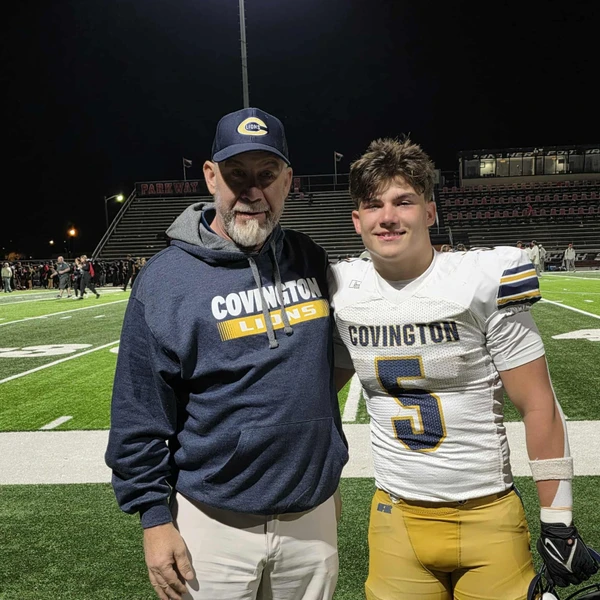
I grew up in Wisconsin and moved to Louisiana to pursue football in the South—an experience that taught me independence, humility, and how to earn respect through consistent work. At Covington High School, I’ve built my life around a clear goal: work hard in school, lead on the field, serve my community, and become the first in my family to earn a four-year degree. I’ve earned a 4.06 GPA, joined the National Honor Society, and stayed committed to leadership and service. My dad, Mike, was diagnosed with non-small cell lung cancer that metastasized to his brain, bones, and abdomen. In March 2026, he became disabled and could no longer work. Overnight, our household income dropped while medical demands increased, creating financial need at the exact moment I’m preparing to start college. Football has shaped how I respond to adversity. I was voted team captain, earned the Lion Heart and Big Dog awards, and was All-District at running back. I’m a 3-star RB and had the honor of playing in the New Orleans Saints Superdome as an All-State player. I also received the Sugar Bowl Scholar-Athlete Award, which reflects my commitment to excellence in both athletics and academics. Service keeps me grounded. I volunteer with the Goodbee Fire Department and at youth football camps, where I’ve learned that leadership means showing up for others consistently.

Education

Covington High School

High School
2023 - 2026

Miscellaneous

  • Desired degree level:

    Bachelor's degree program

  • Majors of interest:

    • Finance and Financial Management Services
  • Not planning to go to medical school
  • Career

    • Dream career field:

      Financial Services

    • Dream career goals:

      help people have a secure life and future

    • flat worker

      concrete
      2026 – Present6 months
    • busser

      Restraunt
      2026 – Present6 months

    Sports

    Football

    Varsity
    2014 – Present12 years

    Research

    • Education, Other

      football/uw madison — anything they needed
      2026 – Present

    Public services

    • Volunteering

      Goodbee fire department — anything they needed
      2024 – Present

    Future Interests

    Advocacy

    Volunteering

    Entrepreneurship

    Olivia Rodrigo Fan Scholarship
    One lyric that stays with me is “I’m so sick of 17.” From brutal, it captures what it felt like when I was still a teenager but life was already pushing me to grow up fast. Moving from Wisconsin to Louisiana as a sophomore meant starting over in every way—new school, new teammates, new expectations, and no history with the people around me. I had to learn quickly how to adapt and prove myself without feeling sorry for myself. On top of that, my dad being terminally ill with cancer added a weight that didn’t pause just because I had homework, practice, or a game. That lyric describes the frustration of being young but carrying responsibilities and stress that don’t feel “teenage,” and it reminds me that it’s okay to admit things are hard even when I keep showing up. Another lyric that resonates deeply is “They all say that it gets better.” From hope ur ok, it hits the complicated space between encouragement and reality. When your family is facing something as serious as terminal cancer, you hear hopeful words from people who care, but sometimes those words don’t change what you’re living through. Still, I’ve learned that hope doesn’t have to be perfect. For me, “it gets better” has meant focusing on what I can control: staying disciplined, keeping my grades strong, and continuing to lead with the right attitude even when I’m dealing with fear and uncertainty at home. Earning a 4.16 GPA and being part of National Honor Society wasn’t just about achievement—it was about refusing to let my circumstances decide my future. A third lyric I connect with is “I’m pretty when I cry.” From pretty isn’t pretty, it speaks to the pressure to look fine on the outside when things are heavy inside. People often see the version of me that’s a football captain and leader, the one who’s expected to be composed and steady. But leadership doesn’t make you immune to stress or sadness—it just means you learn how to carry it and still do what needs to be done. Volunteering with the Goodbee Fire Department also taught me what real strength looks like: showing up for others on their hardest days, even when you’re dealing with your own problems. Olivia Rodrigo’s music helps because it puts honest words to emotions that can be hard to explain. Those lyrics reflect my journey—adapting after a big move, staying focused through family hardship, leading on and off the field, and learning that being human doesn’t cancel out being determined.
    Love Island Fan Scholarship
    Challenge name: “Casa Confessions: The Ripple Test” Core idea A brand-new, episode-driving challenge that tests honesty, loyalty, and influence—not just between couples, but across the whole villa. Islanders learn how their private opinions spread, mutate, and come back to impact them. The twist: you’re judged as much on what you said as how many people you told. When it happens Day 10–18 sweet spot (right when couples think they’re solid, but before Casa Amor or right after a recoupling). Works best when there are at least 6 couples and a few “unsettled” Islanders. Setup & set design Location: The firepit area becomes “The Ripple Room.” Props: A neon board with three meters: TRUTH, LOYALTY, RIPPLE A “Confession Booth” (like a mini Beach Hut) with a camera and a producer voice A stack of sealed envelopes labeled with each Islander’s name A big villa map showing who is connected to whom (string lines between Islanders—pure drama visuals) Wristbands that light up in three colors: Green (Truth), Yellow (Careful), Red (Danger) Host presence: Narrator/voiceover + a “text from the producers” vibe. No external host required, but can be hosted by a guest if the season uses one. The rules (simple, but brutal) Step 1: Private Confessions (everyone does it) Each Islander goes to the Confession Booth and answers 5 prompts, speaking honestly. These are not yes/no—short sentences. Example prompts (you’d rotate them each season): “The person I’m most attracted to in the villa is…” “The couple I think is least genuine is…” “If I had to recouple tonight, I’d choose…” “The thing I’m not telling my partner is…” “The Islander I trust least is…” Important: They’re told: “Some of your answers will be revealed, but you won’t know which.” Step 2: The Ripple Tokens (the social experiment) Each Islander receives 3 Ripple Tokens (physical coins or chips). They must privately assign them: 1 token to someone they’d tell a secret to 1 token to someone they think would spread a secret 1 token to someone they think would protect a secret This creates a “villa gossip map” behind the scenes. Step 3: The Reveal Rounds (firepit) At the firepit, Islanders sit in couples. The screen lights up with three rounds: Round A: Truth Lines A confession appears on screen, but the person’s name is hidden. Example: “I’m in a couple, but I’m more attracted to someone else.” The villa must vote (by wristband color) whether they think the statement is: Green: totally true and fair to say Yellow: risky/half-true Red: messy/unnecessary Then the show reveals: who said it, and whether it’s verbatim or paraphrased (important twist—sometimes the villa is reacting to a slightly softened version). Impact: The person’s TRUTH meter increases if they own it calmly; decreases if they deny or backtrack. Round B: Loyalty Check A prompt shows up: “Would you tell your partner this if asked?” The person who said the confession must answer: Yes, tonight Yes, but later No If they say “No,” the partner gets to ask one follow-up question—but the Islander must answer in one sentence only (prevents spiraling, keeps it sharp). Impact: Couples’ LOYALTY meter changes, affecting who is “safe” later. Round C: The Ripple Reveal This is the new part no other challenge has: the show reveals who would have spread it. For one confession per Islander, the screen displays a mini-chain like: A told B → B told C → C told D Based on the Ripple Token network (and a quick “would you pass this on?” choice the Islanders made earlier, unseen).
    Sabrina Carpenter Superfan Scholarship
    I’m a fan of Sabrina Carpenter because her career is a real example of growth, resilience, and betting on yourself even when people try to put you in a box. She didn’t stay stuck in just one lane—she evolved from acting into building a serious music career, kept improving her writing and performances, and stayed consistent until more people finally recognized her talent. Seeing that kind of long-term effort pay off reminds me that success isn’t usually instant; it’s something you earn through patience and work. What I respect most is how she keeps showing up and getting better. Her music feels confident, but it also feels honest—like she’s willing to talk about emotions and experiences in a way that’s relatable without pretending everything is perfect. For me, that matters, because I’ve learned that life doesn’t slow down just because you’re dealing with hard things. You still have to keep moving, keep growing, and keep finding ways to stay positive. Her career has impacted me by reinforcing the idea that you can reinvent yourself and keep building, even when circumstances are stressful. Watching her stay focused on her goals and continue leveling up makes me want to do the same in my own life—especially as a first-generation college student. It pushes me to take my goals seriously, stay disciplined, and trust that the work I’m putting in now will matter later. On a personal level, her music has also been a source of motivation and stress relief. During times when my family has been going through a lot, having music that helps me reset mentally has been important. It gives me something positive to focus on and helps me keep my mindset strong. Overall, being a fan isn’t just about liking songs—it’s about the example she sets: keep improving, stay true to yourself, and don’t let setbacks or other people’s expectations decide what you’re capable of achieving.
    Bright Lights Scholarship
    My plans for the future start with making the most of the opportunity I have at Millsaps College. In the next four years, I plan to earn my degree, build a strong academic record, and grow into the kind of leader who makes a positive impact on campus and beyond. I want to be fully involved in the Millsaps community—taking challenging classes, using tutoring or office hours when I need them, and staying disciplined with my time so I can balance academics, football, and service. My goal is not just to “get through” college, but to graduate prepared for a career where I can support my family and eventually create opportunities for others. A big part of my future is continuing to develop the leadership skills I’ve gained through football. Being a team captain taught me that leadership is about responsibility, consistency, and setting the standard when things get difficult. In college, I plan to bring that same approach into the classroom and into campus organizations. I want to be someone professors and teammates can count on—someone who shows up, follows through, and helps others rise to the level they are capable of reaching. After college, I plan to build a stable career that allows me to give back to the community that helped shape me in Louisiana. I’ve seen how much difference guidance, encouragement, and access to resources can make—especially for first-generation students who may not have a roadmap. Over time, I want to mentor younger students and student-athletes, helping them understand what it takes to succeed academically, how to prepare for college, and how to stay focused when life is stressful. I also want to continue volunteering and supporting community organizations, because service has always been important to me. My experience volunteering at the Goodbee Fire Department showed me the value of showing up for others without needing recognition, and that is something I want to carry into my adult life. This scholarship would help me take these plans from ideas to reality. Although I have worked hard to earn opportunities, my family is going through an incredibly difficult season because my father is terminally ill with cancer. That reality affects our finances and our stress level in ways that are hard to fully describe. Medical expenses and uncertainty add pressure, and it can make college feel overwhelming even when you’re motivated and prepared. This scholarship would ease the financial strain and help close the gap between what my family can manage and what college costs. It would support expenses like tuition, books, housing, and daily necessities, which would allow me to focus more fully on academics and leadership rather than constant financial worry. Most importantly, this scholarship would give me stability at a time when my family needs it. It would help me stay on track to graduate on time, keep building toward a meaningful career, and continue the journey I started as a first-generation student—one where I turn challenges into motivation and opportunity into long-term impact.
    Sloane Stephens Doc & Glo Scholarship
    The impact I want to make starts with being the kind of person my community can count on—someone who turns opportunity into service. Education, to me, isn’t only a way to build a career. It’s a way to gain the knowledge, confidence, and credibility to come back home and help create stability and opportunity for other families like mine. Growing up as a first-generation student taught me that hard work matters, but guidance and access matter too. I want to use my education to help close that gap. My long-term vision is to build a life where I can mentor younger students—especially first-generation kids and student-athletes—so they don’t feel like they have to figure everything out alone. I want to be the person who can explain the steps that aren’t obvious: how to apply, how to manage finances, how to stay eligible, and how to bounce back when life gets hard. I know what it’s like to carry pressure at home while still trying to show up and perform in school, and I want others to see that their circumstances don’t decide their future. The people who inspire me most are the ones who serve without looking for attention. Volunteering with the Goodbee Fire Department showed me what real commitment looks like—people responding on someone else’s worst day and staying calm, disciplined, and focused. My coaches have also shaped my idea of leadership by teaching me that you earn trust through consistency, accountability, and how you treat others. And my father’s fight with cancer has changed me in ways I can’t fully explain. Watching him face something so serious has made me determined to live with purpose, not excuses. He’s shown me that strength is doing the right thing even when it’s hard. In college and beyond, I plan to keep giving back through service and leadership. I want to stay involved in community programs, volunteer organizations, and campus initiatives that support youth, academics, and wellness. I also want to use what I learn to help strengthen communities like mine—whether that means supporting public service, helping families access resources, or creating opportunities for students to succeed. Ultimately, the change I’m determined to create is simple: I want to help make success feel possible for the next kid who’s working hard but doesn’t have a roadmap. I want to be proof that resilience and discipline can open doors—and I want to hold those doors open for others.
    Bick First Generation Scholarship
    Being a first-generation college student means I’m stepping into a world my family hasn’t had the chance to navigate before. It’s exciting, but it also comes with pressure—because I’m not only working toward my own future, I’m trying to build a new path for my family. College is more than a goal for me; it represents stability, opportunity, and proof that the sacrifices my family has made can lead to something bigger. One of the biggest challenges I’ve faced was moving from Wisconsin to Louisiana as a sophomore. I had to start over—new school, new teammates, new expectations, and a new community. I didn’t have the comfort of growing up with the same friends or the same routines. Instead of letting that change set me back, I treated it as a chance to grow. I focused on what I could control: showing up prepared, being respectful, and working hard. Over time, I found my place academically and socially, and I learned how to adapt quickly—something I know will matter in college and beyond. Another challenge has been what my family has faced with my father’s terminal cancer. Living with that reality has shaped how I see time, responsibility, and resilience. There were moments when it felt like everything was happening at once—school, training, family needs, and the emotional weight of uncertainty. I’ve had to mature fast. What kept me grounded was committing to my responsibilities and refusing to let hardship define my future. I graduated from a Louisiana high school with a 4.16 GPA, earned membership in National Honor Society, and kept pushing myself even when things were difficult. Football has been a major part of that growth. I’ve learned leadership through action—being consistent, being coachable, and being the teammate others can depend on. Earning the role of captain was meaningful because it showed me that leadership isn’t a title; it’s accountability. I’m proud to be a football leader because I’ve learned how to motivate others, stay calm under pressure, and keep working when no one is watching. I also believe in serving my community. Volunteering with the Goodbee Fire Department taught me humility and respect for people who show up for others on their hardest days. It reminded me that real leadership is service. This scholarship would help me take the next step toward my goals by easing the financial strain that comes with being a first-generation student—especially while my family is dealing with serious medical expenses. I’m headed to Millsaps College, and my dream is to earn my degree, build a strong career, and be someone my family can rely on. What drives me is the idea that my effort can change what’s possible for the people who come after me. This scholarship would help me stay focused on academics, continue growing as a leader, and keep moving forward—one step at a time. ​
    Marcia Bick Scholarship
    I learned early that effort matters—but this past year taught me what it really means to keep going when life gets heavy. My biggest obstacle has been my father’s terminal cancer. There are days when our family schedule revolves around appointments, treatments, and the unknowns that come with a serious illness. Emotionally, it is exhausting to watch someone you love fight something you cannot fix. Practically, it changes everything: time at home becomes responsibility, and “normal” teenage stress becomes managing school, training, and family needs at the same time. I chose not to let this obstacle decide my future. I kept my grades strong and graduated with a 4.16 GPA because I’ve worked hard to build options for myself, even when my circumstances were painful and distracting. I also stayed committed to football, training and competing at a high level because the sport has taught me discipline, leadership, and how to stay focused when things are not easy. On the days I felt overwhelmed, I showed up anyway—at practice, in the weight room, and in my classes—because consistency is something I can control. I will be attending Millsaps College as an incoming freshman. My goal is not just to enroll, but to succeed—academically, as a leader, and as someone who makes the most of the opportunity in front of me. Support through this grant would reduce the financial pressure my family is carrying while we handle medical expenses and uncertainty at home. More than that, it would give me stability: the ability to focus on my coursework, stay involved on campus, and continue building the skills and credentials that will lead to a strong career after graduation. I’m proud of what I’ve accomplished so far, but I’m also realistic: talent and motivation are not always enough when financial stress is constant. This grant would help turn the effort I’ve already shown into long-term results. I am committed to working hard, representing this support well, and using the education I earn to create a future my family can be proud of.
    Charles B. Brazelton Memorial Scholarship
    My “awkward” thing is that I’m the kid who looks like I should fit into one place, but talks and lives like I came from somewhere else. I moved from Wisconsin to Louisiana, and I didn’t show up with a Southern accent, I’m not Cajun, and I didn’t grow up with the same traditions most people around me did. The first thing people noticed about me was what I wasn’t—I wasn’t “from here.” I didn’t sound like everyone else, I didn’t know all the local slang, and I didn’t have the shared history that made other people feel connected right away. That feeling got even stronger because I was also one of the only white students in a school where most of my classmates were Black. I’ve never been someone who wants attention, but suddenly I stood out the moment I walked into a room. At first it was awkward in the simplest ways—people asking where I’m from, joking about the way I said certain words, or assuming I wouldn’t understand their culture. Sometimes I felt like “the odd kid,” like I had to prove I belonged before anyone would really give me a chance. It wasn’t always hostile, but it was still isolating, because I didn’t know where I fit yet. At the same time, my life outside of school was heavy. My dad was diagnosed with cancer, and that changed everything for my family. When you’re trying to adjust to a new state, a new school, and new social expectations, it’s hard enough. But when you’re also carrying worry and fear about someone you love, it can make you feel even more alone. There were days when I was quiet not because I didn’t want friends, but because I had so much on my mind. I didn’t want to be “the new kid” and “the kid with problems” at the same time. What helped me overcome all of that was choosing to be steady and open instead of defensive. I realized I didn’t need to change who I was to be accepted—I needed to show people my character. I started by being consistent: showing up, working hard, and treating people with respect. I tried to listen more than I talked, learn what mattered to other people, and not act like I was better just because I came from somewhere else. Over time, the awkwardness turned into connection. I built friendships by being genuine—laughing with people, taking jokes without taking everything personally, and letting others see that I was willing to learn and be part of the community. My faith also played a huge role. My family’s Christian faith kept me grounded when I felt like I didn’t fit in. It reminded me that my identity isn’t based on where I’m from, what I sound like, or whether I’m the “odd one out.” It helped me stay kind when it would’ve been easier to shut down, and it gave me the courage to keep putting myself out there even after uncomfortable moments. So if I had to name what makes me stand out, it’s that I’ve lived in-between worlds: Wisconsin and Louisiana, familiar and unfamiliar, comfortable and completely new. The awkward part was feeling different in every obvious way. The growth came from learning how to connect anyway—and turning “being the odd kid” into being someone who can build real friendships anywhere.
    Christian Fitness Association General Scholarship
    You should consider me for this scholarship because I have consistently worked to excel academically, lead with integrity, and represent my school and community well—while also pushing through circumstances that could have easily derailed my goals. I am a first-generation college student, and I take my education seriously because I see it as my opportunity to build a stable future and honor the sacrifices my family has made. I am determined not only to attend college, but to make the most of it: to grow, to contribute, and to turn opportunity into long-term impact. This scholarship would help me continue my education with confidence and allow me to focus on achieving at the highest level. Academically, I have challenged myself throughout high school and earned a 4.16 GPA. I’m proud of that number not just because it is high, but because it reflects years of discipline, consistency, and determination. I have learned how to manage my time, stay organized, and hold myself accountable—skills that matter in every area of life. Strong grades have come from showing up, being prepared, and doing the work even when it would have been easier to coast. I take pride in doing my best in every class, not because I’m chasing perfection, but because I believe effort is a reflection of character. Maintaining a 4.16 GPA while balancing major responsibilities outside the classroom has taught me how to set goals, prioritize what matters, and stay focused over the long term. Outside the classroom, football has been one of the most important parts of my high school experience and a major way I have developed leadership. It has taught me discipline, toughness, teamwork, and the value of being consistent when no one is watching. I earned recognition as an All-State running back, which required daily commitment, coachability, and the willingness to keep improving. That accomplishment represents long hours of practice, learning from mistakes, and being willing to be pushed by coaches and teammates. It also represents the mental side of competing—staying focused under pressure, preparing the right way, and responding to setbacks without letting them define you. I was also chosen as a team captain, and that role shaped me as much as any award. Being captain wasn’t just about performance—it was about being dependable, setting the tone, and taking responsibility for the team’s culture. I learned how to lead by example, communicate clearly, and stay calm in stressful moments. I learned that leadership means doing what is right even when it is difficult, and being someone others can count on. Whether we were winning or facing adversity, I worked to keep the team united and focused on shared goals. I also made it a priority to encourage underclassmen and help them believe in their potential, because I know how much confidence and support can change someone’s experience. In addition, I am a athlete scholar Sugar Bowl Recipient Finalist, an honor that reflects dedication and the standards I’ve set for myself on and off the field. To me, being a finalist was meaningful because it recognized more than athletics—it represented commitment, effort, and the ability to balance responsibilities. It reminded me that when you stay consistent and keep showing up, people notice the kind of person you are becoming, not just what you accomplish. While I’m proud of these achievements, the part of my story that matters most is the challenge I have faced and the way it has shaped my resilience. The biggest challenge I faced during school was my dad being diagnosed with terminal cancer. That reality changed everything. It brought fear, grief, and uncertainty into my life, and it impacted my family emotionally and financially. When someone you love is fighting for their life, it can feel like the future becomes a question mark. Schoolwork, sports, and college plans don’t disappear, but they become harder to carry because your heart is somewhere else. I overcame this challenge by leaning into structure, faith, and discipline. My family and I are Christians, and our faith became even more important during my dad’s diagnosis. Prayer, support from our faith community, and trusting God day by day helped me stay grounded. Faith didn’t erase the pain, but it gave me hope and steadiness when everything felt uncertain. It reminded me that I wasn’t alone, and that perseverance has purpose. I also learned to take a more mature approach to time management and responsibility. I focused on what I could control: my effort, my attitude, and the way I showed up. I also learned to communicate when I needed support—talking to teachers and coaches when things were difficult—while still holding myself to high expectations. That balance taught me accountability and maturity. Football also played a role in my resilience. The sport teaches you that you don’t quit when you’re tired, and you don’t stop because something hurts—you adjust, you rely on your teammates, and you keep moving. That mindset helped me stay consistent academically and emotionally. Being part of a team gave me structure and purpose on days when life felt chaotic. It reminded me that showing up matters, not only for yourself but for the people who depend on you. I am not asking for this scholarship because things have been easy for me. I’m asking because I have proven I will work for my future, lead with character, and make the most of every opportunity. I have maintained a strong academic record, earned leadership roles and athletic recognition, and continued to pursue my goals while facing one of the hardest experiences a student can go through. This scholarship would reduce financial stress and allow me to focus more fully on college, learning, and contributing to campus life. More than that, it would be an investment in someone who is committed to turning hardship into motivation and opportunity into impact. ​
    Patricia Lindsey Jackson Foundation - Eva Mae Jackson Scholarship of Education
    Faith plays a central role in my life because it gives me purpose, direction, and strength—especially when life is uncertain. My family and I are Christians, and our faith has always been a foundation in our home. It shapes how we respond to challenges, how we treat people, and how we keep going when things feel overwhelming. Through prayer, reading Scripture, and leaning on God’s promises, I’ve learned that faith is not just something you turn to when life is easy; it is something you depend on most when life is hard. My faith has directly impacted my academics by shaping the way I approach school and responsibility. I see education as a gift and an opportunity I’m called to take seriously. Because of that, I’ve tried to work with discipline, integrity, and consistency, even when I’m stressed or tired. That mindset has helped me stay focused throughout high school, and it is reflected in my 4.16 GPA. My faith has also helped me keep perspective. While I care deeply about doing well, I’ve learned that my worth is not defined by a grade or a test score. That balance has helped me push myself while staying grounded and resilient. My personal journey with my dad has strengthened my faith and shaped my future goals in a profound way. My dad was diagnosed with terminal cancer, and that has been one of the most difficult experiences my family has ever faced. Watching someone you love suffer changes you. It brought fear, grief, and stress into our lives, and it made the future feel uncertain at times. But it also revealed how strong faith can be when everything else feels out of your control. My family’s shared faith has helped us stay united. We’ve relied on prayer together, leaned on support from our church community, and held onto hope even when circumstances were painful. Faith hasn’t removed the hardship, but it has given us peace, comfort, and strength to endure day by day. That experience has also impacted my academic and future goals by giving them deeper meaning. I’m motivated not only by personal success, but by the desire to build a stable future and make choices that honor my family’s sacrifices. Going through my dad’s illness taught me that life can change quickly, so preparation and perseverance matter. It also taught me empathy and the importance of using what I learn to help others. As I pursue higher education, I want to develop skills and knowledge that allow me to serve, lead with compassion, and create a future where I can support those around me. In addition to my faith, my family has been the biggest reason I’m pursuing higher education. Seeing their strength—especially during my dad’s diagnosis—has motivated me to keep striving. I also credit teachers, counselors, and mentors who encouraged me, challenged me, and reminded me that I’m capable of more than I sometimes believe. Their support helped me see college as not just a possibility, but a goal worth working for. Ultimately, faith is what keeps me moving forward. It has shaped my character, strengthened my work ethic, and given me hope through the hardest season of my life. It continues to guide my academic journey and inspires my future goals, not just to succeed, but to live with purpose and make a positive impact. ​
    Future Green Leaders Scholarship
    Sustainability should be a priority in business and financial management because the decisions made in these fields shape what organizations value and what they choose to invest in. Budgets, purchasing, operations, and long-term planning determine how much energy is used, how much waste is created, where materials come from, and how a company responds to risk. Environmental issues are not separate from business—they affect costs, supply chains, insurance, regulations, and a company’s reputation. When businesses ignore sustainability, they often pay for it later through higher operating expenses, resource shortages, damaged facilities from extreme weather, or sudden disruptions in production and shipping. Prioritizing sustainability is responsible leadership because it protects both the environment and the long-term financial health of an organization. This topic is personal to me because my family has learned what it feels like when life becomes unpredictable. My dad was diagnosed with terminal cancer, and that experience changed how I look at planning, responsibility, and the future. It showed me how quickly circumstances can shift and how important it is to think ahead instead of waiting until a crisis forces action. While my dad’s diagnosis is a health crisis and sustainability is an environmental issue, they share a common lesson: waiting until it is “too late” is expensive, painful, and sometimes irreversible. That is why I believe business leaders should treat sustainability as prevention and preparedness, not as an optional “extra.” In the future, I see myself helping reduce environmental impact by using financial and management skills to make sustainability practical and measurable. I want to work in a role where I can influence how money is spent and how decisions are evaluated. One way I plan to do that is by building sustainability into budgeting and forecasting—tracking energy and water use, identifying waste in processes, and funding changes that reduce long-term costs. For example, investing in energy-efficient equipment, improving building efficiency, or optimizing inventory systems may cost more upfront, but it often saves money over time while reducing emissions and waste. I want to help decision-makers look beyond short-term price and consider “total cost of ownership,” including maintenance, disposal, and risk. I also want to support sustainability through purchasing and vendor management. In business, supplier choices matter. I would push for clear standards and comparisons: Where do materials come from? How is packaging handled? Are there options with less waste or lower emissions? Even small changes—reducing paper use, improving recycling systems, choosing more efficient shipping routes, and limiting unnecessary travel—can add up when they are managed consistently and measured honestly. Most importantly, I want to help make sustainability part of an organization’s culture. People are more likely to support environmental changes when they understand why they matter and when the goals feel achievable. My dad’s diagnosis has taught me how important it is to communicate with empathy and clarity during difficult situations. In my career, I want to bring that same mindset to sustainability: setting realistic goals, tracking progress, and keeping people focused on the long-term impact of everyday choices. To me, sustainability is not just a trend—it is a commitment to protecting the future, just like good financial planning is.
    Arthur and Elana Panos Scholarship
    God and my personal faith have been a steady foundation in my life, especially during seasons I could not control. My family and I are Christians, and we have always tried to keep our faith at the center of our home. We pray together, we encourage each other with Scripture, and we lean on the truth that God is present even when life feels uncertain. Faith for us is not just something we practice on Sundays—it is something we live every day, and it shapes the way we respond to challenges, decisions, and relationships. The most difficult test of that faith has been my Dad’s diagnosis. He has terminal cancer, and walking through that as a family has been heartbreaking. There are days when fear, grief, and stress feel overwhelming. In those moments, my faith has helped me keep going. It has given me peace when I feel anxious, strength when I feel weak, and hope when the future feels unclear. My family’s shared faith has also been a source of unity. When one of us is struggling, the others step in to pray, to listen, and to remind each other that we are not facing this alone. Our faith doesn’t erase the pain, but it gives us something solid to stand on when everything else feels like it is shifting. Through my Dad’s illness, God has also taught me lessons I will carry for the rest of my life. I’ve learned to value time, to appreciate small moments, and to love people intentionally. I’ve learned that it is okay to ask for help and that community matters. Our church and the people around us have supported us in ways that have shown me what it looks like to be the hands and feet of Christ. I have also learned that faith is not pretending everything is fine—it is trusting God and continuing forward even when life is hard. Looking toward my future career, I believe my faith will guide both what I do and how I do it. Whatever field I enter, I want to work with integrity, honesty, and excellence because my character matters as much as my success. My faith will also shape how I treat people: with respect, patience, and compassion. Going through my dad’s terminal illness has deepened my empathy, and I want that empathy to influence how I lead, serve, and communicate in professional settings. I want to be someone who listens, encourages, and helps create an environment where others feel valued. Most importantly, I want my career to be more than just a paycheck or a title. I want it to be a way to live out my faith—using my abilities to serve others, to persevere through setbacks, and to make a positive impact. My family’s strong Christian faith has carried us through the hardest season of our lives, and I believe it will continue to guide me as I pursue my education, my goals, and a career built on purpose and service. ​
    Kyla Jo Burridge Memorial Scholarship for Brain Cancer Awareness and Support
    My plan for college has always been clear: earn my degree, build a stable career, and become the first in my family to graduate from a four-year college. I’m a first-generation student, and I’ve worked to make that goal real through academics, leadership, and service. I currently have a 4.06 GPA, I’m a member of the National Honor Society, and I’ve tried to lead in ways that are consistent and dependable rather than flashy. What has changed is not my commitment, but my family’s financial reality. My dad, Mike, was diagnosed with non-small cell lung cancer that has metastasized to his brain, bones, and abdomen. The diagnosis has affected every part of our lives, but the financial impact has been especially overwhelming. As treatment intensified, he became unable to work, and in March of 2026 he became disabled due to the illness. That loss of income happened while medical needs and costs increased. When a parent becomes seriously ill, expenses are not just one bill—you are suddenly dealing with ongoing appointments, medications, travel to care, and other costs that show up at the same time normal household bills still have to be paid. For my family, the biggest challenge has been the speed of the change. We went from planning for college with one income picture to facing a completely different situation in a matter of months. The timing matters: this happened during my senior year, when deposits, enrollment decisions, and college costs start becoming very real. I am committed to attending college in Fall 2026, but the gap between what my family can afford and what college costs require has grown larger because of circumstances we did not choose. My response has been to keep moving forward while taking on responsibility where I can. I have learned to be careful with money, to prioritize needs over wants, and to think about the future in a more adult way than I expected at this age. I also understand now that financial stability is not only about working hard—it is also about having a plan for the unexpected. That lesson has shaped my career goal: I plan to study wealth management and financial planning so I can help families prepare for life’s uncertainty, build emergency strategies, and make informed decisions when circumstances shift. I stayed focused on building opportunities through my own effort. At Covington High School, I was voted team captain, earned the Lion Heart Award and Big Dog Award, and was recognized as All-District at running back. I’m a 3-star running back and had the honor of playing in the New Orleans Saints Superdome as an All-State player. I also received the Sugar Bowl Scholar-Athlete Award, which reflects my commitment to excelling in both the classroom and athletics. Those recognitions represent years of training, discipline, and accountability—qualities I am bringing with me to college and to my future career. A scholarship would make a direct, immediate difference for me. It would help cover tuition gaps, books, technology, and the everyday costs that determine whether a student can fully participate in college. Most importantly, it would reduce the financial pressure on my family during a time when our focus needs to be on my dad’s health and on keeping our household stable. I am not asking for an easier path—only the chance to continue on the path I have worked for, despite circumstances outside my control. I’m committed to earning my degree, building a career that helps families create financial stability, and honoring my dad’s strength by finishing what I started. A scholarship would help turn that commitment into reality.
    Forever90 Scholarship
    My plan for college has always been clear: earn my degree, build a stable career, and become the first in my family to graduate from a four-year college. I’m a first-generation student, and I’ve worked to make that goal real through academics, leadership, and service. I currently have a 4.06 GPA, I’m a member of the National Honor Society, and I’ve tried to lead in ways that are consistent and dependable rather than flashy. What has changed is not my commitment, but my family’s financial reality. My dad, Mike, was diagnosed with non-small cell lung cancer that has metastasized to his brain, bones, and abdomen. The diagnosis has affected every part of our lives, but the financial impact has been especially overwhelming. As treatment intensified, he became unable to work, and in March of 2026 he became disabled due to the illness. That loss of income happened while medical needs and costs increased. When a parent becomes seriously ill, expenses are not just one bill—you are suddenly dealing with ongoing appointments, medications, travel to care, and other costs that show up at the same time normal household bills still have to be paid. For my family, the biggest challenge has been the speed of the change. We went from planning for college with one income picture to facing a completely different situation in a matter of months. The timing matters: this happened during my senior year, when deposits, enrollment decisions, and college costs start becoming very real. I am committed to attending college in Fall 2026, but the gap between what my family can afford and what college costs require has grown larger because of circumstances we did not choose. My response has been to keep moving forward while taking on responsibility where I can. I have learned to be careful with money, to prioritize needs over wants, and to think about the future in a more adult way than I expected at this age. I also understand now that financial stability is not only about working hard—it is also about having a plan for the unexpected. That lesson has shaped my career goal: I plan to study wealth management and financial planning so I can help families prepare for life’s uncertainty, build emergency strategies, and make informed decisions when circumstances shift. I stayed focused on building opportunities through my own effort. At Covington High School, I was voted team captain, earned the Lion Heart Award and Big Dog Award, and was recognized as All-District at running back. I’m a 3-star running back and had the honor of playing in the New Orleans Saints Superdome as an All-State player. I also received the Sugar Bowl Scholar-Athlete Award, which reflects my commitment to excelling in both the classroom and athletics. Those recognitions represent years of training, discipline, and accountability—qualities I am bringing with me to college and to my future career. A scholarship would make a direct, immediate difference for me. It would help cover tuition gaps, books, technology, and the everyday costs that determine whether a student can fully participate in college. Most importantly, it would reduce the financial pressure on my family during a time when our focus needs to be on my dad’s health and on keeping our household stable. I am not asking for an easier path—only the chance to continue on the path I have worked for, despite circumstances outside my control. I’m committed to earning my degree, building a career that helps families create financial stability, and honoring my dad’s strength by finishing what I started. A scholarship would help turn that commitment into reality.
    Our Destiny Our Future Scholarship
    My plan for college has always been clear: earn my degree, build a stable career, and become the first in my family to graduate from a four-year college. I’m a first-generation student, and I’ve worked to make that goal real through academics, leadership, and service. I currently have a 4.06 GPA, I’m a member of the National Honor Society, and I’ve tried to lead in ways that are consistent and dependable rather than flashy. What has changed is not my commitment, but my family’s financial reality. My dad, Mike, was diagnosed with non-small cell lung cancer that has metastasized to his brain, bones, and abdomen. The diagnosis has affected every part of our lives, but the financial impact has been especially overwhelming. As treatment intensified, he became unable to work, and in March of 2026 he became disabled due to the illness. That loss of income happened while medical needs and costs increased. When a parent becomes seriously ill, expenses are not just one bill—you are suddenly dealing with ongoing appointments, medications, travel to care, and other costs that show up at the same time normal household bills still have to be paid. For my family, the biggest challenge has been the speed of the change. We went from planning for college with one income picture to facing a completely different situation in a matter of months. The timing matters: this happened during my senior year, when deposits, enrollment decisions, and college costs start becoming very real. I am committed to attending college in Fall 2026, but the gap between what my family can afford and what college costs require has grown larger because of circumstances we did not choose. My response has been to keep moving forward while taking on responsibility where I can. I have learned to be careful with money, to prioritize needs over wants, and to think about the future in a more adult way than I expected at this age. I also understand now that financial stability is not only about working hard—it is also about having a plan for the unexpected. That lesson has shaped my career goal: I plan to study wealth management and financial planning so I can help families prepare for life’s uncertainty, build emergency strategies, and make informed decisions when circumstances shift. I stayed focused on building opportunities through my own effort. At Covington High School, I was voted team captain, earned the Lion Heart Award and Big Dog Award, and was recognized as All-District at running back. I’m a 3-star running back and had the honor of playing in the New Orleans Saints Superdome as an All-State player. I also received the Sugar Bowl Scholar-Athlete Award, which reflects my commitment to excelling in both the classroom and athletics. Those recognitions represent years of training, discipline, and accountability—qualities I am bringing with me to college and to my future career. A scholarship would make a direct, immediate difference for me. It would help cover tuition gaps, books, technology, and the everyday costs that determine whether a student can fully participate in college. Most importantly, it would reduce the financial pressure on my family during a time when our focus needs to be on my dad’s health and on keeping our household stable. I am not asking for an easier path—only the chance to continue on the path I have worked for, despite circumstances outside my control. I’m committed to earning my degree, building a career that helps families create financial stability, and honoring my dad’s strength by finishing what I started. A scholarship would help turn that commitment into reality.
    WCEJ Thornton Foundation Low-Income Scholarship
    My plan for college has always been clear: earn my degree, build a stable career, and become the first in my family to graduate from a four-year college. I’m a first-generation student, and I’ve worked to make that goal real through academics, leadership, and service. I currently have a 4.06 GPA, I’m a member of the National Honor Society, and I’ve tried to lead in ways that are consistent and dependable rather than flashy. What has changed is not my commitment, but my family’s financial reality. My dad, Mike, was diagnosed with non-small cell lung cancer that has metastasized to his brain, bones, and abdomen. The diagnosis has affected every part of our lives, but the financial impact has been especially overwhelming. As treatment intensified, he became unable to work, and in March of 2026 he became disabled due to the illness. That loss of income happened while medical needs and costs increased. When a parent becomes seriously ill, expenses are not just one bill—you are suddenly dealing with ongoing appointments, medications, travel to care, and other costs that show up at the same time normal household bills still have to be paid. For my family, the biggest challenge has been the speed of the change. We went from planning for college with one income picture to facing a completely different situation in a matter of months. The timing matters: this happened during my senior year, when deposits, enrollment decisions, and college costs start becoming very real. I am committed to attending college in Fall 2026, but the gap between what my family can afford and what college costs require has grown larger because of circumstances we did not choose. My response has been to keep moving forward while taking on responsibility where I can. I have learned to be careful with money, to prioritize needs over wants, and to think about the future in a more adult way than I expected at this age. I also understand now that financial stability is not only about working hard—it is also about having a plan for the unexpected. That lesson has shaped my career goal: I plan to study wealth management and financial planning so I can help families prepare for life’s uncertainty, build emergency strategies, and make informed decisions when circumstances shift. I stayed focused on building opportunities through my own effort. At Covington High School, I was voted team captain, earned the Lion Heart Award and Big Dog Award, and was recognized as All-District at running back. I’m a 3-star running back and had the honor of playing in the New Orleans Saints Superdome as an All-State player. I also received the Sugar Bowl Scholar-Athlete Award, which reflects my commitment to excelling in both the classroom and athletics. Those recognitions represent years of training, discipline, and accountability—qualities I am bringing with me to college and to my future career. A scholarship would make a direct, immediate difference for me. It would help cover tuition gaps, books, technology, and the everyday costs that determine whether a student can fully participate in college. Most importantly, it would reduce the financial pressure on my family during a time when our focus needs to be on my dad’s health and on keeping our household stable. I am not asking for an easier path—only the chance to continue on the path I have worked for, despite circumstances outside my control. I’m committed to earning my degree, building a career that helps families create financial stability, and honoring my dad’s strength by finishing what I started. A scholarship would help turn that commitment into reality.
    Treye Knorr Memorial Scholarship
    My plan for college has always been clear: earn my degree, build a stable career, and become the first in my family to graduate from a four-year college. I’m a first-generation student, and I’ve worked to make that goal real through academics, leadership, and service. I currently have a 4.06 GPA, I’m a member of the National Honor Society, and I’ve tried to lead in ways that are consistent and dependable rather than flashy. What has changed is not my commitment, but my family’s financial reality. My dad, Mike, was diagnosed with non-small cell lung cancer that has metastasized to his brain, bones, and abdomen. The diagnosis has affected every part of our lives, but the financial impact has been especially overwhelming. As treatment intensified, he became unable to work, and in March of 2026 he became disabled due to the illness. That loss of income happened while medical needs and costs increased. When a parent becomes seriously ill, expenses are not just one bill—you are suddenly dealing with ongoing appointments, medications, travel to care, and other costs that show up at the same time normal household bills still have to be paid. For my family, the biggest challenge has been the speed of the change. We went from planning for college with one income picture to facing a completely different situation in a matter of months. The timing matters: this happened during my senior year, when deposits, enrollment decisions, and college costs start becoming very real. I am committed to attending college in Fall 2026, but the gap between what my family can afford and what college costs require has grown larger because of circumstances we did not choose. My response has been to keep moving forward while taking on responsibility where I can. I have learned to be careful with money, to prioritize needs over wants, and to think about the future in a more adult way than I expected at this age. I also understand now that financial stability is not only about working hard—it is also about having a plan for the unexpected. That lesson has shaped my career goal: I plan to study wealth management and financial planning so I can help families prepare for life’s uncertainty, build emergency strategies, and make informed decisions when circumstances shift. I stayed focused on building opportunities through my own effort. At Covington High School, I was voted team captain, earned the Lion Heart Award and Big Dog Award, and was recognized as All-District at running back. I’m a 3-star running back and had the honor of playing in the New Orleans Saints Superdome as an All-State player. I also received the Sugar Bowl Scholar-Athlete Award, which reflects my commitment to excelling in both the classroom and athletics. Those recognitions represent years of training, discipline, and accountability—qualities I am bringing with me to college and to my future career. A scholarship would make a direct, immediate difference for me. It would help cover tuition gaps, books, technology, and the everyday costs that determine whether a student can fully participate in college. Most importantly, it would reduce the financial pressure on my family during a time when our focus needs to be on my dad’s health and on keeping our household stable. I am not asking for an easier path—only the chance to continue on the path I have worked for, despite circumstances outside my control. I’m committed to earning my degree, building a career that helps families create financial stability, and honoring my dad’s strength by finishing what I started. A scholarship would help turn that commitment into reality.
    Doing Hard Things My Way: Adaptive Athlete Scholarship
    My plan for college has always been clear: earn my degree, build a stable career, and become the first in my family to graduate from a four-year college. I’m a first-generation student, and I’ve worked to make that goal real through academics, leadership, and service. I currently have a 4.06 GPA, I’m a member of the National Honor Society, and I’ve tried to lead in ways that are consistent and dependable rather than flashy. What has changed is not my commitment, but my family’s financial reality. My dad, Mike, was diagnosed with non-small cell lung cancer that has metastasized to his brain, bones, and abdomen. The diagnosis has affected every part of our lives, but the financial impact has been especially overwhelming. As treatment intensified, he became unable to work, and in March of 2026 he became disabled due to the illness. That loss of income happened while medical needs and costs increased. When a parent becomes seriously ill, expenses are not just one bill—you are suddenly dealing with ongoing appointments, medications, travel to care, and other costs that show up at the same time normal household bills still have to be paid. For my family, the biggest challenge has been the speed of the change. We went from planning for college with one income picture to facing a completely different situation in a matter of months. The timing matters: this happened during my senior year, when deposits, enrollment decisions, and college costs start becoming very real. I am committed to attending college in Fall 2026, but the gap between what my family can afford and what college costs require has grown larger because of circumstances we did not choose. My response has been to keep moving forward while taking on responsibility where I can. I have learned to be careful with money, to prioritize needs over wants, and to think about the future in a more adult way than I expected at this age. I also understand now that financial stability is not only about working hard—it is also about having a plan for the unexpected. That lesson has shaped my career goal: I plan to study wealth management and financial planning so I can help families prepare for life’s uncertainty, build emergency strategies, and make informed decisions when circumstances shift. I stayed focused on building opportunities through my own effort. At Covington High School, I was voted team captain, earned the Lion Heart Award and Big Dog Award, and was recognized as All-District at running back. I’m a 3-star running back and had the honor of playing in the New Orleans Saints Superdome as an All-State player. I also received the Sugar Bowl Scholar-Athlete Award, which reflects my commitment to excelling in both the classroom and athletics. Those recognitions represent years of training, discipline, and accountability—qualities I am bringing with me to college and to my future career. A scholarship would make a direct, immediate difference for me. It would help cover tuition gaps, books, technology, and the everyday costs that determine whether a student can fully participate in college. Most importantly, it would reduce the financial pressure on my family during a time when our focus needs to be on my dad’s health and on keeping our household stable. I am not asking for an easier path—only the chance to continue on the path I have worked for, despite circumstances outside my control. I’m committed to earning my degree, building a career that helps families create financial stability, and honoring my dad’s strength by finishing what I started. A scholarship would help turn that commitment into reality.
    Edna McGrowder Memorial Scholarship
    My plan for college has always been clear: earn my degree, build a stable career, and become the first in my family to graduate from a four-year college. I’m a first-generation student, and I’ve worked to make that goal real through academics, leadership, and service. I currently have a 4.06 GPA, I’m a member of the National Honor Society, and I’ve tried to lead in ways that are consistent and dependable rather than flashy. What has changed is not my commitment, but my family’s financial reality. My dad, Mike, was diagnosed with non-small cell lung cancer that has metastasized to his brain, bones, and abdomen. The diagnosis has affected every part of our lives, but the financial impact has been especially overwhelming. As treatment intensified, he became unable to work, and in March of 2026 he became disabled due to the illness. That loss of income happened while medical needs and costs increased. When a parent becomes seriously ill, expenses are not just one bill—you are suddenly dealing with ongoing appointments, medications, travel to care, and other costs that show up at the same time normal household bills still have to be paid. For my family, the biggest challenge has been the speed of the change. We went from planning for college with one income picture to facing a completely different situation in a matter of months. The timing matters: this happened during my senior year, when deposits, enrollment decisions, and college costs start becoming very real. I am committed to attending college in Fall 2026, but the gap between what my family can afford and what college costs require has grown larger because of circumstances we did not choose. My response has been to keep moving forward while taking on responsibility where I can. I have learned to be careful with money, to prioritize needs over wants, and to think about the future in a more adult way than I expected at this age. I also understand now that financial stability is not only about working hard—it is also about having a plan for the unexpected. That lesson has shaped my career goal: I plan to study wealth management and financial planning so I can help families prepare for life’s uncertainty, build emergency strategies, and make informed decisions when circumstances shift. I stayed focused on building opportunities through my own effort. At Covington High School, I was voted team captain, earned the Lion Heart Award and Big Dog Award, and was recognized as All-District at running back. I’m a 3-star running back and had the honor of playing in the New Orleans Saints Superdome as an All-State player. I also received the Sugar Bowl Scholar-Athlete Award, which reflects my commitment to excelling in both the classroom and athletics. Those recognitions represent years of training, discipline, and accountability—qualities I am bringing with me to college and to my future career. A scholarship would make a direct, immediate difference for me. It would help cover tuition gaps, books, technology, and the everyday costs that determine whether a student can fully participate in college. Most importantly, it would reduce the financial pressure on my family during a time when our focus needs to be on my dad’s health and on keeping our household stable. I am not asking for an easier path—only the chance to continue on the path I have worked for, despite circumstances outside my control. I’m committed to earning my degree, building a career that helps families create financial stability, and honoring my dad’s strength by finishing what I started. A scholarship would help turn that commitment into reality.
    Maria's Legacy: Alicia's Scholarship
    My plan for college has always been clear: earn my degree, build a stable career, and become the first in my family to graduate from a four-year college. I’m a first-generation student, and I’ve worked to make that goal real through academics, leadership, and service. I currently have a 4.06 GPA, I’m a member of the National Honor Society, and I’ve tried to lead in ways that are consistent and dependable rather than flashy. What has changed is not my commitment, but my family’s financial reality. My dad, Mike, was diagnosed with non-small cell lung cancer that has metastasized to his brain, bones, and abdomen. The diagnosis has affected every part of our lives, but the financial impact has been especially overwhelming. As treatment intensified, he became unable to work, and in March of 2026 he became disabled due to the illness. That loss of income happened while medical needs and costs increased. When a parent becomes seriously ill, expenses are not just one bill—you are suddenly dealing with ongoing appointments, medications, travel to care, and other costs that show up at the same time normal household bills still have to be paid. For my family, the biggest challenge has been the speed of the change. We went from planning for college with one income picture to facing a completely different situation in a matter of months. The timing matters: this happened during my senior year, when deposits, enrollment decisions, and college costs start becoming very real. I am committed to attending college in Fall 2026, but the gap between what my family can afford and what college costs require has grown larger because of circumstances we did not choose. I also understand now that financial stability is not only about working hard—it is also about having a plan for the unexpected. That lesson has shaped my career goal: I plan to study wealth management and financial planning so I can help families prepare for life’s uncertainty, build emergency strategies, and make informed decisions when circumstances shift. Even as my family situation changed, I stayed focused on building opportunities through my own effort. I moved from Wisconsin to Louisiana to pursue football in the South, a decision that required sacrifice and adjustment but strengthened my determination. At Covington High School, I was voted team captain, earned the Lion Heart Award and Big Dog Award, and was recognized as All-District at running back. I’m a 3-star running back and had the honor of playing in the New Orleans Saints Superdome as an All-State player. I also received the Sugar Bowl Scholar-Athlete Award, which reflects my commitment to excelling in both the classroom and athletics. Those recognitions represent years of training, discipline, and accountability—qualities I am bringing with me to college and to my future career. Service is also important to me, especially now that I understand how much it matters when a family is going through a difficult season. I volunteer with the Goodbee Fire Department and at youth football camps. Those experiences have shown me that community support is practical: people helping people when it is needed, not when it is easy. They’ve also reinforced my belief that when you are given an opportunity, you should use it to strengthen others. I'm committed to earning my degree, building a career that helps families create financial stability, and honoring my dad’s strength by finishing what I started. A scholarship would help turn that commitment into reality.
    Scorenavigator Financial Literacy Scholarship
    My plan for college has always been clear: earn my degree, build a stable career, and become the first in my family to graduate from a four-year college. I’m a first-generation student, and I’ve worked to make that goal real through academics, leadership, and service. I currently have a 4.06 GPA, I’m a member of the National Honor Society, and I’ve tried to lead in ways that are consistent and dependable rather than flashy. What has changed is not my commitment, but my family’s financial reality. My dad, Mike, was diagnosed with non-small cell lung cancer that has metastasized to his brain, bones, and abdomen. The diagnosis has affected every part of our lives, but the financial impact has been especially overwhelming. As treatment intensified, he became unable to work, and in March of 2026 he became disabled due to the illness. That loss of income happened while medical needs and costs increased. When a parent becomes seriously ill, expenses are not just one bill—you are suddenly dealing with ongoing appointments, medications, travel to care, and other costs that show up at the same time normal household bills still have to be paid. For my family, the biggest challenge has been the speed of the change. We went from planning for college with two incomes picture to facing a completely different situation in a matter of months. The timing matters: this happened during my senior year, when deposits, enrollment decisions, and college costs start becoming very real. I am committed to attending college in Fall 2026, but the gap between what my family can afford and what college costs require has grown larger because of circumstances we did not choose. My response has been to keep moving forward while taking on responsibility where I can. I have learned to be careful with money, to prioritize needs over wants, and to think about the future in a more adult way than I expected at this age. I also understand now that financial stability is not only about working hard—it is also about having a plan for the unexpected. That lesson has shaped my career goal: I plan to study wealth management and financial planning so I can help families prepare for life’s uncertainty, build emergency strategies, and make informed decisions when circumstances shift. At Covington High School, I was voted team captain, earned the Lion Heart Award and Big Dog Award, and was recognized as All-District at running back. I’m a 3-star running back and had the honor of playing in the New Orleans Saints Superdome as an All-State player. I also received the Sugar Bowl Scholar-Athlete Award, which reflects my commitment to excelling in both the classroom and athletics. Those recognitions represent years of training, discipline, and accountability—qualities I am bringing with me to college and to my future career. A scholarship would make a direct, immediate difference for me. It would help cover tuition gaps, books, technology, and the everyday costs that determine whether a student can fully participate in college. Most importantly, it would reduce the financial pressure on my family during a time when our focus needs to be on my dad’s health and on keeping our household stable. I am not asking for an easier path—only the chance to continue on the path I have worked for, despite circumstances outside my control. I’m committed to earning my degree, building a career that helps families create financial stability, and honoring my dad’s strength by finishing what I started. A scholarship would help turn that commitment into reality.