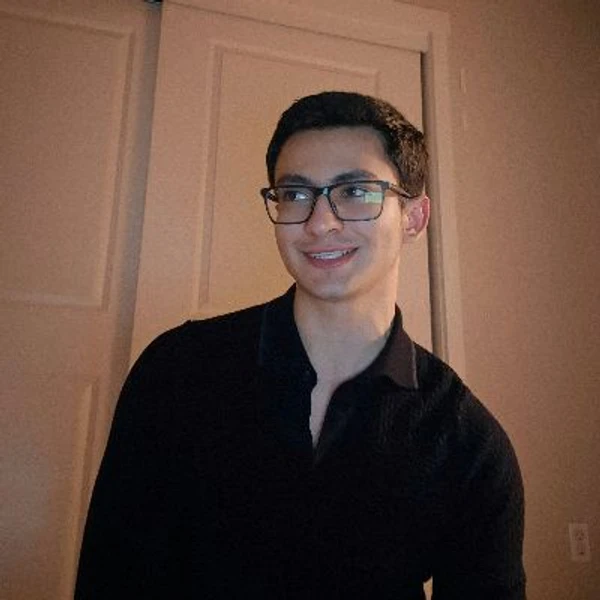
user profile avatar

Jainer Fonseca

1x

Finalist

General information

Hobbies & Interests

  • Poetry
  • Art
  • Speech and Debate
  • Writing
  • American Sign Language (ASL)
  • Anthropology
  • Business And Entrepreneurship
  • Cinematography
  • Coffee
  • Communications
  • Economics
  • Exploring Nature And Being Outside
  • Ethics
  • Fashion
  • Human Resources
  • Liberal Arts and Humanities
  • History
  • Human Rights
  • Photography and Photo Editing
  • Philosophy
  • Jiu Jitsu
  • Tennis

Reading

  • Philosophy
  • Politics
  • Anthropology
  • Economics
  • Humanities
  • Biography
  • Art
  • Classics
  • Cultural
  • Education
  • Family
  • Environment
  • History
  • Leadership
  • Law
  • Literature
  • Sociology
  • Social Science
  • Social Issues
  • Psychology

I read books daily.

Bio

Growing up in Nicaragua, I learned early that education, resilience, and hope can become acts of courage. At 17 years old, I was forced to leave my country and my family due to political persecution, carrying little more than uncertainty and the determination to rebuild my future. Before coming to the United States, I studied marketing in Nicaragua, but arriving here meant starting completely from zero. I began again by earning my GED, continuing through community college, and working tirelessly to create opportunities that once felt impossible. Today, I have been admitted to Oregon State University to pursue a degree in Managerial Economics with a minor in Business. Economics became more than an academic path for me. It became a way to understand people, communities, inequality, and the systems that shape everyday life. I am deeply passionate about social and financial analysis, and I hope to use my education to help identify economic gaps, guide others toward opportunities, and contribute to solutions that create stronger and more equitable communities. For me, education is not only personal achievement. It is the bridge between survival and purpose. Every step of my journey represents the sacrifices my family and I have made, and every opportunity I receive allows me to continue building a future not only for myself, but also for the people and communities I hope to serve.

Education

Oregon State University

Bachelor's degree program

2026 – 2028

Majors:
  • Business/Managerial Economics

Portland Community College

Associate's degree program

2024 – 2026

Majors:
  • Business/Managerial Economics

Miscellaneous

Desired degree level:
Master's degree program
Graduate schools of interest:
Oregon State University
Majors of interest:
Business/Managerial Economics, Human Resources Management and Services
Desired degree modality:
Hybrid, Online, Full-Time, In-Person
Medical school interest:
No

Career

  • HR & Accounting Assistant

    Human Resources · Rio Verde Plantas

    Jan 2023 – Jan 2026

  • HR & Office Coordinator

    Accounting · BAC BANK

    Jan 2022 – Jan 2023

  • Office Assistant

    Automotive · Casa Pellas

    Jan 2020 – Jan 2021

Miscellaneous

Dream career field:
Accounting, Financial Services, Human Resources, Political Science, Social Work
Dream career goals:
To help the society face economic/financial issues with better practices and policies
Work experience:
6 years
Has nursing license:
No

Future Interests

  • Advocacy
  • Politics
  • Volunteering
  • Philanthropy
  • Entrepreneurship
American Dream Scholarship
When I was a teenager, I thought my dreams were simple: attend university, find a stable job, buy a house in my hometown, and build a comfortable life close to my family. As I grew older, however, those dreams began to change, because the more I understood the needs of my family, my community, and eventually my country, the harder it became to imagine a future concerned only with my own success. From a young age, I felt drawn to helping people facing circumstances less fortunate than mine. With friends from high school, I volunteered with Telethon, supporting efforts to provide medical services to children with disabilities, later, I joined TECHO, an organization working with underserved communities and families in need of adequate housing, and I also participated in fundraising activities supporting an orphanage and care home associated with a church in my city. Those experiences introduced me to something that has remained with me ever since: the fulfillment of knowing that what I do can improve someone else's life. Then, in April 2018, Nicaragua changed, and so did I. Protests against the government were met with violent repression, affecting university students, religious leaders, older adults, and many others who demanded change. Over the following five years, political persecution and fear reached my family and people close to me, until my family found an opportunity to send one of their children somewhere safer: the United States. At twenty, I arrived in a new country with a different language, culture, and way of life, and unexpectedly, a new immediate family. I began living with my aunt and uncle, relatives on my father's side whom I had barely known before, yet they welcomed me with an amount of love, patience, and support I could never have anticipated. They became my guardians, teaching me how to navigate life in this country, from learning to drive to understanding the American education system, while constantly reminding me that my circumstances did not have to determine how far I could go. Their encouragement helped me complete my transfer degree at Portland Community College in approximately a year and a half, and today I attend Oregon State University, studying Managerial Economics and Business Administration. My path is still far from easy, particularly knowing that the people I love continue living under the political conditions that forced me to leave, but that reality has also given my education a purpose much larger than myself. My greatest ambition is one I do not say lightly: someday, I hope to serve Nicaragua as its president. I know rebuilding a country cannot happen overnight, nor can passion substitute for preparation, which is precisely why I am studying economics and business today, with the hope of later expanding my education into political science and international relations. I want to understand how economies grow, how institutions earn trust, how opportunities are created, and how responsible leadership can turn those lessons into something tangible for ordinary people. After everything I have experienced at a relatively young age, I have also developed a different understanding of the American Dream. To me, its greatest promise is not wealth, but freedom, the freedom to learn, disagree, participate, dream, and build a future without fear. That is the dream I am pursuing in America, and someday, I hope to help make that same freedom an ordinary reality for Nicaraguans. This scholarship would help me continue preparing for that future, one class, one opportunity, and one step at a time. Thank you so much!
Humanize LLC Gives In Honor of Shirley Kelley Scholarship
At twenty years old, I arrived in the United States after leaving Nicaragua because of political persecution, and my aunt and uncle became the family I needed while learning how to build a life in a country I barely understood. I was already an adult when I came to the United States, but being twenty did not mean I knew how to start over. I had left behind my parents, siblings, grandmother, friends, and almost everything that had been familiar to me. I knew I wanted to continue my education and build a meaningful future, but wanting those things and knowing how to achieve them in a completely different country were two very different things. That is where my aunt and uncle made an enormous difference in my life, they welcomed me into their home and became my guardians and immediate family here. They helped me understand American culture and taught me many of the practical things I needed to become independent, from learning how to drive to understanding how to navigate college in the United States. Eventually, that guidance helped me apply to Oregon State University, where I am currently pursuing a degree in Managerial Economics with a minor in Business Administration. But their influence on me goes beyond those practical things, they have consistently pushed me academically and encouraged me to take my goals seriously. When I have proposed something for my future, their response has rarely been to tell me why it might not work. Instead, they have helped me think about how I can make it happen. Having people around me who genuinely believe in my potential has made me more willing to believe in it myself. Their support has also changed my understanding of independence. I used to associate becoming independent with learning to do everything on my own. My experience has taught me something different: we become stronger partly because of what other people are willing to teach us, and eventually we have a responsibility to share that support with others. For me, that responsibility begins with my family. Much of my family still lives in Nicaragua, under circumstances that remain difficult and uncertain. One of the reasons I am so determined to finish my education and grow professionally is because I want to reach a point where I can create greater opportunities and stability for the people I love. My goals, however, have grown beyond my own family. I hope to become a business consultant and eventually use what I learn about economics, business, and organizations to make positive contributions both to my community in the United States and to my country of origin. My aunt and uncle have shown me how much someone's life can change when they have guidance, encouragement, and people willing to invest in their potential. I cannot repay their support by simply saying thank you. I want to honor it by becoming capable of providing that same support to others. Thank you so much!
Bright Lights Scholarship
There was a time when I truly believed my dream of earning a college degree had come to an end. I grew up in Nicaragua believing that if I worked hard, treated others with respect, and continued learning, I could build a meaningful career. That dream changed when my family and I became victims of political persecution. Because of my beliefs and my desire to live in freedom, opportunities that should have been earned through effort and merit were no longer available to me. The future I had planned was no longer mine to pursue. Leaving Nicaragua was the most painful decision of my life. I had to say goodbye to my grandmother, my parents, my younger brother, my sister, my friends, and the country that had shaped who I was. I was not leaving because I wanted a different adventure. I was leaving because I wanted the chance to live freely and continue building a future that had been taken away from me. When I arrived in the United States, I started from scratch. I had to adapt to a new language, a new culture, and a completely different educational system. Most importantly, I had to believe that it was still possible to dream again. For a long time, I never imagined I would have the opportunity to attend a university, much less one in the United States. Every acceptance letter, every completed course, and every passing semester has felt like proof that hope can survive even after life's most difficult moments. Today, I am pursuing a bachelor's degree in Managerial Economics with a minor in Business Administration at Oregon State University. Alongside my studies, I am building professional experience in Human Resources, where I have discovered how deeply I enjoy helping people, solving problems, and supporting organizations from within. Every experience continues to confirm that I chose the right path. My dream extends far beyond earning a degree. I hope to become a business consultant who helps organizations connect economic success with sustainability and people-centered leadership. I want to help businesses make thoughtful decisions that strengthen their employees, improve their operations, and positively impact the communities they serve. After completing my undergraduate degree, I also hope to continue studying International Relations and anthropology because understanding people, cultures, and global challenges will allow me to create more meaningful and lasting solutions. My journey has taught me that success is never achieved alone. It is built through sacrifice, perseverance, and the generosity of people who believe in your potential before you fully believe in yourself. My family, both in Nicaragua and in the United States, has reminded me every day that education is not simply a personal achievement. It is a way to honor the sacrifices others have made for us and to create opportunities for future generations. Receiving the Bright Lights Scholarship would mean far more than financial assistance. It would allow me to continue pursuing an education that once seemed impossible. It would reduce the burden of paying for college and allow me to focus more fully on learning, growing professionally, and preparing for a career dedicated to serving others. I often think about the young man who left Nicaragua believing that many of his dreams had been lost forever. If I could speak to him today, I would tell him that one day he would walk across a university campus in the United States, surrounded by people who believed in his potential. This scholarship would help ensure that the future he once thought impossible continues to become reality. Thank you so much!
Hines Scholarship
For many people, college is the next step after high school or the beginning of a professional career. For me, it represents something much deeper. Class I complete, every exam I pass, and every scholarship application I submit reminds me why I left everything I loved behind. My education is no longer just my dream; it has become the promise I made to my parents, my grandparents, my sister, my little brother, and to myself when I said goodbye in Nicaragua, believing that one day every sacrifice, every tear, and every mile separating us would have a purpose. College is the bridge between the life I was forced to leave behind and the future I hope to help build. I was born in Chinandega, Nicaragua, a country that taught me resilience long before I understood the meaning of the word. Growing up under an authoritarian government meant living with a but constant fear, where people chose their words, families discussed politics behind closed doors, talented professionals abandoned careers they had years building, and countless young people slowly accepted that achieving their dreams meant leaving the country they loved. The hardest part was never adapting to a new language or a different culture. It was leaving behind the people who gave meaning to my life, knowing they still wake up every morning facing the same uncertainty that forced me to leave, while I carry both the privilege and the responsibility of building the future they always hoped I could achieve. Starting over in the United States required rebuilding my life from the ground up. As both an immigrant and the first person in my immediate family to attend college, every scholarship application, financial aid form, degree requirement, internship search, and academic decision became another lesson I had to learn independently. There were moments when everything felt unfamiliar and overwhelming, yet every obstacle strengthened my conviction that education would become the powerful tool I could use to change not only my own future, but also the future of the communities I hope to serve. Today, I am pursuing a bachelor's degree in Managerial Economics with a minor in Business Administration because I want to understand the economic challenges that shape our societies and develop solutions that create opportunities. I aspire to help organizations become more sustainable economically, socially, and environmentally, believing that responsible leadership and ethical businesses can generate prosperity while improving people's lives. More importantly, I want to understand why some societies create opportunity while others lose it, and dedicate my career to solving those challenges through leadership, sound economic decision-making, and service. One day, I hope to return to Nicaragua and help rebuild the country that shaped me. Whether that journey leads me through business, economic policy, public service, or even the presidency, my purpose will remain unchanged: helping create a nation where families no longer have to separate because of fear, where opportunity exists without forcing people to abandon the ones they love, and where future generations can pursue their dreams without believing another country must become their home. Receiving this scholarship would represent much more than financial assistance. It would be an investment in a student who believes education has the power to transform pain into purpose, knowledge into service, and hope into meaningful change. Every lesson I learn brings me one step closer to returning home, embracing my family, and fulfilling the promise I made when I left Nicaragua: not simply to succeed for myself, but to help build a future where fewer people ever have to make the same heartbreaking choice I did. Thank you!
New Beginnings Immigrant Scholarship
When people hear the word immigrant, they picture someone arriving in a new country with a suitcase and a dream. For me, becoming an immigrant began earlier, the moment I realized that the country I loved could no longer offer me freedom to build the future. Leaving Nicaragua was never part of my plan. I wanted to grow professionally, build my career, remain close to my parents, watch my little brother grow up, celebrate birthdays with my sister, hug my grandparents every weekend, and contribute to the country that had given me my identity. Instead, I found myself making one of the most painful decisions of my life, leaving behind the people I love most in search of something that every person deserves: the opportunity to live freely and pursue their dreams. Living under an authoritarian government changes the way you experience everyday life. Fear becomes part of your routine, influencing conversations, decisions, and even your thoughts. You become careful what you say, who is listening, and how expressing an opinion might affect your future. I watched talented professionals abandon careers they had spent years building, entrepreneurs struggle to keep their businesses alive under constant uncertainty, and countless families experience separation because opportunity increasingly existed elsewhere. The most difficult part of my journey has never been adapting to a new language or a different culture. It has been knowing that my family still wakes up every day in the same environment I was forced to leave, while every milestone I achieve is accompanied by the hope that I am one day closer to embracing them again. Starting over in the United States required rebuilding my life from the ground up. As both an immigrant and the first person in my immediate family to attend college, every scholarship application, financial aid form, academic decision, and career opportunity became something I had to learn independently. There were moments of uncertainty, moments when success seemed impossibly far away, yet each obstacle strengthened my conviction that education would become the bridge between the life I left behind and the future I hope to help create. Today, I am pursuing a bachelor's degree in Managerial Economics with a minor in Business Administration because I want to understand the economic challenges that shape societies and learn how leadership can transform organizations into forces for positive change. My goal extends beyond understanding financial systems or improving efficiency. I want to solve complex economic problems, help organizations become more sustainable from economic, social, and environmental perspectives, and contribute to building communities where opportunity is created rather than lost. I believe that strong institutions, ethical leadership, and responsible businesses have the power to improve lives in lasting ways. My greatest aspiration is to one day return to Nicaragua and dedicate my knowledge, experience, and leadership to helping rebuild the country that shaped me. Whether that path leads me through business, economic policy, or public service, my purpose will remain the same: helping create a nation where young people no longer believe they must leave their families behind in order to develop their talents, where opportunity exists without fear, and where hope becomes something people can build at home rather than search for abroad. Receiving this scholarship would represent much more than financial assistance. It would allow me to continue pursuing an education that has become the foundation of my purpose, bringing me one step closer to reuniting with my family, serving my community, and contributing to a future where the next generation of Nicaraguans can choose to stay, grow, and dream in the country they proudly call home.
Bick First Generation Scholarship
When I left Nicaragua, I was not simply leaving the country where I was born. I was leaving my parents, my sister, my little brother, my grandparents, lifelong friends, and the life I had always imagined for myself. Like thousands of Nicaraguans, I did not leave because I wanted a different home. I left because I wanted the freedom to build a future. It is a decision no young person should ever have to make, but it became the defining moment of my life. Arriving in the United States meant starting over. Everything was unfamiliar, and every opportunity had to be earned from the ground up. As the first person in my immediate family to attend college, I entered a system that no one around me had experienced before. There was no one to explain financial aid, degree planning, scholarships, or internships. Every application and every academic decision required research, persistence, and faith that I was moving in the right direction. Although the path often felt uncertain, giving up was never an option. Growing up under an authoritarian government changed the questions I wanted to answer. I watched talented people leave the country they loved, businesses struggle under economic uncertainty, and families separated by circumstances beyond their control. Those experiences made me wonder why some nations create opportunity while others force people to search for it somewhere else. That curiosity eventually became my purpose. Today, I am pursuing a bachelor's degree in Managerial Economics with a minor in Business Administration because I want to understand how economic policy, responsible leadership, and strong organizations can improve people's lives. My education is preparing me to analyze problems, make informed decisions, and develop solutions that strengthen communities instead of dividing them. One day, I hope to return to Nicaragua and dedicate my life to helping rebuild the country that shaped me. Whether that journey leads me to public service, economic policy, or even the presidency, my purpose will remain the same: to help heal a nation whose people have endured fear, division, and lost opportunities for far too long. I want future generations to believe they can pursue their dreams without leaving behind the people they love. Receiving this scholarship would do far more than ease the financial burden of college. It would allow me to continue pursuing an education that represents hope not only for me, but also for my family and the community I hope to serve one day. As a first-generation college student, I am not simply earning a degree. I am building the knowledge, perspective, and leadership necessary to help create a future where fewer families must choose between staying together and chasing opportunity. Thank you so much!
Joe Gilroy "Plan Your Work, Work Your Plan" Scholarship
"Plan Your Work, Work Your Plan" perfectly describes the mindset that has guided every major decision in my life. My goals have never been based on wishful thinking. They have always been built on intentional preparation, continuous learning, and the willingness to start from scratch when necessary. When I left Nicaragua because of political persecution, I was forced to leave behind everything familiar, including my family, my education, and the life I had imagined. Although I could not control that chapter of my story, I could control what I did next. I decided that every step forward would become part of a larger plan. My long-term goal is to become a business consultant dedicated to helping organizations become more efficient, sustainable, and people-centered. I believe successful organizations should generate value not only for shareholders but also for employees, communities, and the environment. My vision is to help organizations design strategies that balance economic performance with ethical leadership, operational excellence, and long-term sustainability. To reach that goal, I first identified the knowledge I would need. I am currently pursuing a bachelor's degree in Managerial Economics with a minor in Business Administration at Oregon State University. Economics allows me to understand how organizations make decisions, allocate resources, and respond to changing markets. Business courses provide practical knowledge in leadership, finance, operations, and organizational strategy. Together, they create a strong analytical foundation for consulting. At the same time, I have intentionally pursued professional experience in Human Resources because every successful organization depends on its people. Working alongside professionals has shown me how communication, employee development, organizational culture, and thoughtful leadership directly influence business performance. These experiences have reinforced my belief that people are not simply part of an organization. They are its greatest competitive advantage. My education does not stop there. After completing my undergraduate degree, I plan to continue studying International Relations to better understand global markets, international cooperation, public policy, and the cultural dynamics that influence organizations around the world. I also plan to continue exploring anthropology because understanding human behavior, culture, and social systems is essential for creating solutions that truly work. Businesses do not operate in isolation. They exist within communities, cultures, and global systems that constantly shape their success. My plan extends beyond earning degrees. I want to continue writing articles about business, leadership, and life because writing challenges me to organize complex ideas and communicate them clearly. I also hope to learn from mentors, pursue professional certifications, and remain a lifelong student of business and human behavior. Every experience, whether inside a classroom or in the workplace, becomes another building block toward my larger vision. Looking back, rebuilding my life in a new country taught me something no textbook ever could: meaningful progress is achieved one deliberate step at a time. My plan has evolved, but its purpose has remained the same. I want to connect people, sustainability, and organizations in ways that create lasting value for everyone involved. Receiving the Joe Gilroy "Plan Your Work, Work Your Plan" Scholarship would help me continue following that roadmap. More importantly, it would reinforce the principle that has guided me from the very beginning: dreams become reality when they are supported by discipline, preparation, and a clear plan to turn them into action. Thank you so much!
Barbara Cain Literary Scholarship
Books have quietly shaped nearly every stage of my life. Looking back, I can trace my personal growth not only through the places I have lived or the experiences I have had, but through the authors who challenged my perspective when I needed them most. Each book arrived at the right moment, offering a lesson that stayed with me long after I turned the final page. The first book I remember changing my life came before I was ten years old. It was The Man in Search of God. At an age when most children were simply learning about the world around them, I found myself fascinated by the idea that people from different cultures, languages, and traditions could all share the same desire to understand something greater than themselves. That book sparked my curiosity about humanity. Instead of teaching me what to think, it taught me to ask questions, appreciate different beliefs, and approach people with respect and an open mind. As I grew older, my reading became more diverse. One of the books that deeply influenced me was Gestapo by an Italian author and professor. Reading about authoritarianism, fear, and the consequences of unchecked power gave me a deeper appreciation for democracy, justice, and the responsibility every individual has to protect human dignity. As someone who would later leave my own country because of political persecution, those lessons became painfully personal. Another author who profoundly shaped my thinking was Friedrich Nietzsche. His relentless criticism of accepted ideas challenged me to question assumptions, examine my own values, and recognize that growth often begins with intellectual discomfort. Although I did not always agree with his conclusions, I admired his willingness to confront difficult questions without fear. Not every influential book in my life focused on philosophy or history. During some of my most vulnerable moments, I found comfort in the poetry of Alejandra Pizarnik. Her writing gave words to emotions that often felt impossible to express. She reminded me that vulnerability is not weakness, but a reflection of our humanity. Later, Isabel Allende's Aphrodite: A Memoir of the Senses encouraged me to explore another important part of being human: identity, intimacy, and the beauty of understanding ourselves without shame. Her work approached these topics with warmth, humor, and honesty, teaching me that personal growth includes embracing every part of who we are. Today, reading continues to shape the person I am becoming. Inspired by the authors who influenced me, I write my own articles about business and life, along with poetry that allows me to reflect on my experiences. Although my words may never reach as many readers as theirs have, I hope they can encourage someone to think differently, find hope during a difficult season, or simply feel understood. The books that transformed my life taught me that ideas have the power to outlive generations, and I hope to contribute, in my own small way, to that enduring conversation. Thank you so much!
Stephan L. Wolley Memorial Scholarship
I am a first-generation college student from Nicaragua who is working to build a meaningful future through education and service. I am currently pursuing a bachelor's degree in Managerial Economics with a minor in Business Administration at Oregon State University while beginning my career in Human Resources. Through these experiences, I hope to continue learning how to support people, strengthen organizations, and make a positive difference in the communities I serve. My journey to the United States began with one of the most painful decisions of my life. Because of political persecution in Nicaragua, I was forced to leave behind my entire life, my country, and the people who had always been my foundation. I had to say goodbye to my grandmother, my father, my mother, my younger brother, and my sister. Leaving them was heartbreaking, and starting again in a new country brought uncertainty, fear, and many difficult adjustments. However, it also gave me the opportunity to pursue safety, education, and a future shaped by purpose rather than persecution. Today, I live with my aunt, uncle, and cousin, who have become an essential part of my support system in the United States. Our family dynamic is based on communication, encouragement, and teamwork. We support one another not only in our professional and academic goals, but also in becoming better individuals. When one of us makes a major decision or changes a routine, we consider how it will affect everyone in the household. If a plan does not work for one person, we communicate openly and adjust it until we find a solution that supports the whole family. Living in this environment has taught me that family is not only about sharing a home. It is about listening, adapting, and helping each other move forward. That responsibility motivates me every day to keep progressing. My family’s encouragement has been especially important throughout my education. I earned my transfer degree from Portland Community College in just over a year, an accomplishment that required discipline, organization, and persistence. I am now continuing my education at Oregon State University, where I study Managerial Economics and Business Administration. These fields allow me to combine my interest in economics, organizational decision-making, leadership, and the human side of business. I recently began an exciting new position as a Bilingual Human Resources Assistant. This opportunity has allowed me to continue developing skills in employee support, communication, problem-solving, and workplace operations. As an immigrant and bilingual professional, I understand how meaningful it is for employees to feel heard, respected, and included. I hope to use my experiences to help create workplaces where people from different backgrounds can succeed. My long-term goal is to become a business consultant focused on organizational efficiency, sustainability, and people-centered leadership. I want to help companies improve their systems while ensuring that growth does not come at the expense of employees or communities. I believe strong organizations are built when strategy and compassion work together. Receiving the Stephan Laurence Wolley Memorial Scholarship would help reduce the financial pressure of continuing my education and allow me to remain focused on my academic and professional development. More importantly, it would support a journey built on family, resilience, and service. I want my future to honor both the family I left in Nicaragua and the family supporting me in the United States. My story began with having to leave everything familiar behind, but I am determined to make it a story about everything I was able to build afterward. Thank you so much!
Olivia Rodrigo Fan Scholarship
There was a season when Olivia Rodrigo's music became the soundtrack to mornings that looked surprisingly successful from the outside. I had meaningful work, I was studying Managerial Economics with a minor in Business Administration, writing philosophy and business articles, and slowly building the future I had dreamed about after leaving Nicaragua. Yet every time I listened to songs like "brutal" or, more recently, "expectations" and "less," I realized success and softness don't always arrive together. It's funny because people often assume that if life is moving forward, your heart automatically catches up. Mine was still quietly wondering what it would feel like to fall in love again. One idea from Olivia's newest album stayed with me more than anything else. Love isn't portrayed as the opposite of sadness, it's portrayed as something brave enough to exist alongside it. I realized I wasn't longing for some perfect romance or dramatic movie ending. I simply wanted a reminder that, beneath deadlines, goals, and responsibilities, there was still a person capable of loving deeply. Sometimes I joke that I'd even welcome a little heartbreak, not because I enjoy pain, but because a love scar would remind me that my heart still knows how to feel. In a world that constantly rewards productivity, efficiency, and achievement, remaining emotionally available almost feels rebellious. Olivia's songs gave me permission to believe that ambition doesn't have to come at the expense of tenderness. Choosing to study Managerial Economics with a minor in Business Administration has surprised me in the best possible way because it never pulled me away from my creative side, it actually gave it a new language. The more I learn about organizations, incentives, and decision-making, the more I find myself writing about them, asking questions, and searching for the human stories hidden behind numbers and strategies. Olivia's music reminds me that people are wonderfully complex, and I think that's exactly what draws me to both business and storytelling. One helps me understand how organizations work, while the other reminds me why they exist in the first place: because every policy, every decision, and every strategy ultimately shapes the lives of real people. During the day I enjoy solving problems, improving processes, and helping people grow through my work in Human Resources. Later that evening I might write a poem, lose myself in philosophy, or stare at a blank page until a business article begins to make sense. Those parts of me don't compete with each other, they keep each other alive. The analytical side helps me build organizations; the creative side reminds me why people matter in the first place. Today, whenever "it's brutal out here" comes on, I still laugh because it feels strangely accurate. Adulthood can absolutely be brutal sometimes, but Olivia's music has taught me something I didn't expect: resilience isn't about becoming emotionally untouchable. It's about protecting the part of yourself that still believes in love, still chooses kindness, and still hopes to share life with someone someday, even while building a career, chasing dreams, and becoming the strongest version of yourself. Maybe that's why her songs continue to resonate with me. They remind me that behind every achievement is still a person trying to love, to create, to dream, and to remain wonderfully human in a world that often celebrates everything except that. And if I ever end up with a little love scar along the way, I think I'll smile at it, not because it hurt, but because it will remind me that no matter how ambitious I become, my heart never stopped showing up too.
Zelaya Creativity Scholarship
Every morning, before the coffee finished brewing, I opened the same notebook. It wasn't because I had anything extraordinary to write, and honestly, most mornings I didn't. Some pages only held a sentence, a question, or a random observation like, "Why do people always sit in the same chair?" or "What if routines are just Standard Operating Procedures for humans?" My friends joked that I was taking breakfast far too seriously, my roommate once asked if I had accidentally turned my life into a spreadsheet, and maybe, from the outside, they weren't completely wrong. Looking back, it's funny that something as ordinary as a morning routine became one of the biggest creative projects of my life. The funny thing is that the conflict never looked like one. Nobody writes dramatic stories about making the bed, reading ten pages of a book, or spending fifteen quiet minutes thinking before the day begins. Those things seem almost invisible, the kind of details people skip because they're too ordinary to matter. Even I wondered if I was simply overthinking something that wasn't broken. Still, every few weeks I found myself making one tiny adjustment, moving reading before breakfast instead of after, replacing scrolling with journaling, adding a short walk, removing something that no longer served me. At some point I realized I wasn't just following a routine anymore, I was quietly designing a system. Businesses rely on Standard Operating Procedures because they reduce unnecessary decisions, improve consistency, and create more room for solving meaningful problems. I began wondering if people weren't so different. What if a routine could do for a person what a well-designed process does for an organization? Months passed before I noticed the answer. The notebook had quietly started answering questions I hadn't even asked. My poems became philosophy essays, my philosophy essays slowly became business articles, and the same curiosity that shaped my mornings followed me into my studies in Managerial Economics. I found myself recognizing patterns everywhere, in organizations, in conversations, in leadership, and in the way different departments communicate with one another. Professionally, that perspective strengthened my passion for Human Resources because understanding people often begins with recognizing the patterns behind their behaviors, motivations, and interactions. The routine hadn't simply organized my mornings, it had changed the way I learned, worked, and connected with others. By giving structure to the small, repetitive parts of my day, it freed my mind to focus on the questions that mattered most. The purpose of a routine, I discovered, isn't to make every day look the same, it's to create enough stability that every day has room to become different. Looking back, I don't think the most creative thing I've ever built was a poem, a philosophy essay, or even a business article. It was a routine that quietly made room for all of them. People often wait for inspiration before creating something meaningful, but I've learned that creativity also appreciates consistency. Sometimes the smallest, most ordinary habits become the invisible architecture behind our biggest ideas. The conflict everyone else considered trivial turned out to be the foundation for the person I continue becoming, and that's why I'll probably never underestimate the quiet power of an ordinary Tuesday morning again. Thank you so much for reading and for this amazing opportunity!
Charles B. Brazelton Memorial Scholarship
First, I want to say how sorry I am for the loss of Charles B. Brazelton. Reading his story reminded me that behind every statistic about gun violence, there is a family, a future, and countless dreams that suddenly stop. Although our circumstances are different, gun violence has touched my life too. When I was 22, I had to leave my family and my home in Nicaragua because of political persecution. I still remember waking up one morning and finding a bullet embedded in the front door of our house. It wasn't random, it was a warning. A simple piece of metal completely changed the direction of my life, and a few months later I left my country carrying little more than hope that I could build a safer future somewhere else. As for my "awkward" thing... I honestly think my brain is constantly looking for patterns. I notice them everywhere, in business, philosophy, human behavior, animals, history, and even in ordinary conversations. I love discovering that ideas from one completely different world somehow explain another. Over time, I've realized that this way of thinking has quietly shaped who I am. Academically, it has strengthened my path in Managerial Economics because I naturally look for relationships between systems, incentives, and decision-making. Professionally, it has helped me grow in Human Resources, where understanding patterns in communication, motivation, and workplace dynamics often matters just as much as understanding policies. Even in everyday life, it has made interacting with people more meaningful because I'm always curious about what experiences, values, or emotions might be behind someone's actions. I also have three nervous tics that some people find a little unusual. I couldn't even tell you exactly when they started, but they've become part of who I am, and honestly, I love them. Rather than trying to hide them, I've learned to see them as small reminders that none of us are meant to fit into the exact same mold. If there's one lesson I've learned, it's that being different doesn't always have to be loud. Sometimes it simply means noticing what others overlook, asking one more question, or finding connections where no one expected them. Those small habits have shaped the student I am, the HR professional I'm becoming, and the person I hope to continue growing into. I don't think my "awkward" thing is something I need to fix anymore. I think it's one of the reasons I genuinely enjoy learning, connecting with people, and finding purpose in the work I do. Finally, thank you for creating a scholarship that celebrates individuality while honoring Charles B. Brazelton's life and legacy. It would have been easy to let his story be remembered only through tragedy, but instead, you chose to invest in students, their dreams, and the futures they hope to build. As someone whose life has also been shaped by violence, that decision carries a special meaning for me. It reminds me that even after fear and loss, we can still choose to create opportunities, encourage others, and believe in a better future. Thank you for considering my application and for helping students continue writing stories that, hopefully, will make a positive difference in the lives of others.
Jainer Fonseca Student Profile | Bold.org