user profile avatar

Jaden Pierce

1x

Finalist

Bio

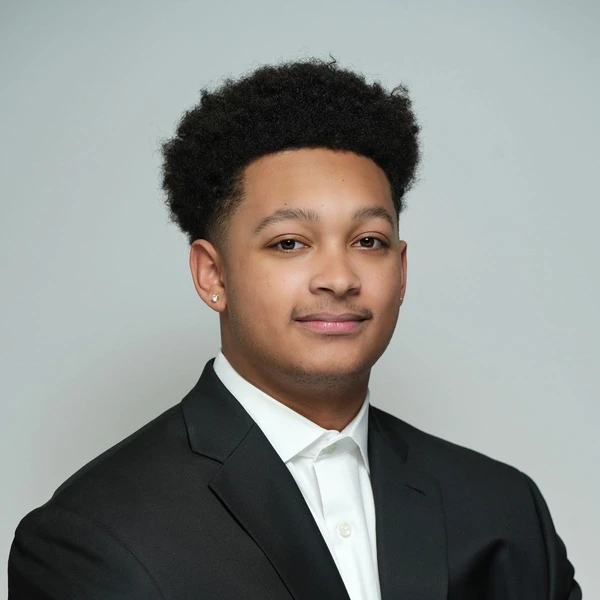
Hello, my name is Jaden Pierce, a rising sophomore at High Point University. Currently studying Business Administration and minoring in Entrepreneurship and Finance. I’m a proud Eagle Scout and love giving back to my community.

Education

High Point University

Bachelor's degree program
2025 - 2029
  • Majors:
    • Business Administration, Management and Operations
  • Minors:
    • Finance and Financial Management Services
Saint John Vianney High Sch

High School
2021 - 2025

Miscellaneous

  • Desired degree level:

    Bachelor's degree program

  • Graduate schools of interest:

  • Transfer schools of interest:

  • Majors of interest:

    • Business, Management, Marketing, and Related Support Services, Other
    • Finance and Financial Management Services
  • Not planning to go to medical school
  • Career

    • Dream career field:

      • Automotive
    • Dream career goals:

    • Lifeguard

      Hazlet Pool Club
      2023 – 20252 years
    • Dinning Room Busser

      Old Glory
      2025 – 2025

    Sports

    Wrestling

    Varsity
    2023 – 20252 years

    Public services

    • Volunteering

      Veterans Home — Assisting in transportation and activities for veterans living in the facility.
      2023 – 2025

    Future Interests

    Volunteering

    Philanthropy

    Entrepreneurship

    Bick First Generation Scholarship
    Being a first-generation student means walking into rooms where everyone else seems to already know the rules. Freshman year, I didn't know what "office hours" were for, I didn't know you could email a professor just to introduce yourself, and I definitely didn't know that "financial aid package" and "what you actually owe" are two very different numbers. Nobody in my family could tell me, because nobody had done this before. I was the experiment. That was terrifying at first. I remember sitting in my dorm room during the first week, watching everyone else's parents text them study tips and advice about which classes to drop, and feeling like I was building the plane while flying it. But somewhere around October of freshman year, something shifted. I stopped seeing "nobody showed me how" as a disadvantage and started seeing it as proof that I could figure things out on my own. I started going to office hours just to ask questions, even dumb ones. I found a couple of upperclassmen who basically became my unofficial guides. I learned how to read a syllabus like it was a legal document, because for me, it kind of was. Money has been the other constant weight. I work every summer, not for extra spending cash, but because tuition doesn't pause for a "gap year to figure things out." I've had to get genuinely good at budgeting, not the theoretical kind you read about, but the real kind where you're checking your account before you buy groceries. That's actually turned into something I care about now. I've spent a lot of time this past year learning about personal finance, not because it's trendy, but because I don't want to spend my twenties recovering from decisions I made at nineteen without understanding them. What drives me is pretty simple: I want to be the reason the next person in my family doesn't feel as lost as I did. I want my little cousins to grow up thinking college is just a normal next step, not some mysterious mountain only "other people" climb. I'm only a sophomore, so I don't have it all figured out yet. I'm still deciding exactly where my major is going to take me,but I know I want a career where I'm building something stable, both for myself and for the people coming up behind me. This scholarship wouldn't just help me pay for next semester. It would take some of the pressure off so I can actually focus on learning instead of constantly doing math in my head about what I can afford. It would mean one less thing standing between me and the version of myself I'm trying to become the first in my family to finish, but hopefully not the last.
    Anthony McPherson Memorial Automotive Scholarship
    The night my cousin called me crying from the side of a highway, I did not fully understand what a DUI meant. I knew it stood for "driving under the influence," but I had never considered what it actually looked like. The flashing red and blue lights, the handcuffs, the phone call to our grandmother at two in the morning. He was twenty-three. He had made a choice that would follow him for years. That night changed the way I think about alcohol, responsibility, and the very real consequences that ripple outward from a single decision behind the wheel. From a moral standpoint, driving under the influence is a violation of the social contract we share with everyone on the road. When we get behind the wheel, we agree to operate that vehicle safely and protect the lives of others around us. Alcohol impairs judgment, slows reaction time, and distorts perception. Many people convince themselves they are "fine to drive." This self-deception is not just a personal failing; it puts innocent people at serious risk. Pedestrians, cyclists, and other drivers have no say in the choice an impaired driver makes, which is what makes drunk driving such a profound ethical breach. It prioritizes personal convenience over human life. Technically, the data is devastating. According to the National Highway Traffic Safety Administration, drunk driving claims roughly 10,000 lives in the United States every year — nearly one death every fifty minutes. Blood alcohol concentration (BAC) at just 0.08%, the legal limit in most states, already reduces coordination and impairs the ability to track moving objects. Modern prevention strategies address this on multiple fronts: ignition interlock devices, which require a driver to pass a breathalyzer test before the car will start, have proven highly effective in reducing repeat offenses. Ride-sharing apps have made sober alternatives more accessible than ever, and sobriety checkpoints serve as both a deterrent and a detection tool. These solutions work best when paired with consistent education starting early in adolescence. Perhaps what gets discussed least, though, is what DUIs do to families. My cousin lost his job because he could not drive to work. My grandmother, who had raised him, spent months navigating the court system alongside him. His younger sister — who looked up to him — grew quiet and withdrawn. The financial strain of legal fees, the emotional weight of shame, and the slow erosion of trust within a family unit are costs that never show up in a statistic. Friends distance themselves. Relationships crack under the pressure of guilt and disappointment. The person who made the choice suffers, but so does every person who loves them. Prevention, ultimately, has to be cultural as much as it is legal or technological. As a college student, I see the pressure to drink at social events every weekend. I also see people making smarter choices. Designating drivers, splitting cab fares, simply deciding it is not worth it. The more we normalize those choices, the safer our roads become. My cousin paid a steep price for one night's poor judgment. I carry that memory with me as both a warning and a motivation to keep talking about why none of us should ever get behind the wheel impaired.