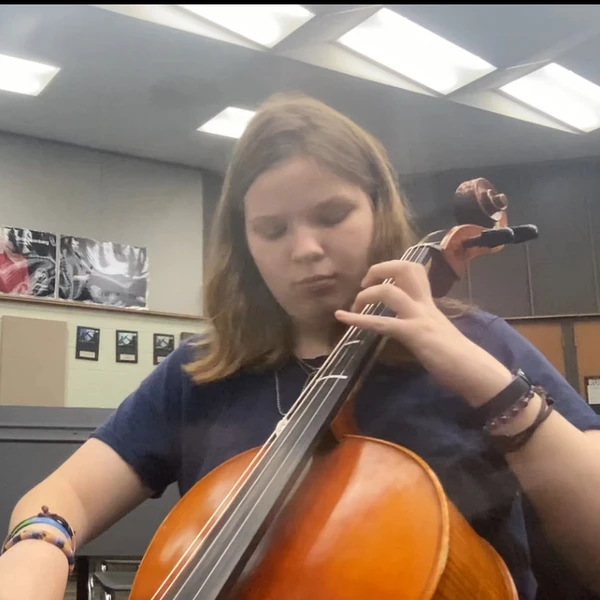
Hobbies and interests
Violin
Cello
Viola
Music
Music Composition
American Sign Language (ASL)
Songwriting
Singing
Choir
Church
Reading
Literary Fiction
Religion
Christian Fiction
Folklore
Education
Family
Music
Spirituality
I read books multiple times per week
US CITIZENSHIP
US Citizen
LOW INCOME STUDENT
Yes
FIRST GENERATION STUDENT
Yes
Jaden Goodwin
1x
Finalist
Jaden Goodwin
1x
FinalistBio
My name is Jaden Goodwin, and I am a student at Aquinas College with a mission to make music an inclusive home for everyone. Growing up with Childhood Apraxia of Speech, I learned early on that communication happens in many ways; music was the place where I finally felt I belonged. This personal journey led me to master the violin, viola, and cello, and even learn ASL to ensure I can reach every student.
My commitment to service is the heartbeat of my work. Whether I am mentoring youth at my church, leading as a Peer Minister and NHS member, or spending time supporting the elderly at my mother’s workplace, I strive to lead with empathy. I know firsthand how it feels to struggle to be heard, and I want to use my education to ensure no one feels left behind. My goal is to become a music teacher who uses the power of strings and inclusive communication to help every student find their voice.
Education
Aquinas College
Bachelor's degree programMajors:
- Education, General
- Music
GPA:
3.6
Wayland High School
High SchoolGPA:
3.7
Miscellaneous
Desired degree level:
Bachelor's degree program
Graduate schools of interest:
Transfer schools of interest:
Majors of interest:
- Education, Other
- Music
Career
Dream career field:
Music
Dream career goals:
Music teacher
Caregiver
Rehoboth2025 – 2025
Research
Computer/Information Technology Administration and Management
Ap stats — Reascher2025 – 2025
Arts
Aquinas choir
Music2026 – PresentAquinas chamber string
Music2025 – PresentWayland union high school
Music2021 – 2025
Public services
Volunteering
Rehobooth — Volunteer2010 – PresentVolunteering
St. Sebastian religious education — Vbs crew leader2018 – PresentVolunteering
St. Sebastian youth ministry — Pier minister2023 – 2025Volunteering
NHS — Club members2024 – 2025
Future Interests
Volunteering
Mad Genius Scholarship
As a first-year music education major and composer, I believe music is a powerful medium to communicate complex ideas, deep emotions, and unique perspectives that cannot always be fully expressed through spoken words. My submission, MAD GENIUS, is an exploration of creativity, curiosity, and the courage required to think beyond traditional artistic boundaries. This piece represents the deeply personal journey of transforming an unusual and chaotic spark of an idea into something meaningful, organized, and expressive.
I chose to write this composition specifically for solo violin and piano because these two instruments reflect two contrasting yet connected sides of the creative process. The violin represents the individual voice of the creator—searching, questioning, experimenting, and discovering new sonic possibilities. As a violinist myself, I wanted the instrument to represent the human side of creativity: the moments of uncertainty, excitement, frustration, and discovery that occur while developing an idea. Conversely, the piano represents the environment surrounding that creator, providing structure, momentum, and unexpected harmonic challenges. Together, these instruments create a conversation between imagination and reality.
Through shifting meters, contrasting textures, dramatic dynamic changes, and moments of both raw chaos and striking beauty, MAD GENIUS captures the unpredictable and energetic nature of invention. To evoke the atmosphere of a creative “studio lab,” the musical narrative follows three distinct phases of development. The piece begins with curiosity and uncertainty, as if an experiment is just beginning. It then grows into a frantic whirlwind of rhythmic energy and musical exploration, representing the endless possibilities and challenges of the creative process. Finally, the chaos transforms into a moment of clarity and triumph, revealing the final discovery that emerges from the experimentation.
My ultimate goal with MAD GENIUS was not simply to write a technically impressive or virtuosic piece for the sake of complexity. Instead, I wanted to tell a cohesive story about how imagination, persistence, and the willingness to take risks can lead to extraordinary results. As a future music educator, this composition represents my belief that every student has a unique creative voice waiting to be discovered. Through my teaching and my own music, I hope to encourage students to embrace curiosity, explore new ideas, and confidently share their individuality through the power of music.
Barbara Cain Literary Scholarship
Books have deeply shaped how I view courage, resilience, and the responsibility to use my unique gifts in service of others. Every story I have read has left a lasting imprint on my character, ultimately influencing both who I am today and the kind of music educator I hope to become. While each book tells a different story, they all share common themes of growth, perseverance, and finding purpose. Those themes have become guiding principles in both my education and my future career.
Rick Riordan’s Percy Jackson and The Heroes of Olympus series taught me that everyone possesses a distinct blend of strengths and weaknesses, and that true success comes from collaboration. Although many of the characters begin their journeys feeling isolated or misunderstood, they eventually discover that their differences become their greatest strengths when they work together. As a future music educator, this lesson reminds me that every student deserves a classroom where they feel accepted, valued, and encouraged to be themselves. A music ensemble reflects this idea perfectly. No single instrument can perform an entire symphony alone. Every musician contributes something unique, and when those individual talents come together, they create something far greater than any one person could accomplish. I want my classroom to foster that same sense of belonging and teamwork.
Likewise, The Trials of Apollo showed me that genuine growth requires humility and perseverance. Apollo begins as a proud, self-centered god, but through failure, loss, and hardship, he learns compassion, responsibility, and sacrifice. His journey reminds me that mistakes are not signs of failure but opportunities to improve. As both a musician and future teacher, I understand that growth comes from persistence. Every rehearsal includes wrong notes, missed rhythms, and moments of frustration before improvement occurs. I hope to model this mindset for my students by encouraging them to embrace challenges, learn from setbacks, and celebrate progress rather than perfection.
Reading The Divine Comedy encouraged me to reflect on morality, redemption, and the lasting impact of our choices. As a Catholic, this classic work strengthened my faith by illustrating that personal transformation and spiritual growth often emerge through life’s greatest challenges. It reminded me that our character is shaped not only by success but also by how we respond to adversity. This perspective inspires me to approach teaching not simply as a profession, but as a vocation rooted in compassion, integrity, and service. I hope to be the kind of educator who encourages students not only to become better musicians but also better people.
Finally, The Absolutely True Diary of a Part-Time Indian taught me about overcoming obstacles through education, determination, and hope. The novel reinforced my belief that a student’s background or circumstances should never determine their future. Every student deserves someone who believes in their potential, even when they struggle to believe in themselves.
Together, these books have strengthened my commitment to creating an inclusive classroom where every student feels seen, supported, and inspired. Through music, I hope to teach far more than technical performance skills. My ultimate goal is to help students develop confidence, resilience, empathy, and a sense of belonging that will remain with them long after they leave my classroom. If I can inspire students the way these books have inspired me, I will know that I have made a meaningful difference in their lives.
J&Y Law Yahouda Yahoudai Service Scholarship
Growing up, I learned that a strong community is built through ordinary people who choose to care for others. Whether that means offering encouragement, volunteering time, or simply showing up when someone needs help, I have seen how small acts of service can leave a lasting impact. These experiences have shaped my desire to continue serving others throughout my life and future career.
One of the most meaningful ways I have contributed to my community has been through my church. My parish has always been more than a place of worship—it is a family that supports people through every stage of life. I have volunteered during Vacation Bible School, helping children learn about their faith through lessons, games, crafts, and music. I have also served as a peer leader during middle school retreats, where I helped younger students feel welcomed, listened to their concerns, and encouraged them to build meaningful friendships. These experiences taught me that leadership is not about being in charge; it is about making others feel valued and included.
Service has also extended beyond my church. Throughout high school, I volunteered at a local senior living community where my mother works. Spending time with residents reminded me that many people simply need someone willing to listen. Whether I was participating in activities, talking with residents, or offering companionship, I learned that kindness and patience can brighten someone’s day in ways we often underestimate. Those conversations helped me appreciate the wisdom and life experiences of older generations while reinforcing the importance of treating every person with dignity and respect.
In school, I sought opportunities to serve through leadership and involvement. As a member of the National Honor Society, I participated in community service projects that benefited people beyond my immediate circle. Today, as a freshman music education major at Aquinas College, I continue serving as the secretary of the student chapter of the National Association for Music Education. This role has allowed me to support fellow future educators while helping strengthen our campus community through collaboration and service.
These experiences have inspired my long-term goal of becoming a music teacher in an underfunded public school. I know that music can become a safe place for students who may be struggling with challenges at home, in school, or within themselves. I want to create a classroom where every student feels welcomed, respected, and encouraged to discover their own voice. My goal is not only to teach notes and rhythms but also to build confidence, foster creativity, and create a sense of belonging that extends beyond the music room.
Community is not built by one extraordinary moment. It is built through consistent acts of compassion that remind people they matter. Whether I am serving in my church, supporting senior citizens, helping classmates, or preparing to become a teacher, I strive to strengthen the communities around me one person at a time. I believe that investing in others creates lasting change, and I am committed to continuing that work throughout my life.
Bright Lights Scholarship
I am the first person in my family to attend college. That accomplishment represents more than earning a degree—it represents years of perseverance, growth, and the belief that education can change a life. As a first-generation college student, I have learned that success is not simply about reaching a destination. It is about creating opportunities for yourself and for those who come after you.
Growing up with a speech impediment was one of the greatest challenges I faced. Communicating with others did not always come easily, and there were times when I felt frustrated or different from my peers. In sixth grade, however, I discovered something that changed my life: music. When I joined orchestra and picked up the violin, I found a way to express myself that did not depend on words alone. Music became my voice, my confidence, and my connection to others.
Today, I am pursuing a degree in Music Education at Aquinas College. My dream is to become a music teacher who helps students discover their own strengths through music. I believe every child deserves access to music education, regardless of their background or circumstances. Music teaches far more than notes and rhythms—it teaches discipline, creativity, teamwork, and self-confidence. Most importantly, it gives students a place where they can belong.
My long-term goal is to teach in public schools and advocate for strong music programs, especially in communities where arts education is often overlooked or underfunded. I want to create a classroom where every student feels valued and supported. As someone who understands what it feels like to struggle with communication, I hope to help students find their own voices and realize their potential.
This scholarship would help me continue pursuing that goal by reducing the financial burden of tuition, books, private lesson fees, certification costs, and other educational expenses. More importantly, it would allow me to focus on becoming the best educator I can be through my studies, choir participation, chamber strings, and leadership opportunities.
This scholarship is more than financial assistance. It is an investment in the students I hope to teach one day. The support I receive now will help me create opportunities for future generations of young musicians. My goal is to help students find their “second voice” through music, just as I found mine. With this scholarship, I can continue building a future dedicated to education, service, and the transformative power of music.
Bick First Generation Scholarship
Being a first-generation college student means stepping into unfamiliar territory while carrying the hopes of those who came before me. No one in my immediate family had the experience of navigating higher education, so many parts of the process—from applications and financial aid to choosing a major and planning a career—were things I had to learn on my own. While that journey has been challenging, it has also taught me independence, deep perseverance, and the critical importance of asking for help when I need it.
One of the greatest personal challenges I have faced is overcoming a speech impediment. Growing up, I often struggled to communicate and was bullied because of the way I spoke. There were times when I felt isolated from my peers and doubted my own abilities. Instead of letting those experiences define me negatively, I found my confidence through music. Music became a sanctuary where I could express myself without fear of judgment. Through orchestra, choir, and performance opportunities, I discovered that my voice was defined by much more than just the words I could say.
Today, I am a freshman at Aquinas College majoring in Music Education. My dream is to become a music teacher and help students find their own unique voices through music, especially those who feel overlooked or struggle to fit in. I want to create classrooms where every student feels valued, supported, and fully capable of success. As someone who has experienced these challenges firsthand, I deeply understand how powerful a caring, empathetic teacher can be in a young person's life.
What drives me is the unwavering belief that music can change lives. It builds confidence, fosters community, and gives students a profound way to express themselves. I hope to bring those life-changing opportunities to future generations, particularly in schools where arts programs may be underfunded or overlooked.
This scholarship would help me continue my journey by easing the financial burden of college. As a music education major, I face expenses that extend far beyond standard tuition, including mandatory private lessons, educational fees, and specialized materials needed to develop as an effective future teacher. Receiving this support would allow me to focus more fully on my academic studies, my musical growth, and my ultimate goal of serving students through education.
Being first-generation is not just a label in my story—it is my ultimate source of motivation. Every step I take in college is a step toward creating new opportunities for myself, my family, and the future students I hope to inspire someday.
RonranGlee Literary Scholarship
Paragraph Selection
“Death could scarce be more bitter than that place! But since it came to good, I will recount all that I found revealed there by God’s grace.” — Dante Alighieri, Inferno, translated by John Ciardi
Essay
The underlying meaning of Dante’s statement is that suffering becomes meaningful when it leads to wisdom, personal growth, and service to others. Although Dante describes an experience so painful that “death could scarce be more bitter,” he ultimately chooses to focus on the good that emerged from it. The passage suggests that hardship is not valuable because it causes pain, but because it can reveal truths that shape a person’s character and inspire them to help others. This idea resonates deeply with my own life because my experiences with a speech impediment, bullying, and the challenges of being a first-generation college student have helped me discover my purpose as a future music educator.
Dante begins by acknowledging the bitterness of his journey. The phrase “Death could scarce be more bitter than that place!” immediately communicates the severity of his suffering. However, the most important word in the passage is “but.” With that single word, Dante shifts the focus from pain to purpose. He writes, “But since it came to good, I will recount all that I found revealed there by God’s grace.” Rather than dwelling on the suffering he endured, Dante chooses to share what he learned. His experience becomes meaningful because it produced wisdom worth passing on to others.
This distinction is central to understanding the passage. Dante does not glorify suffering. Instead, he argues that hardship can become a source of growth when it reveals important truths. The value lies not in the pain itself but in what a person learns from it. By recounting his experience, Dante transforms something bitter into something beneficial. He uses his journey to guide others toward a deeper understanding of themselves and the world around them.
I see a similar lesson reflected in my own life. Growing up with a speech impediment often made communication difficult. There were times when I struggled to express myself and felt different from my peers. In sixth grade, I experienced bullying because of the way I spoke. Those moments were painful and discouraging, and at the time, it was difficult to see any good that could come from them. Like Dante’s journey, they felt bitter and isolating.
However, those experiences ultimately revealed important truths about resilience, empathy, and the importance of belonging. Because I knew what it felt like to struggle to communicate, I became more aware of the challenges that others face. Rather than allowing those experiences to define me negatively, I learned to persevere through them. Looking back, I can see that the difficulties I faced helped shape the person I am today. They taught me to value inclusion, patience, and compassion—qualities that I hope to bring into my future classroom.
One of the greatest revelations in my life came through music. When I joined my school’s orchestra program in sixth grade, I discovered a place where I could express myself without relying entirely on words. Through the violin and later the cello, I found confidence, community, and purpose. Music became a second voice for me. Just as Dante’s journey revealed truths that he felt compelled to share, music revealed to me that communication can take many forms. A melody can express emotions, ideas, and experiences in ways that transcend spoken language.
The phrase “revealed there by God’s grace” is equally important. Dante recognizes that understanding often comes through experiences that are difficult to comprehend while they are happening. As a Catholic, I connect strongly with this idea. There were many moments when I questioned why I faced certain obstacles, especially when I felt isolated because of my speech impediment. Yet over time, I came to see how those challenges prepared me for a greater purpose. They taught me how to relate to students who may feel overlooked, misunderstood, or different from their peers.
This understanding influenced my decision to attend Aquinas College. As a first-generation college student, pursuing higher education represented both an opportunity and a challenge. I chose Aquinas not only because of its strong music education program but also because of its Catholic identity and commitment to service. My faith has taught me that education should do more than prepare someone for a career; it should prepare them to serve others. Aquinas has strengthened my belief that learning and faith work together to help individuals discover their purpose and make a positive impact on their communities.
Another important aspect of the passage is Dante’s decision to recount what he learned. He does not keep his revelations to himself. Instead, he recognizes a responsibility to share them with others. This reflects a broader truth about education and leadership. Knowledge gains significance when it is used to help people grow. The lessons we learn through adversity become most valuable when we use them to encourage and support others who face similar struggles.
This idea directly connects to my ambition of becoming a music educator. My goal is not simply to teach students how to play an instrument or read music. I want to create a classroom where students feel accepted, valued, and empowered to express themselves. I want music to become a source of confidence and belonging for students who may feel unheard, just as it became for me. The challenges I have faced have given me the drive to pursue this mission and the empathy necessary to make a meaningful difference in the lives of my future students.
Ultimately, Dante’s passage teaches that suffering can become meaningful when it leads to wisdom, growth, and service. His journey was bitter, but it revealed truths that were worth sharing. My own experiences with a speech impediment, bullying, and the challenges of being a first-generation college student have taught me the same lesson. They led me to music, strengthened my faith, and inspired my calling as an educator. Like Dante, I believe that difficult experiences should not be hidden or forgotten. They should be transformed into opportunities to help others. By becoming a music educator, I hope to ensure that students who feel unheard, isolated, or different can discover the same confidence, belonging, and purpose that music helped me find.
Sloane Stephens Doc & Glo Scholarship
Education, community, and the arts have profoundly shaped my life and aspirations. As a first‑generation college student pursuing a degree in music education, I view my academic journey as an opportunity not only for personal growth but also for meaningful service to others. The impact I hope to make is helping young people discover their potential through music, just as I once did.
During my childhood, I struggled with a speech impediment that often left me feeling isolated and misunderstood. Speaking in class was intimidating, and bullying made school a difficult environment to navigate. Everything changed when I joined my school orchestra in sixth grade. Music provided a place where I was accepted for who I was rather than how I spoke. Through orchestra, I gained confidence, developed friendships, and found a sense of belonging. That experience revealed how a supportive educational environment can transform a student’s life and inspired my commitment to creating those same opportunities for others.
The educators who guided me throughout my musical journey have been among my greatest inspirations. My orchestra directors encouraged me to grow not only as a musician but also as a leader. They taught me that education extends beyond academic achievement; it is about helping students recognize their strengths and believe in their own abilities. Their faith in my potential shaped the kind of teacher I aspire to become—one who sees every student as an individual and fosters an environment where all students feel valued, supported, and capable of success.
My mother has also played a significant role in shaping my vision for the future. Through volunteering at the senior living community where she works, I witnessed the power of compassion and human connection. One experience that remains with me is watching a resident with dementia sit at a piano and play music despite struggling to remember many aspects of daily life. Seeing music unlock memories and bring joy reinforced my belief that the arts have the power to enrich lives far beyond the classroom.
With my education, I hope to create music programs that are inclusive, accessible, and empowering for all students—especially those who feel overlooked or uncertain about their abilities. I want to provide the same sense of belonging that orchestra gave me by fostering classrooms where students can develop confidence, creativity, and resilience. I am also committed to advocating for arts education in underserved communities so that more young people have access to opportunities that can positively shape their futures.
My vision is a future where every student has the chance to discover their voice and realize their potential. Through music education, I hope to help students build the confidence to overcome challenges, form meaningful connections, and pursue their goals. Ultimately, the impact I want to make extends beyond teaching music. I want to inspire students to believe in themselves and understand that their circumstances do not define what they can achieve. By investing in young people and supporting their growth, I hope to create lasting change—one student, one classroom, and one community at a time.
STLF Memorial Pay It Forward Scholarship
For much of my childhood, struggling with a speech impediment made me a frequent target for bullying. I often felt isolated, lacking the confidence to express myself. However, finding my place in my school’s orchestra program transformed my life, teaching me resilience and giving me a community where I belonged. Experiencing firsthand how a supportive community can uplift an individual instilled in me a deep desire to give back. For me, leadership is not about personal recognition; it is about servant leadership—using one’s experiences and energy to create spaces where others can thrive.
During high school, I sought to put this philosophy into action by joining my church’s peer leadership group. Our core mission was to organize and lead weekend retreats and community-building events for middle school youth. One event I helped organize was a weekend retreat focused on friendship, belonging, and personal growth. Working alongside other peer leaders, I helped coordinate activities, prepare discussion topics, and guide small-group conversations throughout the weekend. I made a conscious effort to reach out to students who seemed withdrawn or hesitant to participate because I remembered what it felt like to be excluded. By the end of the retreat, several students who had arrived feeling nervous were actively participating, building friendships, and engaging with their peers. Seeing those connections form reinforced my belief that leadership is most meaningful when it helps others feel seen, valued, and included.
Beyond structured youth events, I have also sought to drive a positive impact by volunteering weekly at the senior living facility where my mother works. Many of the residents live with dementia and struggle to connect with the world around them. Recognizing the isolating nature of memory loss, I began bringing my music into the facility. I witnessed the remarkable, transformative power of music when a resident with significant memory loss sat at the piano and fluidly played songs from her past. During musical activities, residents who were often quiet became more engaged, sang along to familiar melodies, and shared memories with staff and family members. Seeing music reconnect vulnerable individuals with their emotions and memories reinforced my belief that service is a universal language of human connection.
These diverse volunteer experiences have fundamentally shaped my understanding of leadership through service. True leadership is not defined by authority, but by the depth of your investment in the well-being of others. It means looking at a community, identifying areas of need or isolation, and actively working to bridge those gaps.
Currently, I am pursuing a degree in Music Education with the ultimate ambition of teaching in underfunded and underserved communities. Arts programs are frequently the first to face budget cuts, depriving students of vital creative outlets and communities of belonging. My drive as a future educator is entirely rooted in service: I want to advocate for stronger arts programs, help lower-income students obtain instruments, and ensure that future generations have access to the same life-changing opportunities that saved me. By leading through service today in my community, I am building the foundational empathy and dedication required to elevate minds and lives through education and provide future students with the same sense of belonging that transformed my own life.
Grandmaster Nam K Hyong Scholarship
For much of my childhood, I struggled with a speech impediment that made me an easy target for bullying. By the time I entered sixth grade, I had grown accustomed to being judged not for who I was, but for how I spoke. Many of my classmates saw my speech difference as a reason to exclude or mock me. As a result, I often felt isolated and lacked confidence in my ability to express myself. However, what began as one of the greatest challenges of my life ultimately led me to discover my passion, purpose, and future career. The hardships I faced taught me resilience, perseverance, and empathy—qualities that now drive my desire to help others overcome obstacles and reach their full potential through education.
In sixth grade, my school district required students to choose between band, choir, and orchestra. Inspired by my older brother, who played the cello, I chose orchestra. That decision changed the course of my life. Music became a place where my speech did not define me. Through practice, performances, and collaboration with other musicians, I found a community where I belonged. Music gave me confidence, discipline, and a sense of identity that I had previously struggled to find. It taught me that I was capable of achieving more than others expected of me—and more than I expected of myself.
Throughout high school, I dedicated myself to music and leadership. I participated in both of my high school’s orchestras, where I developed my musicianship, teamwork, and commitment to excellence. Beyond music, I became involved in National Honor Society and served in my church’s peer group, where high school students helped organize and lead events for middle school youth. These experiences strengthened my leadership skills and taught me the importance of serving others. Today, I continue my musical journey as a college student involved in both choir and orchestra, pursuing opportunities to grow as both a musician and educator.
In addition to my academic and musical achievements, I have sought opportunities to give back to my community. One of the most meaningful experiences has been volunteering at the senior living facility where my mother works. Many of the residents live with dementia and often struggle to remember the people and events around them. Yet I have witnessed the remarkable power of music in their lives. One resident, despite significant memory loss, could still sit at the piano and play songs she had learned years earlier. Seeing music reconnect people with memories, emotions, and relationships reinforced my belief in its transformative power. These experiences have strengthened my desire to make music accessible to people of all ages and backgrounds. This experience taught me that music education is not simply about learning notes on a page; it is about equipping students with a universal language of emotional connection, self-expression, and human connection that can remain with them for a lifetime.
I am currently pursuing a degree in Music Education. My goal after graduation is to become a music teacher who serves students in underfunded and underserved communities. I believe that high-quality music education should not be reserved for students in wealthy school districts. Every child deserves the opportunity to experience the discipline, creativity, confidence, and sense of belonging that music provides. Education has the power to elevate minds, expand opportunities, and transform lives, and I believe music education is a vital part of that mission. As someone whose life was transformed by access to music education, I want to ensure that future generations have the same opportunity regardless of their economic circumstances. My goal is not only to teach music but also to help students discover their potential, build confidence, and develop skills that will serve them throughout their lives.
After graduation, I hope to create programs that expand access to instrumental and vocal music education in communities where arts funding is limited. I want to advocate for stronger arts programs, help students obtain instruments and resources they otherwise could not afford, and demonstrate the lasting value of music education to schools and communities. Too often, arts programs are among the first areas affected by budget cuts, despite the positive impact they have on student engagement, academic achievement, and personal development. I want to be part of changing that reality by helping elevate the lives of students through meaningful educational opportunities. Just as music provided me with confidence, belonging, and purpose during difficult moments in my life, I hope to provide those same opportunities to young people who may be facing challenges of their own.
The changes I hope to accomplish extend beyond my profession. Personally, I want to continue growing into a confident leader and advocate. The student who once struggled to speak because of fear and insecurity has become someone who wants to stand before a classroom and inspire others. My experiences have taught me resilience, empathy, and perseverance. I want to continue building those qualities throughout my life while helping others discover their own strengths and potential.
Accomplishing these goals will require dedication, sacrifice, and hard work. I am willing to invest the time necessary to become an exceptional educator through continued study, professional development, and practical experience. I plan to pursue teaching certifications, remain actively involved in professional organizations such as the National Association for Music Education (NAfME) and the Michigan Music Education Association (MMEA), and seek opportunities to learn from experienced educators. I am also committed to advocating for music education beyond my classroom by working with community organizations, schools, and families to increase access to the arts.
Financially, receiving scholarship support would make a significant difference in my educational journey. As a first-generation college student, I have had to navigate many aspects of higher education without the guidance of parents who previously experienced the college process. Along with the challenges of pursuing a degree, I face expenses that include tuition, textbooks, technology, and professional costs such as the Michigan Test for Teacher Certification (MTTC) and certification-related fees. Because teaching is a profession driven by service rather than financial reward, scholarship assistance would help reduce the financial burden of earning my degree and allow me to focus more fully on my academic preparation and professional growth. This support would bring me one step closer to achieving my goal of serving future students through music education.
My ambition is not simply to earn a degree but to use that degree to create meaningful opportunities for others. The challenges I have overcome, from bullying and a speech impediment to the financial realities of higher education, have shaped my determination to succeed. Those hardships taught me resilience, perseverance, and empathy for others who face obstacles in their own lives. They are also the reason I aspire to stand before a classroom and help students recognize their own worth and potential. Music transformed my life by giving me confidence, purpose, and a community where I belonged. My goal is to provide that same opportunity to countless students in the years ahead. Through education, advocacy, and service, I hope to elevate the minds and lives of future generations while continuing to grow into the educator and leader I aspire to become.
Michael Rudometkin Memorial Scholarship
Selflessness, to me, means using my time, abilities, and compassion to support others without expecting recognition or reward. I believe selflessness is not defined by a single extraordinary act but by a consistent willingness to help people feel valued, supported, and connected. This belief has shaped both my personal life and my career aspirations as a future music educator.
One of the earliest ways I learned selflessness came through my mother’s work caring for elderly individuals living with dementia. During my childhood, I often accompanied her and spent time with residents. I was not a caregiver in the medical sense, but I helped in a different way: I was someone to talk to. Many of the individuals struggled with memory loss, confusion, loneliness, or isolation. Spending time listening to their stories, holding conversations, and simply being present taught me that meaningful help does not always come through grand gestures. Sometimes, helping someone means offering patience, companionship, and human connection.
These experiences taught me empathy and showed me the importance of meeting people where they are. I learned that feeling seen and heard can make a significant difference in a person’s life, especially for individuals who may feel forgotten or disconnected from the world around them. Watching my mother serve others with compassion strengthened my understanding of what it means to care for a community.
I embody selflessness today by advocating for students in underfunded communities who are denied the transformative power of the arts. My commitment to expanding access to music education is driven by my belief that high-quality music education should not be a privilege reserved for wealthy school districts but an opportunity available to every student. Music builds discipline, creativity, confidence, and community, yet many students lose access to these experiences because of financial limitations or inequitable educational funding.
As a music education student at Aquinas College, I am actively preparing for a career centered on service, mentorship, and community impact. My long-term goal is not only to teach music in a school setting but also to build partnerships between schools, colleges, churches, businesses, and local organizations to strengthen arts access. Through these collaborations, I hope to help provide instruments, mentorship opportunities, private lessons, community performances, and educational support for students facing financial or social barriers.
For me, selflessness is deeply connected to education. Teaching is not simply delivering content; it is investing in the growth, confidence, and potential of others. Whether I am listening to an elderly resident who needs companionship or advocating for equitable opportunities in music education, my goal remains the same: to use my skills and experiences to serve people in meaningful and lasting ways.
Through empathy, service, and intentional action, I strive to embody selflessness in both my daily life and my future profession. I hope to create communities where individuals feel supported, empowered, and given opportunities to grow because everyone deserves the chance to be seen, heard, and encouraged.
Joe Gilroy "Plan Your Work, Work Your Plan" Scholarship
I believe high-quality music education should not be a privilege reserved for wealthy school districts; it should be an opportunity available to every student. Music builds discipline, creativity, confidence, and community, and my goal is to become a music educator who expands access to these opportunities while strengthening community arts programs.
As a current student at Aquinas College, I am actively building the academic, musical, and professional foundation necessary to reach this goal. My immediate plan is to successfully complete my degree in music education while continuing to grow as both a musician and future educator. My timeline includes completing coursework, field experiences, conducting studies, ensemble participation, and teacher preparation requirements. Alongside academics, I plan to gain additional experience through classroom observation, community involvement, and professional networking opportunities.
Achieving these goals requires careful planning and realistic financial preparation. My educational budget includes tuition, textbooks, instructional materials, transportation, technology needs, and professional preparation expenses. As a music student, private lessons cost approximately $500 per semester, or $1,000 annually. In addition, the Aquinas School of Education requires one-time program fees totaling $240 ($140 education fee and $100 professional preparation fee). Future professional expenses will also include costs such as the Michigan Test for Teacher Certification (MTTC) fees and attendance at the Michigan Music Conference, both important investments in my development as an educator. As a first-generation college student, managing these costs while maintaining strong academic and professional involvement requires intentional financial planning and outside support.
My long-term vision extends beyond earning my degree. I hope to teach within a school system while developing partnerships between schools, colleges, churches, businesses, and local organizations to strengthen access to music education. These partnerships could help provide instruments, mentorship opportunities, private lessons, community performances, and educational support for students facing financial or social barriers.
I have considered multiple paths toward this goal. One path is traditional classroom teaching combined with after-school and community music programs. Another possibility includes nonprofit arts leadership or community outreach work alongside teaching. I am also open to pursuing graduate education in the future if it would strengthen my ability to lead programs, influence curriculum development, or expand educational access.
Timing and adaptability are central to my plan. During my remaining time at Aquinas College, my focus is on academic success, practical teaching preparation, musical growth, and relationship-building within the local community. After graduation, I intend to apply these experiences directly within schools and community organizations while continuing professional development and expanding collaborative partnerships.
Receiving this scholarship would provide a critical resource in achieving these goals. It would alleviate the immediate financial burden of professional and educational costs—including private lessons, School of Education fees, certification expenses, and professional development opportunities—allowing me to focus more fully on my studies, student teaching preparation, and community networking.
My goal is not simply personal career success. I want to create sustainable opportunities where music education becomes a source of creativity, belonging, discipline, and growth for students who may not otherwise have access to those experiences. Through intentional planning, responsible budgeting, educational preparation, and community collaboration, I am working to turn that vision into a practical and lasting reality.
Champions Of A New Path Scholarship
For much of my life, speaking did not come easily. I grew up with a speech impediment that made me a target for bullying and often caused people to judge me before they truly knew me. By sixth grade, I had grown used to being defined by how I spoke rather than by who I was. That same year, my school district required students to choose between band, choir, and orchestra. Inspired by my older brother, who plays cello, I chose orchestra. I did not know it then, but I was not simply choosing an elective—I was finding my second voice.
One of my bullies was in my regular classroom and also played in band. There were days I missed school because facing that environment felt overwhelming. Yet I never missed orchestra. Orchestra became more than a class; it became a place where I could exist without fear of judgment. Inside that classroom, my speech impediment did not matter. My background did not matter. What mattered was the music we created together. For the first time, I was not “the kid with the speech problem.” I was a musician.
That experience shaped not only my identity but also my purpose, and it is why I believe I deserve this investment.
My commitment to music education is rooted in lived experience. I understand firsthand that music programs do more than teach rhythm, technique, and performance. They can provide belonging, confidence, and emotional safety for students who may not find those things anywhere else. Because of that understanding, I am pursuing music education not simply as a career, but as a mission.
My vision statement is: to create a musical classroom where students can be themselves, grow in music, and find their second voice.
My mission statement is: to help students find their second voice through creativity and understanding of music, so it does not matter who they are outside the classroom—inside, they are musicians.
This philosophy gives me a distinct competitive advantage because it comes from personal experience rather than abstract theory. I know what it means for a music classroom to become a refuge. I know what it means for music to communicate when words feel difficult or inadequate. Music is a way to communicate without spoken language. Throughout history, music has allowed people to express what could not safely be said aloud. Even during the Soviet Union, when speaking openly against the government could carry consequences, composers and musicians found ways to communicate ideas through music. Music carries identity, emotion, resistance, and human connection.
That is why I believe music education should be inclusive and accessible to all students, regardless of their background. While music in secondary education is often treated as an elective, I want every student to experience it deeply enough to become a lifelong musician. Music teaches creativity, discipline, collaboration, and expression—but more importantly, it gives students another way to be heard.
My dedication to music has been sustained through years of active participation and service. Throughout middle school and high school, I participated in all twelve trimesters of orchestra, including both orchestra classes available during my senior year. I competed in Solo and Ensemble each year, performing a duet as a freshman and both solos and duets from sophomore through senior year. Beyond school ensembles, I performed in community events such as ArtHop and Snowfest in chamber ensembles from sophomore through senior year.
I also had the opportunity to perform second violin in the Eastern Michigan University Honor Orchestra alongside some of the strongest high school musicians in the state. At Wayne State University’s Honor Orchestra, I performed second violin in an ensemble that included college musicians, an experience that challenged and inspired me as a developing musician.
However, performance is only part of my story. Service, mentorship, and community impact are equally important to me. I regularly helped middle school students tune their instruments before concerts because I understood a simple but powerful truth: when students sound successful, they are more likely to continue playing and enjoying music. I also participated in Play-A-Thons that supported and encouraged younger musicians in our program. Those experiences taught me that student retention and musical growth depend on practical, local support systems—not just talent or instruction.
Today, I continue building toward my goals at Aquinas College, where I am majoring in music education as a first-generation college student. Pursuing higher education without an inherited roadmap has required persistence, self-advocacy, and determination. Every opportunity I receive carries added significance because I am not only building my own future, but also creating a path that can positively impact future students and communities.
At Aquinas, I continue growing as a musician through participation in choir and chamber strings, and I am also a composer. Composition has expanded my understanding of music as communication. Writing music allows me to express ideas and emotions that spoken language sometimes struggles to convey. Through teaching, performance, and composition, I want students to understand that music is not simply something you perform—it is something through which you discover identity, creativity, and connection.
My competitive advantage also comes from my practical, localized blueprint for long-term community impact.
I do not simply want to advocate broadly for music education access; I want to address a specific gap that I understand firsthand. One of my long-term goals is to establish a string orchestra program at Hopkins High School. Currently, local feeder schools provide orchestra experiences, yet Hopkins lacks a comparable program at the high school level. This creates a disconnect for students who have already invested years developing musical skills. I want to build that missing bridge so students do not lose access to orchestral music simply because they advance to the next stage of their education.
My approach is not theoretical. As a future educator trained at Aquinas College, involved in choir, chamber strings, and composition, I intend to combine teaching expertise, student recruitment, community advocacy, and partnership building to create sustainable pathways for orchestral education. Because I understand the local educational landscape, the student pipeline, and the community context, I am positioned to implement a plan rooted in local realities rather than broad assumptions. That localized understanding gives me an execution advantage that many other qualified candidates may not possess.
This is also why this scholarship matters.
Receiving this scholarship will alleviate the financial burden of my undergraduate degree, allowing me to focus entirely on preparing to enter the local school system equipped to build these community pipelines and execute this vision. This investment would not simply support my education; it would accelerate my preparation to create programs, classrooms, and opportunities that serve future generations of students.
Investing in me is not simply investing in one college student. It is investing in future classrooms where students who feel overlooked, bullied, different, anxious, or unheard can discover confidence and belonging through music. It is investing in communities where music education remains accessible rather than exclusive. It is investing in programs designed to create lifelong musicians, lifelong advocates for the arts, and students who discover what I discovered through orchestra: a second voice.
I know the power of that second voice because music gave me one when I struggled to find my own.
That is why I deserve this financial investment over other qualified candidates. My lived experiences, sustained commitment to music, first-generation perseverance, localized execution plan, and long-term vision for community return on investment combine to create a distinct advantage. I am not only pursuing a degree—I am building a mission rooted in personal experience, strengthened through my education at Aquinas College, and directed toward sustainable community impact. My goal is not merely personal success, but creating classrooms and programs where future students can discover the same confidence, identity, and purpose that music gave me.
Project “Investing in the Black”: Future Community Leaders Scholarship
For much of my life, music was more than an elective—it was a way to communicate when speaking felt difficult. Growing up with a speech impediment, I often felt isolated and judged. When I joined orchestra in sixth grade, I found confidence, belonging, and a voice that did not depend on words. That experience shaped my decision to pursue music education at Aquinas College and fueled my commitment to expanding educational equity through the arts.
My career goal is to become a music educator who strengthens communities by reducing a critical disparity: unequal access to music education in underfunded schools. Students in lower-income districts are disproportionately the first to lose arts programs to budget cuts, despite the measurable academic, social, and emotional benefits of music. Research from the National Association for Music Education links music participation with stronger performance in reading and math, while broader arts studies demonstrate direct connections to improved attendance, higher graduation rates, and greater college enrollment. Ultimately, students cannot benefit from programs that do not exist in their schools.
To combat this, my strategy is to build sustainable orchestra programs in underserved schools using a localized community partnership model rooted in the Grand Rapids area. Rather than relying solely on fluctuating school budgets, I will build collaborative pipelines with institutions like Aquinas College, local churches, community arts organizations, and regional businesses to expand access to instruments, private lessons, and performance opportunities. By leveraging Aquinas’s music community, I plan to connect college mentors with K–12 students through tutoring, side-by-side rehearsals, and instrument drives. Additionally, I will establish peer-mentorship systems where older students guide younger musicians, cultivating internal leadership and long-term program retention.
This approach is highly evidence-based. Neuroscientific research shows that music education strengthens memory, attention, and problem-solving by engaging multiple areas of the brain simultaneously. Furthermore, ensemble participation teaches essential soft skills—teamwork, discipline, accountability, and emotional expression. Students involved in music frequently report a stronger sense of school belonging, which acts as a critical buffer against chronic absenteeism and dropout rates.
My plan directly aligns with the principle of “Investing in the Black” because it treats music education not as a short-term charitable expense, but as a self-sustaining investment in human capital and community wealth creation. Strong music programs keep students anchored to their education, driving higher graduation rates and superior long-term educational outcomes. Higher graduation rates directly translate to expanded career opportunities and greater lifetime earning potential. When students develop transferable skills like perseverance, collaboration, and critical thinking, they are equipped to drive workforce development, local entrepreneurship, and community stability.
I will measure the success of this initiative through clear, quantifiable data points over a three-to-five-year timeline: tracking student enrollment and retention rates, K–12 attendance records, instrument acquisition, and the percentage of students transitioning into advanced ensembles or postsecondary education. I will also utilize annual student surveys to evaluate qualitative growth in confidence and school connectedness.
Music changed my life by giving me a voice when speaking felt difficult. Through music education, I want to build programs that are inclusive, evidence-based, and structurally sustainable—ensuring that a student's zip code never determines their access to opportunity, and that a community's greatest investment remains its youth.
Dr. Christine Lawther First in the Family Scholarship
Being a first-generation college student means far more to me than simply earning a degree. It represents perseverance, opportunity, and the ability to overcome barriers that once felt impossible. For much of my life, I struggled with a speech impediment that made me feel isolated and often judged by others. Navigating higher education as a first-generation student has also meant entering a world that was unfamiliar to my family and me. Pursuing a college degree is not only a personal achievement—it is proof that the obstacles I faced do not define my future.
Although my older brother inspired me to become a musician, I am the first in my family to pursue a college degree, making this journey especially meaningful to me. My path toward higher education truly began in sixth grade when I joined orchestra after hearing my brother play cello. Orchestra quickly became a safe place where I felt accepted and valued for the first time. In music, I discovered a voice that did not depend on speech. Through years of performing in orchestra, participating in Solo and Ensemble, and eventually joining choir in college despite believing for years that singing would be impossible for someone with a speech impediment, I found confidence I never thought I could have.
Those experiences led me to pursue music education at Aquinas College. I chose music education because I want to help students experience the same confidence, belonging, and personal growth that music gave me. Music education combines creativity, discipline, leadership, and service in a way that deeply connects to my own experiences. Music also provides countless benefits for students, including stronger communication skills, improved academic performance, emotional expression, teamwork, and self-confidence. Aquinas has been the right environment for me as a first-generation student because of its supportive music community and the close mentorship offered by faculty members.
Pursuing a music education degree has also come with challenges. Music degrees require auditions, juries, ensemble participation, field experiences, and many hours of preparation outside the classroom. Learning how to navigate those expectations without family members who have experienced college before has required independence, persistence, and self-advocacy. At Aquinas, music education is also one of the most financially demanding degree paths because of lesson fees, performance expenses, materials, and professional requirements.
Despite those challenges, I remain committed to this path because I understand firsthand how transformative music can be. My long-term goal is to teach in underfunded schools and help create orchestra opportunities for students who may never otherwise experience them. I want my classroom to be a place where students feel safe, encouraged, and valued regardless of their background or struggles. As a future first-generation college graduate, I also hope to mentor students who may feel uncertain about pursuing higher education or the arts because they have never seen someone with a similar background succeed in those spaces.
Receiving this scholarship would help relieve financial pressure and allow me to focus more fully on my education, student teaching experiences, and professional development. More importantly, it would support my mission of using music education to create confidence, opportunity, and community for future generations of students.
Kayla Nicole Monk Memorial Scholarship
Music education represents the “A” in STEAM, but to me, the arts are far more than a single letter in an acronym. The arts are the bridge that connects creativity, innovation, communication, and human understanding to every other field. Music, in particular, teaches students to think critically, solve problems, recognize patterns, and work collaboratively—skills that are equally valuable in science, technology, engineering, and mathematics. My decision to pursue a degree in music education is rooted in the belief that the arts are essential, not optional, in developing creative and well-rounded thinkers.
What draws me most to music education is its interdisciplinary nature. Music itself requires discipline, analytical thinking, and technical precision, while education involves understanding human development, communication, and learning strategies. I am passionate about combining the structure of music with the science of teaching in order to help students grow both academically and personally. Music education is unique because it develops cognitive skills while also strengthening emotional intelligence, confidence, creativity, and collaboration. Music also provides many long-term benefits for students, including improved memory, stronger communication skills, higher academic performance, and greater self-confidence.
My passion for this field comes from personal experience. For much of my life, I struggled with a speech impediment that made me a target for bullying. By sixth grade, I had become accustomed to being judged for how I spoke. That same year, I chose orchestra after being inspired by my older brother, who plays cello. Orchestra quickly became a safe place where I felt accepted and valued. In music, I discovered a voice that did not depend on speech. Later, I even challenged myself to join choir in college despite believing for years that singing would be impossible for someone with a speech impediment. Those experiences showed me the transformative power music can have in a person’s life, and they inspired me to help create that same sense of belonging for future students.
As a future educator, I want my classroom to be a place where students feel encouraged to explore creativity and confidence while also developing academic skills. Music naturally connects to STEAM concepts through rhythm, fractions, acoustics, physics, and pattern recognition. I hope to help students understand that music is not isolated from other subjects but deeply connected to them. I also want to advocate for stronger arts programs in schools, especially in communities where music opportunities are limited or underfunded. One of my long-term goals is to help establish and strengthen orchestra opportunities for students who may not otherwise have access to them.
Receiving this scholarship would help remove financial barriers that could limit my ability to fully pursue these goals. At Aquinas College, music education is one of the most expensive degree paths because of the many additional costs associated with lessons, ensemble participation, materials, performance requirements, and professional fees. This scholarship would allow me to focus more fully on my education, student teaching experiences, and professional development rather than financial stress. It would also help me attend music education conferences, purchase educational materials, and continue developing my skills as both a musician and future educator.
Music changed my life by giving me confidence, purpose, and community. Through music education, I hope to pass those opportunities on to future generations while showing students that the arts are an essential part of innovation, learning, and human connection.
Poster Studio Express Visual Education Scholarship
This poster was designed to support the music curriculum standard ART.M.I.2.9, which focuses on using a system to read quarter notes, rests, eighth notes, and half notes. I chose this standard because rhythm reading is one of the most vital foundational skills in music education. Before students can successfully perform, they must understand how rhythm works and how different note values relate to one another. As someone currently pursuing a degree in music education, I wanted to create a tool that teaches an academic concept while reflecting how meaningful the arts can be in a student’s life.
Music education has personally shaped who I am. For much of my life, I struggled with a speech impediment that made me a target for bullying. By sixth grade, I had grown used to being judged for how I spoke. That same year, I chose to join the orchestra, inspired by my older brother who plays the cello. That decision completely changed my life. As a string instrument major, I recall that orchestra became a safe space where I could express myself without fear of judgment. In music, I was no longer seen as the kid with a speech impediment—I was seen as a musician. This experience drives my belief that arts education helps students build confidence and discover their identity.
The visual strategy of this poster was carefully planned to help students retain rhythm notation. I utilized cool-toned colors such as purple and blue to create a calm, welcoming, and creative atmosphere. The bold, curved title, “Groove to the Beat!” is designed to grab attention and make learning rhythm feel exciting rather than intimidating. The watercolor background creates softness and visual interest without distracting students from the instructional content.
The layout directly supports the learning process. I placed the rhythm notation chart in the center so students naturally focus on the most important content first. The curved typography surrounding the chart creates a feeling of movement, visually representing musical flow. Furthermore, the rhythm chart demonstrates how note values compare to one another. Students can clearly see how one whole note equals two half notes, four quarter notes, or eight eighth notes. Seeing these relationships helps students internalize abstract rhythmic concepts through visual proportions.
Visual learning is critical in modern K–12 classrooms because students process information in diverse ways. Educational visuals help students remain engaged, improve comprehension, and strengthen long-term memory. In music education specifically, visual learning is essential because notation is a visual language made up of symbols and patterns. Diagrams help students connect abstract sounds to something they can clearly see. As a future educator, I believe that creative visual tools like this poster provide students with a sense of belonging and a path toward musical mastery.
Pamela Branchini Memorial Scholarship
Collaboration in music means far more to me than simply performing together. It is the process of building trust, listening to others, and creating something meaningful that no individual could accomplish alone. In an ensemble, every musician has a role that matters. A single player can influence the energy, balance, and emotion of an entire performance. Collaboration teaches responsibility, communication, patience, and empathy because success depends on everyone working toward the same goal.
Some of the most meaningful collaborative experiences in my life have come through orchestra and choir. Throughout middle and high school, I performed in orchestras where musicians of different skill levels learned to work together to create a unified sound. Preparing for concerts required constant teamwork—listening carefully, adjusting to one another, and supporting each other during rehearsals. Those experiences showed me that music is not about individual recognition, but about contributing to something larger than yourself.
In college, I challenged myself even further by joining choir despite my speech impediment. For much of my life, I had been self-conscious about my voice and how I spoke, so singing in front of others once felt impossible. However, joining choir became one of the most rewarding collaborative experiences I have had. Singing with others taught me to trust both myself and the people around me. Instead of focusing on fear or insecurity, I learned to focus on blending, listening, and contributing to the ensemble as a whole. That experience reminded me that collaboration is not about perfection—it is about courage, support, and shared growth.
One experience that especially inspired me was performing with the Eastern Michigan University Honor Orchestra. Playing alongside talented musicians from across the state pushed me to become more disciplined and attentive as both a violinist and an ensemble member. Although many of us had never met before, we quickly learned to collaborate through shared dedication to the music. It showed me how music can connect people from completely different backgrounds through a common purpose.
Another important collaborative experience has been helping younger orchestra students tune their instruments and prepare for concerts. While it may seem like a small act, it taught me that collaboration also involves mentorship and encouragement. When students feel supported, they become more confident and engaged. Seeing younger musicians succeed reminded me of how much positive guidance can shape someone’s experience in music.
As a future music educator, collaboration will remain central to my goals. Teaching music is not only about instructing students individually—it is about creating an environment where students learn to support one another, work as a team, and develop confidence together. I hope to build ensembles where students feel the same sense of belonging and encouragement that inspired me throughout my own musical journey.
Charles B. Brazelton Memorial Scholarship
What makes me stand out is not a single trait, but the way I have learned to grow and lead in spaces where I am often the exception rather than the norm.
I have a speech impediment, which has shaped how I communicate in both academic and personal settings. For much of my life, it made me highly aware of how I spoke, and I often had to slow down, think carefully, and structure my words before speaking. While that could have been limiting, it instead taught me to communicate with intention. I have become a thoughtful speaker and a strong listener—someone who values clarity and meaning over speed. Over time, I have come to see this not as something that holds me back, but as something that has shaped a more deliberate and reflective way of engaging with others.
That sense of being “different” also appears in my academic and musical path. I am currently the only string music major at Aquinas College. While I am proud of that path, it also means I often find myself without peers who share my exact focus. In that environment, I have had to take greater ownership of my growth. I cannot rely on a large cohort moving in the same direction—I have to be intentional about setting goals, seeking opportunities, and holding myself accountable. That experience has helped me become more independent and self-directed in my development as a musician.
My relationship with music began in middle school when I chose orchestra during a time when I was still learning to navigate the challenges of my speech impediment. Music gave me a way to express myself without relying on spoken language alone. In that environment, I found a sense of belonging and purpose that encouraged me to continue growing. Over the years, I stayed committed through middle school, high school, and into college, participating in ensembles, Solo and Ensemble performances, and honor orchestras that challenged me to improve both technically and personally.
Now, in college, that growth has continued in new ways. As a string-focused major in a smaller program, I have learned to be proactive in shaping my own musical experience. I take responsibility for my progress and look for ways to challenge myself, whether through performance opportunities or continued skill development. Joining choir has also been an important step for me, allowing me to engage with a different form of expression and continue building confidence in an area that once felt difficult.
Looking back, I do not see my differences as obstacles, but as experiences that have shaped how I approach challenges. They have taught me patience, independence, and persistence. More importantly, they have helped me understand that standing out is not about trying to be different—it is about growing fully into who you are, even when your path looks different from those around you.
I continue to build on that foundation with gratitude, discipline, and a commitment to keep improving as both a musician and a person.
Neil Margeson Sound Scholarship
Music didn’t just enter my life—it found me when I needed it most.
Growing up with a speech impediment, I often felt trapped inside my own voice. Words didn’t always come out the way I intended, and over time, I became used to being judged for how I spoke rather than what I said. By sixth grade, I had learned to stay quiet and avoid attention. That same year, I was required to choose between band, choir, and orchestra. I chose orchestra, inspired by my older brother—and that decision became a turning point in my life.
Through music, I discovered a form of expression that did not rely on speech. In orchestra, I was not defined by my limitations, but by my ability to contribute as a musician. It quickly became a place where I felt safe, supported, and understood. Even during times when I struggled to attend school, I remained committed to orchestra. It was the one environment where I felt a true sense of belonging.
My passion for music continued to grow throughout my educational journey. I participated in orchestra during all twelve trimesters offered in middle and high school, and by my senior year, I was enrolled in multiple ensembles. I also performed annually in Solo and Ensemble events, beginning with a duet as a freshman and continuing with both solos and duets in later years. These experiences strengthened not only my technical skills, but also my confidence, discipline, and resilience.
Beyond the classroom, I actively pursued opportunities to expand my musical experience. I performed in community events such as ArtHop and Snowfest in small chamber ensembles, and I was selected to participate in honor orchestras at Eastern Michigan University and Wayne State University. Performing alongside advanced high school and collegiate musicians challenged me to grow and showed me the level of excellence that dedication can achieve.
Music has also shaped how I support others. I have helped middle school students tune their instruments before concerts, knowing that when students sound their best, they feel more confident and are more likely to continue playing. Being able to encourage younger musicians has been one of the most meaningful aspects of my experience.
Now, after completing my first year of college, my connection to music continues to grow. I have joined choir, stepping into a new form of expression that directly challenges the very obstacle that once held me back—my voice. Singing has pushed me to develop confidence in a different way, allowing me to engage with music more personally and courageously than ever before.
Looking ahead, I plan to major in music education and continue performing in both collegiate string ensembles and choir. My goal is not only to grow as a musician, but to help others discover their own voice through music. I am particularly passionate about expanding access to string education. One of my long-term goals is to establish a string orchestra program at Hopkins High School, where one currently does not exist, so that more students have the opportunity to experience music as I did.
So far, music has transformed my educational journey by giving me confidence, purpose, and a sense of belonging. What began as a simple class choice has become a defining part of who I am. As I continue forward, I am committed to using music not only as a form of personal expression, but as a way to inspire and uplift others.
James B. McCleary Music Scholarship
Music didn’t just enter my life—it found me when I needed it most.
Growing up with a speech impediment, I often felt trapped inside my own voice. Words didn’t always come out the way I intended, and over time, I became used to being judged for how I spoke rather than what I said. By sixth grade, I had learned to stay quiet and avoid attention. That same year, I was required to choose between band, choir, and orchestra. I chose orchestra, inspired by my older brother—and that decision became a turning point in my life.
Through music, I discovered a form of expression that did not rely on speech. In orchestra, I was not defined by my limitations, but by my ability to contribute as a musician. It quickly became a place where I felt safe, supported, and understood. Even during times when I struggled to attend school, I remained committed to orchestra. It was the one environment where I felt a true sense of belonging.
My involvement in music has continued to shape who I am. I have participated in orchestra throughout middle and high school, completing all twelve trimesters offered and enrolling in multiple ensembles during my senior year. I also performed regularly in Solo and Ensemble events, beginning with a duet as a freshman and continuing with both solos and duets in later years. These experiences strengthened not only my technical abilities, but also my confidence, discipline, and resilience.
Beyond the classroom, I have actively sought opportunities to grow. I performed in community events such as ArtHop and Snowfest in small chamber ensembles, and I was selected to participate in honor orchestras at Eastern Michigan University and Wayne State University. Performing alongside advanced high school and collegiate musicians challenged me to improve and showed me what dedication can achieve.
Music has also shaped how I support others. I have helped middle school students tune their instruments before concerts, knowing that when students sound their best, they feel more confident and are more likely to continue playing. Being able to encourage others in this way has been one of the most meaningful parts of my experience.
So far, music has changed my life by giving me a voice where I once felt silent. It has helped me build confidence, develop resilience, and form meaningful connections with others. What began as a simple class choice has become a defining part of who I am. Music continues to shape my identity, and it has given me not only a way to express myself, but also a purpose that continues to grow.
Miley Cyrus Fan No-Essay Scholarship
Post Malone Fan No-Essay Scholarship
K-POP Fan No-Essay Scholarship
WCEJ Thornton Foundation Low-Income Scholarship
Attending Aquinas College as a music education major is an important step in my formation as both a musician and a Christian. I am drawn to Aquinas because of its Dominican tradition, which calls students to pursue truth through study, prayer, community, and service. I see music not only as an art form, but as a participation in God’s creative order—a way of reflecting the beauty, harmony, and meaning that come from Him. My goal is that my education will form me intellectually, artistically, and spiritually so that I can serve others more fully in accordance with my vocation.
My path to music began through personal struggle. Growing up with a speech impediment, I often experienced difficulty expressing myself and faced bullying because of it. For a time, I felt defined by those limitations and uncertain of my place in community. That changed in sixth grade when I joined orchestra. In that setting, communication did not depend on spoken language. Instead, it required listening, discipline, and unity of purpose. For the first time, I experienced a space where I could contribute meaningfully without my speech defining my identity.
Over time, I came to understand this experience in a deeper way through my faith. Human beings are created in the image and likeness of God (Genesis 1:27), and therefore possess inherent dignity that is not diminished by limitation or weakness. Music became for me a way of participating in that truth. Even when words failed, I discovered that I could still express beauty, meaning, and emotion through sound. In this way, music became not only personal healing, but a reflection of God’s grace working through creation.
At Aquinas College, I hope to continue growing in this understanding. Through my studies in music education, I will develop skills in pedagogy, theory, conducting, and performance. However, I also hope to grow in virtue—especially patience, humility, and charity—as I learn how to serve students more effectively. The Dominican emphasis on truth encourages me to approach education as something that forms the whole person, not just technical ability. I want to become an educator who recognizes each student as a unique creation of God, worthy of dignity, care, and encouragement.
Participation in college ensembles will also contribute to my formation. Ensemble music reflects a kind of ordered harmony that mirrors divine design: many distinct voices working together toward a unified whole. In this way, I see musical collaboration as a reflection of the Body of Christ, in which each member’s gifts contribute to the good of all (1 Corinthians 12:12–27). Learning to perform in such settings will help prepare me to guide my own students into similar experiences of unity and shared purpose.
After completing my education, I plan to become a public school orchestra director. I see this role as a vocation of service, where I can help students develop not only musical skill, but also confidence, discipline, and a sense of belonging. I am especially committed to reaching students who may feel overlooked or uncertain, helping them recognize that their abilities are real and valuable. I believe education is a form of stewardship, and that teachers are entrusted with shaping both skill and character.
One of my long-term goals is to establish a string orchestra program at Hopkins High School, where no such program currently exists. By strengthening continuity between feeder schools and the high school level, I hope to ensure that students can continue their musical growth without interruption.
In addition, I plan to compose and arrange music for both educational and liturgical settings. I am especially interested in creating accessible works for student ensembles and church communities that allow young musicians to experience both success and beauty. In doing so, I hope to contribute to the Church’s tradition of sacred music, which has long been a means of lifting the mind and heart toward God.
Ultimately, my hope is to use my education at Aquinas College to become an educator who serves others through music in a way that reflects God’s truth, beauty, and goodness. I want to help students discover their own voice, recognize their dignity as God’s creation, and participate in the harmony of community. In doing so, I hope to respond faithfully to the gifts I have been given and to use them in service of God and neighbor.
WCEJ Thornton Foundation Music & Art Scholarship
For much of my childhood, I was defined less by who I was and more by how I spoke. A speech impediment made verbal communication difficult, and it often placed me in situations where I felt judged or misunderstood. Over time, I became aware of how limited language can feel when it does not come easily.
That changed in sixth grade when I joined orchestra.
In that environment, communication was not dependent on speech. Instead, it was built through listening, collaboration, and shared musical structure. For the first time, I experienced a setting in which my difficulty with spoken language was irrelevant to my ability to contribute. Music became a functional means of expression rather than an escape, and it provided a consistent space where I could participate fully without hesitation.
As I continued through middle and high school, orchestra remained a central part of my development. It was not only a performance ensemble, but also a structured environment that reinforced discipline, accountability, and collaboration. Over time, my involvement expanded beyond personal participation to include supporting younger students and contributing to ensemble culture.
Now, as a college music education major, I intend to pursue a career in which I can create similar environments for others. My goal is to become a music educator who prioritizes access, inclusion, and long-term musical development. I am particularly interested in working with students who may not initially see themselves as capable musicians, and in building ensemble spaces where confidence develops through structured musical experience.
I also hope to contribute to expanding string music opportunities in my community by supporting the development of a string orchestra program at Hopkins High School, where no such program currently exists. Ensuring continuity of musical education between feeder schools and the high school level is, in my view, essential to sustaining student engagement.
In addition, I plan to continue composing and arranging music for educational and liturgical settings, with a focus on accessibility for developing ensembles. I am interested in creating repertoire that is both musically meaningful and pedagogically useful.
Through music education and composition, my goal is to contribute to environments where students are given the structure and support to develop both skill and confidence. Music provided that structure for me; I intend to help provide it for others.
WayUp “Unlock Your Potential” Scholarship
Finance Your Education No-Essay Scholarship
Vision of Music Scholarship
The first time I played in orchestra, I felt nervous and out of place, unsure if I could keep up with the others. Then my middle school orchestra teacher leaned over and quietly said, “Take your time, focus on your part, and trust yourself—you belong here.” That small act of encouragement changed everything. Orchestra became a space where I could express myself freely, a place where I wasn’t defined by my speech impediment but by my contributions as a musician. Surrounded by patterns, rhythm, and harmony, I discovered not only my love for music but also a sense of purpose and belonging.
I chose music because it gave me a voice when communication in other areas of my life felt challenging. It became a space where I could express emotions, connect with others, and feel proud of what I could accomplish. Orchestra taught me discipline, collaboration, and the beauty of creating something larger than myself. These lessons inspired me to pursue a career in the music industry as a music educator and conductor—someone who leads ensembles that empower students while fostering inclusive, supportive spaces where everyone feels valued.
My middle school orchestra teacher remains my biggest role model. She believed in every student, regardless of skill or background, and demonstrated how a teacher’s dedication and care could build confidence, passion, and resilience. Watching her guide us with patience and encouragement left a lasting impression, and I aspire to bring that same energy and care to my own students. I want to lead ensembles not just in performance, but in growth, helping young musicians discover their voices, develop self-confidence, and experience the joy that music can bring.
Through my work, I hope to make a meaningful impact by creating transformative musical experiences. Music is more than notes on a page—it is a tool for self-expression, collaboration, and resilience. By mentoring young musicians, I aim to inspire confidence, creativity, and a sense of belonging, particularly for students who may face challenges like I once did. I hope to help them see that their voices matter, both in music and in life.
I want to be remembered as a musician and educator who inspired others to pursue their passions, overcame obstacles with determination, and created spaces where every student felt valued. Above all, I hope people remember the joy, encouragement, and opportunity I helped bring into their lives through music. That is the legacy I hope to leave in the music world—a legacy rooted in passion, guidance, and the transformative power of music.
Robert F. Lawson Fund for Careers that Care
The Resonance of Care: Finding a Voice Through Music Education
For much of my life, my voice felt like a liability. A speech impediment made me a target for bullying, and by the sixth grade, I had grown used to being judged before I could finish a sentence. I often missed school days simply to avoid the anxiety of being heard. However, that year, I joined the school orchestra and picked up the violin. In that classroom, the wall between myself and the world finally crumbled. I discovered that while my words might falter, my music was clear, confident, and resonant. This transformation is why I am pursuing a career in Music Education—to be the "care" in a student’s life that turns their struggle into their strength.
A Career Rooted in Empathy
The "Robert F. Lawson Fund for Careers that Care" honors those dedicated to serving others, and I believe that true service begins with empathy. My plan to make a positive impact starts with redefining the music classroom as more than just a place for technical instruction. To me, a teacher is a guardian of a student’s well-being. Because of my history with bullying, I understand that many students aren't looking for a grade; they are looking for a sanctuary.
In my future career, the violin will be the medium, but inclusion and confidence-building will be the primary goals. I have already begun this work by mentoring middle school students and helping them tune their instruments before concerts. I know from experience that when a student sounds good, they feel capable—and when they feel capable, they are more likely to persevere through the challenges they face outside the music room.
Making a Tangible Impact
My commitment to the "transformative power of music" has led me to prestigious stages, including the Eastern Michigan University and Wayne State University Honor Orchestras. Performing with high-level musicians taught me the value of discipline and community. However, my most significant impact will be local.
Currently, two feeder schools in my area have thriving orchestra programs, but Hopkins High School does not. This gap represents a lost opportunity for students to continue their emotional and creative growth. My long-term career goal is to establish a permanent string orchestra program at Hopkins. I want to build a bridge for those students, ensuring that their "safe space" doesn't disappear when they reach ninth grade.
A Legacy of Service
My legacy will not be measured by the number of trophies on a shelf or the perfection of a recital. Instead, it will be found in:
• Continuity: Creating a pathway where students can belong for all four years of high school.
• Empowerment: Giving students with their own "speech impediments"—whether literal or metaphorical—a way to speak through four strings.
• Community: Building a program that supports local events like ArtHop and Snowfest, bringing the healing power of music to the broader public.
Robert F. Lawson dedicated his life to the benefit of others. I intend to honor that spirit by ensuring that no student in my community has to face their challenges without a voice. Through music education, I will provide the same sanctuary that saved me, helping the next generation find their rhythm, their confidence, and their purpose.
Learner Math Lover Scholarship
As the conductor raises the baton, I begin counting quietly in my head—one, two, three, four—waiting for the moment my section enters. In orchestra, every note depends on patterns and timing, and those patterns are exactly what made me fall in love with math.
Many people see math as only numbers and equations, but to me it feels more like solving a puzzle. A challenging problem can seem confusing at first, but as I work through it step by step, patterns begin to appear. Slowly, the pieces start to connect, and the solution becomes clear. That moment when everything finally makes sense is incredibly rewarding because it shows how patience and logical thinking can transform confusion into understanding. For me, solving a math problem feels similar to practicing a difficult passage on the violin—at first it seems impossible, but with patience and focus, the pieces slowly begin to come together.
My experience in orchestra has helped me appreciate math in a unique way. Rhythm depends on precise timing and mathematical division. Measures are divided into beats, and those beats are divided into smaller note values that must fit together perfectly. When an orchestra performs together, every musician must follow these patterns in order to stay unified. If even one person loses track of the rhythm, the balance of the music changes. In many ways, performing in an ensemble feels like solving a mathematical problem in real time.
Math has also taught me perseverance. Some problems require time and patience before the correct approach becomes clear. Learning to work through those challenges has strengthened my confidence and my ability to think critically.
Ultimately, I love math because it reveals the patterns that shape the world around us. Like music, it shows that when individual pieces come together in the right way, they can create something balanced, meaningful, and beautiful.
Jeannine Schroeder Women in Public Service Memorial Scholarship
One social issue that is especially important to me is creating inclusive environments for students who feel different or misunderstood. Many students with speech challenges, disabilities, or learning differences experience bullying or isolation in school. I understand this personally because I grew up with a speech impediment that often made communication difficult and made me a target for bullying. Those experiences shaped my perspective and motivated me to help create spaces where students feel supported rather than judged.
Music became that space for me. When I joined orchestra in sixth grade, I discovered a place where I could express myself without fear of how I sounded when I spoke. In orchestra, I was not defined by my speech impediment—I was a musician contributing to a group. That experience showed me how powerful music programs can be in building confidence, community, and belonging.
Because of this, I actively work to support younger students in my school’s music program. Before concerts, I regularly help middle school students tune their instruments so they feel prepared and confident when they perform. I know that something as simple as helping a student sound their best can make a major difference in their confidence and their willingness to continue participating in music. When students feel successful, they are more likely to stay involved and discover the joy that music can bring.
I have also participated in Play-A-Thons that help support our music program and encourage younger musicians to remain engaged. In addition, I perform in community events such as ArtHop and Snowfest as part of chamber ensembles. These performances help bring music into the community and demonstrate how the arts can connect people from different backgrounds and experiences.
Through these efforts, I hope to show younger students that music can be a place where everyone belongs. Music provides a powerful way for students to express themselves, especially for those who may struggle to communicate in other ways.
In the future, I plan to continue addressing this issue by becoming a music teacher. My goal is to create classrooms where students feel safe, valued, and encouraged to discover their strengths. I want to ensure that students with speech challenges, disabilities, or other obstacles have the same opportunity I had—to find confidence, connection, and a sense of belonging through music.
Ultimately, I believe that music education can change lives. By creating inclusive music programs and supporting students who may feel overlooked, I hope to help build communities where every student has the opportunity to find their voice.
Special Needs Advocacy Inc. Kathleen Lehman Memorial Scholarship
For much of my life, I struggled with a speech impediment that made communication difficult and often led to bullying. Because of this, I understand what it feels like to be judged or misunderstood for something you cannot control. Those experiences shaped who I am today and inspired my desire to become a music teacher who creates an inclusive and supportive environment for all students, especially those with special needs.
In sixth grade, my school required students to choose between band, choir, and orchestra. I chose orchestra after being inspired by my older brother, who plays the cello. That decision changed my life. Orchestra quickly became a safe space where I could express myself without fear of judgment. While speaking sometimes felt difficult, music allowed me to communicate in a different way. In that environment, I was not defined by my speech impediment—I was simply a musician.
Music gave me confidence when I struggled to find it elsewhere. Throughout middle and high school, I remained deeply involved in orchestra, participating in all twelve trimesters offered. I also performed in Solo and Ensemble competitions each year and participated in community events such as ArtHop and Snowfest in small chamber ensembles. I had the opportunity to perform in honor orchestras at Eastern Michigan University and Wayne State University, experiences that helped me grow as a musician and showed me the power of collaboration and community in music.
These experiences also taught me the importance of supporting younger musicians. Before concerts, I often help middle school students tune their instruments. Something as simple as helping a student prepare can make a big difference in their confidence. When students feel successful and supported, they are more likely to continue participating and discovering their love for music.
As a future music teacher, I want to create classrooms where every student feels welcome and valued. Music has the power to reach students in ways that other subjects sometimes cannot. For students with special needs, music can provide a unique opportunity for expression, connection, and confidence. I want to ensure that all students—regardless of their challenges—have the opportunity to experience the joy and sense of belonging that music can provide.
My long-term goal is not only to teach music but also to build strong music programs that reach as many students as possible. I hope to inspire students the same way my teachers inspired me and to create a space where music helps students grow both artistically and personally.
Music changed my life by giving me confidence, community, and a voice when speaking felt difficult. As a music teacher, I hope to pass that gift on to future students and help them discover their own voices through music.
Our Destiny Our Future Scholarship
Music has the power to change lives, and I know that from personal experience. Because of the impact music has had on me, I plan to make a positive impact on the world by becoming a music educator and creating opportunities for students to discover confidence, belonging, and self-expression through music.
Growing up with a speech impediment, I often struggled to communicate and felt judged for how I spoke. School could be intimidating, and there were times when I felt isolated. Orchestra became the one place where I felt truly understood. When I played my violin, I could express emotions and ideas without needing to find the right words. Music gave me a voice when speaking felt difficult, and it helped me build confidence that slowly carried over into other parts of my life.
Because of this experience, I want to create classrooms where students feel safe, supported, and valued. Not every student walks into school feeling confident or accepted. Some may struggle academically, socially, or emotionally, just as I did. As a music teacher, I want to make sure that the music room becomes a place where students know they belong. Music ensembles teach more than just notes and rhythms—they teach teamwork, discipline, perseverance, and empathy. When students perform together, they learn how to listen to one another and work toward a shared goal.
I also want to help expand access to music education. One of my long-term goals is to start a string orchestra program at Hopkins High School. Currently, two of the local feeder schools have orchestra programs, but Hopkins does not. Without that opportunity, many students may never discover a passion for string instruments or the joy of playing in an ensemble. By building that program, I hope to create a pathway that allows students to continue their musical journey through high school and beyond.
In addition to teaching, I plan to continue performing and composing music. Music has always been a meaningful way for me to connect with my community, whether through school concerts, local events, or church services. I hope to write and perform music that brings people together, encourages reflection, and strengthens community bonds. Music has a unique ability to unite people across different backgrounds and experiences, and I want to use that power to create positive connections.
Making a positive impact does not always mean changing the entire world at once. Sometimes it begins by helping one student feel seen, giving one young musician the confidence to keep playing, or creating one opportunity that might change someone’s life the way orchestra changed mine. If I can help students find their voice, build confidence, and discover the joy of music, then I will know that I am making a meaningful difference.
Through teaching, performing, and serving my community, I hope to pass on the same gift that music gave me—a sense of purpose, belonging, and hope.
Selective Mutism Step Forward Scholarship
My experience with selective mutism has shaped many aspects of who I am today. Growing up, there were many situations where speaking felt overwhelming or nearly impossible, especially in school or unfamiliar environments. Even when I wanted to respond or participate, anxiety could make it difficult to say anything at all. As a result, I was often seen as quiet or withdrawn, and sometimes people misunderstood my silence as disinterest. In reality, I cared deeply about learning and connecting with others, but expressing myself verbally was a challenge.
Because communication is such an important part of school, selective mutism made certain parts of my education difficult. Speaking in class, answering questions, or participating in discussions could cause a great deal of stress. At times, it also made me feel isolated from my peers. However, these challenges also taught me patience and resilience. I learned to find other ways to express myself and to build confidence gradually over time.
One of the most important outlets for me was music. When I joined orchestra in sixth grade, I discovered a place where I could communicate without needing words. Playing my instrument allowed me to express emotion, creativity, and dedication in a way that felt natural and comfortable. In the orchestra room, I felt understood in a way I had not experienced in many other places. Music helped me build confidence and gave me a sense of belonging.
Through my involvement in orchestra, I slowly began to grow more comfortable in my environment. Performing in concerts, participating in Solo and Ensemble competitions, and playing in honor orchestras pushed me to step outside of my comfort zone. Each performance was a reminder that I could overcome anxiety and accomplish something meaningful. These experiences helped me gain confidence not only as a musician but also as a person.
Selective mutism has also given me a deeper sense of empathy for others who struggle with anxiety or communication. I understand how difficult it can be when people expect you to speak or act in ways that feel overwhelming. Because of this, I have become more aware of the importance of supportive environments where individuals feel safe to grow at their own pace. This perspective has influenced my decision to pursue a career in music education, where I hope to create classrooms that encourage every student to feel valued and heard, even if they express themselves in different ways.
Pursuing higher education is important to me because it will allow me to continue growing both academically and personally. Studying music education will give me the knowledge and skills necessary to guide students in their own musical journeys. I want to help students develop not only their musical abilities but also their confidence and sense of belonging.
College will also provide opportunities to continue performing, collaborating with other musicians, and developing as a composer. Music has been a powerful force in my life, and higher education will allow me to deepen that passion while preparing for a meaningful career.
Ultimately, selective mutism has been a challenge, but it has also helped shape my determination and compassion. It taught me that there are many ways to communicate, connect, and succeed. By pursuing higher education, I hope to turn my experiences into something positive by helping future students discover their own voices—whether through music, creativity, or personal growth.
Lippey Family Scholarship
One of the most significant challenges in my life was growing up with a speech impediment. From a young age, speaking could be difficult, and it often made me stand out in ways I did not want. Because of how I spoke, I was sometimes judged or misunderstood by others, and at times it made school a very uncomfortable place to be. I was bullied for something I could not easily control, and for a while it affected my confidence and made me hesitant to express myself.
By the time I reached sixth grade, I had already become used to being nervous about speaking in front of others. That same year, my school district required every student to choose between band, choir, and orchestra. I decided to join orchestra, partly because my older brother played the cello and inspired me to try a string instrument. At the time, I did not realize how important that decision would become in my life.
During sixth grade, one of the students who bullied me was in my regular classroom and also participated in band. Because of this, I sometimes felt anxious about going to school and even missed several days to avoid uncomfortable situations. However, there was one class I never wanted to miss: orchestra. In the orchestra room, I felt something different. It was a place where I could focus on music instead of worrying about how I spoke or how others might react to me.
Playing in the orchestra allowed me to express myself in a way that did not rely on words. Through music, I found a new kind of confidence. When I played my instrument, I felt proud of the progress I was making and the sound we created together as an ensemble. Over time, I began to realize that I was capable of more than I had believed before.
As I continued through middle school and high school, I became more and more involved in music. I participated in orchestra every trimester and eventually enrolled in both orchestra classes available during my senior year. I also began participating in Solo and Ensemble competitions, performing duets and later both solos and duets each year. Preparing for these performances challenged me to practice consistently, manage my time, and push myself to improve.
What began as a difficult situation in my life ultimately helped shape who I am today. The challenge of dealing with a speech impediment and bullying forced me to find strength and confidence in other ways. Music became the place where I could grow, express myself, and discover my abilities.
This experience also helped me develop empathy for others who may feel different or struggle with confidence. I understand how important it is for students to have supportive environments where they can feel safe and valued. Because of this, I plan to pursue a career in music education so that I can help create those kinds of environments for future students.
Looking back, what once felt like a painful challenge became a turning point that led to personal growth. It taught me resilience, patience, and the importance of finding positive outlets for self-expression. Most importantly, it helped me discover my passion for music and my desire to help others find their own confidence through it.
Dr. Connie M. Reece Future Teacher Scholarship
My inspiration to become a teacher comes largely from my experiences with music and the educators who helped me grow both as a musician and as a person. For much of my childhood, I struggled with a speech impediment that made communication difficult and often made me feel isolated from my peers. Because of this, school was not always a place where I felt confident. However, that began to change when I joined orchestra in sixth grade.
Orchestra quickly became a place where I felt accepted and valued. In that classroom, I was not defined by my speech impediment or the challenges I faced socially. Instead, I was recognized for the effort I put into learning my instrument and contributing to the ensemble. My orchestra teachers created an environment where students felt supported and encouraged to grow. They demonstrated patience, dedication, and a genuine belief in their students’ potential. Watching how they guided and motivated us showed me the powerful role a teacher can play in shaping a student’s life.
Music became a way for me to express myself when words were difficult. Through practicing, performing, and collaborating with other musicians, I gained confidence that I had struggled to find elsewhere. Over time, orchestra became more than just a class—it became a community where I felt safe and encouraged. That experience helped me realize how important it is for students to have teachers who create welcoming spaces where everyone can succeed.
Another moment that inspired me to pursue teaching came when I began helping younger students in our music program. Before middle school concerts, I would help students tune their instruments and prepare for their performances. Many of them were nervous or unsure of themselves, and I recognized the same feelings I had experienced when I first started playing. Being able to help them feel prepared and confident was incredibly rewarding. I realized that even small acts of support can make a big difference in a student’s experience.
As a future music educator, I want to create the same kind of environment that helped me grow. I want my classroom to be a place where students feel safe to learn, make mistakes, and improve. Every student brings unique challenges and strengths, and I believe a good teacher helps students discover their potential while supporting them through difficulties.
My experiences with bullying and overcoming my speech impediment have also given me a deeper sense of empathy. I understand how it feels to struggle with confidence and to worry about how others perceive you. Because of this, I want to be the kind of teacher who notices when students feel overlooked or discouraged and helps them find their place within the classroom community.
I also hope to inspire students by showing them how music can open doors to opportunities and personal growth. Through performances, competitions, and community events, students can build discipline, teamwork, and self-confidence. I want to encourage students not only to develop their musical abilities but also to see how music can become a lifelong source of expression and connection.
Ultimately, my goal as a teacher is to give students the same gift that music gave me: confidence, belonging, and purpose. By sharing my experiences and creating a supportive learning environment, I hope to inspire students to believe in themselves and discover the joy and power of music.
Tawkify Meaningful Connections Scholarship
For much of my life, I struggled with a speech impediment that made me a target for bullying. By the time I entered sixth grade, I had grown used to being judged for how I spoke rather than who I was. That year, our school district required students to choose between band, choir, and orchestra. I chose orchestra, inspired by my older brother who plays the cello. At the time, it felt like a simple decision—but it would ultimately change the course of my life.
During that same year, one of the students who bullied me was in my regular classroom and also played in the band. Because of this, sixth grade became a difficult time for me. I missed many school days simply to avoid the situation. However, no matter how anxious I felt, I never missed orchestra. Orchestra quickly became a place where I felt safe and accepted. In that classroom, I wasn’t the student with a speech impediment—I was a musician. Music gave me a way to express myself without needing words, and for the first time, I felt confident in who I was.
From that moment on, I committed myself fully to music. I participated in orchestra throughout both middle school and high school, completing all twelve trimesters available. By my senior year, my dedication had grown so much that I enrolled in both orchestra classes offered at my school. Each rehearsal strengthened my skills, but it also strengthened my sense of belonging.
In addition to regular orchestra classes, I participated in Solo and Ensemble competitions each year. As a freshman, I performed a duet, and from my sophomore through senior year, I performed both a solo and a duet annually. Preparing for these performances taught me discipline, patience, and the value of hard work. Standing on stage and performing music that I had practiced for months was both challenging and incredibly rewarding.
Outside of school, I sought out additional opportunities to grow as a musician and serve my community. From my sophomore to senior year, I performed in small chamber ensembles at community events such as ArtHop and Snowfest. These performances allowed me to share music with a wider audience and experience how music can bring people together. I was also honored to play second violin in the Eastern Michigan University Honor Orchestra, where I performed alongside some of the most talented high school musicians in the state. Additionally, I participated in the Wayne State University Honor Orchestra, where I played second violin in an ensemble that included college musicians. Performing at that level was both inspiring and humbling, and it motivated me to continue improving.
Music has also given me opportunities to support others. Before middle school concerts, I regularly helped younger students tune their instruments. I understand how important it is for young musicians to feel successful and confident, especially at the beginning of their musical journey. When students sound good, they are far more likely to continue playing and enjoying music. I have also participated in Play-A-Thons to help raise support for our music program and encourage younger students to stay involved.
Looking toward the future, I plan to major in music education in college. I hope to continue performing by joining my college’s string ensemble while also developing my skills as a composer. I enjoy writing music for personal fulfillment and for church services, and I hope to continue composing throughout my life.
One of my long-term goals is to start a string orchestra program at Hopkins High School. Currently, two of the district’s feeder schools offer orchestra programs, but Hopkins itself does not. I want to help build a bridge so that students who begin learning string instruments have the opportunity to continue playing throughout high school. Music has had a profound impact on my life, and I want future students to experience the same sense of confidence, belonging, and purpose that orchestra gave me.
Music has shaped who I am today. It gave me confidence when I felt uncertain, community when I felt alone, and purpose when I needed direction. With this scholarship, I hope to continue my musical journey—not only to pursue my passion, but to share it with others and help the next generation of musicians find their own voice through music.
Kristinspiration Scholarship
For much of my life, I struggled with a speech impediment that made me a target for bullying. By the time I entered sixth grade, I had grown used to being judged for how I spoke. That year, our school district required students to choose between band, choir, and orchestra. I chose orchestra, inspired by my older brother who plays the cello. That decision would change the course of my life.
At the time, one of my bullies was in my regular classroom and also played in the band. I missed many school days in sixth grade simply to avoid her—but I never missed orchestra. It became a safe space where I was free to express myself without fear of judgment. In orchestra, I wasn’t the kid with a speech impediment—I was a musician.
From that point forward, I committed fully to music. I played in orchestra throughout middle and high school, participating in all 12 trimesters. By senior year, I was involved in both orchestra classes offered. I also took part in Solo and Ensemble competitions each year: performing a duet as a freshman and both a solo and duet from sophomore through senior year.
Music gave me confidence when I didn’t have it elsewhere. If orchestra hadn’t been available, I might have joined band and played the oboe or flute. But in orchestra, I found my voice through strings.
Beyond school, I actively participated in community events like ArtHop and Snowfest from my sophomore to senior year, performing in small chamber ensembles. I also had the honor of playing second violin in the Eastern Michigan University Honor Orchestra, where I performed alongside some of the top high school musicians in the state. At Wayne State University’s Honor Orchestra, I played second violin in a group that included college musicians—an inspiring and humbling experience.
I also made an effort to give back. I regularly helped middle school students tune their instruments before concerts. I know from experience that when students sound good, they’re more likely to continue playing and enjoying music. I’ve also participated in Play-A-Thons to help support and encourage younger musicians in our program.
Looking forward, I plan to major in music education in college. I will continue to play by joining my college's string ensemble, and I’m committed to composing new works—both for personal fulfillment and for church services. One of my long-term goals is to start a string orchestra program at Hopkins High School. Currently, two local feeder schools have orchestras, but Hopkins does not. I want to build that bridge so more students can experience the transformative power of music like I did.
Music has shaped who I am. It gave me confidence, community, and purpose. With this scholarship, I hope to continue my journey—not only to pursue my passion, but to pass it on to others.
Patricia Lindsey Jackson Foundation - Eva Mae Jackson Scholarship of Education
Faith has played a central role in shaping my values, guiding my decisions, and giving me the strength to persevere through challenges. Throughout my life, my faith has been a source of encouragement, stability, and purpose. It has helped me understand that my talents and experiences can be used not only for personal growth but also to serve others. Because of this belief, faith has significantly influenced both my academic journey and my future goal of becoming a music educator.
One of the most meaningful ways faith has influenced my life is through my involvement in my church community. I serve as an altar server and assist with children and youth programs. These experiences have taught me responsibility, humility, and the importance of service. Through these roles, I have learned how to lead by example and support others with patience and compassion. My church has also given me opportunities to use music as a form of worship and expression, reminding me that music can be a powerful way to connect people and communicate deeper meaning.
My faith has also supported me during difficult moments. Growing up with childhood apraxia of speech presented challenges in communication and confidence. At times, it was difficult to express myself clearly, and I sometimes faced bullying because of it. During those moments, my faith reminded me that my struggles did not define my worth or my potential. Instead, they strengthened my perseverance and shaped my desire to help others who may face their own challenges.
Music became one of the ways I discovered my voice. When I joined orchestra in sixth grade, it became a place where I could express myself freely and build confidence. Music allowed me to communicate emotions and ideas beyond words, and it quickly became one of the most important parts of my life. Through years of dedication, performances, and leadership within my music program, I discovered that music could also be a way to serve and inspire others.
Several people have also encouraged me to pursue higher education and continue developing my talents. My family, especially my older brother who inspired me to join orchestra, has supported my commitment to music and learning. My teachers and music directors have also played an important role by encouraging me to challenge myself and continue growing as both a musician and a student. Their guidance showed me that education is not only about gaining knowledge but also about developing character and using your abilities to contribute to your community.
Because of these influences, I plan to pursue a degree in music education. My goal is to become a teacher who creates a supportive and inclusive classroom where students feel confident expressing themselves through music. I want to help students discover their abilities, build discipline, and experience the sense of belonging that music provided for me. One of my long-term goals is to establish a string orchestra program at Hopkins High School so more students can have access to the opportunities that shaped my life.
Faith continues to guide my goals and remind me that my education is not only a personal achievement but also a way to serve others. By combining my faith, education, and passion for music, I hope to make a meaningful impact on the lives of future students.
Social Media :
Instagram: @jaden_goodwin2025
Marshall and Dorothy Smith Music Scholarship
For much of my life, I struggled with a speech impediment that made me a target for bullying. By the time I entered sixth grade, I had grown used to being judged for how I spoke. That year, our school district required students to choose between band, choir, and orchestra. I chose orchestra, inspired by my older brother who plays the cello. That decision would change the course of my life.
At the time, one of my bullies was in my regular classroom and also played in the band. I missed many school days in sixth grade simply to avoid her—but I never missed orchestra. It became a safe space where I was free to express myself without fear of judgment. In orchestra, I wasn’t the kid with a speech impediment—I was a musician.
From that point forward, I committed fully to music. I played in orchestra throughout middle and high school, participating in all 12 trimesters. By senior year, I was involved in both orchestra classes offered. I also took part in Solo and Ensemble competitions each year: performing a duet as a freshman and both a solo and duet from sophomore through senior year.
Music gave me confidence when I didn’t have it elsewhere. If orchestra hadn’t been available, I might have joined band and played the oboe or flute. But in orchestra, I found my voice through strings.
Beyond school, I actively participated in community events like ArtHop and Snowfest from my sophomore to senior year, performing in small chamber ensembles. I also had the honor of playing second violin in the Eastern Michigan University Honor Orchestra, where I performed alongside some of the top high school musicians in the state. At Wayne State University’s Honor Orchestra, I played second violin in a group that included college musicians—an inspiring and humbling experience.
I also made an effort to give back. I regularly helped middle school students tune their instruments before concerts. I know from experience that when students sound good, they’re more likely to continue playing and enjoying music. I’ve also participated in Play-A-Thons to help support and encourage younger musicians in our program.
Looking forward, I plan to major in music education in college. I will continue to play by joining my college's string ensemble, and I’m committed to composing new works—both for personal fulfillment and for church services. One of my long-term goals is to start a string orchestra program at Hopkins High School. Currently, two local feeder schools have orchestras, but Hopkins does not. I want to build that bridge so more students can experience the transformative power of music like I did.
Music has shaped who I am. It gave me confidence, community, and purpose. With this scholarship, I hope to continue my journey—not only to pursue my passion, but to pass it on to others.
Forever90 Scholarship
I embody a life of service by using my experiences, talents, and faith to uplift others, particularly those who may feel overlooked or discouraged. Service, to me, is not about recognition but about consistent acts of compassion, responsibility, and encouragement. Through my journey overcoming childhood apraxia of speech, my involvement in music, and my commitment to my church community, I have learned that serving others begins with empathy and a willingness to give of yourself for the good of others.
Growing up with a speech impediment shaped my understanding of service in a profound way. Communication did not come easily to me, and there were moments of frustration and insecurity. I understand what it feels like to struggle and to fear being judged. Because of that, I strive to be patient and encouraging toward others. My experiences taught me that sometimes the most meaningful service is simply creating a space where someone feels seen, heard, and valued. Rather than allowing my challenges to define me, I chose to let them shape me into someone who supports others with compassion.
Music became one of the most important ways I both received and offered service. In sixth grade, when I experienced bullying, orchestra became a safe haven where I could express myself freely. In that environment, I was not defined by my speech impediment but by my dedication as a musician. As I grew in confidence, I began looking for ways to give back to the program that had given so much to me. I regularly helped middle school students tune their instruments before concerts, understanding that when students feel confident in their sound, they are more likely to continue playing. I also participated in Play-A-Thons to support younger musicians and strengthen our music community. These actions may seem small, but I believe service often begins in simple, consistent ways.
My faith also guides my commitment to service. Through assisting with children and youth programs and serving as an altar server, I have learned discipline, humility, and responsibility. Serving at church has reinforced my belief that leadership and service go hand in hand. Whether helping younger students or supporting my parish community, I strive to act with integrity and kindness.
As I pursue a degree in music education, I intend to use my education as a lifelong platform for service. My goal is to create inclusive, supportive classrooms where students of all abilities feel encouraged to explore their talents. I want to be the teacher who notices the student who lacks confidence, who provides extra support to those struggling, and who builds programs that expand access to music education. One of my long-term goals is to establish a string orchestra program at Hopkins High School so that more students can experience the same sense of belonging and growth that transformed my life.
Ultimately, I embody a life of service by using my personal challenges as motivation to help others succeed. Through empathy, faith, and dedication, I aim to use my education not only to build a career, but to build opportunities for others to find confidence, community, and purpose through music.
Janice Louise Olach Scholarship
For much of my life, my own voice felt like a liability. A persistent speech impediment made me a frequent target for bullying, and by the sixth grade, I had retreated into a shell of silence. I grew used to being judged not for my character, but for the mechanical difficulty of expressing it. The social anxiety was so acute that I missed many days of school just to avoid a particular bully—but I never missed orchestra.
Choosing the orchestra, inspired by my brother’s cello playing, was the turning point of my life. In that room, the "kid with the speech impediment" disappeared. My instrument became my primary mode of communication; I discovered that while my tongue might trip over consonants, my fingers never stuttered on the strings. This sanctuary gave me the confidence to participate in all 12 trimesters of my K-12 education and compete in Solo and Ensemble events every year of high school.
Overcoming Through Service
As my confidence grew, I realized that the healing I found in music was something I had a responsibility to share. I transitioned from seeking a refuge to building a community. My "concrete actions" began with mentorship and local advocacy:
• Technical Mentorship: I regularly assisted middle school students with tuning and basic technique before concerts. I knew from experience that when a student sounds good, they feel empowered to continue. My goal was to ensure no student quit because of a technical hurdle I could help them clear.
• Civic Performance: I performed in chamber ensembles for community events like ArtHop and Snowfest, using music to enrich local culture.
• Philanthropy: I participated in Play-A-Thons to raise funds for our music programs, ensuring that financial barriers didn’t prevent other marginalized students from finding their voices.
Participating in the Eastern Michigan and Wayne State University Honor Orchestras further humbled me, teaching me that every musician, regardless of their chair, serves the collective harmony of the group.
Lasting Impact and Future Goals
This struggle changed me from a victim of my circumstances into a steward of my craft. I learned that communication is not limited to the spoken word; it is about resonance and empathy. I have gained a unique perspective on the "quiet" students, and I am committed to being the advocate I once needed.
Looking forward, I will major in Music Education. My primary goal is to address a significant gap in my community: starting a string orchestra program at Hopkins High School. Currently, two feeder schools have programs, but the high school does not, creating a "bridge to nowhere" for young musicians. I want to build that bridge.
Additionally, I will continue to compose original works for personal fulfillment and church services, using my "voice" to facilitate communal worship and reflection. Music gave me a sense of purpose when the world tried to silence me. Now, my mission is to ensure that the next generation of students has a safe, supportive space to find their own song.
Christian Fitness Association General Scholarship
For a significant portion of my life, my own voice felt like a betrayal. Growing up with a persistent speech impediment meant that every time I opened my mouth to speak, I was met with either pity or, more frequently, the sting of mockery. By the time I entered the sixth grade, the social landscape of middle school felt like a minefield. I had grown accustomed to being judged not for my thoughts or my character, but for the mechanical difficulty of expressing them. This struggle led to a period of deep isolation; I missed many days of school that year simply to avoid a particular bully who sat in my regular classroom. However, there was one place where my attendance was perfect: the orchestra room.
That year, our school district required us to choose a musical path between band, choir, and orchestra. Inspired by my older brother, a cellist, I chose the strings. It was a decision that would fundamentally alter the trajectory of my life. In the orchestra, the power dynamics of the playground vanished. I discovered that while my tongue might trip over consonants, my fingers never stuttered on the fingerboard. The violin became my primary mode of communication—a place where my worth was measured by the purity of my intonation and the precision of my rhythm. I wasn't "the kid with the speech impediment" anymore; I was a musician.
As I moved through middle and high school, participating in all twelve trimesters and eventually enrolling in both available orchestra classes by my senior year, my relationship with music shifted from a private refuge into a public mission. I realized that the confidence I gained from Solo and Ensemble competitions—progressing from a freshman duet to performing both solos and duets in my final years—was a gift that came with a responsibility. I began to see music not just as a way to save myself, but as a tool to serve others.
My commitment to musical service began in the community and eventually moved into the mentorship of younger peers. Between my sophomore and senior years, I became a regular fixture at local events like ArtHop and Snowfest, performing in small chamber ensembles. These performances taught me that music is a civic service; it provides the emotional fabric of a community gathering. However, my most fulfilling work happened behind the scenes. I made it a point to arrive early to concerts to help middle school students tune their instruments. To an outsider, this might seem like a minor technical chore, but I knew from experience that a student’s confidence is fragile. If they sound good, they feel good; if they feel good, they stay. By ensuring their instruments were ready, I was helping them secure their own place in the musical world.
This spirit of service extended to the broader health of our program. I actively participated in Play-A-Thons, raising the funds necessary to ensure that financial barriers never stood in the way of a student’s artistic growth. Even my time in prestigious ensembles—playing second violin in the Eastern Michigan University Honor Orchestra and the Wayne State University Honor Orchestra—was a lesson in stewardship. Performing alongside top-tier high school and college musicians humbled me and reinforced the idea that every player, regardless of their chair, serves the collective harmony of the group.
As I look toward my future as a Music Education major, my goals are rooted in expanding this service. I am particularly driven by a glaring gap in our local educational infrastructure. Currently, two of our feeder schools possess flourishing orchestra programs, yet Hopkins High School does not. This creates a "musical desert" where students are forced to abandon their instruments at the very moment their skills are beginning to blossom. I am committed to building the "Hopkins Bridge"—a comprehensive string program that ensures these students have a place to continue their journey.
In addition to my goals in education, I intend to continue serving through composition. I plan to join my college’s string ensemble and dedicate myself to writing new works for both personal fulfillment and church services. For me, composing for a congregation is a way to facilitate spiritual reflection and communal healing—offering the same peace to a congregation that the orchestra once offered to a scared sixth-grader.
Music gave me a voice when the world tried to silence me. Now, my mission is to ensure that no other student feels unheard. With the support of this scholarship, I will dedicate my career to building the spaces, the programs, and the confidence that allow the next generation to find their own resonant voice.
Strong Leaders of Tomorrow Scholarship
Leadership, to me, is defined by service, resilience, and the ability to inspire others through encouragement and personal example. My experiences overcoming childhood apraxia of speech, facing bullying, and growing through music and community involvement have shaped me into a leader who values empathy, responsibility, and perseverance. These experiences have taught me that leadership is not about recognition or authority, but about helping others grow and creating environments where everyone feels supported.
Living with childhood apraxia of speech has been one of the most significant influences on my leadership development. From an early age, communication was challenging and required patience, determination, and confidence. I often struggled to express my thoughts clearly, which sometimes led to frustration and self-doubt. However, these challenges taught me resilience and perseverance. I learned to work consistently toward improvement and to remain patient with myself and others. Because I understand what it feels like to struggle, I have developed strong empathy for individuals who face their own obstacles. This perspective shapes how I lead by encouraging others, listening carefully, and helping create spaces where everyone feels valued and understood.
My leadership was further shaped by my experiences in school, particularly when I faced bullying in sixth grade. During this time, I often felt isolated, but joining orchestra became a turning point in my life. Orchestra provided a safe environment where I could express myself freely and gain confidence. In that space, I was not defined by my speech impediment but by my dedication and growth as a musician. This experience showed me the importance of supportive communities and inspired me to help create similar environments for others.
Music has played a central role in my leadership development. I remained dedicated to orchestra throughout middle and high school, participating in all available trimesters, performing in Solo and Ensemble competitions, and participating in community performances such as ArtHop and Snowfest. I also had the opportunity to perform second violin in honor orchestras at Eastern Michigan University and Wayne State University. These experiences taught me discipline, collaboration, and the importance of teamwork in achieving shared goals.
Beyond my own participation, I sought opportunities to support others in my music program. I regularly helped middle school students tune their instruments before concerts, understanding that confidence in performance encourages students to continue and enjoy making music. I also participated in Play-A-Thons that supported and mentored younger musicians. Through these experiences, I learned that leadership involves service, mentorship, and helping others build confidence in their abilities.
My involvement in my church has also strengthened my leadership skills. By assisting with children and youth programs and serving as an altar server, I have developed responsibility, discipline, and a commitment to guiding younger individuals with patience and care. These roles have taught me the importance of leading by example, serving others, and contributing positively to my community.
My aspiration to become a music teacher reflects my commitment to leadership through education. I hope to create inclusive and supportive classroom environments where students of all abilities feel encouraged to express themselves and develop confidence, especially those who may struggle with communication or self-esteem. Ultimately, what makes me a leader is my dedication to serving others, my resilience in overcoming challenges, and my desire to help others discover their strengths and potential. Through compassion, perseverance, and service, I strive to make a meaningful impact in my community and in the lives of future students.
Candi L. Oree Leadership Scholarship
Living with childhood apraxia of speech has profoundly shaped my identity, teaching me that resilience is not just about overcoming a challenge, but about using that challenge to empower others. My experience with disability did more than test my persistence; it fueled a passion for music education and a commitment to leadership through service.
For much of my life, a speech impediment made communication a daily struggle and often made me a target for bullying. Expressing my thoughts required a level of patience and confidence that did not come easily. Yet, these obstacles became opportunities for growth. I developed a deep appreciation for non-verbal expression—specifically music—which became my most powerful means of communication.
This journey also transformed how I relate to others. Having felt the sting of judgment, I strive to create environments where everyone feels accepted. When I joined orchestra in sixth grade, I found a sanctuary. In that space, I wasn't defined by my speech impediment, but by my dedication as a musician. This sense of belonging sustained me through middle and high school. I committed to all twelve trimesters of orchestra, enrolled in dual orchestra classes my senior year, and performed in the Eastern Michigan University and Wayne State University Honor Orchestras. These experiences replaced my insecurity with discipline and confidence.
My disability has also been the primary architect of my leadership style. I actively seek to support younger musicians, whether by helping middle schoolers tune their instruments before a concert or mentoring students during Play-A-Thons. I recognized early on that a student’s confidence in their instrument often translates to confidence in themselves. My leadership approach is rooted in my own history: it emphasizes encouragement, inclusion, and leading by example.
These experiences have clarified my career aspirations. I plan to major in music education to become a teacher who fosters inclusive classrooms. Because music provided me with a voice when speech failed me, I want to help students discover their own means of expression. A long-term goal of mine is to establish a string orchestra program at Hopkins High School, expanding the transformative impact of music to a broader community.
Ultimately, apraxia of speech gave me a unique perspective on the human experience. It taught me that while our voices may sound different, every individual deserves to be heard. As I move forward, I am committed to using my story to lead with compassion and to make a meaningful impact as an educator.
Harry & Mary Sheaffer Scholarship
Building a more empathetic and understanding global community starts with the fundamental recognition that every individual possesses a voice, even if it is not a verbal one. My life has been a study in the power of non-verbal connection. Having navigated years of silence and isolation due to a significant speech impediment, I developed a unique set of skills: deep listening, emotional resilience, and an acute sensitivity to the unspoken needs of others. These are not just musical traits; they are the essential building blocks of empathy. I plan to use my education and my talent as a musician to turn the orchestra room into a laboratory for human connection.
In a world that is increasingly polarized and noisy, the orchestra offers a rare model of global cooperation. To play in a string ensemble, musicians must engage in "active listening," a process where they constantly adjust their own volume, pitch, and timing to support the person sitting next to them. This is the highest form of empathy—it requires one to temporarily set aside their own ego to serve the harmony of the group. As a future music educator, I will use these specific group dynamics to teach my students how to recognize and value the contributions of others. Music is a universal language that transcends borders and languages; by performing works from a diverse range of global composers, I will provide my students with "emotional windows" into cultures different from their own, fostering a sense of shared humanity that remains even after the instruments are put away.
My primary mission to build this empathetic community is through my commitment to "building the bridge" at Hopkins High School. Currently, many students in this underserved area lose their musical outlet when they reach high school because no string program exists. When a student is forced to set down their instrument, they don't just lose a hobby; they often lose the one place where they felt understood. By establishing a thriving orchestra program there, I am creating a sanctuary for students who may be struggling with their own "silences"—whether those are physical disabilities, neurodiverse challenges, or social anxieties.
I will use my education to ensure that my classroom is a place of radical inclusion. I know firsthand that a teacher who notices the quietest student can change that student’s entire worldview. By helping my students find their voice through music, I am giving them the confidence to stand up for themselves and others. My unique talent lies in my ability to turn personal isolation into communal connection. I will use my career to ensure that the next generation of students in my community leaves the orchestra room not just as skilled musicians, but as compassionate global citizens who understand that listening—truly listening—is the most powerful tool we have for building a better world.
Bulkthreads.com's "Let's Aim Higher" Scholarship
For much of my life, I was defined by silence. A significant speech impediment made me a frequent target for bullying, and the anxiety of being judged for how I spoke led me to withdraw from school to avoid the social pain. I felt invisible, silenced by my own biology.
Everything changed in the orchestra room at Wayland. Inspired by my older brother, I chose the violin and discovered a medium of communication that required no words. My director, Mrs. Nofsigner, saw past my disability to the musician beneath. In her class, I wasn't "the kid who struggled to talk"; I was a violinist. This shift in identity taught me that my neurodiversity was not a deficit, but a different way of processing the world. Through the violin, I found a voice that was clear, confident, and immune to the stutters that hindered my speech.
This empowerment fueled my dedication. I participated in orchestra throughout all twelve trimesters of my middle and high school career and eventually earned the honor of performing in the Eastern Michigan University and Wayne State University Honor Orchestras. These experiences proved that my adversity had defined my resilience, not my limitations.
My goal now is to "build the bridge" for others. While I found my voice at Wayland, many students at neighboring Hopkins High School lack a high school string program. This creates a "dead end" where talented musicians are forced to set their instruments down. I am driven to become a music educator to establish a program at Hopkins, ensuring that every student has a four-year sanctuary to grow.
I want to be the teacher who notices the quiet student in the back of the room and gives them a reason to be heard. I have already begun this work by mentoring middle schoolers, knowing that when a student sounds good, they feel good. This scholarship will allow me to turn my past hardships into a professional mission, ensuring the music never stops for the students who need it most.
Jim Maxwell Memorial Scholarship
This opportunity is deeply meaningful to me because it represents not only support for my education, but also recognition of the journey God has guided me through. My life has been shaped by challenges that required perseverance, trust, and faith, and through each stage of growth, my faith has been the foundation that carried me forward. I view this opportunity as a blessing and a responsibility to continue using the gifts God has given me in service to others.
From an early age, I faced the challenge of childhood apraxia of speech, which made communication difficult and required years of patience and determination. Learning to speak clearly did not come easily, and there were moments of frustration and self-doubt. Through prayer, encouragement, and faith, I learned that God works through perseverance and grace. This experience taught me that my struggles did not diminish my worth, but instead strengthened my trust in God’s plan for my life. Over time, I gained confidence in my ability to communicate and discovered new ways to express myself, particularly through music.
In sixth grade, I experienced bullying, another difficult period that tested my faith and sense of belonging. During this time, I remained committed to Religious Education, which became a place of refuge and spiritual growth. Through scripture, reflection, and community, I was reminded of my dignity as a child of God. My faith helped me respond not with bitterness, but with resilience, forgiveness, and compassion. These lessons have continued to guide how I approach challenges and relationships today.
My faith has also led me to serve actively within my church community. I assist with children and youth programs and serve as an altar server, roles that have deepened my sense of reverence, responsibility, and humility. Serving at the altar has strengthened my understanding of worship and taught me the importance of preparation, attentiveness, and faithful service. Working with children has reinforced my desire to lead by example and to create environments where young people feel welcomed, valued, and encouraged in their faith.
Music has become one of the most meaningful ways I experience and share God’s presence. I believe music is a gift from God that allows us to express praise, hope, and truth beyond words alone. For someone who once struggled with speech, music became a powerful form of prayer and communication. Through music, I found confidence, discipline, and purpose, which inspired my calling to become a music teacher. I hope to use music to help students discover their own voices, talents, and sense of belonging.
As I look toward the future, I plan to continue allowing my faith to guide every aspect of my academic and professional life. I strive to become a music educator who teaches with compassion, integrity, and a servant’s heart. With God as my guide, I am committed to overcoming challenges, pursuing excellence, and using my talents to uplift others. This opportunity would help me continue my education with gratitude and faith, as I work toward a future rooted in service, purpose, and praise.
Arthur and Elana Panos Scholarship
My values, resilience, and academic aspirations have been strongly shaped by my faith, community involvement, and personal experiences. During sixth grade, I faced bullying, which was a difficult and formative period in my life. At a time when my confidence was challenged, I found consistency and support through Religious Education. Remaining committed to this environment helped me develop perseverance and a sense of self-worth, while reinforcing values such as respect, empathy, and integrity. These lessons have remained with me and continue to influence how I approach challenges in both academic and personal settings.
My involvement in my church has further contributed to my personal growth and sense of responsibility. I actively assist with children and youth programs, working closely with younger students to support their learning and development. In addition, I serve as an altar server, a role that has required discipline, preparation, and attentiveness. Through these responsibilities, I have learned the importance of reliability, leadership through service, and contributing meaningfully to a larger community. These experiences have strengthened my communication skills and deepened my understanding of how supportive environments can positively shape young people.
Music has been a central and meaningful part of my life, both academically and personally. I view music as a gift that allows individuals to express ideas, emotions, and values that cannot always be conveyed through words alone. Music fosters creativity, collaboration, and reflection, and it has the unique ability to bring people together across differences. Through my musical experiences, I have developed discipline, focus, and an appreciation for artistic excellence, while also recognizing the impact music can have on emotional well-being and personal confidence.
My goal is to become a music teacher, where I can combine my passion for music with my commitment to education and service. I aspire to create a classroom environment that is inclusive, supportive, and encouraging—particularly for students who may feel overlooked or discouraged. Drawing from my own experiences, I understand the importance of feeling valued and supported in an educational setting. As a teacher, I hope to help students develop not only musical skills, but also confidence, teamwork, and a sense of belonging.
I believe my values will continue to guide me throughout my academic and professional journey. By approaching my career with dedication, empathy, and a commitment to excellence, I aim to use music as a positive force in students’ lives. Through education, I hope to inspire creativity, discipline, and personal growth, while making a meaningful contribution to my school and community.
Dr. G. Yvette Pegues Disability Scholarship
My neurodiverse experience is defined by the duality of silence and sound. Navigating life with a significant speech impediment taught me at a young age that the traditional ways we are expected to communicate do not always align with how we process the world. For years, I felt trapped behind a barrier of stutters and social anxiety. This disability made me a target for bullying and caused me to feel like an outsider in my own education. However, through the violin, I discovered that my neurodiversity was not a deficit; it was simply a different way of processing and expressing my reality.
In the orchestra room at Wayland, the music became a universal language that bypassed my verbal struggles. Under the mentorship of my director, Mrs. Nofsigner, I realized that my disability did not define my potential—it defined my empathy. It gave me a unique perspective on what it feels like to be "unheard," and that perspective is exactly what I plan to bring to my future as an educator. I know firsthand that for a neurodiverse student, the classroom can either be a place of immense pressure or a place of profound discovery. I am dedicated to ensuring it is the latter.
I intend to use my education in music to support underserved communities, specifically focusing on the lack of arts infrastructure in our local school districts. While I was fortunate to have a transformative experience at Wayland, I am acutely aware that many students in our area do not have the same access to the arts. Specifically, Hopkins High School currently lacks a string orchestra program. This creates a "dead end" for talented musicians coming out of feeder middle schools. This is a community that is currently being underserved musically, as students are forced to abandon their instruments and their creative "voices" simply because a high school bridge does not exist.
By establishing a string program at Hopkins, I will provide that missing bridge. My goal is to create a curriculum that is inclusive of all learners, ensuring that students with speech impediments, learning differences, or social anxieties have a "safe harbor" just as I did. I plan to use my platform as a teacher to prove that the arts are not merely an elective, but a vital tool for empowerment and social inclusion.
To achieve this, I have already begun working with middle schoolers, helping them tune their instruments and find their confidence before they ever reach high school. I want to use my degree to turn my personal history of silence into a professional legacy of sound, ensuring that every student in the Hopkins and Wayland area has the opportunity to be heard, regardless of their background or the challenges they face.
Second Chance Scholarship
For much of my life, the world was defined by what I could not do. I grew up with a significant speech impediment that transformed every classroom interaction into a source of anxiety. By sixth grade, the weight of being judged for how I spoke was so heavy that I often missed school simply to avoid the pain of being noticed. I felt silenced by my own biology.
Everything changed when I entered the orchestra room at Wayland. Inspired by my older brother, I chose the violin, not realizing I was choosing a lifeline. In that room, I met Mrs. Nofsigner, an educator who fundamentally altered my trajectory. Her classroom was a sanctuary—a "safe harbor" where my perceived limitations were invisible. She was the first to see the musician beneath the struggle.
Under her mentorship, I learned that communication is not restricted to spoken words. When I drew the bow across the strings, I found a voice that was clear, confident, and immune to the stutters that hindered my speech. Education, once a source of trauma, became my greatest source of empowerment.
Steps Taken Toward the Goal
I have been proactive in pursuing this transformation. I participated in orchestra at Wayland throughout all twelve trimesters of middle and high school, eventually enrolling in every orchestra class offered. I pushed past my fear of being noticed by competing in Solo and Ensemble events every year, which led to the honor of playing in the Eastern Michigan University and Wayne State University Honor Orchestras. Performing alongside top musicians proved that my adversity did not define my capacity for excellence.
I have also begun practicing the "education" side of my career by helping middle school students tune their instruments and participating in Play-A-Thons. I know firsthand that when a student sounds good, they feel good; and when they feel good, they gain the courage to face the world.
How This Scholarship Helps
This scholarship serves as the essential bridge between my aspirations and my reality. It will allow me to focus entirely on my Music Education degree and technical growth without the burden of financial stress. It is a vote of confidence in my vision to return to my community as a high-caliber educator capable of building a program from the ground up.
Paying it Forward: Building the Bridge
The most important part of my journey is how I plan to give back. My "Pie in the Sky" dream is to establish a string orchestra program at Hopkins High School. Currently, students in our local feeder schools—the very programs that gave me my voice at Wayland—face a "dead end" when they reach high school because Hopkins lacks a string program.
I intend to build that bridge. I want to be the "Mrs. Nofsigner" for a new generation, providing a sanctuary for students who may be struggling with their own "silences." I will spend my career tuning violins, advocating for the arts, and ensuring that the quiet student in the back of the room knows they have a powerful voice. Through this scholarship, I will ensure that the music never stops for the students who need it most.
Dream BIG, Rise HIGHER Scholarship
For much of my life, the world was a place defined by what I could not do. I grew up with a significant speech impediment that transformed every classroom interaction into a source of anxiety. In a world that prizes quick wit and verbal fluency, I was often left behind, silenced by my own biology. This physical challenge quickly became a mental one; by the time I reached the sixth grade, I had become a target for relentless bullying. The weight of being judged for how I spoke was so heavy that I began to pull away from my education entirely, missing numerous school days simply to avoid the pain of being noticed. I felt invisible, not because I wasn't there, but because I lacked a medium through which I could truly be heard.
Everything changed the day I walked into the orchestra room at Wayland. At the time, our school district required students to choose between band, choir, and orchestra. Inspired by my older brother, who played the cello, I chose the violin. I did not realize then that I was choosing a lifeline. In that room, I met Mrs. Nofsigner, an educator who would fundamentally alter the trajectory of my life.
Mrs. Nofsigner’s classroom was a sanctuary—a "safe harbor" in a storm of social difficulty. She was the first person in my educational journey who looked past my speech impediment to see the musician beneath. In her class, I wasn't "the kid who struggled to talk"; I was a violinist. This shift in identity was revolutionary. She taught me that communication is not limited to the spoken word. When I tucked my violin under my chin and drew the bow across the strings, I found a voice that was clear, confident, and immune to the stutters and blocks that hindered my speech. For the first time, I could express complex emotions and connect with my peers without the fear of being mocked. Education, which had once been a source of trauma, suddenly became my greatest source of empowerment.
My commitment to music became absolute. I participated in orchestra throughout middle and high school at Wayland, completing all twelve trimesters. By my senior year, I was so dedicated to the craft that I was enrolled in both orchestra classes offered by the school. I pushed myself far beyond the boundaries of my comfort zone, participating in Solo and Ensemble competitions every year from my freshman to my senior year. I performed duets and solos, standing on stages where I once would have been terrified to stand. These experiences were more than just musical assessments; they were milestones in my personal reclamation of confidence.
This journey led me to prestigious opportunities, such as playing second violin in the Eastern Michigan University Honor Orchestra and the Wayne State University Honor Orchestra. Performing alongside some of the top high school and college musicians in the state was a humbling experience that reinforced a vital lesson: my adversity did not define my capacity for excellence. I learned that through discipline and the support of a dedicated mentor, I could achieve a level of mastery that once seemed impossible.
However, as I look toward my future as an educator, I recognize a glaring void in our surrounding community. While the feeder schools in our area—including the program that raised me at Wayland—have vibrant orchestra programs that spark a love for music in young students, Hopkins High School does not currently have a string program. This means that every year, dozens of talented students reach a "dead end." They are forced to either set their instruments down forever or find a way to navigate their musical journey alone because the bridge to their high school years has been washed out. Knowing how much the orchestra room saved me during my most vulnerable years, I find this gap in our local educational system unacceptable.
This is what drives my passion for a career in music education. I do not merely want to teach students how to play notes on a page; I want to "build the bridge" for the next generation. My "Pie in the Sky" dream—one that I am fully committed to achieving—is to establish a thriving string orchestra program at Hopkins High School. I want to be the educator who ensures that no student’s musical voice is silenced simply because a program does not exist. I want to create a four-year community where students can grow, not just as musicians, but as people who belong. I want to take the success I experienced at Wayland and transplant that opportunity into Hopkins, ensuring a regional culture of musical excellence.
My education has given me the tools to turn my past hardships into a professional mission. I plan to major in Music Education in college, focusing on the pedagogical skills needed to inspire students and the administrative skills needed to build a program from scratch. I will continue to perform in collegiate string ensembles and compose new works—both for my own fulfillment and for church services—but my primary focus will always be the students. I want to be for them what Mrs. Nofsigner was for me.
I have already begun this work in small ways by helping middle school students tune their instruments and participating in Play-A-Thons to support younger musicians in our program. I know from experience that when a student sounds good, they feel good; and when they feel good, they gain the courage to face the world. My future as a teacher will be dedicated to providing that "safe harbor," ensuring that every student—regardless of the challenges they face—has a place where they are free to express themselves, find their community, and finally find their voice.
Audra Dominguez "Be Brave" Scholarship
Finding My Voice: A Journey Toward Music Education
For much of my life, I struggled with a speech impediment that made me a frequent target for bullying. By the time I entered sixth grade, I had grown used to being judged for how I spoke, often missing school simply to avoid the social anxiety and judgment of my peers. I felt silenced by my own biology. However, that year, our school district required us to choose a music elective. Inspired by my older brother, I chose orchestra—a decision that would fundamentally change the course of my life.
In the orchestra room, the world looked different. I was no longer "the kid who struggled to talk"; I was a violinist. My director, Mrs. Nofsigner, created a sanctuary where my perceived limitations were invisible. She held me to high standards and saw a musician with a story to tell. Through her mentorship, I learned that communication is not restricted to spoken words. Through the four strings of my violin, I found a way to express complex emotions and connect with others with a clarity I had never known. Orchestra became my safe space—a place where I was free to express myself without fear.
From that point forward, I committed myself fully to music. This dedication led me to perform in all 12 trimesters of my middle and high school career. I pushed past my fear of being noticed by participating in Solo and Ensemble competitions every year, and eventually, I had the honor of performing in the Eastern Michigan University and Wayne State University Honor Orchestras. These experiences, playing alongside top high school and college musicians, proved to me that my adversity had not hindered my potential; it had fueled my discipline.
However, as I progressed, I noticed a significant gap in my community. While our feeder schools have vibrant orchestra programs, Hopkins High School does not. I have seen talented students set their instruments down forever because there is no "bridge" for them to cross into their high school years. My ultimate career goal is to become a music educator and establish a string program at Hopkins. I want to ensure that no student’s musical journey is cut short simply because a program does not exist.
As a teacher, I will draw directly from my own experiences to support my students. I know that a classroom is more than a place for academics; for some, it is a lifeline. I am committed to being the educator who notices the quiet student in the back of the room—the one who might be staying home to avoid judgment—and giving them a reason to show up. Whether it is through helping a middle schooler tune their instrument or composing new works for church services, I am dedicated to the idea that when students sound good, they feel good; and when they feel good, they gain the confidence to conquer any adversity.
Music gave me a community, a purpose, and a voice. With this scholarship, I hope to continue my journey at the collegiate level, not only to pursue my own passion but to return to my community and pass that gift on to the next generation.
Harvest Scholarship for Women Dreamers
My "Pie in the Sky" is not a personal accolade or a seat in a world-renowned symphony; rather, it is a vision of a vibrant, thriving string orchestra program at Hopkins High School. To most, this sounds like a standard professional goal. But for me—someone who spent years silenced by a speech impediment and the isolation of bullying—building a program from nothing in a place where it doesn’t exist feels like a monumental mountain to climb. It is a dream of creating a sanctuary for others that was once my only lifeline.
The spark for this dream was lit in the sixth grade. At the time, I was drowning. My speech impediment made every verbal interaction a battlefield, and the bullying I faced was so relentless that I began missing school simply to survive emotionally. Then came the district’s requirement to choose a music elective. I chose orchestra, following in my brother’s footsteps. In that room, under the guidance of my teacher, Mrs. Nofsigner, the world changed. The violin became my primary language. When I played, I wasn't the kid who struggled to talk; I was a musician. The orchestra didn't just teach me notes; it gave me a community, a purpose, and a voice.
However, as I progressed, I noticed a heartbreaking gap. While our middle schools nurtured young string players, Hopkins High School lacked a program to receive them. I saw talented peers set their instruments down forever simply because there was no "bridge" for them to cross. My "Pie in the Sky" is to be the person who builds that bridge—to transform Hopkins into a place where the strings never have to stop.
Getting there will require a blend of creativity, courage, and relentless commitment. The first step is my own education. I am committing to majoring in Music Education, where I will not only refine my technical skills on the violin but also learn the "behind-the-scenes" of program administration. I need to understand how to build a curriculum from scratch and how to advocate for arts funding in a public school setting.
The second step involves courage: the courage to be a salesperson for the arts. To start a program at Hopkins, I will have to convince school boards, parents, and students of the value of an orchestra. I will need to use the very voice I once struggled to find to speak up for the quiet students who need this program as much as I did. I plan to use my experience performing in the Eastern Michigan University and Wayne State University Honor Orchestras as a blueprint for the level of excellence I want to bring to my future students.
Finally, this dream requires a commitment to growth through service. Even now, I prepare by helping middle schoolers tune their instruments and participating in Play-A-Thons. I know that a successful program is built one student at a time.
My dream is "out of reach" because it requires changing the culture and infrastructure of a school district. But I have already overcome the silence that once defined my life. I know that if I can help one student find their voice through a violin—the way Mrs. Nofsigner helped me find mine—then the "Pie in the Sky" isn't just a dream; it’s a future.
Kerry Kennedy Life Is Good Scholarship
A Voice Through the Strings: My Path to Music Education
My career of choice is Music Education. My passion for this field is not merely professional; it is deeply personal. For most of my life, a significant speech impediment made me a target for bullying, leading me to withdraw from others and even avoid school. Everything changed when I joined the orchestra. In that classroom, under the mentorship of my teacher, Mrs. Nofsigner, I discovered that communication isn't limited to spoken words. Through the violin, I found a voice that was clear, confident, and powerful. I am passionate about teaching because I want to provide that same "safe harbor" for students, helping them find their own identity and confidence through music.
Sacrifices for the Goal
To pursue my musical and educational goals, I have made significant sacrifices in time, comfort, and social normalcy:
• Academic and Personal Time: While many of my peers used their elective blocks for study halls or leisure, I committed myself fully to my craft. By my senior year, I was enrolled in every orchestra class offered, filling my schedule with double music periods. Beyond the school day, I sacrificed weekends and evenings to perform in community events like ArtHop and Snowfest, and to travel for prestigious ensembles like the Eastern Michigan University and Wayne State University Honor Orchestras.
• The Comfort of Staying Hidden: For a student with a speech impediment, the "safest" path is often to remain unnoticed. However, my passion for music required me to sacrifice that comfort. I chose to step into the spotlight for Solo and Ensemble competitions every year from freshman to senior year. Pushing past my fear of judgment to perform solo was a significant personal sacrifice of my "comfort zone" in order to grow as a musician.
• Service Over Self: I have dedicated countless hours to the success of others, regularly staying after school or arriving early to help middle school students tune their instruments and prepare for concerts. Choosing to invest my energy into the younger generation, rather than focusing solely on my own practice, has been a deliberate sacrifice to prepare me for my future as an educator.
Making a Difference
My ultimate goal is to "build the bridge" that currently doesn't exist in my community. While our feeder schools have orchestras, Hopkins High School does not. I am driven to become a teacher so I can establish that program, ensuring that students have a place to belong throughout their entire high school journey. I want to be the teacher who, like Mrs. Nofsigner, sees the potential in a quiet student and gives them a reason to show up, play, and succeed.
Donovan Harpster “Called to Teach” Scholarship
Harmony Through Hardship: Finding a Voice in Music Education
For much of my life, my greatest challenge was not a lack of ambition, but a lack of a voice. Struggling with a significant speech impediment, I became a frequent target for bullying. By the time I reached the sixth grade, the weight of being judged for how I spoke was so heavy that I began missing school simply to avoid the social pain. I felt silenced by my own biology and isolated by my peers.
Everything changed when I entered the orchestra room. Inspired by my older brother, I chose the violin, and for the first time, I found a medium of communication that didn't require me to struggle for words. In orchestra, my speech impediment was irrelevant; I was defined only by the music I produced.
The Lessons of the Music Room
The educator who guided me through this transformation was my orchestra director, Mrs. Nofsigner. She created a sanctuary where my "disability" was invisible. She didn't see a student who struggled to speak; she saw a musician with immense potential.
The most vital lesson I learned from Mrs. Nofsigner—and from the music itself—is that every student possesses a "voice," though it may not always be verbal. Through the violin, I found a way to express complex emotions and build a foundation of confidence that eventually gave me the courage to perform in prestigious ensembles, such as the Eastern Michigan University and Wayne State University Honor Orchestras. This experience taught me that when a student feels safe and seen, their perceived limitations begin to disappear.
Influencing My Future Classroom
These lessons will be the cornerstone of my teaching philosophy. As an educator, I will prioritize creating a "safe harbor" classroom. I know from experience that a student’s academic success is tied to their emotional safety. I will be the teacher who looks for the quiet student in the back of the room—the one who might be staying home to avoid judgment—and I will give them a reason to show up.
I am committed to supporting my students’ technical growth by helping them tune their instruments and find their sound, just as I did for middle schoolers during my own high school years. I want my students to know that when they sound good, they feel good; and when they feel good, they gain the confidence to conquer challenges outside of the music wing.
Why I Want to Teach High School
I am driven to become a high school teacher because the teenage years are a pivotal crossroads where students decide who they are going to be. I want to be there to ensure they choose a path of confidence and purpose.
My specific mission is to "build the bridge." Currently, our local feeder schools have vibrant orchestras, but Hopkins High School does not. My goal is to establish a string program at Hopkins so that students don't have to leave their musical voices behind when they graduate middle school. I want to provide a four-year community where students can grow from freshmen to seniors, discovering the same transformative power of music that saved me.
Music gave me community and a future. With this scholarship, I will dedicate my career to passing that gift on to students who are still searching for their own voices.
Marie Humphries Memorial Scholarship
Finding My Voice: Why I am Pursuing Music Education
For much of my life, I lived in the shadow of a speech impediment. It made me a target for bullying and left me feeling isolated, to the point where I often missed school simply to avoid the judgment of my peers. However, in the sixth grade, my school district required us to choose a music elective. Inspired by my brother, I chose orchestra. That single decision did more than teach me how to play an instrument; it gave me a voice when I felt I didn't have one.
I am pursuing a career in teaching because I have experienced the transformative power of a "safe" classroom. I want to be the educator who provides a sanctuary for students who, like me, feel they don't fit in elsewhere. I want to show them that their perceived "limitations" are not barriers to excellence. The Teacher Who Changed My Life
The educator who changed the trajectory of my life was my middle school orchestra director, Mrs. Nofsigner.
At a time when I was skipping school to avoid the pain of being judged for my speech impediment, Mrs. Nofsigner created a space where I felt completely safe. She didn't see a student with a disability; she saw a musician with a story to tell. In her classroom, I wasn't "the kid who struggled to talk"—I was a violinist.
Mrs. Nofsigner taught me that communication is not restricted to spoken words. Through the strings of my violin, she helped me find a way to express complex emotions and connect with others with a clarity I had never known. By holding me to high standards and encouraging me to participate in Solo and Ensemble competitions, she helped me build a foundation of confidence that eventually permeated every other area of my life. Her belief in me turned a shy, intimidated sixth grader into a leader, and I carry her example with me as I prepare to enter the field of music education myself. My Vision as an Educator
As I look toward my future as a music educator, my mission is to "build bridges" for the next generation. I have seen the gap in our current system: while two of our feeder schools have vibrant orchestra programs, Hopkins High School does not. This means many students lose their musical community exactly when they need it most.
My long-term goal is to establish a string orchestra program at Hopkins High School. I want to ensure that no student’s musical journey is cut short due to a lack of programming. I am committed to composing new works for my students and my church, and I plan to remain an active performer in collegiate string ensembles.
I want to teach because I know that for some students, the music room is the only place they feel truly heard. With this scholarship, I will work to become the kind of teacher who notices the quiet student in the back of the room and gives them a reason to show up, play, and find their own voice.
Sunni E. Fagan Memorial Music Scholarship
For much of my life, I struggled with a speech impediment that made me a target for bullying. By the time I entered sixth grade, I had grown used to being judged for how I spoke. That year, our school district required students to choose between band, choir, and orchestra. I chose orchestra, inspired by my older brother who plays the cello. That decision would change the course of my life.
At the time, one of my bullies was in my regular classroom and also played in the band. I missed many school days in sixth grade simply to avoid her—but I never missed orchestra. It became a safe space where I was free to express myself without fear of judgment. In orchestra, I wasn’t the kid with a speech impediment—I was a musician.
From that point forward, I committed fully to music. I played in orchestra throughout middle and high school, participating in all 12 trimesters. By senior year, I was involved in both orchestra classes offered. I also took part in Solo and Ensemble competitions each year: performing a duet as a freshman and both a solo and duet from sophomore through senior year.
Music gave me confidence when I didn’t have it elsewhere. If orchestra hadn’t been available, I might have joined band and played the oboe or flute. But in orchestra, I found my voice through strings.
Beyond school, I actively participated in community events like ArtHop and Snowfest from my sophomore to senior year, performing in small chamber ensembles. I also had the honor of playing second violin in the Eastern Michigan University Honor Orchestra, where I performed alongside some of the top high school musicians in the state. At Wayne State University’s Honor Orchestra, I played second violin in a group that included college musicians—an inspiring and humbling experience.
I also made an effort to give back. I regularly helped middle school students tune their instruments before concerts. I know from experience that when students sound good, they’re more likely to continue playing and enjoying music. I’ve also participated in Play-A-Thons to help support and encourage younger musicians in our program.
Looking forward, I plan to major in music education in college. I will continue to play by joining my college's string ensemble, and I’m committed to composing new works—both for personal fulfillment and for church services. One of my long-term goals is to start a string orchestra program at Hopkins High School. Currently, two local feeder schools have orchestras, but Hopkins does not. I want to build that bridge so more students can experience the transformative power of music like I did.
Music has shaped who I am. It gave me confidence, community, and purpose. With this scholarship, I hope to continue my journey—not only to pursue my passion, but to pass it on to others.