Hobbies and interests
Art
Birdwatching
Child Development
Couponing
Scrapbooking
US CITIZENSHIP
US Citizen
FIRST GENERATION STUDENT
Yes
Jade Nguyen
1x
Nominee1x
Finalist1x
WinnerJade Nguyen
1x
Nominee1x
Finalist1x
WinnerBio
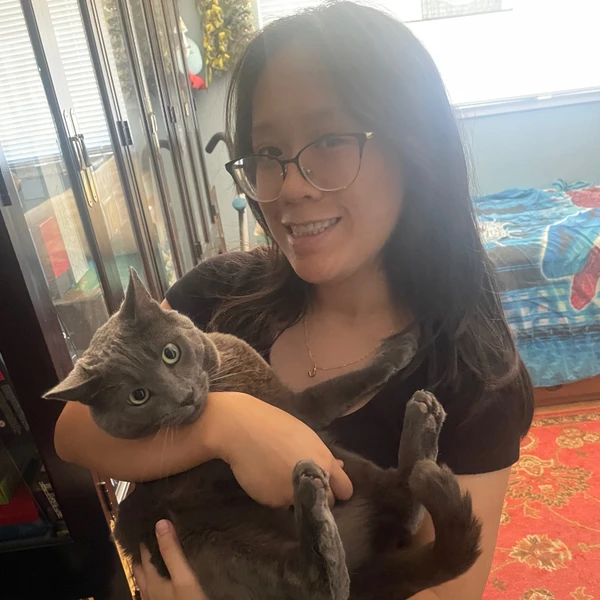
My name is Jade Nguyen, and I’m a student at the University of Houston pursuing a degree in Communication Sciences and Disorders. A first-generation American and future speech-language pathologist!
Education
Baylor University
Master's degree programMajors:
- Communication Disorders Sciences and Services
University of Houston
Bachelor's degree programMajors:
- Communication Disorders Sciences and Services
Miscellaneous
Desired degree level:
Master's degree program
Graduate schools of interest:
Transfer schools of interest:
Majors of interest:
Career
Dream career field:
speech language pathologist
Dream career goals:
Assistant Teacher
Montessori School of Sugarland2024 – Present2 years
Research
Communication Disorders Sciences and Services
National Student Speech Language Hearing Association (NSSLHA), University of Houston Chapter — Member2022 – 2025Communication Disorders Sciences and Services
Program for Supporting and Mentoring Students with Autism (PSMSA) — Mentor2023 – 2025
Future Interests
Advocacy
Volunteering
300 Bold Points No-Essay Scholarship
No Essay Scholarship by Sallie
500 Bold Points No-Essay Scholarship
Bick First Generation Scholarship
Being a first-generation college student means carrying the dreams and sacrifices of my family with me every step of the way. My parents came to America when they were very young, hoping for a better life. My dad never finished middle school, and my mom didn’t finish high school, but they worked tirelessly to give my sister and me opportunities they never had. Education has always meant everything to them because it represents the life they once dreamed of but couldn’t reach.
I realized what being first-generation truly meant when I was filling out FAFSA and saw my parents’ highest education listed as “less than high school.” They were just kids when they came here, yet they built everything from the ground up so I could go to school without worrying about food, safety, or opportunity. My mom stayed up late to cook for us so we always had breakfast. She woke up at 5 a.m. to drive my sister to school, then drove back to take me to mine. My dad works the graveyard shift, and even though he rarely sees us, he does it so our family can be secure. Seeing his exhaustion reminds me why I have to keep going.
When I was younger, my grandma watched me while my parents worked. She would pat my back when I cried and sing to me in Vietnamese until I fell asleep. As I got older, I noticed her memory changing. She would drift off mid-conversation or forget simple things. Eventually, she was diagnosed with dementia, Parkinson’s, and Alzheimer’s. Watching her communication fade was heartbreaking. But on her good days, when she speaks or smiles, it means everything to me.
My grandma is one of the main reasons I want to become a speech-language pathologist. Seeing how SLPs helped her in the hospital, checking her understanding and swallowing, showed me how powerful their work is. They helped her feel safe and cared for in a way words can’t fully describe. I want to do the same for others, especially families like mine who may face language or cultural barriers. There are not many Vietnamese bilingual SLPs, and I want to be one. I want to help people communicate and feel understood, no matter what language they speak.
This scholarship would lift the financial burden from my parents, who are still trying to pay for my college so I don’t have to take out loans. It would allow me to focus on my studies and clinical experience as I work toward graduate school. My dream is to make my family proud and give back to the people who gave me everything.
Being first-generation means more than being the first to go to college. It means honoring every sacrifice, carrying forward every lesson, and building a future that reflects my family’s strength and love.
Communication Sciences and Disorders Scholarship
WinnerI have always been close to my grandma. When I was younger, I lived with her and remember how she used to tell stories in Vietnamese, cook for our family, and talk about her younger years. As I got older, I started to notice small changes. In middle school, she would sometimes respond to my questions with random topics or stare off without answering. Over time, we learned that she had dementia, Parkinson’s, and Alzheimer’s. Now she is bedridden after a fall, and her communication has become more limited.
Watching her go through that has changed how I think about communication. Some days, she doesn’t talk much and only babbles. But when she has good days and speaks clearly, it makes me so happy. She can tell me that she wants water, that the TV is too loud, or that she needs to use the restroom. On those days, she seems more comfortable because she can express her needs. I realize how powerful that is, to be able to communicate what you want, even in the smallest ways.
When she was in the hospital, I saw the speech-language pathologists working with her and other patients. They were checking how well she could understand questions like the year or who the president was. They also watched for signs of swallowing difficulties since she is at risk for aspiration. I didn’t fully understand what they were doing at the time, but I could tell that their work mattered. They helped protect her health and gave her a way to stay connected to the world around her. Seeing that made me want to learn more about communication sciences and disorders.
Now, as I help care for her, I’m even more inspired. Even though she isn’t always fully aware, she still has moments that show how deep her understanding and love go. Once, she pulled me in, hugged me, and said “tội con,” which in Vietnamese translates loosely to “poor you.” But to me, it means much more than that. It carries the weight of appreciation and tenderness, almost like she was saying, “I see what you’re doing for me, and I’m thankful.” That small phrase reminded me how much meaning can exist in just a few words. It made me realize that communication is not just about talking; it’s about connection, emotion, and being understood.
Through studying communication sciences and disorders, I want to learn how to help others like my grandma find their voice again. I’m interested in working with patients who have neurological or cognitive challenges, but I’m open to exploring other areas too. What matters most to me is giving people the chance to express themselves and to feel seen and heard.
Being Vietnamese American also motivates me to represent my culture in this field. There are not many Vietnamese bilingual speech-language pathologists, and I want to bridge that gap. I want families like mine to feel understood and supported, both linguistically and culturally.
Caring for my grandma has taught me that communication brings comfort, dignity, and connection. That is what draws me to this field and what I hope to dedicate my career to.