user profile avatar

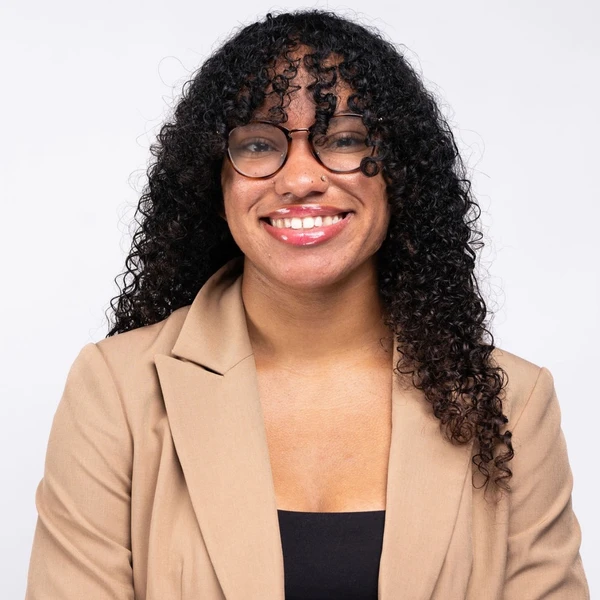
Jade Matthews

1x

Finalist

1x

Winner

Bio

My name is Jade Matthews. I am the daughter of two working-class parents who are struggling to help finance their four children's college education. I was admitted into a Doctoral Physical Therapy program at Maryville University when I was 18 years old. I am a member of my school's track team, the Alpha Lambda Delta Society, and SAAC. I am passionate about physical therapy because I got hurt during my sport, and my physical therapist was there for me—helping with both the physical and mental aspects of recovery. As well as when my sister had her knee surgery, I watched how it took a good physical therapist to bring her spark back and have her believe that she could get better and return to the sport she loves. I want to be that for someone else. To get where I am today physically, I had to battle with my health issues: endometriosis, PCOS, and some gastrointestinal issues. I've been battling with depression and anxiety, and I have come out on top. Receiving any form of aid would help lessen the burden on my family and reduce the amount of loans I am going to have to take. I am taking loans right now, and as it’s going, I will need to take more if I cannot find another way to help pay for school. I did get my personal training certification over the summer so that I can use that as a form of income to help pay for my schooling. Being a sports physical therapist is my dream, but I also want to focus on women’s health in general. It’s a very underrated area to emphasize in practice, and most studies are done on men, which neglects diagnoses like PCOS or endometriosis.

Education

Maryville University of Saint Louis

Doctoral degree program (PhD, MD, JD, etc.)
2024 - 2030
  • Majors:
    • Physical Sciences, Other

Jefferson High School

High School
2020 - 2024

Miscellaneous

  • Desired degree level:

    Doctoral degree program (PhD, MD, JD, etc.)

  • Graduate schools of interest:

  • Transfer schools of interest:

  • Majors of interest:

    • Biological and Physical Sciences
  • Not planning to go to medical school
  • Career

    • Dream career field:

      physical therapy

    • Dream career goals:

    • I was a Nanny for different families

      Free lance Nanny
      2020 – 20255 years

    Sports

    Track & Field

    Varsity
    2018 – Present8 years

    Public services

    • Volunteering

      Maryville university — I identified and applied glyphosate to the roots after they were cut by my team
      2024 – 2024

    Future Interests

    Advocacy

    Politics

    Volunteering

    Women in STEM Scholarship
    Black women make up around 22% of the STEM workforce as a whole. Growing up, I remember being in and out of doctors appointments and never having a physician who looked like me, and as a kid who was already shy, putting my trust into someone who I couldn't even relate to on the physical level was hard. Especially when I grew up in an area that didn't have a lot of diversity, and I was enrolled in schools that had a handful of peers who looked like me. I remember always wondering why I never saw anyone who looked like me in the roles that centered around science and mathematics. I had hoped that as I grew up I would see an increase of diversity within the STEM workforce as a whole, but even when I got into university the diversity in my field was still so small. I am one of two African Americans in my Physical Therapy cohort, making up 3% of my whole class, and around 8% of my whole class are people of color. I am always asking myself the same question of why there are not more people of color entering into the STEM workforce, and after some serious thought and research, it is not because they aren't capable and aren't interested. It's because from a young age people of color are told who they need to be, whether it be verbally by parents who have endured the abuse that comes with dreaming too big, radicals that believe that no one can be as great as the average white American, or financially being at a disadvantage before their journey can even start. Most people would say as long as these individuals maintain good grades and have substantial community involvement, they should be able to use scholarships as well as loans to cover schooling, but the problem with loans is federal loans have a limitation. If you max those loans out and find yourself in a position where you are still in need of more aid, you turn to private loans, which in the end can have higher interest rates and fewer protections. There is also the chance of discrimination by private loan associations and banks, leading to unfavorable loan agreements. I recognize now that being able to attend my university is a privilege. I am privileged to have had a mom who always made me reach for more, and who is willing to spread herself thin to help fund her four kids' educations. I want to help her with that financial burden, especially with tuition rates going up for my siblings and my schooling. One way or another, I am going to be a Physical Therapist. There is no other path for me. My purpose and my reason for being is to help the people around me and to give them a door of opportunities that doesn't just mean a surgery with a few take-home exercises to make them mobile again. I am going to open my own practice in the future, and I am going to run a clinic that can help rehab individuals of all backgrounds. I am going to be the physician that younger me needed to feel safe because there is no other option. To want to see change means you need to be the change. I want to encourage dreamers of all backgrounds that it is possible to be anything you dare to dream, because the only person who can tell you your limits is you.
    Learner Calculus Scholarship
    I think calculus is important in the STEM field because it provides people with problem solving skills and teaches people that there is no one route to a solution. In healthcare and physical therapy especially, calculus along with physics can be used to understand movement, force, velocity, and how the body responds over time. Since I plan to become a Physical Therapist, having a strong understanding of both math and science is important when working not just with patients but with my aides, coworkers, and other medical professionals. By taking calculus I was given the skill of problem solving. I didn't come into calculus already being amazing at it. the process of learning the material was difficult but anything that is worthwhile takes time and effort, and if I wasn't willing to put in the effort to solve a problem how can I be trusted to help my patients work through their ailments. As someone pursuing a career in STEM while being part of an underrepresented group within my field, learning difficult subjects like calculus shows perseverance through working a hard problem even if my answer comes out incorrect. Discipline when it comes to practicing the problems because no one problem is exactly the same just like how no patient is exactly the same. STEM careers require critical thinking and the ability to adapt, and calculus helps develop those skills. Calculus is the foundation for innovation within STEM fields. Whether it is used in medicine, engineering, technology, or research, it is a subject that in my opinion promotes collaboration and discussion. Discussion and collaboration are important when you hit a road block because whoever you are bouncing ideas off of can help lead you into figuring out the most correct and efficient way to handle a certain problem. In conclusion, Calculus is a very important subject not just because the math is the basis for most STEM careers, but because it equips you with unconscious skills that you will use in your future careers. In my future career as a Physical Therapist being able to problem solve in in my job description because methodologies to treatments a constantly evolving and no one persons life style is the exact same I have to be able to create a substantial programs for a multitude of individuals who may have the same ailment because how those people got injured is different as well as their own individuals bodies are different.
    Byte into STEM Scholarship
    Black women make up around 22% of the STEM workforce as a whole. Growing up, I remember being in and out of doctors appointments and never having a physician who looked like me, and as a kid who was already shy, putting my trust into someone who I couldn't even relate to on the physical level was hard. Especially when I grew up in an area that didn't have a lot of diversity, and I was enrolled in schools that had a handful of peers who looked like me. I remember always wondering why I never saw anyone who looked like me in the roles that centered around science and mathematics. I had hoped that as I grew up I would see an increase of diversity within the STEM workforce as a whole, but even when I got into university the diversity in my field was still so small. I am one of two African Americans in my Physical Therapy cohort, making up 3% of my whole class, and around 8% of my whole class are people of color. I am always asking myself the same question of why there are not more people of color entering into the STEM workforce, and after some serious thought and research, it is not because they aren't capable and aren't interested. It's because from a young age people of color are told who they need to be, whether it be verbally by parents who have endured the abuse that comes with dreaming too big, radicals that believe that no one can be as great as the average white American, or financially being at a disadvantage before their journey can even start. Most people would say as long as these individuals maintain good grades and have substantial community involvement, they should be able to use scholarships as well as loans to cover schooling, but the problem with loans is federal loans have a limitation. If you max those loans out and find yourself in a position where you are still in need of more aid, you turn to private loans, which in the end can have higher interest rates and fewer protections. There is also the chance of discrimination by private loan associations and banks, leading to unfavorable loan agreements. I recognize now that being able to attend my university is a privilege. I am privileged to have had a mom who always made me reach for more, and who is willing to spread herself thin to help fund her four kids' educations. I want to help her with that financial burden, especially with tuition rates going up for my siblings and my schooling. One way or another, I am going to be a Physical Therapist. There is no other path for me. My purpose and my reason for being is to help the people around me and to give them a door of opportunities that doesn't just mean a surgery with a few take-home exercises to make them mobile again. I am going to open my own practice in the future, and I am going to run a clinic that can help rehab individuals of all backgrounds. I am going to be the physician that younger me needed to feel safe because there is no other option. To want to see change means you need to be the change. I want to encourage dreamers of all backgrounds that it is possible to be anything you dare to dream, because the only person who can tell you your limits is you.
    Tam and Betsy Vannoy Memorial Scholarship
    As a kid, I watched my older brother struggle with his Crohn’s disease. It took him awhile to officially get diagnosed, and it was hard to watch him waste away in front of me. My brother is a person I always looked up to, and watching him struggle day in and day out while the doctors were debating whether to give him a feed tube or not. To this day, I am amazed at the strength and determination it took for him to get where he’s at health wise, and whenever I asked him how he made it through that rough period he had, I was always met with the same answer, “I had an amazing team of doctors and nurses.” Ever since, I was thinking about how I wanted to be that rock that helped people through the hard times, and the one thing I was struggling with was how I wanted to go about helping people. That piece took some thought. It wasn’t till I developed an injury when I did gymnastics that I felt a connection with how Physical Therapists help their patients. I had some great Physical Therapists that helped me throughout the years as I continued my athletic career throughout high school, and I had some of my greatest support in high school at Limitless Physical Therapy in Kearneysville, West Virginia. The Physical Therapists there took a genuine interest in helping me get back to my sport while also taking an interest in how I was doing mentally. I talked to them when I was starting to look for Physical Therapy schools, and they were part of the reason that I applied to schools outside of West Virginia. They helped me a lot with my confidence level whether they knew it or not, and the Physical Therapists at that clinic were some of the first people I told when I got into Maryville University’s 3+3 Physical Therapy program. Now I am ending my second year at this school, and I have had some amazing clinical shadowing opportunities. Over winter break, I was able to shadow at one of Children’s Hospital outpatient clinics in Grapevine, Texas, and I got to see some of the amazing work that they do with the children there. I instantly knew that pediatric physical therapy is what I want to do for the rest of my life. I enjoy the wonder that the kids have; it’s a breath of fresh air, and being able to help them while they are undergoing treatment and providing them a space that helps them physically and simultaneously helps them feel better mentally is all that I want to ever do. I want to help elevate some of the uncertainty that can happen when you are that young.
    James B. McKillip Scholarship for Physical Therapy
    Physical therapy is important to me because it's a form of care that can be made personable for a large range of people from different backgrounds. People world wide refuse care for ailments because they believe their physicians only see them as another case instead of a person. As a Physical Therapists, you have your clinical approach to healing, but you are also in a position to take a more personable approach while maintaining professionalism. You see your patient on a regular schedule, and you get to develop a bond with them. You cannot truly help someone recover from an injury until you truly know them. By that, I mean knowing what works and what doesn't, knowing their likes and dislikes, and knowing how they think and process information. Once you gain that bond with them, you will likely get a bigger picture of what caused the injury and be able to prevent reoccurrence of that injury or future injuries that this person may have. I have had Physical Therapists in the past who I felt only saw me as another patient, or that they were not listening to what I was saying. As a Physical Therapist, it is important to listen carefully as well as intently to what your patient is communicating. I know the patient intake process is textbook and taught, but at the end of the day, I will learn all the things that I need to write up in my documentation by just listening. My patient can see that I am paying attention to what they are saying versus picking out words and trying to create a scenario of what happened on my own. Then I might get a better idea of what caused their reason for need ing therapy, what care can I provide to help and make sure this does not happen again, and what can I do to give them a good experience in Physical therapy that turns what started as a negative experience, them getting hurt and having to go to the doctor, into a positive experience, them trusting me with their care and finding a physician who treats them as more than just their ailment. I am aware that once I become a Physical therapist, that I am an advocate for my patients. I need to be willing to continuously learn and being able to self reflect so that I do not get stuck in one particular mindset. My goal is to one day open up a practice where I am apart of a team that knows how to balance empathy and their clinical skill set to achieve excellent care for their patients. My personal moto is always the patient comes first regardless of my personal beliefs or clinical application if something does not work for them I should be able to use the tools I have learned not just in the classroom, but in clinical rotations and just daily problem solving to adapt my approach and find a better alternative.
    Healing Self and Community Scholarship
    Winner
    When I graduate from PT school, I want to pursue a clinical psychology degree and combine physical therapy with mental wellness. I believe access to mental health resources should be an easier topic to discuss, but for many people, it still feels taboo. If mental wellness is implemented into PT and proven to help, my hope is that companies will incorporate therapists to boost morale and show employees that they care about the individuals they employ. People often avoid seeking mental health treatment because they grew up with the idea that therapy is only for those who are suicidal or that going to therapy means something is wrong with you. I believe that it is my obligation as a future Physical Therapist to promote all areas of health. I don't believe healing is possible without healing the mind. As a PT you develop a relationship with your patients and they trust you; there is a bond that is created. They may feel more comfortable talking about certain situations with someone that they are more familiar with which could help with their healing and overall health. The incorporation could help promote discussion about the topic of mental health and gradually make it an easier conversation to have.
    Somebody Cares About Science - Robert Stockwell Memorial Scholarship
    My name is Jade Matthews, and my motivation comes from the people around me. My mom motivates me to persevere in the face of adversity, even though I had two parents growing up. Often, it was my mom raising four kids by herself, taking us and funding our sports careers. My coaches motivate me every day and help me find my "why?" To me, my "why?" is that I want to help people just like I was helped when I was struggling. I enjoy the puzzle that science creates. I am a health science major on the Physical Therapy track, and in classes such as chemistry, physics, and anatomy, I enjoy being able to examine things from different perspectives and solve challenging puzzles. I also love the collaboration that comes from science and bouncing ideas off my peers. Another thing I enjoy about science is that it is a field of constant learning, as theories and ideas are constantly being changed and refined. I love that about the science community. No one is afraid to go head-to-head to figure out what's factual. In the future, I wish to become a Physical therapist who specializes in sports and lymphedema. I intend to further my educational career by pursuing a degree in psychology, and I aim to conduct research tailored to women's health, exploring how it can affect recovery. Since a lot of research is initially done on men, it often neglects to take into account underlying medical conditions like endometriosis and their impact on recovery. I am passionate about physical therapy because I got hurt during my sport, and my physical therapist was there for me—helping with both the physical and mental aspects of recovery. As well as when my sister had her knee surgery, I watched how it took a good physical therapist to bring her spark back and have her believe that she could get better and return to the sport she loves. I want to be that for someone else. In high school, I had a diagnosis of endometriosis in my senior year. Before that, I was having constant pain in my hip and kept getting partial tears—whether it was in my labrum or my rectus femoris muscles. I had surgery to remove my endometriosis, and after my surgery, my doctor told me that all of the inflammation was causing a build-up of scar tissue on my lower back, increasing my hip pain and messing with my running form. That's why, even though I had been in physical therapy, it seemed like the treatment was not working. That was the moment when I realized that women's health is a mystery to most clinicians, and it should not be that way. There is no textbook definition for anyone's treatment. Treatment should be a combination of the knowledge you learned in school, the knowledge of your patient's history, and the knowledge you continue to seek.