
Hobbies and interests
Athletic Training
Cheerleading
Coaching
Community Service And Volunteering
Foreign Languages
Neuroscience
Swimming
Reading
Christianity
Drama
I read books multiple times per month
LOW INCOME STUDENT
Yes
Jade Dalton
1x
Finalist1x
Winner
Jade Dalton
1x
Finalist1x
WinnerBio
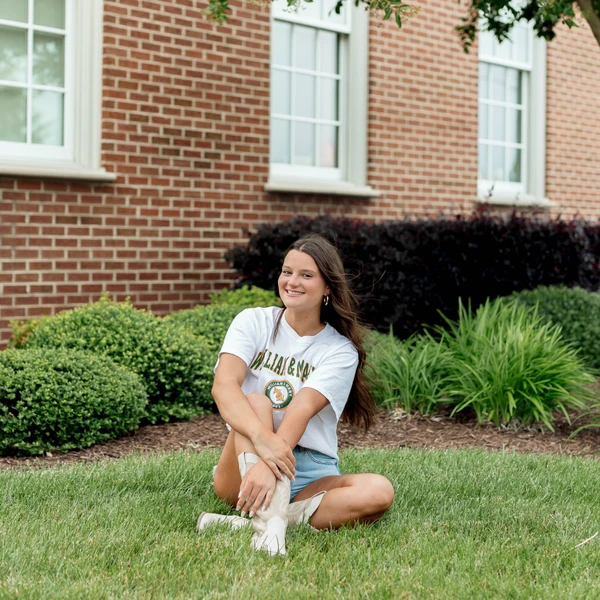
I am a neuroscience student at William & Mary with a strong passion for understanding the human brain and helping others through both science and service. Alongside my studies, I am training as an EMT, where I’m developing hands-on medical and emergency response skills. As a swim instructor and coach, I’ve had the opportunity to teach students of all ages—combining patience, communication, and leadership to help them build confidence and skill in the water. My experiences in neuroscience, emergency medicine, and coaching all reflect my commitment to learning, teamwork, and making a positive impact in my community.
Education
College of William and Mary
Bachelor's degree programMajors:
- Neurobiology and Neurosciences
Nansemond-suffolk Academy
High SchoolMiscellaneous
Desired degree level:
Doctoral degree program (PhD, MD, JD, etc.)
Graduate schools of interest:
Transfer schools of interest:
Majors of interest:
Career
Dream career field:
- Medicine
Dream career goals:
Customer Experience Coordinator Associate
TJMAXX2025 – Present1 yearSwim instructor
East Coast Aquatic LLC2022 – 20253 years
Sports
Swimming
Varsity2010 – 202515 years
Awards
- MVP
Arts
Nansemond-Suffolk Academy
Performance Art2024 – 2024
Public services
Volunteering
Nansemond-Suffolk Academy- Athletic Training — Athletic training student aid2024 – 2025
LeadHer Learning Scholarship
My mom used to always tell me: knowledge is power. I originally thought this meant I needed to gather all of the textbooks I could find and stay up at night reading them, just so I could be more powerful than my older brother. I have found this is not the case. To me, education means much more than earning a degree or memorizing information for an exam. I believe knowledge is power, but knowledge does not always come from a classroom or a textbook. Some of the most important things we learn come from our experiences, the people we meet, and the challenges we face. Education is the process of continually expanding the way we understand ourselves, other people, and the world around us.
My education at William & Mary has given me the opportunity to study neuroscience and develop a deeper understanding of the brain, but my personal experiences have taught me lessons that cannot be found in a textbook. Watching my mom navigate life after a traumatic brain injury taught me about resilience, empathy, patience, and the importance of understanding the person behind a diagnosis. I learned that knowing the biology of an injury is important, but understanding how that injury affects a person and their family is just as meaningful. That experience has shaped the way I view both education and my future career in medicine.
I see education as a lifelong process of becoming more knowledgeable, curious, and capable of helping others. Every experience gives us an opportunity to learn something new, whether it is a scientific concept in a classroom or a lesson about compassion from someone we love. Some lessons challenge our assumptions, while others teach us how to persevere when things do not go according to plan. These experiences build a different kind of knowledge, one that develops character and changes how we approach future challenges.
Ultimately, education gives us the power to understand the world and the people in it. To me, true education is not simply about knowing more; it is about knowing how to use what we learn. I want to use the knowledge I gain through my academic experiences, combined with the knowledge I gain from life, to become a physician who can make a meaningful difference in the lives of patients and their families. I hope to never stop learning, because every new piece of knowledge, whether earned through study or experience, gives me another opportunity to understand, serve, and help others.
Young Women in STEM Scholarship
1. I am a sophomore at William & Mary majoring in neuroscience on the pre-med track. From a young age, I have been fascinated by STEM and the way science can be used to understand the world and improve people’s lives. As I have grown older, that curiosity developed into a passion for neuroscience and medicine. One of my greatest motivations is my mom, who experienced a traumatic brain injury (TBI). Watching her navigate the challenges that came with her injury gave me a personal understanding of how profoundly neurological conditions can affect not only a patient, but an entire family. It made me want to better understand the brain and, ultimately, become someone who can provide knowledge, compassion, and support to patients going through similar experiences. If I could do anything with my life, I would become a doctor who combines my passion for neuroscience with my desire to care for patients. I want a career that allows me to continuously learn while also making a real difference in people’s lives. I especially hope to work with patients and families affected by neurological injuries or disorders, helping them feel understood and supported during some of the most difficult moments of their lives. What motivates me most is knowing that a career in medicine would allow me to turn something that deeply impacted my own family into a source of purpose. I want my education to lead to more than a certificate; I want it to allow me to make people’s lives better.
2. What excites me most about STEM is its ability to turn questions into discoveries and discoveries into solutions. I have always loved learning how and why things work, but neuroscience has made that curiosity especially meaningful to me. The brain is incredibly complex, and there is still so much we do not understand about it. The opportunity to study that complexity and use scientific knowledge to improve people’s lives is what makes STEM so exciting to me.
Although my primary goal is to pursue medicine, I recognize how important information technology has become to the future of healthcare and scientific research. Technology allows us to collect, analyze, and share enormous amounts of information in ways that were once impossible. In neuroscience and medicine, this can contribute to earlier diagnoses, better treatments, improved patient care, and a greater understanding of neurological conditions.
My experience seeing my mom navigate life after a TBI has made me especially interested in how technology can help patients and families. Whether through improved medical records, data analysis, artificial intelligence, or technologies that assist with diagnosis and rehabilitation, information technology has the potential to make healthcare more accessible, efficient, and personalized.
I believe my STEM background would allow me to approach technology not just as a tool, but as a means of helping people. I want to be part of a generation that brings together neuroscience, medicine, and technology to solve problems that affect real people. Ultimately, I hope to use every aspect of my STEM education to create meaningful, lasting improvements in healthcare.
3. One of the greatest challenges I have faced has been learning how to navigate the uncertainty that came with seeing someone I love experience a traumatic brain injury. My mom’s TBI showed me how quickly life can change and how neurological injuries can affect much more than a person’s physical health. They can affect emotions, independence, relationships, and an entire family’s sense of normalcy.
At first, it was difficult to understand what was happening and how to help. I could not change what had happened, and I often wished I could find an immediate solution. Over time, I learned that overcoming a difficult situation does not always mean fixing it. Sometimes it means learning how to adapt, finding ways to support the people around you, and continuing to move forward even when there is uncertainty.
That experience ultimately became a source of motivation rather than something that held me back. I became more interested in the brain and began pursuing neuroscience because I wanted to understand the science behind what my family had experienced. It also strengthened my desire to pursue medicine and help other patients and families facing similar challenges.
My mom’s experience taught me resilience, empathy, and the importance of being present for others. It also taught me that some of the most difficult experiences in life can shape our purpose. Instead of allowing a challenging experience to define me negatively, I have chosen to let it guide my education and career goals. It continues to motivate me to learn, serve others, and pursue a future in which I can make a difference.
Lewis Ohana Scholarship
Winner1. Receiving this scholarship would greatly support my journey as a neuroscience student at William & Mary and help me continue pursuing a career dedicated to healthcare, research, and community service. From an early age, I’ve been fascinated by how the brain shapes who we are—how billions of tiny electrical signals form memories, control movement, and influence behavior. Studying neuroscience allows me to explore these mysteries while preparing to make a real difference in people’s lives.
At William & Mary, I’ve been fortunate to learn from passionate professors and explore the complexities of the brain through challenging coursework. I plan to take advanced classes such as Neurophysiology, Cognitive Neuroscience, and Molecular Mechanisms of Disease to deepen my understanding of how neural systems influence thought and health. I also hope to participate in research examining neuroplasticity and recovery after brain injury—fields that align with my goal of improving treatments for patients recovering from trauma or neurological disorders.
My passion for neuroscience connects closely with my work outside the classroom. As an EMT student, I’m gaining firsthand experience in emergency medicine, where I’ve learned to stay calm under pressure and provide compassionate care to people in crisis. This training has shown me how vital it is to have a strong scientific foundation and the ability to apply it quickly in real-life situations. Likewise, as a swim instructor and coach, I’ve developed patience, leadership, and communication skills by helping students of all ages build confidence in the water. Teaching has taught me that small moments of encouragement can change someone’s outlook—and that lesson carries into how I want to approach healthcare: with empathy and respect for every individual.
Balancing my academics, EMT training, and coaching responsibilities has strengthened my time management and resilience, but it also comes with financial challenges. This scholarship would alleviate the stress of tuition, textbooks, and program costs, allowing me to dedicate more time and energy to my studies, lab work, and volunteer commitments. It would also give me the freedom to pursue unpaid research or clinical shadowing opportunities that are crucial for developing as a future healthcare professional.
Ultimately, this scholarship would not only ease my financial burden but also bring me closer to achieving my long-term goal of working at the intersection of neuroscience and medicine. Whether through clinical research, emergency care, or patient education, I aspire to apply what I learn to help others live healthier, fuller lives. I believe that combining science with compassion is the key to meaningful progress, and this scholarship would help me continue developing the skills and experiences needed to make that vision a reality.