Hobbies and interests
Acting And Theater
Anime
Korean
Engineering
Music
Mathematics
Chemistry
Reading
Adult Fiction
Biography
Chick Lit
Social Issues
Magical Realism
Science Fiction
I read books multiple times per month
Jada Gilliam
1x
Finalist1x
Winner
Jada Gilliam
1x
Finalist1x
WinnerBio
Hello!
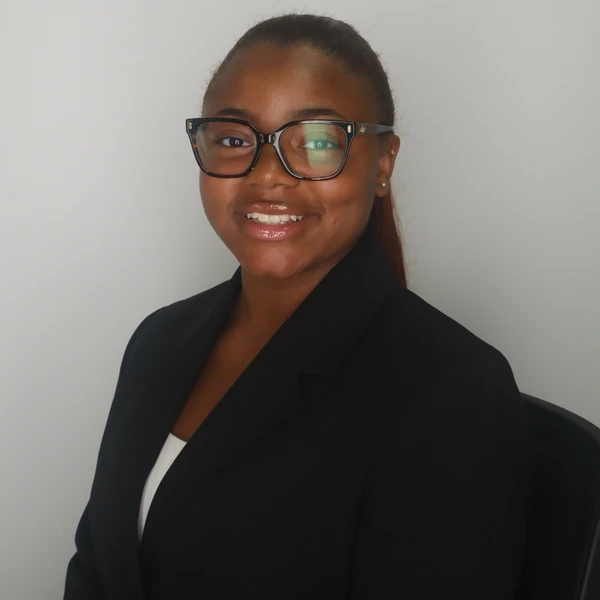
My name is Jada Gilliam, a first-year student at North Carolina A&T State University. I initially started my journey majoring in Communications with a concentration in Multimedia Journalism. However, I have decided to switch my major to Civil Engineering, as I aspire to become an Environmental Engineer. Since I arrived on campus, I have been involved with the A&T Register, the campus newspaper, to gain experience as a writer and editor. I also recently worked at the campus bookstore, which has allowed me to stay connected on campus while honing my leadership, communication, and cooperative skills. For instance, many of my tasks required collaboration with my coworkers, enhancing our ability to communicate effectively.
In addition to my academic pursuits, I have volunteered with local elementary schools and participated in church-led youth soccer programs. These experiences have allowed me to contribute to my community while developing my teamwork and leadership abilities. I am also proud to have received a service-learning diploma, which highlights my commitment to community service and learning.
I look forward to applying my skills and gaining further experience through various internships and programs related to my major in Engineering.
Education
North Carolina A & T State University
Bachelor's degree programMajors:
- Civil Engineering
Guilford Technical Community College
Associate's degree programMajors:
- Pharmacy, Pharmaceutical Sciences, and Administration
Western Guilford High
High SchoolMiscellaneous
Desired degree level:
Bachelor's degree program
Graduate schools of interest:
Transfer schools of interest:
Majors of interest:
- Civil Engineering
Career
Dream career field:
- Civil Engineering
Dream career goals:
Environmental Engineering
Cashier
Raising Cane's2026 – Present7 monthsCashier
North Carolina Agricultural and Technical State University2025 – 20261 yearCashier/Cook
Mikes Vegan Grill2023 – 20252 years
Sports
Track & Field
Varsity2023 – 20252 years
Softball
Varsity2021 – 20254 years
Research
Social Sciences, Other
Western Guilford High School AP Research — Researcher2024 – 2025
Arts
Lincoln Middle School Orchestra and Western Guilford High School Orchestra
Performance Art2018 – 2025Western Guilford High School Theatre
Theatre2025 – 2025
Public services
Volunteering
King's Cross Church — Volunteer2021 – 2021Volunteering
Western Guilford High School Track and Field — Volunteer2023 – 2025Volunteering
Murphey Traditional Academy — Volunteer2021 – 2024
Future Interests
Advocacy
Stephan L. Daniels Lift As We Climb Scholarship
My desire to pursue a career in STEM began long before I had the vocabulary to describe it. As a child in my elementary school gardening club, I learned how the environment touches every part of our lives. We installed rain barrels to collect stormwater and talked about runoff, conservation, and how small changes could protect an entire ecosystem. Those early lessons planted something in me, a curiosity about how the world works and a responsibility to care for the communities shaped by it.
For a long time, I thought I would express that curiosity through storytelling. I entered college as a journalism major, as I believed writing was the best way to advocate for my community. I loved reporting, interviewing, and giving voice to issues that often went unnoticed. But as I learned more about environmental injustice, especially how Black communities disproportionately face pollution, flooding, and unsafe infrastructure, I realized that I didn’t just want to write about these problems. I wanted to help solve them. That realization shifted my path from journalism to engineering, a decision that felt like stepping into the purpose I had been circling since childhood.
My green thumb followed me everywhere. During the pandemic, I grew herbs on my windowsill, reconnecting with the same sense of wonder I felt as a kid. But I also noticed something that bothered me: many GMO fruits and vegetables couldn’t reproduce on their own. That small detail opened my eyes to the deeper issues in our food and environmental systems: access, equity, and who gets to live in safe, healthy environments. It pushed me to think critically about sustainability, environmental design, and the systems that shape everyday life.
In high school, I served as secretary of the Environmental Engineering Club, where I helped organize recycling drives, campus clean‑ups, and student‑led sustainability projects. Those experiences showed me that environmental work isn’t just about science; it’s about people. It’s about creating systems that protect communities, especially those that have historically been overlooked. As a Black woman in STEM, I am deeply aware of the underrepresentation in this field. Black students earn only 7% of STEM degrees, and in engineering, the number drops even lower. Instead of discouraging me, these statistics motivate me. They remind me that my presence in this field matters not just for me, but for the young girls who will come after me.
With my degree in environmental engineering, I hope to work at the intersection of sustainability and public health, designing systems that ensure clean water, resilient infrastructure, and safe environments for underserved communities. I want to help build a world where a child’s zip code does not determine their access to clean air or safe drinking water. Beyond my career, I plan to mentor young Black students, create STEM outreach programs, and help build pathways for the next generation of innovators.
I am pursuing STEM because I believe in the power of innovation to transform lives. With this degree, I hope to uplift my community by designing a more equitable and sustainable future and serving as a role model by ensuring that the next generation sees STEM as a place where they belong, lead, and thrive.
Kayla Nicole Monk Memorial Scholarship
I chose to pursue environmental engineering because, for as long as I can remember, I have been drawn to how our environment shapes our lives and how small acts of care can ripple into meaningful change. My journey began in the gardening club at my elementary school, where we installed rain barrels to collect stormwater and learned how water conservation could protect our local ecosystem. I didn’t know it then, but those afternoons with my hands in the soil were planting the earliest seeds of my STEAM path.
As I grew older, that curiosity deepened. I’ve always had a green thumb, and during the pandemic, I started growing herbs on my windowsill. It was a grounding ritual and a form of escapism, but it also opened my eyes to the realities of our food systems. I learned that many GMO fruits and vegetables couldn’t reproduce on their own, and that bothered me more than I expected. It made me question why our systems were designed this way, who benefited, and who was left vulnerable. That small realization that even something as simple as a tomato carries a story about access, equity, and sustainability became a quiet turning point in my decision to pursue environmental engineering.
In high school, I served as secretary of the Environmental Engineering Club, where I helped organize recycling drives, campus clean‑ups, and student‑led sustainability projects. Those experiences showed me that environmental work isn’t just about science; it’s about people. It’s about creating systems that protect communities, especially those that have historically been overlooked. As a Black woman in STEAM, I understand what it means to navigate spaces where representation is limited. Instead of discouraging me, it motivates me to push forward because I know that the perspectives of women, especially minority women, are essential to building a more just and sustainable world.
Environmental engineering allows me to merge my love for the natural world with my commitment to community impact. My long‑term goal is to work at the intersection of sustainability and public health, designing systems that ensure clean water, safe infrastructure, and resilient ecosystems. I want to help build a world where a child’s zip code does not determine their access to clean air or safe drinking water. I also hope to mentor young girls who share my background, showing them that they belong in STEAM spaces and that their curiosity can become a catalyst for change.
This scholarship would help me continue my education without the constant pressure of financial strain. Balancing coursework with part‑time work is challenging, and receiving this support would allow me to dedicate more time to research, internships, and hands‑on learning opportunities that will shape my future career. More importantly, it would honor Kayla Nicole Monk’s legacy, a young woman whose ambition, creativity, and passion for helping others continue to inspire.
I chose to pursue a career in STEAM because I believe in the power of innovation to transform lives. With the support of this scholarship, I hope to carry forward Kayla’s spirit of determination and use my education to make a lasting difference in the communities that need it most.
Women in STEM Scholarship
The first time I understood how the environment shapes our lives, I was a child beside the gardening plot at my elementary school. My hands were buried in warm soil as our club installed rain barrels to collect stormwater, learning how something as simple as runoff could affect an entire ecosystem. I didn’t know the term “environmental engineering” yet, but I knew I loved watching things grow and wanted to understand how to protect the world that made that growth possible.
That early curiosity stayed with me. By high school, I served as the Environmental Engineering Club secretary, organizing cleanups, recycling drives, and sustainability projects. When the pandemic hit, I grew herbs on my windowsill, reconnecting with the sense of wonder I felt as a kid. But I noticed something: many store‑bought fruits and vegetables, especially GMO varieties, couldn’t reproduce on their own. That frustration pushed me to think more critically about our food and water systems, and the decisions that shape daily life.
I’ve always had a green thumb, but more importantly, I’ve always had questions about access, equity, and why some communities are protected while others are left vulnerable. Those questions led me to STEM and gave me purpose. Environmental engineering became where my love for nature, commitment to justice, and desire to create lasting change finally aligned.
My journey into STEM has not always been linear. As a Black woman, I am often one of the few who look like me in my classes. Instead of discouraging me, this fuels my determination. Representation matters, and I want girls who share my background to see environmental engineering as a space where they belong. My presence in this field is intentional. I am pursuing STEM because the voices of women, especially women of color, are essential to solving the environmental challenges of our generation.
Environmental engineering allows me to merge my love for science with my commitment to community impact. I hope to work at the intersection of sustainability and public health, designing systems for clean water, safe infrastructure, and resilient ecosystems. My long-term goal is to contribute to large-scale restoration projects and advocate for policies that protect vulnerable communities from pollution and climate change. I want to help build a world where a child’s zip code does not determine their access to clean air or water.
Beyond my career goals, I hope to make a difference by becoming the mentor I once needed. Too many young women, especially Black girls, never encounter someone in STEM who looks like them. I want to change that. Whether through outreach programs, school visits, or mentorship initiatives, I plan to create pathways for girls to explore STEM with confidence and curiosity. I want them to know that brilliance is not limited by gender or background, and that they deserve to take up space in every lab, classroom, and boardroom.
This scholarship would help reduce the financial strain of balancing rigorous coursework with part-time work, allowing me to focus more deeply on research, internships, and hands-on learning opportunities that will shape my future career. More importantly, it would affirm my commitment to becoming a leader in environmental engineering, a woman driven by curiosity, grounded in purpose, and determined to make a lasting impact.
I am pursuing STEM because I believe in the power of innovation to transform lives. As a woman in the field, I hope to bring empathy, resilience, and a community-centered perspective to the work ahead. I am ready to contribute, to lead, and to help build a more sustainable and equitable world.
Tia Lukeya Woods from Books Pages to Boarding Passes Scholarship
Growing up in Greensboro, North Carolina, a city shaped by the courage of the Greensboro Four and the legacy of Black students who demanded dignity, I learned early that learning is not confined to a classroom. It is something you chase, carry, and choose. As a student at North Carolina A&T State University, studying Civil Engineering and pursuing a career in environmental engineering, I feel that truth more deeply than ever. My education has taught me how systems work, but my curiosity pushes me to understand how people live within those systems across the world. That is why I want to study abroad: not simply to see new places, but to expand the way I think, question, and engage with the world.
There are questions I cannot answer from a textbook or a lecture hall. I want to understand how communities in other countries manage water scarcity, climate change, and environmental justice. I want to see how culture shapes sustainability, how tradition informs innovation, and how people build resilience in the face of environmental challenges. I want to learn how engineers in Ghana design water systems for rural villages, how coastal communities in the Caribbean prepare for hurricanes, and how cities in Europe balance modernization with environmental protection. These are lessons I cannot fully grasp unless I cross a border and experience them firsthand.
Studying abroad would also help me understand myself. As a Black woman in STEM, I often navigate spaces where representation is limited. Traveling would allow me to see how Blackness is experienced globally and how identity shifts, expands, or deepens across different cultural contexts. I want to learn how to move through the world with both confidence and humility, curiosity and respect. I want to grow into a more grounded, thoughtful, and globally aware version of myself.
But the financial realities of my life have always shaped what opportunities feel possible. As a college student balancing rigorous coursework with part-time work, studying abroad has always felt like a dream just out of reach. The costs of travel, program fees, and even basic living expenses in another country create barriers that my family cannot afford. This scholarship would not just support a trip, but open a door that has always been closed to me. It would turn intention into experience.
What I gain abroad will not stay abroad. I plan to bring it back into my engineering work, my campus community, and my future career. I want to design environmental solutions that are informed by global perspectives and shaped by cultural understanding. I want to share what I learned with younger students, especially Black girls, who deserve to see the world as a place where they belong, not one they watch from afar. I want to carry forward Ms. Lukeya Woods' belief that learning is a lifelong pursuit, one that traverses across books, borders, and the boundaries of who we think we can become.
Studying abroad would not just change my education. It would change my life. And like Tia Lukeya Woods, I intend to carry that learning with curiosity, courage, and joy.
ESOF Academic Scholarship
Growing up in Greensboro, North Carolina, a city shaped by the courage of the Greensboro Four and the legacy of Black students who demanded dignity, I learned early that education is not just a personal achievement. It is a responsibility. As a Black woman pursuing a STEM degree at North Carolina A&T State University– the nation’s largest HBCU and number one producer of Black engineers– I carry that legacy with me every day. My educational and professional goals are rooted in a desire to serve, uplift, and create lasting change in communities like the one that raised me.
I am currently majoring in Civil Engineering to become an Environmental Engineer because I want to help build a world where clean air, safe water, and sustainable infrastructure are not privileges but guarantees. Environmental issues disproportionately affect Black and low-income communities, and I want to be part of the generation that changes that reality. My long-term goal is to become a licensed environmental engineer specializing in water quality and sustainable community planning. I envision myself working with local governments, nonprofits, and community organizations to design systems that protect public health, prevent environmental harm, and ensure that underserved neighborhoods are not left behind in climate resilience conversations.
In the short term, my goals are focused on building the academic and professional foundation necessary to reach that future. I plan to complete my degree with honors, pursue internships in environmental policy and engineering, and gain hands-on experience in water testing, environmental impact assessments, and community-centered sustainability projects. I also hope to participate in undergraduate research that explores the intersection of environmental science and social equity. Every step I take is guided by the belief that engineering is not just about solving technical problems, but about solving human ones.
My commitment to civic and public service is deeply personal and has shaped the way I move through the world. Service has never been something I do for recognition; it is something I do because I understand what it feels like to need support and what it means when someone shows up for you. Throughout high school and now in college, I have dedicated myself to serving children, families, and community members who deserve to feel seen, supported, and empowered.
One of the most meaningful parts of my service has been working with elementary school students in Greensboro. Whether volunteering at local elementary schools, helping with literacy activities, or supporting after-school programs, I have seen firsthand how much a single encouraging voice can matter. Many of the students I work with remind me of myself: curious, bright, and full of potential, yet navigating systems that don’t always nurture them. Showing up for them is my way of honoring the people who showed up for me.
I have also volunteered at track meets and church-based youth soccer programs, where I’ve helped organize activities, mentor younger students, and support families. These experiences taught me that service is not always grand or glamorous. Sometimes it looks like tying a child’s shoe, helping a parent fill out a form, or staying late to clean up after an event. It is the consistency of showing up that builds trust and strengthens communities.
As a college student balancing coursework, campus involvement, and part-time work, I understand the financial and emotional weight that higher education can place on oneself. That is why receiving this scholarship would make a meaningful difference in my journey. It would allow me to reduce my work hours, focus more deeply on my engineering coursework, and pursue research and internship opportunities that will shape my future career. More importantly, it would allow me to continue serving my community without the constant worry of financial strain.
My long-term vision for civic service extends far beyond my undergraduate years. I hope to create programs that introduce young students, especially Black girls, to environmental science and engineering. Representation matters, and I want children to see someone who looks like them solving problems that affect their neighborhoods. I also hope to work with local schools and community centers to provide workshops on environmental justice, sustainability, and public health. My dream is to use my engineering expertise not only to design solutions but to empower communities to advocate for themselves.
Attending an HBCU has strengthened my commitment to service by showing me what it means to be part of a community that believes in my potential. At A&T, I am surrounded by students who are ambitious, resilient, and determined to make an impact. We are not just earning degrees; we are preparing to carry forward the legacy of those who fought for our right to be here. I want my life’s work to honor that legacy.
In everything I do, I strive to embody the values of leadership, service, and purpose. My educational and professional goals are not just about building a career; they are about building a future where my community can thrive. Civic service is part of my identity, and with the support of this scholarship, I will continue to pursue my goals with the same determination, compassion, and commitment that have guided me this far. I am ready to keep learning, keep serving, and keep uplifting the communities that shaped me.
Harry B. Anderson Scholarship
My passion for STEM didn’t begin in a classroom but began in the dirt. As a child, I spent afternoons in my elementary school’s gardening club, proudly tending to tiny seedlings as if they were treasures, and even helped install rain barrels to combat stormwater runoff and learn about water conservation. I loved watching things grow. I loved understanding why certain plants thrived, and others didn’t. My parents and teachers used to tell me I had a “green thumb,” but looking back, that early curiosity was the first sign of the environmental engineer I would one day become.
Growing up in Greensboro, I noticed how the environment shaped people’s lives long before I had the vocabulary to explain it. I saw which neighborhoods flooded after storms, which communities had cleaner parks, and which schools had healthier outdoor spaces. Those observations stayed with me. By high school, I was ready to turn curiosity into action. I joined the Environmental Club and eventually served as secretary, helping organize recycling drives, campus clean‑ups, and sustainability projects. That experience taught me that environmental work is not just about science, it’s about leadership, collaboration, and service.
Now, as a second‑year civil engineering student, I see how all those early experiences connect. STEM gives me the tools to understand the systems behind the problems I noticed as a kid and the power to help fix them. I’m especially passionate about sustainable infrastructure and water systems, because these are areas where environmental inequity is most visible. Clean water, safe stormwater management, and resilient infrastructure should not depend on a community’s zip code. I want to help change that.
My commitment to STEM is also deeply personal. As one of the few Black women in my engineering courses, I’ve learned to turn underrepresentation into fuel. Every time I walk into a room where no one looks like me, I’m reminded that I’m not just pursuing a degree but widening the path for the girls who will follow.
I’m inspired by the life of Harry B. Anderson, whose legacy blends engineering, craftsmanship, curiosity, and community service. He built his own loom, traveled the world, tended gardens, kept bees, and shared agricultural knowledge with others. His life reminds me that engineering is not just technical, it’s creative and deeply connected to the natural world. In many ways, his story mirrors the path I plan on building: one rooted in curiosity, shaped by service, and driven by a desire to improve the world around me.
Outside the classroom, I continue to stay connected to my community by volunteering with elementary school students, helping at track meets, and supporting youth programs through my church. These experiences remind me why my work matters. Environmental engineering is ultimately about people, their health, their safety, and their futures.
My long‑term goal is to become a licensed environmental engineer and work on large‑scale sustainability and water infrastructure projects that address environmental injustice in the South, especially in low-income minority communities. I want to help create communities where clean water, safe infrastructure, and healthy environments are guaranteed, not hoped for.
Brett Brakel Memorial Scholarship
Softball has shaped my life in ways that extend far beyond the field. I didn’t realize it at the time, but the lessons I learned in dusty dugouts, long practices, and tough games would become the same lessons that guide me today: resilience, teamwork, and the power of mentorship. These values mirror the legacy of Brett Brakel, a teacher and coach who believed deeply in the impact of education and athletics.
I fell in love with softball because it gave me a place to grow not just as an athlete, but as a person. The sport taught me how to communicate under pressure, how to trust the people beside me, and how to stay composed even when the game wasn’t going my way. But one of the most defining moments of my athletic experience came the day I suffered a concussion during practice. It was sudden, disorienting, and honestly frightening. Being forced to sit out, attend doctor visits, and watch my team from the sidelines was one of the hardest things I’ve ever experienced.
That concussion taught me a different kind of strength, the kind that comes from patience, discipline, and accepting help. I learned how to advocate for my health, listen to my body, and support my team even when I couldn’t be on the field. It also gave me a deeper appreciation for the behind‑the‑scenes work that keeps athletes safe, which later influenced my decision to work in an athletic department supporting baseball players through treatment and rehabilitation. Those experiences showed me what leadership looks like when no one is cheering: steady, compassionate, and committed.
One of the most influential people in my journey was my high school’s baseball coach, who also served as my sophomore math teacher. Before his class, math felt like something to get through, not something to enjoy. But he taught with the same energy he brought to the field: patient, encouraging, and always pushing us to believe we were capable of more. For the first time, math made sense, and I felt confident in it.
He saw potential in me long before I saw it in myself. His belief in me planted the seed that I could pursue a STEM‑related field in college, a path I once thought was out of reach. His mentorship mirrored the kind of guidance Brett Brakel was known for: teaching, inspiring, and shaping young people both in and out of the classroom.
Those experiences taught me how to care for others, how to lead with empathy, and how to stay committed even when things get difficult. They also strengthened my desire to pursue a career rooted in service, science, and community impact.
As I continue my education, I plan to carry these values forward. Whether I’m studying STEM, mentoring younger students, or contributing to my community, I want to embody the same perseverance, teamwork, and compassion that shaped me, the same values Brett Brakel dedicated his life to uplifting.
Softball didn’t just teach me how to play a game. It taught me how to be resilient, support others, and believe in myself. Those lessons will stay with me long after the last inning.
Charles B. Brazelton Memorial Scholarship
Everyone has that one “awkward” thing about them, the trait people notice before you even say hello. For me, it was always my height. I’m 5’0 on a good day, which means I grew up hearing every short joke imaginable. I’ve been called “fun-sized,” “travel-sized,” and “bite-sized.” The list goes on. I’ve had people use my shoulder as an armrest, like it’s a community resource. And if that wasn’t enough, I also have a cleft chin, or as kids loved to call it, a “butt chin.” So yes, I was short and had a chin with a personality of its own, a double feature.
As a kid, that kind of attention left me unsure of how to respond. I often tried to hide my chin in photos or stand on my toes in group pictures, wishing I could blend in and avoid notice. But the truth about standing out is that you can’t really hide from it, but grow into it. Eventually, I came to see that my height and my chin weren’t flaws; they were threads in the fabric of my story. My chin is a gift from my father, my stature from my maternal grandmother. Trying to change or hide these features would dishonor the people who came before me. While I never tried to physically alter my quirks, I did shrink myself emotionally, hoping to escape ridicule. With time, especially as I entered high school and college, I learned to take up space and embrace what made me unique.
When you’re used to being underestimated, you learn to overdeliver. When people assume you’re quiet or timid because you’re small, you learn to let your work speak loudly. And when you grow up with features people tease, you learn to build confidence from the inside out, the kind that comments or comparisons can’t shake.
Reading about Charles B. Brazelton, I was struck by the detail that he was left‑handed but shot basketballs with his right hand. It reminded me of how many of us try to fit into molds that weren’t made for us, even when our strengths lie somewhere else entirely. Charles found his place in the water, where he excelled. I’ve found mine in education, service, and my growing passion for STEM and environmental impact. Like Charles, I’ve learned that what makes you different is often what makes you powerful.
This scholarship would support me as I continue pursuing my degree and building a career centered on service, sustainability, and community impact. It would allow me to focus more on research, leadership, and opportunities that align with my long‑term goals, rather than the financial stress that so many students face.
My “awkward” things, my height and cleft chin, used to make me feel self‑conscious. Now, they remind me that I was never meant to blend in. I was meant to stand out, stand firm, and stand for something bigger than myself.
WCEJ Thornton Foundation Low-Income Scholarship
WinnerGrowing up in Greensboro, North Carolina, I quickly realized that opportunity is not distributed equally. Raised in a low-income household, financial constraints impacted my student life, from the extracurricular activities I could join to the balance between school and work. Despite these obstacles, I held onto a single conviction: education could transform my future. This belief inspired me to attend North Carolina A&T State University, the historic institution where the Greensboro Four ignited a national civil rights movement by sitting down at a Woolworth’s counter in 1960. Walking the same campus where those courageous young men once stood reminds me that perseverance is woven into my heritage, and that higher education is not merely a personal aspiration but a powerful means to create lasting change.
Service has always been a grounding force in my life. Throughout high school and into college, I volunteered with local elementary schools, helping teachers with classroom tasks, tutoring students, and supporting after‑school programs. I also volunteered at track meets and youth soccer programs through my local church, where I helped organize events, supervised children, and created a safe, encouraging environment for young athletes. These experiences taught me patience, leadership, and the importance of showing up for others, especially children who need positive examples and consistent support. They also showed me how deeply a community can benefit when people invest their time and energy into its youngest members.
I began college as a Multimedia Journalism major because I believed in the power of storytelling. But as I reflected on environmental injustice, especially how Black communities face higher pollution levels, aging infrastructure, and fewer protections, I realized I wanted to be part of designing solutions, not just reporting the problems. That realization pushed me to switch my major to civil engineering, with the long‑term goal of becoming an environmental engineer. It was a difficult decision, especially knowing the financial strain and academic rigor ahead, but it was also the first time I felt completely aligned with my purpose.
Higher education is essential to achieving what I hope to. Civil engineering will give me the technical foundation to design safer water systems, sustainable infrastructure, and environmental protections for communities like the one that raised me. My short‑term goals include strengthening my engineering skills, joining research projects related to water quality and environmental sustainability, and securing internships that expose me to real‑world engineering work. In the long term, I hope to work in environmental engineering roles that focus on improving infrastructure in underserved neighborhoods, places that have historically been overlooked, underfunded, and disproportionately harmed by environmental hazards.
Being a low‑income student has shaped these goals in powerful ways. I understand firsthand what it feels like to live in communities where environmental risks are higher and resources are limited. I know what it means to make difficult choices, whether working extra hours to help cover expenses or dedicating that time to studying. I have worked throughout school to support myself, and while I am proud of my perseverance, it has also meant sacrificing time that could have been spent on academics, internships, or research.
This scholarship would significantly reduce a financial burden. It would allow me to reduce my work hours and focus more deeply on my engineering coursework, which requires long hours of studying, labs, and hands‑on projects. It would also help cover the cost of textbooks, technology, and other academic expenses that add up quickly, often determining whether low‑income students can fully participate in their education. Most importantly, it would give me the stability I need to pursue opportunities that will shape my future career, rather than constantly worrying about how to afford the next semester.
My ultimate goal is to use my degree to create a positive impact by designing safer, healthier, and more sustainable communities. I want to become an engineer who understands not only the science but also the people, someone who can bridge the gap between technical solutions and community needs. Higher education is the key to unlocking that future. With this scholarship, I can continue my journey with determination, purpose, and the drive to create lasting change.
SigaLa Education Scholarship
Growing up in Greensboro, I’ve seen how environmental issues disproportionately affect Black communities, from aging infrastructure to higher exposure to pollutants. These inequities are not accidents, but the result of decades of underinvestment due to systemic racism. I want to be part of the generation that changes that. I chose to pursue civil engineering with the goal of becoming an environmental engineer because I want to help build a world where clean water, safe infrastructure, and healthy environments are not privileges, but the basic human standard.
I didn’t begin college as an engineering major. I started in Multimedia Journalism because I believed in the power of storytelling. But as I reflected on environmental injustice and the communities most affected by it, something shifted. I realized I didn’t just want to report on problems, I wanted to design solutions. That realization pushed me to switch my major to civil engineering, a field where I can directly shape the systems that determine whether communities thrive or struggle.
My short‑term goals are to build a strong foundation in engineering principles, pursue research opportunities in water quality and sustainable infrastructure, and secure internships that expose me to real‑world environmental engineering work. I want to learn how to design systems that are not only technically sound but also equitable and accessible. I also hope to join campus organizations that support minority engineers so I can grow alongside peers who share similar challenges and ambitions.
My long‑term goal is to become an environmental engineer who specializes in improving infrastructure in underserved communities. I want to work on projects that ensure clean drinking water, reduce environmental hazards, and create sustainable systems that protect public health. Eventually, I hope to work with government agencies or environmental organizations to influence policy and advocate for historically ignored communities. I want to be the kind of engineer who understands both the science and the people, someone who can bridge the gap between technical solutions and community needs.
Being an underrepresented minority in STEM has shaped these goals in powerful ways. In many of my classes, I am one of the few Black women in the room. That reality can be isolating, but it also motivates me. It reminds me that representation matters, not just for visibility, but for impact. When communities see engineers who look like them, trust grows. Solutions become more culturally informed. Barriers begin to break. Knowing that so few Black women are in environmental engineering pushes me to keep going, not just for myself but to serve as a role model for the young girls who will come after me.
Financially, this scholarship would make a significant difference. Engineering requires long hours of studying, labs, and hands‑on projects. Balancing that workload with the need to work part‑time can be overwhelming. This scholarship would relieve some of that pressure, allowing me to focus more fully on my coursework, research opportunities, and internships that will shape my future career. It would also help cover the cost of textbooks, lab materials, and other academic expenses that add up quickly. Most importantly, it would give me the stability I need to continue pursuing a field where I know I can make a meaningful impact.
I am committed to using my education to build safer, healthier, and more sustainable communities. With this scholarship, I can continue that journey with confidence, determination, and the drive to create real change in the world.
Michele L. Durant Scholarship
Growing up in Greensboro, I learned early that community is built through service, courage, and the willingness to act when something needs to change. As a current student at North Carolina A&T, I walk the same campus where the Greensboro Four once walked, four young Black men who sat down at a Woolworth’s counter in 1960 and sparked a national civil rights movement. Their bravery demonstrates that leadership doesn’t always come from having power but rather being willing to take initiative. Their story is not only history to me but a daily reminder that ordinary people can create an extraordinary impact.
That legacy has shaped my own journey pursuing higher education. I entered college as a Multimedia Journalism major because I believed in the power of storytelling to uplift communities. But as I became more reflective about environmental injustice, especially in Black neighborhoods facing higher pollution levels, poorer infrastructure, and fewer protections, I realized I wanted to be part of designing solutions, not just reporting the problems. This year, I decided to switch my major to civil engineering with the goal of becoming an environmental engineer. Although it is a challenging path, it aligns with my purpose to protect the health, safety, and futures of communities.
My commitment to education mirrors the legacy of Michele L. Durant, a woman who pursued knowledge fearlessly and believed deeply in the power of learning. She took on immense debt to earn her degrees because she understood that education is a pathway to liberation, especially for Black women who often face financial strain, wage gaps, and underrepresentation in high‑paying fields. Her story resonates with me because I, too, am navigating higher education while balancing work, service, and the pressure to excel in spaces where Black women are still fighting to be seen and supported.
Working at the campus bookstore has shown me how many students, especially students of color, struggle to find their footing in their first year. I’ve helped freshmen who felt overwhelmed, supported donation drives, and tried to be a steady presence for those who needed guidance. These experiences taught me that leadership is not about titles, but empathy, consistency, and the willingness to uplift others. Whether assisting a student in finding their textbooks or volunteering in the community, I strive to embody the same spirit of purpose that the Greensboro Four carried into that Woolworth’s counter.
As an environmental engineer, I want to design cleaner water systems, safer infrastructure, and sustainable solutions for underserved neighborhoods. Environmental issues disproportionately affect Black communities, yet our voices are rarely centered in conversations about sustainability or public health. My goal is to bridge that gap by becoming an engineer who not only understands the science but also understands the people. I want to translate complex issues into accessible information, advocate for equitable policies, and ensure that the communities most affected by environmental harm are included in the solutions.
This scholarship would allow me to continue my education without the constant fear of financial strain. It would free up time and mental space to pursue internships, research opportunities, and leadership roles that will shape my future career. Most importantly, it would help me honor Michele L. Durant's legacy by using my education to create meaningful, lasting change.
I am committed to becoming a woman who not only succeeds academically but also uses her knowledge to build safer, healthier, and more equitable futures for Black communities. With this scholarship, I can continue that journey with confidence, purpose, and the drive to make a lasting impact.