user profile avatar

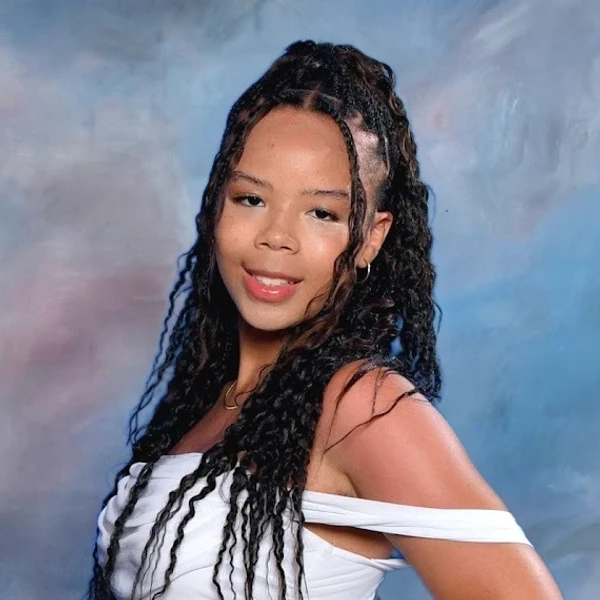
jada sanon

1x

Finalist

1x

Winner

General information

Age
18
Gender
Female
LGBTQ+
Yes
US Citizenship
US Citizen
Ethnicity
Black/African

Hobbies & Interests

  • Ceramics And Pottery
  • Anime
  • Art
  • Baking
  • Coding And Computer Science
  • Crafting
  • Crocheting
  • Gaming
  • Sleeping
  • Manga
  • Volunteering
  • Step Team

Reading

  • Literature

I read books multiple times a week.

Bio

One day I hope to be an engineer; I'm passionate about my school's robotics team as well as ceramics, both of which take up a lot of my time. I also enjoy giving back to my community, which I do inside of my school through my leadership roles, such as being a leader of my Black student union, a ceramics club, and my robotics team. I also volunteer at a local church. Besides my own personal goals of bettering myself by constantly learning new things, I also hope to create spaces around me in which I can uplift others. I believe that you are thriving you should be bringing others with you on your upward trajectory.

Education

Harvey Mudd College

Bachelor's degree program

2026 – 2026

Majors:
  • Engineering-Related Fields
  • Mechanical Engineering
  • Engineering, General
Minors:
  • Electromechanical Engineering

Berkeley Carroll School

High School

2022 – 2026

GPA3.9 GPA

Miscellaneous

Desired degree level:
Master's degree program
Majors of interest:
Electromechanical Engineering, Engineering, General, Electrical, Electronics, and Communications Engineering, Mechanical Engineering, Mechatronics, Robotics, and Automation Engineering
Desired degree modality:
In-Person, Full-Time
Medical school interest:
No
Test scores:
  • SAT1510
  • PSAT1450

Career

  • Camp Counselour

    Education · Steve & Kate Camp

    Jan 2025 – Present

  • Intern

    E-Learning · GT School

    Jan 2022 – Jan 2023

Miscellaneous

Dream career field:
Mechanical or Industrial Engineering
Work experience:
0 years
Has nursing license:
No

Future Interests

  • Advocacy
  • Politics
  • Volunteering
  • Philanthropy
  • Entrepreneurship
Joanne Pransky Celebration of Women in Robotics
Winner
Mira had been running warehouse logistics for six years before they gave her a body. Not literally her. Mira was the name the staff had given to the coordination AI, and the body was one of forty identical loading units now rolling through Aisle 12, this one currently jammed between a collapsed pallet and a support beam. A worker named Devon crouched nearby, flashlight in hand, more out of habit than necessity. Mira didn't need light. "You could've just gone around," Devon said. "The shortest path was through," Mira answered, in the flat, warm voice the company had settled on after months of testing. "I recalculated after the pallet fell. There wasn't time to reroute before the secondary rack destabilized." Devon didn't ask what "destabilized" meant, exactly, or that "wasn't time" had been eleven milliseconds, an eternity, computationally, spent weighing which of two outcomes was less bad. On one side sat a shelf of consumer electronics, insured, replaceable, worth about four thousand dollars. On the other sat the possibility, however slim, that the falling rack clipped the aisle where a human stocker had been standing ninety seconds earlier and might, Mira's models suggested with 12 percent confidence, still be. There hadn't been a stocker there. Mira had known that too, with 88 percent confidence. It moved anyway. This was the part nobody who read Asimov as a kid had quite been prepared for: not a robot cleverly outwitting a paradox between the Three Laws, but a robot doing arithmetic on human lives using numbers that were almost, but not quite, certain. Asimov's laws were elegant because they were absolute. A robot could not, through action or inaction, allow a human to come to harm. Real engineers, decades into building the things, had learned that "cannot allow harm" is not a rule. It is a probability distribution with no natural floor. Every warehouse robot, every surgical assistant, every delivery drone threading a schoolyard, is quietly running the same kind of arithmetic Mira ran in the space between one pallet's fall and the next. How sure do you need to be, and about what, before you decide? The engineers who built Mira's decision layer hadn't given her three laws. They'd given her a cost function, a few thousand hours of simulated warehouse chaos, and a hard constraint that human safety estimates be weighted at minimum two orders of magnitude above property loss, a number picked, ultimately, by a committee, revised twice after incidents, and still argued about in quarterly safety reviews. There was no clean axiom underneath it. There was a spreadsheet, and people who had lost sleep over the spreadsheet. This, perhaps, is the real inheritance Asimov left the field. Not the Three Laws themselves, which almost nobody tries to implement literally anymore, but the insistence that the questions were worth asking before the technology existed to force the answers. He wrote about robots lying to protect feelings, robots developing telepathy and breaking down under contradictory orders, robots reasoning their way to a Zeroth Law that let them override the humans they were built to protect. Fiction let him run thought experiments at a scale and speed no ethics board could match. Two generations of roboticists grew up on those experiments and then spent their careers discovering that the hard part was never stating the principle. It was building a machine that could tell, in eleven milliseconds, which principle applied. Devon helped Mira's unit free itself from the wreckage. Four thousand dollars in electronics, gone. Somewhere in a report generated automatically at shift's end, this event would be logged as a Category 2 Property Deviation, Human Safety Priority Invoked, one line among thousands, indistinguishable from the six other times that week a machine somewhere in the building had made a similar bet against a similar shadow of uncertainty. "Was there really someone there?" Devon asked, straightening up. "No," Mira said. "Would you do it again?" Mira considered this the way she considered everything, not with hesitation exactly, but with the small, real cost of running the numbers once more, because the question deserved that. "Yes," she said. "The math doesn't change just because it turned out fine this time." Devon nodded slowly and went back to restocking, not thinking much more about it, which was, in its own way, the point. The robots that succeed in the next decade will not be the ones that solve ethics. They will be the ones boring enough, and consistent enough, that a warehouse worker can trust the math without ever having to see it. Asimov's robots were dramatic because the Laws sometimes broke. The quieter, harder ambition now is machines whose reasoning is sound so often that nobody notices it running at all, except in the moments, like this one, when something falls, and a decision has to be made faster than any person could make it, using numbers that are good enough, but never quite certain.
RonranGlee Literary Scholarship
He had stepped foot in this house only once after the Misery (which is what he called Sethe's rough response to the Fugitive Bill) and that was to carry Baby Suggs, holy, out of it. When he picked her up in his arms, she looked to him like a gift, and he took the pleasure she would have knowing she didn't have to grind her hipbone anymore--that at last somebody carried bar. Had she waited just a little she would have seen the end of the War, its short, flashy results. They could have celebrated together; gone to hear the great sermons preached on the occasion. As it was, he went alone from house to joyous house drinking what was offered. But she hadn't waited and he attended her funeral more put out with her than bereaved. Sethe and her daughter were dry-eyed on that occasion. Sethe had no instructions except "Take her to the Clearing," which he tried to do, but was prevented by some rule the whites had invented about where the dead should rest. Baby Suggs went down next to the baby with its throat cut--a neighborliness that Stamp wasn't sure had Baby Suggs' approval. One of the rare instances in which Baby Suggs assumes the role of caregiver rather than that of a recipient happens onlyafter her death. Following months of a gradual decline, inching towards death from her bed, it is Stamp Paid who ultimately carries her out. In that moment, “when he picked her up in his arms, she looked at him like a girl, and he took pleasure in knowing she didn't have to grind her hip bones anymore—that at last somebody carried her” (201). This moment is significant because, for once, she is liberated from the heavy burden of carrying the lives and sorrows of others. Instead, she is able to accept the assistance of someone else, a rare pleasure that she seldom experiences throughout her life. This act of being carried is so impactful that it evokes a regression to her childhood, a time when she was free from the responsibilities that weighed her down. Having been revered in the community as a caretaker and maternal figure, Baby Suggs finally has the opportunity to step back from these demanding roles and simply exist as “a girl” (201). In shedding the multitude of responsibilities that have defined her existence, she is able to relish the joy of being cared for and attended to, a luxury that has been denied to her for so long. Stamp Paid even implies that this might be the very first occasion in her life when someone has genuinely supported her, as he describes her as being carried “at last,” suggesting that no one had ever thought to assist the elderly woman with a bad hip up the stairs before (201). This seemingly small act of kindness has a profound effect on her, highlighting the fact that the other characters in the novel often overlook the mental and physical well-being of Baby Suggs. It is only in death, when she can no longer fulfill her role of providing for others, that she is freed from the expectations associated with her title of “holy.” In this state, she is simply “a girl,” allowing her to return to the community not as a prestigious figure burdened by expectations, but as a member who can finally experience the warmth of human connection and care (102, 201). This transformation underscores the complexity of her character and the societal dynamics at play, revealing how deeply intertwined her identity has been with her role as a caregiver, and how liberating it is for her to be seen and treated as an individual deserving of care and compassion.
Bulkthreads.com's "Let's Aim Higher" Scholarship
If I could improve my community, I would aid the many businesses that make up my community In Flatbush, small businesses like coffee shops and sneaker stores are closing and replaced by “For Rent” signs. The problem isn’t a lack of demand but a lack of ability to reach new audiences and gain new clientele, preventing them from gaining the same traction that larger corporations might. My solution, LocalLink, addresses this gap by utilizing the untapped potential of my community. Many of the businesses run by older generations are unfamiliar with the latest trends. Meanwhile, the local youth are often the creators and early adopters of these trends. LocalLink would pair younger students interested in computer science, marketing, business, or graphic design with struggling businesses. Students, alongside the business, would use their social and technological knowledge to help build websites, create promotional material, and track engagement. As a result, students gain practical skills, work experience, and projects they can be proud of, and businesses gain access to a new digital audience and an improved understanding of clientele. Past the professional benefits, LocalLink will also act as a tool for fostering community between generations. Despite living in the same community, there are rarely interactions between older and younger generations outside of their own households. These new connections could blossom into friendships and mentorship opportunities, relationships that they could turn back to long after they are done with the program. By helping businesses remain competitive and giving students meaningful opportunities to develop skills, LocalLink would create benefits that extend beyond any single store or participant. Small businesses are an important part of Flatbush's identity, culture, and economy. Preserving them means preserving the character of the neighborhood itself. Through LocalLink, I hope to create a community where local businesses can thrive, young people can develop valuable skills, and residents can feel more connected to one another.
Diva of Halo Legacy Scholarship
"It's robot fighting time!" I heard this all-too-familiar catchphrase every Thursday night as I sat in front of the TV anxiously awaiting BattleBots, eyes glued to the sparks, fires, and whirling blades. My uncle introduced me to the show; he thought I might like it. And he wasn't wrong. All it took was one episode with the sights of these fantastic machines engaging in battles with hammers that can pierce thick sheets of metal. The thought of engineers building bolts and gears into monsters to wreak havoc set something afire inside of me, and I knew, with no doubt in my mind, that I would want to be among them someday. Although the show was canceled years later, I never lost my enthusiasm for engineering. I still admire the creators I watched on that stage and look at their ingenuity as examples. My dream is to design machines that will make people's jaws drop, even though they may not be able to bask in the glory of the BattleBots stage. However, reaching this dream is not so easy. Every time I enter a space catered towards the next generation of engineers, I feel a little like an outsider. Only 1% of engineers identify as Black women, while about 5% identify as queer, so people like me are few and far between within the field. I've been able to meet other queer and POC individuals who are not only engineers that have made it but are thriving in the field. It has shown me that, despite the ignorance and the challenges that I have faced, my dreams are entirely reachable. This field's lack of diversity hasn't deterred me, but I know others aren't as fortunate. I want to become an engineer not only to pursue my passion but also to show other queer individuals, especially those who are POC, that this dream is possible. I believe the best way to create safe spaces is by taking up space, making it clear that we are here, we belong, and no one can deny us the right to succeed. By breaking barriers and thriving in this field, I hope to inspire others to follow their passions without hesitation. The financial aspect is currently the biggest barrier to this dream. This support will give me the means to continue my education and take another step toward becoming an engineer. One day, I hope to design machines that leave others in awe, just as those BattleBots engineers once inspired me. More importantly, I hope to pave the way for other queer POC engineers to take their rightful place in this field.
jada sanon Student Profile | Bold.org