user profile avatar

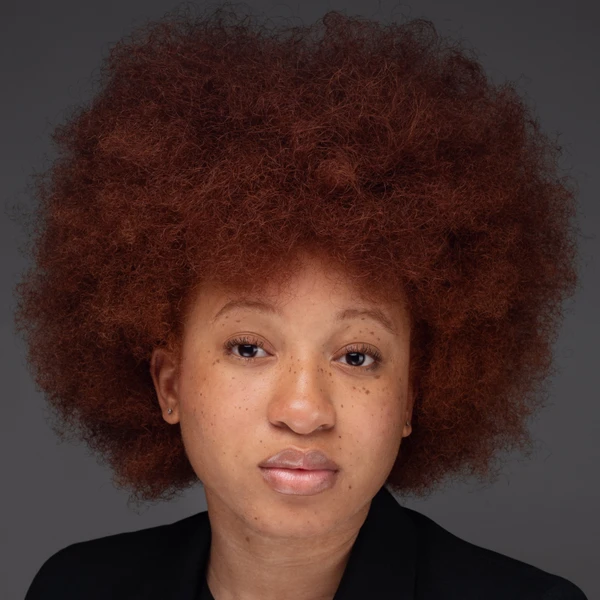
Jada-Cassidy James

1x

Finalist

Bio

I am Jada-Cassidy James, a freshman Marketing major at Kean University with a 3.4 GPA. I am a New York native now living in New Jersey, the daughter of Jamaican immigrants, and someone who has spent years showing up for people in every way I know how. Before college I served two years as a Senior Peer Counselor at my high school, frequently pulled out of class because teachers knew I was the person students actually listened to. I worked and volunteered at my community library, assisted teachers at my church school with young children, led summer programming at a recreational center, and served as a Special Events Assistant for my town. I have been creating and selling original visual art since I was fifteen, building a small business entirely on my own. I currently volunteer with NetStruc, a visibility firm helping small businesses gain community exposure. I was nominated as a Rising Star Honoree at the 500 Men Making A Difference Power Women's Awards, a recognition that came from someone who watched me work and decided I was worth celebrating publicly. I am a Black young woman with natural red hair, who learned early that being different is not a disadvantage. It is a foundation. My goal is to launch a creative agency that gives underserved communities and small businesses the visibility they deserve. I am not just here to earn a degree. I am here to build something that lasts.

Education

Kean University

Bachelor's degree program
2025 - 2029
  • Majors:
    • Marketing
  • GPA:
    3.4

Miscellaneous

  • Desired degree level:

    Bachelor's degree program

  • Graduate schools of interest:

    • Columbia University in the City of New York
    • New York University
    • Northwestern University
    • Fordham University
  • Transfer schools of interest:

  • Majors of interest:

    • Business, Management, Marketing, and Related Support Services, Other
  • Not planning to go to medical school
  • Career

    • Dream career field:

      • Marketing and Advertising
    • Dream career goals:

      My goal is to build a career in brand strategy and community-focused marketing, using storytelling to help businesses connect authentically with the people they serve. Long term, I want to launch my own creative agency that combines my marketing expertise with my background as a working artist and entrepreneur, creating a business that is both profitable and rooted in purpose.

    • Social Media Marketing & Art Studio Assistant

      Untamed Art Studio
      2026 – Present8 months
    • Community Outreach Volunteer

      NetStruc
      2024 – Present2 years
    • Senior Peer Mentor

      Ridgefield Park Junior Senior High School
      2023 – 20252 years
    • Library Page

      Ridgefield Park Public Library
      2024 – 20251 year
    • Special Events Assistant

      Ridgefield Recreational Center
      2025 – 2025
    • Camp Counselor

      Wilber F. Mays Adventist School
      2024 – 2024

    Arts

    • Jada-Cassidy Fine Art

      Visual Arts
      2020 – Present

    Public services

    • Volunteering

      Ridgefield Park Junior Senior High School — Senior Peer Menor
      2023 – 2025

    Future Interests

    Advocacy

    Volunteering

    Philanthropy

    Entrepreneurship

    Ethel Hayes Destigmatization of Mental Health Scholarship
    I spent years walking into rooms and bracing myself. I am a Black girl with natural red hair. Not highlights. Not a style choice. Natural, bright, undeniably red hair that has stopped people in their tracks my entire life. Growing up, the comments came from everywhere. Kids at school, adults at the grocery store, strangers who felt entitled to an explanation for the way I was born. Some people were curious. Some were unkind. All of them made me feel, in ways I did not yet have the language for, that something about me needed to be fixed. That feeling has a name now. I know what it does to a person over time, how it quietly chips away at the way you see yourself, how it makes you smaller in rooms where you should be taking up space, how it follows you into moments that have nothing to do with hair or appearance but carry the same weight of not quite belonging. I did not understand then that what I was experiencing was a real psychological burden. I just knew that I was tired of being looked at like a question nobody could answer. What changed was not the world. The world still stares. What changed was me. I made a decision at some point, not dramatically, not all at once, but slowly and then completely, that I was not going to keep shrinking to make other people comfortable. My hair is not a problem to be solved. It is not a curiosity to be satisfied. It is mine. It is part of who I am and where I come from and the particular way I was put together, and I would not change a single strand of it. That decision unlocked something. When I stopped spending energy on managing how people perceived my difference, I had more energy for everything else. I became more present. More willing to step into difficult moments. More capable of sitting with other people in their pain because I had learned to sit with my own. That is not a coincidence. My two years as a Senior Peer Counselor at my high school, regularly pulled from my own classes to sit with students who were struggling in silence, were shaped entirely by what I had learned from being the girl everyone looked at sideways. I knew what it felt like to need someone to stay in the room. So I stayed. Every time. For every student who needed it. I stepped into a physical altercation between students because I had stopped being afraid of difficult moments. I sat on a hallway floor next to a girl who was not ready to ask for help and waited until she was, because I understood, from the inside, what it costs a person to feel like they do not belong. Mental health in the Black community is still too often treated as something to push through quietly. My experience taught me that the quiet is where the damage happens. The healing begins when someone decides to stay in the room with you instead of looking away. I am that person now. My hair is still red. I still walk into rooms and feel eyes follow me. The difference is that I walk in like I own the place. Because I learned, the hard way and then the beautiful way, that being different was never my weakness. It was always my power.
    Our Destiny Our Future Scholarship
    I do not have a single grand plan for changing the world. What I have is a clear understanding of how change actually happens, not in sweeping gestures or headline moments, but in the accumulation of small, deliberate decisions to show up for people when it would have been easier not to. I have been making those decisions for years. I sat on a hallway floor next to a girl who was too afraid to walk into the counselor's office alone and stayed there until she was ready. I stepped into the middle of a physical altercation between students because the moment required someone to move toward the problem instead of away from it. I spent hours at a library reference desk helping a retired man send his first email, watching something shift in him when it finally went through. I spent summers making sure kids at a recreational center had somewhere safe and engaging to be. I assisted teachers at my church school with children young enough that their entire understanding of what adults are supposed to be was still being formed. I volunteered with NetStruc, a small business visibility firm, because I believe the businesses that anchor working class communities deserve someone in their corner. I recently discovered a small art studio that just opened near my hometown and applied to volunteer there too, because that is simply what I do when I see something new trying to take root in a community. None of those moments made the news. None of them were required of me. But I believe, with complete conviction, that every single one of them mattered to someone. And I believe that the accumulation of moments like those, multiplied across a career and a lifetime, is exactly how the world actually changes. I am now a freshman Marketing major at Kean University with a 3.4 GPA, the daughter of Jamaican immigrants, and a first generation college student. I am building toward a career in community focused marketing and brand strategy, with the long term goal of launching a creative agency that gives underserved small businesses and nonprofits the visibility they need to survive and grow. The organizations doing the most essential community work are almost always the ones with the fewest resources to tell their own story. I want to spend my career fixing that, using the skills I am developing at Kean to amplify the voices that deserve to be heard most but are heard least. I was nominated as a Rising Star Honoree at the 500 Men Making A Difference Power Women's Awards by a mentor who watched me work and decided I was worth celebrating publicly. That recognition meant more to me than any grade because it confirmed something I had quietly believed for a long time: that the way I move through the world, with intention, with consistency, and with genuine care for the people around me, is itself a form of impact. My plan for making a positive impact on the world is not complicated. I intend to keep showing up, keep building, and keep making sure that the people and communities I serve know that someone with a degree and a vision decided they were worth fighting for. I have already started. I do not intend to stop.
    RonranGlee Literary Scholarship
    "Ships at a distance have every man's wish on board. For some they come in with the tide. For others they sail forever on the horizon, never out of sight, never landing until the Watcher turns his eyes away in resignation, his dreams mocked to death by Time. That is the life of men. Now, women forget all those things they don't want to remember, and remember everything they don't want to forget. The dream is the truth. Then they act and do things accordingly." Zora Neale Hurston, Their Eyes Were Watching God (1937) Hurston opens her novel not with a character or a scene but with a theory of longing, and in doing so she makes an argument about power that most readers absorb without realizing it. The underlying meaning of this passage is not simply that men and women experience desire differently. It is that the capacity to redefine reality is itself a form of survival, and that women, specifically Black women, have developed that capacity not by choice but by necessity. The image of ships on the horizon is deceptively gentle. Ships carry wishes. For some people those wishes arrive. For others they never do, and the watching itself becomes the wound. Hurston describes men as Watchers, passive figures whose relationship to their own dreams is fundamentally external. The dream exists out there, on a ship, on a horizon, subject to tides and time and forces beyond their control. When it does not arrive they do not reinterpret it. They resign. They turn away. Time mocks them and they accept the mocking. Women, Hurston argues, do something categorically different. They do not wait for the ship. They do not watch the horizon until resignation sets in. Instead they perform an act of radical interior work: they forget what must be forgotten and remember what must be kept. And then, crucially, they act. The dream does not arrive from outside. The dream becomes the truth. And from that internal truth they build their lives outward. This is not Hurston describing passivity in women. It is Hurston describing a survival strategy so sophisticated that it looks, from the outside, like acceptance. It is the ability to take the raw material of an unjust world and alchemize it into something livable, something purposeful, something that moves forward even when the horizon offers nothing. I did not read this passage for the first time in a classroom. I read it the way I have read everything that has ever mattered to me, by recognizing myself in it before I fully understood it. I am a Black woman with natural red hair who grew up being stared at, questioned, and quietly told in a hundred small ways that the world was not designed with me in mind. I am the daughter of Jamaican immigrants, a first generation college student, someone who has spent years doing community work in libraries and church schools and recreational centers and hallways where students were falling apart. I have spent my life watching horizons that did not always send ships. What Hurston gave me, in eight sentences, was the language for what I had already been doing without knowing it had a name. I had been making the dream the truth. I had been forgetting what needed to be forgotten, which is the voice that says you do not belong here, and remembering what needed to be kept, which is the knowledge that showing up anyway is its own form of power. I had been acting accordingly, building a small art business at fifteen, earning the role of Senior Peer Counselor because I refused to wait for someone to hand it to me, volunteering with a business visibility firm because I understood that the communities I come from deserved to be seen, being nominated as a Rising Star Honoree at the 500 Men Making A Difference Power Women's Awards by a mentor who recognized in me exactly what Hurston is describing in this passage. The men in Hurston's framework are not villains. They are simply oriented outward, dependent on external arrival for their sense of possibility. The women she describes have learned, through generations of necessity, to locate possibility inside themselves and then project it outward into action. That is not a consolation prize for those whose ships do not come in. That is a fundamentally different and more resilient relationship with reality itself. Hurston wrote this in 1937, in the context of a Black woman's life in the American South, in a world that offered Black women almost nothing on the horizon worth watching for. And yet her protagonist Janie does not resign. She acts. She remembers. She makes the dream the truth. Hurston is telling us that this is not weakness dressed up as strength. It is a form of consciousness that the horizon watchers, for all their wishing, never develop. I am still learning to read. That is what college means to me. Not the acquisition of facts but the deepening of the capacity to look at the world closely enough to see what it is actually saying underneath what it appears to be saying. Hurston taught me that a paragraph about ships is really a paragraph about power. About who gets to define reality. About what it means to stop waiting and start building from the inside out. I have been building from the inside out my entire life. Now I finally have the language to say so.
    Bulkthreads.com's "Let's Aim Higher" Scholarship
    I want to build a table. Not a literal one, though I understand the metaphor works either way. I want to build the kind of table where small business owners in underserved communities sit next to the strategists, funders, and creatives who can help them grow. Where the woman selling handmade goods out of her living room gets the same quality of marketing support as the corporation down the street. Where the nonprofit doing the most essential community work stops being invisible simply because it cannot afford to tell its own story. That is what I am building. A creative agency rooted in service, strategy, and the deep belief that visibility is not a luxury. It is a lifeline. I am Jada-Cassidy James, a freshman Marketing major at Kean University with a 3.4 GPA, the daughter of Jamaican immigrants, and a first generation college student. I have spent years watching brilliant people and organizations go unnoticed not because their work was insufficient but because nobody was amplifying it. I worked at my community library and watched people struggle to access resources that should have been easy to find. I volunteered with NetStruc, a small business visibility firm, and saw firsthand how much a little strategic support can shift the trajectory of a business that is already doing everything right. I was nominated as a Rising Star Honoree at the 500 Men Making A Difference Power Women's Awards by a mentor who saw what I was building before I had the words to describe it. I am also a self taught artist who built her own small business from the ground up at fifteen years old with no funding and no blueprint. That experience taught me that building something real requires three things: a clear vision, the willingness to figure it out as you go, and the refusal to stop when it gets hard. My Marketing degree is giving me the language and the framework to scale what I already know how to do instinctively. Every course I take, every concept I learn, every relationship I build at Kean is a beam in the structure I am raising. And when it is done, or as done as something like this ever gets, it will be a place where the communities that shaped me can finally see themselves reflected in the professional world that has historically overlooked them. I am not waiting until I graduate to start building. I am building right now, one volunteer shift, one conversation, one course at a time. The table is already taking shape. I just need the tools to finish it.
    Gladys Ruth Legacy “Service“ Memorial Scholarship
    I am a Black girl with natural red hair. That fact alone has stopped people in their tracks my entire life. Strangers stare. People ask questions that are really just dressed up versions of the same one: why do you look like that? As if I owe anyone an explanation for the way I was born. For a long time that attention made me want to disappear. I learned to brace myself walking into rooms, waiting for the comment, the double take, the whispered conversation I was not supposed to hear. I became very good at reading rooms because I had to. I became very good at standing steady while people stared because I had no other choice. What I did not realize then was that I was building something. Every time I walked in anyway, every time I held my head up when someone made me feel like I should not, I was developing a kind of quiet courage that most people spend their whole lives looking for. And somewhere along the way that courage stopped being about my hair and started being about everything. It became the reason I sat on a hallway floor next to a girl who was too afraid to walk into the counselor's office alone, and stayed there until she was ready. It became the reason I stepped into the middle of a physical altercation between students when everyone else stepped back. It became the reason I showed up at the library, the recreational center, the church school, the community events, the volunteer roles that nobody required of me but that I could not imagine not doing. I am a first generation college student, the daughter of Jamaican immigrants, a freshman Marketing major at Kean University with a 3.4 GPA, and I was nominated as a Rising Star Honoree at the 500 Men Making A Difference Power Women's Awards by a mentor who watched me work and decided I was worth celebrating publicly. None of that happened because I figured out how to fit in. All of it happened because I stopped trying to. The girl watching me from across the hallway does not know my name. She just knows that I walked in like I belonged there. And maybe that is enough to make her think that she does too. That is how I leverage my uniqueness. I refuse to hide it. And in refusing, I give someone else permission to do the same.
    Sgt. Albert Dono Ware Memorial Scholarship
    Service was never explained to me as a concept. It was demonstrated daily by the people around me, quietly and without fanfare, in the way my Jamaican immigrant parents built a life in a country that did not always make it easy, in the way my community showed up for itself when institutions did not, and in the way I learned, early and unmistakably, that the measure of a person is not what they accumulate but what they give. Sgt. Albert Dono Ware left his home country of Ghana, came to the United States, and then gave his life defending it. That is not a small thing. That is the fullest possible expression of the values I was raised to honor: service, sacrifice, and the kind of bravery that is not about the absence of fear but about deciding that something matters more than your own comfort or safety. I think about those values every time I choose to stay in a difficult moment when leaving would have been easier. I am Jada-Cassidy James, a freshman Marketing major at Kean University with a 3.4 GPA. I am an African American woman, the daughter of Jamaican immigrants, and a first generation college student. Before college I served two years as a Senior Peer Counselor at my high school, regularly pulled out of class because teachers trusted me to reach students they could not. I worked and volunteered at my community library. I assisted teachers at my church school with young children. I ran summer programming at a recreational center for kids who needed somewhere safe to be. I stepped into the middle of a physical altercation between students and talked it down because the moment required someone to move toward the problem instead of away from it. That instinct, to move toward the problem, is the closest thing I have to a personal philosophy. It is also, I believe, the essence of what Sgt. Ware embodied every day he served. The challenges facing the African diaspora in the United States are not new but they are urgent. Wealth inequality, educational inequity, lack of representation in leadership, and the persistent undervaluing of Black women in professional spaces are systemic issues that do not resolve themselves. They require people who are willing to name them clearly and work toward them strategically. The reform I believe is most critical is investment in community level economic infrastructure, specifically supporting Black and immigrant owned small businesses and nonprofit organizations that serve African diaspora communities. These organizations are doing the most essential work with the fewest resources. They are the first responders of community wellbeing, providing mentorship, cultural preservation, economic opportunity, and social support in ways that government programs rarely reach and corporate investment rarely prioritizes. This is where my Marketing degree becomes a tool for change rather than simply a career path. Visibility is power. The organizations serving African diaspora communities are often invisible to the funders, policymakers, and consumers who could sustain them, not because their work is insufficient but because nobody is telling their story loudly enough or strategically enough to reach the right audiences. I intend to spend my career fixing that. I currently volunteer with NetStruc, a visibility firm that helps small businesses gain community exposure, and I was nominated as a Rising Star Honoree at the 500 Men Making A Difference Power Women's Awards. Both of those experiences have deepened my understanding of how strategic communication and community relationships can shift power toward the people who need it most. The key stakeholders who must be involved in driving this change include community based organizations led by members of the African diaspora, local and federal policymakers willing to direct funding toward community infrastructure rather than only large institutions, philanthropic foundations with the capacity to take long term bets on grassroots organizations, and young professionals like me who are entering fields like marketing, finance, law, and public policy with both the skills and the lived experience to bridge those worlds. Sgt. Ware came to this country as an immigrant and chose to serve it with his life. My parents came to this country as immigrants and chose to build their lives here in the hope that I would have more than they did. I carry both of those legacies. I carry them into every classroom, every volunteer role, every application, and every moment I choose to show up for my community when it would have been easier not to. Service is not something I do on the side. It is the organizing principle of everything I am building. And I am just getting started.
    Tawkify Meaningful Connections Scholarship
    I did not know what a mentor looked like until I met one who did not announce herself as one. I was at a women's conference, the kind of event where most people come to be seen and leave unchanged. I came because I was curious, because I have always been the kind of person who walks toward things rather than waiting to be invited. That is where I met the woman who would change the direction of my life without either of us realizing it was happening. She saw something in me that day that I had not yet learned to see in myself. Not my resume. Not my grades. Something less tangible and more important than either of those things. She saw the way I engaged with people, the way I listened before I spoke, the way I moved through a room like I genuinely wanted to understand everyone in it. She invited me to volunteer with NetStruc, the visibility firm she runs that helps small businesses gain community exposure. I said yes before she finished the sentence. What followed was not a formal mentorship with scheduled check-ins and goal setting worksheets. It was something more real than that. It was learning by watching someone who had already built what I was trying to build and who trusted me enough to hand me the tools while I was still figuring out how to use them. She put me in rooms I had not earned my way into yet and let me prove that I belonged there. She watched me engage with community stakeholders, represent the organization at public events, and show up consistently in the way she had intuited I would from the moment we met. And then she nominated me as a Rising Star Honoree at the 500 Men Making A Difference Power Women's Awards. She did not tell me she was going to do it. She just did it, because that is what people who believe in you do. They celebrate you publicly before you think you are ready to be celebrated. That relationship reshaped the way I understand human connection and its role in professional life. I came into that conference thinking that success was something you built alone through hard work and the right opportunities. I left understanding that the right relationship at the right moment is itself an opportunity, one that compounds over time in ways you cannot predict or plan for. I am a freshman Marketing major at Kean University with a 3.4 GPA, the daughter of Jamaican immigrants, and a first generation college student. I have spent years building connections in every community I have been part of, as a Senior Peer Counselor, a library volunteer, a church school assistant, a recreational center programmer, and now as someone who helps small businesses find their voice. In every one of those roles the most important skill I brought was not technical. It was relational. It was the ability to make another person feel genuinely seen. Marketing, at its best, is a relational discipline. It is the art of understanding what people need before they know how to ask for it and building a bridge between that need and something real. My mentor taught me that the bridge is always built on trust, and that trust is always built through consistent, authentic human connection. No algorithm replaces it. No technology shortcuts it. You have to show up, pay attention, and care about the person in front of you more than you care about the transaction. That is the professional I am becoming. That is the legacy of the relationship that changed me. And when I am in a position to do for someone else what she did for me, I will not announce myself as a mentor either. I will just show up and hand them the tools.
    Michael Rudometkin Memorial Scholarship
    Selflessness is not something I decided to practice. It is something I was shaped into, one moment at a time, by the people who needed me before I was ready and the situations that did not wait for me to feel prepared. I have never been the kind of person who helps from a safe distance. When a student at my high school was sitting outside the counselor's office too afraid to go in, I sat down next to her on the floor and stayed there until she was ready. When an elderly man came to the library for the third week in a row trying to figure out how to send an email, I did not point him to a tutorial. I sat with him and we did it together, and when it finally went through he looked up at me with something in his eyes that I will never forget as long as I live. When a physical altercation broke out between students and everyone around me stepped back, I stepped forward. Not because I was not afraid. Because someone had to. These are not moments I planned. They are moments that found me because I had made a quiet decision somewhere along the way that I was not going to be the person who looked away. For two years, I served as a Senior Peer Counselor at my high school. I was pulled out of my own classes regularly because teachers and staff trusted me to reach students they could not. I sat with students who were failing, grieving, raging, and falling apart. I did not have all the answers. I never pretended to. What I had was the ability to stay in the room when things got hard, and sometimes that is the only thing another person needs to keep going. I worked at my community library helping people of all ages navigate a world that moves faster than many of them can keep up with. I assisted teachers at my church school with children young enough that their whole understanding of what adults are supposed to be was still being formed. I spent summers running activities at a recreational center for kids who had nowhere else to go, making sure they had something to look forward to each day. I volunteered with NetStruc, a small business visibility firm, giving my time to help community entrepreneurs get seen and heard. In every one of these spaces I showed up not because it was required but because I understood that my presence made a difference. Perseverance for me looks like this: continuing to give when you are tired. Continuing to show up when nobody is keeping score. Continuing to believe that the small moments matter even when the world seems to reward only the grand ones. I come from a family that taught me through example that you do not help people for recognition. You help people because the opportunity to make someone's life a little easier is one of the few things in this world that is never wasted. Michael Rudometkin understood that life is about relationships, and about making time for people even when time is the thing you have least of. I understand that too. I have understood it since I was sitting on a hallway floor next to a girl who just needed someone to stay. I am still that person. I always will be.
    Goobie-Ramlal Education Scholarship
    I was born in the United States, but I was raised in Jamaica. Not literally, but in every way that matters. The food on our table, the music in our home, the way my parents spoke about hard work and education like they were the same word, all of it came from an island they left behind in search of something better. My parents came to this country from Jamaica carrying nothing but the belief that sacrifice now means opportunity later. They did not come for themselves. They came for me. Growing up as the American-born child of Jamaican immigrants means living in two worlds at once. At school I was navigating systems my parents had never encountered. At home I was watching them work harder than most people I knew while receiving less recognition than any of them deserved. I became fluent in both worlds early. I learned how to translate, not just language but culture, expectation, and experience. I learned how to move through institutions that were not built with people like my family in mind, and I learned how to do it without losing where I came from. That navigation is exactly what led me to Marketing. I chose this field because I understand what it means to have a powerful story that the right people never hear. My parents came to this country with Caribbean roots, strong values, and an unshakeable work ethic, and like so many immigrant families, their story has mostly been told by people who do not know it from the inside. I want to spend my career changing that. I want to use marketing and brand strategy to amplify the voices of communities like mine, immigrant communities, Caribbean communities, families who built something real in a country that did not always make it easy. I am a freshman Marketing major at Kean University with a 3.4 GPA. Before college I spent two years as a Senior Peer Counselor at my high school, sitting with students who were struggling and making sure they did not have to do it alone. I worked at my community library helping people of all ages find the resources they needed. I assisted teachers at my church school with young children who were just beginning to understand the world. I spent summers running programming at a recreational center for kids who needed somewhere safe to be. Service has never felt optional to me. It is part of what my parents brought from Jamaica and passed down without ever making it feel like a lesson. My family does not talk about struggle the way other people do. They talk about it the way Jamaicans talk about most hard things, with humor, with faith, and with the unspoken understanding that you keep moving because stopping is not an option. That is the inheritance I carry into every classroom, every application, every early morning I push through when it would be easier not to. Rhia Ramlal Wagner's grandparents worked sugarcane fields so that future generations could have access to what I am reaching for right now. My parents crossed an ocean for the same reason. I do not take that lightly. I take it with me everywhere I go. I plan to use my education to build a career that honors that journey, one that makes space for the next generation of Caribbean and immigrant students to see themselves reflected in the world around them and know that their story is worth telling.
    Jeannine Schroeder Women in Public Service Memorial Scholarship
    The social issue I am working to address does not always make the headlines. It does not have a single name or a single face. But I have seen it every day of my life, in the kid at the recreational center who has nowhere to go after school, in the elderly man at the library who has never been shown how to use a computer, in the student sitting outside the counselor's office too afraid to ask for help, in the family of five stretching one income so far it almost disappears. The issue is invisibility. The quiet, persistent invisibility of people who are working hard, showing up every day, and still being overlooked by the systems and institutions that were never really designed with them in mind. I know what that feels like from the inside. And I decided a long time ago that I was not going to accept it as permanent. I started my art business, at fifteen years old. What began as a creative outlet became something I did not expect: a platform. When I started selling original work internationally, I realized that art has the power to put people and stories into rooms they were never invited into. Every piece I create and sell carries something of where I come from. That matters to me in a way that goes beyond business. My art alone is not enough, so I showed up in every other way I knew how. I worked at my community library, helping people of all ages access information and resources that should have been easier to reach. I assisted teachers at my church school, working with young children at the age when the world is still telling them who they are allowed to become. I spent summers running programming at a recreational center, making sure kids in my community had somewhere safe and engaging to be. I served as a Special Events Assistant for my town, learning how public engagement can either include a community or quietly leave it out. For two years in high school I served as a Senior Peer Counselor, sitting with students who were struggling in silence, being the person who said out loud what nobody else would: you are not alone, and what you are feeling is real, and there is someone here who is not going anywhere. Now, I am studying Marketing at Kean University because I understand something that took me years to see clearly. Visibility is not just about art. It is about narrative. It is about who gets to tell their story and whose story gets amplified. The communities I come from have never lacked talent, heart, or drive. What they have lacked is a megaphone. I am building mine. My plan is to use my degree to work with nonprofits, small businesses, and grassroots organizations in underserved communities, helping them build marketing strategies that get them seen, funded, and heard. I want to launch a creative agency that offers those services affordably to the organizations that need it most but can never afford the going rate. Invisibility is not a personality trait. It is a resource problem. And I am spending my life becoming the resource that fixes it.
    Zelaya Creativity Scholarship
    The Last Slice I had been thinking about that piece of cake since I left the house that morning. It was a Tuesday, which meant a closing shift at the Ridgefield Park Library, then the bus home in the dark with my feet hurting in the specific way they hurt after a day of standing and caring and holding other people's weight. I had helped a woman in her seventies figure out how to attach a document to an email. I had spent summers running activities at a local recreational center for kids who had nowhere else to be, and I had spent two years in high school sitting across from students who were falling apart, learning how to hold a room steady when everything in it wanted to collapse. Now I was the one in college at Kean University, carrying my own course load on top of everything else, and somewhere along the way I had learned to stop expecting anyone to ask if I was okay afterward. But there was cake at home. Birthday cake from my younger sibling's party the night before, the kind with the thick frosting that nobody makes correctly except the one bakery that knows what it is doing. I had saved my piece deliberately, slid it to the back of the second shelf behind the leftover rice, and said nothing to anyone. A small, private plan. The only thing I had arranged for myself all day. I walked in the door at 7:42. I went directly to the refrigerator. I moved the leftover rice. The plate was there. It was clean. Someone had even washed it. I stood in the open refrigerator light for a long moment. Behind me I could hear the television, my siblings arguing over the remote, my mother's voice cutting through from the other room, the familiar sound of five people living loudly in a space that never quite had enough of anything. Room. Quiet. Cake. "Who ate my cake," I said. Not a question. A statement I was delivering to the room. Nobody answered. This was also a statement. I closed the refrigerator. I sat down at the kitchen table. I thought about the woman who cried a little when the email finally sent, like the small victory belonged to both of us. I thought about every student I had sat with in high school during their worst days, and every moment I had spent making sure things were okay for someone else, and how I had never once stopped to feel the weight of it until right now, standing in my kitchen, grieving a piece of cake like it was something important; because it was, that is the part that surprised me. I ate a bowl of cereal instead. It was fine. It was not the cake. Somewhere between the second and third spoonful I started laughing, quietly, to myself, at the pure absurdity of being the person everyone counts on and still losing the one thing I saved for myself. At the fact that this, out of everything, a Tuesday, a missing slice, a clean plate, was what finally made me sit down. Some days the smallest loss is the one that shows you how full your hands already were. And sometimes the most honest thing a student, or anyone, can do is laugh at that, eat the cereal, and get up tomorrow ready to do it all over again.