
Hobbies and interests
Law
Community Service And Volunteering
Jacob Fletcher
1x
Finalist1x
Winner
Jacob Fletcher
1x
Finalist1x
WinnerBio
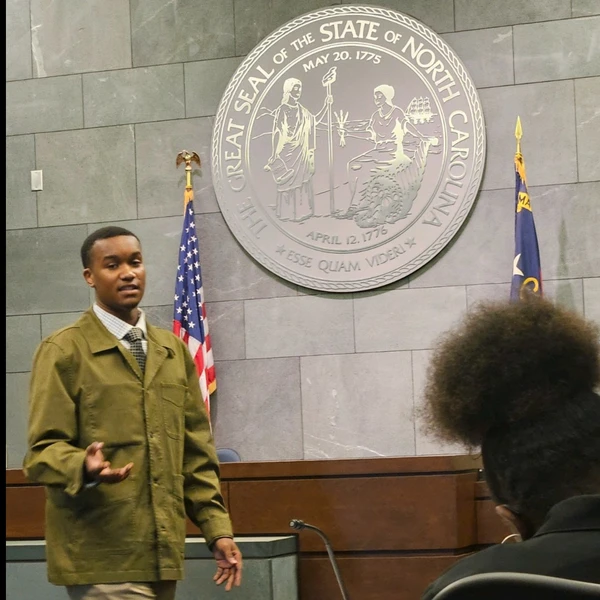
I'm Jacob Fletcher and my goals in life goals are simple: helping others and creating change. Going into the law field or healthcare will be my goal as I enjoy helping others. For the law career path, I will soon become a state and then federal prosecutor and open my law firm specializing in different types of litigation. The health care plan would be physical therapy and opening my clinic. I want my clinic and firm because I want to be able to represent and help others in a more creative nature. I currently enjoy doing teen court as a lead youth attorney, in sports medicine where I am a lead student athletic trainer, helping with Durham Parks and Recreation during city events. I also love working and saving money when I hold a local job at Jersey Mikes.
Education
North Carolina Central University
Bachelor's degree programMajors:
- Political Science and Government
Minors:
- Law
Garner High
High SchoolMiscellaneous
Desired degree level:
Doctoral degree program (PhD, MD, JD, etc.)
Graduate schools of interest:
Transfer schools of interest:
Majors of interest:
- Legal Professions and Studies, Other
- Law
- Criminal Justice and Corrections, General
- Health Professions and Related Clinical Sciences, Other
Career
Dream career field:
- Law Practice
Dream career goals:
Climb up the ranks as a government(state then federal) prosecutor then open up my own law firm specializing in all types of litigation
Intern
George H White Bar Association2024 – 2024Team Member
Jersey Mikes2023 – Present3 years
Sports
Football
Club2014 – 20195 years
Awards
- defensive player of the year
- offensive player of the year
Football
Junior Varsity2021 – 20221 year
Public services
Advocacy
Raleigh Capital Teen Court — Lead Youth Attorney2023 – PresentVolunteering
City Durham Parks and Recreation — Lead organizer2021 – Present
Future Interests
Advocacy
Politics
Volunteering
Philanthropy
Entrepreneurship
Private (PVT) Henry Walker Minority Scholarship
I am Jacob Fletcher, a Political Science student with a concentration in Theory and Pre Law at North Carolina Central University. I am someone who has always believed that ambition means very little without the work ethic to support it. I have never wanted to simply say that I have goals. I want my daily actions, leadership, academics, and service to prove that I am willing to work for them.
My career goals are ambitious because I want my impact to be equally ambitious. My long term goal is to become a federal prosecutor, but I want to take a unique path to get there. I plan to begin my career in federal law enforcement, ideally as a Special Agent with an agency such as the ATF or FBI. I want to understand investigations from the ground up, develop firsthand experience with federal cases, and learn how evidence, investigative strategy, and community impact intersect. I then plan to attend law school and transition into federal prosecution, bringing my investigative experience into the courtroom. Eventually, I hope to establish my own law firm and use my experience to mentor future attorneys and serve communities that need strong advocates.
My work ethic has already shaped the way I approach these goals. At North Carolina Central University, I have challenged myself to become more than a student. I serve as the Student Government Association Attorney General, where I have been trusted with responsibilities requiring professionalism, judgment, advocacy, and accountability. I was originally told that first year students were not typically selected for the position, but I continued working, developing relationships, and proving that I was capable of handling the responsibility. I was eventually trusted to take over the position mid year and was later reappointed. That experience reinforced something I already believed: sometimes the answer is not that an opportunity does not exist. Sometimes you have to work until someone is willing to create the opportunity for you.
My work ethic was also developed through Raleigh Capital Teen Court, where I represented 48 youth clients in a restorative justice program and earned a 46 to 2 record. That experience sparked my passion for law and taught me how preparation, competitiveness, and persistence can turn potential into performance.
This scholarship would help me continue that work. Financial support would allow me to focus more heavily on my education, professional development, internships, leadership opportunities, and preparation for law school and federal service. It would help offset the costs of tuition, books, transportation, professional clothing, application expenses, and other necessities that come with preparing for a competitive career.
I am not asking for an investment simply because I have goals. I am asking for an investment because I have demonstrated that I will work relentlessly to accomplish them. Give me the opportunity, and I will do the work. More importantly, I intend to turn that opportunity into a career devoted to serving others.
Kalia D. Davis Memorial Scholarship
I am Jacob Fletcher, a Political Science student with a concentration in Theory and Pre Law at North Carolina Central University. I am someone who has always believed that ambition means very little without the work ethic to support it. I have never wanted to simply say that I have goals. I want my daily actions, leadership, academics, and service to prove that I am willing to work for them.
My career goals are ambitious because I want my impact to be equally ambitious. My long term goal is to become a federal prosecutor, but I want to take a unique path to get there. I plan to begin my career in federal law enforcement, ideally as a Special Agent with an agency such as the ATF or FBI. I want to understand investigations from the ground up, develop firsthand experience with federal cases, and learn how evidence, investigative strategy, and community impact intersect. I then plan to attend law school and transition into federal prosecution, bringing my investigative experience into the courtroom. Eventually, I hope to establish my own law firm and use my experience to mentor future attorneys and serve communities that need strong advocates.
My work ethic has already shaped the way I approach these goals. At North Carolina Central University, I have challenged myself to become more than a student. I serve as the Student Government Association Attorney General, where I have been trusted with responsibilities requiring professionalism, judgment, advocacy, and accountability. I was originally told that first year students were not typically selected for the position, but I continued working, developing relationships, and proving that I was capable of handling the responsibility. I was eventually trusted to take over the position mid year and was later reappointed. That experience reinforced something I already believed: sometimes the answer is not that an opportunity does not exist. Sometimes you have to work until someone is willing to create the opportunity for you.
My work ethic was also developed through Raleigh Capital Teen Court, where I represented 48 youth clients in a restorative justice program and earned a 46 to 2 record. That experience sparked my passion for law and taught me how preparation, competitiveness, and persistence can turn potential into performance.
This scholarship would help me continue that work. Financial support would allow me to focus more heavily on my education, professional development, internships, leadership opportunities, and preparation for law school and federal service. It would help offset the costs of tuition, books, transportation, professional clothing, application expenses, and other necessities that come with preparing for a competitive career.
I am not asking for an investment simply because I have goals. I am asking for an investment because I have demonstrated that I will work relentlessly to accomplish them. Give me the opportunity, and I will do the work. More importantly, I intend to turn that opportunity into a career devoted to serving others.
Bright Lights Scholarship
My plans for the future are built around one central purpose: to turn education, leadership, and public service into a career that protects people and creates opportunities for others. I am currently pursuing Political Science with a concentration in Theory and Pre Law at North Carolina Central University, and I have intentionally built my college experience around preparing for a career in the justice system.
My immediate goal is to complete my undergraduate education with strong academic performance while continuing to develop as a leader and professional. At NCCU, I serve as the Student Government Association Attorney General, a position that has challenged me to interpret policy, advocate for students, exercise sound judgment, and accept responsibility when difficult decisions must be made. I also plan to continue pursuing internships, legal experiences, mentorship opportunities, and public service positions that will expose me to different sides of the justice system.
After completing my undergraduate degree, my goal is to enter federal law enforcement, ideally as a Special Agent with an agency such as the ATF or FBI. I want to understand investigations from the ground up: how evidence is developed, how cases are built, how investigators work with prosecutors, and how federal enforcement affects communities. I see this experience as an important stepping stone rather than my final destination.
My long term goal is to attend law school and transition into federal prosecution. I want to bring investigative experience into the courtroom so that I can become a prosecutor who understands not only statutes and legal arguments, but also the realities behind the cases I prosecute. Eventually, after completing my public service career, I hope to establish my own law firm and use my experience to mentor young attorneys and provide meaningful service to my community.
This scholarship would help me move toward those goals by reducing the financial barriers associated with earning my education. Tuition, textbooks, professional attire, transportation, internship expenses, application fees, and other educational costs can quickly become obstacles for a student preparing for a demanding career. Scholarship support would allow me to direct more of my resources toward my education and professional development rather than choosing between necessary expenses.
More importantly, this scholarship would be an investment in the work I intend to do with the opportunities I receive. I do not want to simply graduate, obtain a career, and move forward alone. I want to use every opportunity to reach backward and bring someone else forward. My experiences in Teen Court, student government, my church, and community service have taught me that success carries a responsibility to serve.
I know exactly why I am pursuing this path. I want to protect communities, pursue justice, represent people with integrity, and create opportunities for the next generation. This scholarship would not simply help me pay for school. It would help me continue building the foundation for a lifetime of public service.
Samantha Kolesnik Survivor Justice Scholarship: Fighting Rape by Deception
Consent is not a technicality. It is the foundation of bodily autonomy. When a person intentionally uses fraud or deception to obtain sexual access that they otherwise would not have received, the harm is not erased simply because the victim physically participated. The central question should be whether the person freely and knowingly consented under the circumstances, and whether the deception was intentionally used to defeat that consent.
My approach to advocating for recognition of rape by fraud and rape by deception would be grounded in intentionality, accountability, and the fundamental principle that people have the right to control what happens to their own bodies. As someone pursuing a career in federal law enforcement followed by federal prosecution, I want to be prepared to address emerging forms of sexual violence not only after harm occurs, but by helping strengthen the legal framework used to recognize and prosecute it.
If I were presenting this issue before a state legislative committee, my most compelling argument would be simple: a person cannot meaningfully consent to something they were intentionally deceived into consenting to. A misunderstanding is fundamentally different from deliberate deception. The distinction is intentionality.
Not every lie or misrepresentation should automatically become a criminal offense. Criminal law must have clear boundaries, due process protections, and a high evidentiary standard. However, when an individual deliberately creates a false circumstance, identity, or material fact for the purpose of obtaining sexual access, the law should be capable of recognizing the resulting violation. The focus should be on whether the deception was intentional, material to the sexual consent, and directly connected to obtaining sexual access.
This distinction matters because calling these cases merely "misunderstandings" can minimize the survivor's loss of autonomy. Sexual consent is personal and informed. If someone deliberately manipulates another person's understanding of the circumstances in order to obtain sexual access, that manipulation can fundamentally alter the person's ability to make an autonomous decision.
My future career gives me a particular perspective on this issue. I hope to begin in federal law enforcement, where I would learn how investigators identify intent, collect evidence, interview witnesses and survivors, and build cases capable of surviving rigorous scrutiny. I then intend to transition into federal prosecution, where I would bring that investigative understanding into the courtroom. In both roles, I would advocate for careful, evidence based approaches that protect survivors while respecting constitutional rights and due process.
I would also advocate through education. Communities need to understand that consent is not simply the absence of physical resistance. It involves an individual's ability to make a knowing and voluntary decision. Legal professionals, law enforcement officers, educators, and students should be equipped to recognize how intentional deception can undermine that autonomy.
Ultimately, my argument to lawmakers would be that the law should not allow intentionality to become a loophole for sexual violence. If our criminal justice system is committed to protecting bodily autonomy, it must be willing to recognize the ways that autonomy can be violated. My goal is to become the kind of investigator and prosecutor who does not simply enforce existing laws, but helps ensure that the law continues to protect people as society's understanding of harm evolves.
Hines Scholarship
Going to college means far more to me than earning a degree. It represents opportunity, preparation, and responsibility. For me, attending North Carolina Central University means having the opportunity to become the person my younger self hoped I could become while preparing myself to serve people far beyond myself. I am not in college simply to complete assignments and receive a diploma. I am here to build the knowledge, discipline, relationships, and character necessary to create a meaningful career and a meaningful life.
As a Political Science student with a concentration in Theory and Pre Law, I am intentionally preparing for a career in public service. My long term goal is to serve in federal law enforcement, ideally as a Special Agent with an agency such as the ATF or FBI, before transitioning into federal prosecution. I want to understand the justice system from the ground up. I want to learn how investigations are conducted, how evidence is developed, and how communities experience the criminal justice system before eventually bringing that perspective into the courtroom as a federal prosecutor.
NCCU is an important part of that journey because it is giving me more than a classroom education. As an HBCU student, I am surrounded by a community that challenges me to understand where I come from while thinking seriously about where I can go. My experiences in student leadership have taught me how to turn that education into action. As Student Government Association Attorney General, I advocate for students, interpret policy, and take on responsibilities that require professionalism, judgment, and accountability. I have also been involved in organizations and service opportunities that have allowed me to develop as a leader while contributing to my campus community.
My goals were also shaped by Raleigh Capital Teen Court. I entered as a jury member and eventually became a youth attorney, representing 48 clients while earning a 46 to 2 record. That experience sparked my passion for law and showed me that education becomes most powerful when it is used to help others. It made me want to become not only successful, but useful.
That is ultimately what I am trying to accomplish through college. I want to graduate prepared to compete at the highest levels of federal service and eventually law school. I want to build relationships with mentors, pursue internships, strengthen my academic foundation, and develop the leadership skills necessary to carry significant responsibility. I also want to create opportunities for other students by mentoring them and showing them that their ambitions do not have to be limited by their circumstances.
College is my preparation ground, but it is also my proving ground. I am learning how to turn ambition into discipline, opportunities into experience, and experience into service.
When I eventually walk across the stage at NCCU, I do not want to look back and see four years I simply completed. I want to see four years that transformed me into a better student, leader, professional, and servant. I am pursuing an education because I intend to use it. My degree will open doors, but what I do after those doors open will determine the impact I leave behind.
Michael Rudometkin Memorial Scholarship
I embody selflessness by understanding that leadership is not about being the most visible person in the room. It is about recognizing when someone needs help and being willing to step forward, even when there is no recognition attached to it. Throughout my life, I have learned that some of the most meaningful moments of service happen quietly, when helping someone else is simply the right thing to do.
My understanding of selflessness began at Life International RTP in Durham, North Carolina. Growing up with a father who is a pastor and a family deeply involved in church leadership, I learned early that serving others requires consistency. I have served in choirs, children's ministry, worship services, and behind the scenes responsibilities. I have stayed for late night meetings and opened church doors before sunrise for pastors' meetings. Those experiences taught me that helping others is not always convenient. Sometimes selflessness means sacrificing your time, energy, or comfort because something bigger than yourself needs to be done.
Raleigh Capital Teen Court gave me another perspective on selflessness. I represented 48 youth clients in a restorative justice program, advocating for young people who were navigating difficult circumstances. I quickly learned that being an advocate was not simply about winning an argument. It was about listening to someone else's story, understanding their circumstances, and making sure they had someone willing to stand beside them. My 46 to 2 record was something I was proud of, but the greater reward was knowing that I had helped young people navigate a process that could have felt intimidating or overwhelming.
I have also demonstrated selflessness through my work as a CPR instructor. Teaching someone how to respond during a medical emergency is ultimately about preparing them to save someone else's life. I gave my time and knowledge so that others could be prepared to help a stranger, friend, family member, or even someone they had never met. That experience reinforced my belief that service often creates a chain reaction: when you equip one person to help someone else, your impact extends far beyond the original interaction.
At North Carolina Central University, I continue to practice selflessness through my role as Student Government Association Attorney General. I have worked to advocate for students, listen to concerns, interpret policies, and help address issues affecting the campus community. I have learned that sometimes helping someone means having a difficult conversation, researching an issue they do not know how to navigate, or simply being willing to listen.
My goal is to carry this mindset into my future career in federal law enforcement and federal prosecution. I want my authority to be measured by the number of people I help, not the title I hold. Whether I am serving a community, mentoring a student, advocating for someone who feels unheard, or helping a colleague succeed, I want to leave people better than I found them.
To me, selflessness is simple: if I have the ability to help someone, I believe I have a responsibility to do so. That principle has shaped who I am, and it will continue to shape the public servant I become.
J&Y Law Yahouda Yahoudai Service Scholarship
I have learned that community is not something you simply belong to. It is something you build. The strongest communities are created by people who are willing to show up for others, especially when there is nothing to gain in return. Throughout my life, service has been one of the clearest ways I have expressed who I am, and my experiences through my church, youth programs, volunteer work, and North Carolina Central University have taught me that even small acts of service can create lasting impact.
My commitment to service began at Life International RTP in Durham, North Carolina. Growing up with a father who is a pastor and a family deeply involved in church leadership, I was surrounded by opportunities to serve. I have participated in choirs, children's ministry, worship services, Scripture and lyric coordination, and countless behind the scenes responsibilities. I have attended late night meetings and opened church doors before sunrise for pastors' meetings. These experiences taught me that service is not always visible. Sometimes the most important contribution is simply being dependable enough to show up when people need you.
One of my most meaningful community experiences has been Raleigh Capital Teen Court. I first entered Teen Court as a jury member, but watching youth attorneys advocate for their peers sparked my passion for law and service. I eventually became a youth attorney and represented 48 young clients in a restorative justice program, earning a 46 to 2 record. More importantly, I learned that young people deserve opportunities to learn from mistakes rather than being defined by them. Teen Court showed me that accountability and compassion can exist together and that investing in young people is an investment in the future of a community.
I have also contributed through volunteer work with Raleigh Parks, Recreation and Cultural Resources, served as a Sports Medicine Team Leader, worked as a CPR instructor, and assisted with a judicial campaign. Each experience allowed me to serve different groups of people and taught me to communicate, lead, and adapt to different environments. Whether teaching someone how to respond during a medical emergency, helping create safe recreational opportunities for youth, or supporting civic engagement, I have learned that service takes many forms.
At North Carolina Central University, my commitment to community has continued through student leadership. As Student Government Association Attorney General, I advocate for students, participate in policy discussions, and work to improve the campus community. I also remain involved in student organizations and service initiatives because I believe leadership should make the people around you better.
Ultimately, the good I hope to contribute to my communities is bigger than any single volunteer position. I want people to feel supported, heard, and capable of becoming more than their circumstances suggest. My education and future career in federal law enforcement and federal prosecution will give me an even greater platform to serve.
I have learned that community is built by people who consistently choose to care. I intend to be one of those people for the rest of my life.
Joe Gilroy "Plan Your Work, Work Your Plan" Scholarship
My long term goal is to build a career that combines federal law enforcement, federal prosecution, and ultimately private legal practice. I do not view these as separate ambitions. I see them as stages of one career dedicated to understanding, enforcing, and improving the justice system. My plan is to graduate from North Carolina Central University, gain federal investigative experience, attend law school, become a federal prosecutor, and eventually use that experience to establish my own law firm.
My first priority is completing my undergraduate education efficiently and successfully. I am pursuing a Political Science degree with a concentration in Theory and Pre Law at NCCU. During the remainder of college, I plan to maintain a competitive GPA, pursue internships with federal agencies, courts, prosecutors' offices, and legal organizations, and continue developing my leadership experience as Student Government Association Attorney General. I also plan to build relationships with professors, attorneys, federal agents, judges, and alumni who can provide mentorship and professional guidance. My target is to graduate with minimal unnecessary debt while building a strong résumé for both federal employment and law school.
Financial planning is critical. I intend to pursue scholarships, paid internships, campus employment, and federal financial aid while limiting unnecessary expenses. My annual education budget will prioritize tuition and fees, books and academic materials, transportation, professional clothing, application expenses, and eventually law school preparation. I will continuously compare scholarship opportunities and employment options rather than relying on a single source of funding.
After completing my undergraduate degree, my preferred path is to pursue federal law enforcement as a Special Agent, particularly with the ATF or FBI. I will prepare for federal hiring requirements by maintaining strong physical fitness, developing investigative and analytical skills, completing internships, and gaining relevant professional experience. My objective is to spend several years developing firsthand knowledge of federal investigations, evidence, interagency cooperation, and community impact.
While working, I will prepare financially and academically for law school. I plan to build savings for application fees, LSAT preparation, relocation, and living expenses while continuing to pursue scholarships and employer or government education benefits when available. I will also research law schools based on cost, scholarship opportunities, employment outcomes, and proximity to federal legal markets.
My long term transition will be from federal law enforcement into federal prosecution. After law school and admission to the bar, I intend to pursue opportunities with a United States Attorney's Office or another federal legal position that develops my litigation and criminal prosecution skills. My investigative background would allow me to approach prosecution with practical knowledge of how cases are built, while my legal education would prepare me to advocate effectively in court.
Finally, I intend to use my combined experience to establish my own law firm. I want the firm to provide high quality legal representation while creating opportunities for young attorneys and supporting underserved communities.
I understand that careers rarely follow a perfect timeline. If federal employment takes longer than expected, I will pursue local or state investigative positions. If law school must come before federal service, I will reverse the sequence without abandoning the ultimate goal. My plan is ambitious, but it is also adaptable. The destination matters, but I am prepared to adjust the route without losing sight of where I am going.
Sloane Stephens Doc & Glo Scholarship
I do not want my education to simply change my life. I want it to change what is possible for the people who come after me. My vision for the future is rooted in public service, justice, and representation. I am pursuing a degree in Political Science with a concentration in Theory and Pre Law at North Carolina Central University because I want to understand the systems that govern our communities and eventually use that knowledge to protect them.
My career goal is to serve first in federal law enforcement, ideally as a Special Agent with an agency such as the ATF or FBI, before transitioning into federal prosecution. I want to understand justice from the ground up. I want to experience investigations, understand how evidence is developed, work alongside communities, and learn the realities of federal cases before eventually bringing that experience into the courtroom. I do not see federal law enforcement and prosecution as separate ambitions. I see them as two stages of the same commitment to public service.
The people who inspire me most are the people who invested in me before I had anything to offer them in return. My father, a pastor, and my family have shown me that leadership begins with service. Through Life International RTP, I learned that sometimes leadership means being the person who opens the doors before sunrise, stays after everyone leaves, serves behind the scenes, or simply shows up when someone needs you. My mentors have also pushed me to see possibilities beyond what I initially thought was achievable.
That lesson has followed me into my own leadership. Through Raleigh Capital Teen Court, I represented 48 youth clients in a restorative justice program and earned a 46 to 2 record as both defense and prosecution counsel. That experience showed me the power of giving young people accountability without allowing one mistake to define their future. At NCCU, serving as Student Government Association Attorney General has allowed me to advocate for students, interpret policy, and contribute to the community that is helping prepare me for my future.
I want to give back by creating opportunities for others to see themselves in places they may not have considered possible. As an African American student at an HBCU, I understand the importance of representation in law enforcement, government, and the legal profession. I want to mentor students interested in criminal justice, law, and public service and eventually establish my own law firm after my government career.
The future I want to create is one where young people understand that their circumstances do not have to determine their ceiling. I want my education to become more than a degree. I want it to become a tool for advocacy, mentorship, and service.
My goal is not simply to succeed and then look back. It is to succeed, reach back, and bring someone with me. If my education allows me to protect communities, advocate for justice, mentor the next generation, and create opportunities that did not previously exist, then I will know I used it for its greatest purpose.
Sherman S. Howard Legacy Foundation Scholarship
Service was not something I discovered when I entered college. It was something I was raised around. My father is a pastor, and much of my family has served in church leadership, so from an early age I learned that leadership is not about having a title. It is about being present, dependable, and willing to serve when people need you most. My involvement with Life International RTP in Durham, North Carolina, has shaped not only how I serve my community, but also the person and leader I am becoming.
My service at Life International RTP has taken many forms. I have served in choirs, worked with children's ministry, managed Scripture and worship lyrics, assisted with services, and supported the behind the scenes responsibilities that keep the church functioning. Some of my most meaningful experiences have happened away from the platform. I have sat through meetings that extended late into the night, listened to conversations about the needs of our congregation, and opened the church doors at the crack of dawn for pastors' meetings. Those moments taught me that service often happens when no one is watching. Sometimes leadership means simply being the person who shows up.
Life International RTP also taught me how to communicate with people. Being part of a church community exposed me to people of different ages, personalities, experiences, and perspectives. I learned how to walk into a room, understand the environment, and connect with people without hesitation. I learned how to remain professional and presentable while still being authentic. I learned how to adjust my communication to meet people where they are, listen to perspectives different from my own, and receive criticism and advice without becoming defensive. These lessons have become invaluable in my academic, professional, and leadership experiences.
Perhaps most importantly, my church taught me resilience. There have been moments when I have had to serve others while carrying my own doubts, frustrations, or difficult circumstances. Yet I learned how to show up. I learned that putting on a smile does not mean pretending everything is perfect. It means refusing to allow a difficult moment to prevent you from encouraging someone else. The energy, optimism, and authenticity I bring into my leadership are deeply connected to those lessons.
That foundation has followed me to North Carolina Central University, where I serve as Student Government Association Attorney General and continue pursuing opportunities in public service. My experiences at Life International RTP have taught me that leadership requires both confidence and humility. I can advocate for my position while listening to someone else's. I can accept correction without losing confidence in myself. Most importantly, I understand that influence creates responsibility.
As I pursue my goal of serving in federal law enforcement and eventually becoming a federal prosecutor, I know the lessons I learned at Life International RTP will continue to guide me. Federal service will require discipline, composure, communication, integrity, and the ability to interact with people from every walk of life. My faith and church community have helped prepare me for that responsibility.
Life International RTP did more than teach me how to serve. It taught me how to show up, how to lead, how to listen, and how to remain grounded when circumstances become difficult. The strength God has given me through my church, my family, and my community will continue to shape the public servant I become and the communities I ultimately serve.
Augustin Gonzalez Memorial Scholarship
My interest in federal law enforcement is not simply a passion for the badge, the mission, or the excitement of the work. I view federal law enforcement as an intentional stepping stone toward the larger career I am building in the justice system. My ultimate goal is to become a federal prosecutor, and I believe serving as a federal Special Agent with an agency such as the ATF or FBI would give me the investigative experience, discipline, perspective, and understanding necessary to become a stronger attorney.
My interest in the law began through Raleigh Capital Teen Court, where I first experienced the courtroom as a jury member before becoming a youth attorney. Representing 48 youth clients while earning a 46–2 record showed me that I wanted to pursue justice professionally. At North Carolina Central University, that interest has continued through my role as Student Government Association Attorney General, a position I earned after being trusted to take over midway through the academic year and for which I was later reappointed. These experiences have taught me that justice requires more than knowing the law. It requires preparation, judgment, discipline, communication, and the ability to make difficult decisions responsibly.
Federal law enforcement is the next step because I want to understand what happens before a case ever reaches a courtroom. As a Special Agent, I would have the opportunity to learn how complex investigations are developed, how evidence is gathered and evaluated, how investigators collaborate with prosecutors and other agencies, and how federal cases affect the communities involved. I want to experience the investigative side of the justice system firsthand rather than entering prosecution with only a classroom understanding of it.
That experience would become invaluable when I eventually transition into federal prosecution. I want to be a prosecutor who understands not only statutes and courtroom procedure, but also the realities of investigations and the professionals responsible for building those cases. I believe investigative experience would make me more analytical, more prepared, and more capable of evaluating evidence while protecting constitutional rights and pursuing justice fairly.
Federal law enforcement also represents an opportunity for personal growth. It would challenge me to operate under pressure, maintain discipline, work with people from different backgrounds, and develop the composure required to make consequential decisions. Those qualities will follow me throughout my legal career.
Ultimately, I do not see federal law enforcement as a detour from becoming an attorney. I see it as preparation. I want to serve communities in the field, learn the justice system from the ground up, and eventually carry that experience into the courtroom as a federal prosecutor. My goal is not simply to have a career in justice. I want to understand every side of it so that, when I eventually stand in court, I can bring the perspective of someone who has been there from the investigation to the prosecution.
For me, federal law enforcement is not the final destination. It is the foundation for the attorney and public servant I intend to become.
SCFU Scholarship for HBCU Business Students
The first time I understood how closely economics and opportunity are connected was not in a classroom, but in observing how access shapes the decisions people are able to make. I realized that talent exists everywhere, but opportunity does not. That gap between potential and access is where I believe business, when done intentionally, can create real social change. As a Political Science major at North Carolina Central University with a strong interest in law, leadership, and systems, I have become deeply committed to understanding how economic empowerment can be used to transform underrepresented communities.
My vision for economic empowerment begins with access. In many underrepresented communities, individuals are not lacking ambition or intelligence, but rather access to capital, mentorship, business education, and professional networks. I believe business innovation must intentionally address these gaps by creating pathways that allow individuals to build, own, and sustain economic opportunity. This includes expanding support for Black entrepreneurs, increasing financial literacy education, and ensuring that young people are exposed early to business development, leadership, and organizational strategy.
In my future career, I intend to operate at the intersection of law, policy, and business strategy. While my current academic path is pre-law focused, I see business as an essential extension of impact. My long-term goal is to build a law firm that not only provides legal representation but also serves as a platform for economic education and community empowerment. I want to create a structure where legal and business knowledge work together to help individuals and small businesses protect their assets, understand contracts, and make informed financial decisions. Too often, underrepresented communities are excluded from these conversations, which limits long-term economic mobility and generational wealth building.
Economic empowerment is not only about individual success, but about systems that allow communities to grow collectively. Business innovation has the power to shift this reality by creating institutions that are both profitable and purposeful. I believe companies and organizations should measure success not only by revenue, but also by impact: how many people are employed, how many entrepreneurs are supported, and how many barriers to entry are removed. When business is used intentionally, it becomes a vehicle for equity rather than exclusion.
My experience in leadership has reinforced this belief. As the Student Government Association Attorney General at North Carolina Central University, I work within structured systems that require accountability, fairness, and decision-making that directly affects others. I have learned that strong systems are built on consistency and responsibility, not just authority. Additionally, my experience in Raleigh Capital Teen Court, where I served 48 youth clients in a restorative justice program, taught me that systems can either limit or liberate individuals depending on how they are designed and applied. These experiences shaped my understanding that meaningful change requires both structure and intentional leadership.
The Social Change Fund United’s mission resonates with me because it recognizes that economic empowerment is a form of social justice. Driving change requires more than awareness. It requires investment, strategy, and long-term commitment to building systems that last beyond individual success.
Ultimately, my career goals in business and law are aligned with a larger purpose: to create opportunity where it did not previously exist and to ensure that economic systems are more inclusive, equitable, and accessible. I do not view business as separate from social impact. I view it as one of the most powerful tools available to achieve it.
Tia Lukeya Woods from Books Pages to Boarding Passes Scholarship
The first time I realized how far education could take someone was not in a classroom. It was watching people around me talk about places they had never seen as if those places were unreachable. For many students, especially those from underserved communities, the world can feel small not because we lack ambition, but because access often determines exposure. As a student at North Carolina Central University, I have learned that curiosity can push you beyond limitations, but opportunity is what allows you to cross borders both literally and intellectually.
As a Political Science major on a pre-law track, I spend much of my time studying systems, leadership, and how communities interact with power and justice. However, I believe there are lessons about culture, government, and humanity that cannot fully be learned through textbooks alone. I want to study abroad because I want to understand how other countries approach law, public policy, education, and community. I want to see how different societies handle issues such as criminal justice, civic engagement, and social responsibility. More importantly, I want to understand how perspective changes when you step outside of what is familiar.
Growing up, travel beyond necessity was never guaranteed. Financial realities shape how many students experience the world, and for me, global learning opportunities have often felt just outside of reach. I have learned how to maximize every opportunity available to me academically and professionally, but experiences such as study abroad programs can still present financial barriers that are difficult to overcome alone. This scholarship would help turn what has largely been an aspiration into access. It would allow me to pursue experiences that directly strengthen my education and future legal career.
What draws me most to studying abroad is the idea that crossing borders changes the way you think. I want to challenge my own assumptions, engage with people whose experiences differ from mine, and better understand how culture shapes systems and opportunity. As someone who aspires to become a federal criminal prosecutor and eventually establish my own law firm, I know that effective leadership requires more than intelligence. It requires perspective. The ability to understand people from different backgrounds, communicate across differences, and think globally is increasingly important in both law and leadership.
Tia Lukeya Woods’ story resonates deeply with me because it reflects a mindset I value strongly: the belief that learning should never be confined to a single classroom, city, or comfort zone. Like Tia, I believe education is something you actively pursue. It is found in conversations, environments, books, and experiences that force you to grow. Her story also resonates because she carried pride in where she came from while remaining curious about the world beyond it. As a student at an HBCU, I understand the importance of carrying both identity and ambition together.
I carry what I gain from learning back into both my academic work and my community. I want to use those experiences to strengthen my understanding of policy, justice, and advocacy while also encouraging other students from backgrounds similar to mine to pursue opportunities beyond what they initially believe is possible. Representation matters, especially in spaces connected to international education and professional leadership. I want to show that students from underserved communities belong in global conversations too.
For me, studying abroad is not simply about travel. It is about growth. It is about gaining the perspective necessary to become a more effective leader, advocate, and citizen of the world. Education may begin with books, but sometimes the most important lessons are waiting beyond the borders of what you have already known.
ESOF Academic Scholarship
The first time I stood in a courtroom advocating for a youth client through Raleigh Capital Teen Court, I understood that my future would be rooted in law, leadership, and public service. Watching how advocacy, structure, and accountability could redirect someone’s future changed the way I viewed the legal profession. I realized that the law is not simply about enforcing rules. At its best, it is about protecting communities, ensuring fairness, and creating opportunities for individuals to move forward rather than remain defined by their circumstances. That realization continues to shape both my educational and professional goals today.
I am currently a first-year sophomore at North Carolina Central University, majoring in Political Science with a concentration in theory and pre-law. My educational goal is to maximize every academic and professional opportunity available to me while building a strong foundation in legal reasoning, public policy, leadership, and advocacy. I intend to continue strengthening my academic performance, expanding my legal experience through internships and service opportunities, and preparing for law school with the long-term objective of becoming a federal criminal prosecutor.
My professional goals extend beyond simply earning a title or entering a profession. I want to become an attorney who understands not only the law itself, but also the people and communities most affected by it. I am particularly interested in criminal law because it exists at the intersection of accountability, justice, and public trust. As a future prosecutor, I hope to approach the role with fairness, discipline, and an understanding that the legal system should protect communities while also maintaining integrity and equity.
Long term, I aspire to establish my own law firm and create pathways for mentorship, representation, and opportunity within underserved communities. Representation matters deeply within the legal profession, especially for communities that have historically lacked access to resources and advocacy. As an African American student attending a historically Black university, I recognize the importance of entering spaces where decisions are made and operating at a level that allows me to influence systems rather than simply exist within them. I want to use my education and professional experiences to contribute to stronger institutions, more equitable systems, and greater access to legal guidance for those who need it most.
My commitment to civic and public service has already played a major role in shaping my development. One of the most impactful experiences has been my involvement with Raleigh Capital Teen Court, where I served 48 youth clients in a restorative justice program while maintaining a 46 to 2 record as both defense and prosecution advocate. This experience exposed me to the importance of second chances, mentorship, and structured accountability. Many of the individuals I worked with were not inherently defined by poor decisions, but by the environments and circumstances surrounding them. Through this work, I learned that public service is not about temporary recognition. It is about creating systems and opportunities that allow people to move forward.
My service continued through my role as Student Government Association Attorney General at North Carolina Central University, a position I was trusted to assume mid-term and later reappointed to based on my performance. In this role, I help interpret policy, address student concerns, and contribute to initiatives focused on campus safety and student well-being. I have worked on policy-related discussions involving residential life and student safety while also participating in efforts to address harmful digital environments affecting students. These experiences strengthened my understanding of how leadership and public service often operate behind the scenes through policy, structure, and accountability.
What I value most about civic engagement is the ability to create sustainable impact. While direct service is important, I have learned that policy and leadership can influence entire communities at once. Whether through legal advocacy, student government, or mentorship, I approach service with the belief that strong systems should protect, support, and empower the people they serve.
Beyond formal positions, my commitment to public service is reflected in how I approach leadership overall. I believe leadership carries a responsibility to uplift others, maintain integrity, and create opportunities beyond personal success. Every role I have pursued has been intentional in preparing me not only for a career in law, but for a life centered around advocacy and impact.
Ultimately, my educational and professional goals are rooted in purpose. I do not view education as simply earning credentials, but as preparation to enter spaces where I can advocate effectively, influence policy, and contribute to meaningful change. I am committed to becoming an attorney and leader who combines discipline, professionalism, and service to strengthen both institutions and communities.
Success for me will never be measured solely by position or recognition. It will be measured by impact, by the people I help, the systems I improve, and the opportunities I create for others who come after me. That is the purpose driving my education, my leadership, and my commitment to public service.
Jennifer Kelley Memorial Scholarship
WinnerMy life has been shaped by experiences that placed me in positions of responsibility early and challenged me to grow through leadership, advocacy, and service. One of the most influential experiences has been my work with Raleigh Capital Teen Court, where I served 48 youth clients in a restorative justice program, arguing cases as both defense and prosecution while maintaining a 46 to 2 record. That role exposed me to the realities of accountability, second chances, and the impact that guidance can have on someone’s future. It taught me how to communicate under pressure, think critically, and advocate for others within structured systems.
Another defining experience has been serving as the Student Government Association Attorney General at North Carolina Central University, a position I was trusted to assume mid-term and later reappointed to based on my performance. In this role, I help interpret policy, address student concerns, and contribute to initiatives related to student safety and campus well-being. This experience strengthened my professionalism, leadership, and ability to navigate complex issues while maintaining fairness and accountability.
Through both leadership and volunteer work, I have learned that meaningful impact often happens behind the scenes through systems, advocacy, and consistent service. My long-term goal is to become a federal criminal prosecutor and eventually establish my own law firm, but my broader mission is to create pathways for mentorship, representation, and opportunity within underserved communities. I want to use my legal education and leadership experiences to ensure that people, especially those who are often overlooked, have access to fair treatment, guidance, and support.
Outside of school, I am passionate about leadership development, legal advocacy, fitness, and professional growth. I enjoy studying law and policy beyond the classroom because I genuinely value understanding how systems operate and how they can be improved. I also value mentorship and self-development because I believe growth should be continuous. Whether through leadership opportunities, networking, or personal discipline, I am always looking for ways to elevate myself and those around me.
The person who would be my greatest motivator in life is my future self. I am motivated by the vision of who I know I am capable of becoming and the impact I know I can make if I remain disciplined and intentional. Every opportunity I pursue, every leadership role I accept, and every challenge I overcome is driven by the understanding that success is not accidental. I push myself because I know the responsibility that comes with my goals, and I want to become someone capable of creating lasting impact through leadership, advocacy, and service.
Jeffrey J. Douglas First Amendment Scholarship
The first time I realized how powerful free expression truly was, it was not in a courtroom or a textbook. It was while watching anonymous online platforms shape campus culture in real time that I realized how they influenced how students viewed themselves and each other. What began as “free speech” quickly crossed into harassment, bullying, and content that promoted self-harm. That experience forced me to confront a difficult but necessary question: how do we protect free expression while also protecting people?
As the Student Government Association Attorney General at North Carolina Central University, I have worked directly within systems that require balancing rights, accountability, and public interest. One issue that particularly strengthened my interest in First Amendment advocacy involved the rise of anonymous social media applications on college campuses. After observing the harmful impact these platforms had on student well-being, I began researching how other historically Black colleges and universities within the UNC system addressed similar concerns. I reviewed constitutions, policies, and institutional responses while working with student leadership to explore solutions that prioritized both student safety and constitutional considerations.
That experience deepened my understanding of free expression. I learned that defending the First Amendment is not always about agreeing with speech. Often, it is about navigating the tension between liberty and harm while ensuring that restrictions are not driven by discomfort, popularity, or institutional pressure. It requires precision, discipline, and a commitment to constitutional principles even in difficult situations.
My interest in advocacy also extends beyond campus policy. Through Raleigh Capital Teen Court, I served 48 youth clients in a restorative justice program, arguing cases as both defense and prosecution while maintaining a 46-2 record. This experience taught me the importance of due process, fair representation, and ensuring that individuals have a voice within systems that can easily overpower them. Advocacy, whether in a courtroom or in public discourse, begins with protecting individuals' ability to speak, challenge, and defend themselves.
As a Political Science major on a pre-law track, my long-term goal is to become a federal criminal prosecutor and eventually establish my own law firm. However, I believe effective legal advocacy requires more than understanding statutes and procedures. It requires understanding the constitutional freedoms that allow debate, dissent, and representation to exist in the first place. The First Amendment protects not only popular speech, but also controversial, uncomfortable, and vulnerable expression. Without those protections, advocacy itself becomes weakened.
What draws me to this scholarship is not only its support for future attorneys, but its recognition that free expression remains one of the most contested and essential rights in modern society. I am deeply interested in continuing to explore the evolving relationship between technology, public discourse, and constitutional protections, particularly as digital spaces increasingly shape culture and communication.
I do not approach free expression as a choice, but rather a responsibility. The same constitutional principles that protect speech also demand thoughtful, disciplined advocates willing to defend them with integrity. That is the type of attorney I will become.
Aikens Family Scholarship
The first time I stood in front of a courtroom advocating for a youth client in Teen Court, I realized that law was more than a career path to me; it was a purpose. Watching how a single decision, a single voice, or a single opportunity could redirect someone’s future changed the way I viewed leadership, justice, and my own potential. That moment confirmed what I had been working toward for years: building a future where I could use law, policy, and advocacy to create meaningful impact within my community.
I am currently a first-year sophomore at North Carolina Central University, majoring in Political Science with a concentration in theory and pre-law. My educational goal is to continue strengthening my academic foundation before attending law school and ultimately pursuing a career as a federal criminal prosecutor. However, my ambitions extend beyond personal success. I want to become an attorney who not only understands the law but also understands the communities most affected by it. Long term, I aspire to establish my own law firm and create pathways for mentorship, representation, and opportunity for individuals who are often overlooked within professional spaces.
My motivation comes from a deep commitment to growth and service. I have intentionally pursued leadership opportunities that challenge me to operate at a higher level. Through Raleigh Capital Teen Court, I served 48 youth clients in a restorative justice program, arguing cases as both defense and prosecution while maintaining a 46 to 2 record. That experience strengthened my communication, advocacy, and critical thinking skills while teaching me the importance of fairness and accountability. In addition, I currently serve as the Student Government Association Attorney General at NCCU, a role I was trusted to assume mid-term and later reappointed to based on my performance. In this position, I help interpret policy, address student concerns, and contribute to initiatives focused on campus safety and student well-being.
These experiences have shaped not only my professional goals but my mindset. I have learned that success is built through discipline, consistency, and the willingness to step into challenging environments with confidence. I do not wait for opportunities to come to me. I actively pursue them, maximize them, and use them as preparation for the impact I intend to make in the future.
This scholarship would directly support my success by helping reduce the financial pressure that often comes with balancing academics, leadership responsibilities, and professional development opportunities. It would allow me to focus more intentionally on internships, academic achievement, and preparation for law school without being limited by financial barriers. More importantly, this scholarship would be an investment in someone who is committed not only to excelling individually but also to giving back through leadership and service.
I view education as more than earning a degree. For me, it is preparation to enter spaces where decisions are made and ensure that those decisions are informed, fair, and impactful. Every opportunity I pursue is part of that larger mission. I am determined to continue growing as a leader, advocate, and future attorney, and this scholarship would help strengthen the foundation that will allow me to do so.
Sgt. Albert Dono Ware Memorial Scholarship
The legacy of Albert Dono Ware, defined by service, sacrifice, and bravery, reflects a standard of character that extends far beyond military duty. These values are not only admirable they are necessary for leadership, especially when addressing the ongoing challenges faced by the African diaspora in the United States. In my own journey, I have come to understand that true leadership requires a willingness to serve others, to make sacrifices for a greater purpose, and to act with courage in the face of adversity. These principles have shaped how I approach my academic path, my leadership roles, and my long-term vision for creating meaningful change.
Service has been a central part of my development. As a Political Science major at North Carolina Central University, I have intentionally placed myself in positions where I can contribute to the well-being of others. Serving as Student Attorney General has allowed me to uphold fairness and accountability within student government, ensuring that decisions are made with integrity and respect for all individuals. Similarly, my role as Co-Chair and Treasurer of the Justice League Mock Trial and Debate Team has given me the opportunity to support my peers through leadership, mentorship, and responsible management of resources. These roles reflect my belief that service is not passive it requires active engagement and a commitment to improving the systems we are a part of.
Sacrifice, another defining value of Sgt. Ware’s legacy, has also played a significant role in my journey. As the first in my family to attend college, I have had to navigate challenges independently while balancing academic, financial, and personal responsibilities. There have been moments where I have had to prioritize long-term goals over immediate comfort, whether that meant dedicating extra time to my studies, taking on leadership roles that required additional responsibility, or continuing forward despite financial uncertainty. These sacrifices have strengthened my resilience and reinforced my understanding that meaningful progress often requires perseverance and discipline.
Bravery, in my experience, is not limited to extraordinary acts it is demonstrated in everyday decisions to stand firm in one’s values. Through my experiences with the George H. White Bar Association and as a Lead Youth Attorney in Teen Court, I have developed the courage to advocate for others, even in high-pressure environments. Arguing cases, making decisions, and representing individuals requires confidence and a commitment to justice, especially when outcomes have real consequences. This form of bravery speaking up, taking initiative, and remaining steadfast in the pursuit of fairness is essential when addressing systemic challenges.
These values directly inform my vision for addressing the challenges faced by the African diaspora in the United States. Issues such as disparities in the criminal justice system, unequal access to quality education, and economic inequality continue to impact Black communities at disproportionate rates. Addressing these challenges requires a multi-layered approach rooted in both policy reform and community engagement.
One of the most critical areas for reform is the criminal justice system. Policies that promote transparency, accountability, and equitable sentencing are essential to rebuilding trust and ensuring fairness. Expanding access to restorative justice programs, similar to my experience in Teen Court, can provide alternative pathways that focus on rehabilitation rather than solely punishment. Additionally, increasing funding for public defender offices and ensuring equal access to legal representation are necessary steps toward balancing the scales of justice.
Education reform is another key priority. Investing in schools within underserved communities, increasing access to advanced coursework, and expanding mentorship programs can help create more equitable opportunities for students. As someone who has benefited from rigorous academic programs and strong mentorship, I understand how transformative these resources can be. Education is one of the most powerful tools for breaking cycles of inequality and empowering future generations.
Economic empowerment must also be addressed. Policies that support small businesses, increase access to capital, and promote workforce development can help strengthen communities from within. Creating opportunities for financial growth and stability is essential for long-term progress and self-sufficiency.
Driving these changes requires collaboration among key stakeholders. Government leaders and policymakers play a critical role in shaping and implementing legislation. Educational institutions, particularly Historically Black Colleges and Universities like North Carolina Central University, must continue to serve as hubs for innovation, leadership, and community engagement. Community organizations and advocacy groups are essential in ensuring that the voices of those directly impacted are heard and represented. Additionally, legal professionals and members of the justice system have a responsibility to uphold ethical standards and advocate for reforms that promote fairness and equity.
Ultimately, the values of service, sacrifice, and bravery are not just ideals they are guiding principles that shape how I approach both my personal journey and my future career. Inspired by the legacy of Sgt. Ware, I am committed to using my education and experiences to serve others, confront challenges with courage, and contribute to solutions that create lasting, meaningful change for the African diaspora in the United States.
Natalie Joy Poremski Scholarship
My faith is the foundation that guides how I live, lead, and pursue my goals each day. As a Christian, I believe that my life is not only about personal success, but about serving others and honoring God through my actions. Throughout my journey, God has consistently carried me through opportunities, trials, and challenges, reminding me that I am never walking alone. One verse that has remained central to my life is Isaiah 41:10: “Do not fear, for I am with you; do not be dismayed, for I am your God.” This verse has grounded me in moments of uncertainty, especially when facing financial struggles, academic pressure, and the responsibility of being the first in my family to attend college.
I actively live out my faith in my daily life through discipline, integrity, and a commitment to serving others. Whether I am serving as Student Attorney General, managing responsibilities as Co-Chair and Treasurer of the Justice League Mock Trial and Debate Team, or working with youth in restorative justice programs, I strive to reflect Christ-like values in how I lead and interact with others. My faith calls me to treat every individual with dignity and respect, recognizing the inherent value of every human life. This belief directly shapes my support for Pro-Life principles, as I believe that life is sacred and worthy of protection at every stage from conception to natural death.
Supporting Pro-Life values, to me, extends beyond belief it is about action and advocacy. It means approaching issues with compassion, understanding, and a commitment to justice. Through my experiences as a Lead Youth Attorney and my internship with the George H. White Bar Association, I have seen firsthand how systems can impact individuals at vulnerable stages of life. These experiences have reinforced my belief that protecting life also includes advocating for fairness, access to resources, and opportunities for individuals to grow and succeed. My faith teaches me that standing for life also means standing for people in their most challenging moments.
My faith has significantly shaped my future goals and career path. As a Political Science major at North Carolina Central University with aspirations of becoming a federal criminal prosecutor, I feel called to serve in a role that upholds justice while maintaining compassion and integrity. I do not see the law as simply a system of rules, but as a tool that can be used to protect, defend, and uplift others. My desire to enter the legal field is rooted not only in ambition, but in purpose a purpose grounded in my faith and my responsibility to make a meaningful difference.
In the future, I plan to use my education to enact change by advocating for policies and legal practices that protect all stages of life. This includes supporting ethical legal standards, ensuring fair treatment within the justice system, and being a voice for those who may not have the ability to advocate for themselves. I want to contribute to a system that values both accountability and compassion, recognizing that true justice requires both.
Ultimately, my faith continues to shape who I am becoming. It reminds me that every opportunity is part of a greater plan and that my responsibility is to remain faithful, disciplined, and committed to serving others. Through my education and future career, I aim to live out that calling by protecting life, promoting justice, and using my platform to create lasting, meaningful change.
Kalia D. Davis Memorial Scholarship
Receiving this scholarship would have a meaningful and immediate impact on my academic journey and future goals. As a Political Science major at North Carolina Central University, I am committed to pursuing a career in law, with aspirations of becoming a federal criminal prosecutor. I approach my education with discipline and a strong sense of purpose, but financial challenges have made it increasingly difficult to fully focus on achieving my academic and professional potential.
As the first child in my family to attend college, I have taken on the responsibility of navigating higher education largely on my own. From understanding financial aid processes to balancing academic and personal responsibilities, I have learned to be independent and resilient. However, coming from a household with multiple children means that financial resources must be shared, and the rising costs of tuition, books, housing, and transportation continue to place a strain on my family. These challenges are not temporary they are ongoing obstacles that require careful management and sacrifice.
Despite these circumstances, I have remained committed to excellence. My experiences in leadership and legal-focused roles, including serving as Student Attorney General and Co-Chair and Treasurer of the Justice League Mock Trial and Debate Team, reflect my dedication to growth and responsibility. Additionally, my work with the George H. White Bar Association and as a Lead Youth Attorney in Teen Court has strengthened my passion for justice and solidified my career path. Each of these opportunities has prepared me for the demands of a legal career, but they also require time, focus, and energy resources that are often divided when financial stress is present.
A significant challenge I have faced was the inability to access certain need-based scholarships due to administrative issues with my FAFSA. This setback created a financial gap that has made external scholarships like this one essential rather than optional. Without adequate financial support, I am forced to shift attention away from academic and professional development in order to manage financial responsibilities.
This scholarship would help alleviate that burden by allowing me to focus more fully on my education, leadership roles, and career preparation. It would provide the stability needed to invest in academic resources, remain actively involved on campus, and continue building the skills necessary for success in law school and beyond. More importantly, it would allow me to maintain the level of excellence I hold myself to without compromise.
Beyond my personal benefit, this scholarship is an investment in my future impact. I am committed to using my education to advocate for fairness, accountability, and justice within my community. By pursuing a career in law, I aim to serve in a role where I can make meaningful contributions to the legal system while also representing and uplifting underserved communities.
Ultimately, this scholarship would not only support my education it would empower me to continue striving toward a future defined by discipline, integrity, and service. Thank you for this opportunity.
Grand Oaks Enterprises LLC Scholarship
My name is Jacob Fletcher, and I am a Political Science major at North Carolina Central University with a concentration in theory and pre-law. My journey to this point has been shaped by a commitment to discipline, professionalism, and the understanding that success is not something given it is earned through consistent effort and accountability. From early on, I recognized that I wanted a career rooted in justice and advocacy, ultimately aspiring to become a federal criminal prosecutor. That goal has driven me to approach every academic and professional opportunity with purpose, always striving to exceed expectations rather than simply meet them.
At NCCU, I have been fortunate to take on leadership roles that have challenged me to grow both personally and professionally. Serving as Student Attorney General has been one of the most defining experiences of my journey. In this role, I am entrusted with upholding governing standards within student government, ensuring fairness, and making decisions that require both ethical judgment and composure under pressure. This position has reinforced my understanding that leadership is not about authority, but about responsibility especially when it comes to representing and protecting the interests of others.
In addition to my role in student government, I serve as Co-Chair and Treasurer of the Justice League Mock Trial and Debate Team. What began as a competitive opportunity has evolved into a platform where I develop leadership, financial management, and advocacy skills simultaneously. I manage university-allocated funds, plan and coordinate events, and represent NCCU in intercollegiate competitions. These responsibilities have taught me how to balance strategic thinking with execution, while also maintaining accountability for resources and outcomes. Competing in mock trial and debate has strengthened my ability to think critically, argue effectively, and remain composed in high-pressure situations skills that are essential for my future in law.
My professional experiences have further shaped my perspective on justice and solidified my career goals. Through my internship with the George H. White Bar Association, I gained exposure to both the Public Defender’s Office and the District Attorney’s Office. This dual perspective allowed me to see the justice system from both sides, deepening my appreciation for due process, fairness, and the complexity of legal decision-making. Additionally, as a Lead Youth Attorney with Raleigh Capital Teen Court, I had the opportunity to represent 48 youth clients in a restorative justice program. Arguing cases as both defense and prosecution, I developed a well-rounded understanding of advocacy while maintaining a 46–2 record. More importantly, I learned the value of empathy, accountability, and second chances within the legal system.
Attending a Historically Black College and University like North Carolina Central University holds deep meaning for me. An HBCU is more than an institution of higher education it is a community that fosters excellence, culture, and empowerment. At NCCU, I am surrounded by individuals who not only look like me but who share a collective commitment to breaking barriers and redefining success. This environment pushes me to aim higher, knowing that I am part of a legacy of resilience and achievement. It also instills in me a sense of responsibility to honor those who came before me by maximizing every opportunity I am given.
Being at an HBCU has also provided me with access to mentorship, leadership opportunities, and a network that is deeply invested in my success. Professors, advisors, and peers challenge me to think critically and act with purpose. The culture emphasizes not only academic excellence but also community impact, which aligns with my personal values. It is within this environment that I have truly understood the importance of representation in fields like law and government, and how critical it is to ensure that diverse voices are present in positions of power and influence.
My choice to study political science and pursue a career in law is rooted in my desire to make a meaningful difference for both my family and my community. For my family, success means creating opportunities and stability that extend beyond myself. It means honoring the sacrifices that have been made for me to reach this point and using my education to build a legacy of achievement and impact. For my community, it means advocating for fairness, accountability, and justice within systems that do not always operate equitably.
Through my future career as a prosecutor, I plan to uphold the law with integrity while also ensuring that justice is applied fairly and responsibly. I want to be someone who not only enforces the law but also understands the broader impact of legal decisions on individuals and communities. My experiences thus far whether in the courtroom, in student government, or in community programs have prepared me to approach this responsibility with both confidence and humility.
Beyond my career aspirations, I am committed to continuing my involvement in community-based initiatives that promote education, mentorship, and restorative justice. Whether through youth programs, legal outreach, or community engagement, I want to use my knowledge and position to create pathways for others. I believe that true success is not measured solely by personal achievements, but by the impact one has on others.
Ultimately, my journey is defined by a constant drive to grow academically, professionally, and personally. I approach every opportunity with the mindset that I am not only representing myself, but also my family, my community, and the legacy of those who have paved the way for me. I remain committed to becoming the best version of myself, guided by discipline, integrity, and an unwavering pursuit of excellence.