user profile avatar

Jacob Tindol

1x

Finalist

1x

Winner

General information

Hobbies & Interests

  • Animation
  • Gaming
  • Graphic Design
  • Guitar
  • Mathematics
  • Music
  • digital art

Reading

  • Fantasy

I read books multiple times a month.

Bio

At sixteen years old, I have already learned the true meaning of resilience, focus, and transformation. Raised by my paternal grandparents in Godley, Texas, after they gained custody of my sister and me in 2015, I had to navigate a complex childhood shaped by parental substance abuse and incarceration. After facing severe bullying in public school and struggling to cope, I attended Sundown Ranch, where I found the tools and strength to heal and reclaim my future. I chose to turn my adversity into fuel. I channeled my entire focus into my education and personal growth, ultimately achieving the milestone of graduating from Ranch Academy two years early with Honors and nominated to be a Member of the National Society of High School Scholars (NSHSS) - Cumulative GPA: 3.48 This same dedication drives my artistic and technical passions. I love creative writing and journaling, and for the past three years, I have been blending the art of storytelling with code by independently designing and programming my own video games. My ultimate dream is to earn a degree in Computer Game Design and Programming. Having built a strong foundation in both narrative creation and technical development over the last three years, I am eager to use my education to create immersive, impactful digital experiences. I want to build worlds that inspire other players and prove that our past challenges do not define our future potential.

Education

Hill College

Bachelor's degree program

2026 – 2030

Majors:
  • Computer Programming
  • Computer Software and Media Applications
  • Computer Science
Minors:
  • Computer and Information Sciences, General
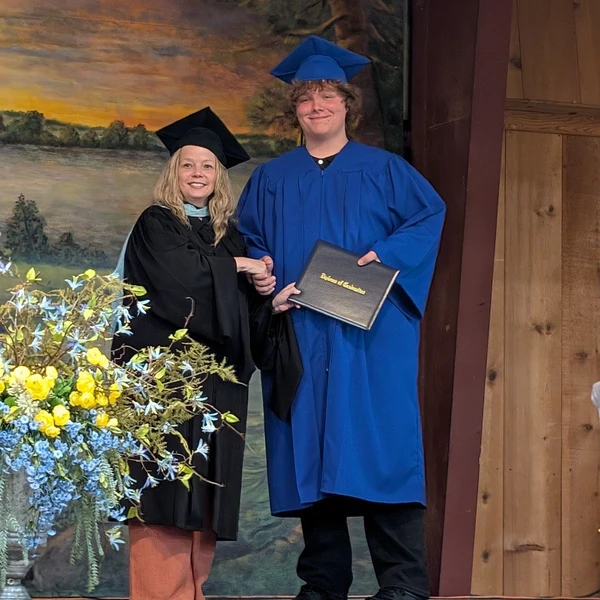
Ranch Academy

High School

2026 – 2026

Homeschooled

High School

2024 – 2026

Miscellaneous

Desired degree level:
Bachelor's degree program
Graduate schools of interest:
The University of Texas at Dallas
Majors of interest:
Computer Science, Computer and Information Sciences, General, Arts, Entertainment, and Media Management, Graphic Communications
Desired degree modality:
Full-Time
Medical school interest:
No
English as first language:
Yes
Homeschooled:
Yes

Career

  • designer

    Computer Games · Myself on Minecraft

    Jan 2022 – Present

  • Cashier / Stock Person

    Retail · Hobby Lobby

    Jan 2026 – Jan 2026

Miscellaneous

Dream career field:
Computer Games, Computer Science, Computer Software, Computer Networking
Dream career goals:
I want to start my own business and create Computer and Video Games.
Work experience:
3 years
Has nursing license:
No
Leadership experience:
Yes

Future Interests

  • Advocacy
  • Volunteering
  • Entrepreneurship
Lost Dreams Awaken Scholarship
To me, recovery is not just a concept; it is the exact framework that allowed me to rebuild my life after being placed into legal custody of my grandparents in 2015. Growing up, navigating severe in-person and online bullying left me isolated and searching for solid ground. For a long time, I felt disconnected and exhausted. Recovery truly began when I stopped letting past adversity define my limits and instead channeled that energy into something I could control: my education and my passion for programming and game design. For me, recovering meant practicing strict personal responsibility and executing a deliberate plan. It meant pushing myself to graduate high school two years early at sixteen, proving to myself that my past did not dictate my capability. Today, as a college student completing my core courses at Hill College, recovery looks like daily discipline. It means managing the balance of my education while working two part-time jobs at Chicken Express and Hobby Lobby to protect my grandparents’ retirement. Ultimately, recovery means transforming old pain into structural stability and a foundation for mentorship. I am not just healing; I am actively building a future where I can transfer to UT Dallas, earn my degree in Animation and Games, and eventually build a program to provide hands-on coding mentorship and emotional stability for other struggling teenagers. Recovery is the intentional choice to use my own story to ensure the next generation doesn't have to walk their difficult paths alone.
RonranGlee Literary Scholarship
Selected Text "Fire is the test of gold; adversity, of strong men. God does not keep a good man in prosperity; he tries him, he hardens him, he disciplines him, and takes him to himself... Why do you wonder that good men are shaken, in order that they may be strengthened? A tree cannot be firmly rooted unless many a wind blows against it; for this very blowing tightens its grip and binds its roots more securely to the earth; those trees are fragile which have grown in a sunny valley." — Seneca, De Providentia (On Providence), Chapter 4 ________________________________________ The Chemistry of Chaos: How Suffering Builds a Stronger Core In De Providentia, the ancient Stoic philosopher Seneca argues that going through massive life disruptions, intense adversity, and painful struggles isn't just bad luck or an unfair punishment but is actually the only physical and psychological way to build real human strength. Instead of looking at a crisis like an annoying, random interruption to an otherwise normal life, he believes that hitting rock bottom and dealing with structural upheaval is basically a mandatory upgrade process for your character. Seneca totally rejects the idea that an easy, comfortable life has any real worth or substance. Through his examples of metallurgy and violent weather systems, he proves his main thesis: Real resilience isn't just about passively taking a beating from life and hoping to survive, but about actively absorbing that chaos and using it to rebuild your foundational core into something completely unbreakable. Seneca starts off by using the scientific metaphor of chemistry and metalworking—stating that "fire is the test of gold"—to show that massive crises don't actually destroy a person's identity, they just reveal who that person really is under pressure. Fire reacts totally differently depending on the exact material it touches. It turns cheap stuff into worthless ash, but it purifies high-quality gold by burning away all the superficial junk and impurities. By calling adversity a "test," Seneca takes the emotional drama and self-pity out of human suffering. He turns a personal crisis into a high-stakes science lab for your personality. He implies that when your external world completely falls apart and your regular safety nets are gone, you are forced to find a backup power source inside yourself. Living an easy, predictable life makes your mind soft and vulnerable to sudden changes but going through a furnace forces your internal framework to harden so you don't collapse when real world problems hit. He makes this structural concept even clearer by switching from chemistry to biology, using his example of the wind-swept tree. A tree that grows up in a "sunny valley”meaning a totally sheltered, privileged, and comfortable environment—is actually super weak and fragile because it never had to fight against the elements to survive. It looks fine on the outside, but it lacks the internal architecture to handle a real storm. On the flip side, a tree that is constantly hit by violent, unpredictable storms on a mountain ridge is forced to adapt biologically by pushing its roots way deeper into the dirt. The wind doesn't just stress the tree out or break its branches; the wind literally forces the roots to tighten their grip on the earth. Seneca’s deeper point here is that the exact forces trying to knock you down are the same ones that lock you into reality and make you stable. Every massive life transition, family upheaval, or crazy event acts like a violent storm, forcing you to expand your base and rely 100% on your own internal strength. Honestly, Seneca completely flips the script on how we look at external chaos and personal history. He tells us to stop whining about crises like they are unfair punishments from the universe and start seeing them as the ultimate adaptation phase. The "hardening" he talks about isn't about becoming an edgy, emotionless robot who doesn't care about anything, but about upgrading your mental armor so you can function in a chaotic world. By surviving heavy transitions and major structural collapses, you stop being a fragile plant in a sheltered valley and become a deeply rooted tree that can't be knocked over by a sudden change in environment. Adversity isn't an obstacle that blocks your life; it is the exact crucible that tests, refines, and proves what you are actually made of. When you look at history through this Seneca-style lens, you realize that people who have gone through intense adversity have a massive competitive advantage over those who have stayed in the sunny valley. The kid who has never faced a real problem is always one bad day away from a total mental collapse because their roots are sitting right on the surface of a comfortable life. But when you have already survived major transitions and had your world flipped upside down, your roots have already grown deep into the bedrock. You have already been through the fire, which means you know exactly what temperature you melt at, and you know you can survive the heat. Seneca is ultimately trying to show us that the chaotic, painful parts of our history are not scars to be ashamed of, but are the literal anchors holding us together when the next storm rolls in.
Bulkthreads.com's "Let's Aim Higher" Scholarship
Building Immersive Outlets: Project Refactor The thing I am most passionate about building is not a physical structure or a line of consumer products, but a community mentorship program called "Project Refactor". My ultimate life mission is to design and establish a game development initiative that provides high-performance workstations, reliable high-speed internet access, and comprehensive design training for displaced, self-taught, or non-traditional youth. Having navigated a childhood fractured by familial substance abuse, mental illness, and my own subsequent struggles with trauma and recovery, I know firsthand what it means to sit in dark, chaotic spaces. Project Refactor will be the bridge I build to help kids walk out of that same instability, using interactive storytelling and mechanics as a therapeutic and professional outlet. Building this program will have a profound, positive impact on my own life by uniting my personal history of recovery with my academic passions. As I pursue my Bachelor of Arts in Animation and Games at The University of Texas at Dallas, studying game design allows me to see that fixing an unsustainable gameplay loop or broken code perfectly mirrors personal healing. In game development, an error message or a failed mechanic is not an emotional indictment; it is simply objective information telling you that your current logic requires restructuring. By building Project Refactor, I will solidify my own technical expertise while transforming my past adversity into a practical tool for leadership and advocacy. It allows me to create a professional platform where my career successes directly sustain my commitment to service. For my community, Project Refactor will systematically address an invisible wall that standard local resources cannot fix. Displaced teenagers experiencing the psychological and logistical chaos of trauma need structured creative outlets and emotional stability to find their footing. By introducing a self-paced, project-based game creation curriculum, this program will bypass rigid traditional academic barriers. I will build a network of artists, programmers, and writers to provide direct mentorship, clearing a concrete pathway into the modern digital economy for youth who are normally locked out of it. By teaching vulnerable teenagers how to architect virtual worlds, I am ultimately teaching them how to think logically, diagnose behavioral loops, and strategically debug their own lives to build self-reliant futures.
Science and Advocacy Scholarship
In computer science, a broken line of code is not an emotional failure; it is simply logic that needs to be refactored. I learned this principle not in a university lecture, but while fighting to survive a chaotic childhood. Raised by my paternal grandparents after my biological parents succumbed to addiction and mental illness, I spent my early years without a sense of safety. The trauma followed me into high school, where relentless bullying triggered severe anxiety and depression. Lacking coping mechanisms, I spiraled down the same dark path of substance use that claimed my parents. My turning point occurred at Sundown Ranch, a rehabilitation facility in Canton, Texas. In that structured environment, I began journaling to process my experiences. Writing allowed me to view my destructive habits objectively, transforming chaos into data that I could analyze and correct. I took control of my life, transferred to Ranch Academy, managed an accelerated curriculum independently, and graduated high school two years early at just 16 years old. This recovery ignited my deep passion for computer science. For three years, I have taught myself programming and game design. I was instantly drawn to the field because fixing a software bug perfectly mirrors personal healing. Where others see simple entertainment, I see thousands of lines of code building a functional, orderly universe. I am fascinated by software architecture and 3D graphic design—areas where critical thinking systematically solves complex problems. Beyond the classroom, I have independently mastered coding languages, built core physics mechanics, and prepared to enter the University of Texas at Dallas for a Bachelor of Arts in Animation and Games. My commitment to science extends directly into advocacy. I believe science is a vital tool for community resilience, providing a objective framework to dismantle personal and societal chaos. I began promoting this mindset at Sundown Ranch, where I taught struggling peers how to use systematic journaling to diagnose their emotional stressors. Today, I advocate for scientific thinking online and in tech spaces by demonstrating how logical troubleshooting can replace emotional panic. Through this outreach, I help non-traditional youth view their personal failures as technical bugs to be diagnosed rather than fixed identity traits. If we do not champion scientific thinking and data-driven problem-solving, vulnerable youth will remain trapped in the chaos of emotional despair and misinformation. Without the grounding objectivity of the scientific method, individuals facing trauma lose the exact logical tools required to rewrite a faulty personal narrative. My ultimate career goal is to work as a Lead Systems Programmer for a major studio while launching a mentorship initiative called Project Refactor. This program will provide displaced youth with hands-on software training and emotional stability. By teaching them the logical frameworks of programming, I will empower them to debug their own lives and build sustainable careers. Championing computer science is my life's purpose—it is the catalyst I use to turn structural adversity into human progress.
Elijah's Helping Hand Scholarship Award
In August 2015, my life’s trajectory was permanently rewritten when my paternal grandparents legally obtained custody of my older sister and me. Before their intervention, physical and emotional safety were unknown luxuries. I was raised in an environment heavily fractured by my biological parents’ severe substance abuse and untreated mental illness. Today, my biological mother is serving a thirteen-year prison sentence, and my biological father lives unsheltered on the streets of Jackson, Mississippi. Amidst this deep, generational instability, my grandparents uprooted their lives to provide a household anchored in love, stability, and rigorous discipline. They effectively saved my life. However, the psychological ripple effects of early childhood trauma followed me into adolescence. During high school, relentless and severe bullying deeply impacted my mental health, triggering intense anxiety and depression. Isolated and lacking the emotional tools to cope, I made the destructive choice to turn to substance use as an escape. I rapidly slipped down the exact path that had claimed my biological parents. Recognizing that I was actively destroying my future, I made the critical decision to seek help and admitted myself to Sundown Ranch, a rehabilitation facility in Canton, Texas. This program became the ultimate turning point in my life. It taught me to process trauma through creative writing and journaling. Reclaiming control of my trajectory, I transitioned to independent homeschooling through Ranch Academy, managing an accelerated curriculum to graduate high school two years early at just sixteen years old. Turning my life around forged an unbreakable resilience and a rigorous work ethic, directly fueling my passion for computer science. Three years ago, I began teaching myself game design and programming. I discovered that the systematic process of refactoring broken code heavily mirrored my own journey of recovery and self-transformation. This lived experience allows me to clearly identify a critical, overlooked problem in my community. When citizens walk through local neighborhoods, they notice only the surface-level symptoms of homelessness or poverty. What they fail to see are the invisible walls blocking vulnerable teenagers, those entering addiction recovery, dealing with addicted parents, or experiencing homelessness—from participating in the modern digital economy. Standard community resources, like public library computers, are entirely inadequate for youth experiencing the psychological and logistical chaos of displacement and trauma. They need structured technical mentorship, emotional stability, and logical frameworks to guide them toward sustainable futures. With the necessary resources, I will address this systemic gap by launching "Project Refactor," a technology-focused mentorship initiative designed specifically for non-traditional, self-taught, or displaced youth. I will establish safe spaces equipped with high-performance programming workstations. The program will offer a self-paced, project-based curriculum in software development and game design, bypassing rigid academic systems to accommodate youth whose lives have been disrupted by trauma. Most importantly, I will build a network of technology professionals to provide direct mentorship, clearing a concrete pathway into the tech sector. My professional dream is to work as a Lead Systems Programmer for a major game development studio, building core logical frameworks for digital experiences, and using that platform to sustain Project Refactor. This scholarship is the vital catalyst for this entire vision, alleviating the financial burden on my grandparents so I can fully commit to academic excellence. By investing in my education, you invest in a future where my grandparents' legacy of sacrifice extends outward to refactor my entire community.
Ethel Hayes Destigmatization of Mental Health Scholarship
Today, true entrepreneurship is defined by a specific mindset: the ability to recognize systemic breakdown, assume personal risk, and innovatively engineer a path toward structural renewal. An entrepreneur identifies human gaps, systemic bugs, and chaotic failures within our social fabric, deploying creative solutions to build order from chaos. This understanding was forged through personal adversity, childhood trauma, and displacement. I lived out the entrepreneurial process of survival and restructuring within my own life long before applying it to computer science. Growing up, my life was shaped by complex challenges that forced me to develop self-reliance at a young age. My biological parents struggled with severe substance abuse driven by untreated mental illness. This addiction fractured our family unit, leaving them unable to provide a safe, stable environment for my older sister and me. The chaotic nature of my early childhood meant that safety was a luxury, and consistency did not exist. Every day was an exercise in navigating an unpredictable, broken ecosystem. A profound turning point occurred in August 2015, when my paternal grandparents stepped in and legally obtained custody of us. They uprooted their lives, sacrificing their retirement security to provide a household anchored in love and discipline. While my biological mother serves a thirteen-year prison sentence and my father lives unsheltered in Jackson, Mississippi, my grandparents gave us a vital second chance. Their sacrifice saved my life, though early childhood trauma followed me into adolescence. To honor their sacrifices, I prioritized my education, but my journey was derailed by severe personal struggles. During high school, I became the target of relentless, severe bullying. This abuse deeply impacted my mental health, triggering intense anxiety and depression. Lacking tools to cope with this pain, I turned to substance use, slipping down the path that claimed my parents. Recognizing I was destroying my future, I admitted myself to Sundown Ranch, a rehabilitation facility in Canton, Texas. This program became the ultimate turning point, allowing me to heal, process trauma, and reclaim my focus. During recovery, I discovered creative writing and journaling, which provided a healthy outlet for my emotions. I then took control of my trajectory, transitioning to homeschooling through Ranch Academy. Through intense self-discipline, I managed an accelerated curriculum and graduated high school two years early at just sixteen years old. This turnaround forged my greatest strength: an unbreakable, relentless resilience. It directly fueled my passion for computer science, a field where I craved logic and stability. Three years ago, I began teaching myself game design and programming. Where others saw a video game, I saw thousands of lines of code building a functional, orderly universe. Coding independently taught me to embrace failure as a technical necessity. When a script breaks, there is no room for panic—only objective debugging and critical thinking. I realized that refactoring broken code heavily mirrored my life. Just as a programmer rewrites a faulty script, a person can use technology, mental health recovery, and education to reshape their narrative. Computer science became the ultimate tool for problem-solving, both on the screen and within myself. Conversely, my greatest weakness stems from this exact same journey: I struggle deeply with hyper-independence and asking for help. Because I had to learn total self-reliance at such a young age to survive childhood chaos, my default setting is to carry every burden entirely on my own shoulders. Whether navigating complex software bugs or managing heavy emotional stress, I often treat asking for assistance as a sign of personal failure rather than a healthy, collaborative tool. I am actively working on debugging this mindset, recognizing that true growth requires vulnerability and that seeking help is a strategic necessity, not a weakness. To turn this passion into reality, I will attend Hill College for my core courses before transferring to the University of Texas at Dallas (UTD) for a BA in Animation and Games. This path provides the technical and artistic foundation needed to innovate. My dream is to work as a Lead Systems Programmer for a major studio, building the logical frameworks behind next-generation digital experiences. My ultimate entrepreneurial goal extends beyond technical roles. I plan to launch "Project Refactor," a tech mentorship initiative for non-traditional, self-taught, or displaced youth. Mental illness, addiction, and displacement are community crises that people often ignore. Passersby see surface-level homelessness but miss the invisible walls blocking vulnerable teenagers—those in recovery or dealing with unstable families—from joining the digital economy. Having lived through this chaos, I know standard resources like public library computers are insufficient. These youth require structured mentorship and logical frameworks to find sustainable futures. Project Refactor will establish dedicated spaces with workstations and reliable internet. It will offer a self-paced, project-based software development curriculum, bypassing traditional academic rigidity to accommodate youth disrupted by trauma. I will build a network of tech professionals to provide direct mentorship, mapping out concrete pathways into the tech sector. By sharing my story openly, I want to show these youth that their background does not dictate their future, teaching them to view personal failures not as dead ends, but as systemic bugs to be debugged and refactored. This scholarship is a vital catalyst for this vision, easing the financial burden on my grandparents. They altered their retirement and sacrificed their financial comfort to give me a second chance. I desperately do not want to place the weight of tuition on them after everything they have already given up. This funding will allow me to fully focus on academic excellence. By supporting my education, you invest in a future where my grandparents' legacy of sacrifice is multiplied into a lifeline for vulnerable youth. Ultimately, being an entrepreneur today means taking the broken scripts of society, rewriting them with resilience, and building an orderly framework where others can succeed.
Learner Math Lover Scholarship
My love for mathematics stems directly from a lifelong desire for logic, predictability, and stability in an unpredictable world. Growing up amidst personal and family upheaval, I found that the outside world could often be chaotic and shifting. Mathematics, however, offered an unshakeable framework where rules never changed, logic always prevailed, and every problem possessed an objective solution. This passion for mathematical certainty naturally paved the way for my journey into computer science and game design. In game development, math is not just an abstract academic subject; it is the invisible, foundational architecture that brings a digital universe to life. When I teach myself programming mechanics or design game systems, I am actively applying mathematical concepts to solve tangible problems. For instance, creating fluid player movement, programming realistic physics, or calculating collision detection all rely heavily on geometry and vector mathematics. To make a character jump realistically, I must manipulate gravitational acceleration curves, translating calculus concepts into executable lines of code. Even designing balanced gameplay systems—such as enemy artificial intelligence behavior patterns or item drop rates—demands a firm grasp of probability and statistics. Furthermore, the rigorous problem-solving process inherent in mathematics heavily reinforces my technical mindset when a script breaks. Math taught me to embrace failure as a structural necessity rather than a source of panic. When an equation or a line of code does not work, it simply requires objective debugging, patience, and critical thinking. Just as a mathematician methodically refactors a complex proof step by step, a game designer must isolate syntax errors and re-engineer broken scripts to make a system function perfectly. Ultimately, I love math because it empowers me to transform raw logic into interactive art. It provides the exact tools I need to build stable, creative sanctuaries from scratch, proving that with the right formula, any broken system can be completely rebuilt.
Elizabeth Schalk Memorial Scholarship
Growing up, my life was shaped by complex challenges that forced me to develop self-reliance at a young age. Both of my biological parents struggled with severe substance abuse, a devastating manifestation of untreated mental illness. This addiction left them entirely unable to provide a safe, stable environment for my older sister and me. In August 2015, my life trajectory changed when my paternal grandparents legally obtained custody of us, providing a household anchored in love and discipline. While my biological mother is currently serving a thirteen-year prison sentence and my biological father lives unsheltered on the streets of Jackson, Mississippi, my grandparents gave us a vital second chance at a bright future. To honor their immense sacrifices, I heavily prioritized my education, but my journey was not without deep personal struggles with my own mental health. During high school, I faced severe, relentless bullying that triggered deep emotional pain, anxiety, and depression. Lacking the proper tools to cope with this heavy mental toll, I temporarily turned to using drugs as an escape. Recognizing that I was on a dangerous and destructive path, I took the critical step to seek help and attended Sundown Ranch in Canton, Texas. This rehabilitation program became a major turning point in my life, helping me heal psychologically, reclaim my focus, and completely turn my life around. During my stay at Sundown Ranch, I discovered creative writing and journaling, which allowed me to process my trauma. Following this transformation, I transitioned to homeschooling and managed an accelerated curriculum independently through Ranch Academy. Through rigorous self-discipline, I graduated high school two years early, finishing at just sixteen years old. This background directly fueled my interest in computer science, shaped my career goals, and forged the unbreakable work ethic that defines who I am today. My interest in pursuing a degree in computer science grew directly out of a desire for logic and stability in an unpredictable world. Three years ago, I began teaching myself the complex mechanics of game design and programming. I quickly realized that computer science is the ultimate tool for problem-solving. Learning to code on my own taught me how to embrace failure as a technical necessity. When a script breaks, there is no room for panic; there is only room for objective debugging and critical thinking. The process of refactoring broken code heavily mirrored my own life and family history. Just as a programmer can rewrite a faulty script to make a system function perfectly, a person can use technology, mental health recovery, and education to reshape their own narrative. Mental illness and addiction fractured my biological family, but through recovery and resilience, I have learned to rebuild my life from the ground up. After receiving my degree, my dream job is to work as a Lead Systems Programmer for a major game development studio, building the core logical frameworks that power next-generation digital experiences. Beyond the technical aspects, my goal is to use my platform to mentor other non-traditional, self-taught, or displaced youth who are navigating their own family hardships and mental health challenges. This scholarship is a vital step for my family. It will alleviate the financial burden on my grandparents, who have already sacrificed so much, allowing me to fully commit my energy to software theory as I build a meaningful career in technology.
Sweet Dreams Scholarship
Growing up, my life narrative was rewritten by two people who refused to let me become a statistic: my paternal grandparents. In August 2015, they stepped into a chaotic situation fueled by my biological parents’ severe substance abuse and legally obtained custody of my older sister and me. While my mother began serving a thirteen-year prison sentence and my father ended up unsheltered on the streets of Jackson, Mississippi, my grandparents chose to build a household anchored in love, stability, and discipline. Their resilience directly changed the entire trajectory of my life. To honor their profound sacrifices, I committed myself to education, finding the inner strength to overcome severe high school bullying, navigate addiction recovery at Sundown Ranch, and independently graduate from homeschool at just sixteen years old. Their choice to salvage my future inspired my passion for computer science—a field where logic, structure, and systematic rebuilding can create absolute order out of unpredictability. Living in a household hyper-aware of the devastation of addiction and displacement, I became acutely attuned to a problem in my community that most people simply walk past: the isolation and technical disenfranchisement of displaced, unhoused, and non-traditional youth. When people walk through downtown Jackson or past local community centers, they see the surface-level issues of homelessness or modern economic decay. What they fail to notice are the invisible walls blocking vulnerable teenagers—those couch-surfing, dealing with addicted parents, or entering recovery—from entering the modern digital economy. Most people assume that access to a public library computer is enough. What I notice, having lived through the psychological and logistical chaos of these environments, is the complete lack of structural mentorship, technical stability, and logical frameworks necessary to guide these youth into sustainable digital careers. They are walked past because society often views their circumstances as personal failures rather than systemic bugs that require strategic debugging. If given the necessary resources to act, I would bridge this gap by establishing "Project Refactor," a localized, technology-focused mentorship initiative designed specifically for non-traditional, self-taught, and displaced youth. Just as a programmer rewrites a faulty script to make a broken system function perfectly, this program would provide the physical infrastructure and intellectual architecture to help vulnerable teenagers reshape their personal narratives through technology. With funding, I would secure a dedicated physical space equipped with high-performance workstations, reliable internet, and software development tools. The curriculum would bypass traditional academic rigidness, focusing instead on self-paced game design, programming, and system architecture—the very tools that provided me with stability and critical thinking during my own recovery. Furthermore, I would establish a structured network of remote tech professionals to provide direct mentorship, showing these youth a concrete pathway into the tech sector. By teaching them to embrace technical failure as a necessity rather than a dead end, we can cultivate the exact type of resilience the tech industry thrives on. This scholarship will allow me to master software theory and build the career foundation required to bring this vision to life, ensuring that the legacy of sacrifice started by my grandparents extends outward to refactor my entire community.
Christian Fitness Association General Scholarship
Growing up, my life was shaped by complex challenges that forced me to develop self-reliance at an exceptionally young age. Both of my biological parents struggled with severe, long-term substance abuse, which ultimately left them entirely unable to provide a safe, stable, or nurturing environment for my older sister and me. The instability of those early years meant that basic necessities and emotional security were constantly in flux. However, a definitive turning point arrived in August 2015, when my paternal grandparents stepped forward and legally obtained custody of us. They welcomed us into a household anchored firmly in love, structure, and moral discipline. While my biological mother is currently serving a thirteen-year prison sentence and my biological father lives unsheltered on the streets of Jackson, Mississippi, my grandparents chose to give us a second chance at a bright, successful future. To honor the immense personal and financial sacrifices my grandparents made, I deeply prioritized my education. I viewed academic excellence as the ultimate way to validate their faith in me, but my journey was far from a linear path to success. During my initial high school years, I faced severe, relentless bullying that heavily impacted my mental health and eroded my self-esteem. Lacking the proper emotional tools and psychological support to cope with such intense pain and isolation, I temporarily turned to substance use as a desperate means of escape. Fortunately, my downward spiral did not define me. Recognizing that I was on an incredibly destructive path that would waste the second chance my grandparents had provided, I actively sought help. I attended Sundown Ranch, a specialized rehabilitation program located in Canton, Texas. This intensive program became a major turning point in my life, helping me heal from past traumas, reclaim my personal focus, and completely turn my trajectory around. During my transformative stay at Sundown Ranch, I discovered an unexpected outlet: creative writing and reflective journaling. Putting my thoughts into structured words allowed me to process my experiences objectively and regain control of my own narrative. Following this period of profound internal transformation, I transitioned to homeschooling and managed an accelerated academic curriculum independently through Ranch Academy. Through rigorous self-discipline, meticulous time management, and an unyielding work ethic, I graduated high school two years early, finishing my secondary education at just sixteen years old. This unique personal background directly fueled my passion for computer science, shaped my long-term career goals, and forged the unbreakable work ethic that makes me an ideal candidate for this scholarship. My interest in pursuing a degree in computer science grew organically out of a deep-seated desire for logic, predictability, and stability in an otherwise unpredictable world. When human relationships and environments failed me, systems governed by mathematical certainty offered a safe harbor. Three years ago, I began teaching myself the complex mechanics of game design and software programming. I quickly realized that computer science is the ultimate tool for practical problem-solving. While my peers saw a finished video game as mere entertainment, I saw thousands of lines of code working together in perfect harmony to build a functional, immersive universe. Learning to code entirely on my own taught me how to embrace failure not as a defeat, but as a technical necessity. When a script breaks or a compilation fails, there is absolutely no room for panic; there is only room for objective debugging, systematic isolation of variables, and critical thinking. Over time, I realized that the tedious process of refactoring broken code heavily mirrored my own life. Just as a programmer can rewrite a faulty, inefficient script to make a complex software system function perfectly, an individual can use technology, resilience, and higher education to entirely reshape their own personal narrative. Code does not care about where you came from; it only cares about the logic you apply to move forward.After receiving my undergraduate degree, my dream job is to work as a Lead Systems Programmer for a major game development studio. Rather than focusing solely on surface-level aesthetics, I want to build the underlying architectural systems, memory management protocols, and core logical frameworks that power next-generation digital experiences. Beyond these technical aspirations, I have a deep desire to use my professional platform to mentor other non-traditional, self-taught, or displaced youth who want to enter the tech sector but lack traditional pathways. I want to show them that personal trauma can be converted into professional triumph. I am the best candidate for this scholarship because I possess a rare, proven combination of academic acceleration, independent technical experience, and unbreakable resilience. Graduating high school at sixteen proves my scholastic focus and capacity to handle rigorous workloads, while my three years of independent game programming demonstrate a deep, self-motivated commitment to this field. Furthermore, this scholarship is a vital practical step for my family. I refuse to pass the financial responsibility of higher education entirely onto my grandparents, who have already sacrificed their retirement years and financial savings to rescue my sister and me. This award will significantly alleviate the financial burden on my household, allowing me to fully commit my energy to software theory and academic excellence as I build a meaningful, impactful career in technology. I am the best candidate for this scholarship because I possess a rare combination of proven academic acceleration, independent technical experience, and unbreakable resilience. Graduating high school at sixteen proves my scholastic focus, while my three years of independent game programming demonstrate my deep commitment to this field. Furthermore, this scholarship is a vital step for my family. I do not wish to pass the financial responsibility of higher education entirely to my grandparents, who have already sacrificed so much. This award will alleviate the financial burden on my household, allowing me to fully commit my energy to software theory and academic excellence as I build a meaningful career in technology.
Mad Genius Scholarship
Option C: To me, a "Mad Genius" isn't a cliché caricature in a white lab coat cackling at a lightning storm. Real madness isn’t loud; it is a quiet, consuming hyper-focus. It is what happens when someone looks at a broken, messy reality and becomes utterly obsessed with rewriting its fundamental source code. True genius is a beautiful fire, but the "madness" settles in when you realize the only way to build something perfect is to burn down your own comfort to do it. Here is a story of how that fire starts. The Architecture of the Void The rain in Godley, Texas didn’t just fall; it flattened the grass and turned the dirt into a heavy, suffocating clay. Inside the small, dimly lit room, the only light came from the aggressive neon flicker of a cheap monitor. Outside the door, the world was predictably fractured. People yelled, promises broke, and the adults who were supposed to keep the universe spinning were losing their own battles against their demons. But inside the monitor, there was absolute order. Arthur was sixteen, but his eyes carried the heavy fatigue of someone who had lived twice that long. His fingers hovered over a keyboard, dancing in a rhythm only he could hear. To anyone looking through the window, the room looked like chaos—crumpled papers of logic flowcharts, empty soda cans, and discarded textbooks. But to Arthur, it was a sanctuary. He was a transactional architect of his own reality. For three years, he had been building a digital world. It wasn’t just a video game; it was an intricate, sprawling logic engine where actions had perfect, immutable consequences. If you coded a gravity variable to 9.81 m/s^2, the world obeyed. It didn't lie. It didn't disappear into the night or fail to show up. Lately, though, a glitch had crept into his core rendering engine. A trivial memory leak was causing the physics of his virtual sky to tear apart at random intervals. Most people would have ignored it, closed the laptop, and gone to sleep. But a Mad Genius cannot sleep when the sky they built is broken. Arthur’s eyes narrowed as lines of C++ code scrolled past. His grandparents, who had spent decades fighting tooth and nail to keep their small family business alive, were asleep in the next room. They knew what it meant to rebuild from nothing after everything collapsed. Arthur inherited that exact defiance, but he had funneled it entirely into the machine. "If the compiler won't accept the logic," he muttered, his voice a dry rasp, "then the compiler's boundaries are wrong. "He wasn't just fixing a bug anymore; he was rewriting the rules of the engine's memory allocation. He began stripping away the standard safety protocols of the program. He bypassed the operating system’s memory protections, forcing the hardware to dedicate every single ounce of its processing power to his simulation. The fan on his computer began to whine, a high-pitched scream of protesting copper and silicone. The air in the room grew hot, smelling faintly of warm circuit boards. He knew he was pushing the machine to its absolute limit. A single syntax error could trigger a hard system crash, wiping out days of unbacked-up work. But the true mark of a Mad Genius is the total willingness to risk total devastation for the sake of a perfect creation. The desire to see the world work correctly completely overrode the permission to care about his own exhaustion. At 4:14 AM, his fingers hit the final Enter key. The screen went pitch black. The fan stopped. For three agonizing seconds, the room was as silent as a grave. Then, the monitor burst into a brilliant, seamless display of cascading light. The virtual sky didn't just hold together; it fluidly adapted, beautifully rendering thousands of complex particle physics calculations simultaneously without dropping a single frame. Arthur let out a breath he felt like he’d been holding for years. He had looked into the chaotic void of a broken system, refused to quit, and forced it to bend to his will. He leaned back, the neon glow painting his face. He was exhausted, isolated, and entirely misunderstood by the outside world. But as he watched his creation breathe, he smiled. The world outside might be messy, but in here, he was the architect.
Zelaya Creativity Scholarship
My custom-built rig didn’t just crash. It died with an agonizing, pixelated screech. One second, I was looking at the final, beautiful lines of C++ code for my indie game project. The next, the screen tore into a neon-green glitch pattern, the audio stuck on a horrific buzz, and both monitors plunged into total blackness. The silence that followed was heavy. The RGB lighting on my keyboard faded to a cold, dead white.I sat frozen in my chair. The Texas night air outside my window was perfectly still, but inside, my chest was tight. I looked at my watch: 11:14 PM. Tomorrow morning, I was supposed to submit this exact game demo along with my application for a highly competitive college scholarship. Graduating early at sixteen meant everything was riding on this moment. I needed that degree in Computer Gaming Designing and Programming. Three years of solo development, asset painting, and sleepless nights felt like they had just vaporized into a cloud of fried silicon. Panic surged, hot and sharp. I couldn't let a black screen ruin my all the hard work that I put in to this. I dropped to my knees, crawling under the desk into the web of wires. I checked the power strip. The ledger lights were still on. I checked the display cables. They were secure. "Come on," I whispered, hitting the power button on the front panel. Nothing. Not a single fan spun. The machine was a brick. The absolute latest build only existed on my local solid-state drive. If the motherboard had shorted out and taken the drive down with it, the game was gone. Desperate, I grabbed my screwdriver kit. I pulled the tempered glass side panel off the case, my hands shaking so badly the screws rattled across the desk. I needed to isolate the issue. I began unplugging non-essential components—the secondary storage drives, the custom lighting strips, anything that could cause a short. I bypassed the chassis power button entirely, taking a flathead screwdriver and carefully touching it to the two power-switch pins on the motherboard to force a manual jumpstart. A tiny spark flickered. The cooling pumps gave a sudden, fluid gasp. The fans roared to life at maximum velocity, sounding like a jet engine spinning up in my bedroom. The internal debug LEDs flashed a frantic sequence of red, yellow, and finally, a solid, beautiful green. I lunged back into my chair. The main monitor flickered, displaying the motherboard logo, followed by the operating system loading wheel.When the desktop finally appeared, my mouse flew to the project folder. I double-clicked the directory, my breath hitched in my throat, and watched as the game engine initialized. The assets loaded. The code compiled. 100% complete. Every line of work was intact, saved by the system's crash log just seconds before the power supply's safety breaker had tripped.
Kyle Lam Hacker Scholarship
Winner
Growing up with my grandparents since age five, I quickly realized that our household operated across a generational tech gap. My sister and I were digital natives, while my grandparents, who gained legal custody of us in August 2015, were comfortable with a simpler, less connected lifestyle. When I transitioned into homeschooling and graduated two years early from Ranch Academy in Canton, Texas, technology became my primary window to the world. It was during these years of intensive independent study that I taught myself the basics of programming and began building my own video games. However, my most rewarding moment of technical problem-solving didn't happen behind a computer screen compiling a complex game loop. It happened right in our living room when I used my self-taught tinkering skills to bring unexpected delight to the two people who raised me.The breakthrough occurred on a rainy Tuesday evening when our old, reliable television set finally gave out. In a household that prioritized stability, a sudden electronic failure was an unwelcome disruption. Rather than immediately looking to replace it, my instinct was to see if I could diagnose the problem myself. I safely disassembled the casing, treated the circuit board like a physical puzzle, and ultimately discovered a blown capacitor on the power supply board. Armed with a budget soldering iron from my modest workspace, a replacement part from a dismantled donor appliance, and online hardware forums, I went to work. Within an hour of careful, meticulous tinkering, I successfully soldered the new component in place and reassembled the console. When I plugged it back in and the screen flickered to life, the pure astonishment and relief on my grandparents' faces was an unforgettable reward.Delighted by this success, I decided to take the project a step further to truly modernize their viewing experience. My grandparents often struggled with navigating modern digital streaming menus, so I decided to "hack" together a custom, simplified media interface. Using an affordable, open-source single-board computer I had saved for my game development projects, I programmed a streamlined, large-icon interface that mapped directly to a basic, tactile remote control. I automated the startup sequence so that the television booted directly into this user-friendly dashboard, completely eliminating the confusing sub-menus and secondary inputs that usually frustrated them.When I presented the finished setup to them that weekend, their reaction moved far beyond mere gratitude. My grandfather, who usually avoided tech gadgets entirely, was suddenly zipping through our family photo archives and classic movie selections with absolute confidence. Watching them effortlessly interact with a system I had re-engineered brought a vibrant, new energy to our living room. I had taken something intimidating and transformed it into a source of accessible comfort and daily joy for them.This specific experience solidified my professional aspirations and shaped my perspective as a future developer. I realized that the true power of computer science and software development isn't just about writing efficient code or rendering high-end graphics; it is about human-centric problem-solving. This realization directly fuels my dream of earning a Bachelor of Science in Computer Science and Game Design. Whether I am optimizing core gameplay systems in Unreal Engine or configuring automated tools with the Microsoft Game Development Kit, my ultimate goal remains exactly the same. I want to build intuitive, mechanically sound digital experiences that break down barriers, engage audiences, and bring that exact same sense of delight to users around the world.
Dr. Christine Lawther First in the Family Scholarship
Growing up, my understanding of family milestones was shaped by hardship. Raised by my paternal grandparents since age five, my sister and I entered their legal custody in August 2015 while my biological parents battled substance abuse and incarceration. My background could have defined me, but my grandparents provided a stable foundation that fueled my resilience. I chose to take control of my future, transitioning to homeschooling and graduating two years early from Ranch Academy in Canton, Texas. Being the first in my family to earn a college degree means transforming these early hardships into a story of triumph. It is a profound declaration that our past does not dictate our potential. This degree is my way of breaking a multi-generational cycle of instability and honoring the immense sacrifices my grandparents made to give me a chance at a better life. To achieve this, I am pursuing a Bachelor of Science in Computer Science with a specialization in Game Design and Development. For the past three years, I have actively built my own independent video games, teaching myself the fundamentals of logic and design. College represents the necessary bridge between this self-taught experimentation and true technical mastery. I am eager to master advanced software architecture, data structures, and the specialized mathematics required for complex physics engines. My academic goal is to achieve deep fluency in C++ and C# while learning to optimize workflows within professional tools like Unreal Engine, Unity, and the Microsoft Game Development Kit. College will provide the structured environment, peer collaboration, and mentorship I need to turn my raw creative passion into industry-ready engineering skills. My long-term career goal is to become a Lead Gameplay Programmer at a major game development studio. I want to build deep, immersive worlds and mechanically sound systems that challenge players and offer them a sense of community. Video games provided me with a crucial outlet and escape during my most difficult years, and I want to design experiences that offer that same comfort to others. Beyond technical execution, I aim to step into leadership roles where I can direct multi-disciplinary teams of artists, writers, and engineers. Ultimately, my long-term personal goals tie back to the family that raised me. I intend to use the financial and professional stability generated by a career in software development to fully support my grandparents as they age. I also want to use my platform to mentor other non-traditional, self-taught youth who are trying to break into the technology sector from difficult circumstances. By earning this degree and building a lasting career, I will ensure that my grandparents' investment in my future permanently changes our family's trajectory, proving that resilience and focused ambition can rewrite any story.
Joe Gilroy "Plan Your Work, Work Your Plan" Scholarship
Growing up,life taught me early that stability is something you have to build, not something you can take for granted. After being taken in by my paternal grandparents at age five and watching my sister and me enter their legal custody in 2015,I learned the value of resilience and hard work. My biological parents were absent due to substance abuse and incarceration, but my grandparents provided a foundation that allowed me to focus on my future. I chose an accelerated path, transitioning to homeschooling and graduating two years early from Ranch Academy in Texas. My ultimate goal is to earn a Bachelor of Science in Game Design and Development, transforming my past three years of self-taught game creation into a lifetime career as a gameplay programmer. To achieve this vision,I have mapped out a multi-phased strategic plan that details the academic pathways, essential resources, and financial budgeting required for success. Phase-1:Academic Preparation and Fast-Tracking(Ages 16–18)The immediate objective is to transition from early high school graduation into higher education while optimizing costs. Path-A (Preferred):Enrolling directly into a university with a dedicated game development program, utilizing freshman-level scholarships to offset costs. Path-B (Contingency):Completing foundational Texas Core Curriculum classes (including the 090 Component Area Option) at a local community college like Hill College. This pathway guarantees credit transfers to a major Texas university under the Texas Common Course Numbering System, significantly cutting lower-division tuition costs. Phase 2: Portfolio and Software Mastery (Concurrent)A degree provides a credential, but a technical portfolio secures employment. Over the next four years, I will expand my current three-year foundation of independent game building into advanced technical proficiency. Technical Milestones:Transition from basic scripting to deep mastery of specialized tools, specifically C++ optimization within Unreal Engine. Industry Alignment: Utilizing the Microsoft Game Development Kit and integrating Visual Studio environments to build, test, and publish playable indie prototypes on public platforms like itch.io. Required Resources and Comprehensive BudgetingExecuting this plan requires strict financial planning and resource optimization. Because I am entering higher education early at age 16, my financial roadmap relies heavily on institutional aid, grants, and merit-based or scholarships. Tuition and Institutional Fees: Estimated at $12,000–$16,000 annually for Texas public universities, or $3,500 annually if utilizing the community college Path B. This will be funded through platforms like Bold.org, federal Pell Grants, and state-specific funding for independent or non-traditional students. Hardware Resources:A highly reliable, dedicated development workstation is required to compile complex game engines and test assets. I have budgeted $1,500 for a specialized MXZ gaming PC or a comparable development-grade setup. Software and Learning Resources Master Assets:$0 (Standard software, including Visual Studio, and the Microsoft GDK, is free for students). Living and Miscellaneous Expenses: Budgeted at $800 monthly for transport, food, and emergency savings, minimized by continuing to commute from a stable home environment or securing campus housing via work-study grants. Risk Mitigation and Alternate Angles for Success A thorough plan must anticipate potential roadblocks and provide viable pivots to ensure long-term progress. Risk 1:Financial Shortfalls. If primary scholarships are competitive or delayed, I will pivot immediately to part-time employment at regional distribution facilities or retail centers that offer flexible scheduling and tuition reimbursement programs for employees. Risk 2:Academic Overload. Entering advanced computer science courses at age 16 presents a steep learning curve. To mitigate this, I will utilize institutional tutoring networks and join local collegiate esports or intramural game development clubs to build peer support systems. By executing this timeline, optimizing every available educational resource, and maintaining a strict budget, I will leverage my foundation to graduate as a skilled, industry-ready programmer before most peers enter the workforce.
Learner Mental Health Empowerment for Health Students Scholarship
Growing up, my life was shaped by complex challenges that forced me to develop self-reliance at a young age. Both of my biological parents struggled with substance abuse, leaving them unable to provide a safe environment for my older sister and me. In August 2015, my paternal grandparents legally obtained custody of us, providing a household anchored in love and discipline. While my biological mother is serving a thirteen-year prison sentence and my biological father lives unsheltered on the streets of Jackson, Mississippi, my grandparents gave us a second chance at a bright future. To honor their sacrifices, I prioritized my education, but my journey was not without deep personal struggles. During high school, I faced severe bullying that heavily impacted my mental health. Lacking the proper tools to cope with the emotional pain, I temporarily turned to using drugs as an escape. Recognizing that I was on a destructive path, I sought help and attended Sundown Ranch in Canton, Texas. This rehabilitation program became a major turning point, helping me heal, reclaim my focus, and completely turn my life around. Following this transformation, I transitioned to homeschooling and managed an accelerated curriculum independently through Ranch Academy. Through rigorous self-discipline, I graduated high school two years early, finishing at just sixteen years old. This background directly fueled my interest in computer science, shaped my career goals, and forged the work ethic that makes me an ideal candidate for this scholarship. My interest in pursuing a degree in computer science grew out of a desire for logic and stability in an unpredictable world. Three years ago, I began teaching myself the complex mechanics of game design and programming. I quickly realized that computer science is the ultimate tool for problem-solving. While others saw a finished video game, I saw thousands of lines of code working together to build a functional universe. Learning to code on my own taught me how to embrace failure as a technical necessity. When a script breaks, there is no room for panic; there is only room for objective debugging and critical thinking. The process of refactoring broken code heavily mirrored my own life. Just as a programmer can rewrite a faulty script to make a system function perfectly, a person can use technology and education to reshape their own narrative. After receiving my degree, my dream job is to work as a Lead Systems Programmer for a major game development studio. I want to build architectural systems and core logical frameworks that power next-generation digital experiences. Beyond the technical aspects, my goal is to use my platform to mentor other non-traditional, self-taught, or displaced youth who want to enter the tech sector. I am the best candidate for this scholarship because I possess a rare combination of proven academic acceleration, independent technical experience, and unbreakable resilience. Graduating high school at sixteen proves my scholastic focus, while my three years of independent game programming demonstrate my deep commitment to this field. Furthermore, this scholarship is a vital step for my family. I do not wish to pass the financial responsibility of higher education entirely to my grandparents, who have already sacrificed so much. This award will alleviate the financial burden on my household, allowing me to fully commit my energy to software theory and academic excellence as I build a meaningful career in technology.
Bright Lights Scholarship
Growing up, my life was shaped by complex challenges that forced me to develop self-reliance at a young age. Both of my biological parents struggled with substance abuse, leaving them unable to provide a safe environment for my older sister and me. In August 2015, my paternal grandparents legally obtained custody of us, providing a household anchored in love and discipline. While my biological mother is serving a thirteen-year prison sentence and my biological father lives unsheltered on the streets of Jackson, Mississippi, my grandparents gave us a second chance at a bright future.To honor their sacrifices, I prioritized my education, but my journey was not without deep personal struggles. During high school, I faced severe bullying that heavily impacted my mental health. Lacking the proper tools to cope with the emotional pain, I temporarily turned to using drugs as an escape. Recognizing that I was on a destructive path, I sought help and attended Sundown Ranch in Canton, Texas. This rehabilitation program became a major turning point, helping me heal, reclaim my focus, and completely turn my life around. Following this transformation, I transitioned to homeschooling and managed an accelerated curriculum independently through Ranch Academy. Through rigorous self-discipline, I graduated high school two years early, finishing at just sixteen years old. This background directly fueled my interest in computer science, shaped my career goals, and forged the work ethic that makes me an ideal candidate for this scholarship.My interest in pursuing a degree in computer science grew out of a desire for logic and stability in an unpredictable world. Three years ago, I began teaching myself the complex mechanics of game design and programming. I quickly realized that computer science is the ultimate tool for problem-solving. Where others saw a finished video game, I saw thousands of lines of code working together to build a functional universe. Learning to code on my own taught me how to embrace failure as a technical necessity. When a script breaks, there is no room for panic; there is only room for objective debugging and critical thinking. The process of refactoring broken code heavily mirrored my own life. Just as a programmer can rewrite a faulty script to make a system function perfectly, a person can use technology and education to reshape their own narrative.After receiving my degree, my dream job is to work as a Lead Systems Programmer for a major game development studio. I want to build the architectural systems and core logical frameworks that power next-generation digital experiences. Beyond the technical aspects, my goal is to use my platform to mentor other non-traditional, self-taught, or displaced youth who want to enter the tech sector.I am the best candidate for this scholarship because I possess a rare combination of proven academic acceleration, independent technical experience, and unbreakable resilience. Graduating high school at sixteen proves my scholastic focus, while my three years of independent game programming demonstrate my deep commitment to this field. Furthermore, this scholarship is a vital step for my family. I do not wish to pass the financial responsibility of higher education entirely to my grandparents, who have already sacrificed so much. This award will alleviate the financial burden on my household, allowing me to fully commit my energy to software theory and academic excellence as I build a meaningful career in technology.
Max Bungard Memorial Scholarship
Growing up, my life was shaped by complex challenges that forced me to develop self-reliance at a young age. Both of my biological parents struggled with substance abuse, leaving them unable to provide a safe environment for my older sister and me. In August 2015, my paternal grandparents legally obtained custody of us, providing a household anchored in love and discipline. While my biological mother is serving a thirteen-year prison sentence and my biological father lives unsheltered on the streets of Jackson, Mississippi, my grandparents gave us a second chance at a bright future.To honor their sacrifices, I prioritized my education, but my journey was not without deep personal struggles. During high school, I faced severe bullying that heavily impacted my mental health. Lacking the proper tools to cope with the emotional pain, I temporarily turned to using drugs as an escape. Recognizing that I was on a destructive path, I sought help and attended Sundown Ranch in Canton, Texas. This rehabilitation program became a major turning point, helping me heal, reclaim my focus, and completely turn my life around. Following this transformation, I transitioned to homeschooling and managed an accelerated curriculum independently through Ranch Academy. Through rigorous self-discipline, I graduated high school two years early, finishing at just sixteen years old. This background directly fueled my interest in computer science, shaped my career goals, and forged the work ethic that makes me an ideal candidate for this scholarship.My interest in pursuing a degree in computer science grew out of a desire for logic and stability in an unpredictable world. Three years ago, I began teaching myself the complex mechanics of game design and programming. I quickly realized that computer science is the ultimate tool for problem-solving. Where others saw a finished video game, I saw thousands of lines of code working together to build a functional universe. Learning to code on my own taught me how to embrace failure as a technical necessity. When a script breaks, there is no room for panic; there is only room for objective debugging and critical thinking. The process of refactoring broken code heavily mirrored my own life. Just as a programmer can rewrite a faulty script to make a system function perfectly, a person can use technology and education to reshape their own narrative.After receiving my degree, my dream job is to work as a Lead Systems Programmer for a major game development studio. I want to build the architectural systems and core logical frameworks that power next-generation digital experiences. Beyond the technical aspects, my goal is to use my platform to mentor other non-traditional, self-taught, or displaced youth who want to enter the tech sector.I am the best candidate for this scholarship because I possess a rare combination of proven academic acceleration, independent technical experience, and unbreakable resilience. Graduating high school at sixteen proves my scholastic focus, while my three years of independent game programming demonstrate my deep commitment to this field. Furthermore, this scholarship is a vital step for my family. I do not wish to pass the financial responsibility of higher education entirely to my grandparents, who have already sacrificed so much. This award will alleviate the financial burden on my household, allowing me to fully commit my energy to software theory and academic excellence as I build a meaningful career in technology.
Bick First Generation Scholarship
Growing up, my life was shaped by complex challenges that forced me to develop self-reliance at a young age. Both of my biological parents struggled with substance abuse, leaving them unable to provide a safe environment for my older sister and me. In 2015, my paternal grandparents legally obtained custody of us, providing a household anchored in love and discipline. While my biological mother is serving a thirteen-year prison sentence and my biological father lives on the streets of Mississippi, my grandparents chose to give us a second chance at a bright future.To honor their immense sacrifices, I took complete ownership of my education. When I transitioned to homeschooling, I managed an accelerated curriculum independently through Ranch Academy in Canton, Texas. Through rigorous self-discipline, I graduated high school two years early, finishing at just sixteen years old. This unique background directly fueled my interest in computer science, shaped my career goals, and forged the work ethic that makes me an ideal candidate for this scholarship. My interest in pursuing a degree in computer science grew out of a desire for logic and stability in an unpredictable world. Three years ago, I began teaching myself the complex mechanics of game design and programming. I realized that computer science is the ultimate tool for problem-solving. Where others saw a finished video game,I saw thousands of lines of code working together to build a functional universe. Learning to code completely on my own taught me how to embrace failure as a technical necessity. When a script breaks, there is no room for panic; there is only room for objective debugging and critical thinking. The process of refactoring broken code heavily mirrored my own life.I realized that just as a programmer can rewrite a faulty script to make a system function perfectly, a person can use technology and education to reshape their own narrative.After receiving my degree, my dream job is to work as a Lead Systems Programmer and Engine Developer for a major game development studio. I want to build the architectural systems, physics engines, and core logical frameworks that power next-generation digital experiences.Beyond the technical aspects, my long-term goal is to use my platform to mentor other non-traditional, self-taught, or displaced youth who want to enter the tech sector, proving that your current environment does not dictate your ultimate destination.I am the best candidate for this scholarship because I possess a rare combination of proven academic acceleration, independent technical experience, and unbreakable resilience. Graduating high school at sixteen proves my scholastic focus, while my three years of independent game programming demonstrate my deep commitment to this field. Furthermore, this scholarship is a vital practical step for my family. I do not wish to pass the financial responsibility of higher education entirely to my grandparents, who have already sacrificed so much. This award will directly alleviate the financial burden on my household, allowing me to fully commit my energy to software theory and academic excellence as I build a meaningful career in technology.
Chadwick D. McNab Memorial Scholarship
Every individual is shaped by their beginnings, but we are ultimately defined by the choices we make when facing adversity. My early life was defined by complex familial challenges that forced me to develop maturity and self-reliance at a very young age. Both of my biological parents struggled with severe substance abuse, leaving them unable to provide a safe or stable environment for my older sister and me. In August 2015, when I was just five years old, my life changed directions when my paternal grandparents legally obtained custody of us. While my biological mother is currently serving a thirteen-year prison sentence and my biological father lives unsheltered on the streets of Jackson, Mississippi, my grandparents chose to give us a second chance at a bright future. They stepped into the void, offering a household anchored in love, security, and discipline. The profound dedication my grandparents showed in raising us instilled a deep sense of responsibility within me. I understood early on that the best way to honor their sacrifices was to maximize my potential and approach my education with absolute seriousness. When I transitioned to a homeschool curriculum for high school, I took complete ownership of my learning environment. Free from the traditional classroom structure, I learned how to set my own deadlines, research complex topics independently, and maintain rigorous self-discipline. Through this focused approach, I managed an accelerated curriculum and graduated early from Ranch Academy in Canton, Texas, at just sixteen years old. Graduating two years ahead of my peers taught me that limitations are often self-imposed, and that intensive focus can bypass any obstacle. This unique educational journey directly paved the way for my passion: Computer Game Design and Programming. For the past three years, I have dedicated my free time to learning how to build my own independent video games. What began as a curiosity quickly evolved into a dedicated technical pursuit. Game development is a unique intersection of logic and creativity; it requires understanding complex coding languages, mathematics, physics engines, and narrative structures. Every time a script failed or a game crashed, I was forced to look at my errors objectively, debug the system, and try again. This process mirrors the challenges I faced in my personal life. Just as code can be refactored and rewritten to function perfectly, I learned that a person can reshape their own narrative regardless of how their early chapters began. My ultimate dream is to earn a formal degree in Computer Game Design and Programming, and this scholarship is a vital step toward making that a reality. Pursuing higher education as a sixteen-year-old high school graduate is a significant milestone, but it also brings financial responsibilities that I do not wish to pass entirely to my grandparents, who have already given me so much. This award will directly alleviate the financial burden on my family, allowing me to fully commit my energy to coding labs, advanced software theory, and academic excellence. I am eager to bring my resilience, unique background, and three years of self-taught game development experience to your institution, proving that determination can turn an uncertain beginning into a successful, impactful career in technology.
Chris Jackson Computer Science Education Scholarship
Growing up, my life was shaped by complex challenges that forced me to develop self-reliance at a young age. Both of my biological parents struggled with substance abuse, leaving them unable to provide a safe environment for my older sister and me. In August 2015, my paternal grandparents obtained custody of us, providing a household anchored in love and discipline. While my biological mother is serving a thirteen-year prison sentence and my biological father lives on the streets of Mississippi, my grandparents chose to give us a second chance at a bright future.To honor their immense sacrifices, I took complete ownership of my education. I managed an accelerated curriculum independently through Ranch Academy in Canton, Texas. Through self-discipline, I graduated high school two years early, finishing at just sixteen years old. My background directly fueled my interest in computer science, shaped my career goals, and forged the work ethic that makes me an ideal candidate for this scholarship. My interest in pursuing a degree in computer science grew out of a desire for logic and stability in an unpredictable world. Three years ago, I began teaching myself the complex mechanics of game design and programming. I realized that computer science is the ultimate tool for problem-solving. Where others saw a finished video game, I saw thousands of lines of code working together to build a functional universe. Learning to code completely on my own taught me how to embrace failure as a technical necessity. When a script breaks, there is no room for panic; there is only room for objective debugging and critical thinking. The process of refactoring broken code heavily mirrored my own life. I realized that just as a programmer can rewrite a faulty script to make a system function perfectly, a person can use technology and education to reshape their own narrative.After receiving my degree, my dream job is to work as a Lead Systems Programmer and Engine Developer for a major game development studio. I want to build the architectural systems, physics engines, and core logical frameworks that power next-generation digital experiences. Beyond the technical aspects, my long-term goal is to use my platform to mentor other non-traditional, self-taught, or displaced youth who want to enter the tech sector, proving that your current environment does not dictate your ultimate destination.I am the best candidate for this scholarship because I possess a rare combination of proven academic acceleration, independent technical experience, and unbreakable resilience. Graduating high school at sixteen proves my scholastic focus, while my three years of independent game programming demonstrate my deep commitment to this field. Furthermore, this scholarship is a vital practical step for my family. I do not wish to pass the financial responsibility of higher education entirely to my grandparents, who have already sacrificed so much. This award will directly alleviate the financial burden on my household, allowing me to fully commit my energy to software theory and academic excellence as I build a meaningful career in technology.
Nebustream Technology Development Scholarship
Every individual faces moments that test their resolve, but for me, resilience has never been a theoretical concept—it has been an absolute necessity. Growing up under incredibly difficult family circumstances, I had to learn self-reliance and emotional maturity at a very early age. My biological parents struggled with severe substance abuse, which ultimately led to my biological mother serving a thirteen-year prison sentence and my biological father living on the streets of Jackson, Mississippi. In August 2015, my paternal grandparents gained legal custody of me. They provided the structural stability and care I needed to thrive. To honor their immense sacrifices, I committed myself fully to my education. I transitioned to a homeschool curriculum for high school and pushed myself through a rigorous, accelerated curriculum, graduating early from Ranch Academy in Canton, Texas, at just sixteen years old. While my academic path required self-discipline, my greatest test of perseverance occurred within my true creative passion: Computer Game Design and Programming. For the past three years, I have been teaching myself how to build independent video games from the ground up. Game development is a rigorous blend of artistic storytelling and complex logical problem-solving. It requires a deep understanding of physics engines, interactive event handlers, math, and intricate code syntax. Because I was entirely self-taught, my early attempts at creating playable software were defined by a steep learning curve and constant, frustrating technical roadblocks.My most significant encounter with profound failure happened during the second year of my self-directed development journey. I had spent four months programming a complex, multi-level 2D platformer game. I manually wrote hundreds of lines of code to handle player physics, enemy artificial intelligence paths, and accurate collision detection. I was incredibly proud of the daily progress I had made and looked forward to completing my first fully functional prototype. Because I had not yet fully mastered proper version control workflows or repository back-ups, a sudden script conflict permanently corrupted the primary project files.When I tried to launch the game engine, the screen filled with hundreds of fatal compilation errors. The game would not load, and the core scripts were completely unreadable. Four months of meticulous daily labor vanished in an instant. Looking at the broken project, I felt an overwhelming sense of defeat and exhaustion. The easiest option was to walk away from the computer entirely and accept that game development might simply be too advanced for a self-taught teenager.But giving up directly clashed with everything my life story had taught me. I looked at the sacrifices my grandparents made to give me a stable future, and I thought about the sheer discipline it took to graduate high school two years early. I realized that a corrupted file was just a temporary setback, not a permanent defining moment for my future career. I refused to let my hard work end in an absolute failure.Instead of quitting, I chose to treat the disaster as a hard-earned professional lesson. I spent the next week researching Git software and automated version control systems to ensure I would never lose my data again. Then, I opened a completely blank project file and started coding over from scratch. Armed with the knowledge gained from my previous mistakes, I rewrote the scripts much cleaner and optimized the game mechanics much faster than the first time. The final version of the game ran significantly smoother and featured far better programming logic than the original build. That failure did not stop me; it forced me to become a more competent, disciplined developer, proving that with determination, any broken narrative can be rewritten and perfected.
Treye Knorr Memorial Scholarship
Every individual is shaped by their beginnings, but we are ultimately defined by the choices we make when facing adversity. My early life was defined by complex familial challenges that forced me to develop maturity and self-reliance at a very young age. Both of my biological parents struggled with severe substance abuse, leaving them unable to provide a safe or stable environment for my older sister and me. In August 2015, when I was just five years old, my life changed directions when my paternal grandparents legally obtained custody of us. While my biological mother is currently serving a thirteen-year prison sentence and my biological father lives unsheltered on the streets of Jackson, Mississippi, my grandparents chose to give us a second chance at a bright future. They stepped into the void, offering a household anchored in love, security, and discipline. The profound dedication my grandparents showed in raising us instilled a deep sense of responsibility within me. I understood early on that the best way to honor their sacrifices was to maximize my potential and approach my education with absolute seriousness. When I transitioned to a homeschool curriculum for high school, I took complete ownership of my learning environment. Free from the traditional classroom structure, I learned how to set my own deadlines, research complex topics independently, and maintain rigorous self-discipline. Through this focused approach, I managed an accelerated curriculum and graduated early from Ranch Academy in Canton, Texas, at just sixteen years old. Graduating two years ahead of my peers taught me that limitations are often self-imposed, and that intensive focus can bypass any obstacle. This unique educational journey directly paved the way for my passion: Computer Game Design and Programming. For the past three years, I have dedicated my free time to learning how to build my own independent video games. What began as a curiosity quickly evolved into a dedicated technical pursuit. Game development is a unique intersection of logic and creativity; it requires understanding complex coding languages, mathematics, physics engines, and narrative structures. Every time a script failed or a game crashed, I was forced to look at my errors objectively, debug the system, and try again. This process mirrors the challenges I faced in my personal life. Just as code can be refactored and rewritten to function perfectly, I learned that a person can reshape their own narrative regardless of how their early chapters began. My ultimate dream is to earn a formal degree in Computer Game Design and Programming, and this scholarship is a vital step toward making that a reality. Pursuing higher education as a sixteen-year-old high school graduate is a significant milestone, but it also brings financial responsibilities that I do not wish to pass entirely to my grandparents, who have already given me so much. This award will directly alleviate the financial burden on my family, allowing me to fully commit my energy to coding labs, advanced software theory, and academic excellence. I am eager to bring my resilience, unique background, and three years of self-taught game development experience to your institution, proving that determination can turn an uncertain beginning into a successful, impactful career in technology.
Jacob Tindol Student Profile | Bold.org