Hobbies and interests
Softball
Basketball
Drawing And Illustration
Music Composition
Writing
Iyanna Edwards
1x
FinalistIyanna Edwards
1x
FinalistBio
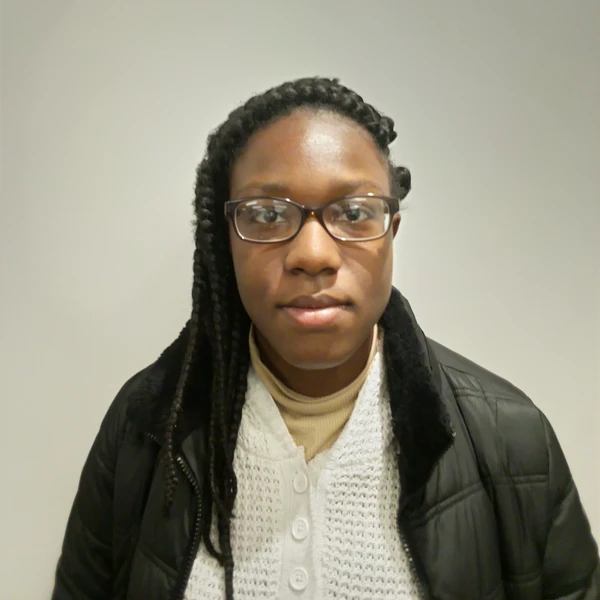
Hello, my name is Iyanna Edwards! My Intended major is Pre-medicine, and I enjoy playing basketball and softball, as well as drawing and composing music.
Education
National Cathedral School
High SchoolMiscellaneous
Desired degree level:
Doctoral degree program (PhD, MD, JD, etc.)
Majors of interest:
- Medicine
- Human Biology
- English Language and Literature/Letters, Other
Test scores:
1540
SAT
Career
Dream career field:
Medical Practice
Dream career goals:
Sports
Basketball
Club2012 – Present14 years
Awards
- Coache's Award for Exemplary Athletes (JV Basketball - 2023)
Softball
Club2012 – Present14 years
Arts
National Cathedral School and St. Alban's School Orchestra
MusicNCS/STA Spring Concert (2023, 2024, 2025), NCS/STA Fall Concert (2022, 2023, 2024), National Cathedral Festival of Lessons and Carols (2022, 2023, 2024), National Cathedral Flower Mart Concert (2023, 2024, 2025)2019 – Present
Public services
Volunteering
Naitonals Youth Academy — I coached kids from ages 6-12 in baseball games and activities in the Washington Nationals' Play Ball program.2024 – PresentVolunteering
Elizabeth House - Fish of Laurel — I prepared and served food at the Laurel Multiservice Center2025 – Present
Hazel Joy Memorial Scholarship
I was twelve years old when my brother passed. It was April of 2020. I was cooking breakfast in the kitchen, enjoying a spring break which had started early due to the pandemic. My dad was off of work and was laughing at a comedy show on the couch. He received a call, and his laughter suddenly gave way to sobbing. My dad left that morning to go to Florida, where my older brother Isaiah lived. Only when he returned a week later did I receive the news; Isaiah had died.
Following Isaiah’s death, regret consumed me. I didn’t see my brother very much during the last years of his life, as he went to college, and then took a job, several states away. I wished that I had reached out more: that I had called more often, and had insisted on visiting during my summer break. I wished I could go back in time to the night of his death–caused by an infection which hospitalized him–and alerted Isaiah’s doctors about his worsening condition. As I worked through my grief, I realized that ruminating on my regrets wouldn’t change anything. I couldn’t help Isaiah any longer; however, I could do my best to be there for those who were still alive. Now, I make a conscious effort to support my loved ones, celebrating their successes and comforting them during struggles.
Isaiah’s death highlighted the impermanence of my own life. When I was younger, I believed I could wait until I was an adult to ‘make my mark’ on the world. However, after Isaiah’s death, I realized that I couldn’t wait for a distant, unguaranteed future to start impacting others. Volunteering is one way I help improve my community in the present. For the past couple of years, I have volunteered at the Nationals Youth Baseball Academy, coaching pre-K and elementary school kids through baseball-related games and activities. I love volunteering with the Nationals Academy; I especially love coaching the youngest children, ages four to six. They are the same age I was when Isaiah and I last lived together, while I am the age that Isaiah was at that time. Volunteering with the Nationals Academy has given me new insight into my relationship with Isaiah. I feel that, in some small way, my affection for the young Academy kids mirrors the love Isaiah had for me.
I never blamed the doctors who cared for Isaiah before his death. They tended to him at the very beginning of the pandemic, when uncertainty about the coronavirus compounded fear about its lethality. After Isaiah passed, the doctors who treated him continued working, risking their lives every day to help those in desperate need. As I processed my grief during the pandemic, I gained incredible respect for medical workers; this respect has inspired me to pursue a career in medicine. I could not save Isaiah, but I can dedicate my life to saving others. Receiving this scholarship would help my single-income household cover the cost of college tuition, allowing me to continue my studies and achieve a medical career.
When I think about Isaiah, I give myself room to grieve and reminisce on the past. Then, I turn to the present: how I can help my loved ones now, and how I can prepare to help others in the future. Within the medical field, I would like to become a pediatrician. I want to help children like those I volunteer with at the Nationals Academy, and like the little girl who, twelve years ago, felt so loved by her older brother.
Sarah Eber Child Life Scholarship
I was twelve years old when my brother passed. It was April of 2020. I was cooking breakfast in the kitchen, enjoying a spring break which had started early due to the pandemic. My dad was off of work, and was laughing at a comedy show on the couch. He received a call, and his laughter suddenly gave way to sobbing. My dad left that morning to go to Florida, where my older brother Isaiah lived. Only when he returned a week later did I receive the news; Isaiah had died.
Following Isaiah’s death, regret consumed me. I didn’t see my brother very much during the last years of his life, as he went to college, and then took a job, several states away. I wished that I had reached out more: that I had called more often, and had insisted on visiting during my summer break. I wished I could go back in time to the night of his death–caused by an infection which hospitalized him–and alerted Isaiah’s doctors about his worsening condition. As I worked through my grief, I realized that ruminating on my regrets wouldn’t change anything. I couldn’t help Isaiah any longer; however, I could do my best to be there for those who were still alive. Now, I make a conscious effort to support my loved ones, celebrating their successes and comforting them during struggles.
Isaiah’s death highlighted the impermanence of my own life. When I was younger, I believed I could wait until I was an adult to ‘make my mark’ on the world. However, after Isaiah’s death, I realized that I couldn’t wait for a distant, unguaranteed future to start impacting others. Volunteering is one way I help improve my community in the present. For the past couple of years, I have volunteered at the Nationals Youth Baseball Academy, coaching pre-K and elementary school kids through baseball-related games and activities. I love volunteering with the Nationals Academy; I especially love coaching the youngest children, ages four to six. They are the same age I was when Isaiah and I last lived together, while I am the age that Isaiah was at that time. Volunteering with the Nationals Academy has given me new insight into my relationship with Isaiah. I feel that, in some small way, my affection for the young Academy kids mirrors the love Isaiah had for me.
I never blamed the doctors who cared for Isaiah before his death. They tended to him at the very beginning of the pandemic, when uncertainty about the coronavirus compounded fear about its lethality. After Isaiah passed, the doctors who treated him continued working, risking their lives every day to help those in desperate need. As I processed my grief during the pandemic, I gained incredible respect for medical workers; this respect has inspired me to pursue a career in medicine. I could not save Isaiah, but I can dedicate my life to saving others. Receiving this scholarship would help my single-income household cover the cost of college tuition, allowing me to continue my studies and achieve a medical career.
When I think about Isaiah, I give myself room to grieve and reminisce on the past. Then, I turn to the present: how I can help my loved ones now, and how I can prepare to help others in the future. Within the medical field, I would like to become a pediatrician. I want to help children like those I volunteer with at the Nationals Academy, and like the little girl who, twelve years ago, felt so loved by her older brother.
Sunshine Legall Scholarship
In a frightening, deeply polarized world, I cling to values and actions which are objectively good, like kindness and service. My effort to embrace goodness in the world influences my pursuit of a medical career; physicians, surgeons and other medical practitioners objectively benefit the world. I intend to major in Biology in college; I would like to pursue a career in pediatrics so I can help children and families.
I have volunteered with children at the Washington Nationals Youth Baseball Academy for two years. While I have enjoyed volunteering with children, I’ve learned that they sometimes fail to understand and verbalize their needs. Once this past fall, a boy repeatedly asked his friends to compare their thumbs’ sizes with his own. As I watched them, I realized that the boy’s own thumb was swollen. I came up to the boy and asked about his thumb; he said that he’d injured it throwing with his dad before practice. Since he had never jammed his finger before, and because his father had evidently missed the injury, the boy hadn’t realized his swollen thumb was an issue and never contacted a coach. I brought the boy inside to get ice, resenting my inability to realize his injury sooner. I seek to understand children better through education in child psychology and continued volunteer work with children. To diagnose and treat children effectively, I need to know how children describe symptoms, and which symptoms and health discrepancies they tend to overlook.
As well as understanding children’s communication, I wish to improve my own ability to communicate with others. By minoring in English, I wish to strengthen my communication skills; writing efficiently will help me to communicate my ideas to colleagues and patients. I would also like to study sociology so I can understand both my young patients and their parents. The effectiveness of medical treatments are often dependent on patients’ acceptance of them; for example, patients cannot receive the benefits of vaccination if they (or their parents) refuse vaccines out of ignorance or skepticism. I want to learn how to gain the trust of my patients so I can treat them effectively.
At college, I hope to study the scientific and mathematical subjects vital to my medical career, learning about the biological processes I will monitor and support in my work. I will also study subjects like sociology and English which will help me relate to my patients, as I aid their bodies efficiently due to a strong understanding of their minds.
My family is struggling with the cost of college attendance. We are a five person, single-income household, and both myself and my twin brother graduate from high school this year, which requires my family to pay for both of our college expenses simultaneously. Receiving this scholarship would help my family cover the cost of college tuition.
Valerie Rabb Academic Scholarship
I was twelve years old when my brother passed. It was April of 2020. I was cooking breakfast in the kitchen, enjoying a spring break which had started early due to the pandemic. My dad was off of work and was laughing at a comedy show on the couch. He received a call, and his laughter suddenly gave way to sobbing. My dad left that morning to go to Florida, where my older brother Isaiah lived. Only when he returned a week later did I receive the news; Isaiah had died.
Following Isaiah’s death, regret consumed me. I didn’t see my brother very much during the last years of his life, as he went to college, and then took a job, several states away. I wished that I had reached out more: that I had called more often and had insisted on visiting during my summer break. I wished I could go back in time to the night of his death–caused by an infection which hospitalized him–and alerted Isaiah’s doctors about his worsening condition. As I worked through my grief, I realized that ruminating on my regrets wouldn’t change anything. I couldn’t help Isaiah any longer; however, I could do my best to be there for those who were still alive. Now, I make a conscious effort to support my loved ones, celebrating their successes and comforting them during struggles.
Isaiah’s death highlighted the impermanence of my own life. When I was younger, I believed I could wait until I was an adult to ‘make my mark’ on the world. However, after Isaiah’s death, I realized that I couldn’t wait for a distant, unguaranteed future to start impacting others. Volunteering is one way I help improve my community in the present. For the past couple of years, I have volunteered at the Nationals Youth Baseball Academy, coaching pre-K and elementary school kids through baseball-related games and activities. I love volunteering with the Nationals Academy; I especially love coaching the youngest children, ages four to six. They are the same age I was when Isaiah and I last lived together, while I am the age that Isaiah was at that time. Volunteering with the Nationals Academy has given me new insight into my relationship with Isaiah. I feel that, in some small way, my affection for the young Academy kids mirrors the love Isaiah had for me.
I never blamed the doctors who cared for Isaiah before his death. They tended to him at the very beginning of the pandemic, when uncertainty about the coronavirus compounded fear about its lethality. After Isaiah passed, the doctors who treated him continued working, risking their lives every day to help those in desperate need. As I processed my grief during the pandemic, I gained incredible respect for medical workers; this respect has inspired me to pursue a career in medicine. I could not save Isaiah, but I can dedicate my life to saving others. Receiving this scholarship would help my single-income household cover the cost of college tuition, allowing me to continue my studies and achieve a medical career.
When I think about Isaiah, I give myself room to grieve and reminisce on the past. Then, I turn to the present: how I can help my loved ones now, and how I can prepare to help others in the future. Within the medical field, I would like to become a pediatrician. I want to help children like those I volunteer with at the Nationals Academy, and like the little girl who, twelve years ago, felt so loved by her older brother.
Hester Richardson Powell Memorial Service Scholarship
Following the death of my older brother, Isaiah, regret consumed me. I didn’t see my brother very much during the last years of his life, as he went to college, and then took a job, several states away. I wished that I had reached out more: that I had called more often and had insisted on visiting during my summer break. I wished I could go back in time to the night of his death–caused by an infection which hospitalized him–and alerted Isaiah’s doctors about his worsening condition. As I worked through my grief, I realized that ruminating on my regrets wouldn’t change anything. I couldn’t help Isaiah any longer; however, I could do my best to be there for those who were still alive. Now, I make a conscious effort to support my loved ones, celebrating their successes and comforting them during struggles.
Sometimes, I find supporting others to be straightforward: I can help friends easily by explaining a concept from class, reading over an essay, or giving encouragement before a test. Other times, I struggle to know how to help others. One day last year, I came across two friends in the hallway. One was crying after she’d gotten a disappointing grade on an assessment. The other friend consoled her; I realized that I had no idea what to say. The sad friend turned to me. I took a couple of Hershey Kisses from my pocket and handed them to her. They were a little melty; I apologized. She laughed. “Thanks Iyanna. You’re a good friend”. My attempt at consolation was imperfect, but my friend saw and appreciated my intention. This moment taught me that I didn’t need the perfect words or phrases to help, only the genuine effort.
One of my fondest memories comes from Basketball Senior Night during ninth grade. After our JV game, my teammates and I stayed to watch the Varsity game and cheer on our classmates; my friend Talia played on Varsity, and I was glad to see her succeed. Talia made a great shot just before halftime and ran excitedly off the court to go to the locker room. I ran off the bleachers, jumped, and shoulder-bumped Talia in midair to celebrate with her and show my support. I didn’t think much of the moment as the game continued, but someone later told me that Talia really appreciated my congratulations. I appreciate that moment now; I had gone out of my way to support a friend, even though I wasn’t sure that my action mattered. I did something deliberately for a friend, and it helped them.
As I prepare for college and beyond, I want to continue helping and inspiring others, even when I don’t have the perfect solutions. I don’t know how to solve large, complex global problems; no one does. However, my experience overcoming grief and regret has given me the courage to try and help anyways.
My family is struggling with the cost of college attendance. We are a five person, single-income household, and both myself and my twin brother graduate from high school this year, which requires my family to pay for both of our college expenses simultaneously. Receiving this scholarship would allow me to cover the cost of books and other study materials for college.
Eden Alaine Memorial Scholarship
I was twelve years old when my brother passed. It was April of 2020. I was cooking breakfast in the kitchen, enjoying a spring break which had started early due to the pandemic. My dad was off of work and was laughing at a comedy show on the couch. He received a call, and his laughter suddenly gave way to sobbing. My dad left that morning to go to Florida, where my older brother Isaiah lived. Only when he returned a week later did I receive the news; Isaiah had died.
Following Isaiah’s death, regret consumed me. I didn’t see my brother very much during the last years of his life, as he went to college, and then took a job, several states away. I wished that I had reached out more: that I had called more often and had insisted on visiting during my summer break. I wished I could go back in time to the night of his death–caused by an infection which hospitalized him–and alerted Isaiah’s doctors about his worsening condition. As I worked through my grief, I realized that ruminating on my regrets wouldn’t change anything. I couldn’t help Isaiah any longer; however, I could do my best to be there for those who were still alive. Now, I make a conscious effort to support my loved ones, celebrating their successes and comforting them during struggles.
Isaiah’s death highlighted the impermanence of my own life. When I was younger, I believed I could wait until I was an adult to ‘make my mark’ on the world. However, after Isaiah’s death, I realized that I couldn’t wait for a distant, unguaranteed future to start impacting others. Volunteering is one way I help improve my community in the present. For the past couple of years, I have volunteered at the Nationals Youth Baseball Academy, coaching pre-K and elementary school kids through baseball-related games and activities. I love volunteering with the Nationals Academy; I especially love coaching the youngest children, ages four to six. They are the same age I was when Isaiah and I last lived together, while I am the age that Isaiah was at that time. Volunteering with the Nationals Academy has given me new insight into my relationship with Isaiah. I feel that, in some small way, my affection for the young Academy kids mirrors the love Isaiah had for me.
I never blamed the doctors who cared for Isaiah before his death. They tended to him at the very beginning of the pandemic, when uncertainty about the coronavirus compounded fear about its lethality. After Isaiah passed, the doctors who treated him continued working, risking their lives every day to help those in desperate need. As I processed my grief during the pandemic, I gained incredible respect for medical workers; this respect has inspired me to pursue a career in medicine. I could not save Isaiah, but I can dedicate my life to saving others.
This year will mark the sixth anniversary of Isaiah’s death. I still miss him dearly; no matter how many Aprils pass, I will never stop missing him. When I think about Isaiah now, I give myself room to grieve and reminisce on the past. Then, I turn to the present: how I can help my loved ones now, and how I can prepare to help others in the future. I plan to pursue a career in pediatrics. I want to help children like those I volunteer with at the Nationals Academy, and like the little girl who, twelve years ago, felt so loved by her older brother.
Code Breakers & Changemakers Scholarship
In a frightening, deeply polarized world, I cling to values and actions which are objectively good, like kindness and service. My effort to embrace goodness in the world influences my pursuit of a medical career; physicians, surgeons and other medical practitioners objectively benefit the world. I intend to major in Biology in college; I would like to pursue a career in pediatrics so I can help children and families.
I have volunteered with children at the Washington Nationals Youth Baseball Academy for two years. While I have enjoyed volunteering with children, I’ve learned that they sometimes fail to understand and verbalize their needs. Once this past fall, a boy repeatedly asked his friends to compare their thumbs’ sizes with his own. As I watched them, I realized that the boy’s own thumb was swollen. I came up to the boy and asked about his thumb; he said that he’d injured it throwing with his dad before practice. Since he had never jammed his finger before, and because his father had evidently missed the injury, the boy hadn’t realized his swollen thumb was an issue and never contacted a coach. I brought the boy inside to get ice, resenting my inability to realize his injury sooner. I seek to understand children better through education in child psychology and continued volunteer work with children. To diagnose and treat children effectively, I need to know how children describe symptoms, and which symptoms and health discrepancies they tend to overlook.
As well as understanding children’s communication, I wish to improve my own ability to communicate with others. By minoring in English, I wish to strengthen my communication skills; writing efficiently will help me to communicate my ideas to colleagues and patients. An English minor would also allow me to continue enriching my passion for literature. I have always enjoyed literary fiction, especially fantasy. My enjoyment of idealized fantasy worlds inspires me to help create a more ideal real world. The fall of evil and the restoration of good in stories gives me hope that the real world can improve. As I work towards improving the world in a STEM career, fantasy literature continues to inspire me.
At college, I hope to study the scientific and mathematical subjects vital to my medical career, learning about the biological processes I will monitor and support in my work. I will also study subjects like sociology and English which will help me relate to my patients, as I aid their bodies efficiently due to a strong understanding of their minds.
My family is struggling with the cost of college attendance. We are a five person, single-income household, and both myself and my twin brother graduate from high school this year, which requires my family to pay for both of our college expenses simultaneously. Receiving this scholarship would help me to cover the cost of books and other study materials for college.
Harvest Scholarship for Women Dreamers
My “Pie in the Sky” goal is to publish a book. I have always loved writing, both fiction and nonfiction, and my dream is to share my passion for writing with the world. I want to benefit others with my writing, whether I share an inspiring fictional novel, creative nonfiction story, or sociological opinion. I would love to use my literary abilities to help and encourage others.
Writing has always helped me express myself. It has allowed me to explore my ideas and emotions, letting my thoughts and experiences inspire stories, characters, and fictional worlds. Writing comforted me when I struggled with social anxiety in middle school, and it serves as a respite from my current fears about the country and world. Recently, I have overcome my shyness and self-doubt to share my writing and express my thoughts to others.
Last year, I took a creative nonfiction writing class at my school. In the class, I learned about various forms of creative nonfiction writing, including personal narratives: anecdotes about life experiences. I wrote a personal narrative about accidentally breaking a robin egg in middle school. I described how the loss of the egg had grieved me, and how my grief over the egg contrasted my apparent insensitivity to large-scale tragedy at the time. Over the course of COVID, which ‘began’ in my mind not with the lockdown in March 2020, but with the death of my older brother that April, I grew somewhat desensitized to death. In my personal narrative, I wrote about my struggle to reconcile my numbness towards seemingly-innumerable COVID deaths with my empathy for the loss of one small egg.
Before writing, I’d never mentioned my experience with the egg to anyone. I told myself that I ignored the experience because I considered it unimportant; in reality, I feared leaving my social comfort zone to share my feelings with others. Despite this fear, I shared my personal narrative with my classmates for peer review. To my surprise, my classmates applauded my story, saying that they found it impactful. I decided to submit the story to my school’s literary publication, and the publication editors selected it to feature in that year’s edition. After the publication’s release, many people read my piece and told me that it inspired them; the story which I’d initially disregarded had positively affected others.
I want to continue pushing my social boundaries, creating and sharing more literary works. In the next few years, I will continue building my writing portfolio, creating and posting new works to online forums for critique. I will study English in college to learn more about literary work from professionals. After building my writing portfolio, I will use it to apply for freelance writing jobs. Finally, I will use my experience in professional writing to self-publish a book. Through hard work, I believe that I can follow my passion and make my dream a reality.
My family is struggling with the cost of college attendance. We are a five person, single-income household, and both myself and my twin brother graduate from high school this year, which requires my family to pay for both of our college expenses simultaneously. Receiving this scholarship would help me to cover the cost of books and other study materials for college.
LOVE like JJ Scholarship in Memory of Jonathan "JJ" Day
I was twelve years old when my brother passed. It was April of 2020. I was cooking breakfast in the kitchen, enjoying a spring break which had started early due to the pandemic. My dad was off of work, and was laughing at a comedy show on the couch. He received a call, and his laughter suddenly gave way to sobbing. My dad left that morning to go to Florida, where my older brother Isaiah lived. Only when he returned a week later did I receive the news: Isaiah had died.
Following Isaiah’s death, regret consumed me. I didn’t see my brother very much during the last years of his life, as he went to college, and then took a job, several states away. I wished that I had reached out more: that I had called more often, and had insisted on visiting during my summer break. I wished I could go back in time to the night of his death–caused by an infection which hospitalized him–and alerted Isaiah’s doctors about his worsening condition. As I worked through my grief, I realized that ruminating on my regrets wouldn’t change anything. I couldn’t help Isaiah any longer; however, I could do my best to be there for those who were still alive. Now, I make a conscious effort to support my loved ones, celebrating their successes and comforting them during struggles.
Isaiah’s death highlighted the impermanence of my own life. When I was younger, I believed I could wait until I was an adult to ‘make my mark’ on the world. However, after Isaiah’s death, I realized that I couldn’t wait for a distant, unguaranteed future to start impacting others. Volunteering is one way I help improve my community in the present. For the past couple of years, I have volunteered at the Nationals Youth Baseball Academy, coaching pre-K and elementary school kids through baseball-related games and activities. I love volunteering with the Nationals Academy; I especially love coaching the youngest children, ages four to six. They are the same age I was when Isaiah and I last lived together, while I am the age that Isaiah was at that time. Volunteering with the Nationals Academy has given me new insight into my relationship with Isaiah. I feel that, in some small way, my affection for the young Academy kids mirrors the love Isaiah had for me.
I never blamed the doctors who cared for Isaiah before his death. They tended to him at the very beginning of the pandemic, when uncertainty about the coronavirus compounded fear about its lethality. After Isaiah passed, the doctors who treated him continued working, risking their lives every day to help those in desperate need. As I processed my grief during the pandemic, I gained incredible respect for medical workers; this respect has inspired me to pursue a career in medicine. I could not save Isaiah, but I can dedicate my life to saving others.
This year will mark the sixth anniversary of Isaiah’s death. I still miss him dearly; no matter how many Aprils pass, I will never stop missing him. When I think about Isaiah now, I give myself room to grieve and reminisce on the past. Then, I turn to the present: how I can help my loved ones now, and how I can prepare to help others in the future. I plan to pursue a career in pediatrics. I want to help children like those I volunteer with at the Nationals Academy, and like the little girl who, twelve years ago, felt so loved by her older brother.
Ryan Stripling “Words Create Worlds” Scholarship for Young Writers
When I was in kindergarten, my teacher, Mrs. Nguyen, held an end-of-year celebration. She gave the parents a short speech about every kid in her class; when Mrs. Nguyen spoke about me, she jokingly complimented my ability to “write on, and on, and on…”. While the comment offended my six-year-old self, I now remember the remark fondly. I appreciate that Mrs. Nguyen could notice my passion for writing at such a young age. Even as a kid, before I’d developed my authorial skills and literary ambitions, I’d had a lot to write about.
Writing has always helped me express myself. It has allowed me to explore my ideas and emotions, letting my thoughts and experiences inspire stories, characters, and fictional worlds. Writing comforted me when I struggled with social anxiety in middle school, and it serves as a respite from my current fears about the country and world. Recently, I have overcome my shyness and self-doubt to share my writing and express my thoughts to others.
Last year, I took a creative nonfiction writing class at my school. In the class, I learned about various forms of creative nonfiction writing, including personal narratives: anecdotes about life experiences. I wrote a personal narrative about accidentally breaking a robin egg in middle school. I described how the loss of the egg had grieved me, and how my grief over the egg contrasted my apparent insensitivity to large-scale tragedy at the time. Over the course of COVID, which ‘began’ in my mind not with the lockdown in March 2020, but with the death of my older brother that April, I grew somewhat desensitized to death. In my personal narrative, I wrote about my struggle to reconcile my numbness towards seemingly innumerable COVID deaths with my empathy for the loss of one small egg.
Before writing about it, I’d never mentioned my experience with the egg to anyone. I told myself that I ignored the experience because I considered it unimportant; in reality, I feared leaving my social comfort zone to share my feelings with others. Despite this fear, I shared my personal narrative with my classmates for peer review. To my surprise, my classmates applauded my story, saying that they found it impactful. I decided to submit the story to my school’s literary publication, and the publication editors selected it to feature in that year’s edition. After the publication’s release, many people read my piece and told me that it inspired them; the story which I’d initially disregarded had positively affected others.
In college, I would like to pursue a minor in English so that I can continue to improve my writing abilities. I want to hone the craft which I have loved my entire life, and which has helped me relate to others and understand myself.
My family is struggling with the cost of college attendance. We are a five person, single-income household, and both myself and my twin brother graduate from high school this year, which requires my family to pay for both of our college expenses simultaneously. Receiving this scholarship would allow me to cover the cost of books and other study materials for college.
Bre Hoy Memorial Softball Scholarship
My name is Iyanna Edwards. I have been playing softball for 13 years. I play for the DC Elite travel team and will complete my senior season at the National Cathedral School this spring. I am currently in the recruiting process to play college ball.
One of the things I love most about softball is that it is a team sport. Softball provides athletes with an opportunity to work and grow with teammates, and to develop bonds which last well beyond the season’s end. Softball has taught me how to help others: how to interact with and serve my peers as a teammate or friend. Without softball, I would not be the person I am today.
Throughout my life, softball has helped me to connect with others. I often struggled socially when I was younger; I wanted to reach out and make friends with people, but I didn’t know how. Softball provided me with an opportunity to interact with others consistently during practices and games. Since my teammates and I came together for a specific purpose–playing and improving in softball–I did not feel pressured to act extrovertedly or go beyond my social boundaries. I could be a good friend and teammate simply by working hard in practice, doing my best and encouraging others. Some of my favorite memories to date come from my time in Little League, which I joined in the eighth grader to get extra reps outside of travel ball. In three years of league play, I got to know each of my teammates well. I knew which positions they preferred, where they hit the ball most often, and even the movies they liked to watch when practice ended. By the end of my time on the team I had developed a familial bond with my teammates: we all played out of love not only for softball, but for each other.
Softball has also taught me about team cooperation. I joined my current club team, DC Elite, in the summer of 2024. During one of my first practices, Jaelynn, my teammate, gave me a pointer on my swing. Immaturely, I felt offended: I had been the best hitter on my previous teams and was embarrassed to have a teammate correct me in my strong suit. However, I soon realized that friendly critique was a part of the team culture. My coach often said that “thoroughbreds should run with thoroughbreds”: that those who were deeply committed to improvement should train and work with one another. He wanted us to help our teammates out whenever we could in order to strengthen the team as a whole. I now understand this, and I am delighted both to receive and give feedback to my peers.
Softball has truly been a constant in my life. I have moved cities and schools: I have experienced academic highs and lows: I have struggled through the pandemic and the death of my older brother. Throughout it all, I have had softball to rely on. Softball has comforted me in all circumstances: it can both take my mind off academics after a difficult week at school and add to my joy on a pleasant day. I feel that my winters would not be complete without indoor workouts, or my summers without evening trips to the batting cage. My life will change greatly when I begin college next year; I am glad that I will have softball, and the lessons it has taught me, as I move forward.
Sloane Stephens Doc & Glo Scholarship
I believe that real relationships are important. Individuals, especially individuals within my generation, have recently become more isolated, due in part to the lingering social effects of COVID-19 and the rise of political polarization. As such, artificial relationships, such as AI chatbots and parasocial celebrity relationships, have risen. These counterfeit relationships are popular because they provide pleasure to their users; they can, to an extent, make users feel seen and cared for. But artificial relationships fail to match real ones because real relationships are reciprocal; real relationships are not only about receiving but also giving.
Following the return to in-person classes in 2021, I struggled socially in middle school. I had been relatively socially unaware as a child, and this was the period when I realized many of my youth’s deficiencies: not greeting those I knew with their name, or responding to lengthy conversation prompts with monosyllables. I also shared few interests with my classmates, due in part to my cultural differences as a minority in a majority-white space, and in part to my sustained love of childish or “nerdy” entertainment. I desired close friendships but did not know how to reach out to anyone. So, I stayed on the outskirts of conversations, staring down at my work as I listened to discussions about shows or celebrity dramas I cared nothing for, to gain some proximity to the people I did care about.
At the same time, I created fantasies in my head, imagining dozens of stories under the pretense that I would write them someday. I didn’t. They weren’t stories to share, but to keep: to achieve meaningful relationships in my imagination, if not in my reality. Each character had some trait which would draw others to them: a loveable personality or competency within that world’s magic system. I lived vicariously through these daydreams, playing out the relationships I wished I had.
Things improved in high school, when I had the liberty to join clubs and sports teams. Softball and basketball, which I had played competitively for years, and which consumed most of my time outside of school, driving to and from practices and tournaments, gained a true social component for the first time. I grew close to my teammates, who I saw for the majority of the day in both school and practice. I began to join in conversations; my social skills improved, and I became friends even with those outside my immediate athletic circles.
I appreciated every aspect of my new friendships: moments both of laughter and of tears. I found that friends’ vents and difficulties arose in conversation as much as their successes and joys, and that both expressions brought me closer to them. As my genuine relationships deepened, my old fantasies seemed increasingly shallow. I realized that even though I could receive joy from imaginary relationships, those relationships robbed me of the ability to give joy to others. I learned that a large part of friendship was helping friends through difficulties; walking with others through their struggles increased my empathy for them and made them more “real” and whole in my mind.
I want to pursue a medical career so I can serve others at their greatest moments of need. I want to give to others as much as I can by aiding them at their most vulnerable. I want to help them through miserable moments so I can see them as whole, love them, and aid them. In a world of artificial connection, I feel that a life of service is the realest life I can live.