Age
18
Gender
Male
Ethnicity
Asian
Religion
Buddhist
Hobbies and interests
Athletic Training
Artificial Intelligence
Coding And Computer Science
Exercise And Fitness
Exercise Science
Fitness
Learning
Running
Self Care
Soccer
Sports
Weightlifting
Community Service And Volunteering
Engineering
Key Club
Math
Mathematics
Physics
STEM
Reading
Self-Help
Academic
Health
Philosophy
Short Stories
I read books multiple times per month
US CITIZENSHIP
US Citizen
LOW INCOME STUDENT
Yes
FIRST GENERATION STUDENT
Yes
Steven Nguyen
1x
Finalist
Steven Nguyen
1x
FinalistBio
I’m a first-generation Vietnamese American student from Virginia planning to major in Computer Engineering. Growing up in a low-income household taught me early that opportunities are earned through consistency, not comfort. Whether I’m studying for AP and dual enrollment classes, soccer training, or working on coding projects late at night, I’ve learned that progress usually happens when nobody is watching.
Technology interests me because I like understanding how systems connect to solve real problems. After experimenting with small coding projects, I realized I want to do more than consume technology; I want to build things that improve people’s lives and create opportunities for the future.
Soccer has shaped my mindset just as much as academics. After being cut from Varsity, I had to decide whether to settle or work harder. That experience taught me resilience, accountability, and how to respond to setbacks without making excuses. I carry that same mentality into school, leadership, and my future goals.
As a first-generation student, I know how confusing it can feel to navigate academics, college, and career opportunities without a roadmap. That’s why I try to help younger students and teammates who feel overlooked or uncertain about their future. My goal is not only to succeed in Computer Engineering but also to create opportunities that make the path easier for those who come after me.
Education
James Wood High
High SchoolGPA:
4
Miscellaneous
Desired degree level:
Bachelor's degree program
Majors of interest:
- Engineering, General
Career
Dream career field:
Computer Hardware
Dream career goals:
I aim to build a career in Computer Engineering, specializing in robotics and AI, while pursuing soccer competitively. I want to contribute to innovations that shape industries and demonstrate that hard work can drive success in multiple arenas.
Sports
Track & Field
Junior Varsity2024 – 20262 years
Soccer
Junior Varsity2022 – 20242 years
Research
Computer Science
Independent/James Wood High School AP Computer Science Class — Researcher and Developer2024 – 2025
Public services
Volunteering
Local Buddhist Temple — Volunteer2018 – PresentVolunteering
Local Youth Soccer Camp (Friend's Camp) — Camp Volunteer/Assistant2025 – 2025Volunteering
Key Club — Active Member2025 – PresentVolunteering
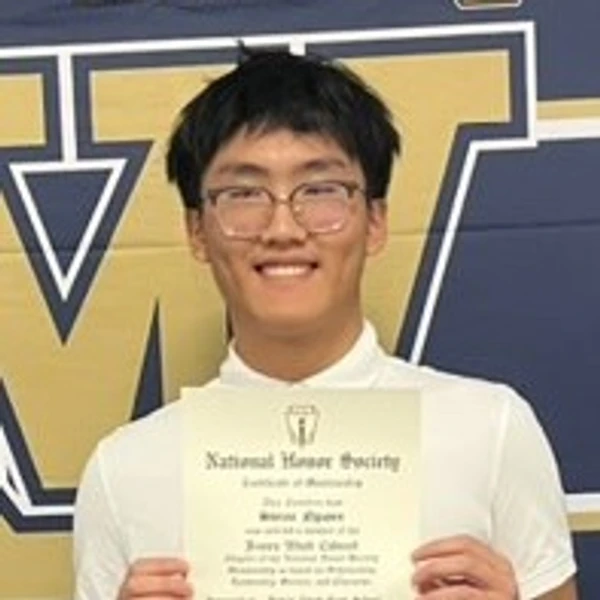
National Honors Society — Contributing Member2024 – Present
Future Interests
Advocacy
Volunteering
Philanthropy
Entrepreneurship
Williams Foundation Trailblazer Scholarship
When I was younger, I thought successful students were just born knowing what to do. They knew which classes to take, how to prepare for college, and how to build a future for themselves. As a first-generation Vietnamese American student growing up in a low-income household, I quickly realized that many students like me were trying to figure everything out alone.
By high school, I had learned how difficult it was to balance academics, sports, family responsibilities, and financial stress while still trying to plan for college. I took dual enrollment and AP classes because I wanted to push myself, but I also noticed something that bothered me: many younger students avoided opportunities simply because nobody had ever shown them how to navigate them.
During soccer season, one underclassman told me he wanted to switch out of advanced classes because he thought they were "for smarter people." That stuck with me because I used to think the same thing. I showed him my own schedule, talked honestly about struggling in difficult classes, and explained how I learned to manage my time and ask for help when I needed it. Later that year, he decided to stay in his advanced courses instead of dropping them. Moments like that made me realize how powerful guidance and representation can be for students who feel overlooked.
Instead of keeping my experiences to myself, I started making an effort to help younger students however I could. Through soccer, school clubs, and everyday conversations, I shared advice about course selection, study habits, scholarships, and college preparation. A lot of students from immigrant or low-income families do not grow up with people explaining how dual enrollment works, how to prepare for engineering programs, or even how college applications function. I understood that confusion personally, so I wanted to become someone younger students could actually relate to.
Soccer also became one of the biggest ways I supported others. Over several years in my school's soccer program, I learned that sports can give students confidence, discipline, and belonging, especially for students dealing with pressure outside of school. I tried to encourage younger teammates who doubted themselves and create an environment where people pushed each other to improve instead of putting each other down. Sometimes helping people starts with something simple: making sure they feel seen, included, and capable of more than they think.
Outside of athletics, I became involved in organizations such as NHS, FBLA, Key Club, and community service activities. These experiences strengthened my belief that leadership is not about attention or titles. Real leadership means stepping up when you understand a problem and choosing to help even when nobody asks you to.
Being a trailblazer does not always mean starting a massive organization or inventing something revolutionary. Sometimes it means becoming the person you needed when you were younger. For me, that means helping students from underserved backgrounds realize that their financial situation, family background, or self-doubt does not define their future.
As I pursue Computer Engineering in college, I want to continue creating opportunities for students who feel overlooked, especially in STEM fields where many marginalized communities remain underrepresented. I want to use technology, mentorship, and leadership to help break barriers for future generations. Receiving the Williams Foundation Trailblazer Scholarship would not only support my education but also help me continue building pathways for others to succeed after me.
Dream BIG, Rise HIGHER Scholarship
I learned the meaning of education long before I understood the value of a transcript, a test score, or a college acceptance letter. I learned it by watching my family carry responsibility with quiet strength, by seeing what sacrifice looks like up close, and by understanding that for some families, education is not just an achievement. It is a turning point. As a first-generation Vietnamese American student, I grew up knowing that college was never something I could take for granted. It was something my family hoped for, worked toward, and believed in deeply, even when the path to get there was uncertain.
That perspective gave the school real purpose for me. Education was never just a box to check or a routine to get through. It became the place where I started building a future that was bigger than the one I was born into. Every class, every deadline, and every challenge became part of something larger. I was not only working for grades. I was working to become someone my family could count on, someone who could turn opportunity into stability, and someone who could honor the sacrifices that made my education possible in the first place.
One of the hardest parts of that journey has been learning how to move with ambition while staying grounded in reality. When a family has a limited financial margin, every decision matters more. College is not just about choosing a major or a school. It is about making a long-term commitment that affects the future of everyone who has supported you along the way. That pressure has never disappeared for me, but I have learned not to let it freeze me. Instead, it has pushed me to stay disciplined, to think carefully, and to treat every opportunity like it matters because it does.
Being a first-generation student has also meant figuring things out without a blueprint. There is no built-in map for how to navigate admissions, financial aid, scholarships, deadlines, and the pressure that comes with trying to do everything right the first time. I have had to learn how to keep going even when things felt confusing or overwhelming. That process has made me more independent and more resilient. It has also made me honest with myself about the work success actually takes. Growth has not always looked impressive from the outside. Sometimes it has looked like staying consistent when I was tired, asking questions when I did not know the answer, and refusing to quit when things got hard.
Education has also shaped the way I think about the future. I plan to study computer engineering because I am drawn to the way technology can solve problems, improve systems, and create new possibilities. Technology is part of everything now, whether that is communication, transportation, health care, education, or daily life itself. That matters to me because I want my education to lead to work that has a real impact. I do not want to just earn a degree for the sake of saying I earned one. I want to build skills that allow me to contribute something meaningful, to create tools and systems that make life better for other people, and to be part of a field that helps shape the future.
What motivates me most is the idea that success should not stop with me. I want my education to open doors for my family, not just for myself. I want to be able to support the people who supported me. I want to be a role model for my younger sister and show her what it looks like to stay committed to a goal even when the path is not easy. I want to prove that where you start does not decide where you finish. A hard beginning does not mean a limited future. In fact, it can create the kind of perspective that makes success mean more.
My family's story is one of courage. They made the difficult decision to leave their home country and start over in a new country, with a new environment, new expectations, and a new set of challenges. That kind of sacrifice changes how you see everything. It teaches you not to waste the opportunities you are given. It teaches you to be grateful, but also determined. It teaches you that progress does not come from luck alone, but from endurance, faith, and effort. I carry that with me every day. Their sacrifice is part of my motivation, and I want my education to make that sacrifice matter.
Education has given me direction, discipline, and purpose. It has taught me that success is not just about talent, but about persistence. It has shown me that ambition without effort does not go anywhere, and that real growth takes patience, discipline, and resilience. It has also shown me that my story is still being written, and that I have the power to shape what comes next.
There was a moment that made my responsibility feel real in a different way. In my family, the college decision was not just about where I would go, but about what was realistic for us. I remember conversations where we talked about whether starting at a community college or going directly to a four-year university made the most sense financially and long-term. I wasn't having a casual discussion, but a reflection on the reality that higher education is both an opportunity and a major financial commitment. In that moment, I understood that my path forward wasn't just about ambition, but about making thorough choices that considered my family's situation. It made me take college more seriously than ever, not just as a goal, but as a responsibility I needed to get right. That experience pushed me to stay focused, do my research, and treat my education like something that would shape not only my future but my family's stability as well.
Matthew E. Minor Memorial Scholarship
I'll never forget the day one of the new younger players on my soccer team froze after being teased. I stepped in, guided him through a drill, and encouraged him to trust himself again. Seeing his confidence return in that moment taught me that leadership isn't just about skill, but about standing up for others and helping them grow. It made me realize that even small acts of guidance can ripple outward, shaping not just one moment, but a child's sense of self and confidence for years to come. Moments like this have shaped how I approach academics, athletics, and community service, and they continue to guide me as I prepare to pursue a degree in Computer Engineering.
As a first-generation student, I've learned that success comes from discipline, consistency, and caring for others along the way. Volunteering at my local Buddhist temple since 2018, I've assisted with events, mentored younger attendees, and contributed to programs that support families in our community. Through Key Club and National Honor Society, I've organized service projects, provided guidance to younger students, and learned the power of teamwork in creating lasting impact. Last Summer, I helped at a local youth soccer camp, designing short lessons on teamwork and respect that gave kids practical strategies to handle conflicts both on and off the field. Watching shy kids transform into confident, collaborative teammates reminded me that guidance, patience, and encouragement can change lives.
Entering higher education comes with financial challenges. Tuition, textbooks, and living expenses add up quickly, and as a first-generation, low-income student, my family can only do so much. A scholarship like this would allow me to focus fully on my studies and community impact rather than immediate financial stress, giving me the freedom to continue mentoring youth and exploring ways to make technology safer and more accessible.
Preventing bullying, both in-person and online, is a cause I take seriously. On the field, I step in when teammates are targeted, promoting communication, inclusion, and respect. Online, I emphasize safe practice in my own digital life and teach younger students about responsible behavior on social media and gaming platforms. Cyberbullying isn't isolated; it's systemic, and I aim to address it through mentorship, education, and innovation. As a future Computer Engineer, I hope to develop tools and programs that protect children online and empower them to navigate digital spaces responsibly.
Through these experiences, I've learned that leadership is more than taking initiative; it's about creating environments where others feel safe, supported, and empowered to grow. With this support, I can continue mentoring youth, contribute to my community, and demonstrating that one person's commitment and responsibility can influence both peers and future generations. I want every child I encounter to feel seen, supported, and capable of overcoming obstacles, because no one should feel alone in their challenges.