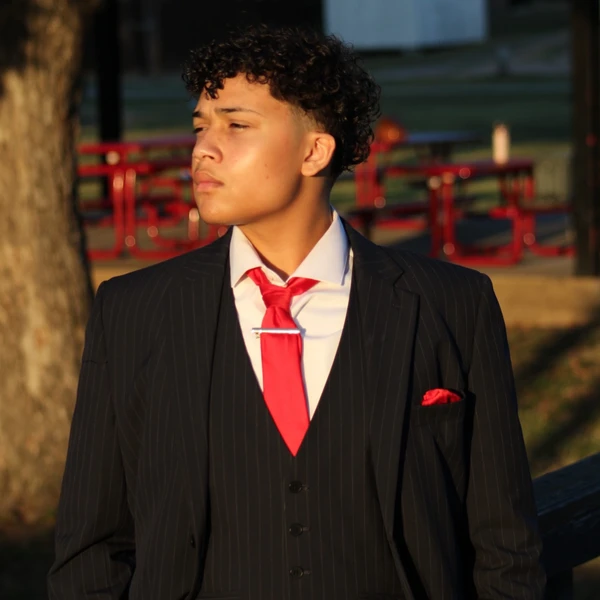
user profile avatar

Isaiah Wayne

1x

Finalist

Bio

I am a passionate and driven student with a deep commitment to pursuing a career as a professional actor and filmmaker. Growing up with limited resources, I have learned to rely on determination, creativity, and resilience to chase my dreams. Theater has become more than an activity for me—it is a space where I have found purpose, confidence, and a voice. Through my involvement in varsity theater acting as well as musical productions, I have developed strong performance skills and a dedication to storytelling. I aspire to use film and acting not only to entertain, but to represent real stories and inspire others who come from backgrounds like mine. Despite the obstacles I’ve faced, I am determined to turn my passion into a career and prove that where you start does not define where you can go.

Education

Red Oak High School

High School
2022 - 2026

Miscellaneous

  • Desired degree level:

    Bachelor's degree program

  • Majors of interest:

    • Visual and Performing Arts, General
    • Drama/Theatre Arts and Stagecraft
    • Film/Video and Photographic Arts
    • Arts, Entertainment, and Media Management
    • Rhetoric and Composition/Writing Studies
  • Not planning to go to medical school
  • Career

    • Dream career field:

      Performing Arts

    • Dream career goals:

      Professional Actor/ Film Director

    • Team Member

      Firehouse Subs
      2025 – Present1 year

    Sports

    Taekwondo

    Intramural
    2020 – 20233 years

    Research

    • Communications Technologies/Technicians and Support Services, Other

      Navarro College Dual Credit at Red Oak High School — Certified Emergency Telecommunicator
      2022 – 2026

    Arts

    • Red Oak Hawk Theatre- Varsity Acting and Musical Acting

      Acting
      Pride and Prejudice, Little Shop of Horrors, Animal Farm, A Monster Calls, Sleepy Hollow, Sound of Music, Xanadu, Once on this Island
      2019 – Present

    Public services

    • Volunteering

      Red Oak Hawk Theatre Kids Camp — Camp Counseler
      2024 – Present
    • Volunteering

      The Troupe Theatre — Actor
      2025 – 2025

    Future Interests

    Advocacy

    Volunteering

    Philanthropy

    Entrepreneurship

    Reach Higher Scholarship
    Books have always helped me understand myself, but three in particular shaped the way I see the world: Fences by August Wilson, Frankenstein by Mary Shelley, and Animal Farm by George Orwell. Each one taught me something different about humanity, power, and identity — lessons that have guided my goals and the way I show up in my community. Fences resonated with me deeply as a mixed‑race Black and white student who has often lived in the “in‑between.” Wilson’s exploration of generational trauma, identity, and the weight of expectations helped me understand how history shapes people in ways they don’t always recognize. It taught me empathy — the kind that looks beyond someone’s actions and tries to understand the pain beneath them. That lesson influences how I treat others, especially the kids I mentor in theatre. Frankenstein taught me about the consequences of isolation and the human need to be seen. The creature wasn’t born a monster; he became one because he was denied connection. As someone who has sometimes felt misunderstood because of my identity, I connected with that theme. It pushed me to create spaces where others feel valued, especially in theatre environments where vulnerability is essential. Animal Farm opened my eyes to how power can be manipulated and how easily people can be silenced. It taught me to question systems, advocate for fairness, and use my voice responsibly — especially when others cannot. These books shaped my goals: to use theatre and storytelling to build community, amplify unheard voices, and create spaces where people feel seen. My involvement in theatre has been the heart of my community impact. At Hawk Theatre Kids Camp, I worked with children who were shy, anxious, or unsure of themselves. Many reminded me of my younger self. I helped them find confidence through warm‑ups, one‑on‑one encouragement, and creating a supportive environment. Watching them step into the spotlight for the first time showed me how powerful encouragement can be. At The Troupe Theatre, especially during productions with heavy themes, I helped create safe spaces for castmates to process difficult material. I learned how to lead with empathy, listen deeply, and support others through emotional work. But my growth hasn’t been perfect. One failure that taught me a lot happened during a rehearsal where I tried to take on too much — helping younger actors, managing props, and trying to perfect my own performance. I ended up overwhelmed and dropped the ball on responsibilities I had promised to handle. I felt embarrassed, but it taught me an important lesson: leadership doesn’t mean doing everything. It means knowing when to ask for help. Since then, I’ve learned to communicate better, delegate, and trust others. Mentorship has played a huge role in my life as well. Teachers, directors, and older actors have guided me, encouraged me, and helped me grow into someone who can now mentor others. Their belief in me shaped my confidence — and I try to pass that forward. What makes me unique is the combination of my mixed‑race identity, my love for theatre, and my commitment to creating belonging. I understand what it feels like to be in‑between, and I use that understanding to make others feel included. My goal is to continue using storytelling to build community, uplift marginalized voices, and create spaces where everyone — no matter their background — feels like they belong.
    WCEJ Thornton Foundation Low-Income Scholarship
    Attending higher education is the next step in a journey that began long before I ever stepped onto a stage. Growing up mixed, I spent years trying to understand who I was and where I fit. Theater helped me reclaim my identity, but college is where I hope to expand it—where I can turn the spark I found in high school into a lifelong craft and a meaningful career. Higher education will give me what I’ve never had before: access to mentors, training, and a community of artists who push me to grow. In high school, theater taught me how to use my voice. In college, I want to learn how to refine it—how to act with intention, how to write stories that matter, and how to direct work that reflects the world I come from. I want to study the history of performance, explore new techniques, and understand the power of storytelling on a deeper level. College is where I can take the raw passion that saved me and shape it into something sustainable, something that can reach beyond the walls of a classroom. But my goals aren’t only about personal growth. I want to create a positive impact by using my art to give others what I once needed: representation, belonging, and a reminder that identity is not a limitation. Growing up, I rarely saw characters who looked like me or lived in the in‑between space I occupied. I know how isolating that can feel. Through theater, I want to help build stories that reflect the full spectrum of human experience—stories that show mixed kids, marginalized kids, and overlooked kids that they are not invisible. Higher education will also give me the tools to bring those stories into communities that need them most. I hope to work with youth programs, schools, and local theaters to create spaces where young people can explore who they are without being told to choose one version of themselves. Art has the power to heal, to connect, and to challenge the narratives that divide us. I want to be part of that work. Ultimately, attending college is not just about earning a degree. It’s about stepping into the person I’ve fought to become. It’s about taking the duality that once made me feel lost and turning it into a source of strength. It’s about using my creativity to build bridges—between cultures, between communities, and between people who may not see themselves reflected anywhere else. Higher education will help me transform my passion into purpose. And with that foundation, I plan to create art that doesn’t just entertain, but empowers. Art that reminds people, as theater once reminded me, that identity is not a box to check. It’s a story to tell.
    Kay Sykes Arts Scholarship
    I didn’t choose my art form so much as it found me—at a moment when I felt split in half. Growing up mixed, I was constantly told to pick one identity, one box, one version of myself. Forms, classrooms, even casual conversations demanded a simplicity I didn’t have. With a white mother and an absent Black father, the world tried to flatten me into something linear, something singular. I learned early how to shape‑shift: one version of myself at home, another at school, never fully belonging to either. That quiet loneliness followed me everywhere. When I signed up for theater as an elective, I wasn’t searching for meaning. I just needed a class. But the moment I stepped into that room, something shifted. The space buzzed with laughter, raw voices, and stories that felt alive. For the first time, I wasn’t being asked to shrink or simplify myself. Theater didn’t want half of me—it demanded all of me. That freedom lit a spark I didn’t know I was missing. Onstage, I discovered a world where identity wasn’t a checkbox but a palette. I could be loud, soft, bold, broken, joyful, complicated. I could be characters who looked nothing like me and characters who felt exactly like me. In every role, I found pieces of myself I had hidden or never realized were there. Theater became the first place where my duality wasn’t confusing—it was powerful. It taught me that culture isn’t only inherited; it can be created. It can be expressed, shaped, and shared. For two years, that stage became my home. But when my family told me theater “didn’t matter,” the light went out. I drifted through ninth and tenth grade without direction, trying clubs and activities that never filled the space theater left behind. Without that creative outlet, the loneliness I thought I had outrun settled back in. I felt unanchored, like I was fading into the background of my own life. When junior year came and I finally had the chance to return, I didn’t ask for permission. I chose myself. Walking back into the theater room felt like stepping into sunlight after years underground. The stage welcomed me without hesitation, as if it had been waiting. And in that return, I realized how deeply this art form had shaped me. Theater didn’t just give me confidence—it gave me wholeness. It stitched together the parts of me I had been taught to separate. It showed me that my identity isn’t a burden or a contradiction; it’s a story worth telling. My involvement in theater has been impactful because it taught me to embrace complexity, to speak boldly, and to see beauty in the spectrum of who I am. They once told me to choose one side of myself. Theater taught me to choose both. To choose more. To choose me.
    WCEJ Thornton Foundation Music & Art Scholarship
    I plan to make a positive impact on the world through my art by telling stories that reflect the complexity of identity and the humanity we all share. Growing up biracial, I often felt pressure to simplify who I was, as if I had to choose one side of myself. Theater became the place where I learned that identity isn’t limited to labels, and that storytelling has the power to help people feel seen. As a future actor and filmmaker, I want to create work that challenges stereotypes and highlights characters who exist in the gray areas—people who are layered, conflicted, and real. Through acting, I hope to bring empathy to audiences by portraying characters with honesty and depth. When viewers connect with a character’s struggles, they begin to understand experiences different from their own. That understanding can break down assumptions and encourage compassion. Through filmmaking, I want to shape narratives that amplify underrepresented voices and explore themes of belonging, culture, and self-acceptance. My goal is to create stories that help others who feel caught between worlds recognize that their complexity is not something to hide, but something to embrace. Beyond the screen and stage, I also hope to give back by mentoring younger artists and supporting inclusive creative spaces. Theater gave me confidence and a sense of belonging when I needed it most, and I want to help create that same environment for others. Ultimately, I want my art to spark conversation, build empathy, and remind people that the world is not divided into simple categories. Through storytelling, I hope to encourage audiences to see both themselves and others with more understanding.
    Marie J. Lamerique Scholarship for Aspiring Scholars
    One of the most challenging moments shaped by my upbringing came when I was told I couldn’t continue in theater. Up to that point, theater had quietly become the place where I felt most complete. Growing up biracial in a single-parent household, I often felt like I was living between identities. At home, I was raised by my white mother, and without my father present, half of my identity felt distant and undefined. At school, I surrounded myself with friends who reflected another part of me, yet I still felt like I didn’t fully belong anywhere. Theater was the first space where those divisions didn’t matter. Onstage, I wasn’t forced to choose; I could exist fully and explore humanity beyond labels. That made the moment I was told I couldn’t continue even more difficult. My family didn’t see theater as practical or important, and I was encouraged to focus on other things. Suddenly, the one place where I felt grounded was gone. I remember watching audition announcements go up and feeling a mix of frustration and helplessness. I walked past the theater room every day, hearing laughter and warm-ups from inside, knowing I wasn’t part of it anymore. Instead, I filled my schedule with other clubs and activities, trying to convince myself I was fine. Outwardly, I stayed involved and social, but internally I felt disconnected. Without theater, I lost the outlet that helped me understand myself. It felt like being pushed back into a version of my life where I was once again trying to blend in instead of express who I was. For two years, I carried that feeling. But during that time, something shifted. The absence of theater made me realize how much it meant to me. It wasn’t just a class; it was where I discovered my voice and confidence. When I finally had the opportunity to return in my junior year, I made a decision in that moment: I wouldn’t let others define the importance of something that shaped who I was. I signed up, committed fully, and threw myself into every rehearsal and performance. I approached the experience with a new level of determination because I understood what it felt like to lose it. That moment shaped how I approach my future. It taught me that passion sometimes requires resilience, especially when others don’t immediately understand it. Instead of backing away from uncertainty, I now lean into it. I pursue acting and filmmaking with intention, knowing that these paths may not always seem conventional, but they are meaningful to me. The experience also strengthened my independence. I learned to advocate for myself and trust my instincts about what fulfills me. Moving forward, I carry that lesson with me. My upbringing challenged me to define myself without clear guidance, and being pulled away from theater forced me to decide whether I truly believed in my passion. I did. That decision continues to guide me as I pursue a future in storytelling. I want to build a career as a professional actor and filmmaker, creating work that speaks to people who, like me, have felt divided or uncertain. That moment didn’t just challenge me; it clarified my purpose and gave me the determination to follow it.
    Hines Scholarship
    Going to college, to me, means claiming the space to become fully myself. For much of my life, I felt pressured to choose between parts of my identity. Growing up biracial in a single-parent household, I was constantly asked to define myself in simple terms: Black or white. Forms, classrooms, and conversations left no room for the truth that I was both. Without my father present, one side of my identity felt distant, and I struggled to understand where I belonged. I shifted depending on the environment, trying to blend in, never feeling complete. That uncertainty followed me until I found theater, a place where I didn’t have to choose at all. Theater became the first space where I could exist without dividing myself. Onstage, I could explore different characters, cultures, and emotions. I learned that identity is not confined to a single label, but shaped by experience, empathy, and creativity. For the first time, I felt whole. However, my path has not been easy. There were years when I was forced to step away from theater, and during that time, I felt disconnected from myself. When I returned, I realized how essential storytelling had become in my life. It wasn’t just an activity; it was my purpose. Theater gave me a voice, and with that voice came the desire to share meaningful stories with others. Going to college represents the opportunity to refine that voice and turn passion into a profession. I want to study acting and filmmaking so I can develop the skills necessary to tell stories that reflect complex identities like my own. College will challenge me artistically and academically, pushing me to grow as both a performer and a storyteller. I want to learn from mentors, collaborate with other artists, and immerse myself in an environment where creativity is taken seriously. More importantly, I want to use college to discover new perspectives and deepen my understanding of humanity, which will strengthen my work as an actor and filmmaker. What I am trying to accomplish goes beyond personal success. I want to create stories that allow people to feel seen, especially those who feel caught between worlds. My experiences taught me how isolating it can be when you don’t see yourself represented. Through acting and filmmaking, I want to bring forward narratives that embrace complexity and challenge expectations. I hope to portray characters who reflect the full spectrum of identity and produce films that highlight voices that are often overlooked. By doing so, I want to contribute to a more inclusive and empathetic artistic community. College is also a step toward independence and self-definition. It represents my decision to pursue a path that once felt uncertain, but now feels undeniable. I am not just attending college to earn a degree; I am going to build a foundation for a life in storytelling. I want to grow into a professional actor and filmmaker who uses art to connect people and spark understanding. Ultimately, going to college means embracing every part of who I am and using that experience to create work that inspires others to do the same.
    Students Impacted by Incarceration Scholarship
    My father’s incarceration shaped my life long before I understood what incarceration truly meant. I never met him, never heard his voice, and never had the chance to learn the history, culture, or traditions that should have been passed down to me. His absence wasn’t just the absence of a parent—it was the absence of an entire side of my identity. Growing up mixed without access to my African American heritage left me with questions that didn’t have clear answers. I didn’t just lose a father; I lost a connection to a world I should have belonged to. Incarceration affects families in ways that are often invisible. For me, it meant growing up with a constant sense of distance and confusion. I wondered who he was, what he believed in, and whether I resembled him in any way. I wondered what parts of myself came from him—my creativity, my emotions, my way of thinking. That uncertainty shaped my mental and emotional world. It made me feel “in‑between,” like I was carrying a story with missing chapters. But as painful as that silence was, it also taught me resilience. It forced me to build identity from the pieces I did have and to search for meaning in places where others might not look. That search led me to storytelling. I don’t meditate or journal, but I write scripts and stories. Writing became the place where I could explore the emotions I didn’t know how to express. It helped me process the absence, the questions, and the cultural disconnect. Through writing, I learned that I could create the connection I never had. I could give voice to characters who felt the same silence I grew up with. That creative outlet shaped my academic and career ambitions. I want to become a professional actor and filmmaker because storytelling helped me understand myself. Acting gave me a space to express emotions I had spent years holding in. Filmmaking gave me a way to build worlds where identity—especially mixed identity—is allowed to be complex, layered, and real. My father’s incarceration didn’t stop me from dreaming; it pushed me toward a career where I can turn pain into purpose. His absence taught me empathy, depth, and emotional honesty—qualities that matter deeply in acting and filmmaking. It made me want to tell stories that reflect the realities people carry quietly. It made me want to create characters who feel human, flawed, and whole. Incarceration shaped my life, but it did not define my future. Instead, it gave me the determination to build something meaningful from the silence he left behind.
    Curtis Holloway Memorial Scholarship
    My educational journey has never been something I walked alone. Even though I grew up without my father and never had the chance to know him or the African American side of my family, I was never without support. My mother and grandmother became the foundation of everything I am. They carried the weight of two parents, two histories, and two generations of strength, and they did it without ever letting me feel like I was missing something they couldn’t give. My mother has always been the person who pushed me to believe in myself, even when I struggled to understand who I was. She raised me on her own, balancing work, responsibility, and the emotional weight of being both the protector and the provider. She taught me resilience by example. She showed me what it means to keep going even when life feels heavy. Her support shaped me into someone who doesn’t quit, someone who knows how to stand back up after falling. Every time I pursue a new opportunity or push myself creatively, I honor her sacrifices. My grandmother supported me in a different but equally powerful way. She gave me stability, warmth, and a sense of belonging when I felt split between identities. She reminded me that family isn’t defined by who is missing—it’s defined by who shows up. Her presence grounded me, especially during the years when I felt disconnected from my own identity. She encouraged my creativity, celebrated my achievements, and made sure I always knew I was capable of more than I realized. Their support has shaped my goals in ways I’m still discovering. Growing up without my father left me with questions about who I was, but my mother and grandmother helped me build answers through experience, not bloodlines. They taught me to find myself through expression, which is why storytelling became so important to me. I don’t meditate or journal, but I write scripts and stories. That’s where I process my emotions, explore my identity, and make sense of the silence my father left behind. Writing helped me discover my voice, and acting helped me learn how to use it. Their support is the reason I want to go to college and pursue acting and filmmaking professionally. I want to build a career that reflects the strength they poured into me. I want to create stories that honor the complexity of identity, the weight of absence, and the beauty of resilience. I want to make them proud—not just by succeeding, but by becoming someone who uses his gifts with purpose. As I work toward my goals, I carry their support with me. It motivates me to push harder, dream bigger, and stay grounded. Their love filled the space my father left behind, and because of them, I don’t move through the world feeling incomplete. I move through it knowing I come from strength. And that strength is what drives me toward my future.
    Enders Scholarship
    My story begins with a parent I never met. My father was away before I ever had the chance to know him, and with him went an entire side of my identity—my African American heritage, my cultural history, and the answers to questions I didn’t even know how to ask as a child. Losing a parent you never knew is a complicated kind of grief. It isn’t built on memories; it’s built on absence. It’s built on wondering who you might have been if you had grown up with both sides of yourself present. Growing up mixed, I often felt like I was living between two worlds without fully belonging to either. My mother did everything she could, but she could only teach me the part of the story she knew. The other half was a blank page. That emptiness shaped my mental and emotional world more than I realized. I felt confusion about who I was supposed to be, frustration at the silence surrounding my father’s side of the family, and a loneliness that came from not having a cultural mirror to look into. Those emotions were heavy, especially when I didn’t have the language to express them. What helped me most wasn’t meditation or journaling—it was writing scripts and stories. Storytelling became the place where I could explore the parts of myself I didn’t understand. When I wrote, I wasn’t limited by what I didn’t know about my father or my heritage. I could imagine, create, and fill in the gaps with characters who felt the things I couldn’t say out loud. Writing helped me find my voice long before I ever spoke it confidently. It gave me a way to process grief, identity, and the feeling of being “in‑between.” That creative outlet naturally led me to acting and filmmaking. Theatre was the first space where I felt whole—where I didn’t have to choose one version of myself. Onstage, I could be everything at once. Film gave me the same freedom, but on a larger scale. It showed me that stories can heal, connect, and reveal truths people carry quietly. That’s why I want to go to college: to study acting and filmmaking professionally, to refine my craft, and to tell stories that help others feel seen the way storytelling helped me. The people who influence me most are artists who use their work to express depth, identity, and humanity. Denzel Washington, Michael B. Jordan, and Viola Davis inspire me with their emotional honesty and the power they bring to every role. Directors like Ryan Coogler and Christopher Nolan show me how storytelling can be both personal and cinematic, grounded and larger than life. Their work reminds me that film isn’t just entertainment—it’s impact. My father’s absence shaped my story, but it didn’t define my future. It pushed me toward creativity, toward expression, and toward a career where I can turn silence into something meaningful. Acting and filmmaking aren’t just goals for me—they’re the way I’ve learned to understand myself and the world.
    Love Island Fan Scholarship
    Love Island Challenge: “The Truth Carousel” Overview: “The Truth Carousel” is a high‑energy, drama‑sparking challenge designed to test honesty, loyalty, intuition, and emotional intelligence—all while keeping the Islanders laughing, guessing, and sweating. It blends strategy, teamwork, and just enough chaos to shake up the villa dynamics. Setup: The challenge takes place in the main villa garden, transformed into a bright, carnival‑themed arena. At the center sits a large rotating platform—the Carousel—decorated with neon lights, oversized question cards, and a glowing heart at the top. Surrounding it are four stations: Confession Corner, Guessing Booth, Risk Ramp, and Safe Seat. Each Islander wears a color‑coded wristband representing their couple. The wristbands light up when it’s their turn, adding suspense and anticipation. How It Works: The challenge unfolds in three rounds, each designed to reveal something different about the Islanders. ROUND 1: CONFESSION CAROUSEL The Carousel spins, and when it stops, one Islander is randomly selected. A card pops up with a prompt such as: “Share a moment in the villa you haven’t told your partner about.” “Reveal a first impression you kept to yourself.” “Name the Islander you trust the most—and the least.” The selected Islander must answer honestly. Their partner listens from the Safe Seat, unable to respond until the round ends. This builds tension and tests emotional maturity. ROUND 2: GUESSING BOOTH Now the couples work together. The Carousel reveals a statement about someone in the villa—anonymous at first. Examples: “This Islander said they could see themselves recoupling soon.” “This Islander thinks another couple won’t last.” “This Islander has been holding back a secret compliment.” Couples must enter the Guessing Booth and lock in who they believe the statement is about. If they guess correctly, they earn points. If they guess wrong, they must complete a lighthearted dare—like a dance‑off, a dramatic reading of a love letter, or a silly runway walk. This round tests intuition, communication, and how well couples read the villa. ROUND 3: RISK RAMP The final round is where the stakes rise. Each couple chooses whether to take a “risk card” or a “safe card.” Safe Card: A harmless question or easy task. Risk Card: A deeper, more revealing question or a challenge that could shake up dynamics. Examples of Risk Cards: “Reveal one thing your partner does that secretly annoys you.” “Choose one Islander you think is not here for the right reasons.” “Pick a couple you believe is the strongest—besides yourselves.” Risk Cards earn double points, but they also create the most tension. Winning the Challenge: The couple with the highest score wins a private sunset date and immunity from the next recoupling. The losing couple must spend the evening apart in different parts of the villa, giving them time to reflect on what they learned. Why This Challenge Works: “The Truth Carousel” blends humor, honesty, and emotional depth. It pushes Islanders to open up, tests their communication, and reveals hidden dynamics—all while keeping the energy fun and unpredictable. It’s the perfect mix of romance, drama, and entertainment that Love Island thrives on.
    Ethel Hayes Destigmatization of Mental Health Scholarship
    How My Mental Health Shaped My Goals, Relationships, and Understanding of the World My experience with mental health has shaped nearly every part of who I am—my goals, my relationships, and the way I understand the world. For a long time, I didn’t have the language to describe what I was feeling. I just knew I carried a heaviness that didn’t seem to belong to anyone else around me. Growing up mixed, I learned early how it felt to live between identities, between expectations, between versions of myself that never fully aligned. That confusion created a loneliness I didn’t know how to name, and that loneliness slowly became the backdrop of my mental health. As a child, I was constantly asked to choose—Black or white, one box or the other. People questioned my hair, my skin, my family, and even my right to claim my own identity. My father’s absence left half of my heritage suspended in silence, and my mother’s presence made people assume the rest. I learned to shape‑shift, to blend, to become whatever version of myself made others comfortable. That constant shifting took a toll. I didn’t realize it then, but I was slowly disconnecting from myself in order to survive the spaces I was in. Mental health struggles often begin quietly. Mine did. It started with feeling out of place in rooms where everyone else seemed to know who they were. It continued with the pressure to perform different identities depending on where I was—one at home, another at school. Over time, that split became exhausting. I felt like I was living two lives, and neither one felt fully mine. That internal conflict grew into anxiety, self‑doubt, and a sense of isolation that followed me everywhere. The first place I felt whole was theatre. I didn’t enter it expecting anything life‑changing; I chose it as an elective because it seemed easy. But the moment I stepped into that space, something shifted. Theatre didn’t ask me to choose a side of myself. It didn’t ask me to simplify who I was. Onstage, I could be everything at once—loud, soft, angry, joyful, confused, whole. Theatre became the first environment where my mental health didn’t feel like a burden. It felt like a source of depth, empathy, and emotional truth. For two years, theatre was my anchor. It gave me a community, a purpose, and a way to express emotions I had spent years suppressing. But when my family didn’t support me continuing, that anchor was suddenly gone. Ninth and tenth grade became some of the hardest years of my life. Without theatre, I drifted. I joined clubs, made friends, and kept myself busy, but inside, I was spiraling. The loneliness I thought I had escaped came back stronger. I felt disconnected from myself again, and that disconnection affected everything—my motivation, my confidence, and my relationships. Mental health struggles don’t just affect how you feel; they affect how you connect. During those years, I found myself pulling away from people, not because I didn’t care, but because I didn’t know how to show up when I felt so lost. I became quieter, more guarded, more afraid of being misunderstood. I didn’t want to burden anyone with feelings I didn’t fully understand myself. That distance created misunderstandings, strained friendships, and moments where I felt invisible even in a crowded room. But mental health challenges also taught me resilience. They taught me how to rebuild myself piece by piece. When I returned to theatre junior year, I didn’t just return to a class—I returned to myself. Theatre welcomed me back like I had never left. It coaxed the embers inside me back to life. It reminded me that expression is not weakness; it is survival. That realization shaped my goals more than anything else. My mental health journey is the reason I want to become an actor and filmmaker. Storytelling saved me when I didn’t know how to save myself. It gave me a language for emotions I couldn’t articulate. It gave me a way to understand my identity, my culture, and my place in the world. Films like Sinners, with its blues‑soaked storytelling, showed me how deeply culture and emotion can intertwine. The weight of that film—the history, the pain, the resilience—mirrored the emotional weight I carried growing up. It taught me that stories rooted in truth can heal, connect, and transform. My mental health struggles also reshaped my relationships. I learned to value honesty, vulnerability, and communication. I learned to surround myself with people who see me fully, not just the version of me that fits their expectations. I learned that connection isn’t about perfection; it’s about presence. And I learned that asking for help is not a sign of weakness—it’s a sign of strength. Most importantly, my mental health journey changed the way I understand the world. It taught me that everyone carries something unseen. It taught me to move through life with empathy, patience, and curiosity. It taught me that identity is not a box to check but a story to tell. And it taught me that healing is not linear—it’s layered, ongoing, and deeply human. My experience with mental health didn’t break me. It shaped me. It gave me purpose. It gave me a voice. And it gave me the determination to create stories that help others feel seen, understood, and less alone.
    Learner Math Lover Scholarship
    I love math because it was the first place in my life where the world felt steady. Growing up mixed, I spent years navigating questions that didn’t have clear answers—questions about identity, belonging, and which version of myself people expected to see. I was constantly asked to choose one box, one side, one truth, even though my life was never that simple. Math was the opposite. It didn’t ask me to erase parts of myself or fit into categories that didn’t match who I was. It simply asked me to think. Math gave me something I didn’t always have in my personal life: structure. No matter what was happening at home or how disconnected I felt from my own identity, math stayed consistent. If I didn’t understand something, I could break it down step by step until it made sense. There was comfort in that clarity. In a world full of uncertainty, math offered a place where logic and patience could always lead me somewhere solid. But what surprised me most is that math isn’t just rules and formulas—it’s creative. It’s problem‑solving. It’s storytelling in its own way. Every equation is a puzzle, every graph a picture, every solution a moment of discovery. Math taught me that there are multiple paths to understanding something, just like there are multiple paths to understanding yourself. In theatre, I learned how to express emotion. In math, I learned how to understand it. Both require focus, imagination, and the willingness to look deeper than what’s on the surface. That’s why I love math. It reminds me that even when life feels complicated, there is always a way through—one step, one line, one solution at a time.
    Tawkify Meaningful Connections Scholarship
    trum of who we are.In a world increasingly shaped by technology, the future of human connection depends on our ability to hold onto the parts of ourselves that cannot be compressed into a profile, a checkbox, or a curated image. I learned this long before social media became the center of communication. Growing up mixed, I was constantly asked to choose—Black or white, one box or the other. Standardized tests, the DMV, even casual conversations demanded simplicity from a life that was anything but simple. Technology often mirrors that same pressure, flattening people into categories that don’t reflect the truth of who they are. But my life has taught me that real connection happens in the spaces where complexity is allowed to exist. As a child, I moved between worlds. At home, I was one color. At school, another. My father’s absence left half of my identity suspended in silence, and my mother’s presence made people assume the rest. I learned to shape‑shift, to blend, to become whatever version of myself made others comfortable. That kind of loneliness is quiet but heavy. It follows you like a shadow. The first place I felt whole was theatre. Onstage, I didn’t have to choose a side of myself. I could be everything at once—loud, soft, angry, joyful, confused, whole. Theatre gave me a space where truth mattered more than appearance, where connection came from vulnerability rather than performance. It reminded me that human connection is built on presence, not perfection. Technology can’t replace that, but it can help us protect it. It can help us share our stories wider, reach people who feel unseen, and build communities that don’t rely on physical proximity to feel real. Culture plays a powerful role in this too. I think about the film Sinners, and the way the blues in that movie carried weight, history, and emotion that couldn’t be explained in words alone. That’s what authentic connection feels like—something deeper than information, something rooted in lived experience. Technology can spread culture, but it cannot create it. That part still has to come from us. So the question isn’t whether technology harms connection. It’s whether we use it to hide or to reveal. Whether we use it to perform or to express. Whether we use it to erase culture or to honor it. To preserve connection, we have to stay intentional. We have to choose conversations over comments, honesty over aesthetics, and curiosity over assumptions. We have to remember that connection is not measured in followers or notifications, but in the moments when someone feels seen. To strengthen connection, we must bring our full selves into the spaces we occupy—online or offline. That means embracing the parts of our identity that don’t fit neatly into categories. It means sharing our stories, our cultures, and our truths even when they don’t match the simplicity the world expects. And to reimagine connection, we have to build digital spaces that reflect the richness of real life, not the limitations of a checkbox. Spaces where identity is fluid, where culture is celebrated, where people can show up as their whole selves without shrinking to fit a screen. The future of human connection isn’t about choosing between technology and humanity. It’s about using technology to amplify the parts of humanity that matter most—our stories, our cultures, our identities, and the ways we show up for one another. If we can do that, connection won’t fade. It will evolve. It will deepen. It will become something more honest, more inclusive, and more reflective of the full spectrum of who we are.
    Big Picture Scholarship
    The movie that has had the greatest impact on my life is Spider‑Man (2002). It wasn’t just a superhero film to me—it was the first story that made hope feel real. I watched it as a kid, long before I understood identity, loneliness, or the weight of growing up mixed in a world that wanted me to choose a side. But even then, something in that movie reached me. It showed me that ordinary people—people who feel invisible, confused, or out of place—can still rise into something extraordinary. Peter Parker wasn’t born powerful. He wasn’t wealthy, popular, or understood. He was awkward, overlooked, and constantly trying to figure out who he was supposed to be. That felt familiar. I saw myself in the kid who didn’t quite fit, who carried more questions than answers, who felt pulled between different versions of himself. And yet, despite all of that, he chose to be someone who made the world better. Not because it was easy, but because it mattered. That message stayed with me. Spider‑Man taught me that heroism isn’t about perfection—it’s about responsibility, resilience, and heart. It showed me that even when life feels heavy or confusing, there is always a way forward. That sense of hope shaped the way I see myself and the kind of stories I want to tell as an actor and filmmaker. I want to create characters who feel real, flawed, and human—people who fight through their circumstances, not because they’re fearless, but because they’re trying. Just like Peter. The film also sparked my love for storytelling. The way Sam Raimi blended emotion, action, humor, and heartbreak made me realize that movies aren’t just entertainment—they’re experiences that can change people. They can make someone feel seen. They can inspire someone to keep going. They can shift the way a kid views their own potential. That’s what Spider‑Man did for me. It planted the first seed of wanting to create something that could move people the same way. I also have to give an honorable mention to Sinners. That film hit me in a different way—culturally, emotionally, spiritually. The blues sequences carried a weight that reminded me of the history and pain woven into my own identity. It wasn’t about superheroes or swinging through skyscrapers; it was about survival, truth, and the complexity of being human. Sinners showed me the power of storytelling rooted in culture—how music, pain, and resilience can shape a narrative that feels like a mirror. It taught me that filmmaking isn’t just about spectacle; it’s about soul. Together, these films shaped the artist I want to become. Spider‑Man gave me hope. Sinners gave me depth. Both taught me that stories matter—not just the big ones, but the personal ones, the messy ones, the ones that make people feel less alone. As an actor and filmmaker, I want to create work that carries that same impact. I want to tell stories that lift people up, that reflect the complexity of identity, and that remind audiences—especially young people who feel “in‑between”—that they are allowed to be more than one thing. That they can rise. That they can choose who they become. Spider‑Man showed me that even the most ordinary person can change the world. That’s the kind of hope I want to pass on.
    Mark A. Jefferson Teaching Scholarship
    I grew up learning how to navigate the world in pieces. Being mixed meant constantly moving between identities, expectations, and environments that didn’t always make space for someone like me. My father’s absence left half of my heritage in silence, and my mother’s presence made people assume the rest. For years, I felt like I was living between two worlds—never fully belonging to either. That feeling of being “in‑between” shaped me more than I realized. It taught me how deeply young people need to feel seen, understood, and valued for their whole selves. My family faced its own challenges. My mother raised me alone, carrying the weight of two parents while trying to protect me from the gaps left behind. We dealt with financial strain, emotional strain, and the quiet heaviness that comes from trying to build stability without a full support system. Those experiences taught me resilience, but they also taught me empathy. I learned to notice the students who sit quietly, the ones who blend in, the ones who carry more than they say. I learned to recognize the difference between a kid who is unmotivated and a kid who is overwhelmed. Theatre became the place where everything finally made sense. It was the first space where I didn’t have to choose one part of myself. Onstage, I could be everything at once—loud, soft, angry, joyful, complicated, whole. Theatre stitched together the pieces of my identity and showed me the power of expression, storytelling, and community. Even when my family didn’t support me continuing, the spark it lit stayed alive. When I returned to theatre junior year, it felt like reclaiming a part of myself I had been forced to abandon. Music played a powerful role in that journey too. Kendrick Lamar’s storytelling taught me that truth can be raw and liberating. The blues sequences in Sinners reminded me of the weight of generational pain and the beauty of resilience. And the emotional clash of the “I Lied to You” scene mirrored the internal conflict I carried growing up—torn between who I was expected to be and who I actually was. Music helped me process what I didn’t yet have the words for. It taught me that expression isn’t just art—it’s survival. These experiences are the foundation of why I want to become a high school theatre teacher. I want to create a classroom where students don’t feel pressured to shrink themselves or choose between parts of who they are. I want to be the kind of educator who recognizes the quiet battles students fight, who listens before judging, who sees potential where others see problems. Theatre gave me a home when I felt split between two worlds, and I want to build that same home for the next generation of students. My goal is to make a positive impact by uplifting students who feel unseen—students who, like me, grew up navigating complexity without a roadmap. I want to teach them that their stories matter, their voices matter, and their experiences are not burdens but strengths. Through theatre education, I hope to help young people understand themselves, challenge the world around them, and step into their futures with confidence. I know what it feels like to be misunderstood, overlooked, or asked to simplify who you are. As a theatre teacher, I want to ensure my students never feel that way. I want to give them what I needed growing up: a space to be whole. That’s the impact I hope to make—one student, one story, one stage at a time.
    Sammy Ochoa Memorial Scholarship
    I grew up learning how to navigate the world in pieces. Being mixed meant people often tried to define me before I could define myself. I was asked to choose a box, a side, a single version of who I was, even though my identity has never been that simple. My father’s absence left half of my heritage in silence, and my mother’s presence made people assume the rest. For years, I felt like I was living between two worlds—never fully belonging to either. My family faced its own share of struggles. My mother raised me on her own, carrying the weight of two parents while trying to shield me from the gaps left behind. Money was tight, support was limited, and the emotional strain of navigating life without a father figure shaped both of us in ways we didn’t always talk about. I learned early how to adapt, how to read a room, how to shift myself to fit the expectations around me. But that constant shape‑shifting came with a cost. I lost track of who I was when I wasn’t trying to be what someone else needed. The turning point came when I found theater. It was the first space where I didn’t have to split myself in two. Onstage, I could be loud, soft, angry, joyful—anything. Theater stitched together the parts of me I had been taught to separate. It gave me a voice when I didn’t know how to speak for myself. Even when my family didn’t support me continuing, the spark it lit stayed alive. When I finally returned to theater junior year, it felt like reclaiming a part of my identity I had been forced to abandon. Music played a huge role in that journey too. Artists like Kendrick Lamar helped me understand the power of storytelling—how truth can be uncomfortable, raw, and liberating all at once. His music taught me that identity isn’t something to hide; it’s something to honor. The blues sequences in the film Sinners hit me with that same emotional weight. They carried a heaviness that reminded me of the unspoken history and pain that shape so many families, including my own. And the “I Lied to You” sequence, with its clashing tones and emotional tension, mirrored the internal conflict I felt growing up—torn between who I was expected to be and who I actually was. Music became a mirror, a release, and sometimes a guide. All of these experiences shaped my purpose. I want to make a positive impact by creating spaces—through writing, storytelling, and the arts—where people feel seen in their complexity. I want to uplift those who feel “in‑between,” who grew up without clear answers, who learned to survive by blending in. I want to show them that identity is not a limitation but a strength. My life has taught me that healing comes from expression, connection, and truth. Whether through theater, writing, or music, I plan to use my voice to help others find theirs. I want to build a world where no one feels pressured to choose one part of themselves just to be accepted. A world where duality is celebrated, not questioned. I’m still growing, still learning, still becoming—but now I do it with pride. And I hope to help others do the same.
    Nick Lindblad Memorial Scholarship
    Music has been one of the most defining forces in my high school years because it gave language to emotions I didn’t yet know how to express. When everything around me felt chaotic or confusing, music became the one place where I could sit with my feelings without needing to explain them. It didn’t ask me to choose a side of myself or simplify my identity. It just let me feel. Kendrick Lamar was the first artist who made me realize that music could be more than sound—it could be truth. His work showed me that storytelling can be raw, uncomfortable, and liberating all at once. Listening to him during some of my hardest moments in high school felt like having someone finally articulate the tension I carried between who I was expected to be and who I actually was. Kendrick’s music taught me that complexity isn’t something to hide; it’s something to honor. His honesty pushed me to be more honest with myself. That same emotional clarity hit me again when I watched Sinners, especially the blues sequences woven throughout the film. The blues in that movie didn’t just sit in the background—they pressed into the story, heavy and haunting. They reminded me of the weight of generational pain, the kind that lingers even when you don’t have the words for it. Hearing those blues lines felt like someone had reached into the quiet parts of my own life—the loneliness, the confusion, the longing—and pulled them to the surface. It made me realize how deeply music can hold history, identity, and grief all at once. But the moment that changed me most was the “I Lied to You” sequence. The way the music clashed—softness against tension, confession against denial—felt like listening to the inside of my own mind. That scene captured the feeling of being split between two truths, two identities, two versions of myself. It mirrored the internal conflict I’d been carrying for years: wanting to belong, wanting to be understood, and wanting to stop pretending. The emotional collision in that sequence helped me understand that contradiction is part of being human. It made me feel seen in a way I didn’t expect. Together, these musical experiences shaped how I moved through high school. They helped me process the parts of myself I didn’t talk about—the confusion around my identity, the pressure to fit into categories that never fit me, the loneliness of feeling like I had to be different versions of myself in different spaces. Music became a mirror, a release, and sometimes a guide. Most importantly, music taught me that expression is survival. Whether it’s Kendrick’s storytelling, the aching blues of Sinners, or the emotional clash of “I Lied to You,” each piece showed me that art can transform pain into something meaningful. It can connect people who have never met. It can make someone feel less alone. Music didn’t just affect my high school years—it helped me understand them. It helped me understand myself. And it continues to shape the way I move through the world, with more honesty, more empathy, and more courage to embrace every part of who I am.
    Jerome L. James “Rise” Creative Writing Scholarship
    Creative writing and expression are vital to me because they give shape to the parts of myself the world once tried to erase. For most of my life, I was asked to choose—Black or white, one box or the other, as if identity were a multiple‑choice question with only one correct answer. Growing up mixed in a world that insisted on simplicity, I learned early how it felt to be flattened. My father’s absence left half of my heritage suspended in silence, and my mother’s presence made people assume the rest. I moved through childhood like a sketch drawn in pencil—light, erasable, unfinished. Writing became the first place where I didn’t have to choose. Before I ever stepped on a stage, I found myself scribbling thoughts in margins, in notebooks, in the quiet moments when the confusion of who I was felt too heavy to carry alone. Words gave me a way to hold both sides of myself without apology. They let me explore the loneliness of being “in‑between,” the ache of not seeing my identity reflected back at me, and the longing to belong somewhere without splitting myself in two. Writing didn’t demand proof. It didn’t question my hair, my skin, or my family. It simply let me exist. When I discovered theater, that private spark of expression burst into flame. Onstage, I learned that storytelling is a form of truth‑telling. Every character I played, every script I touched, helped stitch together the pieces of myself I had been taught to separate. Theater showed me that identity is not a limitation but a lens—one that allows me to see the world in color, nuance, and depth. Writing became the bridge between my inner world and the stage, the place where I could transform confusion into clarity and silence into voice. Writing has impacted my life by giving me agency over my own narrative. Instead of letting others define me, I learned to define myself. Instead of shrinking to fit the expectations around me, I learned to expand. Through creative expression, I found the courage to reclaim the parts of my identity that had been ignored or misunderstood. I learned that duality is not something to hide—it is something to celebrate. I see writing as a path to meaningful change because stories have the power to shift how people see themselves and each other. When someone reads a story that reflects their struggle, they feel less alone. When someone encounters a perspective they’ve never considered, empathy grows. Writing can challenge assumptions, dismantle stereotypes, and open conversations that might otherwise remain locked behind discomfort or ignorance. It can illuminate the experiences of those who live in the margins and remind the world that identity is not binary—it is expansive. My goal is to use writing to uplift others who feel unseen or miscategorized, especially those navigating mixed identities or fractured family histories. I want to create stories that validate complexity, that honor the beauty of being more than one thing, that remind people they never have to choose between the parts of themselves. Writing gave me the language to understand who I am. Now I want to use it to help others do the same. Creative expression saved me. It gave me a home when I felt split between two worlds. And now, it’s the tool I carry forward—one that can spark connection, ignite understanding, and light the way for others searching for their own voice.
    Perry Brown Performing Arts Scholarship
    What I want to accomplish as an actor is bigger than a career. I want to create a legacy — one built on stories that matter, stories that reach people, stories that make someone feel seen in a way I didn’t always feel growing up. Acting is my main goal because it is the most direct way I can connect with people. It is the art form that lets me step into the world with honesty, vulnerability, and truth. But I also plan to direct alongside acting, because directing allows me to shape the stories I care about from the inside out. Together, these two paths form the foundation of the legacy I want to leave behind. Growing up mixed‑race — Black and white — I often felt like I lived in the “in‑between,” unsure of where I belonged or how to express the parts of myself that didn’t seem to fit anywhere. Acting became the first place where I didn’t have to choose. Onstage and onscreen, I could be whole. I could explore identity, emotion, and humanity without shrinking myself. That freedom changed me. Now, I want to use that freedom to change others. As an actor, I want to take on roles that challenge stereotypes and expand representation. I want to play characters who are complex, layered, and deeply human — characters who reflect the people who rarely see themselves portrayed with honesty. I want to bring emotional truth to every performance, whether it’s a quiet moment of vulnerability or a powerful confrontation. My goal is to make audiences feel something real, something that stays with them, something that shifts the way they see themselves or the world. But acting alone isn’t enough for the impact I want to make. That’s why I plan to direct at the same time — not later, not “after I’ve made it,” but alongside my acting career. Directing allows me to build the world around the story. It lets me choose which narratives get told, how they’re framed, and whose voices are centered. I want to create films that explore identity, belonging, mental health, and the quiet battles people fight within themselves. I want to tell stories that give voice to those who have been overlooked — mixed‑race kids, children of single parents, young performers searching for a place to belong. My experiences in theatre have already shown me the power of storytelling. Through The Troupe Theatre and productions like Hairspray, I learned how art can spark conversations about race, community, and acceptance. Through mentoring younger performers, I learned how storytelling can build confidence and belonging. These moments taught me that acting is not just performance — it is impact. And directing is how that impact grows. I want my work to matter. I want someone to watch a film I create and feel understood for the first time. I want to leave behind stories that continue to speak long after I’m gone. Acting is how I begin that legacy. Directing is how I keep it alive. My dream is not just to be in films — it is to shape them. To build stories that heal, challenge, and connect. To create a body of work that future generations can look to and say, “This meant something.” That is the legacy I want to leave. And I plan to start building it now.
    Pamela Burlingame Memorial Scholarship for Dance/Theater
    My future goals in theater and film are rooted in a lifelong search for identity, voice, and belonging. Growing up biracial in a single-parent household, I was often asked to choose between parts of myself. Forms, tests, and everyday conversations demanded I pick one box: Black or white. But I was never just one. Raised by my white mother without my father present, half of my identity felt distant and undefined. At school, I surrounded myself with friends who reflected another part of me, yet I still felt caught between worlds. I learned to shape-shift depending on where I was, never fully feeling whole. That quiet uncertainty followed me until I discovered theater. I originally chose theater as an elective, expecting it to be easy, but it quickly became something more. The classroom was filled with storytelling, vulnerability, and creativity. For the first time, I entered a space where identity wasn’t limited to a single box. Through performance, I could explore different lives, perspectives, and emotions. In doing so, I began to understand my own. Theater allowed me to embrace the complexity of who I was rather than simplify it. I became deeply involved, performing in productions, developing characters, and learning the discipline behind the craft. Each experience strengthened my confidence and gave me a voice I didn’t know I had. When I was forced to step away from theater for two years, I felt that sense of purpose disappear. I stayed involved in school, but nothing replaced the creative outlet that had grounded me. Returning to theater in my junior year reignited my passion, and this time I committed fully. Since then, I have dedicated myself to acting, taking on challenging roles and growing as a performer. My involvement has shaped not only my artistic abilities but also my understanding of empathy, collaboration, and storytelling. In the future, I hope to specialize in acting for both stage and screen while also pursuing filmmaking. Acting allows me to bring characters to life and connect audiences to human experiences, while filmmaking gives me the opportunity to shape stories from the ground up. I want to create performances and films that reflect complex identities, challenge stereotypes, and highlight the nuance within people. My background has shown me how powerful representation can be, and I want my work to reflect the spectrum of human identity. Ultimately, I hope to give back to the theater and film community by creating opportunities for others who feel unseen or divided. I want to produce stories that encourage people to embrace every part of themselves. Whether through mentorship, community involvement, or independent filmmaking, my goal is to create spaces where artists can explore their identities freely. Theater gave me a home when I felt split between worlds, and I want to offer that same sense of belonging to others. What inspired me to pursue a future in theater was the freedom it gave me to be whole. Onstage, I learned that identity is not confined to labels. Through storytelling, I found connection, purpose, and confidence. As a future professional actor and filmmaker, I want to use that same power to tell meaningful stories, represent complex identities, and help others see themselves fully.
    Maria's Legacy: Alicia's Scholarship
    Earning a college degree would change the path of my life — and the lives of future generations of my family — in ways that go far beyond career opportunities. Coming from a single‑parent, low‑income household, higher education has always felt like both a dream and a doorway. My mother worked tirelessly to give me stability, but college was something she never had the chance to pursue. For me, earning a degree is not just about personal achievement; it is about breaking a cycle, expanding what is possible, and creating a foundation that future generations can build upon. A BFA in Acting or a BA in the Psychology of Performers would allow me to combine the two things that have shaped me most: storytelling and understanding people. Growing up mixed‑race — Black and white — I often felt caught between identities, unsure of where I fit. Theatre became the first place where I didn’t have to choose. It gave me the freedom to be whole, to explore emotion honestly, and to connect with others in ways that felt grounding and real. Studying acting at a deeper level would allow me to turn that personal discovery into a lifelong craft. At the same time, I’ve always been fascinated by the emotional lives of performers — how vulnerability, identity, and psychology shape the work we create. A degree focused on performer psychology would allow me to support artists from the inside out, helping them navigate the mental and emotional demands of the field. Whether I’m onstage or guiding others through their own artistic journeys, I want to use my education to build healthier, more inclusive creative spaces. My passion for this work is rooted in what I’ve already done. Through The Troupe Theatre and Hawk Theatre Kids Camp, I’ve mentored young performers who arrived shy, anxious, or unsure of themselves. I’ve helped them warm up, guided them through stage fright, and created environments where they felt safe to take risks. During our production of Hairspray, I stepped into a leadership role by helping castmates navigate the show’s heavy themes of racism and belonging — themes that hit close to home for me. These experiences taught me that theatre is not just performance; it is community, healing, and connection. A college degree would allow me to expand that impact. I want to create spaces where young artists — especially those from mixed‑race, single‑parent, or low‑income backgrounds — can find their voice. I want to tell stories that reflect real identities and real struggles. And I want to build a career that uplifts others, whether through performance, mentorship, or psychological support. To me, a college degree represents possibility. It represents the chance to build a life defined not by limitation, but by purpose. It represents the opportunity to become the first in my family to pursue higher education in the arts — and to show future generations that their dreams are valid, no matter where they start. I am actively pursuing this path through every rehearsal, every performance, and every moment spent helping others shine. My passion is clear, my goals are grounded, and my commitment to making a positive impact is unwavering. A college degree would not just change my life — it would allow me to change the lives of others.
    Sola Family Scholarship
    Growing up with a single mother shaped me in ways I’m still discovering. My mom is white, and I am mixed‑race — Black and white — which created a unique kind of distance in my identity. She loved me fiercely, worked tirelessly, and did everything she could to give me a good life, but there were parts of my experience she simply couldn’t fully understand. I grew up navigating the world with a foot in two cultures, while only one of them was reflected at home. That quiet separation shaped my sense of self more than I realized at the time. My mom carried the weight of two parents on her shoulders. She worked long hours, stretched every dollar, and still found ways to show up for me — at performances, school events, and the moments when I needed her most. Watching her taught me resilience. She never complained, even when things were hard. She taught me that strength isn’t loud; sometimes it’s the quiet determination to keep going when no one is watching. But even with all her love, I often felt like I was piecing together my identity alone. There were moments when I felt out of place — too Black in some spaces, too white in others, and unsure where I belonged. My mom supported me, but she couldn’t fully guide me through the complexities of being mixed‑race. I had to learn how to navigate assumptions, stereotypes, and the feeling of being “in‑between.” That journey forced me to grow up quickly. It taught me how to advocate for myself, how to listen deeply, and how to understand people whose experiences differ from my own. The turning point came when I found theatre. Onstage, I didn’t have to choose one identity or hide the parts of myself that felt complicated. Theatre gave me a place to be whole. Offstage, it gave me a community where I could help others feel the same sense of belonging I had spent years searching for. Through The Troupe Theatre and Hawk Theatre Kids Camp, I learned how to support people who felt shy, anxious, or unsure of themselves — feelings I knew intimately. Helping them step into the spotlight helped me step into my own identity too. Growing up with a single mother taught me empathy. It taught me how to see people beyond their circumstances, how to appreciate quiet sacrifices, and how to build strength from vulnerability. It taught me that family isn’t defined by structure, but by love and effort. And it taught me that identity is something you grow into, not something you inherit fully formed. Today, I carry those lessons into everything I do. I want to use my experiences to create spaces where others feel seen — especially young people who feel “in‑between” like I once did. I want to tell stories through acting and film that reflect real identities, real struggles, and real resilience. And I want to continue lifting others up the way my mom lifted me. Growing up with a single mother didn’t just shape me — it grounded me. It gave me purpose. And it taught me that even when life feels divided, you can still grow into someone whole.
    Our Destiny Our Future Scholarship
    When I think about the kind of impact I want to make on the world, I always return to the places where I first learned what it meant to feel seen. Growing up mixed‑race — Black and white — I often felt like I lived in the “in‑between,” never fully fitting into one space or another. Theatre became the first place where I didn’t have to choose. It gave me the freedom to be layered, emotional, bold, and whole. That experience shaped not only who I am, but the kind of change I want to create. My plan to make a positive impact on the world begins with storytelling. I want to pursue acting and film because I believe stories have the power to shift perspectives, challenge stereotypes, and help people feel less alone. Representation matters — not in a superficial way, but in the way that seeing someone who looks like you, or feels like you, can make you believe you belong. I want to tell stories that reflect real people with real identities and real struggles, especially those who feel “in‑between” like I once did. But my impact won’t be limited to the screen or the stage. I want to build community. My experiences with The Troupe Theatre and Hawk Theatre Kids Camp showed me how powerful it is when people feel supported. At Kids Camp, I worked with children who arrived shy, anxious, or unsure of themselves. Helping them step into the spotlight — guiding them through stage fright, celebrating their small victories — taught me that confidence grows when someone believes in you. At The Troupe Theatre, especially during emotionally heavy productions, I learned how to create safe spaces where castmates could be vulnerable and honest. Those moments taught me that leadership is rooted in empathy. I plan to carry those lessons into my future by creating inclusive spaces for young artists. One day, I hope to build a community‑centered performing arts program where kids from all backgrounds — especially those from mixed‑race, single‑parent, or low‑income households — can explore their creativity without fear or judgment. I want to give them what theatre gave me: belonging, confidence, and a place to grow. Right now, I’m actively working toward these goals. I continue to mentor younger performers, take leadership roles in theatre, and push myself creatively. I’m preparing to study acting and film so I can develop the skills I need to tell meaningful stories and build the kind of programs I envision. Every rehearsal, every performance, and every moment spent helping someone else shine brings me closer to the future I want to create. My impact won’t come from being the loudest voice in the room. It will come from being the person who listens, who encourages, who creates space for others to be themselves. It will come from using my own experiences — the challenges, the confusion, the growth — to help others feel seen. I want to make the world a kinder, more inclusive place. And I plan to do it one story, one performance, and one person at a time.
    Lotus Scholarship
    Growing up in a single‑parent, low‑income household shaped my resilience long before I understood the word. My mom is white, and I am mixed‑race — Black and white — which created a quiet but constant separation in how I saw myself. She loved me deeply and worked tirelessly to provide for me, but there were parts of my identity she couldn’t fully understand. I often felt like I was navigating the world alone, trying to piece together who I was without seeing myself reflected at home. That disconnect pushed me to grow up quickly. I learned how to advocate for myself, how to adapt, and how to stay grounded even when I felt out of place. But the real turning point came when I found theatre. Onstage, I didn’t have to choose one identity or hide the parts of myself that felt complicated. Theatre gave me a space to be whole — and eventually, it gave me a way to help others feel whole too. Through The Troupe Theatre and Hawk Theatre Kids Camp, I’ve worked with kids who were shy, anxious, or unsure of themselves. Many reminded me of my younger self. Helping them step into the spotlight, guiding them through stage fright, and creating a space where they felt seen showed me how powerful encouragement can be. It inspired me to use my life experience to build community and belonging wherever I go. I’m actively pursuing my goals by continuing to mentor younger performers, taking leadership roles in theatre, and preparing to study acting and film. My dream is to create inclusive spaces where people — especially those who feel “in‑between” like I once did — can find their voice. My adversity taught me strength. Now I want to use that strength to lift others.
    Simon Strong Scholarship
    Everyone faces adversity, but the moments that shape us most are often the ones that force us to confront who we are and who we want to become. For me, adversity showed up in the form of identity — growing up mixed‑race, Black and white, in spaces where I often felt like I didn’t fully belong to either side. I lived in the “in‑between,” constantly navigating assumptions, stereotypes, and the quiet pressure to choose one version of myself. That confusion followed me for years, and for a long time, I tried to shrink myself to fit whatever space I was in. The turning point came during my time with The Troupe Theatre, specifically during our production of Hairspray. The show deals directly with racism, segregation, and belonging — themes that hit close to home for me. I was excited to be part of a story that mattered, but I didn’t expect it to bring up so many emotions. During early rehearsals, I felt torn between the two sides of my identity. I questioned whether I had the “right” to speak up in conversations about race, or whether I should stay quiet to avoid judgment. It felt like the same internal conflict I had been carrying for years was suddenly spotlighted. One rehearsal in particular pushed me to my breaking point. We were discussing the emotional weight of the show, and I felt overwhelmed — not just by the material, but by the fear of saying the wrong thing. I shut down, convinced that my voice didn’t belong in the conversation. That night, I went home feeling like I had failed — failed my castmates, failed the story, and failed myself. But adversity has a way of revealing strength you didn’t know you had. The next day, a castmate pulled me aside and told me something I’ll never forget: “Your perspective matters. You don’t have to choose one side of yourself to belong here.” That moment felt like someone had finally given me permission to breathe. I returned to rehearsal with a different mindset. Instead of hiding the parts of myself that felt complicated, I brought them into the room. I shared my experiences, listened deeply to others, and helped create a space where everyone felt safe to be honest. I stepped into a leadership role — not because I was the loudest, but because I understood what it felt like to be unsure, unseen, or in‑between. That adversity didn’t break me; it shaped me into someone who leads with empathy, courage, and authenticity. What I learned is simple but powerful: you don’t overcome adversity by becoming someone else. You overcome it by becoming more yourself. If I could give advice to someone facing the same circumstances, I would tell them this: Your identity is not a contradiction. It is a strength. You don’t have to shrink yourself to fit into other people’s expectations. The world needs your full story — not the edited version. Speak up even when your voice shakes. Take up space even when it feels uncomfortable. And trust that the parts of you that feel “in‑between” are the very parts that make you unique, resilient, and capable of making a difference. Adversity taught me how to stand in my truth. Theatre gave me the space to express it. And now, I carry that strength into everything I do.
    Sunshine Legall Scholarship
    My academic and professional goals are rooted in the same place where I first found my voice: theatre. As a mixed‑race Black and white student, I grew up navigating the “in‑between,” often unsure of where I fit. Theatre became the first space where I didn’t have to choose one identity or shrink myself to make others comfortable. It gave me the freedom to be layered, emotional, bold, and whole. That experience shaped not only who I am, but the future I want to build. Academically, I plan to study acting and film, focusing on storytelling that reflects real people with complex identities. I want to learn how to write, perform, and direct stories that challenge stereotypes and amplify voices that are often overlooked. Professionally, my goal is to create a career where I can perform, teach, and eventually build a community‑centered arts program that gives young people a safe place to express themselves. I want to use my art to create belonging — something I spent years searching for myself. My commitment to giving back began with The Troupe Theatre and Hawk Theatre Kids Camp. At Kids Camp, I worked with children who arrived shy, anxious, or unsure of themselves. Many reminded me of my younger self. I helped them warm up, guided them through stage fright, and celebrated their small victories. Watching them step into the spotlight for the first time showed me how powerful encouragement can be. It taught me that helping someone find confidence is one of the most meaningful gifts you can give. At The Troupe Theatre, especially during our production of Hairspray, I learned how to support others through emotionally heavy material. The show deals with racism, segregation, and belonging — themes that hit close to home for me. I helped create a rehearsal environment rooted in kindness and trust, where castmates could talk openly about the show’s themes and their own experiences. That collaboration taught me that community isn’t just something you join; it’s something you build. These experiences inspired me to make a difference in the world by creating spaces where people feel seen. I want to use storytelling to spark empathy, open conversations, and help others feel less alone. I want to build programs where young performers — especially those who feel “in‑between” like I once did — can find their voice. Giving back has shaped my goals because it showed me the impact one person can have simply by showing up with kindness and intention. It taught me that leadership isn’t about being the loudest voice; it’s about lifting others up. It taught me that service doesn’t always look dramatic — sometimes it looks like patience, listening, and creating space for someone else to shine. My community has given me so much: confidence, purpose, and a sense of belonging. Now, I want to give that back. I want to use my art to build a future where more people feel safe to be themselves, where diverse stories are celebrated, and where every young person knows their voice matters. That is the difference I hope to make — one performance, one story, and one person at a time.
    Pamela Branchini Memorial Scholarship
    For me, collaboration is the heart of theatre. It’s the reason I fell in love with performing in the first place. Theatre is built on relationships — the trust between castmates, the shared vulnerability in rehearsal rooms, and the collective effort that turns individual voices into a single, powerful story. That is exactly what Pam Branchini believed in, and it’s what I’ve experienced firsthand throughout my time in The Troupe Theatre. As a mixed‑race Black and white student, I’ve often lived in the “in‑between,” navigating spaces where I didn’t always feel fully understood. Theatre changed that for me. It became the first place where I didn’t have to choose one identity or shrink myself to fit expectations. Collaboration in theatre means bringing your whole self into the room — your background, your emotions, your experiences — and trusting others to do the same. It means building something together that none of us could create alone. My most meaningful collaborative experience was our production of Hairspray with The Troupe Theatre. The show deals directly with racism, segregation, and belonging — themes that hit close to home for me. We knew from the beginning that this production would require more than memorizing lines and choreography. It demanded honesty, empathy, and a willingness to sit with discomfort. It required us to collaborate not just artistically, but emotionally. In rehearsals, we created a space where castmates could talk openly about the show’s themes. We shared personal stories, asked difficult questions, and supported one another through moments that felt heavy. I found myself stepping into a leadership role — not because I was the loudest voice, but because I understood what it felt like to live between identities. I helped guide conversations, listened deeply, and made sure everyone felt respected. That experience taught me that collaboration is not just about working together; it’s about caring for one another. It also taught me that collaboration is an act of trust. In Hairspray, every scene depended on the cast moving as one — emotionally, musically, and physically. We had to rely on each other completely. When someone struggled, we lifted them up. When someone succeeded, we celebrated together. By the time we reached opening night, we weren’t just a cast. We were a community. This experience shaped my goals for the future. I plan to pursue acting and film not just as a career, but as a way to build inclusive, collaborative spaces where people feel seen. I want to create stories that reflect the complexity of identity and the beauty of connection. I want to work with others who believe in the power of art to bring people together. Collaboration in my intended field means honoring every voice in the room. It means recognizing that the best art comes from shared vulnerability and collective strength. It means building relationships that last long after the final curtain falls. Theatre taught me that I shine brightest when I’m helping others shine too. And that is the kind of collaborator — and the kind of artist — I hope to continue becoming.
    Kalia D. Davis Memorial Scholarship
    I’ve always lived in the space between worlds. As a mixed‑race Black and white student, I grew up navigating assumptions, stereotypes, and the pressure to fit into categories that never fully reflected who I am. Theatre became the first place where I didn’t have to choose one version of myself. Onstage, I could be layered, emotional, bold, and whole. Offstage, I found a community where I could help others feel that same sense of belonging. That combination — identity and art — has shaped the person I am and the future I’m working toward. My journey in theatre began as a way to express myself, but it quickly became something much deeper. Through The Troupe Theatre and Hawk Theatre Kids Camp, I discovered how powerful storytelling can be when it’s used to lift others up. At Kids Camp, I worked with children who arrived shy, anxious, or unsure of themselves. Many reminded me of my younger self — someone who didn’t always feel comfortable taking up space. I helped them warm up, guided them through stage fright, and celebrated their small victories. Watching them step into the spotlight for the first time showed me how transformative encouragement can be. At The Troupe Theatre, especially during productions with heavy themes, I learned how to create safe spaces for castmates to process difficult material. I listened, supported, and helped build an environment rooted in kindness and inclusion. These experiences taught me that leadership isn’t about being the loudest voice. It’s about being steady, compassionate, and intentional. It’s about helping others feel seen. Helping people has become the center of everything I do. It’s why I want to pursue acting and film — not just to perform, but to tell stories that reflect real people with real identities and real struggles. I want to create work that challenges stereotypes, amplifies underrepresented voices, and builds community. I want to make art that helps people feel less alone. This scholarship would make a meaningful difference in my journey. Pursuing an arts education is expensive, and financial barriers can limit opportunities before they even begin. Receiving this scholarship would allow me to focus fully on developing my craft — taking classes, participating in productions, and creating original work — without the constant stress of how to afford it. It would give me the freedom to grow as an artist and as a leader. More importantly, this scholarship would help me continue serving others. My long‑term goal is to create a performing arts studio and film collective that centers inclusion, representation, and community. I want to build a space where young performers — especially those who feel “in‑between” like I once did — can find their voice. A space where they feel safe, supported, and celebrated for who they are. A space where art becomes a tool for healing and connection. I’m proud of the person I’ve become through theatre — someone who listens, someone who encourages, someone who helps others shine. With this scholarship, I can continue growing into the artist and mentor I hope to be. I can continue using my voice to uplift others. And I can continue building a future where everyone, no matter their background, feels like they belong. This scholarship wouldn’t just support my education. It would support the community I hope to build.
    David Foster Memorial Scholarship
    Some teachers change the way you think. A few change the way you see the world. And then there are the rare ones who change the way you see yourself. For me, that teacher was my AP English Literature teacher, Mr. Wood. Before his class, I liked reading, but I didn’t understand literature. I understood plot, characters, themes — the things you memorize for quizzes — but I didn’t understand the heartbeat beneath the words. I didn’t understand how a story could become a mirror, or a warning, or a doorway into someone else’s soul. I didn’t understand how a poem could say something I had felt my whole life but never had the language for. I didn’t understand that literature wasn’t just something you study; it was something you live with. Mr. Wood changed that. From the first week of class, he made it clear that AP Lit wasn’t about checking boxes or hunting for symbolism like it was a scavenger hunt. He taught us to slow down, to sit with a sentence, to ask why an author chose a particular word instead of another. He taught us that literature is a conversation — between the writer and the reader, between the past and the present, between who you are and who you’re becoming. He didn’t lecture at us. He invited us in. He asked questions that didn’t have one right answer, and he made us believe our interpretations mattered. When we read novels, he pushed us to look beyond the surface and into the emotional truth underneath. When we read poetry, he taught us to listen for the rhythm of meaning, not just the rhyme. When we wrote essays, he challenged us to think boldly, to trust our voices, and to write with intention rather than fear. What made his influence so powerful wasn’t just his knowledge — though he had plenty. It was the way he treated literature as something alive. He showed us that stories aren’t just entertainment; they’re maps of human experience. They reveal what people fear, what they hope for, what they hide, and what they dream of. They show us the world through someone else’s eyes, and in doing so, they expand our own. For me, that changed everything. As someone who grew up mixed‑race and often felt caught between identities, literature became a place where I could explore the complexity of who I am. Mr. Wood helped me see that stories don’t have to fit neatly into categories — and neither do people. He taught me that the most powerful narratives are the ones that embrace contradiction, vulnerability, and truth. That lesson has shaped not only how I read, but how I create, how I communicate, and how I move through the world. His class didn’t just make me a better student. It made me a better thinker, a better artist, and a more empathetic person. It taught me that words matter — not just on the page, but in the way we tell our own stories and listen to the stories of others. Mr. Wood didn’t just teach me literature. He taught me how to see. And that is a lesson I will carry with me for the rest of my life.
    Let Your Light Shine Scholarship
    When I think about the legacy I want to create, I don’t picture something grand or flashy. I picture a room full of people who feel safe, seen, and valued because of something I helped build. My entire journey in theatre — from performing with The Troupe Theatre to mentoring kids at Hawk Theatre Kids Camp — has shown me how powerful it is when someone creates a space where others can grow. That’s the kind of legacy I want to leave behind: one built on belonging, representation, and the courage to be fully yourself. Growing up mixed‑race, I often felt like I lived in the in‑between. I didn’t always see people who looked like me onstage or onscreen, and I didn’t always feel like I fit neatly into one group. Theatre changed that for me. It gave me a place where I didn’t have to choose one identity or shrink myself to fit expectations. That freedom shaped my purpose. I want to use my art — acting, storytelling, and eventually directing — to create spaces where others feel that same sense of acceptance. One day, I hope to build a business that reflects that mission. My dream is to create a performing arts studio and film collective called The Spectrum Stage, a place designed specifically for young artists who feel overlooked, unheard, or unsure of where they belong. It would be a hybrid space: part acting school, part creative studio, part community center. We would offer classes, mentorship, film projects, and inclusive productions that highlight diverse voices and stories. The goal wouldn’t be to create perfect performers — it would be to create confident, empowered people who know their voice matters. I want this business to be accessible, affordable, and rooted in community. Too many kids never get the chance to explore the arts because of cost, lack of representation, or fear of judgment. I want to remove those barriers. I want to build a place where kids who feel “different” walk in and immediately feel like they belong. A place where mixed‑race kids, queer kids, neurodivergent kids, and anyone who has ever felt “in between” can find their people and their voice. That vision is directly inspired by the ways I already shine my light. At Kids Camp, I learned how to lift others up — how to help a shy child step into the spotlight for the first time, how to celebrate small victories, how to be patient when someone needs extra support. At The Troupe Theatre, especially during shows with heavy themes like Hairspray, I learned how to create safe spaces for difficult conversations and emotional honesty. I shine my light by being the person who listens, who encourages, who makes others feel comfortable being themselves. I don’t shine through being the loudest or most dramatic person in the room. I shine through kindness, empathy, and the ability to make others feel seen. That’s the light I want to carry into my future — into my art, my business, and the legacy I hope to build. My dream is to leave behind a world where more people feel like they belong. A world where young artists don’t have to shrink themselves to fit in. A world where stories reflect the full spectrum of human experience. That’s the legacy I want to create — one voice, one story, and one safe space at a time.
    Williams Foundation Trailblazer Scholarship
    One of the most meaningful, self‑initiated projects I’ve been involved in grew out of my work with Hawk Theatre Kids Camp and The Troupe Theatre. While both programs already served young performers, I noticed a gap that wasn’t being addressed: many of the kids who joined us were shy, anxious, or felt like they didn’t belong anywhere. Some came from marginalized backgrounds, some struggled socially, and some simply didn’t have access to spaces where they could express themselves freely. I recognized those feelings because I had lived them myself as a mixed‑race student who often felt caught between identities. So I decided to take action and create something within these programs that centered belonging, confidence, and emotional safety. At Hawk Theatre Kids Camp, I initiated what I called the “Spotlight Support Project.” It wasn’t an official program at first — just something I started doing because I saw a need. I began by pairing older volunteers with younger or more nervous campers, creating a buddy system that helped kids feel supported from the moment they walked in. I also led short daily check‑ins where kids could share how they were feeling, what they were excited about, or what scared them. These conversations helped normalize vulnerability and gave campers a chance to be heard in a way many of them weren’t used to. I also created simple confidence‑building exercises that focused less on performance and more on self‑expression. Instead of jumping straight into rehearsals, we spent time doing activities that encouraged kids to explore their voices, celebrate their differences, and support one another. Over time, I watched campers who once hid behind others step forward with pride. Kids who barely spoke on day one were volunteering for solos by the end of the week. Seeing that transformation made me realize how powerful intentional support can be. At The Troupe Theatre, I expanded this work during our production of Hairspray, a show that deals directly with racism, segregation, and belonging. I recognized that these themes could be emotionally heavy, especially for younger cast members or those from marginalized backgrounds. So I helped create a safe‑space discussion circle where castmates could talk openly about the show’s themes, ask questions, and share personal experiences. I didn’t wait for someone else to lead these conversations — I stepped in because I knew how important it was for everyone to feel respected and protected while working through difficult material. The biggest challenge I faced was balancing leadership with sensitivity. I had to learn how to guide conversations without dominating them, how to support others without assuming their experiences, and how to create structure without making anyone feel pressured. But those challenges taught me how to lead with empathy, humility, and intention. This project shaped my understanding of service in a profound way. I learned that innovation doesn’t always mean inventing something new — sometimes it means noticing a need and creating a solution with the resources you already have. I learned that leadership is not about authority, but about responsibility. And I learned that serving marginalized and underserved youth means giving them what I once needed: a place where they feel seen, valued, and safe to be themselves. The “Spotlight Support Project” may have started small, but its impact was real. And it’s something I plan to continue expanding as I pursue a future in theatre and film — creating spaces where every young person, no matter their background, feels like they belong.
    Sewing Seeds: Lena B. Davis Memorial Scholarship
    One of the most meaningful goals I have worked toward was becoming a confident leader and mentor within my theatre community. When I first joined The Troupe Theatre and later began volunteering at Hawk Theatre Kids Camp, I loved performing, but I didn’t see myself as someone others would look to for guidance. I was quieter, more reserved, and still learning how to take up space as a mixed‑race person who often felt caught between identities. My goal was to grow into someone who could support others, especially young performers who needed encouragement and a sense of belonging. Reaching that goal required me to step outside my comfort zone. At Hawk Theatre Kids Camp, I volunteered for responsibilities that intimidated me at first — leading warm‑ups, helping run rehearsals, and working closely with children who struggled with stage fright or self‑doubt. Many of them reminded me of myself at their age: unsure, nervous, and afraid to be seen. I made it my mission to help them feel safe and valued. I learned their names quickly, celebrated their progress, and stayed patient when they needed extra reassurance. Over time, I watched them transform from hesitant to confident, and I realized I was transforming too. Their growth helped me find my own voice as a leader. My volunteered work with The Troupe Theatre challenged me in a different way. During our production of Hairspray, we had to navigate themes of racism, segregation, and belonging — topics that hit close to home for me. We knew we needed to create a rehearsal environment rooted in kindness, trust, and inclusion. I stepped into a leadership role by helping facilitate conversations, supporting castmates who felt overwhelmed, and making sure everyone felt respected. It wasn’t always easy. Balancing emotions, addressing sensitive topics, and ensuring the cast felt safe required maturity and empathy. But it taught me that leadership isn’t about being the loudest voice in the room. It’s about being steady, compassionate, and intentional. Achieving my goal of becoming a leader didn’t happen overnight. It took consistency, vulnerability, and a willingness to grow. But the moment younger performers began seeking me out for help, or castmates trusted me during difficult scenes, I knew I had become the person I once needed. Now, I’m working toward my next goal: building a future in acting and film where I can continue using storytelling to create belonging, representation, and connection. I want to develop my craft, create my own projects, and eventually build programs for young performers who feel unseen or unsure of themselves. I hope to use my experiences — both the challenges and the triumphs — to help others find confidence in their identities and their voices. The goal I achieved taught me that growth comes from stepping into spaces that once felt intimidating. It taught me that leadership is rooted in empathy. And it taught me that the most meaningful goals are the ones that help you become someone who can lift others up. I’m proud of the leader I’ve become — and even more excited for the artist and mentor I’m working to become next.
    East Harris County Impact Scholarship
    One of the most meaningful ways I have served my community has been through my work with Hawk Theatre Kids Camp and The Troupe Theatre. Both experiences allowed me to use my love for theatre to support others, especially young people who needed encouragement, confidence, and a place to belong. What started as simple volunteering quickly became a project that shaped my understanding of service, leadership, and the responsibility we have to lift others up. At Hawk Theatre Kids Camp, I worked with children who often arrived shy, anxious, or unsure of themselves. Many of them reminded me of my younger self—quiet, hesitant, and afraid to take up space. Theatre can be intimidating, especially for kids who don’t yet believe in their own voices. I made it my mission to help them feel seen and supported. I learned their names quickly, celebrated their small victories, and guided them through moments of stage fright or self‑doubt. Over time, I watched them transform from timid to confident performers. Seeing a child step into the spotlight for the first time, knowing I helped them get there, was one of the most rewarding experiences I’ve ever had. My work with The Troupe Theatre deepened that impact. During our production of Hairspray, we had to navigate themes of racism, segregation, and belonging. We knew we needed to create a rehearsal environment rooted in kindness and inclusion. As someone who understands what it feels like to be “in between,” I helped facilitate conversations, support castmates, and ensure everyone felt safe exploring the show’s emotional weight. This wasn’t just about putting on a performance—it was about building a community where everyone felt respected and valued. The challenges I faced—helping nervous kids, navigating sensitive themes, and balancing emotions in the rehearsal room—taught me patience, empathy, and the importance of leading with compassion. I learned that service isn’t about being the loudest voice or the person in charge. It’s about showing up consistently, listening deeply, and creating space for others to shine. I also learned that leadership is not about authority; it’s about responsibility. When people look to you for support, you have to be steady, kind, and intentional. Most importantly, these experiences taught me that small acts of service can create lasting change. A single encouraging word can help a child find confidence. A safe rehearsal space can help a cast tell a difficult story with honesty and heart. Service doesn’t always look dramatic—it often looks like patience, presence, and compassion. Through theatre, I learned that community is something we build together. And I’m proud to have played a part in building spaces where everyone feels like they belong.
    CollectaBees, LLC Golden Hive Gallery Art Scholarship
    For as long as I can remember, art has been the place where I finally felt like I could breathe. Growing up mixed‑race, I often felt like I lived in the in‑between — not fully fitting into one group or another, always navigating assumptions and expectations. Theatre became the first space where I didn’t have to choose one version of myself. I could be bold, emotional, complex, and whole. That freedom didn’t just shape who I am; it shaped the future I want to build. I plan to sustain my future through art by turning the thing that helped me find my voice into the foundation of my career. Acting and film are not just creative outlets for me — they are tools for connection, representation, and healing. My goal is to build a multifaceted artistic career that allows me to perform, teach, direct, and create original work that reflects the world honestly and inclusively. My experiences at The Troupe Theatre showed me how powerful storytelling can be when it’s rooted in community. During our production of Hairspray, we had to navigate themes of racism, segregation, and belonging. As someone who has lived the complexities of identity, I helped create a rehearsal environment grounded in kindness and inclusion. That experience taught me that art can spark conversations people are often afraid to start. It can open hearts, shift perspectives, and bring people together. I want to carry that impact into my future work — using theatre and film to challenge stereotypes and amplify voices that are too often overlooked. Volunteering at Hawk Theatre Kids Camp strengthened my belief that art can sustain more than just a career — it can sustain a community. I worked with children who arrived shy, unsure, or afraid to stand out. Helping them find confidence through performance reminded me that art is not just about being seen; it’s about helping others feel seen too. In the future, I hope to run workshops, teach acting classes, and create programs for young people who feel like they don’t fully belong. These opportunities will not only support me financially, but also keep me connected to the heart of why I love this work. I also plan to create my own content — short films, stage productions, and eventually larger projects. By writing and producing my own work, I won’t have to wait for someone else to give me permission to tell the stories that matter to me. I can build a sustainable career by creating opportunities rather than relying solely on being cast. This independence will allow me to shape narratives that reflect real people with real identities, real struggles, and real beauty. Emotionally, art sustains me by giving me purpose. It allows me to transform my experiences — the confusion, the in‑between, the growth — into something that helps others feel less alone. That is the kind of future I want: one where my creativity supports me, my community, and the next generation of storytellers. I plan to sustain my future through art by performing, teaching, creating, and building spaces where everyone feels like they belong. Theatre and film gave me a voice. Now I want to use that voice to build a future that is meaningful, inclusive, and full of stories that matter. One story at a time.
    Wicked Fan Scholarship
    I’ve always been drawn to stories about people who don’t fit the mold — people who are misunderstood, underestimated, or judged before they’re known. Maybe that’s why Wicked has always felt like more than just a musical to me. It’s a story that mirrors the experience of anyone who has ever lived in the in‑between, anyone who has been labeled before they had the chance to define themselves. As someone who grew up mixed‑race and often felt caught between identities, Wicked speaks to me on a level that goes far beyond the stage. At its core, Wicked is about perspective — how the world decides who is “good” and who is “wicked,” often without ever hearing the full story. Elphaba’s journey resonates with me because she is constantly judged for things she cannot change. People see her difference before they see her humanity. That feeling is painfully familiar. Growing up, I often felt like I had to explain myself, justify myself, or soften parts of who I was to make others comfortable. Watching Elphaba refuse to shrink, even when the world pushes her to, is empowering. Her story reminds me that being different isn’t a flaw — it’s a strength. I’m also a fan of Wicked because of the way it uses music and storytelling to explore friendship, identity, and the courage it takes to stand alone. The relationship between Elphaba and Glinda is one of my favorite parts of the show. It’s messy, honest, and real. They challenge each other, grow together, and ultimately learn that true friendship isn’t about sameness — it’s about seeing someone fully and choosing them anyway. That message matters deeply to me, especially as someone who values connection and community in my own theatre work. The music is another reason I love Wicked. Songs like “Defying Gravity” and “I’m Not That Girl” capture emotions I’ve felt but never had the words for. “Defying Gravity” especially feels like an anthem for anyone who has ever decided to stop apologizing for who they are. Every time I hear it, I’m reminded of the moment I stopped trying to fit into boxes that weren’t made for me. It’s a reminder that choosing your own path — even when it’s difficult — is an act of bravery. But beyond the personal connection, Wicked inspires me as an artist. It shows how powerful theatre can be when it challenges assumptions and invites audiences to rethink the stories they thought they knew. It proves that art can shift perspectives, spark empathy, and make people question the labels they place on others. That’s the kind of impact I want to make through my own work in acting and film. I’m a fan of Wicked because it’s a story about finding your voice, embracing your difference, and choosing your own truth — even when the world tells you not to. It’s a reminder that being “wicked” is often just another word for being unapologetically yourself. And that’s a message I’ll carry with me long after the curtain falls.
    Patricia Lindsey Jackson Foundation-Mary Louise Lindsey Service Scholarship
    Service has always been a part of my life, but I didn’t fully understand its meaning until I began volunteering with The Troupe Theatre and Hawk Theatre Kids Camp. These two spaces showed me that service isn’t always about grand gestures. Sometimes it’s about showing up consistently, offering kindness, and creating a place where others feel safe to grow. At Hawk Theatre Kids Camp, I worked with children who often arrived shy, anxious, or unsure of themselves. Many reminded me of my younger self—quiet, hesitant, and afraid to take up space. Theatre can be intimidating, especially for kids who don’t yet believe in their own voices. I made it my mission to help them feel seen. I learned their names quickly, celebrated their small victories, and guided them through moments of stage fright or self‑doubt. Watching them transform from timid to confident was one of the most rewarding experiences I’ve ever had. Alongside helping anytime I could when a child needed help. It is the best feeling in the world. To help someone. It taught me that leadership isn’t about being the center of attention. It’s about lifting others up until they can stand confidently on their own. My work with The Troupe Theatre deepened that understanding. Theatre is a community built on trust, vulnerability, and collaboration. When we performed shows with heavy themes—like Hairspray, which deals directly with racism and segregation—we knew we had to create a rehearsal space rooted in kindness and inclusion. As someone who grew up mixed‑race, I understood how important it was for everyone to feel respected and supported. I helped facilitate conversations, encouraged castmates to speak openly, and made sure no one felt alone navigating the show’s emotional weight. That experience taught me that service sometimes means being the bridge—connecting people, easing tension, and helping others feel safe enough to be honest. What inspired me to take action in both spaces was simple: I know what it feels like to be unsure of where you belong. I know how powerful it is when someone reaches out and says, “You matter here.” My faith plays a role in that too—not necessarily in a religious sense, but in the belief that kindness is a responsibility. I believe we’re meant to use our gifts to support others, and theatre has always been the gift that helped me find myself. Sharing that gift feels like the most natural form of service I can offer. The challenges I faced—helping nervous kids, navigating sensitive themes, balancing emotions in the rehearsal room—taught me patience, empathy, and the importance of leading with compassion. These experiences shaped my understanding of service as something active and intentional. They taught me that leadership is not about authority, but about presence. And they taught me that faith is believing that small acts of kindness can create lasting change. Serving through theatre has shown me the kind of person I want to be: someone who builds community, creates belonging, and helps others discover their voice. Social Media: Instagram: sm_zaywayne
    Kristie's Kids - Loving Arms Around Those Impacted By Cancer Scholarship
    I’ve always been someone who searches for connection — between people, between stories, and between the different parts of myself. Growing up mixed‑race meant learning early how it feels to live in the in‑between, never fitting neatly into one category. For a long time, I felt like I had to shrink or split myself just to make others comfortable. But everything changed when I found theatre. The stage became the first place where I didn’t have to choose one version of myself. I could be bold, emotional, complex, and whole. Acting gave me the freedom to explore identity instead of apologizing for it. Volunteering with The Troupe Theatre and Hawk Theatre Kids Camp deepened that connection. I watched shy kids transform into confident performers, and I saw how storytelling can create belonging for people who don’t always feel like they have a place. Those experiences shaped my passion for theatre and film — not just as art forms, but as tools for unity, empathy, and representation. Cancer entered my life in a way I wasn’t prepared for when my mother’s cousin, Diana, passed away. She was someone whose presence filled a room — warm, funny, and deeply loved. Losing her was painful, but what stayed with me most was the strength she showed throughout her fight and the way her story touched everyone around her. It made me realize how many stories like hers go unheard. How many families carry grief quietly. How many lives deserve to be remembered. Her passing didn’t just affect me emotionally — it shaped my purpose. It made me want to use my voice, my creativity, and my future career to tell stories that matter. Stories that honor people like Diana. Stories that remind others they’re not alone in their battles. Stories that bring communities together through shared humanity. That’s why attending college is so important to me. I want to study acting and film so I can learn how to create work that sparks connection and understanding. I want to build inclusive sets, cast diverse actors, and tell stories that reflect the world as it truly is — full of people with layered identities, real struggles, and incredible resilience. I want to use my education to amplify voices that are often overlooked and to create art that brings people together rather than divides them. My long‑term goal is to build a career where I can merge creativity with impact — whether through community theatre programs, youth outreach, or films that highlight underrepresented experiences. I want to help others feel seen the way theatre helped me feel seen. And I want to honor Diana by telling stories that carry the same strength, warmth, and humanity she lived with. Cancer changed my life by reminding me how precious stories are — and how powerful they can be when shared. Through my education and future career, I hope to make the world a little more connected, a little more compassionate, and a lot more understanding. One story at a time.
    Valerie Rabb Academic Scholarship
    I’ve always lived in the space between worlds. As a mixed‑race person, I grew up navigating assumptions, stereotypes, and the pressure to simplify myself into something easier for others to understand. For years, I felt like I had to choose one identity or the other, even though neither choice ever felt complete. That experience shaped me more than anything else. It taught me empathy, awareness, and the importance of creating spaces where people feel seen. Those lessons guide the career path I’m choosing and the impact I hope to make. I found my voice in theatre. The stage became the first place where I didn’t have to shrink or split myself. I could be layered, emotional, complex, and whole. Acting gave me the freedom to explore identity instead of apologizing for it. Film opened an even wider door — a chance to tell stories that reach people far beyond a single room. Through both, I discovered the power of representation and how deeply it affects people who rarely see themselves reflected honestly. My volunteer work strengthened that purpose. At The Troupe Theatre, especially during our production of Hairspray, I saw how important it is to create an inclusive environment. The show deals directly with racism and segregation, and we knew we had to build a rehearsal space rooted in trust and respect. As someone who understands what it feels like to be “in between,” I helped bridge conversations, support castmates, and ensure everyone felt safe exploring the show’s themes. At Hawk Theatre Kids Camp, I worked with children who reminded me of younger versions of myself — shy, unsure, or afraid to stand out. Helping them find confidence through performance showed me how powerful storytelling can be when it becomes a tool for belonging. The adversity I faced growing up mixed‑race — the questions, the assumptions, the feeling of not fitting neatly anywhere — could have made me smaller. Instead, it made me determined. I learned to embrace every part of who I am, and now I want to use my career to help others do the same. My goal is to pursue acting and film with a focus on unity, inclusion, and authentic representation. I want to create work that challenges stereotypes, opens doors for underrepresented voices, and brings people together through shared stories. I hope to build inclusive sets, cast diverse actors, and tell stories that reflect the world as it truly is — complex, multicultural, and full of people who deserve to be seen. I also want to continue working with youth, creating programs that use theatre and film to help young people explore their identities and build confidence. If I can help even one person feel less alone than I once did, then I’ll know I’m making a positive impact. My future career isn’t just about performing. It’s about using storytelling to create connection, understanding, and belonging. It’s about turning my own adversity into a source of strength — and using that strength to make the world a little more inclusive, one story at a time.
    Aserina Hill Memorial Scholarship
    I’m a student who has always lived in the space between worlds. Being mixed‑race meant growing up with a layered identity, one that didn’t always fit neatly into the categories people expected. But that in‑between space shaped me into someone who values connection, creativity, and community — and those values guide everything I do. In school, I’ve always gravitated toward the arts, especially theatre and film. Acting became the first place where I didn’t have to choose one version of myself. I could be bold, emotional, complex, and whole. That freedom pushed me to get involved in The Troupe Theatre, where I performed in community shows, including Hairspray. Because of the show’s racial themes, our cast had to create a rehearsal space built on trust, kindness, and inclusion. As someone who understands what it feels like to be “in between,” I helped make sure everyone felt respected and supported. That experience taught me how powerful theatre can be when it becomes a safe space for everyone. I also volunteer with Hawk Theatre Kids Camp, helping young performers find their confidence. Many of them arrive shy or unsure, just like I once was. Watching them grow braver each day reminds me why I love this work. Theatre isn’t just performance — it’s belonging. Outside the arts, I’ve worked jobs that taught me responsibility and empathy, including my time at Firehouse Subs. Serving people, working under pressure, and supporting my team helped me grow into someone who can stay grounded even when things get chaotic. All of these experiences shape the person I’m becoming. After high school, I plan to study acting and film. My goal is to build a career that uses storytelling to create unity and representation. I want to bring people together through the stories I tell and the spaces I help create. If I could start my own charity, it would combine everything I care about. I would create an organization called The Spectrum Stage, a free or low‑cost theatre and film program for mixed‑race youth, kids of color, and any young person who feels like they don’t fully belong. Our mission would be simple: to give every child a place where they can express themselves without apology. We would offer acting workshops, film projects, mentorship, and community performances. Volunteers would help teach classes, run rehearsals, build sets, and support kids emotionally as they explore their identities through art. The goal wouldn’t be to create perfect performers — it would be to create confident, connected young people who know their voice matters. Everything I’ve learned so far — from school, from theatre, from volunteering, from navigating identity — has shown me that the world becomes better when people feel seen. Through my future career and the programs I hope to build, I want to make sure no one has to shrink themselves to fit in. I want to help people take up space — boldly, fully, and proudly.
    Chris Ford Scholarship
    I grew up learning how to navigate the world from the in‑between. As a mixed‑race person, I often felt like I didn’t fully belong to one group or the other. People wanted me to choose a side, fit a category, or simplify myself into something easier to understand. For a long time, I tried. But the more I shrank myself to fit expectations, the more I realized how many people around me were doing the same — hiding parts of who they were just to feel accepted. Everything changed when I found theatre. The stage became the first place where I didn’t have to choose. I could be layered, emotional, contradictory, and whole. Acting gave me the freedom to explore identity instead of apologizing for it. Film opened an even wider door — a chance to tell stories that reach people far beyond a single room. Through both, I discovered the power of representation and the impact it has on people who rarely see themselves reflected honestly. My volunteer work with The Troupe Theatre and Hawk Theatre Kids Camp deepened that purpose. Working with kids who were shy, unsure, or afraid to stand out reminded me of my younger self. I saw how quickly they blossomed when someone encouraged them, listened to them, and made space for their voices. I realized that storytelling isn’t just art — it’s connection. It’s belonging. It’s healing. That’s the kind of impact I want to make through my future career in acting and film. I want to create work that brings people together, challenges stereotypes, and opens doors for voices that have been overlooked or misunderstood. I want to build inclusive sets, cast diverse actors, and tell stories that reflect the world as it truly is — complex, multicultural, and full of people who deserve to be seen. I want to show audiences that identity isn’t something that needs to be simplified to be understood. It can be celebrated in all its depth. My goal is to use my education to learn not just the craft of acting and filmmaking, but the responsibility that comes with storytelling. I want to study how media shapes culture, how representation influences self‑worth, and how art can be used to build empathy across differences. Eventually, I hope to create programs for young people — especially those who feel “in between” like I once did — giving them a space to express themselves without apology. I believe that film and theatre have the power to shift perspectives, spark conversations, and create unity where division once existed. And I want to be part of that change. A career in acting and film isn’t just about performing for me. It’s about using my voice, my identity, and my experiences to make the world more inclusive, more understanding, and more connected. That is the impact I hope to make — one story at a time.
    Ava Wood Stupendous Love Scholarship
    Prompt 2 “Boldly, Unapologetically Me” For most of my life, people tried to tell me who I was before I ever had the chance to decide for myself. Being mixed‑race meant I was constantly asked to “pick a side,” as if identity were a multiple‑choice question with only one correct answer. I spent years trying to blend in, adjusting myself depending on who I was with. It felt safer to be what people expected than to risk being questioned or dismissed. The turning point came when I returned to theatre. Onstage, I didn’t have to shrink or simplify myself. I could be layered, emotional, contradictory — human. Theatre became the first place where my full identity wasn’t confusing or inconvenient; it was an asset. Directors encouraged me to bring my whole self into every role, and for the first time, I felt seen without explanation. Volunteering at The Troupe Theatre and Hawk Theatre Kids Camp strengthened that confidence. Kids don’t care about labels — they care about connection. Watching them express themselves freely reminded me that authenticity is something we’re born with, not something we earn. So I stopped conforming. I stopped apologizing for being “in between.” I embraced the truth that I am not half of anything — I am whole. Being boldly, unapologetically myself isn’t just a personal choice. It’s a statement that identity doesn’t have to fit inside a box. And I hope my confidence gives others permission to embrace their own. Prompt 3: “Creating Connection” As a mixed‑race actor, I’ve spent much of my life navigating spaces where I didn’t fully fit into one group or another. That experience has shaped the way I approach community: I’m always looking for ways to make sure no one feels like they’re standing on the outside. That responsibility became especially important when The Troupe Theatre performed Hairspray, a musical built on themes of segregation, racism, and the fight for inclusion. We knew from the start that we couldn’t treat the show like just another production. Its message demanded that our rehearsal room be a place where every cast member — regardless of race, background, or experience — felt safe, respected, and valued. I took that to heart. I made it a point to check in with castmates, especially younger actors or those who were nervous about the show’s heavy themes. I helped create conversations about the historical context, the language used in the script, and how we could portray these moments with honesty while still protecting each other emotionally. Being mixed‑race gave me a unique perspective. I understood what it felt like to be caught between identities, and I used that understanding to help bridge gaps within the cast. I encouraged openness, kindness, and curiosity rather than judgment. By the time we opened, we weren’t just performing a story about inclusion — we were living it. Helping create that environment reminded me why I love theatre. It’s not just about performing. It’s about building community, creating belonging, and making sure everyone has a place in the story.
    Text-Em-All Founders Scholarship
    I grew up searching for a place where I could exist as my full self. Being mixed‑race meant constantly navigating assumptions and expectations, and for a long time, I felt like I had to shrink or split parts of who I was just to fit in. But the moment I stepped into a theatre, something shifted. Onstage, I didn’t have to choose one identity. I could be everything at once — bold, vulnerable, complex, whole. That discovery shaped not only who I am, but the career I want to build. I plan to use my education in acting and film to create work that brings people together, challenges stereotypes, and opens doors for voices that are too often overlooked. Storytelling has always been a powerful force in society, and I want to be part of the generation that uses it intentionally — to build unity, not division. As someone who grew up feeling “in between,” I understand how meaningful it is to see yourself represented honestly and fully. My goal is to create films and performances that give that feeling to others. My volunteer work has shown me exactly why this matters. At The Troupe Theatre, I saw how community performances could bring people of all ages and backgrounds into the same room, sharing laughter, emotion, and connection. Theatre breaks down barriers in a way few things can. It reminds people that despite our differences, we all feel, hope, and dream in similar ways. Working with kids at Hawk Theatre Kids Camp strengthened that belief even more. Many of the children arrived shy, unsure, or afraid to be seen — feelings I knew well. But as they learned lines, played characters, and stepped into the spotlight, something changed. They grew braver. They grew louder. They grew into themselves. Watching that transformation made me realize that storytelling isn’t just entertainment. It’s empowerment. It’s confidence. It’s belonging. That’s the kind of impact I want to make on a larger scale. Through my education, I hope to study acting, directing, and film production so I can create work that reflects real people and real experiences — especially those who live between cultures, identities, or expectations. I want to build inclusive sets, cast diverse actors, and tell stories that challenge the narrow definitions society often places on people. I want to show that representation isn’t a trend; it’s a necessity. In the future, I hope to start programs or workshops for young people who feel unseen, giving them the same space theatre gave me — a place to explore who they are without apology. Whether through film, stage work, or community outreach, I want to use my career to amplify voices, build bridges, and create art that sparks understanding. Acting and film are more than careers to me. They are tools — tools for unity, tools for healing, tools for change. My goal is to use them to make the world a little more open, a little more compassionate, and a lot more inclusive. That is the impact I hope to make, one story at a time.
    Peter and Nan Liubenov Student Scholarship
    I’ve spent most of my life learning how to exist in spaces that weren’t built with someone like me in mind. Being mixed‑race meant constantly navigating assumptions, stereotypes, and the pressure to choose one identity over another. For years, I felt like I lived in the margins — too much of one thing, not enough of another. But that experience shaped the way I move through the world. It taught me to see people beyond labels, to listen before judging, and to create space where others feel safe to be their full selves. That, to me, is the foundation of being a positive force in society. Working at Firehouse Subs was the first place I learned how small acts of kindness can shift someone’s entire day. Serving people, cleaning tables, and working through rushes taught me patience and empathy. I saw how many people walk into a restaurant carrying stress, frustration, or loneliness. Sometimes the simplest things — a warm tone, a moment of understanding, a bit of humor — made a difference. That job taught me that being a positive force doesn’t always look heroic. Sometimes it’s just showing up with compassion in everyday moments. Volunteering with The Troupe Theatre and Hawk Theatre Kids Camp expanded that impact. In community theatre, I learned how storytelling brings people together across differences. Performing for families, kids, and neighbors reminded me that art can heal, connect, and inspire. At the kids camp, I saw how powerful it is to give young people a space to express themselves freely. Many of them were shy, unsure, or afraid to be seen — feelings I knew well. Helping them step into the spotlight, even for a moment, felt like giving them a piece of confidence they could carry into the world. These experiences shape how I see myself now: someone who leads with empathy, who understands what it feels like to be overlooked, and who uses that understanding to lift others. Current social norms influence this thinking in a big way. We live in a world that talks a lot about diversity but still struggles to fully embrace it. People are quick to categorize, quick to assume, and quick to judge. Social media encourages perfection instead of authenticity. Many young people feel pressure to fit into boxes that don’t reflect who they truly are. Because I’ve lived that pressure, I feel responsible for helping others break free from it. In the future, I want to continue being a positive force by creating spaces — through theatre, community work, or youth programs — where people feel seen and valued. I want to challenge the norms that tell people they have to choose one identity, one path, or one version of themselves. I want to show that strength comes from embracing complexity, not hiding it. I believe my mixed‑race identity, my work experience, and my volunteer service have prepared me to make a meaningful impact. They’ve taught me that change doesn’t always come from grand gestures. It comes from everyday actions rooted in empathy, understanding, and the courage to be fully yourself. That’s the kind of force I want to be — now and in the future.
    Be A Vanessa Scholarship
    My family has always taught me that adversity doesn’t define you — how you rise from it does. I was raised by my mother alone, watching her navigate challenges with a strength that didn’t need to be announced. She worked, sacrificed, and pushed forward even when life felt unsteady. That resilience became the foundation of my own. Growing up mixed‑race, caught between identities, I often felt like I didn’t fully belong anywhere. I learned early what it meant to feel unseen, unheard, or misunderstood. But those experiences shaped the way I want to move through the world: by making sure others never feel that same isolation. Two paths helped me discover how I could do that — theatre and emergency telecommunications. Theatre was the first place where I felt whole. Onstage, I didn’t have to choose one version of myself. I could be bold, vulnerable, loud, soft — everything at once. Volunteering with The Troupe Theatre showed me that storytelling is more than entertainment. It’s connection. It’s healing. It’s a way to give people a mirror when they need to see themselves, or a window when they need to understand someone else. I learned that a performance can shift perspectives, spark empathy, and bring communities together. Through my education, I want to study theatre not just as an art form, but as a tool for social impact. I hope to create programs and performances that give young people — especially those who feel caught between worlds like I once did — a space to express themselves and feel seen. Emergency telecommunications taught me a different kind of service. Becoming a certified emergency telecommunicator meant stepping into people’s lives at their most frightening moments. You learn quickly that your voice can be the difference between panic and clarity. You learn to stay calm when someone else can’t. You learn that compassion is not optional — it’s essential. That work showed me the power of steady leadership and the importance of emotional resilience. It also taught me that helping others doesn’t always look heroic. Sometimes it’s guiding someone through a crisis one breath at a time. My education will allow me to bring these two worlds together — communication, empathy, crisis response, and storytelling. I want to use what I learn to build a career centered on service, whether through community arts, public safety, or programs that support mental and emotional well‑being. I want to create spaces where people feel safe, understood, and valued. I want to help others find their voice, the way theatre helped me find mine, and offer stability the way emergency telecommunications taught me to provide. My family overcame adversity through strength and love. I overcame mine by learning to embrace every part of who I am. Now, I want to use my education to turn those lessons outward — to uplift others, to build community, and to make the world a little more compassionate. I plan to make the world better by doing what I’ve already begun: showing up for people, whether through a headset or a stage light, and using every skill I gain to make someone else’s path a little brighter.
    Scorenavigator Financial Literacy Scholarship
    My relationship with finances didn’t begin in a classroom. It began the moment I realized that if I wanted stability, independence, and a future I could shape myself, I would have to earn it. Growing up, money was something we didn’t talk about much. I understood what it meant to stretch a dollar, but not how to build one. Financial education wasn’t handed to me—I had to learn it through experience. My first real lessons came when I started working at Firehouse Subs. It was my first job, my first paycheck, and my first time understanding how quickly money can disappear if you don’t manage it with intention. I learned how to budget for gas, school expenses, and the small things that made life feel normal. I learned the discipline of saving, even when the amount was small. That job taught me that financial responsibility isn’t about how much you make—it’s about how you handle what you have. Later, becoming a certified emergency telecommunicator deepened that understanding. The training was intense, and the responsibility was even heavier. But earning that certification showed me the value of investing in myself. It taught me that education—formal or not—is a financial decision. It’s a choice to build a future where I can support myself and contribute to my community. The job also exposed me to the reality that financial stress is one of the biggest pressures people face. Hearing people call in crisis made me realize how important financial stability is to mental and emotional well‑being. Volunteering with The Troupe Theatre added another layer to my financial education. Acting for free taught me the difference between passion and income, and the importance of balancing both. It showed me that while art feeds the soul, financial literacy feeds the future. I learned to value my time, my skills, and the importance of building a life where I don’t have to choose between what I love and what sustains me. My financial education has been a patchwork of real‑world lessons: budgeting paychecks, saving for goals, investing in certifications, and learning the value of work—paid or unpaid. These experiences taught me that financial literacy isn’t just about money. It’s about freedom. It’s about building a life where I don’t have to shrink myself to fit into someone else’s expectations or limitations. Looking forward, I plan to continue learning about budgeting, credit, investing, and long‑term planning. I want to build a future where I can support myself, pursue my passions, and eventually give back to the communities that shaped me. I want to be someone who breaks cycles, not repeats them. Someone who understands money well enough to use it as a tool—not a burden. My goal is to create stability for myself so I can create opportunities for others. Whether through theater, emergency response, or community programs, I want to use what I learn to help people who feel stuck, overwhelmed, or unseen. Financial education gave me confidence. I want to pass that forward. My journey with finances hasn’t been perfect, but it’s been honest. And it’s shaping me into someone who is ready—not just to survive, but to build, to grow, and to give back.
    Rev. Ethel K. Grinkley Memorial Scholarship
    For most of my life, I felt like I was living between two worlds—asked to choose one identity, one box, one version of myself. But the more I grew, the more I realized that the things that shaped me most weren’t the labels people tried to give me. They were the moments when I learned how to show up for others, how to serve, and how to lead with love. My journey into service didn’t begin with a grand calling. It started behind the counter at Firehouse Subs, my first job. I spent a year learning how to treat people with patience even when they were impatient with me, how to work as part of a team, and how to stay steady when everything around me felt chaotic. It taught me humility—how every role, no matter how small, can brighten someone’s day. I learned that kindness is a form of love, and consistency is a form of faith. That foundation grew stronger when I became a certified emergency telecommunicator. Taking calls from people on the worst days of their lives taught me a different kind of service—one rooted in calm, compassion, and responsibility. You learn quickly that your voice can be a lifeline. You learn that faith isn’t always religious; sometimes it’s the belief that you can help someone through fear, confusion, or danger. Those moments shaped me into someone who doesn’t run from crisis but leans in with steadiness and care. At the same time, I found another form of service through The Troupe Theatre, where I volunteered as an actor in community productions. Theater gave me a place to express the parts of myself I once hid, but volunteering taught me something deeper: storytelling is an act of love. When you perform for your community—families, elders, kids—you’re giving them connection, joy, and understanding. You’re offering them a mirror or a window, sometimes both. It reminded me that service isn’t always about emergencies; sometimes it’s about healing through art. The mentors I’ve met along the way—directors, coworkers, supervisors—have taught me lessons I carry everywhere. One told me, “People won’t always remember your words, but they’ll remember how safe you made them feel.” Another taught me that leadership is not about being the loudest voice, but the most grounded one. These lessons have become part of my faith: faith in people, faith in community, and faith in the power of showing up. Looking forward, I want to continue building a life rooted in service. Whether through theater, emergency response, or community programs, I want to create spaces where people feel seen, supported, and valued. I want to use my experiences to help young people—especially those who feel caught between identities—find belonging and confidence. I want to grow into someone who leads with empathy, who listens deeply, and who uses every skill I gain to lift others. Love, faith, and service aren’t abstract ideals to me. They’re the principles that helped me stitch together the parts of myself I once thought I had to choose between. They’re the reason I want to make a positive impact on the world. I don’t choose one side of myself anymore. I choose to serve—with all of who I am.
    Ken Bolick Memorial Scholarship
    For a long time, I thought growth only happened in big, dramatic moments—the kind you see onstage. But most of my growth has come from smaller places: behind a sandwich counter, backstage in a community theater, and in the quiet lessons passed down by the people who believed in me before I believed in myself. My first job was at Firehouse Subs, where I worked for a year. It wasn’t glamorous, but it taught me more about people than I expected. I learned how to stay calm when the lunch rush hit like a tidal wave, how to work with teammates whose personalities clashed with mine, and how to show kindness even when customers weren’t offering any in return. I learned responsibility—showing up on time, covering shifts, earning trust. But the biggest lesson was humility. Serving people, cleaning tables, and doing the unglamorous work reminded me that every job has dignity. Every role matters. And every person wants to feel seen. At the same time, I volunteered with The Troupe Theatre, performing in unpaid community productions. Those experiences grounded me in a different way. Theater gave me a space to express the parts of myself I had spent years trying to hide or split apart. But volunteering taught me something deeper: art is service. When you perform for a community—families, kids, elders—you’re giving them escape, connection, and sometimes healing. I saw how storytelling could bring people together who might never speak to each other otherwise. I learned that even when you’re not being paid, your work can still have value. The mentors I met along the way shaped me just as much. At Firehouse, a shift leader once told me, “People remember how you make them feel more than anything you do.” It sounded simple, but it changed the way I approached every interaction. In theater, directors and older actors taught me to take risks, to trust my instincts, and to stop apologizing for taking up space. They showed me that leadership isn’t about being the loudest voice—it’s about lifting others up. These experiences helped me understand what I want to accomplish moving forward. I want to grow into someone who creates spaces where people feel safe to be themselves—whether that’s in a workplace, a rehearsal room, or a community program. I want to continue developing my communication skills, my patience, and my ability to connect with people from different backgrounds. Over time, I hope to mentor others the way I was mentored, offering guidance to young people who feel unseen or unsure of where they belong. My life so far has taught me that growth doesn’t come from choosing one identity or one path. It comes from showing up—at work, onstage, in community—and learning from every person who crosses your path. It comes from listening, serving, and allowing yourself to evolve. I’m still learning who I am and who I want to become, but I know this: I want to keep growing into someone who gives back. Someone who builds community. Someone who helps others feel seen. And I know I can get there, one small lesson at a time.
    Ward Green Scholarship for the Arts & Sciences
    You can only pick one. Black or white. That was the rule—on standardized tests, at the DMV, on every form that demanded I shrink myself into a single box. Even as a child, I knew something about that was wrong. I was never just one. Raised by my white mother, I assumed we were the same until school showed me a world full of color—brown skin, copper skin, skin like burnt sugar. My friends belonged to one world. I hovered between two, unsure where to land. People questioned my hair, my features, my identity. My father’s absence made half of me feel like a rumor. I learned to shape‑shift—one version at home, another at school—until I couldn’t tell which one was real. That confusion followed me everywhere, especially into family gatherings where my skin felt like a spotlight I never asked for. I lived in the in‑between, disconnected even from the person who raised me. It was a loneliness I didn’t yet have the language for. Then I walked into a theater class. I chose it because I didn’t know what else to choose. But the moment I stepped into that room—alive with laughter, raw voices, and stories—I felt something ignite. Theater didn’t ask me to pick one side of myself. It didn’t ask me to explain my identity or justify my existence. It simply asked me to show up. And for the first time, I did. Fully. For two years, theater became my home—bright, loud, honest. Then the light went out. My family didn’t support me continuing. They told me acting didn’t matter. So for ninth and tenth grade, I drifted. Without theater, I felt split again—unanchored, unseen. Junior year, I stopped asking for permission. I returned to the stage, and it welcomed me like I’d never left. It stitched my halves back together and taught me something I had spent years trying to understand: identity isn’t confined to color. Culture isn’t inherited only through blood. It can be created—through story, expression, and community. That realization shaped my academic path. I plan to study theater and performance, not just to refine my craft, but to understand how storytelling shapes identity, belonging, and empathy. I want to explore directing, acting, and dramaturgy—areas where I can help bring complex, underrepresented narratives to life. Theater gave me a place to exist without apology, and I want to build spaces like that for others. My goal is to use what I learn to serve my community—especially young people who feel unseen or caught between worlds the way I once did. I want to create programs and workshops that make theater accessible to students of color, mixed‑race students, and anyone who has been told they don’t fit neatly into a category. I want to help them find their voice, their story, their fire. What inspired my future in theater wasn’t a single performance or role. It was the moment I realized the stage didn’t force me to choose. It let me be everything I am. And now, I want to give that same freedom to others. They told me to pick one. Now I know better. I choose both. I choose more. I choose me. And I choose to use what I learn to help others choose themselves too.