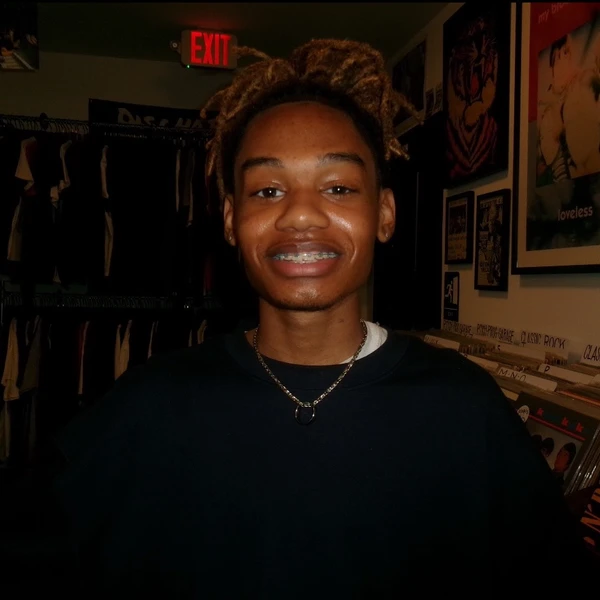
user profile avatar

Isaiah Craig

1x

Nominee

1x

Finalist

Bio

I’m Isaiah Craig, a vocalist from Jacksonville, Florida. My love for music started when I was young and has grown over the years, especially through seven years of training at Lavilla and Douglas Anderson School of the Arts. Raised in a close knit community of family and friends, I’ve always felt that singing is something I’m meant to do. Music allows me to connect with others and create a space for reflection and emotion. During my time at Douglas Anderson, I earned several honors, including a place on the wall of excellence, and I founded the Vocal Leadership Council to give students a platform to advocate for themselves and their department. Fall of 2025, I began studying Vocal Performance at Oakwood University, excited to continue my journey in a faith filled, talented environment. My goal is to use my voice for gospel music and ministry, hoping to inspire and be a vessel for healing and grace.

Education

Oakwood University

Bachelor's degree program
2025 - 2025
  • Majors:
    • Music
  • GPA:
    3.9

Miscellaneous

  • Desired degree level:

    Bachelor's degree program

  • Graduate schools of interest:

  • Transfer schools of interest:

  • Majors of interest:

    • Visual and Performing Arts, General
    • Religious Music and Worship
    • Music
  • Not planning to go to medical school
  • Career

    • Dream career field:

      Music

    • Dream career goals:

    • Intern

      First Coast no more homeless pets
      2023 – 2023

    Arts

    • Douglas Anderson school of the arts and Lavilla school of the arts

      Music
      2015 – 2025

    Public services

    • Advocacy

      Vocal Leadership Council — Founder
      2024 – 2025

    Future Interests

    Advocacy

    Volunteering

    Entrepreneurship

    WCEJ Thornton Foundation Music & Art Scholarship
    Music, to me, is a way of shaping what people feel, believe, and carry with them long after a moment ends. I want to make a positive impact on the world through my art by using my voice to bring hope, healing, and emotional release to people who feel overwhelmed, unseen, or stuck in difficult seasons of life. I have experienced firsthand how music can shift an atmosphere. In church and ministry spaces, I have seen how a song can completely change someone’s posture, how they carry their pain, and how they see their future. That is the kind of impact I want my life’s work to have. I am inspired by how music has always been connected to resilience in Black communities and other marginalized groups. Throughout history, art has carried people through oppression, struggle, and uncertainty. It's a source of strength when words are not enough. That history matters to me because it shows that music is not just creative expression but survival, testimony, and hope passed from one generation to the next. I want my artistry to continue in that tradition by creating music that reminds people they are not alone and that their story is still unfolding. My goal is to pursue music in a way that is both spiritually grounded and emotionally intentional. I want to be a praise and worship leader and gospel artist who creates spaces where people can genuinely encounter peace, reflection, and encouragement. I do not see music as performance alone, but as ministry, something that reaches into the emotional weight people carry and helps them release it, even if just for a moment. Beyond performance, I am also interested in understanding the technical side of music, including sound production and how audio shapes emotional experience. I want to learn how sound design, balance, and production choices affect how people experience music in live and recorded settings. My goal is to combine both the artistic and technical sides so I can help create meaningful, high quality musical experiences that truly connect with audiences. Ultimately, I want my art to create impact that lasts beyond a single performance. I want people to leave encounters with my music feeling seen, strengthened, and reminded that there is hope even in difficult places. If my work can help someone keep going, heal, or feel understood, then I consider that a meaningful contribution to the world.
    SCFU Scholarship for HBCU Business Students
    Economic empowerment can change communities because it affects what people actually have access to, education, stability, opportunities, and the chance to build a better future. In a lot of Black and underrepresented communities, there is no shortage of talent or ambition. The real issue is access. Access to connections, guidance, and spaces where opportunity is already circulating. Because of that, many people are forced to work harder just to reach rooms that others are already connected to. I believe business can help shift that when it is done with intention and awareness. What I want is to help create opportunities for people who are often overlooked or underestimated. Representation is more than just seeing someone who looks like you, it is about having a voice in decisions and being part of the spaces where those decisions are made. I want to help build workplaces where Black people and other marginalized groups are not just present, but actually supported, valued, and given real room to grow into leadership. Being one of the only Black students in certain classrooms made that idea very real for me. It was not always something obvious, but I felt it. You notice when you are one of the few people in a room who looks like you. You notice what is missing, whose voices are not there, and how easy it is for someone to feel out of place without anyone saying a word. That experience stuck with me. It made me think about how many talented people never even get the chance to see themselves reflected in leadership or professional spaces, and it pushed me to want to change that. As someone studying Human Resources, I care a lot about what happens inside those systems that people do not always see. HR is what shapes who gets hired, who gets trained, who gets promoted, and who gets supported. It is the structure behind opportunity. I want to help build systems that are fair, intentional, and actually give people a real chance to move forward once they are in the room. I also think business has a long-term impact that goes beyond one person. One opportunity can shift an entire family’s future. It can create stability, open doors, and change what is possible for the next generation. For many Black families, those pathways have historically been harder to access, which is why I take representation and opportunity seriously. It is not just about success, it is about access to it. Music and ministry have also shaped how I see people. Through music, I have watched how powerful it is when someone feels seen and emotionally understood. It can change how people carry themselves, how they deal with pain, and how they see hope again. That taught me that impact is not always about big moments, it is often about connection. I carry that mindset into everything I do. At the end of the day, I want to use business as a way to open doors, not close them. I want to help build spaces where opportunity is not limited to a few people, but shared with those who have historically been left out. And I want my work to make it easier for the next generation to walk into rooms and know they belong there. I am currently pursuing a double major in Voice Performance and Human Resources.
    GD Sandeford Memorial Scholarship
    I am double majoring in Voice Performance and Human Resources because I carry a deep love for both the arts and business. Although these fields may seem completely different, I see them as deeply connected through one purpose: people. Music allows me to connect with people emotionally, offering hope, healing, and encouragement, while human resources allows me to support people professionally by creating opportunities, representation, and equitable spaces for growth. Both require a level of empathy, leadership, communication, and the ability to understand human needs, which is why pursuing both paths feels natural to me rather than contradictory. Music has always been more than performance to me, it is healing, hope, and survival. Growing up in church and serving in ministry showed me that music has the power to pull people out of dark places. I have witnessed people walk into worship carrying pain, grief, exhaustion, and hopelessness, yet leave feeling renewed because music created an atmosphere where they could believe in something greater than themselves. That experience shaped the purpose behind my voice performance degree. I do not simply want to sing; I want to use my voice to encourage, uplift, and restore people who feel unseen or broken. For Black communities especially, art and music have always carried deep significance. Throughout history, music became one of the greatest contributions to our fight and freedom. It gave people the strength to hope, persevere, and continue fighting forward even in the face of oppression and hardship. I see that same power today, and I want my career to continue that legacy. Through praise and worship ministry and gospel music, I hope to create spaces where people feel safe, valued, and emotionally connected. My educational journey has also led me toward human resources because I want to create change beyond music. There are still spaces in corporate leadership and HR where Black professionals remain underrepresented. I want to help diversify those environments and create opportunities for people who have historically been excluded from them. Too often, success in America is tied to access: access to wealth, connections, mentorship, and opportunity. Many wealthy families are able to pass down resources and networks that naturally open doors for future generations. Black families, however, have not always had equal access to those same opportunities because of systemic and historical barriers. I want to be part of changing that reality. Through human resources, I hope to advocate for equitable hiring practices, mentorship opportunities, and workplace cultures that allow people from marginalized backgrounds to thrive. I want to help create environments where Black professionals can walk into rooms we have not traditionally been represented in and know they belong there. Although voice performance and human resources may seem different, both paths ultimately align with the same mission: helping people. Whether through music that heals emotionally or leadership that creates opportunity professionally, my goal is to use my education to uplift others, open doors, and leave a lasting impact on the communities I serve.
    Neil Margeson Sound Scholarship
    Music is more than sound to me, it is an experience of emotion, atmosphere, and connection. My passion began in church, where I learned that music carries presence. Performing in the worship team, I realized that music is not just about entertainment; it creates an environment where people find hope and encounter something greater than themselves. As I grew, my passion expanded from singing into the mechanics of sound. I became fascinated by how voices blend, how dynamics shift a room's energy, and how subtle adjustments in audio balance can completely alter a moment's emotional impact. This taught me that music is a collaborative, highly deliberate art form.Musically, my education has taught me discipline, focus, and collective responsibility. Through choral ensembles, I learned that success requires consistency and mutual accountability. Every voice matters, and a single off-key note affects the whole group. This mindset directly elevated my academic life, pushing me to be more attentive, resilient, and purposeful in my studies.This discipline became crucial when life grew difficult. My mother worked multiple jobs and my father drove over the road to support our family and fund my passion. In high school, our lives shifted drastically when my sister was diagnosed with Rett syndrome, bringing deep emotional and financial strain into our household. During seasons when financial pressure threatened to halt my education entirely, music became my grounding force. Singing and listening to worship provided stability and a sense of direction when everything else felt uncertain. It transformed from a hobby into my ultimate purpose.My future goal is to pursue a career in praise and worship ministry and become a gospel recording artist. This calling is rooted deeply in my upbringing, my faith, and my lived experiences. However, to truly fulfill this vision, I want to master audio engineering and sound production. I am eager to learn the technical side of the industry, from acoustic design to software like Pro Tools. Understanding sound design will allow me to enhance live worship environments, creating professional-grade spaces where music is not just heard, but felt as a vessel for healing, encouragement, and connection.Ultimately, music has given me direction, discipline, and a profound sense of purpose. It continues to guide the path I am committed to walking, both academically and spiritually. This scholarship represents a vital opportunity to alleviate my family's financial burdens, continue developing my creative gifts, and step fully into the calling that music has placed on my life.
    James B. McCleary Music Scholarship
    Music made me realize my life could be bigger than the world I saw growing up. Watching my mother work three jobs and my father drive over the road taught me the true definition of sacrifice. They hustled day and night to ensure our family was taken care of, and through their hard work, they gave me something not everyone gets the opportunity to discover: passion. Because of that, I fell deeply in love with music, transforming it from a hobby into a calling that has placed me in rooms I never imagined. That calling eventually brought me to Oakwood University, where I became a member of the Aeolians. Being chosen as a section leader in just my second year within such a prestigious ensemble has been a defining moment of my life. Music has allowed me to travel across the United States, sing alongside acclaimed artists like Stevie Mackey, and build lifelong bonds with musicians who constantly challenge me. These experiences taught me that music is far more than entertainment or performance, it is where discipline is built, responsibility is required, and human connection becomes real. Most importantly, it has given me a platform to use my voice to impact others and contribute to something far bigger than myself. However, my musical journey has not existed outside of real-life hardships. During my freshman year of high school, my family experienced a life-changing moment when my sister suffered a sudden seizure. She was later diagnosed with Rett syndrome at 17 years old. Watching her transition from independently to becoming wheelchair-bound added emotional weight and responsibility to our household. My parents worked even harder to handle the medical and financial pressures while I fought to stay focused on my education. The financial strain became very real last semester when clearance issues almost forced me to withdraw from school entirely. In moments of uncertainty, music shifted from a passion into stability. It became the anchor that kept me grounded when everything around me felt like it was collapsing. I realized that the same grit my parents poured into our survival is the same passion I must pour into my education and my dreams. Being at Oakwood University has permanently expanded my vision. I am surrounded by a higher level of musicianship, discipline, and expectation that pushes me to rise to the level of my environment every day. I am now positioned at the center of opportunities, resources, and connections that are shaping the direction of my career. Music has turned my passion into a clear, unshakable purpose. It has proven to me that where I come from does not limit where I am going, and that even in the face of hardship, my voice carries the power to shape my destination. This scholarship will not just fund my education; it will invest in a vision that my circumstances could never limit.
    Pamela Branchini Memorial Scholarship
    Imagine yourself in a choir of 50 people. Each person carries their own story, burdens, and passions, yet everyone comes together to sing one song, bringing their own stories while blending and molding with one another to create a unified sound. That is the beauty of collaboration, and that has been my experience in music. I believe Hans Ulrich Obrist said it best: “Art is not created in isolation. It grows from dialogue, exchange, and collaboration.” It is impossible to do what we do and truly make an impact in isolation. Through music, I’ve learned that you cannot carry everything by yourself. You are stronger when you have a team and a community behind you pushing you forward. My understanding of collaboration deepened during my time at Douglas Anderson School of the Arts. During my sophomore year, our vocal department was shaken when our teacher was arrested for lewd misconduct with a student. It left the department in a strange and uncertain place, and many of us did not really know how to process it. In a way, it forced us to lean on each other. What started as a difficult moment created a bond between us as singers and as family. The following year, a group of singers I had grown especially close with were placed together in a sixteen-part jazz ensemble. Because of the relationships we had built, the music felt different. We trusted each other. We listened more closely, blended more intentionally, and learned how to move as one sound instead of separate voices. The connection we shared shaped the way we sang, and the product of that collaboration was something truly special. We were not just singing notes, we shaped the atmosphere of every room we performed in. These experiences have shaped how I see collaboration in my field. In vocal performance, collaboration is not just about singing together, it’s about building trust, sharing ideas, and creating an environment where every voice contributes to the final expression. Leading and participating in ensembles has taught me that the most inspiring music comes from relationships, dialogue, and mutual support. Now, as a member of the Aeolians at Oakwood University, I continue to experience this every day. Before every rehearsal, we pray together and share how God has blessed us and the areas where we need help. That intentional connection strengthens our music and reminds me that collaboration is about more than just sound, it’s about caring for one another as people while creating something meaningful together.
    Dr. Fletcher L. Gamble Scholarship
    A young boy walking around the house with a hanger in his hand, using it as a microphone, jamming to whatever melody was playing in his head, singing Chris Brown with his mom every day, headed to Head Start with a McDonald's sausage biscuit and orange juice in his hand, or sitting in church and watching the choir lead the congregation into worship, analyzing every shift and change in the atmosphere. This young boy is me, I’m Isaiah Craig. I attend Douglas Anderson School of the Arts, and this is a loaded question for me: what inspired my passion for music? Every day, we get into vehicles and turn on our radio, or bright and early Sunday morning, turn on our gospel to get ready for worship at church, or have our headphones in to jam out to our favorite songs. Music is a language that everyone can understand. You can be in an ensemble of 50 different people who are going through 1,000 different things, and you all come together and make one sound. That’s the beauty of music, and that’s why I want to pursue it. I’ve been attending performing arts schools since middle school, and it has taken me until now to realize that you cannot talk about the essence of music without talking about the pain that our people have gone through. It’s in every song: jazz, country, R&B, pop. The way our people use oral transmission to carry history and messages is astounding. The pain and labor that our people went through are in our ears every day, and this is another reason I will continue to thrive in my passion for music. I’m an advocate for the things we go through. Every time I stand up on a stage, I’m breaking generational curses and barriers that are built to put us down. Growing up, I saw firsthand how limited opportunities, and doubt can keep people from pursuing their dreams. My family has had these challenges, and I know others in my community have, too. But every time I sing, I’m proving to myself and others that we can rise above what’s expected of us. I’m not just carrying the weight of my own dreams; I’m representing my family, my culture, and the next generation who might believe they’re stuck because of where they come from. Through my music, I want to show them that breaking these cycles is possible, and that our voices are powerful enough to create change. When it comes to art or a passion like music, I believe people are often scared to push themselves to do it or to take that big leap of faith because they’re scared of what others think or they simply cannot believe they can do it. That’s a problem in the art world—we’re scared to mess up. But if you don’t ever fall, you don’t have room to grow. I want to teach people to conquer and just DO when it comes to their art. I would love to own a studio and bring art to low-income areas and better vocal programs to schools. In other schools around the county, people are just thrown into art classes for the elective credit, but it’s more than that. University: Oakwood University
    Corderius M. Webster Memorial Scholarship
    A young boy walking around the house with a hanger in his hand, using it as a microphone, jamming to whatever melody was playing in his head, singing Chris Brown with his mom every day, headed to Head Start with a McDonald's sausage biscuit and orange juice in his hand, or sitting in church and watching the choir lead the congregation into worship, analyzing every shift and change in the atmosphere. This young boy is me, I’m Isaiah Craig. I attend Douglas Anderson School of the Arts, and this is a loaded question for me: what inspired my passion for music? Every day, we get into vehicles and turn on our radio, or bright and early Sunday morning, turn on our gospel to get ready for worship at church, or have our headphones in to jam out to our favorite songs. Music is a language that everyone can understand. You can be in an ensemble of 50 different people who are going through 1,000 different things, and you all come together and make one sound. That’s the beauty of music, and that’s why I want to pursue it. I’ve been attending performing arts schools since middle school, and it has taken me until now to realize that you cannot talk about the essence of music without talking about the pain that our people have gone through. It’s in every song: jazz, country, R&B, pop. The way our people use oral transmission to carry history and messages is astounding. The pain and labor that our people went through are in our ears every day, and this is another reason I will continue to thrive in my passion for music. I’m an advocate for the things we go through. Every time I stand up on a stage, I’m breaking generational curses and barriers that are built to put us down. Growing up, I saw firsthand how limited opportunities, and doubt can keep people from pursuing their dreams. My family has had these challenges, and I know others in my community have, too. But every time I sing, I’m proving to myself and others that we can rise above what’s expected of us. I’m not just carrying the weight of my own dreams; I’m representing my family, my culture, and the next generation who might believe they’re stuck because of where they come from. Through my music, I want to show them that breaking these cycles is possible, and that our voices are powerful enough to create change. When it comes to art or a passion like music, I believe people are often scared to push themselves to do it or to take that big leap of faith because they’re scared of what others think or they simply cannot believe they can do it. That’s a problem in the art world—we’re scared to mess up. But if you don’t ever fall, you don’t have room to grow. I want to teach people to conquer and just DO when it comes to their art. I would love to own a studio and bring art to low-income areas and better vocal programs to schools. In other schools around the county, people are just thrown into art classes for the elective credit, but it’s more than that.