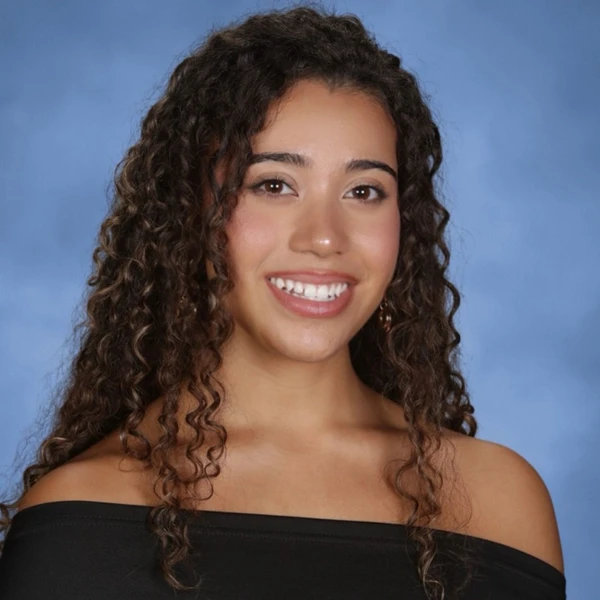
Gender
Female
Ethnicity
Black/African, Hispanic/Latino
Hobbies and interests
Psychology
Tutoring
Community Service And Volunteering
Business And Entrepreneurship
Photography and Photo Editing
Reading
Novels
I read books multiple times per week
US CITIZENSHIP
US Citizen
LOW INCOME STUDENT
Yes
Isabella Walker
1x
FinalistIsabella Walker
1x
FinalistBio
I’m a high school student who grew up between France and the United States, and that experience shaped how I see the world and the kind of future I want to build. Living and studying abroad taught me how to adapt, communicate across cultures, and connect deeply with people whose lives look different from mine. Those lessons now guide everything I do; in school, in my community, and in the goals I’m working toward.
I’m planning to major in International Business because I want a career that blends people, culture, travel, and problem-solving. I’m especially interested in how global companies build bridges between communities and create opportunities that go beyond borders.
Outside the classroom, I stay busy with work and leadership. I’ve worked as a barista and a bakery cashier, gaining real experience in customer service, teamwork, and patience. While studying abroad, I founded a bilingual tutoring program that connected more than 40 French and American students. I also launched an international pen-pal exchange across the U.S., France, and Spain to help students improve their language skills and understand each other’s cultures.
I’m passionate about learning, building connections, and becoming someone who can make a meaningful impact, whether that’s through global business, cross-cultural collaboration, or future entrepreneurial projects. I’m committed to creating a life of purpose, hard work, and growth, and I’m grateful for any support that helps me continue moving toward that future.
Education
Monte Vista High School
High SchoolGPA:
3.9
Miscellaneous
Desired degree level:
Bachelor's degree program
Majors of interest:
- Business, Management, Marketing, and Related Support Services, Other
Career
Dream career field:
International Affairs
Dream career goals:
Cashier
Maison Benoit Artisanal Bakery2024 – 2024Barista
Starbucks2025 – Present1 year
Sports
Track & Field
Club2024 – 20251 year
Research
International and Comparative Education
School Year Abroad — Researcher, Interviewer, Presenter2024 – 2025
Arts
Monte Vista High School
Photography2024 – Present
Public services
Volunteering
School Year Abroad — Founder, Manager, leader, tutor2024 – 2025Volunteering
iBest Learning Center — Volunteer tutor2023 – 2024
Future Interests
Philanthropy
Entrepreneurship
Chi Changemaker Scholarship
The issue I stepped up to address was unequal access to language education, something I hadn’t fully recognized until I lived it from the outside. While studying abroad in Rennes, France, I attended a local high school where many students were eager to learn English but couldn’t afford private tutoring. Motivation wasn’t the barrier. Access was. I recognized the same pattern I had seen in the United States: opportunity quietly filtered by income.
What motivated me to act was realizing that language isn’t just a skill; it’s a gatekeeper. Fluency shapes academic confidence, job prospects, and global mobility. Watching capable students fall behind because of cost felt unacceptable, especially when peers around them had the ability to help.
I founded a bilingual tutoring club that paired French students with English-speaking peers for free, conversation-based support. What began as informal practice sessions became a structured, volunteer-run program with scheduled meetings, rotating tutors, and age-diverse groups. Beyond language acquisition, the space emphasized confidence and belonging. Students returned not just to learn English, but because they felt seen and supported. Leading the program required recruiting volunteers, coordinating schedules, adapting when plans failed, and sustaining momentum across cultural and logistical barriers.
Through this work, I learned that social impact doesn’t come from good intentions alone. It requires organization, consistency, and trust. I also learned how powerful peer-led solutions can be when communities are invited to participate rather than be “helped.”
If given the resources to expand this work, I would scale the model into a sustainable, cross-cultural tutoring network that partners with schools and community organizations. My goal is to create accessible language-learning spaces that can be replicated in different regions, supported by student leadership and local collaboration.
This experience shaped how I see change. Meaningful impact starts small, but it grows when people are willing to step in, stay committed, and build systems that outlast them. That is the kind of changemaker I am committed to being.
Valerie Rabb Academic Scholarship
I am a student shaped by responsibility, curiosity, and a strong belief that people deserve access to opportunity long before they are expected to succeed on their own. Growing up in a single-parent household, I learned early how to be independent, adaptable, and self-motivated. Financial instability and emotional uncertainty were part of my daily life, but school became a place where effort still mattered. It was where I learned that consistency, not perfection, creates progress.
Over time, I gravitated toward spaces where I could support others. Volunteering and extracurricular involvement gave me a sense of purpose beyond myself. Whether tutoring, mentoring younger students, or working in fast-paced environments, I learned how small acts of care can change someone’s confidence and trajectory. These experiences taught me that service doesn’t have to be loud to be meaningful. It just has to be sustained.
One of the most defining experiences in my life occurred while studying abroad in Rennes, France. Living with a host family and attending a local school forced me to navigate discomfort, language barriers, and unfamiliar systems. I quickly noticed how many motivated students struggled to learn English simply because private tutoring was inaccessible. Education, something I had always relied on as a stabilizing force, was suddenly limited by income and circumstance.
Rather than accept that gap, I helped create a bilingual tutoring club that paired French students with English-speaking peers. What began as informal conversation practice became a structured, volunteer-run program focused on accessibility and confidence-building. Through this experience, I learned how organization, empathy, and follow-through turn good intentions into real impact. It reinforced my belief that meaningful change often starts locally, with people willing to step in and stay committed.
The adversity I’ve faced has taught me resilience, but more importantly, it has shaped my sense of responsibility. I don’t see success as something achieved alone. I see it as something that carries an obligation to give back. In my future career, I plan to work in business and global systems with a focus on education access, social impact, and community development. I want to help design programs and organizations that lower barriers rather than reinforce them.
Valerie Rabb dedicated her career to uplifting students and advocating for their potential. That legacy resonates deeply with me. I hope to honor it by continuing to show up for others, especially in moments when support can make the difference between giving up and moving forward. Through education, service, and thoughtful leadership, I intend to contribute to a world where more students feel seen, supported, and capable of reaching their goals.
Overcoming Adversity - Jack Terry Memorial Scholarship
Jack Terry’s story is extraordinary not only because of the scale of what he survived, but because of what he chose to do afterward. After losing his entire family, his language, and his sense of safety, he rebuilt a life rooted in learning, service, and hope. What inspires me most is not just his resilience, but his belief that education can be an act of renewal, both personal and communal.
My own adversity has not been sudden or historic, but persistent. I was raised in a single-parent household marked by financial instability and emotional uncertainty. From a young age, I learned to be independent not as a choice, but as a necessity. There were moments when school felt secondary to survival, when focusing on long-term goals felt unrealistic compared to immediate responsibilities. Yet education became the one constant I could control. It was where effort translated into possibility.
Living with limited resources taught me how to adapt. I learned to plan ahead, manage my time carefully, and take responsibility for my progress without expecting safety nets. These skills didn’t come from privilege; they came from necessity. Over time, that necessity shaped my resilience. I stopped seeing challenges as obstacles to avoid and began seeing them as problems to solve.
One pivotal experience that reshaped my understanding of myself and others occurred while studying abroad in Rennes, France. Being far from home without the familiarity of language or support systems forced me to confront discomfort head-on. I noticed how easily opportunity can be determined by access rather than ability, especially in education. After observing motivated students struggle to learn English simply because private tutoring was unaffordable, I founded a bilingual tutoring club connecting French students with English-speaking peers. What began as a small effort grew into a structured, community-driven program. That experience taught me that resilience is not just about enduring hardship, but about using what you’ve learned to reduce barriers for others.
Jack Terry’s life reminds me that adversity does not define the limits of who we become. Instead, it can shape our sense of responsibility. Like him, I see education not as a personal achievement alone, but as a tool for contribution. Through my studies in business and international systems, I plan to work at the intersection of education, access, and social impact. I want to build organizations and initiatives that expand opportunity sustainably, especially for communities where talent is overlooked due to circumstance.
Giving back, to me, means creating systems that outlast individual effort. It means ensuring that access to education, language, and opportunity is not dependent on income or luck. Jack Terry transformed unimaginable loss into a life of service and learning. While my journey is different, his story reinforces my commitment to use education as a way forward, not just for myself, but for others still waiting for their chance.
Jessie Koci Future Entrepreneurs Scholarship
I plan to study business management with a focus on entrepreneurship because I’m interested in how ideas turn into systems that actually last. I’m not drawn to business as a title or a shortcut to success, but as a toolkit: strategy, organization, financial literacy, and leadership. Higher education matters to me because I’ve learned that good intentions alone don’t sustain impact. You need structure, planning, and accountability to build something that serves people well over time.
My interest in entrepreneurship developed through experience, not theory. While studying abroad in Rennes, France, I noticed that many motivated students struggled to learn English simply because private tutoring was expensive and inaccessible. Instead of seeing it as an abstract problem, I decided to build a solution with what I had. I founded a bilingual tutoring club that connected French students with English-speaking peers. What began as informal conversation practice grew into a structured program with volunteer recruitment, scheduling systems, and adaptable lesson formats. Running it taught me how quickly ideas fall apart without follow-through and how much creativity is required to make something sustainable.
That experience confirmed that I want an entrepreneurial career because I like being responsible for outcomes. Entrepreneurship forces you to confront reality: what works, what doesn’t, and why. I enjoy that pressure. I like iterating, responding to feedback, and improving systems rather than abandoning them when they become inconvenient. I don’t want to wait for permission to solve problems that already exist.
I believe I will be successful in my business endeavors because I don’t romanticize entrepreneurship. I understand that many businesses fail not because of bad ideas, but because of poor execution, lack of adaptability, or misaligned priorities. I’ve already learned that starting something is the easy part; sustaining it is the work. Through my tutoring program and my job experience, I’ve had to manage time, people, and setbacks simultaneously. I’ve learned to listen before deciding, to adjust rather than defend, and to build systems that don’t rely on one person’s energy alone.
Another reason I believe I’ll succeed is that I measure success differently. I don’t chase scale for the sake of visibility. I care about usefulness. If something helps people consistently and responsibly, that’s success to me. That mindset keeps me grounded and prevents burnout, because the goal isn’t constant expansion, but meaningful impact.
To me, a successful life isn’t defined by status or income, though financial stability matters. A successful life looks like agency: the ability to support myself, contribute to others, and build things that reflect my values. It looks like choosing work that aligns with who I am, not losing myself in what I build. It looks like creating opportunities rather than competing for scarcity.
Jessie Koci’s story resonates with me because it values persistence, practicality, and self-direction. I’m pursuing higher education not to follow a predetermined path, but to prepare myself to carve one intentionally. This scholarship would support not just my academic journey, but my commitment to building businesses that are thoughtful, resilient, and rooted in real human needs.
Richard Neumann Scholarship
I’ve always been drawn to building things that don’t exist yet, especially when the absence of something quietly limits people’s opportunities. For me, creativity shows up not on a canvas, but in problem-solving: noticing what isn’t working, imagining an alternative, and figuring out how to make it real.
While studying abroad in Rennes, France, I visited a local high school and noticed a pattern that felt familiar. Students were eager to learn English, but many were falling behind because private tutoring was expensive and inaccessible. Language, something so foundational, had become a gatekeeper. I didn’t see a lack of effort or ability; I saw a system that excluded motivated students simply because of cost.
So I created a solution with what I had. I founded a bilingual tutoring club that connected French students with English-speaking peers. What began as informal conversation practice quickly turned into a structured, community-based program. I recruited volunteers, coordinated schedules, created flexible lesson formats, and adjusted constantly based on feedback. There was no blueprint. I learned by doing.
The most meaningful part wasn’t academic improvement alone, it was confidence. Students returned not because the program was perfect, but because they felt seen, supported, and capable of improving. Creating that space taught me that creativity isn’t about originality for its own sake; it’s about responsiveness. It’s about paying attention and being willing to iterate when something doesn’t work.
If I had the resources, I would expand this idea into a scalable language-access platform designed for underserved communities. The problem I want to address is the global gap between motivation and opportunity in education. Too often, students want to learn but lack affordable, culturally responsive support.
My solution would be a hybrid program combining local partnerships with a digital platform. Schools and community centers could partner with trained bilingual volunteers and university students, while an online system would provide scheduling tools, adaptable lesson plans, and progress tracking. Unlike traditional tutoring companies, this platform would prioritize accessibility over profit, offering services free or at very low cost, funded through grants, partnerships, and institutional support.
With proper funding, I would focus on three things: training, sustainability, and community ownership. Tutors would receive guidance not just in language instruction, but in cultural sensitivity and mentorship. The program would be designed to grow locally, allowing each community to adapt it to their needs rather than imposing a one-size-fits-all model. Over time, students who once received support could become mentors themselves, creating a cycle of empowerment.
What excites me most is that this solution doesn’t rely on reinventing education, but on rethinking access. Creativity, to me, is seeing that small structural changes can have outsized impact when they’re designed with care.
Richard Neumann believed that problem-solving is a form of art. I agree. The things I want to create are not meant to be admired from a distance, but used, adapted, and improved by the people they’re meant to serve. This scholarship would support not just my education, but my commitment to building solutions that make opportunity more widely shared.
Zedikiah Randolph Memorial Scholarship
I am a first-generation, bicultural student pursuing business with a global focus because I’ve seen how opportunity is often distributed not by talent, but by access. As a student of color, I’ve grown up navigating systems that weren’t built with me in mind, learning early how to advocate for myself, adapt quickly, and keep moving forward even when resources were limited. Those experiences shaped both my ambition and my sense of responsibility.
I chose business because it is one of the most powerful tools for change. Markets shape who has access to education, language, technology, and mobility long before policy ever does. I saw this clearly while studying abroad in Rennes, France, where I conducted a capstone project on educational inequality. I visited local schools and noticed that students struggled to learn English not because they lacked motivation or ability, but because tutoring was expensive and inaccessible. Language, a skill increasingly tied to economic opportunity, depended on income.
Rather than leaving that realization as research, I acted on it. I founded a bilingual tutoring club that connected French students with English-speaking peers, creating a free, community-based space for learning and confidence-building. Running the program taught me that impact requires more than empathy. It requires structure, consistency, and follow-through. I recruited volunteers, coordinated schedules, adapted when participation fluctuated, and learned how to sustain momentum over time. That experience solidified my desire to pursue business not for profit alone, but for scalable, people-centered solutions.
In business and finance, students of color remain significantly underrepresented, especially in leadership roles. For example, fewer than 2% of U.S. venture capital decision-makers are Black or Latino, and representation in corporate leadership continues to lag behind population demographics. These gaps don’t reflect a lack of talent. They reflect barriers to mentorship, capital, and early exposure. By entering this field, I represent a small but growing percentage of students of color who are committed to changing how these systems operate.
My goal is to work in international development, social entrepreneurship, or impact-driven consulting, building initiatives that expand access to education and workforce development, particularly in underserved and emerging communities. I plan to use business frameworks to design programs that are financially viable, culturally informed, and built to last. Just as importantly, I want to mentor and support students who may not yet see themselves represented in these spaces.
I believe inspiration starts with visibility and follow-through. I want younger students to see that success in business does not require abandoning your values or your identity. It requires using them as strengths. By sharing my journey, creating accessible programs, and advocating for inclusive leadership, I hope to make this field feel less distant and more possible for the next generation.
This scholarship would support not just my education, but my commitment to widening the path for those who come after me. I don’t intend to be the exception. I intend to help change the numbers.
Resilient Scholar Award
I grew up in a single-parent household where stability was never guaranteed, but responsibility was. From a young age, I learned how to adapt quickly: emotionally, practically, and academically. There was no clear line between childhood and independence. I learned to manage my own schedule, advocate for myself, and keep moving forward even when things felt uncertain. While this kind of upbringing comes with challenges, it also shaped the way I approach the world: with resilience, initiative, and an instinct to step up when something needs to be done.
One of the most formative realizations of my life came when I studied abroad in Rennes, France. Living thousands of miles away from home forced me to confront how much of my strength came from navigating instability. I arrived excited but ungrounded, suddenly without the familiar roles I had grown into at home. I was no longer the dependable one or the problem-solver by default. For the first time, I had to rebuild myself in a new environment.
That shift made me deeply aware of how independence can feel isolating, especially for students who are expected to figure things out on their own. I saw this reflected in a local French high school I visited, where students struggled to learn English not because they lacked ability, but because tutoring was inaccessible and expensive. Language, something so foundational to opportunity, was determined by circumstance.
That realization pushed me to act. I founded a bilingual tutoring club that connected French students with English-speaking peers. What started as informal conversation practice grew into a consistent, community-based program. I handled logistics, recruited volunteers, and learned how to sustain momentum when things didn’t go as planned. More importantly, I saw how much confidence grows when someone feels supported instead of left to figure things out alone.
Through this experience, I came to understand something about myself: my drive doesn’t come from wanting recognition or control, but from knowing what it feels like to carry responsibility quietly. Growing up in a single-parent household taught me how to endure. Building something abroad taught me how to lead with empathy.
I also learned to recognize strength in others more clearly. I stopped assuming that silence meant disinterest or that hesitation meant a lack of ability. Often, it simply means someone hasn’t been given access, encouragement, or room to try. That perspective has stayed with me.
As I prepare for college, I carry both the resilience shaped by my upbringing and the clarity gained through experience. I am motivated not only to succeed, but to create spaces where others don’t have to navigate challenges alone. My journey has taught me that resilience isn’t just about surviving difficulty. It’s about using what you’ve learned to make the path forward more possible for someone else.
Jorge Campos Memorial Scholarship
The moment I realized service could change a community didn’t happen during a grand gesture, it happened in a small, quiet classroom in Rennes, France, with mismatched chairs and a whiteboard that barely erased. That was where the first student walked in, clutching her notebook, whispering “Bonjour… do you really tutor for free?”
I nodded, and something shifted in both of us.
During my study abroad year, I founded a bilingual tutoring club to support French students who didn’t have access to affordable English help. At first, all I wanted was to fill a gap I saw during a visit to a local school, tired students, overwhelmed teachers, and families unable to pay for private tutoring. But what grew out of that small idea was far more than grammar corrections or vocabulary practice.
I built a space where students felt welcomed, encouraged, and genuinely seen.
Some came shy and unsure, barely speaking above a whisper. Others came with heavy school days and heavier expectations at home. But each time they walked in, I greeted them with a smile, asked about their week, and tried to make the room feel like theirs. That mattered. For many of them, school was a place they survived, not somewhere they felt supported.
Over time, our little room became a community. We celebrated perfect scores, helped each other through difficult lessons, laughed through mispronounced words, and listened when someone needed to vent. Parents told me their children came home excited again, not about English, but about learning. That was the biggest reward.
My leadership became less about managing tutors and more about anticipating needs, lifting others up, and creating an atmosphere where everyone felt capable. When a student didn’t understand something, I didn’t rush: I asked questions, tried again, and matched their pace. When tutors felt insecure, I reminded them that leadership isn’t about knowing everything, it’s about showing up for others with patience and care.
That is the kind of service Don Jorge embodied: humble, steady, human-centered. The kind that doesn’t announce itself, but fills a room anyway.
This experience reshaped the way I see leadership. It taught me that kindness is a strategy, not an accessory, and one that builds trust faster than any structured lesson plan. It showed me that unity happens when people feel safe enough to grow together. And it helped me discover a version of myself I am proud of: someone who can create community anywhere in the world.
It also shaped what I want for my future.
I plan to study business with an emphasis on international development and entrepreneurship. I want to build programs that remove barriers the way our tutoring club did, whether for language learners, underserved students, or communities whose needs are overlooked. I want to design solutions that are inclusive, accessible, and built on dignity, not charity. Most of all, I want to lead with the same warmth and attentiveness that defined the spaces I create.
The tutoring club began as a response to a problem. But it became the clearest reflection of who I hope to be: someone who shows up early, stays late, notices what people need, and leaves communities better than I found them.
That is the legacy I want to continue; starting now, and carrying forward into every space I enter.
Williams Foundation Trailblazer Scholarship
I didn’t mean to become a trailblazer. I just couldn’t shake the feeling that something was wrong.
It happened during a field trip to a French high school. I sat through classes where students looked exhausted, teachers struggled through English lessons, and extra help was something only wealthier families could afford. For many students, learning a global language wasn’t an opportunity, it was a barrier. And I couldn’t stop thinking about how unfair that was.
I was studying abroad in Rennes, surrounded by peers from across the U.S., but the students I met in French schools didn’t have the same access, the same support, or the same confidence. Language, something that should connect people, was limiting them. I wanted to change that, even if I didn’t yet know how.
What I did have was a group of American classmates fluent in English, a desire to help, and a belief that small solutions can grow into real change. So I started something that didn’t exist yet: the first-ever Bilingual Tutoring Club at School Year Abroad.
There were no guidelines, no precedent, and definitely no guarantee it would work. I created sign-ups, recruited volunteers, advertised to families, and found classroom space wherever teachers would loan it. At first, we weren’t sure if anyone would show up. Then one student came. Then another. Then entire families.
Before long, we were tutoring; middle and high school students who couldn’t afford private lessons, university students preparing for exams and a fifty-year-old police officer who wanted conversational practice for career mobility but most importantly, we were giving students something education often withholds from marginalized groups: access without barriers. Our club was free, student-run, and open to anyone who needed it.
I watched shy students walk in afraid to speak, then leave proudly reading full paragraphs in English. I watched parents express relief that, for once, help didn’t come with a price tag. I watched my own tutors gain confidence as they learned to lead, to teach, and to meet students where they were.
As the club grew, so did the responsibility. Schools declined to promote it, so I built our network entirely through word of mouth. Students had different learning needs, so I adapted lessons and trained peers. Every challenge forced me to think creatively, to build solutions instead of waiting for someone else to do it.
That’s when I realized: innovation isn’t always flashy. Sometimes, it’s simply refusing to walk past a problem and assuming it’s too big for you to touch.
The Tutoring Club taught me that marginalized communities don’t just need ideas, they need action. They need people willing to bridge gaps others overlook. They need leaders who create opportunity where it’s been missing.
And it gave me my path forward.
I plan to study business with a focus on social impact and international development. I want to build educational programs and nonprofits that expand access to learning, especially for students who, like the ones I taught, are limited by the cost of opportunity rather than their potential.
I didn’t expect a small idea in a borrowed classroom to change me. But it did. It showed me what happens when you clear a little space where others can grow.
And if being a trailblazer means creating paths that others can walk more easily than I did, then that’s exactly the kind of future I want to build.
Rev. and Mrs. E B Dunbar Scholarship
I used to think obstacles were things you pushed through once, like a door you open and never have to touch again. But growing up, I learned they’re more like waves. Some knock you off your feet. Some pull you under. And some teach you how to swim.
The biggest wave came from home. My mother’s instability created a tense, unpredictable environment that shaped everything; how I spoke, how I learned, how I trusted myself. I spent years keeping my voice small just to stay safe. That silence followed me into school, making me afraid to ask questions or admit when I needed help. It chipped away at my confidence until even dreaming about a future felt too bold.
The turning point was the letter I wrote at sixteen, asking a judge to terminate her parental rights. It was the hardest decision I’ve ever made. But signing my name at the bottom taught me something I didn’t know I had: agency. That moment didn’t magically remove the obstacles in my life, but it gave me the courage to face them instead of letting them drown me.
Since then, my education has become not just a goal but a lifeline. Academically, I push myself because I know what it feels like to be held back by circumstances you can’t control. I studied abroad for a year in France, where I founded a tutoring club to support students who couldn’t afford help learning English. I saw firsthand how access, just simple, free access, can transform someone’s confidence and future. I came home determined to build my career around that kind of impact.
That’s why I plan to major in business with a focus on social entrepreneurship. I want to create programs and organizations that expand educational access for students who, like me, grew up navigating instability, financial strain, or environments that made learning feel secondary to survival. I want to design community-based tutoring initiatives, mentorship networks, and language-access programs that lift students who deserve more than what they were handed.
Giving back isn’t separate from my future, it’s the reason for it. My obstacles didn’t break me; they clarified the work I’m meant to do. I know what it feels like to be overlooked, unheard, and unsure of what comes next. And I also know what one act of support, one opportunity, or one mentor can do.
My education is the foundation I’ll use to build something that doesn’t just help me rise, but makes sure others rise with me.
Aserina Hill Memorial Scholarship
If there’s one thing people consistently tell me, it’s that I have a way of showing up for others. I don’t think it’s something I learned from a book or a class, it’s something life shaped into me through every community I’ve been part of, every younger student I’ve helped, every moment when I wished someone had done the same for me.
I’m a senior in high school now, but the way I see education and service really began to form long before that. Growing up, I moved between different homes, different cultures, and different expectations. When I studied abroad in Rennes, France, everything I had ever learned about adaptability, empathy, and community suddenly went into action. In this unfamiliar city, I founded a bilingual tutoring club for students who couldn’t afford private English help. I didn’t know it at the time, but building that little program in a small classroom would teach me some of the most important lessons of my life: that people thrive when they feel supported, that confidence grows with connection, and that service isn’t just an action, it’s a way of being.
Back in California, I kept finding myself drawn to spaces where I could help someone else feel less alone. At IBest Learning Center, where I tutor younger students, I’m reminded every day of how much a bit of guidance can change a child’s entire outlook on learning. Whether I’m helping a fifth grader untangle a math problem or encouraging a shy student to read aloud, I see the same spark, the moment they realize they’re capable. That never gets old for me.
These experiences have shaped not only who I am, but also what I hope to build. If I were given the chance to start a charity of my own, it would grow from the same belief that guided me abroad and guides me now: that every young person deserves access to support, confidence, and a sense of belonging. I imagine creating a space, physical or virtual, where students from immigrant families, low-income backgrounds, or new cultural environments can receive mentorship, academic help, and language support without feeling judged or left behind. Something centered on connection. Something built on the idea that no one should navigate education alone.
In many ways, this idea is simply an extension of what I’ve already lived. I’ve seen firsthand how a single supportive moment can shift someone’s direction. How a teacher, a tutor, a mentor, or even a stranger can change what you believe about yourself. And I want to spend my life creating more of those moments, especially for kids who remind me a little of myself; hopeful, capable, and just needing someone to stand beside them while they find their place.
After high school, I plan to study business and international relations so I can build programs and systems that expand educational access on a larger scale. My goal isn’t just to make a difference, it’s to make a difference that lasts.
Service has shaped me into someone who believes fiercely in the potential of others. If I’m given the chance, I want to shape the world right back.
Harvest Scholarship for Women Dreamers
My “Pie in the Sky” dream didn’t arrive all at once, it grew the way most things in my life have grown: slowly, stubbornly, and with a feeling in my chest that said, there’s more for you than this.
For a long time, I thought dreaming big was a luxury reserved for people with easier lives, fuller bank accounts, or simpler stories. But as I got older, and especially after spending a year abroad in France, I realized that my dreams weren’t too big. My world had just been too small.
My “Pie in the Sky” goal is to build something of my own: a global, socially responsible business that expands access to education and opportunity, especially for the communities that get overlooked. I want to create programs, connections, and cross-cultural partnerships that lift students the way I once needed lifting. A business that isn’t just profitable, but transformational.
That dream feels huge but it also feels like the most honest thing I’ve ever admitted out loud.
My dream began in a small classroom in Rennes, France, where I founded the first bilingual Tutoring Club at my school. I created it because language tutoring was too expensive for most French families, and the inequity bothered me. What started as a tiny project turned into a full program that helped middle schoolers, high schoolers, university students, and even a 50-year-old police officer who just wanted to practice English.
That experience changed me. I loved the building process; identifying a need, designing a solution, gathering people around a mission, and watching something grow from nothing. It was the first time I realized:
I don’t just want to participate in the world. I want to create in it.
Growing up low-income in a single-parent household, I saw up close how lack of access limits potential. I know what it feels like to want more but have fewer resources. And I know how transformative it is when someone finally gives you a chance.
This is why I want my future business to focus on global education access, leadership development, tutoring programs, and opportunities for underrepresented youth. I want to make the kind of impact that compounds over generations, not just years.
Dreaming is powerful, but building takes clarity. Here’s how I plan to get there:
1. Study international business and global leadership
I want to understand how companies operate across cultures, economies, and communities—and how ethical entrepreneurship can shift systems rather than reinforce them.
2. Continue my work in education equity
Whether through tutoring programs, community service, or campus initiatives, I want to keep sharpening the skills I started developing in France.
3. Intern with mission-driven companies
I want to learn from organizations that center sustainability, access, and long-term community impact.
4. Grow my cross-cultural understanding
Living abroad revealed how much of the world there still is to learn. I want to study abroad again, speak more languages, and understand the people I hope to someday serve.
5. Build my entrepreneurial courage
The “Pie in the Sky” dreams require stepping into rooms where you might feel too young, too inexperienced, or too ambitious. I want to keep choosing courage anyway.
My dream is big enough to scare me, but it’s also big enough to guide me. And every time I take a step toward it, I feel that familiar spark inside me.
I used to shrink my dreams to fit my circumstances. Now I’m building a life big enough to hold them. And I plan to chase this dream until the world recognizes it as real.
Helping Hand Fund
For most of my life, success wasn’t a finish line, it was simply staying afloat.
Growing up in a low-income, single-parent household in California meant learning early what scarcity feels like. It meant watching my dad work long hours while navigating the unpredictable reality of running a small business. It meant seeing my family stretch every dollar to support six kids, while still trying to give each of us the chance to dream. For a long time, success felt like something meant for other people; people who didn’t have to worry about money, stability, or survival.
But as I got older, success started to shift from something distant to something I could build, piece by piece.
To me today, success means creating a life bigger than the circumstances I was born into. It means pursuing opportunities that once felt out of reach. It means choosing growth even when fear, uncertainty, or financial stress tells me to stay small. Most of all, it means using every lesson I’ve learned to open doors for others who grew up the way I did.
Education has been my clearest pathway toward that vision.
When I earned a full scholarship to study abroad in France through School Year Abroad, it changed everything. I spent nine months immersed in a new culture, learning a new level of independence, and building confidence I didn’t know I had. I even founded a bilingual tutoring club there to help French students who couldn't afford English support. That experience taught me what leadership looks like when you don’t have a roadmap. It taught me how to see a need, design a solution, and turn it into something that makes an impact.
But behind all of those accomplishments was the same quiet truth:
none of it would have been possible without financial support.
That is why this scholarship matters to me so deeply.
My definition of success is not just about earning a degree. It’s about earning the ability to break cycles: to build a career in business where I can create programs, opportunities, and solutions for communities like mine. I want to study international business and sustainability, combining entrepreneurship with equity and impact. I want to learn how to build organizations that lift people up instead of leaving them behind. I want to create access for students who grew up thinking that their dreams were too expensive.
But college is expensive. With a low-income background and six kids in my family, even with my dad working tirelessly and my stepmom supporting us as a nurse, we simply can’t afford tuition without help. Every dollar matters. Every scholarship matters. Every bit of support moves me closer to becoming the woman I’m trying to become, the one who turns around and pays it forward.
This scholarship wouldn’t just reduce financial stress. It would allow me to focus more on my education, take leadership opportunities, and pursue internships in sustainability and global business without wondering how my family will manage the costs. It would give me the freedom to say yes to the experiences that will shape my career and amplify my impact.
Success, to me, is not a single accomplishment. It’s a direction. It’s a commitment to rising higher than the circumstances that once held me down, and bringing others with me.
With this scholarship, I won’t just be stepping closer to my goals. I’ll be stepping into the future I’ve spent my entire life working toward.
Linda Kay Monroe Whelan Memorial Education Scholarship
The first time I understood the power of giving back was when I realized that sometimes the smallest acts; an hour of help, a shared skill, a moment of patience, can change the direction of someone else’s life.
My own life has been shaped by people who showed up for me when things were hard. Growing up in a single-parent, low-income household meant there were many moments where support felt scarce. School became my constant, and the adults and communities around me became the reason I learned to keep going. So when I finally had the chance to give back, I didn’t hesitate, because I knew exactly how much it mattered.
My earliest community service began at IBest Learning Center, where I volunteered for over 100 hours tutoring and supporting younger students. At first, I thought I was just helping with math worksheets or reading practice. I didn’t realize I was learning, too: how to communicate with patience, how to encourage kids who reminded me of my younger self, how to show someone they mattered by giving them time and attention.
But the moment that changed everything came during my study abroad year in France. While visiting a local French high school, I saw how much students struggled with English and how expensive tutoring was for their families. It felt unfair that the opportunity to learn a language, something that could open doors in their futures, depended on money. That didn’t sit right with me.
So I created a bilingual tutoring club entirely from scratch. No funding, no formal support, no guarantee anyone would show up. But they did. Middle schoolers, high schoolers, university students, even a fifty-year-old police officer, came because they needed help and a space where they felt supported. Over time, this small idea turned into a community built around confidence and connection.
That experience shaped me in ways I’m still discovering. It taught me that service isn’t about how much you have to give, it’s about giving what you can, consistently, with heart. It taught me how to lead with empathy, how to listen, and how to build something meaningful even when the resources are limited. Most importantly, it taught me that community is something you create through action, not intention alone.
Those lessons have shaped my educational goals, too.
In college, I plan to study business with a focus on international relations and sustainable development. I want to build programs and organizations that expand access—whether to education, mentorship, or global opportunities, for communities who have been overlooked or underserved. My dream is to combine business innovation with community-centered thinking, creating solutions that help people rise, especially those facing the same barriers I once had.
Education, to me, is not just a personal path, it’s a tool for impact. The more I learn, the more I can give. The more I grow, the more I can help others grow with me.
Giving back didn’t just shape my life; it gave me direction. And now, I want to spend my future doing the same for others.
Dream BIG, Rise HIGHER Scholarship
My education didn’t change my life in a single moment, it changed the moment I realized I deserved one.
For most of my childhood, school was the one place where I felt predictable safety. Home was chaotic. My mother’s moods were sharp and unpredictable, and silence became my survival strategy. I learned to stay small, stay quiet, stay out of the way. But school was different. It was a place where effort mattered more than mood, where curiosity wasn’t punished, and where I could slowly build a world outside the one I lived in.
Looking back, that was the first way education gave me direction, it showed me that the life I inherited didn’t have to be the life I kept.
As I got older, the contrast between school and home grew sharper. I loved learning. I loved structure. I loved the feeling of understanding something new. But none of that erased the reality: I was a kid in a single-parent household, navigating instability I didn’t have the language for yet. Even when I earned good grades, I second-guessed myself. I doubted whether I belonged in the rooms my teachers encouraged me to step into.
Everything shifted the day I wrote the letter that changed my life.
At sixteen, with my hands shaking above the keyboard, I wrote to a judge asking to terminate my mother’s parental rights. It was the hardest thing I had ever done, and the first time I had truly advocated for myself. It was the moment I realized that using my voice, not silence, was how I would move forward. And once I stepped into that truth, my world opened in ways I couldn’t have imagined.
Education wasn’t just something I participated in anymore. It became something I pursued with intention, purpose, and a sense of possibility.
That’s how I ended up boarding a plane to France for School Year Abroad, a program I earned a full scholarship to. It felt surreal: a girl who once felt small now stepping into a completely new country, language, and life. Living and learning abroad was the most transformative academic experience I’ve ever had. It pushed me far outside my comfort zone, not just in what I studied but in how I carried myself.
I became fluent in French.
I built a tutoring club for local students who couldn’t afford extra help.
I learned how to navigate unfamiliar streets, unfamiliar customs, and unfamiliar versions of myself.
Education didn’t just teach me French, it taught me courage. It taught me that knowledge is more than memorization. It’s connection. It’s confidence. It’s the ability to see a problem and decide you’re capable of solving it.
When I returned home, something was different. I wasn’t just participating in my education anymore, I was building on it. I worked at Starbucks to support myself and took on sustainability leadership in the store. I mentored younger kids. I took advanced classes not because I needed to, but because I loved the challenge. I realized that the girl who once hesitated to raise her hand was now someone who created opportunities for others to learn.
And that’s when my goals became clear.
I want to study business and international relations, not just to build a career but to build systems, programs, organizations, solutions, that help people find their footing the way education helped me find mine. I want to work at the intersection of sustainability, community impact, and global development. I want to reshape what access looks like for students, families, and communities who have been told, directly or indirectly, to shrink themselves.
Education didn’t just point me in that direction. It convinced me I belong there.
I know what it feels like to doubt yourself, to navigate instability, to have big dreams but no roadmap. I also know what it feels like to sit in a classroom, whether in California or France, and realize that learning can transform your life if someone believes in you long enough for you to believe in yourself.
That is the future I want to help build.
A future where creative ideas aren’t limited to those who can afford them.
A future where global perspectives are accessible, not exclusive.
A future where sustainability isn’t a buzzword but a responsibility shared across communities and businesses.
A future where kids who grew up quiet finally learn that their voices can move mountains.
My education gave me direction, but more importantly, it gave me permission, to dream bigger, rise higher, and carve out a life I once thought was unreachable.
Now I want to use that education to make sure the next generation of students doesn’t have to wait as long as I did to realize their potential.
Because who we’re becoming matters just as much as where we’re going. And I’m just getting started.
Hearts on Sleeves, Minds in College Scholarship
For most of my life, my voice didn’t feel like a tool, it felt like a risk.
I grew up in a house where speaking up could flip the day upside down. My mother’s moods swung fast and sharp, and I learned early that silence was the safest currency. Stay small. Stay quiet. Stay out of the way. That was the strategy. And for a long time, it worked, at least well enough to survive.
What it didn’t do was teach me how to advocate for myself. Or how to believe that what I said mattered.
The moment everything shifted didn’t feel brave at first. It felt terrifying. I was sixteen, sitting at my desk, staring at a blank document titled, “Letter to the Judge.” My hands were shaking because I knew exactly what I was about to do: ask the court to terminate my mother’s parental rights. Ask for freedom. Ask for safety. Ask for a life that wasn’t shaped by fear.
I wrote the letter anyway.
That was the first time I used my voice with no guarantee it would be heard, trusted, or believed, but knowing I couldn’t keep silent anymore. It was the most vulnerable thing I’ve ever done, and the most powerful. For the first time, I wasn’t speaking to avoid conflict or soften danger. I was speaking to change the trajectory of my life.
After the judge granted the request, the strangest thing happened: the world suddenly opened.
The silence I used to hide in didn’t feel comforting anymore. It felt like a cage I had outgrown. When I was accepted to School Year Abroad and finally able to go, I carried that new bravery with me, not loudly, but steadily.
Living in France forced me into moments where my voice wasn’t optional. Asking strangers for directions. Explaining myself in a language I was still relearning. Advocating for students in the tutoring club I created. Leading a room full of peers from a culture that once intimidated me. Every day stretched me a little further from the girl I used to be.
And communication stopped being something I feared. It became my bridge, between cultures, between people, between who I was and who I’m becoming.
I realized something important:
Voice isn’t volume. Voice is ownership.
It’s choosing to speak even when you tremble. It’s choosing honesty over safety. It’s choosing to shape your life instead of shrinking inside it.
Now, I use my voice to create community everywhere I go. Whether it's guiding French students through English practice, supporting younger kids as a mentor, encouraging sustainability at Starbucks, or helping my siblings find confidence, communication is at the center of who I am. Not the polished, perfect kind, just the real, honest, human kind.
In college, I want to use that same voice to uplift others who feel small, stuck, or unheard. I want to major in business and psychology so I can build something, programs, organizations, communities, that makes people feel capable and connected. I want to advocate for students like me, whose circumstances could have erased them but didn’t.
And I want to keep telling the truth, even when it's uncomfortable.
Because once I found my voice, I realized something that changed everything:
Silence kept me safe, but speaking is what set me free.
And I plan to use that freedom, not just for myself, but for everyone who is still learning how to speak.
Charles Bowlus Memorial Scholarship
The first time I realized what “low income” really meant, I wasn’t looking at a bill or a bank account.
I was watching my mom count grocery items back into the cart so we could afford dinner for six kids.
That moment lodged itself in me, the quiet math of sacrifice, the way adulthood can bend itself around what children need, even when it hurts. My family looks different than most. I grew up in a single-parent household for years, watching one parent try to be everything at once: provider, protector, comforter, problem-solver. Some months were stable. Some months were held together by luck and prayer. Even now, with a blended family and two amazing parents who do everything for us, we still feel the weight of financial uncertainty, especially as my dad’s small business has struggled through legal issues that shook our entire household.
Money was always tight. Opportunities weren’t guaranteed. But instead of making me bitter, it made me sharp.
Growing up in a low-income, single-parent household taught me to pay attention, to every dollar, every resource, every choice. I learned early that stability isn’t something you take for granted; it’s something you build. Watching my dad rebuild his business from the ground up and my stepmom work long shifts as a nurse to keep our family steady taught me more about grit than any classroom ever could.
It also shaped my career goals completely.
I want to go into business not just because I love building things, but because I understand what financial insecurity really feels like. I’ve lived the reality of watching dreams get adjusted, postponed, or downsized because money dictated the options. I’ve seen how unpredictable income affects everything, family stress, mental health, confidence, opportunity.
But I also know what entrepreneurship can do.
My dad built a bourbon company from nothing but an idea and sheer belief. Even in the hardest seasons, I’ve watched him refuse to quit. That resilience rooted itself in me. I want to build something too, something stable, impactful, and sustainable. A business that creates opportunity instead of limiting it.
Being low-income made me resourceful.
Being in a single-parent household made me independent.
But growing up around entrepreneurship made me ambitious.
That combination is why I see myself one day leading initiatives that support small businesses, especially those run by families like mine, people with incredible ideas but limited access to capital, mentorship, or networks. I want to build companies that don’t just generate profit, but also uplift communities and carve paths for people who weren’t born into abundance.
My background didn’t limit my ambition; it gave it purpose.
I know the weight of instability, and I want my future to be defined by the opposite—not just for me, but for the people I hope to serve. Where I come from taught me to work hard, think big, and never forget the people who don’t have a safety net.
I’m not just chasing a career.
I’m chasing the chance to rewrite what opportunity looks like, for my family, and for families like mine.
Future Green Leaders Scholarship
The first time I learned how much waste a business can produce, it wasn’t from a climate documentary. It was from the sound of a single Starbucks cup hitting the trash.
Then another. And another.
Thousands per week. From one store.
Working as a barista taught me more about environmental impact than any science class. I saw how everyday business habits, automatic, unnoticed, quietly harm the planet. A customer ordering a second plastic cup “just in case.” A stack of straws disappearing hourly. Cream cartons tossed because they expired a day too soon. Even our recycling bin was often contaminated, turning good intentions into more waste.
Most people didn’t notice. I couldn’t unsee it.
So I started small. I talked to my manager about reusable cup incentives. I printed signs encouraging customers to bring their own cups. I tracked how much dairy and packaging we threw out and shared the numbers. I wasn’t just making coffee anymore, I was trying to shift a culture.
Then came France.
During my study-abroad year in Rennes, sustainability wasn’t a buzzword. It was a lifestyle. People carried tote bags automatically. Bought produce from small markets. Used public transit instead of cars. My host family composted every day without thinking twice. Even the metro voice announcements reminded riders about energy use.
Suddenly, I could see the gap between intention and action, between American “talking about change” and French “living it.”
That difference shaped my career goals more clearly than anything else.
I want to study business not just to build something of my own, but to build something that does less harm and more good. Sustainability isn’t a side project, it’s the foundation of modern business. Companies that ignore it fall behind. Companies that embrace it set the standard.
My future is somewhere in that intersection: environmental responsibility and entrepreneurial innovation.
I imagine myself creating business models where waste reduction is built in from day one. I see myself designing systems that make sustainability easy, intuitive, and profitable. Whether that’s through eco-conscious product design, supply-chain reform, or corporate sustainability leadership, I want to be the person who pushes businesses toward choices that last.
I’ve already started, through my small-scale advocacy at Starbucks, through studying consumer habits in France, through building community-centered projects like my bilingual tutoring club that rely on resourcefulness and shared responsibility. Sustainability and social impact often go hand-in-hand; my experiences taught me that you create meaningful change by changing systems, not just behaviors.
One day, I want to build a company where “green” isn’t an initiative, it’s the baseline.
My career won’t just reduce impact.
It will redefine it.
Chris Ford Scholarship
If I had to describe myself in one sentence, it would be this: I’m someone who believes that opportunity should never depend on luck. Maybe that comes from growing up between two worlds, France and the United States, or from watching my family stretch every resource to support six kids while navigating unpredictable financial challenges. Or maybe it came from the moment I realized that there are people with all the potential in the world who simply never get the chance to use it.
That thought has shaped everything I care about.
During my year studying abroad in France, I saw this inequity up close. English tutoring was expensive, teachers were overworked, and many students, some dreaming of international careers, were slipping through the cracks simply because help was out of reach. I couldn’t ignore it. So I founded the first-ever bilingual tutoring club at my school. What started as a small idea grew into a community program serving middle schoolers, high schoolers, university students, and even a 50-year-old police officer determined to improve his English.
I led a team of American student volunteers, matched them with French learners, organized weekly sessions, managed communication with families, and built an entirely free program from scratch. I saw shy students begin speaking fluently. I saw tutors develop confidence in leadership. And I watched a room full of strangers become a community connected by learning, support, and curiosity.
That experience is the moment I realized what I want to do with my future.
I want to study business, specifically entrepreneurship and international management, so I can build things that open doors for others. I’m fascinated by how ideas become systems and how systems can either uplift people or shut them out. I want to create businesses that prioritize accessibility, education, community empowerment, and sustainable growth. I want to bring together my love for psychology, anthropology, and business to design solutions that acknowledge culture, human behavior, and equity.
In the future, I hope to launch programs, social enterprises, or international ventures that make opportunity less conditional, especially for communities who have been historically overlooked. Whether that’s through educational access, community development, sustainable business initiatives, or international collaboration, I want to build structures that help people unlock their potential.
As a Black student pursuing business, I also care deeply about representation. I want younger versions of myself to see that someone who looks like them can lead, innovate, and create meaningful change. I want to mentor future students, support families navigating barriers like my own, and invest in communities that rarely get invested in.
This scholarship would help relieve the financial pressure on my family, but more importantly, it would help me continue the work I’ve already started. Everything I’ve done so far, leading a tutoring program, working as a sustainability advocate at Starbucks, tutoring younger kids, studying abroad, learning languages, has shown me that impact starts with one brave step, one idea, one person.
I am ready to take that next step. I just need the chance.
Big Picture Scholarship
The movie that has influenced me most is Call Me By Your Name, not because of its romance, but because of what it taught me about honesty, emotion, and living a life where you refuse to shrink.
The first time I watched it, I didn’t fully understand why it hit me so hard. I was young, sitting on my bedroom floor, watching Elio fall apart on the screen in a way I had never allowed myself to. I had been raised in an environment where emotions felt dangerous, something you hid, something that always seemed to trigger consequences, I recognized that in Elio immediately: the fear of speaking, the instinct to stay silent even when your heart is begging you not to.
The final scene, is the moment that changed me. His father’s speech right before that, the one about not killing off the parts of ourselves that feel too deeply, struck a place in me I didn’t know was still alive. “To make yourself feel nothing so as not to feel anything—what a waste.” It was the first time I’d heard an adult say that pain wasn’t something to be ashamed of. That emotion didn’t make you weak. That shrinking yourself to survive wasn’t living.
At sixteen, I found myself in a situation where I had to choose between staying silent or finally using my voice. I was writing a letter to a judge, asking for the termination of my mother’s parental rights. It was the hardest, most terrifying thing I’ve ever done. I felt small, fragile, and unsure if I had the right to ask for something better. But I remembered that scene. I remembered Elio’s father saying that our capacity to feel deeply is what makes us human. That avoiding hurt only creates a deeper kind of loss.
So I spoke. I wrote the letter.
That decision saved me. It set off a chain reaction that led me to studying abroad in France, rediscovering a language I thought I’d lost, founding a tutoring club that helped dozens of students, and, most importantly, rebuilding my confidence. Every leap I’ve taken since then came from that moment of courage. Call Me By Your Name didn’t give me the answers, but it showed me what hiding from myself looked like. It showed me the cost of silence.
As I’ve grown, the movie has followed me like a quiet reminder. It taught me that life isn’t about avoiding mistakes; it’s about choosing to live fully, even when it scares you. It taught me to notice the beauty in the small things: sunlight filtering through trees, a conversation on a metro, the way memory folds itself into moments you don’t realize are important until later. That mindset became the foundation of my photography, my journaling, and my desire to help people, because when you learn to pay attention, you can’t help but care more deeply.
Most importantly, the film helped me redefine strength. Not as hardness, or distance, or perfection. But as vulnerability, honesty, and the willingness to confront the parts of your life that hurt. The bravery to speak. The bravery to feel.
I used to think I had to stay quiet to survive. Now I understand that my voice, the one I fought so hard to reclaim, is the most powerful thing I have. And in many ways, that realization began with a movie about a boy learning to let himself feel everything.
That’s why Call Me By Your Name is the film that changed me. It didn’t just move me, it helped me become myself.