Hobbies and interests
Cheerleading
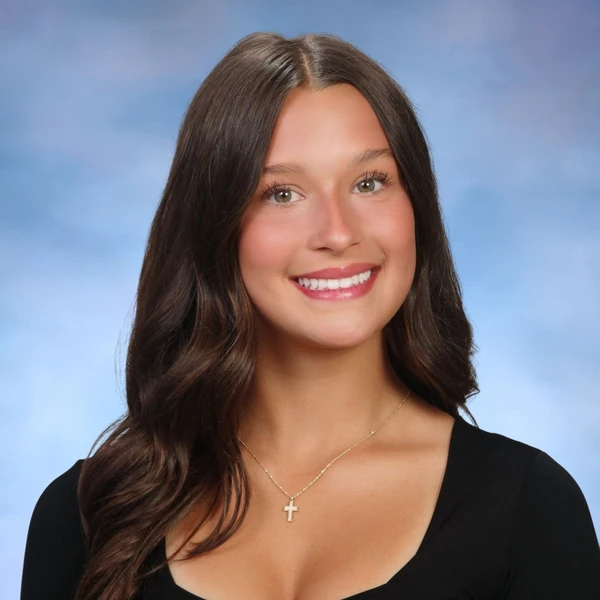
Isabella LoScalzo
1x
FinalistIsabella LoScalzo
1x
FinalistBio
I'm a motivated high school senior passionate about pursuing a career in elementary special education. Dedicated to mentoring and inspiring young learners through hands on experience as a youth cheer coach. I'm captain of the high school cheerleading
team and lifelong All-Star cheerleader with many national titles, bringing over eight years of athletic leadership, teamwork, and discipline. I'm currently enrolled in a Future Educators program in my high school, developing classroom skills and a strong foundation in child development. I'm committed to creating positive learning environments that build confidence, teamwork, and a love of learning.
Education
Roxbury High School
High SchoolMiscellaneous
Desired degree level:
Bachelor's degree program
Majors of interest:
- Education, General
Career
Dream career field:
Education
Dream career goals:
Coach
Nfinite All Starts2020 – Present6 years
Sports
Cheerleading
Varsity2017 – Present9 years
Arts
Roxbury High School
Ceramics2022 – 2025
Public services
Volunteering
Roxbury Jr. Gaels — Coach2022 – 2025Volunteering
Interact Club — member2022 – Present
Marie Humphries Memorial Scholarship
11:30 a.m. - Ten minutes until my calm morning is transformed by the excited energy of 15 unpredictable Pre-K students. By the third week of school, I am confident in our routine: parent drop-off followed by morning circle. Just as we prepare to pick up our charges, Ms. Kelly hands me a clipboard. An expert in early childhood education, she wants to talk about Brandon, my favorite four-year-old.
As a young student, I felt other kids had a secret school code I lacked. Learning my math facts or state locations was a struggle. I hated getting up in the morning, knowing I’d have a headache by 2:30 from intense focus on topics that just didn't make sense to me in the same way they did for everyone else.
Then I met Mrs. Carroll, my fourth-grade teacher, who felt more like a friend. In no time at all, she noticed my frustration with catching on more slowly than my peers and spent extra time with me after small-group sessions to gradually build my independence. She taught me fun ways to study concepts like multiplication and spelling. By the end of the year, I was still not the fastest at quizzes and continued to mix up Nebraska and Iowa on map quests, but I found more success with the material.
While many who find school challenging are excited to leave it behind, I desire to become a teacher like Mrs. Carroll: a compassionate educator who helps struggling students feel confident. My career goal began to become a reality last year through my Teaching Young Children course, where students who want to become educators lead a preschool class housed in our building.
Brandon quickly became my favorite. A little out of step with other kids and a bit more disruptive, Brandon enjoyed coloring and reading. He hated group time. I thought he was just a more solitary kid, but I didn't know the signs of autism. So Ms. Kelly’s concerns shocked me. When she handed me a clipboard of behavior and emotion-based activities to do with him, I quickly scanned the list. A sticker chart was attached. Each day, Brandon would start with 5 stickers. If he were a good listener, he would keep them all and earn a prize before leaving. If he didn’t follow directions, he would lose a sticker. As I walked to collect Brandon from his mom, I felt overwhelmed by all the things I suddenly needed to know.
After cheer practice and homework that night, I researched signs of autism. Lack of eye contact. Difficulty understanding social cues. Failure to recognize emotions. I realized why Ms. Kelly suspected Brandon might be neurodivergent. I also read about the potential long-term positive impacts of early intervention on children with special needs. I saw my first chance to make a difference.
Initially, Brandon melted down when our routine changed or when I asked him to join other students. He rarely earned a prize. I carefully documented his setbacks and progress, knowing that Ms. Kelly would include my notes in her special education evaluation request. With my patience and positive reinforcement, he became more cooperative and involved in the classroom. By June, Brandon still had the occasional meltdown, but he was also excited to tell Ms. Kelly each time I complimented his great day of learning.
My experience with Brandon confirmed that children with special needs are my calling. Since then, I have decided attend the University of Alabama to get my Elementary and Special Education degree to make sure students, like Brandon, are seen and encouraged to learn to their potential.
Keri Sohlman Memorial Scholarship
11:30 a.m. - Ten minutes until my calm morning is transformed by the excited energy of 15 unpredictable Pre-K students. By the third week of school, I am confident in our routine: parent drop-off followed by morning circle. Just as we prepare to pick up our charges, Ms. Kelly hands me a clipboard. An expert in early childhood education, she wants to talk about Brandon, my favorite four-year-old.
As a young student, I felt other kids had a secret school code I lacked. Learning my math facts or state locations was a struggle. I hated getting up in the morning, knowing I’d have a headache by 2:30 from intense focus on topics that just didn't make sense to me in the same way they did for everyone else.
Then I met Mrs. Carroll, my fourth-grade teacher, who felt more like a friend. In no time at all, she noticed my frustration with catching on more slowly than my peers and spent extra time with me after small-group sessions to gradually build my independence. She taught me fun ways to study concepts like multiplication and spelling. By the end of the year, I was still not the fastest at quizzes and continued to mix up Nebraska and Iowa on map quests, but I found more success with the material.
While many who find school challenging are excited to leave it behind, I desire to become a teacher like Mrs. Carroll: a compassionate educator who helps struggling students feel confident. My career goal began to become a reality last year through my Teaching Young Children course, where students who want to become educators lead a preschool class housed in our building.
Brandon quickly became my favorite. A little out of step with other kids and a bit more disruptive, Brandon enjoyed coloring and reading. He hated group time. I thought he was just a more solitary kid, but I didn't know the signs of autism. So Ms. Kelly’s concerns shocked me. When she handed me a clipboard of behavior and emotion-based activities to do with him, I quickly scanned the list. A sticker chart was attached. Each day, Brandon would start with 5 stickers. If he were a good listener, he would keep them all and earn a prize before leaving. If he didn’t follow directions, he would lose a sticker. As I walked to collect Brandon from his mom, I felt overwhelmed by all the things I suddenly needed to know.
After cheer practice and homework that night, I researched signs of autism. Lack of eye contact. Difficulty understanding social cues. Failure to recognize emotions. I realized why Ms. Kelly suspected Brandon might be neurodivergent. I also read about the potential long-term positive impacts of early intervention on children with special needs. I saw my first chance to make a difference.
Initially, Brandon melted down when our routine changed or when I asked him to join other students. He rarely earned a prize. I carefully documented his setbacks and progress, knowing that Ms. Kelly would include my notes in her special education evaluation request. With my patience and positive reinforcement, he became more cooperative and involved in the classroom. By June, Brandon still had the occasional meltdown, but he was also excited to tell Ms. Kelly each time I complimented his great day of learning.
My experience with Brandon confirmed that children with special needs are my calling. Since then, I have decided attend the University of Alabama to get my Elementary and Special Education degree to make sure students, like Brandon, are seen and encouraged to learn to their potential.