Mooresville, NC
Hobbies and interests
Sewing
Reading
Chinese
Spanish
Arabic
Cooking
Exercise And Fitness
Farming
Piano
Reading
Adventure
Art
Cookbooks
Crafts
Cultural
Fantasy
Folk Tales
Travel
I read books daily
Isabella Larson
1x
FinalistIsabella Larson
1x
FinalistBio
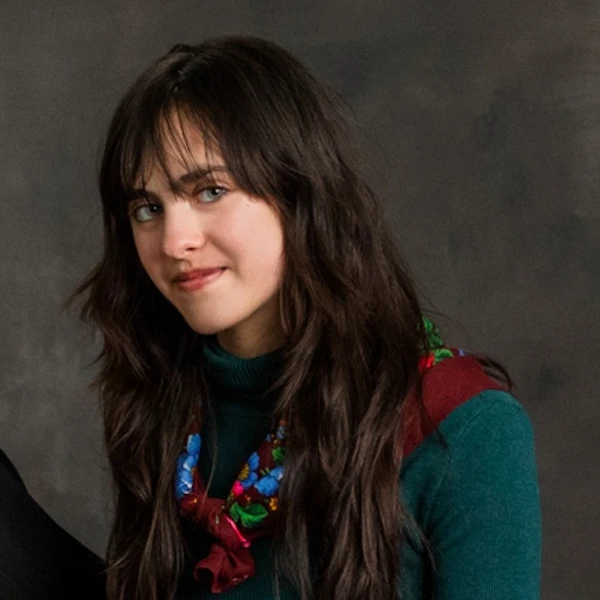
The environment is at the heart of everything I do. As an Environmental Health Sciences major, it’s the focus of my studies, and as a college student on a no-waste mission, protecting the earth is the core motivation for many aspects of my personal life. I’m highly interested in how ecosystem health and conservation protect community health and mental wellbeing. Extracurricularly, I am president of the Gardening and Ethnobotany in Academia project at UNC Chapel Hill, and I am also involved with UNC Compostmates and the Avian Society at UNC. As a Lebanese-American student, I participate in UNC’s Arab Student Organization, and was the co-president of the Middle Eastern Cultures Club at my high school. I am committed to academic excellence as a Morehead-Cain Scholar and Honors Carolina student and was recently awarded the Alice Rowan Swanson Fellowship and the C. Ritchie Bell Award for promising young professionals in the environmental field. As a Leave No Trace Level 2 Instructor, I help Chapel Hill locals incorporate Leave No Trace principles into their everyday lives and recreate outdoors with regard for community spaces. I also have research experience on traditional medicine systems, and interned at Wild at Heart Legal Defense Association, Taiwan, an environmental law firm working to protect Taiwan’s natural biodiversity. I prioritize communication to promote international environmental solutions, and have various working fluency levels in Spanish, Arabic, Chinese, and Samoan.
Education
University of North Carolina at Chapel Hill
Bachelor's degree programMajors:
- Environmental/Environmental Health Engineering
GPA:
3.8
North Carolina School of Science and Mathematics
High SchoolGPA:
4
Community School Of Davidson
High SchoolGPA:
4
Miscellaneous
Desired degree level:
Master's degree program
Graduate schools of interest:
Transfer schools of interest:
Majors of interest:
Test scores:
1470
SAT
Career
Dream career field:
Environmental Engineering
Dream career goals:
Server
The Pines at Davidson2020 – 20222 yearsSandwich Artist
SubWay2018 – 20202 yearsPatient Care Assistant
CareYaya2022 – Present4 years
Sports
Cross-Country Running
Varsity2019 – 20212 years
Research
Alternative and Complementary Medicine and Medical Systems, General
National University of Samoa — Primary Researcher2024 – 2024
Arts
Community School of Davidson Band, North Carolina School of Science and Mathematics Jazz Band, Lake Norman Charter Honors Band, Recreational Playing
Music2016 – Present
Public services
Volunteering
Leave No Trace — As a Level 2 Instructor, I work with community members and teach Leave No Trace principles to be incorporated into education, everyday life, and interactions with the outdoors.2023 – PresentVolunteering
Various local animal shelters in Iredell, Orange, and Chatham counties — I assist with tasks involving take care of shelter animals such as administering medication, cleaning living spaces, and exercise. I also work with adoptions on advertising and events to help adopt out more animals.2018 – Present
Future Interests
Advocacy
Volunteering
Audra Dominguez "Be Brave" Scholarship
After graduating high school, I was committed to UNC Chapel Hill as an Environmental Health Sciences major in the Gillings School of Public Health. I’d worked hard to be admitted to this program and was excited beyond measure. What I didn’t anticipate was falling ill with a mystery illness shortly after graduation. My blood was drawn again and again, my fever hovered at 105 degrees for an extended period of time, and I developed open ulcerations on my body. I was put on intense painkillers, was in and out of the hospital, and tested for what felt like every illness on the planet. Yet it wasn’t until after I started recovering after over a month bedridden that the illness was identified as mono, made extremely severe because of undetected anemia.
I did not fully recover from that first bout of illness. The first two years of college, I spent every other week sick in bed. Despite my best efforts to exercise and stay healthy, I constantly had an on and off fever, my throat was destroyed by how swollen my throat was, my stomach was in pain, and I could barely breathe. There were times when I lost feeling in my legs and could no longer see. Hospital visits never yielded any answers- the tests always returned as strep. There were moments I was afraid of dying. Doctors suspect mono altered my immune system, leaving me susceptible to recurring infection. After two years of constant illness, a tonsillectomy completely changed my life.
Despite the demand of persevering in my classes while bearing the mental and physical burden of constant illness, I gave my all to continuing as a full-time student at UNC Chapel Hill, maintaining my honors status and Dean’s List. I served as the Director of Public Relations for the Gardening and Ethnobotany in Academia project, and the time I was forced to spend in bed solidified my commitment to the environment more than ever. After my tonsillectomy, I jumped back into my environmental involvements. I went on to study abroad in Samoa on a scholarship and research how social and environmental pressures affect the Samoan traditional medicine system. I presented at the Cullowhee Native Plant Conference in 2024 and received the C. Ritchie Bell Award for promising young environmental professionals. As newly elected president of the Gardening and Ethnobotany in Academia Project, I connect club members with local educational experiences in nature, prioritizing cultural and medicinal uses of native regional plants. I also created a small neighborhood garden aimed at cultivating local native plants with heirloom food-producing plants, providing for my neighbors and restoring local biodiversity.
The passion I pour into my extracurricular and academic environmental involvements is proof of my commitment to the environmental field, despite the medical difficulties I’ve faced. After I graduate from UNC Chapel Hill, I will continue the momentum I’ve created as a Master’s student in Environmental Engineering, and after that in a state environmental engineering role in which I hope to address pressing environmental issues at the regional level. I will use my policy course focus to become involved with local environmental policy. I also hope to eventually own a sustainable farm to provide for my family and community members. Audra’s bravery resonates with me as someone who plans to make change, and I hope to use my bravery to create solutions to protect natural resources and provide for the people around me. I’m deeply grateful for the opportunity to apply for this scholarship which would help support me in my last year at UNC Chapel Hill.
Alexander Hipple Recovery Scholarship
Sometimes I still dial Grandma’s number instinctively. My phone often rang with calls from her upwards of five times a day, regardless of if I was in class or working. My grandmother suffered from bipolar disorder; her condition was significantly worsened by the opioids she’d been taking for over a decade. People with bipolar disorder sometimes fixate on one person, and for my grandmother, that person was me. I was the oldest grandchild and the only person she trusted in a manic episode.
Hydrocodone was supposed to be short term relief after her shoulder replacement. Then, her bottle of pills ran out, weeks before they should have. Growing up, “It’s time for Grandma to take her medicine,” was something I heard often. If I’d known what she’d been taking when I was younger, I might have understood her sooner. Her bipolar was well documented, with homelessness, suicide attempts, bankruptcy, and paranoia scattered on her record. And yet, her doctor continued prescribing hydrocodone, though opioids are well known to worsen symptoms in people with bipolar.
Growing up, I struggled to balance my grandmother’s needs with my education, and I was envious of classmates who had better relationships with their grandparents. When I transferred to a new school in sixth grade, I acutely felt the effects of having a mentally ill addict as a family member. I was moody and struggled to integrate into existing friend groups at my new school. I had a few friends, but felt isolated at school. I joined the band late, in seventh grade, and I was put in class with the kids from grade below me. I picked up the trumpet and met two boys named Alex and Cooper. They treated me with kindness, not caring that I didn’t mesh with the kids in my grade. I remember Alex Hipple as one of the few kids who was always truly kind to me at the Community School of Davidson, despite my struggles. I transferred schools again in tenth grade, but those moments of kindness from a few students at CSD were what helped me through until then.
Eventually, Grandma started taking pills more often, her manic episodes escalating. She was running out of money, and worst of all, she was forgetting things. When I started college, she visited the doctor with panic attacks presenting as chest pain- we didn’t know they started prescribing her oxycodone. She deteriorated rapidly. Within weeks, we had to make the decision to move her to a memory care facility. After many doctor’s visits, we were finally able to transition her to less intense pain meds and help manage her bipolar. She died surrounded by family a few months later.
Curbing her addiction in her last few months offered the chance for a new relationship with her. She had always been the bubbly, bright grandmother that we caught glimpses of between her manic episodes. The chance to repair our relationship allowed me to understand how addiction and mental illness interact and are truly dangerous. I’m participating in trauma counseling and am healing from the damage addiction did to my life. Though it robbed me of years with my grandmother and left me with unspeakable grief, I’m carrying forward the positive principles she taught me- particularly appreciation for art, writing, and music. I’m committed to my academics, pursuing a degree in Environmental Health Sciences, something I know my Grandma would be proud of. I’m deeply grateful for the opportunity to apply for this scholarship in memory of Alex, who made my journey a little bit easier when I was struggling.
Captain Jeffrey McFetridge USN (Ret) Scholarship
The only moments of my childhood that were not spent outside were the moments I spent sleeping. As I changed with every season, I watched the plants cycle and grow with me. When I moved out of my parents’ house, I had pocketed an understanding of how crops were cultivated, how each organism plays a different role in their ecosystem, and the careful system of checks and balances that keeps our world turning. The transition to college left me seeking new ways to center myself around the environment, which I’ve found in my studies as an Environmental Health Sciences major at UNC Chapel Hill. I serve as president for UNC’s Gardening and Ethnobotany in Academia Project, and am a member of multiple environment-related clubs. I also work constantly towards a no-waste lifestyle, and I am a Leave No Trace Master Educator. The environment is my passion, my major, my mindset, and one of my hobbies. Ultimately, I hope to benefit the environment as much as it has benefitted me. Through a career in conservation engineering, I plan to focus on how environmental health impacts community health, and will work to protect crucial natural areas.
Dr. Samuel Attoh Legacy Scholarship
The ultimate exemplification of legacy for me is the impact my mother has left on her community. Mothers are often one of the most meaningful people in our lives, but my mother’s hard work has reached beyond just her family. The lives of her community members have been greatly bettered by her efforts; her dedication has shaped me into my own person. She crushes her hardships with love. While my grandmother’s bipolar disorder was a significant challenge, my mother was her caretaker from the age of 42 until her death at 85. My mother also lost two young daughters and showed incredible grace to 4 year old me and my grandmother at the time. Such compassion is impossible without perseverance. She pours herself into improving the lives of those around her constantly. She helps others without being asked, most recently taking care of an elderly friend whose husband passed away.
The environment is another object of her passion, an integral part of her culture. She has served in many environmental roles, one of which being the former Education Chair for the North Carolina Native Plant Society. She raised my sister and I outdoors, assisted and guided children who needed her along the way, encouraged us all to capitalize on our different talents, and set the bar high for us. By making a difference in the lives of those around her, facing hardship with grace, and advocating relentlessly for the environment, she has taught me you truly can be the change you want to see, and love makes it all possible. To me this is why legacy matters- it’s about the positive impact on others you leave behind. She planted the seed of unconditional love, and today I feel I have grown that love into a crucial part of my own person.
Having learned from my mother, I do my best to help others whenever possible. This includes taking in and finding good homes for 10 stray cats in the past year, all of which I came across locally by chance. I balance my work as a caregiver with my education, helping families with members who struggle with dementia. I have hosted bake sales to fund weekend meals for children who are food-insecure, and another to cover the cost of dental surgery for a senior cat whose owner could not afford it. Though I am deeply involved in helping my community, I also follow my mother’s lead in advocacy. I am on a no-waste mission, which means stopping plastic consumption, eating local foods, and swapping items with neighbors rather than buying. As a Leave No Trace Level 2 Instructor, I also guide community members in engaging with the outdoors to improve their mental and physical health, while leaving as little an impact on our local natural areas as possible. The final aspect of her legacy, arguably the most important, is passion, something I pour into everything I do. Even though engaging in intensive Environmental Health coursework, working part-time, volunteering, staying active, and being involved with student organizations can feel overwhelming at times, I manage my time and energy wisely in order to give my everything to my involvements.
Throughout my life, I will continue to help, advocate, and be passionate in all my involvements. One of my greatest dreams is to buy land of my own and start a small-scale sustainable farm to provide for myself, my family, and my local community. My mother’s legacy has shaped my set of core beliefs; through my community involvement, I hope to leave as much of a positive impact as my mother has.
Kim Moon Bae Underrepresented Students Scholarship
My identity is like a stuffed grape leaf. To others, I may look like one uniform entity, but I’m filled with many things that make me whole. One such thing is my Lebanese identity- I’m the daughter of a Lebanese father. Being Arab, I’ve experienced an array of food, values, and languages. Simultaneously, I've struggled to reconcile the diversity of my Lebanese heritage with my Americanness; it can seem at times that being American is hostile to other forms of ethnic identities. Grape leaves allow me to think about these identities coexisting. For me, the grape leaf is a substitute for the melting pot (an American who contains many things). A grape leaf, in its place, is a whole which allows all its components to be equally important.
Stuffed grape leaves are a food I grew up eating. They’re a staple in Middle Eastern cuisine; being raised by a Lebanese father means eating countless grape leaves. You start with whole grape leaves, which are then filled with rice, ground lamb, and Lebanese seven spice, wrapped into cylinders and boiled with lamb bones. Typically, my family lines up in the kitchen and makes a large pot of grape leaves as a team. These endeavors leave us with enough grape leaves to last for weeks.
Though grape leaves are a staple in Lebanese families, they aren’t so widely loved in America. Few Americans are familiar with grape leaves, nor do they want to be. In my lifetime, my friends have been reluctant to try dishes my family makes, such as kibbeh nayyeh, a lamb delicacy. This experience doesn’t solely apply to food. It has also been unfortunately common when it comes to many people’s familiarity with Lebanese culture. My whole life, I’ve had to explain to people what it means to be Middle Eastern. I’ve encountered people who believe many unfortunate stereotypes about Arabs. For years, I’ve had to justify my heritage to people I barely know. It’s caused an internal struggle in which I don’t feel accepted in my American identity and simultaneously feel ambivalent towards my Lebanese identity.
Resolving the conflict between my identities is another way in which I’m like a grape leaf. What’s allowed me to accept both identities as equal parts of myself has been the realization that the two can coexist without competing, much like the lamb and rice can coexist within a grape leaf. The ingredients are harmoniously distributed throughout the whole grape leaf, without favoring the lamb or the rice more. Their combination turns separate parts (my identities) into one indefinable whole (me). I’ve come to realize that my identities are just two parts of me; neither has to overpower the other. I can be equally a part of the Lebanese community while still being an American.
Accepting my identity has been integral to my journey in becoming who I am today. I’ve realized my identity contains many diverse components which mingle together in many surprising ways. All these ingredients create one whole which is neither American or Lebanese, but is a distinct mixture of both, handmade with care. Though I’ve struggled with how my identities coexist, working through this struggle has made me confident in my cultural identity. The perseverance I apply in the face of hardship, and will continue to practice in my pursuit of higher education, stems from my cultural resilience and confidence. I’m proud to be both Lebanese and American, and I know that both my identities are equally important to the person that I was, am now, and will be in the future.