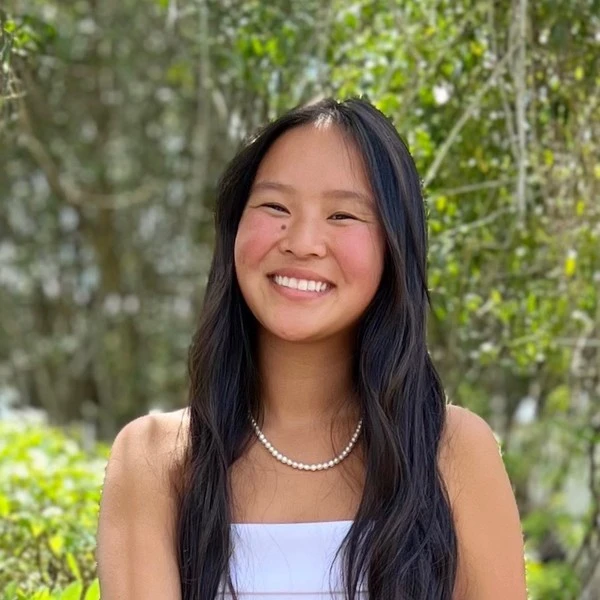
user profile avatar

Isabella Fusco

1x

Finalist

General information

Hobbies & Interests

  • Research
  • Reading

Reading

I read books multiple times a week.

Bio

I am an undergraduate student honors majoring in biomedical engineering with a strong interest in medical technology and healthcare innovation. As someone living with spina bifida, I have experienced firsthand how medical systems and assistive technologies shape daily life, which has motivated me to pursue engineering solutions that improve accessibility, independence, and patient outcomes. Currently, I work in a Laboratory, where I lead an extracellular vesicle research project in relation to Fragile X Syndrome. Through this experience, I have developed technical skills including immunocytochemistry (ICC), Western blotting, live mouse and gerbil handling, tissue perfusion and collection, and experimental protocol development. In addition, I have prior research experience in stem cell biology from projects conducted during high school. These projects included growing intestinal organoids, investigating treatments for hemochromatosis utilizing esiRNA, and studying the effects of CoQ-10 on induced pluripotent stem cells (iPSCs) in relation to Alzheimer’s disease. My goal is to contribute to the development of biomedical devices and technologies that directly improve quality of life for patients with disabilities and chronic conditions. I am especially interested in innovation that makes healthcare more personalized, accessible, and effective.

Education

Florida State University

Bachelor's degree program

2025 – 2029

Majors:
  • Biomedical/Medical Engineering

Miscellaneous

Desired degree level:
Doctoral degree program (PhD, MD, JD, etc.)
Graduate schools of interest:
Medical University of South Carolina
Desired degree modality:
In-Person
Medical school interest:
No

Career

Miscellaneous

Dream career field:
Medicine
Work experience:
1 year
Has nursing license:
No
Bulkthreads.com's "Let's Aim Higher" Scholarship
When people think about building something, they often think of a product, a business, or a piece of technology. While I hope to contribute to medical innovations one day, what I truly want to build is a better environment for both patients and healthcare workers. As a Biomedical Engineering student with plans to attend medical school, I have become increasingly aware of the challenges facing the healthcare system. Patients often feel overwhelmed, unheard, or frustrated while navigating medical care. At the same time, healthcare workers face long hours, staffing shortages, burnout, and immense pressure. While advances in medicine and technology continue to improve treatments and outcomes, I believe there is still significant room for improvement in the overall experience of healthcare for everyone involved. Growing up with spina bifida has given me a unique perspective on healthcare. I have spent a great deal of my life interacting with doctors, nurses, therapists, and medical technology. These experiences taught me that some of the most meaningful aspects of healthcare are not always the treatments themselves, but how patients are treated throughout the process. A compassionate healthcare provider, clear communication, and feeling genuinely cared for can make a difficult situation much easier to navigate. Through my studies in biomedical engineering and my experiences in research, I hope to contribute to solutions that improve both patient care and the working conditions of healthcare professionals. Whether that involves developing more efficient medical technologies, improving healthcare systems, or eventually caring for patients as a physician, my goal is to help create an environment where patients feel supported and healthcare workers have the resources they need to provide the best possible care. Building this future will take years of education, research, and dedication. Every class I take, every hour I spend in the laboratory, and every opportunity I have to learn from medical professionals helps me move closer to that goal. I understand that meaningful change does not happen overnight, but I believe even small improvements can have a lasting impact on people’s lives. The positive impact of this goal extends beyond my own career. Better healthcare environments lead to better patient outcomes, stronger communities, and healthier lives. When healthcare workers are supported, they can provide higher quality care. When patients feel respected and understood, they are more likely to trust the healthcare system and advocate for their own well being. Ultimately, I hope to build a future where healthcare is not only more advanced, but also more compassionate. By combining engineering, medicine, and empathy, I want to help create a system that works better for everyone who depends on it.
Tawkify Meaningful Connections Scholarship
As technology becomes more integrated into our everyday lives, many people worry that authentic human connection is disappearing. It is easy to see why. We can spend hours scrolling through social media, texting, or interacting with screens without ever having a meaningful conversation. However, I do not believe technology is inherently bad. Technology is simply a tool. The real question is how we choose to use it and whether we continue to prioritize the relationships that make us human. Human connection is one of the most important aspects of life. People are not meant to go through life alone. We thrive when we feel understood, supported, and valued by others. Some of the most meaningful moments in life cannot be replicated by technology. Sitting with a friend after a difficult day, sharing a meal with family, celebrating achievements together, or simply having a face to face conversation creates a sense of belonging that no screen can fully replace. These connections shape who we are and have a profound impact on our happiness, mental health, and overall well being. At the same time, technology has transformed the way we communicate. It allows us to stay in touch with loved ones across the world, maintain relationships despite distance, and access communities we may never have found otherwise. For many people, technology provides opportunities for connection that would not have existed in previous generations. It can bring people together, spread ideas, and help individuals find support during difficult times. The problem is not the existence of technology itself. The problem arises when technology begins to replace genuine human interaction rather than enhance it. I believe the future of human connection depends on our ability to find balance. As technology continues to advance, we must be intentional about protecting the relationships that matter most. It is important to put down our phones during conversations, make time for family and friends, and engage fully with the people around us. Being physically present is not enough. We must also be emotionally present. Authentic connection requires listening, empathy, and vulnerability, qualities that cannot be automated or replaced by artificial intelligence. As someone entering a generation that has grown up surrounded by technology, I have seen both its benefits and its drawbacks. I have watched technology connect people across great distances, but I have also seen how easy it is for people to feel isolated despite being constantly connected online. This has reinforced my belief that meaningful relationships require effort and intention. The strongest connections are built through shared experiences, trust, and genuine care for one another. The future will undoubtedly include even more advanced technology than we can imagine today. However, no technological innovation will ever replace the comfort of a loved one, the value of a real conversation, or the feeling of being truly understood. As society moves forward, we should embrace technological progress while remembering that our relationships are what give life meaning. Technology may change the way we connect, but it should never replace the human connection that makes us who we are.
Teaching Technicians Scholarship
My name is Isabella Fusco, and I am pursuing a degree in Biomedical Engineering at Florida State University with the long term goal of attending medical school. I chose biomedical engineering because it combines my passion for science, technology, and healthcare into a field that has the power to directly improve people’s lives. I am fascinated by the way engineering principles can be applied to solve medical problems, develop life changing technologies, and advance our understanding of the human body. Through my technical career, I hope to contribute to innovations that make healthcare more effective, accessible, and personalized for patients around the world. My interest in biomedical engineering is deeply connected to my personal experiences. Growing up with spina bifida exposed me to healthcare and medical technology from a young age. I have seen firsthand how advancements in medicine, medical devices, and research can improve independence and quality of life. These experiences gave me an appreciation not only for the physicians who care for patients but also for the engineers and researchers who develop the tools and technologies that make modern healthcare possible. They inspired me to pursue a career where I can contribute to the creation of those innovations myself. In addition to my coursework, I have spent several years involved in scientific research. Through opportunities working with stem cells, intestinal organoids, neurodegenerative disease models, and extracellular vesicles, I have developed technical laboratory skills while learning how research can lead to meaningful discoveries. These experiences have strengthened my ability to think critically, solve problems, and work collaboratively with others. More importantly, they have shown me how engineering and science can be used to answer questions that have real implications for human health. As a biomedical engineer, I hope to help bridge the gap between scientific discovery and patient care. Many of the world’s biggest healthcare challenges require interdisciplinary solutions that combine engineering, biology, medicine, and technology. Whether developing improved medical devices, contributing to regenerative medicine research, or helping design new diagnostic tools, I want my work to have a direct and measurable impact on patients. I am especially interested in creating technologies that improve accessibility and quality of life for individuals with disabilities and chronic medical conditions. I believe biomedical engineering is one of the most powerful fields for creating positive change because it transforms scientific knowledge into practical solutions. Every advancement, whether it is a new treatment, device, or diagnostic technique, has the potential to improve countless lives. Through my education and future career, I hope to contribute to those advancements while continuing to advocate for patient centered innovation. By combining technical expertise with compassion and a deep understanding of the patient experience, I aim to make a lasting impact on healthcare and help create a future where more people can live healthier, fuller lives.
Emerging Leaders in STEM Scholarship
I am interested in healthcare and biomedical engineering because I’ve grown up seeing how closely medicine and daily life are connected. Living with spina bifida, healthcare has never been something complex to me, it has been part of my routine and experience for as long as I can remember. Over time, I started paying attention to more than just the medical side of care. I noticed how much of a difference the design of tools, accessibility of devices, and ease of use can make in someone’s independence and confidence. That perspective is what led me toward biomedical engineering, where medicine and engineering meet to solve real human focused problems. What draws me most to this field is the ability to directly improve quality of life through innovation. I’m especially interested in designing biomedical treatment therapies that prioritize accessibility from the beginning, not as an afterthought. Something as simple as a more intuitive or better fitting device can significantly reduce barriers for patients. I want to contribute to solutions that help people live with more independence, dignity, and comfort, particularly those with disabilities or chronic conditions whose needs are often overlooked in early stages of design. The impact I hope to make is grounded in that idea of accessibility and inclusion in healthcare. My goal is to be part of the process that ensures medical technology is not only advanced, but actually usable for the people it is meant to serve. I want my work to reflect both technical innovation and real-world understanding of patient experience. Long term, I hope to help bridge the gap between engineering design and lived medical experience so that patients’ voices are more directly reflected in the tools and systems they rely on every day. One of the main adversities I have faced is navigating life with a chronic medical condition. Spina bifida has required me to interact with healthcare systems consistently and has given me a firsthand understanding of both the strengths and limitations of medical care. While it has come with challenges, it has also shaped how I think about problem-solving and resilience. I’ve had to adapt, advocate for myself, and learn how to work within systems that are not always designed with every patient in mind. Instead of discouraging me, those experiences pushed me toward wanting to improve those systems for others. Overall, my experiences have given me both the motivation and perspective to pursue biomedical engineering. I want to use my education to create practical, meaningful improvements in healthcare that make a real difference in people’s everyday lives.
Women in Healthcare Scholarship
I chose to pursue a degree in healthcare because I’ve seen firsthand how closely health and daily life are connected, not just through medicine itself, but through the systems, tools, and people involved in care. Living with spina bifida means that healthcare has always been part of my life in a very real, ongoing way appointments, imaging, devices, and routines that most people don’t really think about. Over time, I started to notice that what made the biggest difference wasn’t just the medical treatment itself, but the design of the tools I was using, how accessible they were, and whether they actually fit into real life. That’s what pushed me toward biomedical engineering and healthcare. I became interested in the space where medicine and engineering overlap, where problems are solved not only through diagnosis or treatment, but through design and innovation. Something as simple as a device fitting better, being easier to use, or requiring less assistance can completely change someone’s independence and confidence. I want to be part of the process that makes those kinds of improvements happen, especially for patients with disabilities or chronic conditions. My experience has also made me more aware that healthcare is not simply one thing fits all. Two people can have the same diagnosis but completely different experiences and that difference matters when designing solutions. Because of that, I want to help make sure that patient perspectives are not treated as unused information, but as something focused to how healthcare tools and systems are developed. As a woman entering healthcare and biomedical engineering, I also recognize how important representation is in these spaces. STEM and engineering can still feel like environments where women are underrepresented, especially in more technical or research focused roles. I want to contribute not just by being present in the field, but by being actively involved through research, problem solving, and collaboration that puts patients first. I also hope to use my position to support and encourage other women who are interested in healthcare or engineering but may not always see themselves in those spaces. I’ve learned that confidence in these fields often comes from exposure and encouragement, and I want to be part of creating that for others, whether through mentorship, teamwork, or simply showing up fully in my own work. Ultimately, my goal is to make a positive impact by helping develop biomedical solutions that improve accessibility, independence, and quality of life for patients. I want my work to reflect both the technical side of healthcare and the human side. Thus making sure that innovation doesn’t just focus on what is possible, but on what actually improves people’s everyday lives.
Isabella Fusco Student Profile | Bold.org