Hobbies and interests
3D Modeling
Robotics
Cooking
Isaac Cao
1x
Finalist
Isaac Cao
1x
FinalistBio
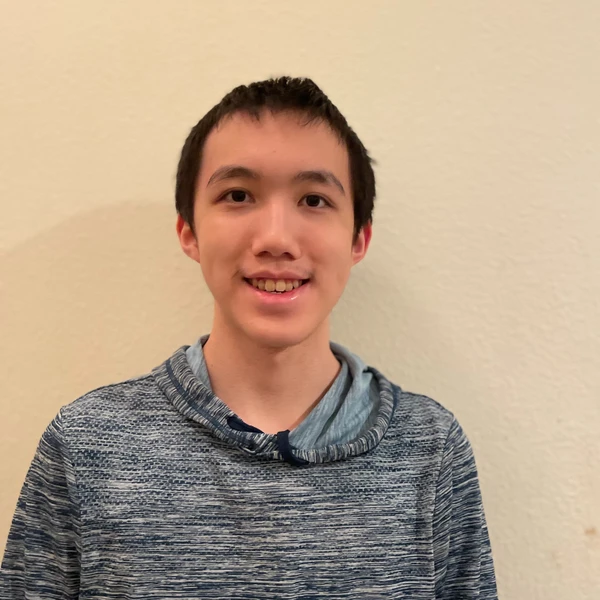
I am a 17-year-old high school senior in the Cambridge program at Juanita High School with a 3.9 GPA. I enjoy challenging myself both academically and creatively. I placed 9th nationally in the Speed Stacks Youth Olympic Games, an experience that taught me focus, precision, and persistence.
At home, I help support my family, including two siblings with disabilities, which has shaped my sense of responsibility and empathy. One of my proudest personal interests is cooking—I enjoy learning cuisines from around the world by following cookbook recipes, which has taught me patience, curiosity, and attention to detail.
I am passionate about 3D modeling, electrical engineering, and computer science, and I hope to pursue a future where I can design and build technology that makes a meaningful impact.
Education
Juanita High
High SchoolMiscellaneous
Desired degree level:
Bachelor's degree program
Majors of interest:
- Electrical and Computer Engineering
Career
Dream career field:
Electronic Engineering
Dream career goals:
Future Interests
Advocacy
Politics
Volunteering
Entrepreneurship
Justin Moeller Memorial Scholarship
My interest in information technology grew from curiosity and hands-on experience rather than from having easy access to mentors or resources. As a student from an underrepresented background, I learned early that exploring technology often requires initiative and persistence. What drew me to IT was not just the idea of writing code, but the ability to design systems, solve real problems, and create tools that combine logic and creativity.
One of the most formative experiences in my journey was participating in two consecutive DigiPen summer programs focused on coding, game architecture, and interactive design. These courses introduced me to structured programming, problem-solving through iteration, and the fundamentals of how complex systems are built. Rather than focusing only on outcomes, the programs emphasized debugging, collaboration, and understanding how individual components interact within a larger system. This experience strengthened my interest in computer engineering and helped me see how software design, hardware constraints, and user experience intersect.
Earlier, in middle school, I was part of a junior coding club at a choice school that encouraged independent thinking and exploration. Being part of that community allowed me to experiment with programming concepts in a supportive environment and collaborate with peers who shared similar interests. These early experiences helped me build confidence and reinforced the idea that technology is not just about technical skill, but about creativity, communication, and persistence.
What excites me most about information technology is its flexibility and impact. IT systems shape how people communicate, learn, and access opportunities. I am particularly interested in areas such as computer engineering, electrical engineering, and artificial intelligence because they combine theoretical thinking with real-world applications. I enjoy understanding how systems work at both the software and hardware levels, and how intelligent systems can adapt to solve complex problems more efficiently.
My background has taught me to value practical learning and self-directed growth. Without constant access to mentors in the field, I learned to seek out opportunities like summer programs, clubs, and independent projects to build my skills. This process required discipline and adaptability, qualities that will continue to guide me as I pursue higher education in an IT-related field.
This scholarship would help remove financial barriers that often limit access to advanced education and training in technology. By reducing the burden of tuition and related costs, it would allow me to focus on developing the technical skills and knowledge needed to succeed in information technology. I hope to use my education to build systems that are reliable, inclusive, and innovative, contributing to a future where technology expands access and opportunity rather than limiting it.
Richard Neumann Scholarship
I have always enjoyed creating things that require both careful planning and hands-on problem solving. One project that best represents how I think and work was assembling a sophisticated three-dimensional mechanical puzzle that combined structure, electronics, lighting, and motion. The puzzle arrived as hundreds of small components—structural pieces, wiring, gears, a battery system, and LED lights—without a single obvious path to completion. Turning these parts into a functioning moving object required patience, experimentation, and creative problem-solving.
Assembling the puzzle was not simply following instructions. Each step depended on understanding how components interacted as a system. If one gear was misaligned or a wire was placed incorrectly, the entire structure would fail to move or light up properly. I had to frequently step back, analyze the design, and rethink my approach when something didn’t work. Through trial and error, I learned how small changes could significantly affect the final outcome. When completed, the puzzle transformed into a three-dimensional object with coordinated motion and lighting powered by a battery—an experience that reinforced how creativity and engineering work together.
This project reflects how I naturally approach problems. I enjoy breaking complex challenges into manageable parts, testing ideas, and refining solutions. The satisfaction didn’t come from finishing quickly, but from understanding why the system worked. That mindset extends beyond projects and into how I approach learning, especially in STEM-related subjects where design, logic, and iteration are essential.
If I had the resources and funding to solve a larger problem, I would focus on creating interactive educational tools that help students learn through building rather than memorization. Many students struggle in traditional classroom environments because lessons are abstract and disconnected from real-world application. I would design modular, hands-on learning kits that combine physical construction with basic electronics and programming. These kits could help students visualize concepts in engineering, physics, and computer science by allowing them to create working models with lights, motion, and sensors.
Such tools could be particularly impactful for students who learn best through experimentation and creativity. By encouraging curiosity and problem-solving, these kits could help students build confidence while developing practical skills. With adequate funding, I would collaborate with educators to ensure the designs are accessible, affordable, and adaptable to different learning levels.
Creativity, to me, is not just artistic expression—it is the ability to see problems as opportunities to build something better. Whether assembling a mechanical puzzle or imagining new ways to improve education, I am motivated by the process of turning ideas into reality. This scholarship would support my continued growth as a creative problem solver and allow me to pursue an education where innovation, design, and thoughtful solutions are at the center of my work.
Big Picture Scholarship
The movie that has had the greatest impact on my life is October Sky. At its core, the film is about curiosity, perseverance, and the courage to pursue learning even when the environment around you does not naturally support it. Watching it helped shape how I think about education—not just as a path to a career, but as a way to expand what is possible for myself and for others.
In October Sky, Homer Hickam grows up in a coal-mining town where expectations are narrow and futures often feel predetermined. What resonated with me most was not just his interest in rockets, but the way learning became an act of self-direction. Homer did not wait for ideal conditions or approval; he experimented, failed repeatedly, adjusted, and tried again. This process mirrors how real learning works, especially in technical fields like engineering and computer science.
I see strong parallels between Homer’s journey and my own interests in electrical engineering, computer science, and 3D modeling. I am drawn to fields where ideas must be tested in the real world, where mistakes are not endpoints but feedback. Like building rockets, designing systems requires patience, iteration, and the willingness to learn from failure. October Sky reinforced for me that progress is not about perfection, but persistence.
The movie also shaped how I view the role of education in a broader community context. Homer’s success was not achieved alone—teachers, friends, and mentors played critical roles in encouraging his growth. This reflects my belief that education creates a ripple effect. When one person is given the chance to learn deeply, that knowledge can uplift families, peers, and communities.
Growing up, I have learned that responsibility and effort often come before recognition. Balancing academics with family responsibilities has taught me to value discipline and consistency. October Sky affirmed that these qualities matter, even when the journey feels uncertain. It reminded me that intellectual curiosity combined with hard work can open doors that once seemed unreachable.
Ultimately, October Sky inspires me because it presents education as an evolving journey rather than a fixed destination. It shows that pursuing knowledge is an active choice—one that requires courage, resilience, and belief in long-term impact. As I prepare to pursue a four-year college degree, this perspective continues to guide me. I want to use my education not only to advance my own goals, but to contribute meaningfully through innovation, problem-solving, and service.
This film helped me see the “big picture”: that learning has the power to transcend circumstance, expand opportunity, and create lasting impact when driven by curiosity and determination.