user profile avatar

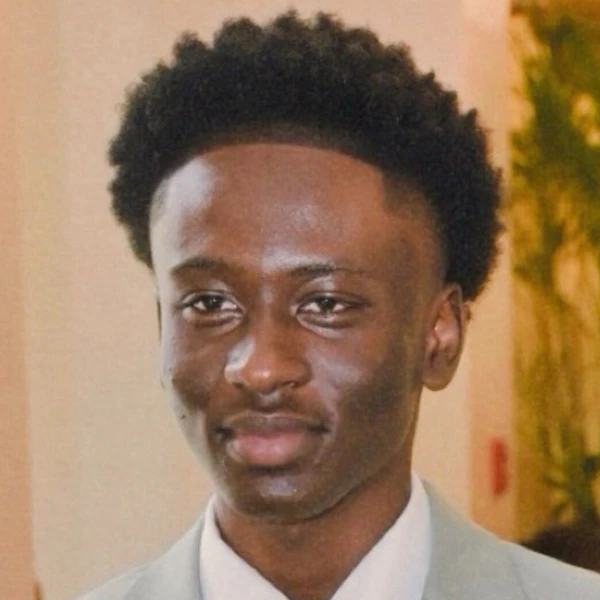
Benjamin Panford-Quainoo

1x

Finalist

Bio

Hi, I'm Benjamin "Benji" Panford-Quainoo, a sophomore Electrical Engineering student at Howard University and an independent R&B singer-songwriter originally from Tema, Ghana. As a first-generation college student in the U.S., I'm passionate about using engineering and music to solve problems, inspire others, and create meaningful impact. Whether I'm producing church livestreams, editing media content, writing songs that connect with people, or developing engineering solutions, I believe creativity and problem-solving go hand in hand. My long-term goal is to build an engineering company while pursuing a professional music career, proving that technical innovation and artistic expression can thrive together. Every scholarship brings me one step closer to graduating with less debt so I can create opportunities for others and give back to the communities that have invested in me.

Education

Howard University

Bachelor's degree program
2025 - 2029
  • Majors:
    • Electrical/Electronic Engineering Technologies/Technicians
Gov. Thomas Johnson High

High School
2024 - 2025

Miscellaneous

  • Desired degree level:

    Bachelor's degree program

  • Graduate schools of interest:

  • Transfer schools of interest:

  • Majors of interest:

    • Electrical, Electronics, and Communications Engineering
  • Not planning to go to medical school
  • Career

    • Dream career field:

      Electrical/Electronic Manufacturing

    • Dream career goals:

      My long-term career goal is to become an electrical engineer who develop technologies that solve everyday problems while continuing to grow as a singer-songwriter. I want to use my engineering background to solve real-world problems and contribute to advancements in electronics and emerging technologies. At the same time, I hope to bridge the gap between technology and creativity by exploring how engineering can improve the way music is created, produced, and experienced. Beyond my own career, I want to mentor students from underrepresented backgrounds, especially young Black and African students, showing them that they can succeed in STEM without giving up their passions. Ultimately, I hope my work leaves a lasting impact through innovation, creativity, and service to others.

    • Media Production & Technical Support Assistant

      International Central Gospel Church (ICGC) – Fuller Temple
      2025 – Present1 year

    Arts

    • Independent R&B Recording Artist & Audio Engineer

      Music
      https://open.spotify.com/album/7G3Bg3Ts0LaspOVYDwPD8n?si=oYL3cS0mQfWWr_yhQNOczg , https://open.spotify.com/album/63ojYKVcGOh1MpJWWwjf5U?si=GkBb-IGPSdu8vMy6bKKhMw
      2021 – Present

    Public services

    • Volunteering

      International Central Gospel Church (ICGC) – Fuller Temple — Media Specialist
      2025 – Present

    Future Interests

    Volunteering

    Philanthropy

    Entrepreneurship

    RonranGlee Literary Scholarship
    Selected Passage (Marcus Aurelius, Meditations, Book 2): “You have power over your mind—not outside events. Realize this, and you will find strength.” One of the central truths Marcus Aurelius communicates in this passage is that genuine strength comes from mastering one's own mind instead of attempting to control the unpredictable world. His statement is not meant to encourage people to ignore their problems or pretend hardship does not exist. Rather, Aurelius argues that while external events may shape our circumstances, they do not have to determine our character or emotional well-being. The underlying meaning of the passage is that freedom is achieved when people recognize the difference between what belongs within their control and what does not. By accepting this distinction, individuals can develop resilience, wisdom, and a stable sense of purpose that is not dependent on outside circumstances. The first sentence, “You have power over your mind,” establishes that the human mind is the foundation of personal freedom. Aurelius deliberately places emphasis on the mind because it is the one part of life that belongs entirely to the individual. Wealth can disappear, relationships can change, health can decline, and opportunities may come and go without warning. None of these things can be guaranteed. However, the ability to think, judge, and choose how to respond remains a personal responsibility. Aurelius is suggesting that people often surrender this responsibility by allowing outside events to dictate their emotions. Instead of recognizing their own agency, they allow fear, anger, or disappointment to make decisions for them. According to Aurelius, true power begins when individuals realize they always retain authority over their own thoughts. The phrase “not outside events” reveals an equally important lesson. Aurelius recognizes that the world is naturally uncertain and uncontrollable. Every person's life includes setbacks, unexpected changes, and disappointments. Even the most careful planning cannot prevent every obstacle. Rather than fighting against reality, Aurelius teaches that people should accept uncertainty as an unavoidable part of life. This acceptance should not be confused with passivity or laziness. He does not suggest giving up on goals or refusing to solve problems. Instead, he argues that people should invest their energy where it can actually make a difference. Worrying endlessly about events beyond one's influence only creates unnecessary suffering because it focuses attention on things that cannot be changed. This distinction between internal and external control also reflects a broader understanding of human nature. Aurelius believed that emotions themselves are not the greatest obstacle; instead, the judgments attached to those emotions often cause greater harm. Two individuals may experience the exact same failure, yet one interprets it as evidence of personal worthlessness while the other views it as an opportunity for growth. The event itself remains identical, but the meaning assigned to it changes the outcome completely. Aurelius is therefore arguing that people do not simply react to reality; they react to the stories they tell themselves about reality. By learning to question those stories and replace destructive thinking with rational judgment, individuals become emotionally stronger and less vulnerable to circumstances beyond their control. Another important aspect of this passage is its challenge to society's common definition of success. Modern culture frequently encourages people to measure themselves through achievements, popularity, financial success, or the approval of others. Social media has intensified this tendency by creating constant opportunities for comparison. Many people become discouraged because they judge themselves according to standards that depend heavily on external validation. Aurelius rejects this entire way of thinking. In his view, no amount of recognition can guarantee peace of mind if someone lacks self-control. Likewise, a person facing difficult circumstances can still possess dignity, wisdom, and inner confidence if they govern their own thoughts well. His philosophy shifts the definition of success away from temporary accomplishments and toward lasting character. The final sentence, “Realize this, and you will find strength,” carries special significance because it suggests that strength is discovered through understanding rather than force. Aurelius does not promise an easier life or fewer hardships. Instead, he promises a different relationship with hardship itself. Once someone fully accepts that external events cannot control the mind unless permission is given, challenges lose much of their ability to create fear. Difficult experiences become opportunities to practice patience, courage, and self-discipline rather than reasons to despair. Strength therefore becomes an internal habit developed through consistent self-awareness rather than something granted by favorable circumstances. This idea also reflects Aurelius' role as a Roman emperor. Despite possessing immense political authority, he understood that even an emperor could not command every event. Wars, disease, betrayal, and death remained beyond his control. His personal experience reinforced the belief that external power alone could never produce lasting security. By writing this reflection, Aurelius demonstrates that wisdom is not measured by the amount of influence someone possesses over others but by the amount of discipline they possess over themselves. His advice carries greater credibility because it comes from someone who had every opportunity to pursue external control yet concluded that inner mastery was ultimately more valuable. Ultimately, the underlying meaning of this passage is that human freedom begins within the mind. Aurelius argues that people often suffer unnecessarily because they confuse circumstances with identity and outcomes with personal worth. By separating what they can control from what they cannot, individuals become more resilient, thoughtful, and emotionally balanced. His philosophy is not an invitation to ignore life's difficulties but an encouragement to face them with discipline and reason. Even centuries after it was written, this passage continues to challenge readers to stop chasing control over an unpredictable world and instead cultivate mastery over themselves. Aurelius believes that this inner mastery is the only form of strength that cannot be taken away, making it the truest foundation for a meaningful and resilient life.
    Adrin Ohaekwe Memorial Scholarship
    Career Goals and the Lessons Chess Taught Me The first time I sat down to play chess, I quickly realized it wasn't a game you could win by making random moves. Every decision had consequences, and sometimes sacrificing something small was necessary to achieve something greater. Those lessons have stayed with me far beyond the chessboard and continue to shape the way I approach my education, career, and life. Today, I am an Electrical Engineering student at Howard University with a long-term goal of building an engineering company that develops technologies to solve real-world problems. At the same time, I am an independent R&B artist because I believe creativity and innovation go hand in hand. Although engineering and music seem like different worlds, both require strategic thinking, patience, and constant improvement—the same qualities that chess has taught me. One of the greatest lessons chess has given me is the importance of thinking several moves ahead. In a match, you cannot focus only on your next move; you have to anticipate challenges before they happen. I apply that same mindset to my education by planning my coursework, seeking scholarship opportunities, and building experiences that prepare me for the future instead of waiting for opportunities to come to me. Every class, project, and decision is another move toward the career I want to build. Chess has also taught me resilience. Even strong players lose games. Instead of dwelling on mistakes, they analyze what went wrong and improve. That perspective has helped me navigate challenges, including moving from Tema, Ghana, to the United States in 2022 and adjusting to a completely new educational system. There were moments when things didn't go as planned, but I learned that setbacks are opportunities to grow rather than reasons to quit. Another lesson chess reinforces is patience. Success rarely comes from rushing. Whether I'm solving a difficult engineering problem, mixing one of my songs, or serving on my church's media team, I know that the best results come from careful attention to detail and a willingness to keep learning. Chess reminds me that every move matters, even the ones that seem small at the time. Looking ahead, I hope to use engineering to create technologies that improve everyday life while continuing to inspire people through music. I also want to mentor young Black students who may feel they have to choose between technical careers and creative passions. Chess has shown me that success isn't about making one perfect move—it's about consistently making thoughtful decisions over time. Just like every chess game begins with a single move, every meaningful career begins with a single opportunity. This scholarship would help me continue making the right moves toward a future where I can innovate, create, and give back to others.
    Ethel Hayes Destigmatization of Mental Health Scholarship
    Growing up, I didn't hear many conversations about mental health. In the communities I was part of, especially as a young Black man, emotional struggles were often treated as something to keep private rather than something to openly discuss. Over time, I realized that silence doesn't make pain disappear. It only makes people carry it alone. Although I have faced periods of stress, uncertainty, and pressure while adapting to major life changes, what has impacted me most has been seeing how mental health challenges can affect people around me. Watching loved ones struggle taught me that you never truly know what someone is carrying. It made me more patient, more compassionate, and more intentional about checking in on others instead of assuming they're okay. Moving from Tema, Ghana, to the United States in 2022 also changed my perspective. Starting over meant adjusting to a new culture, education system, and environment while trying to build a future for myself. There were moments when the pressure felt overwhelming, but I learned the importance of leaning on my faith, my family, and my community instead of trying to handle everything on my own. Those experiences have influenced both my relationships and my career goals. As an Electrical Engineering student at Howard University, I want to create technology that improves people's lives. As an independent R&B artist, I hope my music encourages people to feel understood and reminds them that they are not alone. Whether through engineering or music, I want my work to make life a little easier and a little brighter for others. Most importantly, my experiences have taught me that kindness matters. A conversation, a listening ear, or simply showing up for someone can make a bigger difference than we realize. Mental health should never be something people are ashamed to discuss. By creating spaces where people feel seen, heard, and supported, we can help remove the stigma that prevents so many from seeking help. My goal is to use my education, creativity, and faith to build a future where people are empowered not only to succeed but also to care for their well-being and for one another. I believe real strength isn't pretending you're never struggling—it's having the courage to seek support and to be that support for someone else.
    Redefining Victory Scholarship
    Christian Fitness Association General Scholarship
    Growing up in Tema, Ghana, I learned that opportunities aren't guaranteed—they're earned. My parents constantly reminded me that education was one of the greatest investments I could make in myself. They didn't just tell me to work hard—they showed me what perseverance looked like through the sacrifices they made for our family. Those lessons stayed with me when my family moved to the United States in 2022. Leaving behind everything familiar meant adapting to a new culture, a different educational system, and an entirely new way of life. There were moments when I questioned whether I belonged, but every obstacle reminded me why I came in the first place: to build a better future. Today, I'm a sophomore studying Electrical Engineering at Howard University. I chose engineering because I've always been fascinated by how things work, but even more than that, I enjoy solving problems that can improve people's lives. Engineering challenges me to think critically, to be patient when solutions don't come immediately, and to keep learning even when concepts feel difficult. Those lessons extend far beyond the classroom and influence how I approach every area of my life. Outside of engineering, music has become one of the greatest teachers in my life. I'm an independent R&B singer-songwriter who writes, records, mixes, and masters my own music. Every song begins with an idea, but turning that idea into something meaningful takes countless hours of writing, revising, recording, and learning from mistakes. There have been songs I've completely scrapped because they didn't meet the standard I set for myself. That process taught me that excellence rarely comes from talent alone—it comes from consistency, humility, and a willingness to improve. Over time, those small improvements have added up. My music has reached listeners around the world and accumulated more than 100,000 streams on Spotify. While I'm grateful for those numbers, what means the most to me are the messages from listeners who tell me that a song helped them through a difficult season or simply made them feel understood. Moments like those remind me that success isn't measured only by statistics. Sometimes success is knowing something you created made one person's day a little better. My passion for serving others extends beyond music. At International Central Gospel Church (ICGC) Fuller Temple, I volunteer on the media team, helping with livestream production, audio support, video editing, and social media. Most people never notice the work happening behind the scenes, and honestly, that's okay with me. I've learned that meaningful service doesn't always come with recognition. Whether I'm troubleshooting technical issues before service begins or editing videos afterward, I'm helping create an experience that allows people—including those unable to attend in person—to stay connected with their faith and community. That responsibility has strengthened my leadership, communication, and problem-solving skills while reminding me that every role matters, even the ones few people see. I've also stayed involved on campus through organizations like Howard University's African Student Association and the Harmundi Foundation. Being part of these communities has allowed me to celebrate my Ghanaian heritage while connecting with students and mentors who encourage me to think bigger than myself. Those relationships have shown me that success is rarely achieved alone. It grows through community, accountability, and people who believe in your potential even during moments of doubt. One challenge that continues to shape my journey is the financial cost of higher education. As an out-of-state student at Howard University, I've had to be intentional about finding ways to make my education affordable. Applying for scholarships has become more than simply searching for financial assistance—it's become an investment in my future. Every application represents another opportunity to reduce the financial burden on my family and continue pursuing my goals without allowing debt to define my future. That process has taught me persistence because success doesn't always come after the first application. Sometimes it requires submitting dozens before hearing "yes." Looking ahead, my long-term goal is to become an electrical engineer, gain valuable industry experience, and eventually start my own engineering company focused on developing practical technologies that improve everyday life. At the same time, I plan to continue pursuing music professionally because creativity has always been part of who I am. I don't believe I have to choose between engineering and music. One challenges me to think logically, while the other teaches me empathy and expression. Together, they've shaped the person I'm becoming. As I continue building my career, I also hope to mentor younger students—especially those from immigrant and underrepresented backgrounds—who may wonder if they belong in STEM or if their dreams are too ambitious. I want them to see someone who came from another country, embraced challenges instead of running from them, and remained committed to serving others along the way. Representation matters, and I hope my journey can encourage someone else to believe in their own. I believe I should be considered for this scholarship not because my path has been perfect, but because I've chosen to keep moving forward despite every obstacle I've encountered. My education, my faith, my music, and my service have all taught me the same lesson: success is not simply about what you achieve for yourself, but about how you use your gifts to serve others. Receiving this scholarship would not only ease the financial burden of my education—it would allow me to continue growing into the engineer, artist, and servant leader I aspire to become. I am committed to making the most of every opportunity I receive, and I hope one day to create opportunities for others in return.
    Barbara Cain Literary Scholarship
    One of the first books that truly changed the way I looked at the world was Purple Hibiscus by Chimamanda Ngozi Adichie. Before reading it, I saw books mainly as stories. After reading it, I realized they could also be mirrors, windows, and teachers. They could help me better understand people, challenge my assumptions, and inspire me to think more deeply about the kind of person I wanted to become. As someone who grew up in Tema, Ghana before moving to the United States, reading Purple Hibiscus felt personal. The novel wasn't just about a Nigerian family—it explored themes of faith, identity, family expectations, courage, and finding your own voice. Although my experiences were different from Kambili's, I connected with her journey of learning to grow into herself despite uncertainty. The book reminded me that strength isn't always loud. Sometimes it's found in perseverance, kindness, and having the courage to become who you're meant to be. That lesson has stayed with me throughout my own journey. When I moved to the United States, I had to adjust to a completely different environment while trying to preserve the values I grew up with. Books became one of the ways I learned to understand different perspectives without losing my own. They taught me empathy—the ability to see life through someone else's experiences—and that has influenced both my education and my relationships. Today, I'm a sophomore studying Electrical Engineering at Howard University. At first glance, engineering and literature may seem worlds apart, but reading has made me a better engineering student. Engineering is ultimately about solving problems for people, and books constantly remind me to think about the people behind those problems. Technical knowledge tells us what we can build, but stories teach us why those solutions matter. Reading has also shaped my creativity. Outside of engineering, I'm an R&B singer-songwriter who writes and records my own music. Great books and great songs have something in common: they tell honest stories that make people feel understood. Whether I'm reading a novel or writing lyrics, I'm reminded that words have the power to encourage, challenge, and connect people from completely different backgrounds. Barbara Cain dedicated her life to helping others discover that same power through books. I admire that because reading has never simply been about entertainment for me. Every meaningful book I've read has left me with a question to think about, a lesson to apply, or a new perspective to carry forward. In the future, I hope to become an electrical engineer and eventually build my own engineering company while continuing to pursue music professionally. No matter where those paths lead, I want to remain someone who never stops learning. Books have taught me that growth begins with curiosity, and curiosity is the foundation of both innovation and compassion. Long after I finish a novel, I often find myself thinking about its characters and lessons. To me, that's the true value of reading. A great book doesn't end when you turn the last page—it continues shaping the decisions you make, the dreams you pursue, and the person you become. Purple Hibiscus did exactly that for me, and I hope I'll continue finding books that challenge and inspire me for the rest of my life.
    Charles B. Brazelton Memorial Scholarship
    When people first meet me, they're usually surprised to learn that I'm studying Electrical Engineering. Not because engineering is unusual, but because if you spend enough time around me, you'll quickly realize that music is just as much a part of my life. I write songs, record vocals, mix my own music, and spend hours chasing the perfect sound. Most people assume I'm either "the engineering guy" or "the music guy," and they're always confused when I tell them I'm both. Growing up, I felt like I had to explain that combination. Friends interested in music wondered why I'd choose one of the most challenging STEM majors. Engineering classmates were surprised that after finishing homework, I'd spend my evenings writing R&B songs or learning new mixing techniques. For a while, it felt like I didn't fit neatly into either group. Eventually, I realized that was actually my greatest strength. Engineering and music aren't as different as they seem. Both reward curiosity. Both require patience. Both involve solving problems that don't always have obvious answers. Whether I'm debugging a programming assignment, trying to understand an electrical circuit, or adjusting the smallest EQ setting on a vocal, I'm doing the same thing: experimenting until everything works together. That mindset has shaped how I approach life. I don't believe people should be limited to one identity. You can be analytical and creative. You can love mathematics and melodies. You can spend the afternoon studying engineering principles and the evening writing a song that helps someone feel understood. That perspective has also influenced how I serve my community. At my church, International Central Gospel Church (ICGC), I volunteer on the media team, helping with livestream production, audio, video editing, and social media. It's one of the few places where both sides of me come together. The technical skills I develop through engineering help solve production problems, while my musical background helps me think creatively about audio and presentation. Growing up in Tema, Ghana before moving to the United States also taught me that standing out isn't something to hide. Starting over in a new country meant adapting to a different culture while still holding onto the values that shaped me. Instead of trying to become who everyone else expected me to be, I've learned to embrace every part of my story. If there's one "awkward" thing about me, it's probably that I'll spend an hour talking about electrical systems and then another hour debating why one vocal harmony works better than another. To some people, those interests don't seem connected. To me, they always have been. I've stopped trying to fit into one box because the most meaningful opportunities in life often happen where different passions intersect. That's where I hope to build my future—using engineering to solve problems, music to connect with people, and both to leave a positive impact on the communities I serve.
    Learner Online Learning Innovator Scholarship for Veterans
    Technology has completely changed the way I learn. As an Electrical Engineering student at Howard University, I quickly realized that learning doesn't stop when class ends. Some of my biggest breakthroughs have happened late at night while watching a tutorial, reading documentation, or working through practice problems online until a concept finally clicked. I rely on several online platforms to strengthen what I learn in the classroom. YouTube has become one of my most valuable learning tools because it allows me to hear difficult engineering concepts explained from different perspectives. When one explanation doesn't make sense, another instructor often presents it in a way that finally connects the dots. I've learned topics ranging from circuit analysis and programming fundamentals to calculus techniques through educational channels that complement my coursework. ChatGPT has also become one of the most valuable tools in my education. Rather than simply looking up answers, I use it to break down difficult concepts into smaller pieces, ask follow-up questions, and test my understanding. When I'm studying electrical engineering, I often ask ChatGPT to explain why a circuit behaves a certain way or walk me through the reasoning behind a solution instead of just providing the final answer. That interactive process has helped me become a stronger problem solver. Outside of engineering, I use online resources to develop skills that aren't taught in my degree program. As an R&B singer-songwriter, I record, mix, and master my own music. Through YouTube tutorials, online forums, and audio engineering communities, I've learned techniques that allow me to produce professional-quality recordings from my own setup. Those same problem-solving skills carry over into engineering because both disciplines require experimentation, patience, and constant learning. My volunteer work at International Central Gospel Church has also allowed me to apply what I've learned online in real-world situations. I help operate livestreams, edit videos, manage audio systems, and create social media content. Many of the technical skills I use today came from online tutorials that I immediately put into practice while serving my church. Learning through experience has shown me that knowledge becomes meaningful when it's applied to help others. One lesson online learning has taught me is that successful students aren't the ones who know everything—they're the ones who know how to keep learning. Engineering changes rapidly, and I know my education won't end when I graduate. Whether I'm learning a new programming language, studying emerging electrical technologies, or exploring advances in music production, I plan to remain a lifelong learner. My long-term goal is to become an electrical engineer, build my own engineering company, and continue pursuing music professionally. The ability to teach myself new skills through online platforms will remain one of my greatest strengths throughout that journey. Every tutorial watched, every question asked, and every concept mastered brings me one step closer to creating technology that solves real problems and leaves a lasting impact.
    Learner Mental Health Empowerment for Health Students Scholarship
    College has taught me that mental health isn't just about whether someone has been diagnosed with a condition. It's also about carrying pressure that other people can't always see. As students, we juggle demanding coursework, financial stress, uncertainty about the future, family expectations, and the pressure to succeed while trying to convince everyone—including ourselves—that we're doing fine. As a sophomore studying Electrical Engineering at Howard University, I've experienced that pressure firsthand. Engineering is rewarding, but it can also be overwhelming. There are days when assignments pile up, deadlines overlap, and it feels like there's never enough time. On top of that, I'm constantly searching and applying for scholarships to reduce the financial burden on my family. While I wouldn't describe myself as someone defined by mental health struggles, those experiences have taught me how important it is to care for my emotional well-being before reaching a breaking point. One thing that has helped me stay grounded is my faith. My relationship with God reminds me that my worth isn't determined by a grade, an internship, or whether everything goes according to plan. Prayer gives me perspective when I begin to feel overwhelmed, and my church community has shown me the importance of encouraging one another instead of pretending we always have everything together. I also advocate for mental wellness through the way I serve others. At International Central Gospel Church (ICGC), I volunteer on the media team, helping with livestream production, video editing, audio, and social media. While my role is technical, it supports something much bigger than technology. It helps create a welcoming environment where people can hear messages of hope, encouragement, and healing—whether they're sitting in the sanctuary or watching from home because they aren't able to attend in person. Music has become another outlet for me. As an R&B singer-songwriter, I've learned that music has the ability to express emotions that are sometimes difficult to put into words. Whether I'm writing or listening, music reminds me that people aren't alone in what they're feeling. It creates connection, and connection is one of the strongest tools we have against isolation. I've also become more intentional about checking in on friends instead of assuming they're okay simply because they seem fine. Sometimes the most meaningful form of advocacy isn't organizing a campaign—it's listening without judgment, offering encouragement during stressful weeks, or reminding someone that asking for help is a sign of strength rather than weakness. As an engineer, I hope to spend my career solving technical problems, but I never want to lose sight of the people behind those problems. Success means little if it comes at the expense of compassion. Whether I'm working with colleagues, mentoring younger students, or leading my own company one day, I want to help create environments where people feel supported, respected, and comfortable speaking openly about their mental health. Mental health matters because every person deserves the opportunity to succeed without feeling like they have to suffer in silence. If I can use my education, my faith, and my voice to make even one person feel seen, heard, or encouraged, then I'll know I've made a meaningful difference.
    Arthur and Elana Panos Scholarship
    Growing up in Tema, Ghana, faith wasn't something my family practiced only on Sundays—it was part of how we lived every day. Before school, before important decisions, and especially during difficult seasons, we prayed together. When my family made the life-changing decision to move to the United States, we didn't know exactly what the future would look like, but we believed God was leading us toward opportunities we couldn't yet see. That trust became the foundation I continue to build my life on today. Starting over in a new country wasn't easy. I had to adapt to a different culture, a new education system, and an unfamiliar environment while trying to find my place. There were moments when I questioned whether I belonged or whether I was capable of achieving the goals I had set for myself. During those moments, my faith reminded me that my identity wasn't determined by my circumstances but by the purpose God had placed in my life. One of the biggest ways my faith has shaped me is through serving at my church, International Central Gospel Church (ICGC) Fuller Temple. For several years, I've volunteered on the media team, helping operate livestreams, edit videos, manage audio, and create social media content. Most people never notice the work happening behind the scenes, but that's exactly what I've come to appreciate. Service isn't about recognition; it's about using the gifts God has given you to help others. Working on the media team has taught me responsibility, humility, and consistency. When technical issues arise before a service begins, people don't need excuses—they need someone willing to calmly solve the problem. Those experiences have strengthened my character just as much as my technical skills. They've shown me that leadership often means serving first. My faith has also influenced the way I approach my education. As a sophomore studying Electrical Engineering at Howard University, I don't see my degree as simply a pathway to financial success. I see it as preparation for stewardship. I believe God gives each person talents with the expectation that they will use them to benefit others. Engineering gives me the opportunity to solve problems, improve lives, and create technology that serves communities rather than simply impressing them. Beyond engineering, I'm also an R&B singer-songwriter. Whether I'm creating music or studying engineering, my faith reminds me that excellence is a form of worship. It pushes me to work with integrity, remain teachable, and remember that success has little value if it comes at the expense of character. In the future, I hope to build my own engineering company while continuing my career in music. Whatever opportunities come my way, I want to lead with honesty, compassion, and integrity. I want people to remember not only the quality of my work but also the way I treated others. My goal is to create opportunities for young people, mentor future engineers, and use both my career and my platform to encourage others to pursue their God-given purpose. Arthur and Elana Panos built their lives through faith, perseverance, and hard work. Their story reminds me of my own family's journey and reinforces the values my parents have always taught me. I don't know every step God has planned for my future, but I do know that my faith will continue to guide every decision I make. It has carried me this far, and I believe it will continue to shape the person, engineer, entrepreneur, and servant leader I hope to become.
    Emerging Leaders in STEM Scholarship
    Growing up in Tema, Ghana, I learned early that education wasn't just about getting good grades—it was about creating opportunities that could change the trajectory of your life. My parents constantly emphasized that knowledge was something no one could take away from me. When my family moved to the United States, I carried that mindset with me, but I quickly realized that starting over meant adapting to a new country, a different school system, and unfamiliar expectations. It wasn't easy, but those challenges strengthened my resilience and reminded me why pursuing higher education mattered. Today, I'm a sophomore studying Electrical Engineering at Howard University because I'm fascinated by the way technology quietly powers almost every part of our lives. I've always been curious about how things work, but what truly drew me to engineering was realizing that behind every innovation is someone willing to solve a problem that others accepted as impossible. One experience that confirmed I was on the right path came through serving on the media team at my church, International Central Gospel Church (ICGC). I help operate livestreams, edit videos, manage audio, and create social media content. Most people only see the finished product, but I've learned that technology is often at its best when no one notices it's there. I've spent countless hours troubleshooting equipment, fixing technical issues minutes before a service begins, and making sure people who can't attend in person can still feel connected. Those moments showed me that engineering isn't only about building devices—it's about serving people through thoughtful solutions. Outside of engineering, I'm also an R&B singer-songwriter who records and mixes my own music. Music has taught me creativity, while engineering teaches me structure and precision. Together, they've shown me that innovation happens when technical knowledge meets imagination. Whether I'm improving a vocal mix or solving an engineering problem, I approach both with the same mindset: keep learning, keep experimenting, and never settle for "good enough." One of the biggest challenges I've overcome has been navigating higher education while carrying significant financial responsibility. As an out-of-state student at Howard University, I've spent countless hours searching and applying for scholarships because I know every opportunity matters. Rather than allowing financial obstacles to discourage me, they've motivated me to work harder and become more intentional about my future. Every scholarship application reminds me that investing in my education is also investing in the impact I hope to make one day. In the future, I want to become an electrical engineer who develops technologies that improve everyday life while eventually building my own engineering company. At the same time, I plan to continue pursuing music professionally because I believe innovation isn't confined to a single field. I want to show young Black students—especially those from immigrant backgrounds—that they don't have to choose between being analytical and being creative. They can excel in both. To me, STEM is more than a career path. It's a way to solve problems, create opportunities, and leave communities better than I found them. My journey from Tema to Howard University has taught me that resilience and curiosity can open doors. I hope to use both throughout my career to build technology that serves people, inspire future engineers, and prove that diverse perspectives are essential to shaping the future.
    Chadwick D. McNab Memorial Scholarship
    Technology first became real to me when I realized it wasn't just about devices—it was about people. One of the projects I've been most passionate about has been serving on the media team at my church, International Central Gospel Church (ICGC) Fuller Temple. What started as simply helping behind the scenes gradually became a responsibility I took pride in. Today, I help operate our livestreams, edit videos, manage audio, and create social media content that allows our church to reach people both inside and outside the building. Most people only see the finished product: a smooth livestream, clear audio, or a well-edited video. They don't see the countless details behind it. I've spent hours troubleshooting audio issues moments before service, adjusting camera feeds, fixing software problems, editing content late into the night, and finding creative ways to make our online presence more engaging. Every challenge taught me that technology isn't about having all the answers—it's about being willing to learn, adapt, and solve problems when they arise. One Sunday, our livestream encountered technical issues just before service began. There wasn't time to panic. I worked alongside the team to identify the problem, reroute our setup, and get everything running again before many viewers even noticed. It wasn't a groundbreaking invention, but it reinforced something that has stayed with me ever since: the best technology often works so seamlessly that people never realize how much effort went into making it happen. That experience changed how I viewed engineering. Growing up in Tema, Ghana, I was always curious about how things worked. After moving to the United States, that curiosity only grew stronger as I gained access to more technology and opportunities to learn. Working in church media showed me that engineering isn't simply about building machines or writing code. It's about designing systems that improve people's lives, connect communities, and solve meaningful problems. That realization is one of the reasons I chose to study Electrical Engineering at Howard University. I want to understand the systems behind the technology I use every week—from signal processing and communications to embedded systems and intelligent devices. My goal isn't simply to earn a degree; it's to become someone capable of creating technology that is both innovative and impactful. Beyond engineering, I'm also an R&B singer-songwriter who records and mixes my own music. Music has taught me creativity, while engineering teaches me precision. Together, they've shown me that the best solutions often come from combining technical knowledge with creative thinking. In ten years, I hope to build my own engineering company focused on developing practical technologies that solve everyday problems while continuing to innovate in music technology. Just as importantly, I want to mentor young Black students interested in STEM, helping them see themselves in industries where they are still underrepresented. Chadwick McNab was remembered not only for his technical ability but also for his curiosity, generosity, and willingness to help others grow. Those qualities resonate deeply with me. I hope to build a career defined not only by the technology I create but by the people I inspire, the communities I serve, and the opportunities I create for those who come after me.
    Byte into STEM Scholarship
    Growing up in Tema, Ghana, I was surrounded by people who believed that education was one of the few things no one could ever take away from you. My parents constantly reminded me that knowledge creates opportunities, and that mindset stayed with me when my family moved to the United States. Adjusting to a new country, a different school system, and an unfamiliar culture wasn't always easy, but it taught me resilience and the importance of embracing change instead of fearing it. Today, I'm a sophomore Electrical Engineering student at Howard University, and every step of my journey has reinforced why I chose this path. I've always been curious about how things work. Whether it was electronics, power systems, or the technology behind the music I love, I wanted to understand what happened behind the scenes. That curiosity eventually grew into a passion for engineering because I realized engineers don't just solve problems—they create possibilities. They build the technology people rely on every day, often without anyone realizing the amount of thought and innovation behind it. Outside the classroom, another passion has shaped me just as much: music. I'm an R&B singer-songwriter who writes, records, and mixes my own music. At first glance, engineering and music seem unrelated, but they've taught me the same lesson: creativity and problem-solving go hand in hand. Whether I'm troubleshooting an engineering concept or refining a vocal mix until it sounds right, both require patience, attention to detail, and a willingness to keep improving. Service has also become a defining part of who I am. At International Central Gospel Church (ICGC) – Fuller Temple, I volunteer on the media team, helping with livestream production, video editing, and social media content. Many members of our congregation aren't able to attend services in person, so knowing that our work allows them to stay connected has shown me that technology is most meaningful when it serves people. Leadership isn't always about being the loudest person in the room; sometimes it's about showing up consistently and using your skills to help others succeed. Pursuing an Electrical Engineering degree at Howard University is preparing me for much more than a career. It's giving me the technical knowledge, discipline, and confidence to solve real-world problems while learning from professors and classmates who challenge me to think bigger. After graduation, I hope to gain industry experience before launching my own engineering company focused on developing practical electrical and technology solutions. I also want to create internships and mentorship opportunities for students from underrepresented backgrounds who may not have access to the same guidance or professional networks. At the same time, I plan to continue pursuing music professionally because I believe innovation isn't limited to one field. My goal is to demonstrate that someone can be both an engineer and an artist, using technical knowledge to build solutions and creative expression to inspire people. Receiving this scholarship would do more than ease the financial burden of earning my degree. It would be an investment in someone who intends to multiply that opportunity by serving others, mentoring future engineers, and proving that Black students belong at the forefront of innovation. My hope is that one day, the opportunities I've been given become opportunities I can create for someone else.
    William A. Lewis Scholarship
    One of the biggest obstacles I've faced in pursuing higher education has been navigating a completely new environment while trying to make one of the biggest financial investments of my life. I grew up in Tema, Ghana, where education was always viewed as the foundation for creating opportunities. From an early age, my parents emphasized that learning could open doors no matter where life took me. When my family moved to the United States, I had to adjust to a new school system, a different culture, and a new way of preparing for college. Everything felt unfamiliar at first. I wasn't just trying to earn good grades. I was learning how to navigate an entirely different educational system while adapting to a new country. As I approached graduation, I knew I wanted to study Electrical Engineering. I've always been fascinated by technology and the way engineering transforms ideas into real-world solutions. Whether it's power systems, electronics, or the technology behind the music I create, I enjoy understanding how things work and finding ways to improve them. That passion led me to Howard University, an HBCU where I knew I could grow academically while being surrounded by a community that celebrates Black excellence. Getting accepted was exciting, but it introduced another obstacle: paying for it. Even after receiving financial aid, there remained a significant gap between the cost of attendance and what my family could comfortably afford. Like many students, I realized that getting into college was only part of the challenge—staying there financially would require persistence. Instead of letting that discourage me, I became intentional about searching for scholarships, applying for every opportunity that aligned with my goals, and taking ownership of my future. Every application I complete represents another step toward graduating with less debt and more freedom to pursue my ambitions. The people who helped me overcome these challenges were my parents, my church community, and the mentors who believed in me before I fully believed in myself. My parents constantly reminded me why they made the sacrifices they did and encouraged me to keep pushing even when the process became overwhelming. My church also became a place where I could serve while continuing to grow. Volunteering on the media team—helping with livestream production, editing content, and social media—showed me the importance of using my skills to serve others. It reinforced that success isn't only measured by personal achievements but by how you use your talents to impact your community. Today, I'm pursuing Electrical Engineering while continuing to develop as an R&B singer-songwriter. Although engineering and music may seem like different paths, both require creativity, discipline, and a willingness to solve problems. My long-term goal is to build an engineering company that develops innovative solutions while creating opportunities for young engineers who need someone to believe in their potential. The obstacles I've faced haven't changed my goals—they've strengthened them. They've taught me resilience, gratitude, and the importance of investing in others, just as others have invested in me. I hope to carry those lessons throughout my career and become someone who opens doors for the next generation.
    J&Y Law Yahouda Yahoudai Service Scholarship
    Growing up, I've learned that serving your community isn't always about standing in front of a crowd. Sometimes it's about doing the work behind the scenes so someone else can be impacted. For me, that place has been my church, International Central Gospel Church (ICGC) – Fuller Temple. Since 2025, I've volunteered as part of the church's media team, where I help operate cameras, support live production, edit media content, and assist with social media marketing. While many people only see the finished livestream or social media post, I've learned that every service depends on dozens of small details working together. Whether I'm helping troubleshoot equipment, preparing visuals, editing content after service, or promoting upcoming events online, my goal is always the same: help create an experience that reaches people both inside and outside the church. One of the most rewarding parts of serving has been knowing that our work extends beyond the building. Many members of our congregation are elderly, traveling, working, or physically unable to attend services in person. Through livestreams and online content, they can still stay connected with their church family. Something as simple as making sure the audio is clear or editing a video properly can allow someone to participate in worship from home. Realizing that has completely changed how I view service. Volunteering has also taught me lessons I'll carry into my career. Working in media requires teamwork, communication, patience, and problem-solving. Live production rarely goes perfectly, and I've learned to stay calm, adapt quickly, and focus on finding solutions instead of dwelling on problems. Those are the same qualities that drew me toward electrical engineering. Both fields require people who enjoy figuring out how things work and making them work even better. Outside of church, I try to contribute by encouraging others through my music. As an R&B artist and songwriter, I want to create music that people can genuinely connect with during different seasons of life. While my music career is still growing, I hope it becomes another way I can positively influence people and remind them they aren't alone. Looking ahead, community service won't stop after college. My long-term goal is to start my own engineering company, creating opportunities for young engineers who may not have access to mentors or professional experience. I also hope to mentor aspiring artists who share my passion for creativity and excellence. I've learned that making a difference doesn't always require a huge platform. Sometimes it begins with showing up consistently, serving wherever you're needed, and doing your work with excellence. That's the kind of impact I want to continue making throughout my life.
    David Goodnight Scholarship
    David Goodnight Scholarship Essay When I think about where I'll be in ten years, I don't picture myself choosing between engineering and music. I picture myself using both. I chose electrical engineering because I've always been fascinated by how things work behind the scenes. The technology that powers our everyday lives—electronics, power systems, automation, audio equipment—is built by people who know how to turn ideas into reality. That's the type of person I want to become. At the same time, music has been a huge part of my life. I'm an R&B artist, songwriter, and mixing engineer, and creating music has taught me creativity, discipline, and how to keep improving even when no one is watching. Rather than seeing those passions as separate, I see them as two sides of the same mindset: solving problems and creating something that didn't exist before. Years 1–3 Graduate from Howard University with a Bachelor's degree in Electrical Engineering. Complete internships in electrical engineering, power systems, or embedded electronics. Continue releasing music independently while learning more about intellectual property, business, and entrepreneurship. Years 3–6 Work as an electrical engineer, gaining experience designing electrical systems and learning how successful engineering firms operate. Earn professional certifications and build relationships with mentors, contractors, and clients. Save capital to launch my own engineering company instead of relying on outside investors. Continue growing my music career, with the long-term goal of becoming an artist under OVO Sound because of the way Drake and his team have built a brand around quality, longevity, and artistic excellence. Years 6–10 Launch my own electrical engineering firm specializing in electrical design, automation, energy-efficient systems, and technology consulting. Expand into developing original products that solve practical problems for businesses and communities instead of only providing engineering services. Hire young engineers, especially students from underrepresented backgrounds, giving them opportunities to gain experience that many struggle to find after graduation. Invest profits into research, innovation, and mentoring future engineers and entrepreneurs. Success for me isn't just about building a profitable company. It's about creating opportunities that didn't exist before. Growing up, I learned that talent can only take you so far without opportunity. That's why I want my business to become a place where young engineers are trusted with meaningful work, encouraged to innovate, and given room to grow. I also want to use my music platform to inspire students who think they have to choose between creativity and STEM. I've learned that engineering strengthens my creativity just as much as music strengthens my ability to solve problems. In ten years, I hope people know me for more than my job title. I want to be known as someone who built things that matter—whether that's an electrical system, a patented product, a successful engineering company, or music that connects with people around the world. My vision isn't simply to become an engineer or an artist. It's to become a builder in every sense of the word: building technology, building businesses, building careers for others, and proving that creativity and engineering are strongest when they work together.
    Learner Tutoring Innovators of Color in STEM Scholarship
    When people find out I'm studying Electrical Engineering, they're usually surprised. They expect me to say music because that's what they know me for. I write songs, sing, and spend hours mixing and mastering vocals. The truth is, music is exactly what led me to engineering. Growing up in Tema, Ghana, I became fascinated by how technology could transform a simple idea into something that reached thousands of people. A microphone captures a voice, circuits process the signal, software shapes the sound, and suddenly a song can connect with listeners around the world. I didn't just enjoy listening to music—I wanted to understand how it all worked behind the scenes. When I moved to the United States, I quickly realized that pursuing engineering would challenge me in ways I had never experienced. I was adjusting to a new country, a different education system, and the financial realities of paying for college. Those challenges could have convinced me that STEM wasn't for someone like me. Instead, they strengthened my determination. Today, I'm an Electrical Engineering student at Howard University because I want to build technologies that improve lives. Engineering teaches more than equations and circuit design. It teaches curiosity, discipline, and the ability to solve problems that don't have obvious answers. Those lessons extend far beyond the classroom. As a person of color, I understand the importance of representation in STEM. Growing up, I didn't often see engineers who looked like me being highlighted in the media. Yet history is filled with Black innovators whose work changed the world, even if their stories weren't always told. That motivates me to contribute my own chapter. I don't want to become an engineer simply to earn a degree or secure a stable career. I want to help create technology that brings people together. Whether that's improving communication systems, advancing consumer electronics, or eventually exploring innovations in music technology, I want my work to make everyday experiences better and more accessible. My background in music has also shaped the type of engineer I hope to become. Writing songs has taught me empathy because every song begins with understanding people and their emotions. Engineering requires the same mindset. The best innovations aren't created just because they're technically impressive—they succeed because they solve real problems for real people. I hope that one day another young Black student, whether in Ghana or here in the United States, can look at someone like me and think, "If he can do it, maybe I can too." Representation isn't simply about being visible; it's about making opportunities feel attainable. Innovation becomes stronger when people with different backgrounds bring different ideas to the table. My experiences as a Ghanaian immigrant, a musician, and an aspiring engineer have each given me a unique perspective that I plan to carry throughout my career. STEM has given me the tools to solve problems, and I hope to use those tools to create technology that leaves people and communities better than I found them.
    Erin Lanae's HBCU Excellence Scholarship
    When I left Tema, Ghana, and moved to the United States, I knew college would be more than just earning a degree. I wanted a place where I could grow into every part of who I am. Howard stood out because it offered exactly that. I could pursue Electrical Engineering while being surrounded by a culture that celebrates Black excellence, creativity, and ambition. I'm someone with two big dreams. I want to become an electrical engineer, and I also want to build a career as an R&B artist. Some people see those paths as completely different, but Howard has shown me that I don't have to choose between them. Every day, I'm surrounded by students chasing ambitious goals in business, medicine, the arts, engineering, and beyond. That environment pushes me to dream bigger instead of playing it safe. Howard has also taught me resilience. Paying for college hasn't been easy, and I've spent countless hours applying for scholarships because I refuse to let finances determine my future. Each application reminds me why I started this journey. To me, Howard isn't just where I attend school. It's a community that constantly challenges me to become a better student, a better creator, and a better man. That is an experience I'll carry with me long after graduation.
    Love Island Fan Scholarship
    Challenge Name: “Finish My Song” If I could create a brand-new Love Island challenge, it would be called “Finish My Song.” As an R&B singer and songwriter, I have always thought music reveals things people are too nervous—or too smart—to say directly. On Love Island, that could be dangerous. Before the challenge, each Islander would privately choose a short instrumental from several different moods: romantic R&B, Afrobeats, heartbreak, toxic love, or an upbeat summer sound. They would then record the beginning of an original four-line song about their current experience in the villa. The lyrics could be about their couple, someone they secretly like, a red flag they have noticed, or something they have been afraid to say. There is one rule: they must leave the final line unfinished. At the challenge, the songs would play anonymously one at a time. The other Islanders would first have to guess who wrote each song and who it is about. Then, the person they believe the song is about must step forward and finish the final line on the spot. That is where the challenge gets interesting. Imagine an Islander singing, “I came here thinking my head wouldn’t turn / Then you walked in and gave me something to learn / I’m coupled up, but lately I’ve been confused / If I had one night to choose…” Now the entire villa is staring at two people, waiting to see who steps forward—and what they say next. After every performance, the original songwriter is revealed. They then choose whether to “Release It” or “Delete It.” If they release it, they admit the completed song reflects a connection they genuinely want to explore. If they delete it, they stay with their current couple—but the lyrics have already been heard, so the consequences do not disappear. The winning pair would be chosen by the other Islanders based on the best chemistry, creativity, and final line. Their prize would be a private sunset date with one catch: before leaving, they must choose one unreleased song from the challenge to play for the entire villa. My challenge would work because it has everything Love Island needs: romance, humor, creativity, uncomfortable honesty, and just enough chaos to ruin at least one perfectly peaceful evening.
    Mad Genius Scholarship
    Option C: 2:13 A.M. At 2:13 a.m., the average person is asleep. The Mad Genius is listening to the same four seconds for the eighty-seventh time. I know because I have been him. The problem was a word. Not a verse. Not a chorus. One word. I had recorded the line hours earlier, and to anyone else, it probably sounded fine. The note was in tune. The timing was right. The microphone had done its job. But every time the word passed through my headphones, something bothered me. I soloed the vocal. Play. Stop. Play. Stop. I moved it slightly to the left. Worse. I moved it back. Better, but not right. On my laptop, the vocal existed as a collection of colored blocks and waveforms. To me, it was something else. I could hear the version that did not exist yet. That is the first symptom. A Mad Genius is haunted by things that are almost right. At 2:21 a.m., I opened another recording take. Somewhere inside it, I found the beginning of the word I wanted. The ending was wrong, but the beginning had the feeling. I cut it. Then I found the ending in a different take. I cut that too. I placed the pieces together. It sounded terrible. I leaned back in my chair. “Okay.” This is the second symptom. The Mad Genius says “okay” when the situation is clearly not okay. My room looked like the headquarters of someone with no clear career plan. On one side of my screen was a recording session full of vocals, effects, and decisions no one had asked me to make. On the other was coursework reminding me that I was an electrical engineering student. People like simple descriptions. Engineer. Singer. Writer. Pick one. The Mad Genius has never been very good at picking one. I came to the United States from Ghana in 2022. Since then, I have learned that rebuilding your life can make you experimental. New country. New schools. New people. New expectations. You start figuring things out because waiting for everything to become comfortable is not an option. Maybe that is where my version of madness began. Or maybe it started earlier. I have always had songs in my head before I had the tools to make them sound the way I imagined. I do not produce beats. I write. I sing. I record myself. I mix and master my own music because, at some point, I got tired of my ideas being limited by what I did not know how to do. So I learned. Badly, at first. Then slightly less badly. I watched. I listened. I changed settings I did not understand. I ruined mixes. I made vocals too loud, then too quiet. I added too much reverb because it sounded beautiful for thirty seconds and terrible the next morning. I discovered that a compressor was not supposed to fix every problem just because I had finally learned what one was. The process was messy. That is the third symptom. A Mad Genius is willing to be bad at something long enough to become dangerous. At 2:37 a.m., I returned to the word. The two pieces still did not belong together. I zoomed in until the waveform looked less like sound and more like geography. Mountains. Valleys. Tiny movements of air frozen on a screen. I added a crossfade. Play. Closer. I adjusted the volume. Play. Closer. I changed the timing by an amount small enough that nobody listening would ever consciously notice. Play. I froze. There it was. The word passed through my headphones like it had always existed that way. Nobody would know what I had done. That was the point. For all that the phrase “Mad Genius” suggests explosions, wild hair, and inventions unveiled before a shocked crowd, I think most real mad genius happens quietly. It is the hundredth attempt no one sees. It is noticing a problem everyone else can live with and being unable to leave it alone. But obsession by itself is not genius. A person can spend five hours making something worse. I have done that too. The difference is learning when madness needs discipline. That is something engineering is teaching me. Music taught me to trust what I hear. Engineering is teaching me to prove why something works. One world begins with, “What if?” The other asks, “How?” I want both. When I look at a circuit, I see a system where one small change can affect everything downstream. When I open a vocal session, I see the same thing. Change the timing, and the emotion changes. Change the frequency balance, and a voice that felt buried can suddenly stand in front of you. Push something too far, and the whole system reacts. Maybe my room does not contain two different futures after all. Maybe it contains one laboratory. In that laboratory, there is a nineteen-year-old who still does not know exactly what his job title will be ten years from now. He knows he wants to become an electrical engineer. He knows he wants to keep making R&B. He knows he is fascinated by sound, technology, and the invisible systems that allow an idea inside one person to become an experience for someone else. He also knows there are easier paths. It would be easier to choose one version of himself and make it understandable. It would be easier to stop when a song is “good enough.” It would definitely be easier to go to sleep. At 2:46 a.m., I played the song from the beginning. The word arrived. Four seconds later, it was gone. No fireworks. No lightning. No audience applauding the discovery. Just me, sitting in the dark, smiling at something most people would never notice. Then I heard something wrong with the harmony behind it. I looked at the clock. 2:47 a.m. I sighed and reached for the mouse. The Mad Genius returned to work.
    Bright Lights Scholarship
    I Do Not Want to Choose Only One Future Whenever someone asks about my plans for the future, I have learned that they usually expect one answer. One career. One job title. One clear path. My answer has never fit neatly into one box. I am studying electrical engineering at Howard University, and I plan to build a career working with technology and systems that affect how people live, communicate, and create. At the same time, I am an R&B singer and songwriter. I record my own vocals, mix and master my music, and have spent years teaching myself how to turn an idea in my head into something another person can actually hear. For a long time, I saw those as two separate futures competing for my attention. Now, I see the connection between them. Music made me curious about technology before I had the vocabulary to explain that curiosity. Every recording session depends on microphones, interfaces, computers, signals, and systems working together. Mixing my own music taught me to listen for problems, experiment with solutions, and keep adjusting until something works. Electrical engineering gives me the opportunity to understand technology at a much deeper level and eventually contribute to it myself. My future goal is to become an electrical engineer while continuing to grow as an artist. I am especially interested in where engineering, audio, and creative technology overlap. I do not know exactly what my job title will be ten years from now, and I think pretending otherwise would be dishonest. What I do know is the kind of future I want to build: one where my technical abilities and creativity strengthen each other instead of forcing me to abandon one for the other. The challenge is making it financially possible to reach that future. Attending Howard has given me opportunities I value deeply, but the cost of college is a reality my family and I cannot ignore. Even with my merit scholarship and financial aid, there is still a significant gap. We have already had to rely on student loans, including private loans, and I know that continuing to borrow at the same pace every year is not sustainable. That is why this scholarship would mean more to me than simply having extra money toward tuition. It would reduce the amount I may need to borrow for my education and the interest attached to that borrowing long after the original tuition bill is gone. Every scholarship I earn gives me more freedom to focus on completing my degree, pursuing internships, and developing my skills instead of allowing the cost of college to make every future decision for me. After graduation, I plan to begin my engineering career, aggressively repay my highest-interest student debt, and continue building my music independently. Over time, I hope to use what I learn in both worlds to explore opportunities in audio technology and other creative applications of engineering. I am not asking this scholarship to create my future for me. I am already working toward it. I am asking for help making sure that the cost of reaching it does not limit what I can do once I arrive.
    Ruthie Brown Scholarship
    I Refuse to Treat Debt Like a Problem for Future Me The first time I really looked at the numbers behind my college education, I realized that “I will deal with it after graduation” was not a plan. It was just postponing the fear. I attend Howard University and am pursuing electrical engineering. I am grateful to be there, but gratitude does not make tuition less expensive. Even with my merit scholarship and financial aid, there is still a significant gap. My family and I have had to rely on student loans, including private loans, to make attendance possible. Seeing the interest rate and understanding how much a loan can grow while I am still in school changed the way I think about paying for college. My current strategy is simple: I am trying to prevent tomorrow’s debt before only focusing on repaying yesterday’s. That is why scholarships have become a serious part of my financial plan. I do not apply only to the largest or most well-known awards. I research smaller scholarships, local opportunities, scholarships related to engineering, and even awards built around topics outside my major. I treat each application as a chance to reduce the amount I may have to borrow next semester. A $1,000 scholarship may not sound life-changing compared with the full cost of college, but that is $1,000 I do not have to borrow and pay interest on for years. I am also planning my education carefully. I monitor my degree requirements and course schedule because taking unnecessary classes or extending graduation would mean additional tuition and living expenses. My goal is to complete my electrical engineering degree on time while building experience that can help me secure internships and eventually a strong full-time position. My plan after graduation is to avoid letting lifestyle inflation outrun my income. I know it will be tempting to finally earn an engineering salary and immediately upgrade everything. Instead, I want to maintain a reasonable lifestyle and make aggressive payments toward my highest-interest debt, particularly private loans. I also plan to understand every repayment option available to me rather than automatically choosing the smallest monthly payment and ignoring how much interest accumulates over time. At the same time, I am building another part of my future through music. I write and sing R&B and mix and master my own work. I do not expect music to magically erase my debt, but I am working toward creating multiple sources of income rather than depending entirely on one paycheck. I cannot change the fact that college is expensive, and I cannot pretend I will graduate without financial obligations. What I can control is whether I ignore those obligations until they become overwhelming. I am addressing my student debt now by pursuing scholarships, limiting future borrowing, staying intentional about graduation, and preparing to attack high-interest debt once I begin my career. My goal is not simply to make monthly payments for decades. It is to build a life in which the education I worked for creates opportunities instead of becoming a financial weight I am still carrying long after I leave campus.
    Joe Gilroy "Plan Your Work, Work Your Plan" Scholarship
    My goals are to build a successful career in electrical engineering while also continuing to grow in music production, audio engineering, and entrepreneurship. I want to create a future where I can combine technology, creativity, and innovation to make a positive impact on others while building financial stability for myself and my family. To achieve these goals, I understand that success requires discipline, planning, consistency, and long-term commitment. Currently, I am pursuing a degree in electrical engineering at Howard University. My academic plan is to continue strengthening my foundation in mathematics, physics, electronics, and engineering systems while gaining hands-on technical experience through projects, internships, and collaborative opportunities. I plan to maintain strong academic performance, build professional connections, and seek internship opportunities related to engineering and technology throughout college. These experiences will help prepare me for a long-term career in engineering and provide practical industry knowledge. At the same time, I plan to continue developing my music career and technical audio skills. Over the past several years, I have independently learned music production, recording, mixing, and mastering using Pro Tools and Waves Audio. I have already released music on streaming platforms and gained experience in creative direction, vocal production, and digital media. My goal is to continue improving my sound, expanding my audience, and building a sustainable creative brand while balancing academics and engineering. My plan for success includes careful financial planning and resource management. Since college expenses can be overwhelming, I actively apply for scholarships, search for internship opportunities, and look for ways to reduce unnecessary financial stress. Scholarships such as this one are important because they help me focus more on my education and professional growth rather than financial burdens. I also plan to eventually gain part-time employment or paid internship experience related to engineering, media, or technology to continue supporting my educational goals. In addition to academics and career preparation, I believe personal growth and community involvement are important parts of success. I currently volunteer through my church’s media ministry, where I assist with livestreaming, presentations, video recording, and technical setup during services and events. This experience has strengthened my teamwork, communication, and technical problem-solving skills while teaching me the importance of consistency and service. One of the biggest lessons I have learned is that goals require structure and discipline. Similar to the idea of “Plan Your Work, Work Your Plan,” I try to approach my future with clear goals and intentional steps. My short-term goals include maintaining academic success, gaining internship experience, and continuing to develop my technical and creative skills. My long-term goals include becoming a successful engineer, building financial stability, and using both technology and creativity to positively impact others. Overall, my plan is built around continuous learning, hard work, and adaptability. I know success will not happen instantly, but I am committed to staying disciplined, improving myself consistently, and taking advantage of opportunities that move me closer to my goals.
    Hines Scholarship
    Getting into college means an opportunity, development, and an opportunity to create a better future for both me and my family. As a member of a minority group, I understand that getting into college means access to possibilities that previous generations did not have. Going into college means much more for me than obtaining a diploma. It is about developing my skills, following my interests, and creating my life's stability through hard work. Studying electrical engineering at Howard University seems to be an important step towards reaching all of these goals. Being passionate about engineering from childhood, I see the opportunity to become an expert in the field. Studying engineering requires great analytical thinking, discipline, and constant academic achievements, and this is what I strive to develop during college years. I aim to get enough knowledge and practice necessary to become a successful engineer. At the same time, studying at college gives me the chance to develop my interest in music and creativity. Not only academics, music production, songwriting, and audio engineering consume my spare time. These activities have helped me learn many important skills, including patience, discipline, and the ability to express oneself. I want to combine these two passions to build up a unique future career and make sure that engineering and creativity do not conflict with each other. The last important part of going to college is that it involves growth and perseverance. Working at college and managing everything else has not been easy, but such challenging situations taught me how to be resilient and persistent. I learned how to go beyond my limits and overcome challenges. College has taught me to be flexible and to collaborate with people to achieve common goals despite the existing challenges and difficulties. Furthermore, studying in college allows me to make my contribution to my community and help those in need. Being a black student enrolled in the engineering program, I realize the need to give opportunities for young black people interested in STEM fields. I would like my story to prove for them that it is possible to reach high results in technical and creative spheres. In addition to learning, I plan to do my best to stay active socially. My volunteer work at my church's media ministry has shown me the power of collaboration and leadership and the need to use one's strengths for helping other people. I plan to continue being helpful to people through technology and creativity. Overall, getting into college is about building a foundation for a future that I wish to create. I dream about financial prosperity, personal development, professional success, and the opportunity to contribute to society as an engineer and musician.
    Michael Rudometkin Memorial Scholarship
    One example of selflessness I demonstrate is devoting my time and efforts to helping others without expecting to be noticed for it. In addition, I would argue that selflessness does not always mean doing something amazing or receiving any recognition for one's contributions. Rather, it involves being present for others, helping them out in whatever way you can, and making contributions to the community with your deeds. One notable example of such dedication is my volunteering in my church's media ministry. As a media support volunteer, I help with livestreaming, presentations, video recording, and technical setups in church services and events. Even though most of the attention is paid to things that happen on the stage, I understand that the backstage work should be appreciated since it helps create an atmosphere that makes people feel welcomed, inspired, and involved. There have been several times when some technical difficulties emerged, and I stayed back after the services to fix all that stuff in order to make sure everything works properly. Though the process could be quite stressing and time-consuming sometimes, I keep doing my part since I know how much it means for other people within the community. Besides, I try my best to serve people by encouraging and helping them. In the course of studies and throughout my life, I came to the conclusion that, sometimes, people just need someone who would listen to them, motivate and believe in them when they face difficulties in their lives. By helping my classmates with homework, giving advice to my friends in tough times, and supporting others' creative endeavors by making music, I try to become such a person. Another example of perseverance in my aspirations is my path to becoming a musician and engineer. Learning two subjects simultaneously, namely electrical engineering and music production, requires not only devotion but also consistency and determination. During some moments, when I felt unable to cope with my academic, social, and creative commitments, I kept moving since I loved both areas of study. Using music, I want to connect emotionally with the audience and make music that will be relatable or comforting for them. With engineering, I aim at using the power of innovative technologies to benefit society. Additionally, selflessness has taught me to be humble and grateful. Being a helper to others makes me realize that success includes more than achieving something personally; it also presupposes putting your abilities to use to raise others. It turns out that even a simple action like volunteering, giving support, or helping to solve some problems might have an essential impact on other people's lives. Overall, going forward, I am eager to search for new ways to serve other people using technology and creativity within my education and career. My goal is to continue volunteering and supporting my community in any way I can by using my knowledge to influence other people positively. To me, being selfless means having a chance to do some good and help people in their development.
    Learner Math Lover Scholarship
    What I like about mathematics is that this subject offers an opportunity to think critically and apply logic when solving various problems. Mathematics not only involves dealing with numbers and performing mathematical actions on them but also helps understand phenomena and find solutions following a step-by-step approach. Solving challenging mathematical tasks develops patience, perseverance, and attention to detail. One of the reasons why I appreciate mathematics so much is the way it is related to engineering and technological innovation. Being an electrical engineering major, I have noticed how mathematics plays a critical role in analyzing circuits and systems, physics phenomena, and technologies. Whatever area mathematics may relate to – whether it is algebra, calculus, or physics formulas and theories – mathematics is at the heart of innovation. Moreover, mathematics proved helpful outside of academic assignments too. Specifically, it has helped me understand how music production and audio engineering work. Both fields require knowledge of timing, patterns, frequencies, sound waves, and many other aspects that rely on mathematical principles. The fact that mathematics is a discipline that requires certain discipline is another feature that I appreciate. There were numerous situations when certain math concepts did not make sense immediately, requiring constant efforts and practice to understand them and achieve improvements. Gradually, such experience made me more confident in tackling challenges. Finally, what makes mathematics so attractive to me is its wide applicability in everyday life. Regardless of whether it is engineering and technology, entrepreneurship, natural sciences, music production, or some other field – mathematics plays a vital role in all of them. Math allows people to be innovative and address problems effectively, which is the case of the society progressing.
    Tawkify Meaningful Connections Scholarship
    Option 2: The Future of Human Connection In today's world, technology has revolutionized communication. People are able to instantly connect with individuals all around the globe through various technological innovations like social media sites, streaming media, texting apps, and communities. However, technology has impacted our ability to connect with one another in many ways, as it has made individuals feel more digitally connected but less emotionally connected to each other. Therefore, in order to preserve authentic human connection, we need to be intentional, empathic, and utilize technology as a means of connecting rather than substituting it for authentic interactions. First, it is important to encourage individuals to remain authentic both online and offline in order to cultivate meaningful human connection. Many times, social media tends to encourage users to put on a false image for others and therefore make their relationship or friendship superficial. Real connection exists when individuals feel comfortable enough to share and discuss their vulnerabilities with each other. It could happen among friends, family members, or within communities and artistic circles. Authenticity will ensure that people feel heard and understood rather than judged by others. In the future, it will be important for people to have places to speak their mind honestly and freely without fear of being criticized for it. Secondly, technology has been used to promote human connection if we utilize its potential to bring individuals together and provide them with opportunities to engage with each other. I was able to experience this firsthand through my passion for music and media. Being an independent artist and producer, I have had the pleasure of engaging with fans and fellow musicians from various countries around the world thanks to technology. However, at the end of the day, it does not matter what technology has enabled us to do, but what feelings and understandings lay beneath the interaction between individuals. It taught me that true human connection has nothing to do with physical proximity; it is all about emotions and relatability. Finally, I have seen the significance of connection during my volunteering for my church's media department. While helping out with the livestreaming and various presentations, I realized that my role was to provide an opportunity for people who could not physically be there to join and feel included and involved. I used to think that my media volunteering was only meant to help people watch the sermon but now I am confident that I am helping with the cultivation of connection. The most important thing for maintaining human connection is that technology serves as an augmentation of communication and not as a substitute for human interaction. Listening to people, taking care of one another, spending time with one another, and showing compassion are always important. With the development of artificial intelligence, virtual interaction, and social media, it will be especially important to master emotional intelligence and empathy. As far as the future is concerned, authentic human connection will rely on individuals choosing intentional relationships rather than convenient ones. Meaningful connections can only be formed based on consistency, trust, good communication, and mutual support, whether it is friendship, family bonding, romantic relationships, or community engagement. Technology can be used to find, contact, and communicate with people, but actual connections will remain emotionally honest and reciprocal. From my personal standpoint, I want to contribute to stronger human connections using engineering skills and my musical talent. I would like to use my engineering knowledge creatively without losing sight of the human side of communication. Through media, music, and future engineering projects, I would like to help build something that connects people.
    Our Destiny Our Future Scholarship
    My plan to make a positive impact on the world includes the use of my technical expertise to help, inspire, and connect with others. Having pursued studies in the field of electrical engineering in addition to being deeply involved in music and media creation, I would like to integrate all these three things in order to influence people's lives for better. One of the areas that I am currently using to make a contribution to my community is volunteer service in the media ministry of my local church. In such a position, I help organize livestreams, video recordings, PowerPoint slideshows, and set up technical equipment during the services. This may seem unobtrusive and inconspicuous to some extent; however, after becoming a part of such a team, I came to understand the huge role of media and technology in uniting people, promoting their messages, and providing space for encouragement. In the future, I wish to become a professional engineer able to contribute to further technological innovations and improvements. The thing is that technology has the power to make communication and life easier for millions of people across the globe. Therefore, I would like to apply my knowledge in engineering to improve the quality of people's lives through the implementation of new solutions. Another way to make a positive impact that I will definitely utilize is the creative aspect in my life – I love music. Indeed, the arts and entertainment industry plays a key role in influencing our minds and helping to cope with challenges. Being passionate about the music business, I will try to produce songs that would encourage and motivate people when they are struggling. Moreover, another area that I plan to explore to make a positive contribution to society is representation and mentoring. Being a black student of electrical engineering who works in music, I plan to motivate other students like me. Thus, I would like to inspire black young men and women to follow their dreams without paying attention to what the society might say about them. Making a significant difference doesn't necessarily mean getting lots of attention from people. I strongly believe that making a positive impact starts with consistency and service. Therefore, in the future, no matter where I end up in my career, I will do my best to help my fellow community members through volunteering or teaching them new things. To conclude, my plans include the use of technology, creativity, and service to assist people.
    Julia Elizabeth Legacy Scholarship
    It is important to have a diverse representation of people in STEM careers because innovation grows stronger if people with different backgrounds, cultural and personal experiences are involved. The fact that science, technology, engineering, and mathematics play a huge role in almost every area of our lives means that we must be sure that these people who are involved in innovations represent diversity of the environment around us. Without diversity in STEM, we lose a lot of opinions, voices, experiences, which might lead to limited creativity and development. Another thing that makes representation in STEM important is that it inspires and motivates young people. When students see engineers, scientists and other representatives of the field who are like them or similar to them, they will be more motivated to join the profession. For underrepresented students, it may mean even more because it shows that talent and intelligence is not a matter of race, gender, culture, etc. As a black student who studies electrical engineering, I understand how important representation in the field is. Traditionally, STEM lacked representation of minority groups and it still does now to some extent. By seeing successful black engineers, creators and innovators, I get inspiration and motivation needed to move forward despite any obstacles or stereotypes. This reminds me that I can do great things in my life and that people from every ethnicity are supposed to be provided with opportunities. Furthermore, diversity in STEM is necessary since different communities face different problems. People who come from different places and have different experiences will have a greater chance to notice these problems and deal with them properly. Engineers and scientists create products, systems, and innovations that influence millions of people and having a diverse group of people working on something can make a difference. The last but not least thing about representation in STEM is that it provides us with an opportunity to destroy existing barriers in order to increase diversity in technical areas, promote equity and social advancement. Many minority communities have always been discriminated against and it has prevented them from joining certain professions where they could make great contribution. I personally hope that I would be able to contribute to diversity by becoming an electrical engineer who combines his passion for technology, music and innovation. Being myself and succeeding in this field will show everyone that representation matters and it opens up a lot of new opportunities. In conclusion, I believe that diversity in STEM is very important for many reasons and it can positively impact society and people who take part in such processes.
    Lydia Fray Music Scholarship
    My engagement with the arts and specifically music has greatly impacted my life since childhood. While initially viewed merely as entertainment, it soon became a vehicle of expression, story-telling, and self-awareness. Music production and songwriting gave me an opportunity to develop my creative side and gain valuable experience in confidence, discipline, and self-expression. As I came to realize the power of music to touch people's hearts through common emotional experiences, I became more engaged with music as something more serious than mere entertainment. The desire to compose music like some great artists who managed to convey their feelings through songs made me start working on music production, educating myself in recording, mixing, and mastering on such software as Pro Tools and Waves Audio. Thus, my hobby developed into a real passion for the long run. Furthermore, engagement with the arts taught me various skills other than creative, which turned out to be crucial throughout my life. Music production requires a lot of patience, consistency, critical thinking, and attention to details. As a result, I learned how to be persistent and patient and keep producing music despite minor setbacks, learning how to cope with frustration, make progress through trial and error, and produce music even if not much progress is visible on the surface. Moreover, being able to observe how people interact with music made me understand the importance of creativity and how much one can accomplish using creative abilities. When seeing that people are able to feel what I was trying to express through my music, I got an understanding of how valuable creativity really is and the fact that music has the power to make people feel better about themselves and give hope. Overall, being actively engaged in arts helped form my identity and shaped some of my future plans. With interest in music along with computer science and programming, I became attracted by the idea of audio engineering, which gave me a new perspective on creativity and made me realize that it is possible to combine creativity with knowledge about technology. Moreover, creating music is something I love, since it gives me pleasure to see ideas take life and form. Even though creative jobs might be unpredictable, I will not give up and continue improving and educating myself in order to reach my goals. While being aware that the field requires effort and dedication, I will keep studying music and audio engineering and use my knowledge and abilities to pursue my passion in life. To sum up, engagement with the arts had a positive impact on me, making my life have a clear purpose and helping me gain valuable skills and confidence while giving me unique opportunities as a person. Link to my compositions: https://open.spotify.com/album/7G3Bg3Ts0LaspOVYDwPD8n?si=IjHs8v_DRXysAdmDi2AsMA
    Shepherd E. Solomon Memorial Scholarship
    Growing up, I've understood that giving back to the community does not necessarily mean doing something big or noticeable. Rather, it often means using one's skills, efforts, and time to help someone else and to leave a good impression no matter where one finds himself/herself. One of the primary ways that I give back to the community is working in the media ministry of the church that I attend – using my technology skills to support its various services and events. As a member of the media ministry in ICGC Fuller Temple, I help to organize livestreams, presentations, video recording, and technical preparations during church services and other special events. I also work on creating online materials and social media content to help both members and visitors stay informed. While the front-stage performances may attract attention, I have come to realize that all other backstage activities are equally important as well and contribute to ensuring successful organization of events and creating a welcoming atmosphere in which people feel encouraged and inspired. For me, giving back means helping others in any possible way. I strongly believe that every person has something valuable to offer to the community. Although I am sometimes not very vocal among other people, I have understood that I can also make a difference by bringing my creativity, technical skills, and efforts. Whether helping people solve technical problems or working on livestreams, I understand that I help keep people engaged. Additionally, I also believe that one can give back through music by inspiring others. As an independent artist, singer, and producer, I write and sing songs that help me channel my emotions and share stories with others who may relate to me. Learning patience and consistency from music helps me achieve many goals, and I plan to further use it to inspire others. Community service also allowed me to grow as a person, helping me understand the importance of responsibility, leadership, teamwork, and humility. Working in the interests of other people has helped me realize that success cannot be determined only by my accomplishments, but by my ability to use them to help others as well. As I pursue education in electrical engineering and music in college, I would like to find more ways to use my technical knowledge together with creativity and to help people around me. To conclude, giving back to the community is important since communities thrive thanks to people working together to help each other. Even minor acts of service can make considerable differences in other people's life. I am convinced that if everybody gives back by helping in whatever way possible, we will have more chances to bring some positive changes in our community's future.