Hobbies and interests
Baking
Reading
Adult Fiction
I read books daily
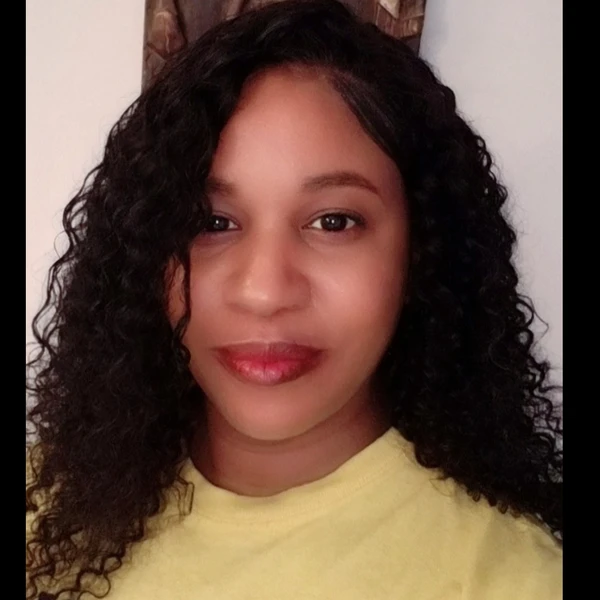
Imani Bridges
1x
FinalistImani Bridges
1x
FinalistBio
I am a proud Black woman, a single mother, and an educator who has spent the past 15 years pouring my heart into teaching math. I believe every student deserves a teacher who sees their potential, and for me, that belief has been the foundation of my career. Teaching isn’t just a job..it’s my calling.
Outside the classroom, I am raising two amazing children on my own. Both are working hard to make their way through college, and I’m doing everything I can to support their journey while also pursuing my own dream of earning a doctorate. It isn’t easy balancing work, family, and school, but I am deeply motivated by the desire to set an example for my children and the students I serve. I want them to see that no matter the obstacles, success is possible with faith, effort, and determination.
Scholarship support would not just ease a financial burden, it would be an investment in a mother, a teacher, and a leader who is fully committed to making a lasting difference in her home, her school, and her community.
Education
American College of Education
Doctoral degree program (PhD, MD, JD, etc.)Majors:
- Education, General
American College of Education
Master's degree programMajors:
- Education, General
Miscellaneous
Desired degree level:
Doctoral degree program (PhD, MD, JD, etc.)
Graduate schools of interest:
Transfer schools of interest:
Majors of interest:
- Education, General
Career
Dream career field:
Education
Dream career goals:
Math Teacher
2009 – 202516 years
Sports
Volleyball
Junior Varsity1998 – 1998
Research
Education, General
Math Teacher2009 – 2025
Arts
Bombshell fitness
Danceno2000 – 2020
Public services
Volunteering
church — volunteer2020 – 2025
Lotus Scholarship
I did not grow up with financial security. I grew up with strength.
Raised in a single-parent, low-income household by a public school teacher, I learned early that sacrifice was part of survival. My mother spent her days pouring into other people’s children and her nights stretching every dollar to provide for me. There were seasons when bills were negotiated, meals were extended, and exhaustion lived quietly in her eyes. Yet through every hardship, one message remained unwavering: education is freedom.
Watching her teach by day and persevere by night shaped me. I saw firsthand how one educator could influence dozens of lives, even while managing her own challenges. Her example planted something unshakable in me: resilience paired with responsibility. Every degree I pursue, every classroom I lead, and every student I mentor is a deliberate act of breaking cycles and building new possibilities for families like mine
That environment did not break me, it sharpened me. I developed grit before I understood adversity. Now a mother of two and an educator myself, I carry forward both her strength and her mission. I intentionally create classrooms where students from under-resourced backgrounds feel seen, supported, and capable of more than their circumstances suggest. I also lead initiatives within my school that focus on data-driven growth, equitable practices, and mentorship, ensuring that students and colleagues alike benefit from consistent support and intentional leadership.
My pursuit of advanced education is not about personal advancement alone, it is about generational transformation. I'm working to influence educational systems, mentor teachers, and close opportunity gaps so that children like I once was, have access to pathways, not just possibilities.
This scholarship is more than funding. It is an investment in a legacy that began with a single mother who believed in education, and continues through me.
Enders Scholarship
Some lessons arrive quietly, without warning or permission. Grief taught me how quickly life can change and how important it is to decide what kind of person I would become in response.
The loss of loved ones forced me to confront emotions I was never prepared to manage. There were days when sadness felt heavy and others when determination took its place, but most days required me to hold both at once. At first, I turned to alcohol and nonprescription painkillers to quiet emotions I did not yet know how to face. The numbness offered temporary relief, but when it faded, the pain remained unchanged and waiting. Being a teacher responsible for my students and a mother accountable to my children forced me to confront that reality. I realized I could not afford to disappear, even briefly, because others depended on my presence and clarity. That responsibility became the turning point that pushed me toward healthier ways of healing and moving forward.I learned quickly that grief is not linear, and neither is healing. What I did learn was how easily loss can stall a person or sharpen them.
I chose the latter.
During this season, writing my thoughts down became my lifeline. Writing allowed me to place my thoughts somewhere outside of myself when carrying them became too heavy. It gave shape to emotions I could not always name and clarity during moments of doubt. Yoga followed as a way to steady myself, teaching me how to sit with discomfort instead of avoiding it. Together, these practices helped me develop emotional discipline, resilience, and self-awareness, skills that now guide both my personal and academic life.
These experiences directly influenced my decision to continue my education. Education represents stability in a world that can shift without warning. It is how I transform adversity into intention and ensure that hardship does not dictate my future. Continuing my education is not simply about advancement; it is about purpose. It is about creating opportunities, modeling perseverance, and building something meaningful despite loss.
My greatest influences are those closest to me, family and friends, who demonstrated strength through consistency rather than grand gestures. They showed me what it means to keep showing up, to work with integrity, and to believe in progress even when outcomes are uncertain. Their quiet resilience shaped my understanding of leadership and responsibility.
I am also inspired by educators, writers, and advocates I have never met, individuals whose work centers on healing, equity, and growth. I admire those who create space for reflection while pushing others forward, reminding me that education is not only about knowledge, but about humanity.
Loss taught me that time is fragile, but purpose is intentional. Through reflection, discipline, and learning, I have emerged more focused and determined. This scholarship is not just financial assistance; it is an investment in resilience, growth, and the belief that even through loss, something meaningful can still be built.
Taylor Swift Fan Scholarship
The performance that moved me most wasn’t the loudest, the flashiest, or the one with the biggest costume change, it was the moment when Taylor Swift sat alone at the piano during The Eras Tour and let the stadium go quiet enough to hear itself breathe.
No dancers. No fireworks. Just her, a piano, and tens of thousands of people realizing they were about to be trusted with something unscripted.
That “surprise song” section felt like a secret shared at stadium scale. Taylor smiled nervously, admitted she might mess up, and then played anyway. It was a masterclass in vulnerability disguised as entertainment. Watching her choose imperfection over polish reminded me that The Life of a Showgirl isn’t about flawless execution, it’s about showing up honestly, even when the spotlight is unforgiving.
What made the moment unforgettable wasn’t just the song, but the permission it gave. Taylor didn’t perform at the audience; she performed with us. When she laughed at a missed note and kept going, it felt like a reminder that growth doesn’t cancel out humanity. As someone who balances ambition with real-world responsibilities, that mattered. It told me that excellence and authenticity can exist in the same breath.
There’s also something quietly radical about a woman at the peak of her career choosing stillness. In a culture that expects constant reinvention and spectacle, she paused. She trusted her craft, and her audience enough to let silence do some of the work. That confidence doesn’t come from ego; it comes from endurance. From surviving eras where you’re underestimated, criticized, dissected, and still deciding to stand center stage.
I laughed, I cried (quietly, because of composure), and I left feeling oddly braver. That performance mirrored what it looks like to keep building a life while carrying expectations, history, and hope all at once. It wasn’t about proving anything. It was about honoring the journey.
The Life of a Showgirl celebrates longevity in the spotlight, but that piano moment revealed the heart behind it: staying human when the world expects a highlight reel. Taylor showed that sometimes the most powerful performance isn’t the one that dazzles, it’s the one that tells the truth, trusts the audience, and keeps playing even when the lights feel too bright.
That’s the performance I’ll carry with me long after the last encore fades.
Love Island Fan Scholarship
Someone once said, "If the villa voted honestly, half these couples would panic." So here is a game based on that premise.
Challenge Name: “The Receipts Room”
The villa goes quiet. The music cuts. Phones buzz all at once.
“Islanders… tonight, the truth isn’t coming from your partner. It’s coming from everyone else.”
Welcome to The Receipts Room, a challenge that doesn’t test attraction, but awareness.
How It Starts
Before the challenge, Islanders anonymously answer questions about each other, no couples together, no discussions. Just honest opinions.
Questions include:
“Which Islander is being more strategic than genuine?”
“Which couple is one bombshell away from crumbling?”
“Who flirts when their partner isn’t around?”
“Who is settling instead of choosing who they really want?”
The answers are tallied anonymously. No producers stirring the pot, this drama is fully homegrown.
Inside the Receipts Room
Couples are split up. One by one, Islanders enter a neon-lit booth with a screen, a timer, and three buttons: BUZZ, PASS, and DENY.
Each Islander is shown three statements about their relationship or partner, based entirely on how the villa voted.
They must respond:
BUZZ – “I think this is true.”
PASS – “I’m not sure.”
DENY – “That doesn’t describe us.”
After each choice, the screen reveals how many Islanders agreed with the statement. Not who. Just how many. The higher the number, the heavier the silence.
The Moment Everyone Waits For
Once both partners complete the room, they reunite at the fire pit.
They’re shown:
Where they agreed
Where one avoided answering
Where they directly contradicted each other
Then they’re given 90 uninterrupted seconds to talk.
No yelling from the group.
No commentary.
No saving face.
Just honesty or the lack of it.
The Stakes
Couples who show alignment, growth, and emotional maturity earn a Trust Token, which can later be used to:
Block a bombshell from choosing them
Or override another couple’s date win
Couples who struggle don’t get dumped, but they become vulnerable at the next re coupling because perception matters.
Why This Challenge Hits
This isn’t about embarrassing Islanders, it’s about revealing blind spots.
It shows how couples think they’re coming across
Versus how the villa actually sees them
And viewers will absolutely argue about every single vote.
Tagline
“It’s not what your partner says that matters. It’s what everyone else sees.”
This challenge would spark real conversations, real cracks, and real growth, exactly the kind of moment we Love Island fans live for.
Women in STEM Scholarship
The most dangerous moment in a classroom is not when a student gets an answer wrong, it’s when she stops asking questions.
I have spent my career in education watching curiosity fade far too early, especially among girls who are capable, bright, and quietly convinced that STEM spaces were not designed with them in mind. That realization, not a single class or textbook, is what drew me deeper into STEM. I chose this path because I have seen how knowledge empowers, but only when access and encouragement are intentional.
As a mathematics educator, data analyst, and doctoral student, I work at the intersection of numbers and people. I use data to uncover patterns, but I use relationships to change outcomes. In my classroom and leadership roles, I have watched young women light up when they realize that problem-solving is not about perfection, but persistence. I have also watched that spark dim when they feel unseen or unsupported. STEM is not just a field to me; it is a responsibility.
My own journey into STEM has been shaped by resilience, faith, and a deep sense of purpose. As a Black woman navigating academic and professional spaces where representation is limited, I learned early how important it is to be visible, not flawless, but present. I returned to higher education after years in the classroom, balancing rigorous coursework with family responsibilities and leadership roles, because I understood that growth requires discomfort. Curiosity pushed me forward when fear told me to stay still.
Beyond my formal studies, I am building a mentorship initiative called She Leads, inspired by the guidance I received from women who believed in me before I fully believed in myself. One of those mentors, Gloria a retired school administrator turned pastor and founder of GGG Ministries, modeled what it looks like to combine leadership, service, and vision. Through She Leads, I plan to partner with schools to expose girls from under-served communities to experiences they might never otherwise encounter: STEM careers, college environments, leadership opportunities, and the confidence to imagine themselves in spaces they have not yet seen.
As a woman in STEM, my contribution will not be limited to my own advancement. It will be measured by how many doors I help open and how many students walk through them asking better questions than before. I want girls to see STEM not as an exclusive club, but as a tool, one they can use to solve problems, advocate for themselves, and shape their futures.
This scholarship represents more than financial support. It represents alignment with a community that believes curiosity should be nurtured, not silenced, and that women belong at every table where innovation happens. I am committed to contributing not only my skills and knowledge, but my voice, my leadership, and my unwavering belief that empowered women change systems, one question at a time.
Learner Tutoring Innovators of Color in STEM Scholarship
The first time a student told me, “I’m just not a math person,” I realized how early brilliance can be buried, not by lack of ability, but by lack of exposure, confidence, and representation.
I chose to pursue a degree in STEM because I have spent my career watching students, especially students of color, decide that science and mathematics were not “for them” long before they were ever given a real chance to succeed. As a middle school math teacher and instructional leader, I have seen how quickly curiosity turns into fear when students internalize low expectations or fail to see themselves reflected in the field. STEM, to me, is not just about numbers or systems; it is about access, identity, and opportunity.
My own journey into STEM has been shaped by both passion and responsibility. I grew up learning to problem-solve out of necessity, often navigating spaces where excellence was expected but support was limited. As a Black woman, I learned early how rare it was to see people who looked like me leading conversations in mathematics or data-driven decision-making. Instead of accepting that absence, I chose to become part of the presence. I pursued advanced coursework and leadership roles in education, not only to deepen my own expertise, but to model what is possible for the students watching me.
I am currently pursuing doctoral-level studies focused on mathematics engagement, data-informed instruction, and teacher leadership. My work sits at the intersection of STEM and equity, using data not as a label, but as a tool for growth. In my role as a Positive Behavioral Interventions & Supports (PBIS) coordinator and data analyst, I analyze trends to identify gaps, design interventions, and support educators in making informed decisions that benefit the whole child. STEM gives me the language and structure to turn concern into action.
As a person of color in STEM, my impact will be measured not only by what I achieve, but by who I bring with me. I am building a mentorship initiative, She Leads, designed to partner with schools and community organizations to expose students, particularly girls from under-served neighborhoods, to experiences they might not otherwise access. This includes hands-on STEM activities, career exposure, college readiness, and mentorship from professionals who understand their realities. Representation matters, but relationship matters more.
My long-term goal is to expand this work beyond my classroom and district by developing scalable programs that support both students and educators. I want to help schools use data responsibly, teach mathematics in culturally responsive ways, and cultivate environments where students of color are not just included in STEM spaces, but empowered to lead them.
STEM gave me structure, clarity, and a voice. My purpose is to use it to open doors that were once quietly closed and to stand in those doorways long enough for others to walk through.
Ethel Hayes Destigmatization of Mental Health Scholarship
I used to believe that being strong meant never letting anyone see how close I was to breaking.
My experience with mental health has fundamentally reshaped my goals, my relationships, and the way I understand the world. For a long time, I lived by endurance. I believed that if I kept functioning: working, parenting, care giving, producing, then I was fine. What I didn’t understand was that functioning is not the same as being well.
My mental health challenges emerged gradually, rooted in physical pain, responsibility, and the pressure of being everything to everyone. A severe back injury led to nerve damage that made sleep nearly impossible. Chronic pain wore down my resilience, and after surgery, the physical relief did not immediately bring emotional recovery. I was off work for months as a single parent, watching bills pile up, and stability feel increasingly fragile. Depression settled in quietly, disguised as exhaustion and determination.
For a time, I coped in ways that looked manageable from the outside. I continued showing up. I continued caring for others. But internally, I was disconnected from myself, from rest, and from the support I needed. My mental health experience taught me that pain does not have to be loud to be dangerous. It only has to be ignored.
What ultimately changed me were my relationships. Honest conversations with the people who loved me forced me to confront truths I had avoided. My children, in particular, reshaped my understanding of strength. They didn’t need me to be perfect; they needed me to be present and healthy. That realization changed how I relate to others. I now value honesty over appearance and connection over control. I no longer measure relationships by how much I can carry alone, but by how willing I am to let others walk beside me.
These experiences also reshaped my goals. I no longer pursue education or leadership as proof of worth. I pursue them with intention. My academic goals are now centered on building systems that acknowledge mental health as foundational, not peripheral. As an educator and school leader, I see daily how emotional distress impacts learning, behavior, and self-worth. My lived experience has given me empathy without romanticizing struggle and clarity without judgment.
Mental health has also changed how I see the world. I no longer view people through the narrow lens of performance or productivity. I see behavior as communication. I see burnout as a warning, not a weakness. I understand that many people are doing the best they can with tools they were never taught to use. This perspective has made me slower to judge and quicker to listen.
Recovery has taught me responsibility, not just for my own wellness, but for the culture I help create. I am intentional about boundaries, rest, reflection, and faith. I choose practices that support sustainability rather than sacrifice. I model emotional honesty for my children and my students because I want them to know that asking for help is not failure, it is actually wisdom.
My mental health journey did not derail my life; it redirected it. It stripped away illusions about strength and replaced them with something sturdier: self-awareness, accountability, and compassion. It taught me that growth does not always look like acceleration; sometimes it looks like slowing down enough to heal.
This scholarship would support not only my educational goals, but the work I am committed to doing long-term: creating environments where mental health is acknowledged, supported, and destigmatize. I carry my experiences with humility and purpose, knowing they shape how I lead, how I love, and how I understand the world.
I am no longer interested in surviving silently. I am committed to living honestly and helping others do the same.
Wicked Fan Scholarship
The first time Elphaba stepped onto that broom and sang “Defying Gravity,” I laughed out loud, because at that point in my life, the only thing I was defying was my alarm clock.
I didn’t fall in love with Wicked because of the spectacle. I fell in love with it because it told the truth in the most theatrical way possible: if you don’t fit the mold, the world will try to convince you that you are the problem. Elphaba’s story isn’t about becoming wicked; it’s about becoming honest.
There’s a scene early on where Elphaba is misunderstood before she even speaks. That hit home. As a woman who returned to school after nearly twenty years, raised children as a single parent, and chose growth over comfort more than once, I know what it feels like to walk into a room already carrying assumptions. I’ve been the “why now?” woman. The “aren’t you tired?” woman. The “that seems risky” woman. Elphaba gets that treatment and still chooses to keep going.
And then there’s Glinda. Glitter, confidence, impeccable branding. I laugh every time because she reminds me of the version of myself I tried to be when I thought likability was the same as leadership. Watching Glinda and Elphaba together feels like watching the internal debate I’ve had for years: be polished and approved, or be real and disruptive. Spoiler alert, I picked disruptive.
But the moment that sealed it for me is that scene: the lift, the broom, the green girl refusing to come back down. “I’m through accepting limits ’cause someone says they’re so.” That lyric should honestly be printed on every adult learner’s syllabus. When Elphaba sings it, I don’t hear rebellion; I hear resolve. I hear a woman deciding that the timeline, the labels, and the expectations no longer get to decide her ceiling.
What makes Wicked unforgettable is its humor. It understands that courage often comes with sarcasm, that growth is awkward, and that transformation rarely looks graceful at first. That resonates with me as an educator, a parent, and a late bloomer who has learned to laugh while leaping.
I’m a fan of Wicked because it reminds me and my students that being misunderstood is not the same as being wrong. Sometimes it’s just the cost of choosing to rise. And if defying gravity comes with a little side-eye from the crowd, I’m okay with that. I’ve already packed my broom.
Law Family Single Parent Scholarship
I didn’t return to college because I finally had time; I returned because, as a single parent, I could no longer afford not to.
Single parenthood has shaped every part of my pursuit of higher education, not as a background detail, but as the driving force behind it. When you are the sole provider, the sole decision-maker, and the sole safety net, education stops being optional. It becomes survival, strategy, and responsibility wrapped into one choice.
I am a single mother raising two children, one in high school and one already in college, while working full time as an educator and caring for an elderly parent. There is no margin for error in my life. Every bill, every deadline, every setback lands squarely on my shoulders. Returning to school after nearly twenty years was not something I did because conditions were right; it was something I did because conditions demanded growth.
Pursuing higher education as a single parent means studying late at night when the house is finally quiet, budgeting carefully so tuition does not disrupt household stability, and pushing through exhaustion because stopping is not an option. It means carrying guilt when time must be divided and determination when doubt creeps in. Most of all, it means understanding that quitting would teach my children the wrong lesson.
Single parenthood has made my educational goals precise. I am not pursuing degrees for prestige or possibility alone; I am pursuing them to build long-term stability for my family and to expand my ability to serve others. As an educator and Positive Behavioral Interventions & Supports coordinator, I see daily how students from single-parent households face invisible barriers. My lived experience allows me to approach leadership with empathy, urgency, and clarity.
Being a single parent has also forced me to become disciplined and intentional. I do not waste opportunities. I plan carefully, manage time relentlessly, and approach learning with purpose. Every course I complete strengthens my ability to advocate for students and families navigating hardship without safety nets. My education is not separate from my parenting; it is an extension of it.
My plan to make a positive impact in my community is rooted in this understanding. Through advanced education and leadership, I aim to help create school environments where academic success is paired with emotional support, mentorship, and practical resources. I want to help build systems that recognize the realities single parents face and ensure students are supported rather than overlooked.
This scholarship would ease a burden that single parents know well: the constant balancing of progress and protection. It would allow me to continue my education without compromising the stability my children depend on. More importantly, it would affirm that perseverance pursued under pressure matters.
Single parenthood did not slow my pursuit of higher education it actually sharpened it. It taught me how to move forward with intention, resilience, and responsibility. What I am building is not just a degree, but a future shaped by strength, sacrifice, and the belief that showing up still counts even when you have to do it alone.
Ella's Gift
I didn’t start drinking to escape my life, I started drinking to survive pain that would not let me sleep, think, or rest.
The origin of my struggle with alcohol and dependency did not begin with recklessness; it began with injury. A severe back injury left me with an L5 disc bulge pressing against my sciatic nerve, causing relentless, excruciating pain. Before surgery, the nerve damage was constant, sharp, burning, and unforgiving. Nights were the hardest. Sleep became impossible, and my mind never slowed. I was a single parent, a full-time educator, and the sole provider for my family, trying to function through pain that consumed my body and my thoughts.
To cope, I did what many people do quietly: I looked for relief wherever I could find it. Alcohol, PM pills, and the doctor's prescription only put a small dent in the pain. I told myself this was temporary, just a bridge until surgery. But survival habits have a way of lingering, especially when pain is followed by fear.
After surgery, the worst of the nerve pain eased, but recovery brought a new hardship. I was off work for three months. As a single parent, those months were devastating. Bills piled up. Savings disappeared. The pressure of providing with no income settled heavily on me, and depression took root. I had been strong for so long that I didn’t recognize how fragile I had become. I returned to functioning teaching, parenting, and care giving, but emotionally, I was unraveling.
That is when coping crossed into dependency.
From the outside, I looked fine. I was responsible. Productive. Reliable. But I had become a functional alcoholic, using alcohol at night and PM pills to avoid the weight of depression and exhaustion. I told myself I needed them for pain or stress. The truth was simpler and harder: I didn’t know how else to stop hurting.
What stopped me were three voices that cut through my denial.
The first was my best friend’s. She looked at me and said, calmly and directly, “You’re not supposed to be taking PM painkillers when you don’t actually have a headache.” There was no accusation, just concern. In that moment, I realized I was medicating emotions I had never allowed myself to feel.
The second voice was my teenage daughter’s. She told me, “Get yourself together. You’re my role model, I love you, and you don’t have to be perfect.” Her words broke me open. I had been trying so hard to appear strong that I had forgotten what strength actually looks like. I did not want her to learn that coping meant numbing or hiding.
The third voice was my college-aged son’s. He said, “It’s not healthy that you waited until your forties to become an alcoholic.” His honesty was painful, but it was also loving. Hearing my reality spoken aloud forced me to confront what I had normalized.
Recovery began with truth. I stopped drinking. I stopped taking PM pills. I addressed my depression directly instead of avoiding it with therapy. I learned that high functioning does not equal healthy, and that unresolved pain, physical or emotional, will always demand attention. Recovery for me has meant boundaries, accountability, prayer, rest, and choosing connection over isolation.
This experience reshaped how I understand mental health and substance abuse, not as moral failures, but as signals that something deeper needs care. As an educator and Positive Behavioral Interventions & Supports coordinator, I now recognize how easily pain hides behind performance. I see it in students and families who are doing their best to survive. My lived experience informs my work with empathy and clarity.
My educational goals are rooted in this understanding. I am pursuing advanced studies focused on leadership, student engagement, and mental-health–informed systems so I can help build school environments that address wellness before crisis. I want to lead with honesty, compassion, and lived understanding, not theory alone.
My plan for continuing recovery is intentional and ongoing. It includes maintaining sobriety, prioritizing mental health care, staying accountable to trusted relationships, grounding myself in faith, and modeling emotional honesty for my children. Recovery is not a finish line for me; it is a daily commitment to health, presence, and responsibility.
This scholarship would support more than my education. It would support a woman who chose healing over hiding, a mother determined to lead by example, and an educator committed to breaking cycles before they reach the next generation.
I am not proud of how I coped, but I am proud of how I stopped. And I am committed to using what I have learned to support others with honesty, empathy, and purpose.
ADHDAdvisor Scholarship for Health Students
The first time I realized how powerful emotional support could be, it wasn’t during a lesson; it was when a student stopped shaking once he realized he wasn’t in trouble. As an educator and Positive Behavioral Interventions & Supports (PBIS) coordinator, I help others with their mental health by changing how moments of distress are handled. I work with students who come to school already overwhelmed by academics, family responsibilities, or fear of failure. Many of them have learned that struggling quietly is safer than asking for help. My role is to make school a place where they do not have to hide.
One moment that stays with me involved a student who repeatedly shut down during math. He would put his head down, refuse to work, and brace himself for discipline. Instead of escalating the situation, I asked him to step into the hallway and simply asked what was wrong. His voice cracked as he said he felt stupid and panicked every time he thought he might be called on. His hands were shaking. No one had ever asked him that before.
We changed the approach. I gave him options: private check-ins, time to think, permission to be wrong. Slowly, his anxiety eased. He began attempting problems again. His confidence returned before his grades did, and that mattered more. That moment reinforced my belief that emotional support is not separate from learning; it is foundational to it.
I extend this same care to colleagues. Teaching is emotionally heavy work, and burnout is common. I support fellow educators by normalizing honest conversations about stress, encouraging boundaries, and reminding them that needing support does not mean they are failing.
My studies are preparing me to expand this work beyond individual moments. Through advanced training in leadership and data-informed practices, I plan to design systems that prioritize mental health consistently through trauma-informed practices, mentorship structures, and school-wide support models.
Emotional support does not require grand gestures. Sometimes it starts with one question, asked at the right moment. This scholarship would help me continue building environments where people feel safe enough to keep going and strong enough to believe they can.
Organic Formula Shop Single Parent Scholarship
Most nights, my house goes quiet long before my responsibilities do.
That silence is where the hardest part of being both a student and a single parent lives. It is where I finish coursework after making sure one child’s college tuition payment is scheduled, another child’s high school assignments are complete, and my elderly parent’s needs have been met. It is where exhaustion meets determination, and where the weight of responsibility feels both heavy and deeply personal.
The most challenging part of being a student and a single parent is not time management; it is the constant emotional negotiation between presence and progress. Every hour spent studying is an hour not spent resting. Every hour spent resting feels like time borrowed from my future. As a single parent, there is no margin for error. If I fall behind, there is no one else to absorb the impact. That reality makes every decision carry more weight.
Returning to school after nearly twenty years amplified that pressure. I am not only responsible for myself; I am responsible for modeling resilience, discipline, and follow-through for my children. One is navigating high school, watching closely to see whether persistence truly pays off. The other is already in college, learning what adulthood demands. I am acutely aware that my choices teach them far more than my words ever could.
Financial strain is an ever-present challenge. On a teacher’s salary, pursuing advanced education requires sacrifice and faith. There are moments when I ask myself how any of this will be repaid, not just in dollars, but in energy, time, and health. There are nights when the fear of debt competes with the hope of opportunity. Balancing that tension while ensuring my children never feel the weight of adult worry is one of the most difficult parts of this journey.
Emotionally, the challenge lies in carrying everyone else while continuing to carry myself. As an only child, I am also responsible for an aging parent. There is no backup plan, no extra set of hands. Some days, I move from teacher, to student, to caregiver, to mother without pause. The physical tiredness is real, but the mental load is heavier, the constant awareness that I cannot afford to quit, slow down, or fail.
Yet, despite these challenges, I continue because I am building something larger than a degree. I am building stability, opportunity, and a different narrative for my family. I am building a future where my children see that obstacles do not define limits, and that starting later does not mean starting weaker.
This scholarship would ease more than a financial burden; it would create breathing room. It would allow me to focus more fully on my studies without sacrificing the stability my children depend on. It would reduce the constant calculation of what must be postponed, delayed, or done without. Most importantly, it would affirm that the work of single parents who pursue education is not invisible.
For my children, this scholarship represents a possibility. It shows them that perseverance is recognized, that effort matters, and that education is worth fighting for even when the path is difficult. It helps pave a future where I can serve my community more effectively, advance professionally, and provide greater security for my family.
Being both a student and a single parent has taught me endurance, humility, and clarity of purpose. It has taught me how to lead without applause and how to persist when no one is watching. This scholarship would not simply support my education; it would support a family, a future, and a commitment to turning struggle into strength.
I am not asking for relief from responsibility. I carry that willingly. I am asking for partnership in building what comes next for myself, for my children, and for the generations who will learn from the example we set.
Bulkthreads.com's "Let's Aim Higher" Scholarship
I am building what I wish someone had built for me when I was smart, struggling, and silently slipping through the cracks. For years, I focused on survival; showing up, doing the work, and carrying responsibility without complaint. As a teacher, a single mother, and an only child caring for an elderly parent, practicality often outweighed vision. But over time, I realized that survival alone was not enough. I wanted to build something lasting, something that could interrupt cycles of burnout, invisibility, and quiet disengagement for students and educators alike.
What I am building is a pathway that connects academic success with mental wellness and mentorship. Returning to school after nearly twenty years was a deliberate step toward that goal. My doctoral focus centers on student engagement, teacher leadership, and sustainable support systems within schools, particularly for students who are often misunderstood or overlooked. I am not pursuing this work in theory. I am building it from experience.
One moment made this especially clear. I worked with a student who consistently shut down during math instruction. He rarely spoke, avoided eye contact, and had developed a reputation for “not trying.” Instead of escalating consequences, I sat beside him one afternoon and asked a simple question: What was making this hard? He admitted he was terrified of being wrong and embarrassed in front of his peers. That conversation shifted everything. With adjusted supports, private check-ins, and a focus on growth instead of speed, he began to reengage. His confidence returned before his grades did, and that mattered.
That student represents why I am building this future. As a teacher and Positive Behavioral Interventions & Supports coordinator, I see how often academic struggles are rooted in emotional overwhelm. My doctoral work is equipping me to design and lead systems that address those needs intentionally, through trauma-informed practices, mentorship structures, and data used with compassion rather than punishment.
I am also building a legacy for my children. They have watched me return to school while tired, uncertain, and financially stretched. They have also watched me persist. I want them to see that building a meaningful future does not require perfect timing, only courage, discipline, and purpose.
Ultimately, what I am building is not just a degree or a career advancement. I am building capacity for students to feel seen, for educators to feel supported, and for schools to become places where success and well-being are not competing priorities. That work will shape my future, and it will strengthen the communities I serve.
Learner Mental Health Empowerment for Health Students Scholarship
I did not realize how fragile my mental health had become until I caught myself hoping my car wouldn’t start so I could have one quiet day to breathe. I understand how closely learning is tied to emotional well-being, especially when expectations are high and support feels limited. Returning to school after nearly twenty years while teaching full time, taking care of an elderly parent, a child in high school and a child in college, while being a single parent, forced me to confront stress, self-doubt, and physical exhaustion in ways I had never experienced before. I quickly learned that academic success without mental wellness is unsustainable. Protecting my mental health became essential not only to completing my studies but to remaining effective in the classroom.
As an educator, mental health is not an abstract concept; it shows up every day in the faces and behaviors of my students. In my role as a teacher and Positive Behavioral Interventions & Supports (PBIS) coordinator, I work closely with students who carry anxiety, frustration, and trauma into the classroom. One moment that stays with me involved a student who regularly shut down during math instruction. He avoided eye contact, refused to attempt problems, and was often labeled as unmotivated. Instead of escalating consequences, I sat with him after class and simply asked what he needed. He admitted he was overwhelmed and afraid of being wrong in front of his peers.
That conversation changed everything. We adjusted expectations, built in private check-ins, and focused on progress rather than perfection. Over time, his confidence grew, not because the work became easier, but because his mental health was acknowledged. That experience reinforced what I already knew as a student myself: when mental health is prioritized, learning becomes possible.
My advocacy for mental health is intentional and ongoing. In my classroom, I normalize struggle and emphasize that confusion is part of learning, not a failure. I incorporate flexibility, reflection, and emotional check-ins so students feel safe enough to try. As a PBIS leader, I advocate for viewing behavior as communication and for using data to support students rather than punish them. These practices help shift school culture from compliance-driven to care-centered.
As a student, I also advocate by modeling boundaries and balance. Juggling coursework, teaching, caregiving as an only child to an elderly parent, and single motherhood has required me to acknowledge limits without guilt. I have learned that rest, prayer, and reflection are not signs of weakness; they are strategies for sustainability. This understanding allows me to show up more fully for my students and colleagues.
Bold advocacy for mental health begins with honesty. I speak openly with students about stress management, emotional regulation, and asking for help. I want them to know that success does not require silence or suffering. My goal is to help create environments where students feel seen, supported, and empowered to care for their mental well-being.
Mental health matters because students cannot thrive academically if they are overwhelmed emotionally. As both a student and an educator, I advocate for mental health through my actions, my leadership, and my commitment to building classrooms and school communities where learning and well-being go hand in hand.
Nabi Nicole Grant Memorial Scholarship
Returning to school after nearly twenty years required more than courage; it required faith. The kind of faith I was raised with, passed down from my mother, rooted in prayer, perseverance, and the belief that God does not place purpose in our hearts without providing a way forward. Even so, stepping back into an academic space after two decades filled me with doubt.
I had spent my career teaching mathematics, not writing research papers or engaging in scholarly dialogue. I worried that I would sound remedial, that my voice would not measure up, and that my years of experience would somehow count for less because they came from the classroom instead of academia. Those fears followed me as I enrolled in my program, quietly asking God if I was truly prepared for this next step.
At the same time, life did not pause. I am an only child with an elderly parent who depends on me. I am a single mother raising two children; one in high school and one in college, both watching how I navigate adversity. I felt a deep responsibility not only to succeed, but to model faith in action. I feared letting them down, yet I feared even more teaching them that fear should determine the limits of their dreams.
The financial reality was sobering. On a teacher’s salary, I questioned how I would ever repay the cost of further education. Some evenings, after full days of teaching, caregiving, and parenting, I sat physically exhausted at my kitchen table staring at assignments, wondering if faith could truly sustain me through such uncertainty.
In those moments, I returned to the foundation my mother laid. I prayed as I was taught, not for ease, but for strength. I leaned on Scripture that reminded me that God did not give us a spirit of fear, and that obedience often requires stepping forward without full clarity. Faith became my anchor, steadying me when doubt threatened to take over.
Over time, my perspective shifted. I began to see that my years in the classroom were not a weakness, but preparation. When exhaustion crept in, I learned to rely on God’s strength rather than my own. When fear resurfaced, I remembered that faith is not the absence of doubt, but the decision to trust God anyway.
This journey has deepened my faith and refined my purpose. Returning to school after twenty years was an act of obedience rooted in the values my mother instilled in me. Through faith, I have learned that perseverance honors God, growth requires courage, and walking forward even when afraid is sometimes the greatest testimony of all.
RonranGlee Special Needs Teacher Literary Scholarship
I did not come to special education through a textbook definition or a certification pathway alone. I came to it through students, through the quiet ones who learned to disappear, the frustrated ones who were labeled before they were understood, and the brilliant ones whose gifts were buried beneath systems that were never built with them in mind. Over fifteen years as an educator, I have learned that special education is not a place or a program. It is a commitment to presence, dignity, and possibility.
Professor Harold Bloom’s assertion that “the purpose of teaching is to bring the student to his or her sense of his or her own presence” captures, in one sentence, the heartbeat of why I teach. To experience one’s own presence is to feel seen, capable, and worthy of occupying space in the world. For students with disabilities, this sense of presence is often interrupted by deficit-based language, by lowered expectations, by instructional practices that prioritize compliance over understanding. My passion for special education lies in restoring what has too often been taken from these students: their voice, their agency, and their belief in themselves.
To me, a student’s “sense of presence” means more than academic success. It means a student recognizes their own value, understands how they learn, and trusts that their perspective matters. It is the moment a student who has been told they are “behind” realizes they are simply learning differently. It is when a child who avoids eye contact raises their hand, not because they are required to, but because they want to be heard. Presence is ownership of self.
As a mathematics teacher, I have worked closely with students receiving special education services, students with learning disabilities, emotional regulation challenges, processing differences, and gaps created by trauma or inconsistent access to instruction. I have seen how easily math, in particular, becomes a gatekeeper subject that reinforces shame. Too often, students internalize failure before they ever experience success. My mission has been to interrupt that cycle.
I guide students toward a sense of presence by first creating environments where they are emotionally safe. As a Positive Behavioral Interventions & Supports (PBIS) coordinator and data analyst, I have learned that behavior is communication. When a student shuts down, acts out, or disengages, I do not ask, “What is wrong with this student?” I ask, “What is this student telling me?” This shift from punishment to understanding is foundational in special education and central to my practice.
Instructionally, I design learning experiences that honor diverse ways of thinking. I use multiple representations, scaffolded entry points, flexible pacing, and technology tools that allow students to show understanding beyond traditional tests. I celebrate growth, not just mastery. When students see that effort matters and that progress is recognized, they begin to believe in themselves again. That belief is presence taking root.
Equally important is teaching students self-advocacy. I intentionally model language such as, “This strategy works best for me,” or “I need this explained a different way.” I want my students to leave my classroom knowing how to articulate their needs without shame. For students with disabilities, self-advocacy is not an add-on skill; it is a life skill. It is how they learn to navigate systems long after they leave school.
My passion for special education is also deeply personal. As a mother, I understand the vulnerability of entrusting your child to a system and hoping they will be understood, protected, and challenged. I carry that awareness into my work every day. I see my students not as data points or labels, but as someone’s child full of potential, complexity, and dreams.
If I were to tell this story as a brief fairy tale, I would be the kind of heroine who does not arrive with a sword, but with patience and persistence. I walk into a classroom that others have labeled “difficult.” The students are guarded; some have stopped believing in themselves altogether. Instead of demanding compliance, I listen. Instead of rushing, I stay. Slowly, the walls begin to crack. A student who once refused to try completes a problem. Another explains their thinking aloud for the first time. The magic is not instant or flashy, but it is real. The spell that is broken is the lie that they were never capable.
Special education teachers are, at their core, restorers. We restore confidence, restore access, and restore a sense of self that systems too often erode. I am passionate about this profession because I have seen what happens when students reclaim their presence. They do not just learn, they transform.
This scholarship represents more than financial support. It represents an investment in educators who believe that every student deserves to be fully present in their own life. I am committed to being that kind of educator for my students, for their families, and for the communities we serve.
Priscilla Shireen Luke Scholarship
Giving back has never been something I scheduled separately from my life; it has been woven into my work, my parenting, and my identity as an educator. For more than fifteen years, I have served students, families, and colleagues in communities where resources are often limited but potential is abundant. My commitment to service is not rooted in recognition, but in responsibility, an understanding that access, advocacy, and opportunity must be actively created.
Currently, I give back through my work in education and leadership. As a classroom teacher and as a Positive Behavioral Interventions & Supports (PBIS) data analyst, team leader, and coordinator, I support students beyond academics. I collaborate with teachers to identify behavioral and instructional gaps, help schools use data responsibly, and advocate for interventions that are preventative rather than punitive. Much of this work happens quietly, after school meetings, family conversations, mentoring new teachers, and problem-solving alongside colleagues who are overwhelmed and under-supported. I view this as service because it directly impacts school culture and student success.
Mentorship is another way I give back. I intentionally support early-career teachers, particularly educators of color, by offering guidance, encouragement, and practical strategies for navigating the profession. Teaching can be isolating, and I believe retention begins with support. I also work closely with families, helping them understand school systems and advocate for their children. As a single mother myself, I know how intimidating schools can feel, and I strive to be a bridge rather than a barrier.
Looking ahead, my goal is to expand my impact through advanced education and leadership. I plan to continue pursuing roles that influence instructional practice, school policy, and professional learning. Through doctoral study, I aim to contribute research that centers on equity, ethical decision-making, and sustainable school improvement. I want to help shift conversations away from deficit-based thinking and toward solutions that honor students’ lived experiences.
In the future, I plan to formalize mentorship opportunities for educators and aspiring leaders, particularly women and individuals from underrepresented backgrounds. I also hope to contribute to district-level initiatives that focus on data-informed, but not data-driven, decision-making, ensuring that numbers never outweigh humanity. My vision of impact is practical and local: stronger schools, supported teachers, informed families, and students who feel seen and valued.
Receiving this scholarship would allow me to continue this work without the constant strain of financial pressure. As a single parent balancing work, school, and family, financial support would provide stability and focus, both of which directly affect my ability to serve others. This scholarship would not only support my education; it would amplify the work I am already doing and the work I am committed to continuing.
Giving back, to me, means leaving systems better than I found them. Through continued education, leadership, and service, I intend to do exactly that, consistently, intentionally, and with purpose.
Susie Green Scholarship for Women Pursuing Education
The courage to return to school did not come from a single moment of inspiration; it came from years of lived experience that slowly clarified what I was being called to do next. After more than fifteen years in education, I realized that staying where I was comfortable was no longer enough. I had gained experience, insight, and leadership skills, but I also saw the limitations of my influence without advanced training. Going back to school required courage because it meant choosing growth over ease, and purpose over fear.
As a Black woman and single mother, courage has always been a necessity, not a choice. Balancing full-time work, parenting, and financial responsibility has taught me how to persevere even when resources are limited and expectations are high. Returning to school meant acknowledging that I would be stretched emotionally, mentally, and financially. However, it also meant modeling resilience for my children and demonstrating that education is not bound by age or circumstance. I wanted them to see that courage is not the absence of fear, but the decision to move forward despite it.
Professionally, my courage was fueled by my responsibilities. Throughout my career, I have served not only as a classroom teacher but also in leadership roles as a Positive Behavioral Interventions & Supports (PBIS) data analyst, team leader, and coordinator. In these roles, I witnessed firsthand how leadership decisions shape student outcomes, teacher morale, and school culture. I saw how data could be used thoughtfully or misused and how equity often depends on who is seated at the decision-making table. I knew that if I wanted to advocate effectively for students and educators, I needed deeper preparation and a stronger voice.
Community service has always been a central part of my work. I mentor new teachers, collaborate with families, and support initiatives aimed at closing opportunity gaps. Over time, I recognized that my impact could be expanded through advanced study, research, and leadership development. Returning to school was an act of courage because it meant committing to long-term service, not just immediate results. It meant investing in the skills necessary to create sustainable change rather than temporary solutions.
Financial reality also played a role. Choosing to pursue higher education as a single parent requires careful planning and sacrifice. There were moments of doubt but the moments were outweighed by the belief that this investment would strengthen my ability to serve others. Courage, for me, meant trusting that temporary strain would lead to lasting impact.
Ultimately, what gave me the courage to return to school was purpose. I am driven by a desire to lead ethically, advocate effectively, and contribute meaningfully to my community. This scholarship would not only ease a financial burden; it would affirm that my commitment to education, leadership, and service is worthy of support. With continued education, I will remain focused on creating opportunities, mentoring others, and ensuring that schools serve all students with fairness, dignity, and care.
Debra S. Jackson New Horizons Scholarship
Returning to higher education at this stage of my life is not the result of convenience or ideal timing; it is the result of clarity. After more than fifteen years in education, I now understand not only the challenges students face, but the systems that sustain them and the responsibility I have to help improve those systems. As a Black woman, single mother, and long-serving educator, my journey has been shaped by resilience, service, and an unwavering belief that education remains the most powerful tool for change.
I entered the field of education with a desire to support students who often feel unseen or underestimated. Over the years, my classroom experience expanded into leadership roles, including serving as a Positive Behavioral Interventions & Supports (PBIS) data analyst, team leader, and coordinator. These roles allowed me to see how thoughtful leadership, grounded in both data and compassion, can shift school culture and student outcomes. I have worked closely with teachers, families, and administrators to identify gaps, implement supports, and ensure that decisions reflect the real needs of students rather than assumptions.
My professional growth has occurred alongside personal responsibility. As a single mother, I have balanced parenting, full-time work, and graduate study while navigating financial strain and limited resources. Pursuing a doctoral degree has required sacrifice, persistence, and careful planning. Yet it has also reinforced my commitment to modeling perseverance for my children and demonstrating that education is not limited by age, circumstance, or hardship. This degree represents not just personal achievement, but generational progress.
These experiences have shaped my values and career aspirations. I am committed to equity-driven leadership, ethical decision-making, and service-centered education. My goal is to continue advancing into roles where I can influence instructional practice, support educators, and contribute to research and policy that prioritize student well-being and long-term success. I aim to mentor future educators and leaders, particularly those from underrepresented backgrounds, and to advocate for systems that balance accountability with humanity.
Community service is not separate from my work; it is embedded within it. I serve by mentoring new teachers, supporting families, and leading initiatives that strengthen school communities. Through my continued education, I plan to deepen my impact by producing research and professional learning that supports sustainable, inclusive reform. My commitment is not temporary or situational; it is lifelong.
This scholarship would be a transformation. It would ease a significant financial burden and allow me to remain focused on my academic goals while continuing to serve my school community and family. More importantly, it represents an investment in someone who has already demonstrated commitment, leadership, and follow-through. I do not view this opportunity as assistance alone, but as a partnership, one that will enable me to continue giving back, expanding access, and leading with purpose.
B.R.I.G.H.T (Be.Radiant.Ignite.Growth.Heroic.Teaching) Scholarship
Scholarship Essay: The Day I Found My Why
The bell had just rung, and most students had scattered out of my classroom, buzzing with post-quiz energy. But one student stayed behind, shoulders slumped, fiddling with the frayed strap of his backpack. “Ms. B,” he said quietly, “I didn’t think I could do it. But I passed.” His name was Darion, a seventh grader who had struggled all year in math, and in life. That moment, when he believed in himself for the first time, reminded me exactly why I became a teacher in the first place.
My journey into education began in the fourth grade, during a math lesson on long division. I remember feeling completely confused, but I was too afraid to raise my hand. I didn’t want to look stupid. Just when I thought I’d fall further behind, a classmate named George raised his hand and offered to share an easier way to solve the problem with the class. I looked up, relieved, maybe this would help. But our teacher, Mrs. Tuft, shut him down without hesitation. “No,” she said firmly, “we’re doing it my way.” The opportunity to learn from a peer, and maybe feel less alone in my confusion, disappeared in an instant. I left that classroom with a silent promise: If I ever become a teacher, I will never silence a student’s voice. I will make space for different ways of thinking and give students the chance to teach and lead, especially those who struggle to find confidence in the subject.
That promise came full circle years later when I met Darion.
Darion had entered my classroom with more behavioral referrals than completed assignments. Many adults had already decided who he was and what he could not do. But I saw something else, a spark that had been dimmed, not extinguished. I started by letting him sit closer to me, where he felt safe. I allowed him to lead small groups when he mastered a topic. I even incorporated his love for basketball into our lessons, using NBA stats to teach decimals and fractions. Slowly, his head started to rise. His pencil began to move. The day he scored a B-minus on his math quiz, he handed it to me with a proud smirk, followed by a downward glance, like he still didn’t fully believe he was capable.
I looked him in the eyes and said, “You did that. Nobody gave it to you.”
What followed wasn’t just academic growth. He stopped skipping class. He started mentoring others. He no longer feared being wrong, he embraced being a leader. He even volunteered to work problems on the board, just like I wish I could’ve done back in fourth grade.
That’s the kind of environment I’ve dedicated my life to creating, one where no student feels silenced or invisible. Where students feel safe enough to say, “I don’t get it,” and strong enough to say, “Let me show you how I did it.” I believe in allowing students to teach, collaborate, and build each other’s confidence. That’s how learning becomes empowering. That’s how classrooms become communities.
If awarded this scholarship, I will continue to pour into students like Darion, and like the fourth-grade version of myself who just needed one teacher to say, “Let’s try it your way.” My mission is to be that teacher every single day.
Debra S. Jackson New Horizons Scholarship
A Life Built on Purpose, Persistence, and People
The bell had already rung, but one student lingered behind. She nervously asked if I could help her understand the math problem that had frustrated her all week. Tired from the day, I sat beside her anyway, because I knew what it felt like to need someone to believe in you, even when you’re too afraid to ask. That moment reminded me exactly why I do this.
My path to higher education has never been smooth, but it's been full of meaning. I’m a single Black mother, raising two incredible children while teaching math for the past 15 years. Every decision I’ve made has been rooted in my desire to show them what strength, dedication, and purpose look like. I chose education because it saved me, and now I’m working toward my doctorate so I can help shape a system that does the same for others.
Teaching has never been just a job for me. It’s a mission. I’ve seen firsthand how students from underserved backgrounds often struggle, not because they lack ability, but because they lack support. That’s where I step in. I teach math, yes, but more than that, I teach confidence, problem-solving, and the belief that success is possible. My values..equity, perseverance, and service, were shaped by this work and by my own journey of overcoming obstacles.
Now, I’m reaching for more. Pursuing my doctorate is a big step, but a necessary one. I want to be in rooms where decisions are made, where policies are written, and where educators are trained. I want to advocate for students who are often overlooked and support teachers who are working hard to make a difference. My dream is to create mentorship programs for new educators and single parents like myself, people who need encouragement and a road map for what’s possible.
Community has always been at the heart of what I do. I mentor new teachers, volunteer in local youth programs, and use every opportunity I can to pour back into the people who poured into me. But I know I can’t do it all alone. This scholarship would help lighten the financial burden of tuition and give me the space to keep pushing forward. It would be a vote of confidence, not just in me, but in the future I’m trying to build for my children and my students.
I’ve worked hard to get to this point. And I’m not finished. This scholarship will help me cross the next milestone, but more importantly, it will help me continue walking a path that opens doors for others. I don’t just want to succeed. I want to lead, to serve, and to leave a legacy that reminds others they can, too.
Dr. Jade Education Scholarship
If I close my eyes and imagine the life I’ve always dreamed of, I see a defining moment. I’m sitting in the front row of my youngest child’s college graduation, eyes filled with tears, heart full of pride. At that same ceremony, I’m also being honored, having recently earned my doctorate. That moment reflects everything I’ve worked so hard to achieve: raising two children as a single mother, putting them through school, and reaching new heights in my own education.
I’ve been a middle school math teacher for 15 years. My classroom has always been more than a place to solve equations, it’s a space where students learn to believe in themselves. Many of my students come from communities like mine, where opportunities can feel out of reach and expectations are sometimes low. I’ve made it my mission to change that perspective. I want every student to see that they are capable, that their voice matters, and that their future is not defined by their current circumstances.
Outside the classroom, my journey has been filled with obstacles. As a single Black mother, I’ve had to navigate the demands of parenting, working full time, and continuing my education. There were times when I wasn’t sure how I would make ends meet..how I’d afford school supplies for my kids, or cover tuition, or find time for coursework after grading papers and cooking dinner. But through it all, I’ve stayed focused on my goal: to become a doctor of education, not just for myself, but as a way to inspire and uplift others.
In my dream life, I am more than a teacher, I’m a mentor, a leader, and an advocate. I envision myself using my doctorate to influence education policy and provide professional development that centers equity and empowerment. I want to support new teachers, especially those who share similar backgrounds and face similar challenges. I want to create scholarship opportunities for single mothers pursuing higher education, and build community programs that provide academic support and mentorship for students who need it most.
I also dream of financial stability, not wealth, but freedom. The freedom to support my children without worry. The freedom to give back, to donate, to start something that will outlive me. That kind of stability means I can continue to grow without sacrificing my family’s well-being. It means I can reach back as I climb, helping others who are walking the path I’ve traveled.
This scholarship would be more than just financial support. It would be a powerful affirmation that my dreams are valid, that someone sees the value in what I’m building, not just for myself, but for my children, my students, and my community. It would allow me to keep pushing forward with a little less weight on my shoulders and a lot more hope in my heart.
I’m not just working to live the life of my dreams, I’m building a legacy. One that proves success is possible, no matter where you start.