Hobbies and interests
Medicine
Public Health
Public Policy
Law
STEM
Business And Entrepreneurship
Reading
Academic
Horror
Philosophy
Cultural
I read books daily
Ilahi Creary-Miller
4x
Finalist1x
WinnerIlahi Creary-Miller
4x
Finalist1x
WinnerBio
I am a first-generation student who has fought for every step of my education. Because higher education was never financially secure for me, I pursued it while balancing multiple jobs and heavy academic pressure. Service is at the heart of what I do; I have spent my life making waves of impact with limited resources because I believe that education and healthcare are tools for the overlooked.
I earned my pre-healthcare degree from Howard University, which taught me how to survive with purpose, and I am now a Harvard Presidential Scholar completing my MPH to learn how to lead with intention. I turn this drive into measurable action.
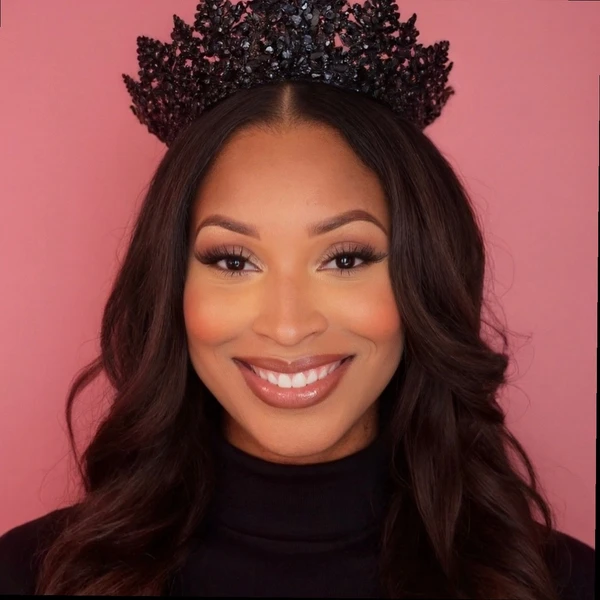
As Miss Black United States 2025, I advocate for community-centered healthcare. My goal is to ultimately become the provider my family needed; one who leads with empathy, accountability, and the resourcefulness I've honed my entire life.
Education
Harvard College
Master's degree programMajors:
- Medicine
- Public Health
GPA:
3.9
Howard University
Bachelor's degree programMajors:
- Chemistry
- Biology, General
GPA:
3.3
Miscellaneous
Desired degree level:
Master's degree program
Graduate schools of interest:
Transfer schools of interest:
Majors of interest:
- Medicine
Career
Dream career field:
Medicine
Dream career goals:
Practice Medicine
Research Program Coordinator
Johns Hopkins Schools of Medicine- Dept of Otolaryngology Head & Neck Surgery2022 – 20242 years
Sports
Track & Field
Varsity2014 – 20184 years
Research
Neurobiology and Neurosciences
Johns Hopkins Schools of Medicine- Dept of Otolaryngology Head & Neck Surgery — Research Program Coordinator2022 – 2024
Arts
Howard University
Graphic Art2020 – 2022
Public services
Volunteering
Black United States Pageant — Miss Massachusetts Black United States2024 – 2025Volunteering
Black United States Pageant — Miss Black United States2025 – Present
Future Interests
Advocacy
Politics
Volunteering
Philanthropy
Entrepreneurship
WayUp “Unlock Your Potential” Scholarship
Diverse Nursing Scholarship
No Essay Scholarship by Sallie
A Man Helping Women Helping Women Scholarship
My life’s work is to make sure that no girl grows up believing she must shrink in order to survive. I have seen what happens when women are left unsupported. I have watched girls learn to quiet their opinions in classrooms, women minimize their ambition in workplaces, and mothers be dismissed in medical settings when they insist something is wrong. I uplift women not because it is a niche interest, but because the cost of neglecting women is visible everywhere, from the bodies we bury too early to the dreams that die before they are ever spoken aloud.
I do this work through every part of my life. As Miss Black United States, my crown bears the weight of the change I am working to make. I wear it as living proof that Black women belong in rooms where our presence has historically been uninvited or ignored. I use that visibility to speak to girls globally in elementary schools, teen groups, churches, and pageant audiences about ambition before the world teaches them to dilute it. I do not wait for women to become adults before empowering them; I begin where confidence is first interrupted.
Beyond the stage, my work is rooted in systems change. I am a graduate student at Harvard studying health policy, on a path to become a surgical Physician Associate specializing in emergency and cardiothoracic care. My goal is to operate at the intersection of the operating room and the policy table. I aim to save women’s lives in moments of crisis while also shaping the rules that determine whether they ever receive fair and timely care. Women are often misdiagnosed, unheard, and dismissed in medicine, and I intend to be at the forefront of that change.
My commitment to women is not theoretical. I do this work because I believe deeply in what happens when women are supported early and consistently. I have taught reproductive health to girls in Kenya, supported vaccine access initiatives in Argentina, and worked with several national and international nonprofits to bring care and dignity to overlooked communities. I mentor young women because I know what it feels like to walk without a guide, and I refuse to let the next generation do it alone.
I also believe in involving men in this work, not excluding them. I love helping men learn how to show up for women in ways that create safety, opportunity, and respect. Change cannot happen in one gender. It requires all of us working with intention.
This scholarship would widen the reach of the work I have already begun. Financial relief would allow me to continue representing women on national platforms, mentoring across age groups, and advancing through medical and policy training without being forced to slow down to survive. Women do not need more promises of change postponed for a future when life is easier. They need people building change in real time, while the barriers still exist.
I was not given a world that automatically made space for ambitious women. I am building one, not only for the girls watching, but also for the men learning how to support them. I do this so that when another woman stands where I stand someday, she will inherit a world that does not ask her to shrink before it lets her lead.
Kayla Nicole Monk Memorial Scholarship
Kayla Nicole Monk lived with a reality most people never face: being born with a heart that had to be surgically rebuilt just to give her a chance at life. Even in the face of that fragility, she pursued her dreams with conviction and imagination. She wanted to build businesses, influence people, and leave a mark on the world. Her story shows that people who understand how uncertain time can be often pursue it with extraordinary urgency. She did not wait for perfect conditions to dream. She dreamed because life is never guaranteed.
That same awareness shaped my path. I chose to pursue science and medicine because I have seen firsthand how much a person’s future depends on the strength of their heart, both physically and figuratively. In my family, cardiovascular disease and stroke aren't just statistics; they're real experiences and conditions we are genetically predisposed to. My great-grandmother suffered a stroke that permanently changed her life, and watching those around her struggle to preserve her dignity showed me how delicate the line is between merely surviving and truly living. That experience didn't just make me aware of disease; it made me aware of what is lost when a body fails before a life’s work is finished.
That realization drives me toward a future in medicine and policy, with plans to become a surgical Physician Associate working in cardiothoracic and emergency care after I complete my graduate training. I want to be on the side of the table where time is extended for other people, the way it was for Kayla, so that life does not end before impact is made. My long-term goal is to serve in high-stakes settings where minutes and decisions determine whether someone gets the years they need to finish their story.
This scholarship would give me the stability to continue preparing for that work without slowing down to survive. Because I am the first in my family to pursue this path, there is no financial cushion or generational roadmap beneath me. Everything I build, I build while carrying responsibility, studying full-time, and serving communities now, not later. I teach, mentor, and advocate because, like Kayla, I refuse to wait for perfect conditions before making a difference.
I never had the chance to meet Kayla, but her story makes me wish the world had been given more time to see what she would have created. Since she is no longer here to build the future she imagined, I will carry forward the kind of work she stood for.
Kayla’s story is a reminder that time is not promised, so purpose cannot be delayed. She used the years she was given to light the way for others. I intend to spend my life extending both time and possibility for people who might not otherwise have it. Supporting me would not only honor her legacy. It would help ensure that more people live long enough to build legacies of their own.
Wicked Fan Scholarship
The moment I saw Cynthia Erivo step on-screen as Elphaba with braids down her back, I understood the story of Wicked differently. A braid is never accidental. It is a choice to show what the world often teaches people to tuck away. It is heritage made visible. It is difference that does not apologize.
In Wicked, the world does not fear Elphaba because she is unkind. It fears her because she exists without disguise. The braids captured that truth in an instant. Before she speaks, she is already defined. Her braids becomes a symbol of how quickly identity can be misread as threat.
Braids also tells another truth. Strands that are delicate alone become strong when woven together. The more tension applied, the more secure the braid becomes. That is Elphaba’s life. That is the life of anyone who has ever carried a self the world tried to flatten, a reality far too many of us face. You either remain whole or you vanish. You must command the space and say "it's me".
Wicked does not pretend that staying whole is easy. It shows the cost. It shows how the world rewards people who smooth themselves down to be loved and resists those who step forward in their full shape. Glinda is celebrated for being agreeable. Elphaba is challenged for being unmistakably herself.
I love Wicked because it doesn't treat difference as a flaw to erase, but as a force that can open new space in a story that seemed already written. Cynthia Erivo’s braids were not just a styling choice. They were an intentional but quiet form of courage. It said that this Elphaba carries a history the audience did not expect, and she will not unravel to make anyone more comfortable.
Wicked reminds me that there is strength in staying woven, in keeping all parts of yourself intact even when the world would prefer you silenced or softened. That is why the story stays with me. It is not just about magic. It is about the bravery of continuing to be fully yourself in a place that teaches you not to be.
Charles Cheesman's Student Debt Reduction Scholarship
The average American borrower carries about forty thousand dollars in student debt. I carry more than one hundred and sixty thousand. That number is not a footnote in my life. It governs every decision I make. It is the reason I save nothing, the reason I cannot invest, the reason I delay medical care, and the reason I still send money home while knowing there is nothing to replace it. Debt has become the invisible hand that shapes my limits, even when my ambition is limitless.
I did not inherit wealth, instructions, or margin. I inherited responsibility. I was a first-generation student who learned college as I lived it. There were no family contributions, no back-up plan, and no option to fail. To get to and through college, I had to do what so many low-income students of color do in silence; I borrowed. I worked multiple jobs as a full-time student on borrowed time. I borrowed loans to study, to stay housed, to eat, to print assignments, to commute, to survive. The irony is that the very act of pursuing education, which was supposed to be the escape, is the same thing that chained me to a future with less freedom.
Even under the constant weight of debt, I never considered retreating into self-preservation. I mentored students, led service initiatives, and taught reproductive health to hundreds of girls across Kenya and Argentina. I sought out funding opportunities to contribute to public health work in communities where health equity is not a principle but a matter of survival. I became the person others called for direction, even while quietly carrying a financial reality that most of my peers never had to endure.
My career goals are not abstract. I intend to work in clinical care as a Physician Associate and to lead in health policy at the national level, with the long-term intention of serving communities that look like the one I grew up in. My purpose is to build sustainable structures that make health, education, and opportunity accessible to every community. I understand firsthand how student debt can delay everything. It delays the ability to build credit, afford academic supplies, purchase essentials, fund early community programs, or even say yes to low-paying opportunities to advance yourself without gambling on necessities.
If this scholarship reduces even a fraction of my debt, the benefit is not merely emotional relief. It translates directly into capacity. Money that is not absorbed by loan repayment can be redirected to savings, investment, and early-stage community work instead of servicing interest.
Selecting me as a recipient of this scholarship is not only subtracting debt, but it is multiplying what I am able to build beyond myself. I come from people who carried weight they never put down long enough to create anything that could outlive them. I am determined to be the break in that pattern. This support would allow me to continue pouring into communities in ways that equip other first-generation students with knowledge, access, and opportunity so that the cycle of scarcity does not repeat.
This scholarship would not only give me room to breathe and room to build; it would ensure that the price I paid to get this far does not become the reason the people coming after me never make it at all. My potential is not defined by my debt, but my ability to unleash that potential depends on whether I can free myself from the weight that keeps so many of us stuck at the starting line.
Bick First Generation Scholarship
WinnerBeing a first-generation student means choosing to climb a staircase no one before you has ever seen, with no one ahead to call back directions. I grew up in Poughkeepsie in a household where survival took priority over planning for the future. There were no savings accounts, no financial buffer, and no one who could explain what FAFSA or course registration even meant. I entered higher education the way many first-generation students do, by learning the rules while already living the consequences.
What people rarely see is how isolating it can feel to be the first. There is no one to check whether a decision is wise, no one to warn you before you sign a binding document, no one who has walked the path you are trying to navigate. I have cried in financial aid offices, signed loan agreements I had to trust, gone to class after working overnight, and stretched groceries to make tuition work. None of that appears on a transcript, but it shapes who you become.
Even in the middle of that instability I continued to serve others. I taught reproductive health to girls who had never been told their bodies belonged to them. I supported vaccine access work in Argentina so children I will never meet might live to dream. I did not wait for stability before contributing. I gave while still building, because I know what it feels like to need help and not have it.
Being first-generation is not just an identity. It is responsibility. It is carrying the possibility that you may become the point where your family’s story changes direction. This scholarship would not create my motivation. It would relieve the constant strain that comes from advancing without a safety net. Students like me do not lack ambition. We carry ambition and burden at the same time.
You would not only be supporting one student. You would be helping interrupt a pattern that has persisted for generations. You would be allowing someone who has already built from scarcity to continue building without risking collapse to do so. If I have been able to create this much with uncertainty under my feet, imagine what is possible when that ground is finally steady.
Champions Of A New Path Scholarship
College was never guaranteed for me. There were no savings accounts, no legacy expectations, no adults setting aside money in my name. There was only the understanding that if I did not move my life forward myself, it would not move. I entered higher education the way some people enter survival: with urgency, instability, and no cushion if I failed.
My advantage is what I produced in the midst of that struggle. I did not wait for stability before I showed up for others. While rationing food to stretch tuition money, I was teaching reproductive health to hundreds of girls in Kenya. While living in borrowed spaces and working multiple jobs to stay enrolled, I was helping build vaccine-access infrastructure in Argentina. And even while living with the constant knowledge that one financial emergency could end everything, I worked with the Health Justice Initiative to advance equity for people whose conditions were more unforgiving than mine.
Most people begin to give back once they feel safe. I gave back when I was not safe. I did not wait for comfort, for certainty, or for a lighter load. I did not serve in theory. I served in motion, under pressure, and without backup. That is not luck and it is not personality: it is the muscle memory of someone who learned early that if you wait for ideal conditions to matter, you will never matter at all.
This scholarship will not create my ambition. It will remove the cost I have been paying for carrying it alone. I am not asking to be rescued. I am asking to be released from the penalty that comes with building something without inherited support. The work is already happening; the impact is already documented; the pace is already proven.
This trajectory is not pointed toward personal comfort. It is directed toward a lifelong career intervening in the health and social inequities I have experienced first-hand. I have seen what happens when vulnerable populations are left behind, and my ambition is now fully mobilized to prevent that outcome. The work I started in Kenya and with the Health Justice Initiative is just the small-scale evidence of the sustained, large-scale impact I intend to execute once my education provides the necessary platform.
A student who excels with resources has proven capability. A student who excels without them has proven inevitability.
You would not be funding a maybe. You would be stabilizing work that is already in motion, protecting the urgency of my trajectory, and allowing someone who built through scarcity to finally build without having to bleed for it to continue. This scholarship is not just an investment in my education; it is a critical investment in the expansion of my proven service work. It is the infrastructure that allows my energy to shift entirely from survival to the sustained, large-scale impact I am ready to deliver.
Women in STEM Scholarship
Science and biology changed my life. I didn’t end up in STEM because it sounded impressive. I chose it because I refused to let the world decide my limits. I grew up in instability and loss, in a home where survival left no space for dreaming. Girls like me are often told to shrink. As a Black woman and a first-generation college graduate, I was never expected to end up in science, let alone shape it. We are handed quiet futures and expected to accept them. Choosing science was my way of refusing that notion. It was the first place where my questions were welcomed and my curiosity felt like power instead of defiance.
At Howard University, I studied biology while working two jobs to keep myself in school. I chose the body as my focus because all my life I had watched people I love go without care. In my family, people skipped medication, endured untreated pain, and barely survived due to lack of access. Not because they didn’t care, but because the system made care a privilege. I wanted to understand that harm at its root. I entered STEM to confront it and to change it.
I didn’t wait for a degree to start serving. I led reproductive health workshops for young girls in Kenya who had never been given language for their own bodies. I helped families in Argentina access vaccines that had been out of reach for years. I worked with nonprofits alongside advocates who believe, as I do, that science means nothing if it never reaches the people who need it most. Those experiences taught me that STEM is not neutral. It either protects people or abandons them.
Now as a graduate student, my goal is to close the gap between knowledge and justice. I am preparing to become a Physician Associate who doesn't just treat individual patients but works to dismantle the barriers that decide who gets care and who gets written off. My purpose is not to fit into STEM quietly. It is to expand who is seen, who is served, and who believes they belong in the field to begin with.
Being a woman in STEM means walking into rooms that were not built with us in mind and refusing to leave. It means carrying not only your own ambitions but the weight of every girl watching to see if you bent or rose. I want to be the reason a young girl in a biology classroom doesn’t assume that science, research and technology belongs to someone else. I want to be the reason a patient finally feels seen in a space that has historically dismissed them. I want to be the reason the next generation doesn't inherit the same ceilings I had to break through.
I chose STEM because science is one of the most powerful tools humans have ever held. I want to show that women in this field are not accessories to someone else’s discovery. We are the ones leading the charge. We are architects of the future, claiming space to build, heal, disrupt, and lead with intention. STEM does not only need more women for fairness. It needs our perspective, our lived experience, and the solutions that only we can see. Women in STEM are not an anomaly or an exception. We are the beginning of a new expectation: that science must serve everyone and be shaped by all of us.