Hobbies and interests
Agriculture
3D Modeling
Artificial Intelligence
Engineering
Reading
Christianity
Christian Fiction
I read books multiple times per week
ibrahim Gowon
1x
Finalist
ibrahim Gowon
1x
FinalistBio
My name is ibrahim Gowon , and I am a high-achieving African American student currently in the 11th grade. I was born in Nigeria, where I learned early on that creativity often emerges from overcoming challenges. One of my greatest inspirations was a local mechanic nicknamed “Alignment,” whose resourcefulness and commitment to sustainability left a lasting impression on me. Watching him repurpose abandoned car parts to help his community taught me the value of innovation, resilience, and making a positive impact with limited resources.
After moving to the United States, I became even more aware of the importance of environmental stewardship and community involvement. These experiences have shaped my passion for computer science and engineering, fields where I believe I can develop solutions that empower communities and address real-world problems.
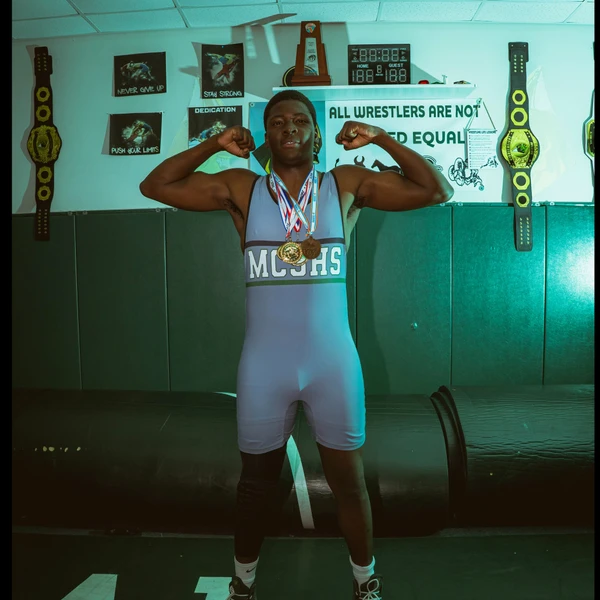
With a 4.211 GPA, three years of varsity wrestling, and active membership in my school’s math club, I have learned the importance of discipline, teamwork, and perseverance. My goal is to become a computer scientist and engineer focused on green technologies, using my skills to create sustainable solutions for communities like the one I grew up in.
I am passionate about combining technical expertise with a commitment to social good. I believe my unique background, academic achievements, and drive to make a difference make me a strong candidate for any opportunity that allows me to further my education and contribute to positive change.
Education
Miami Central Senior High School
High SchoolMiscellaneous
Desired degree level:
Master's degree program
Majors of interest:
- Mechanical Engineering
- Computer Science
- Computer Engineering
- Mechatronics, Robotics, and Automation Engineering
Career
Dream career field:
Mechanical or Industrial Engineering
Dream career goals:
to create motivational animation stories using ai then adding them to cap cut, wich result in me posting them on tik tok
Bank United STEM program2024 – Present2 years
Sports
Wrestling
Varsity2023 – Present3 years
Awards
- yes i won district championship
Research
Computational Science
Bank United STEM program — i was teaching the students who had dificulty in undestading programming and figuring out why the population of women in the STEM industry was low2024 – 2024
Coach "Frank" Anthony Ciccone Wrestling Scholarship
There are moments in sports when everything feels sharp and alive, like the world is cheering for you. That is exactly how I felt after winning the district championship. My teammates slapped my back, the gym lights felt brighter than usual, and the sound of the crowd echoed in my chest. I could still hear my coach’s voice clear as day: “Leave it all on the mat.” Those words carried me into regionals with all the confidence in the world. I felt ready. I felt untouchable.
The regional gym was packed the morning of the tournament. The air smelled like sweat, rubber mats, and the metallic scent of nerves. I remember pacing behind the warm-up area, hearing the screech of shoes and the thud of bodies hitting mats. My heart was pounding, but in the best way. When my name was called, I jogged out under the bright overhead lights, the mat slightly cold against my feet.
My first two matches went exactly how I had imagined. Every move felt smooth and controlled. I could hear my teammates shouting encouragement, my coach giving short, sharp instructions. By the time I stepped onto the mat for the semifinal, I felt locked in. This was my moment. I could almost see myself competing at states.
The match started strong. I was ahead, feeling my opponent weakening under my grip. Then, out of nowhere, the referee blew his whistle and flashed a warning. I froze. “For what?” I whispered under my breath, confused. My coach called out that everything was legal, but the ref had already made up his mind. I tried to reset, tried to shake off the confusion, but a second warning came. The crowd murmured. My stomach dropped.
When the third warning hit, the whistle sliced through the noise like a blade. Disqualified.
I remember standing there, sweat dripping into my eyes, hands shaking, trying to understand how a match I was clearly winning had just been taken away from me. The cheers from other mats faded. The gym felt small and silent, even though I knew it was loud. My coach’s face said everything. Shock. Frustration. Hurt for me.
Walking off the mat was the hardest part. My legs felt heavy, like the loss was weighing me down physically. My chest tightened, and I could barely breathe. All the early morning practices, the bruises, the conditioning, the sacrifices. It felt like they had been erased with one whistle.
For days, I replayed everything in my head. I felt cheated and angry, and part of me wanted to quit wrestling completely. But when the anger faded, something else started rising inside me. I realized that unfair moments do not define you. How you respond to them does.
I decided to embrace the role of the underdog. If the system was not always going to be fair, then I would train harder, smarter, and with more intention. I focused on the parts of wrestling I could control. I pushed myself in conditioning, stayed after practice, and rebuilt my confidence one drill at a time.
That regional loss taught me resilience in a way no win ever could. Now, when I step onto the mat, I carry that moment with me. Not as a failure, but as fuel. I am not just wrestling to win. I am wrestling to prove to myself that I can rise from any setback, no matter how unfair, and come back stronger than before.
Shanique Gravely Scholarship
It is strange how one person can shift the entire direction of your life without you noticing it right away. For me, that person has always been my older sister, and her impact on my life has been deeper than anything I could have learned from a classroom or a textbook.
Growing up, I watched her work through challenges that would break most people. She balanced school, long hours at work, and responsibilities at home, and she did all of it with a level of strength that I did not understand at the time. She never looked for praise or recognition. She just showed up every day and put in the work. Seeing her push forward, even when things were tough, gave me a real example of what commitment looks like. It taught me early on that success is not about shortcuts. It is about the habits and effort you show every day, especially when no one is watching.
One moment with her completely changed how I viewed my future. It happened during my freshman year, a time when I was still trying to figure out who I was and what direction I wanted to go in. She sat me down and told me that I needed to start thinking seriously about my goals. At first, I did not think much of it. It felt like just another piece of advice from an older sibling. But as time passed, I realized her words had planted something in me. For the first time, I began to see school as more than a set of assignments. I began to see it as a chance to build something for myself.
From that point on, she became the person I went to when I felt unsure. She helped me look into engineering programs, pushed me to challenge myself academically, and reminded me that I was capable even on days when I did not believe it. She encouraged me to take opportunities seriously and not settle for the minimum. Little by little, her belief in me helped me build my own belief in myself.
Her influence also taught me the value of responsibility. Watching her manage so much at once showed me that life will not always be easy, but you can still rise above your circumstances. She taught me that giving up is never an option and that effort is something you control no matter what you are facing.
Today, every goal I set and every step I take is shaped by the example she set for me. She is the reason I push myself, stay focused, and try to be disciplined even when things get overwhelming. Her impact is not something that faded over time. It is something I carry with me every single day, and it continues to guide the kind of person I want to become.
Rev. and Mrs. E B Dunbar Scholarship
Some people grow up knowing exactly how their path will unfold, but my journey has never felt that simple. Every step toward college has been something I had to fight for, piece by piece, with whatever resources I could find.
One of the biggest obstacles I have faced in my pursuit of higher education has been learning how to move forward with limited tools and support. I have always aimed high, but I did not grow up with easy access to everything that students usually rely on. There were many moments when I had to figure things out on my own, from understanding financial aid to finding programs that could actually help me grow. Even something as basic as having a reliable laptop made school harder, especially when I started exploring engineering and needed programs that my computer could barely handle. I made it work, but it took patience and a lot of extra effort.
I also had to learn how to balance a heavy schedule. Between academics, sports, mentoring, and community responsibilities, I often felt pulled in different directions. There were days when I felt exhausted, but I kept pushing because I knew what my goals meant to me. These challenges taught me discipline, time management, and how to stay steady even when things felt overwhelming.
Overcoming these experiences helped shape the person I am today. They taught me that working hard through difficult times builds strength, and that persistence matters just as much as talent. These lessons are what keep me motivated as I prepare for college.
In the future, I want to use my education to give back to my community in a meaningful way. I plan to become a mechanical engineer and focus on sustainable solutions that reduce waste and help communities access better technology. I also want to support younger students who face some of the same challenges I did. Whether it is through mentoring or leading programs, I want to show them that their goals are possible.
My education will give me the tools to create real change. It will help me build a career that not only reflects my passions but also gives me the chance to lift others up and make a positive impact where it is needed most.
Sloane Stephens Doc & Glo Scholarship
I grew up in Nigeria watching my family navigate daily challenges, and one experience in particular shaped the way I see the world and my future. My father worked tirelessly to provide for us, yet even something as seemingly simple as car maintenance was a constant struggle. I watched firsthand the frustration and stress when our car would not start, forcing us to walk long distances to school just to arrive on time. What struck me even more was seeing how some mechanics exploited hardworking families like ours in underserved communities, charging unfair prices or performing unnecessary repairs. These experiences were more than an inconvenience. They affected my siblings and me, impacting our education and daily lives. I realized that access to reliable, affordable engineering solutions is not just about convenience. It can shape futures, determine opportunities, and influence the paths young people take in life.
That experience ignited my passion for mechanical engineering, specifically automotive engineering. I want to design practical, efficient, and sustainable automotive solutions that can make a real difference for people in communities like mine. I have always been curious about how machines work, from taking apart a bicycle as a child to learning about engines and vehicle systems. I spent hours experimenting with parts and learning how each component interacts with others. Now, I want to use that curiosity to solve real-world problems and ensure that families do not have to struggle as mine did. I hope to develop vehicles and systems that are reliable, affordable, and environmentally conscious, making daily life easier for families and students in underserved communities.
Beyond my technical interests, I am committed to helping others. I mentor younger students and assist classmates with STEM projects, believing that success is most meaningful when it inspires others. By sharing what I have learned, I hope to spark curiosity and confidence in the next generation. I want to combine my skills and experiences to give back, showing younger generations that engineering is not only a career but also a tool to improve communities and solve meaningful problems.
my story is one of curiosity, resilience, and a desire to create impact. Growing up, I learned how much daily struggles can affect education, opportunity, and well-being. These lessons have shaped my aspirations and fueled my determination to pursue automotive engineering. I want to design solutions that are not only innovative but accessible so that future generations will not face the same challenges I did. My goal is to use my knowledge, creativity, and experiences to make a tangible difference, transforming obstacles into opportunities for others and inspiring change wherever I can.
Ronald Whitmore Jr. Scholarship
When I hear the words “Black excellence,” I think of strength, resilience, and the determination to reach one’s full potential despite obstacles. It represents celebrating the achievements and contributions of Black people while breaking barriers, challenging stereotypes, and showing pride in our identity. Black excellence goes beyond academic or professional accomplishments; it is reflected in the everyday choices we make to lead with integrity, uplift our communities, and inspire others. It turns challenges into opportunities and uses talent to create positive change.
I embody Black excellence in my everyday life by focusing on personal growth and using my abilities to help those around me. In school, I push myself to achieve my goals and tackle subjects that stretch my skills. Education is not only a personal achievement for me; it is a way to open doors for my future and for others in my community. Outside the classroom, I mentor younger students, support peers who are struggling, and encourage them to pursue their own goals. For instance, I have helped middle school students understand challenging math concepts and develop confidence in their abilities. Witnessing their growth reminds me that excellence is not only about what I achieve but also about the ways I empower others.
My understanding of Black excellence is also shaped by the history and contributions of Black leaders, innovators, and thinkers. Their resilience in the face of adversity motivates me to approach challenges with determination and pride. I strive to embody that same strength in my own life, whether it means persevering through a difficult project, stepping into leadership roles, or finding ways to support my family and community. Excellence is evident not just in accomplishments, but in how we carry ourselves, the standards we uphold, and the impact we have on those around us.
I also embrace Black excellence by learning from the history and contributions of Black leaders, innovators, and thinkers. Their resilience in the face of adversity inspires me to approach challenges with determination and pride. I try to reflect that same strength in my own life, whether it is persevering through a difficult project, taking on leadership responsibilities, or finding ways to support my family and community. Black excellence is visible in how we carry ourselves, the standards we set for ourselves, and the positive impact we make on those around us.
At the end of the day, Black excellence is about recognizing the value of my own potential, embracing my identity, and contributing positively to my community every day. I aim to honor my heritage through action, achievement, and integrity. By working hard, mentoring others, and serving as a role model, I hope to inspire those around me to reach higher, dream bigger, and make meaningful change. Black excellence is both a personal responsibility and a shared legacy, and I am committed to carrying it forward in every part of my life.
Mark A. Jefferson Teaching Scholarship
I have always believed in the power of education to open doors and change lives. Growing up, I saw how a teacher’s encouragement could transform a student’s confidence and inspire them to aim higher. I remember feeling unsure about my own abilities until a teacher told me she believed in me. That moment changed how I saw myself and planted the seed that I could one day have the same impact on others. Those experiences shaped my desire to become an educator who makes students feel valued, supported, and capable of more than they thought possible.
From a young age, I found joy in helping others learn. Whether tutoring younger students, guiding them through projects, or simply listening when they needed support, I realized that teaching is about more than sharing knowledge. It is about sparking curiosity, building character, and helping students discover their own strengths. Even something as simple as encouraging a student to ask questions can open the door to deeper understanding and self-confidence.
As an educator, my goal is to create classrooms where every student feels included, respected, and challenged to grow. I believe that education is not one size fits all. Students learn in different ways and at different paces, so I plan to design lessons that meet them where they are while connecting learning to real-world issues. By incorporating critical thinking, creativity, and empathy into my teaching, I hope to prepare students not only for academic success but also for life beyond school.
I also want to work beyond the classroom to promote educational equity. Many students face barriers such as limited resources, unstable home environments, or a lack of access to opportunities. These challenges can make it harder for them to succeed, no matter how much potential they have. That is why I want to work with fellow educators, families, and community leaders to ensure that all students have access to quality resources, safe learning environments, and the support they need to thrive.
Ultimately, my dream as an educator is to help students see the possibilities in themselves and in the world around them. I want to inspire them to believe in their own abilities, set ambitious goals, and pursue their dreams with determination. If I can encourage even a few students to see themselves in a brighter future, I will know I have made a meaningful and lasting impact. Education is more than a career to me; it is a way to shape the next generation of thinkers, leaders, and change-makers who will carry our world forward.
Stewart Family Legacy Scholarship
Leadership and science are two forces that, when combined, have the power to shape a better future for all of us. Science drives discovery, innovation, and solutions to the challenges we face, while leadership ensures those discoveries are applied in ways that benefit people, communities, and the planet. Without leadership, scientific progress might remain stuck in labs and research papers. Without science, leadership would lack the tools to create lasting, meaningful change.
Leadership is about vision, decision-making, and the ability to inspire others to work toward a common goal. In the context of science, leaders are the ones who bring researchers, policymakers, and communities together to turn knowledge into action. For example, when scientists develop renewable energy technologies, it takes strong leadership to push for their adoption, secure funding, and guide communities through the transition. Good leaders are able to bridge the gap between complex scientific ideas and the everyday lives of people, making change both understandable and achievable.
Science itself shapes the future by expanding what is possible. It gives us new tools to fight diseases, protect the environment, explore space, and improve quality of life. From medical breakthroughs to sustainable agriculture, science provides the foundation for solving problems that affect billions of people. However, these solutions must be implemented responsibly, and that is where leadership plays a critical role. Leaders ensure that scientific advancements are used ethically, equitably, and with long-term impacts in mind.
The combination of leadership and science has already transformed the world—eradicating diseases, creating global communication systems, and advancing technology at an unprecedented pace. Looking forward, this partnership will be essential in addressing global challenges like climate change, resource shortages, and emerging health threats. Leaders who understand and respect science can make decisions that protect the planet for future generations, while scientists who value leadership can see their work reach its full potential.
In the end, leadership and science shape our future by working hand in hand. Science gives us the knowledge to solve problems, and leadership turns that knowledge into action. Together, they create a path toward a world that is healthier, more sustainable, and more connected than ever before.
Matthew E. Minor Memorial Scholarship
I have always believed that a strong community is built by the people who are willing to take an active role in it. Throughout my life, I have tried to be that person. At school, I have taken part in student leadership and worked on projects that help bring students together. In my neighborhood, I have volunteered my time to assist younger students with homework, guide them through school projects, and provide a listening ear when they need support. Over the summer, I helped local businesses with office work such as filing, organizing documents, and handling clerical tasks. These experiences may seem small on their own, but together they have taught me that showing up for others, consistently and with genuine care, makes a lasting impact. They have also helped me learn how to communicate well with people from different backgrounds, adapt to different situations, and lead with empathy.
Pursuing higher education has always been my goal, but it is a goal I cannot achieve alone. My family works hard to provide for us, but the reality is that the cost of tuition, housing, books, and other essential expenses is far beyond what we can afford. I am determined to study computer engineering and work toward a career that combines technology with problem-solving to improve people’s lives. Financial support would not only remove the constant worry of how to pay for each semester, but it would also open the door to opportunities like internships, research, and projects that would prepare me to give back to my community in even more meaningful ways. With the right resources, I can focus on learning, growing, and using my skills to make a difference.
Another important part of my involvement in the community is working to keep children and youth safe, both in person and online. I have seen how bullying can harm someone’s confidence, especially when it happens behind a screen where it feels harder to escape. That is why I make it a priority to be a trusted person younger kids can talk to. I share tips on protecting personal information, using strong privacy settings, and thinking carefully before posting online. I also encourage them to speak up if they or someone they know is being bullied, whether that is in school or on social media. In person, I make sure to step in or notify an adult when I see someone being treated unfairly. I believe that safety and respect should be the foundation of any community, and I strive to model that every day through my actions.
By combining my dedication to service, my academic ambitions, and my commitment to protecting others, I hope to continue building a safer, stronger community while pursuing my own education and future goals.
Bright Lights Scholarship
Coming from a low-income, single-parent household, I’ve faced the reality that even when you have the potential and the passion, pursuing higher education can still feel out of reach. My mother has always worked hard to provide for our family, but the financial challenges we’ve faced have made it clear that achieving big goals requires not just ambition, but support.
I plan to become a mechanical or automotive engineer. My drive comes from firsthand experience. Growing up, I saw how a lack of access, knowledge, and fairness in the automotive industry can impact families like mine. My uncle struggled to maintain his car when the economy declined. He couldn’t afford frequent repairs because mechanics often chose to replace parts entirely—purchasing new components instead of restoring the old ones, even when it wasn’t necessary. This practice cost more and ignored sustainable solutions that could have made a real difference. Watching his car sit unused for months showed me how mechanical issues, combined with a system that favors profit over people, can hold someone back from getting to work, caring for family, or just living freely.
That experience didn’t just frustrate me—it motivated me. I want to become the kind of engineer who understands both the technical side of machines and the human side of access and affordability. Whether it’s improving vehicle efficiency, promoting sustainable repair solutions, or helping develop more accessible systems, I aim to create practical, people-focused engineering innovations that don’t leave anyone behind.
But for students like me—first-generation, underrepresented, and low-income—college isn’t just the next step; it’s a major leap. I’ve had to learn everything about the process on my own, from financial aid to application deadlines. I’ve stayed focused, worked hard in school, and sought out every opportunity to grow and push myself, including getting involved in programs and activities that support future engineers.
This scholarship would be more than financial help—it would be a vote of confidence in my vision and future. It would allow me to focus more on my studies and less on whether I can afford to keep going. Most importantly, it would help me break cycles of limitation, not just for myself, but for others in my community who need engineers that understand their struggles and design with them in mind.
College shouldn’t be a door locked by income. I’m determined to walk through that door and, with your support, hold it open for others.
Charles Bowlus Memorial Scholarship
Losing my aunt to cancer was one of the most painful moments in my life. She wasn’t just a relative; she was a second mother, a guiding light, and someone who always encouraged me to dream beyond my circumstances. Watching her suffer through treatments and hospital stays, while still trying to smile and comfort the people around her, changed the way I see life. That experience planted something in me—an understanding that life is short, and if I want to change my future and give back to others, I have to be bold, focused, and relentless.
My aunt’s passing also taught me something else: that behind every machine in a hospital—every scanner, every radiation device—there are people who built them to save lives. I didn’t understand it all back then, but I was fascinated by how technology had the power to fight cancer. That moment became one of the reasons I became interested in mechanical engineering. I want to be part of the next generation of builders, innovators, and problem-solvers—creating machines that can improve people’s lives, just like the ones that gave my aunt more time with us.
In addition to losing my aunt, I’ve grown up in a low-income household. I’ve learned what it means to stretch every dollar, to share space, to sacrifice, and to work hard even when the odds are against you. While some kids worry about which game to buy next, I’ve had to worry about things like whether the Wi-Fi will work long enough to turn in my homework or how to make a computer from a broken one just to complete my assignments. But I don’t resent these struggles. They’ve made me stronger, more creative, and more determined. They’ve taught me how to survive, but more importantly, how to thrive.
My background has given me a deep appreciation for opportunity. I know that getting to college—and eventually becoming an engineer—won’t just change my life. It will change the lives of my younger siblings, my mother, and my entire community. I want to build machines that can help solve real-world problems. Whether it’s designing safer cars, making energy-efficient machines, or working on medical technology, I want to do work that matters. I want to show people from low-income backgrounds that we can succeed too—not just as athletes or entertainers, but as scientists, engineers, and innovators.
Applying for this scholarship is more than just a chance to pay for school—it’s a chance to honor my aunt’s memory and to prove to myself that where you start doesn’t have to define where you end up. I want to be the first in my family to graduate with a degree in engineering and one day create tools that help save lives, just like the ones that tried to save hers.
Richard (Dunk) Matthews II Scholarship
My name is Ibrahim, and I’m a high school senior passionate about pursuing a trade that combines creativity, problem-solving, and impact. I plan to become a mechanical engineer, with a focus on automotive engineering. This passion began when I was growing up in Nigeria, where I witnessed how difficult it was for people—especially those who worked hard every day—to afford car repairs and access reliable maintenance. I saw my father, my uncle, and others struggle to keep their vehicles running, often because replacement parts were expensive or unavailable. That experience stayed with me.
Now living in the U.S., I’ve set my mind on mastering mechanical engineering so I can one day help build more affordable, sustainable solutions for vehicle repair and design. I want to explore how to reuse and improve existing materials rather than constantly replacing them. I plan to study engineering in college, gain hands-on experience through internships, and use every opportunity to learn from experts in the field.
But more importantly, I want to give back. My goal is to eventually start an organization that provides low-cost, sustainable repair services in underserved communities—both in the U.S. and back home in Nigeria. I want to teach young people how to fix and maintain machines, giving them both skills and confidence. I believe trade skills like engineering aren’t just about building things—they’re about building people and communities.
This journey isn’t just about success for me; it’s about making sure others have a better path forward.
Let me know if you want this tailored to a specific scholarship, trade program, or organization!
You said:
400 minimum
ChatGPT said:
Certainly! Here’s an expanded version with at least 400 words that fully addresses who you are, your trade plans, how you’ll master it, and how you’ll give back:
My name is Ibrahim, and I am a high school senior passionate about pursuing mechanical engineering, especially focusing on automotive engineering. Growing up in Nigeria, I witnessed firsthand how challenging it was for hardworking people like my dad, uncle, and others in my community to maintain their cars. The cost of parts and repairs was often too high, and many times vehicles were discarded when a part wore out instead of being repaired or reused. Watching these struggles inspired me to want to make a difference—not just for my family, but for communities like mine where resources are limited, and sustainability is critical.
Now that I live in the United States, I have more access to technology and education, and I plan to use these opportunities to master the trade of mechanical engineering. My goal is to study mechanical engineering in college, focusing on areas that emphasize sustainability, innovation, and cost-effective repair methods. I am committed to gaining hands-on experience through internships, mentorships, and research projects to develop practical skills and deepen my understanding of how machines work and how they can be improved.
I believe mastering this trade is about combining technical knowledge with creativity and problem-solving. I want to be able to design better mechanical systems, develop affordable repair techniques, and innovate sustainable solutions that reduce waste and extend the lifespan of vehicles and machinery. Learning from experienced engineers and constantly challenging myself to grow will be key steps in this journey.
To me, mechanical engineering is more than just a trade—it’s a way to build stronger communities, open doors for future generations, and create lasting impact. I am excited to dedicate myself to this path and contribute to a better future for those who face the struggles I once saw growing up.
"Most Gen Z Human Alive" Scholarship
Why am I the most Gen Z person alive? Easy. I’ve got 27 tabs open, music blasting, a TikTok playing in the background, and I’m writing this in my Notes app at 2 a.m.—while pretending I’m not spiraling. I am the BeReal notification. I don’t just post on time, I strike a pose like I’m in a Vogue shoot—whether I’m brushing my teeth or halfway through a bag of Hot Cheetos.
I don’t text back—I send playlists. Emotions? Explained through memes. Conversations? 90% GIFs, 10% “that’s so valid.” When I’m stressed, I don’t meditate—I scroll. Somehow seeing a raccoon stealing a slice of pizza calms me more than yoga ever could.
I live in the chaos and make it aesthetic. I romanticize everything. Walking to the fridge? That’s a main character moment. Crying over homework? Sad indie playlist = healing. I’ve planned my influencer era at least five times with no content posted, but I do have a saved folder called “future brand deals.”
My screen time is my personality trait. My Notes app holds 10 unfinished rants, 4 business ideas, and 1 emotional breakdown from last Thursday. I’ve survived Zoom classes, algorithm changes, and every TikTok trend from “skibidi toilet” to “girl dinner.”
Basically, I’m Gen Z in human form: loud, creative, anxious, unfiltered—and somehow thriving.
David Foster Memorial Scholarship
Mr. Adams, my 10th-grade English teacher. At a time when I was still adjusting to life in a new country, trying to understand my identity and where I fit in, Mr. Adams became more than just a teacher—he became a mentor who helped shift my mindset and approach to life.
When I first entered his class, I was quiet, unsure of myself, and hesitant to participate. English wasn’t my strongest subject, especially with writing, and I often felt like I didn’t have the right words to express my thoughts. But Mr. Adams had a way of making every student feel seen. He didn’t judge me for being behind or different. Instead, he encouraged me to speak up, to write from my experiences, and to see my story as something powerful, not something to hide.
One moment that really stuck with me was during a writing assignment where we had to share a personal story. I wrote about my life growing up in Nigeria, the challenges my family faced, and how that shaped the way I see the world. I wasn’t sure it was any good, but Mr. Adams pulled me aside after class and said, “Your story matters. You have something important to say, and people need to hear it.” That was the first time I truly felt like my voice had value.
Mr. Adams helped me realize that where I come from isn’t a disadvantage—it’s a strength. He taught me that education isn’t just about memorizing facts, it’s about using your knowledge to grow, to question the world, and to make a difference. His classroom was a place where I felt safe to express myself and push past my fears. He challenged me to go deeper, to ask better questions, and to aim higher.
Outside the classroom, Mr. Adams would often share advice about life. He reminded us that success isn’t about being the smartest person in the room—it’s about showing up, staying consistent, and being willing to grow through struggle. That message stuck with me. It helped me overcome self-doubt, not just in academics, but also in other areas like wrestling, leadership roles, and planning for my future career in mechanical engineering.
Because of Mr. Adams, I’ve learned to approach life with a growth mindset. I no longer shy away from challenges—I see them as opportunities to get better. I’ve become more confident in my ideas, more focused on my goals, and more committed to making an impact. He taught me to believe in my potential, even when things get hard.
Mr. Adams didn’t just help me improve my writing—he helped shape the person I’m becoming. His belief in me made me believe in myself, and that’s something I’ll carry with me for the rest of my life.
Individualized Education Pathway Scholarship
For a long time, I believed something was wrong with me. Back in Nigeria, I always struggled with math—even though I did well in most of my other subjects. No matter how much I paid attention in class, I would leave feeling confused, frustrated, and behind. When I moved to the United States and entered a new education system, I expected a fresh start, but the same struggle followed me. I was soon placed on an IEP, and at first, I felt ashamed. I saw it as a label that meant I was less capable than my classmates.
But what I didn’t realize then was that the IEP was not a limitation—it was a lifeline. It allowed me to receive the support I genuinely needed. With extra time on assignments, tutoring, and teachers who took the time to work with me one-on-one, I began to understand not just the content, but also how I learn best. I realized that my struggles with math weren’t because I wasn’t smart enough—they were because I hadn’t been taught in a way that matched my learning style.
This was a turning point in my life. I began putting in more effort, staying after school for tutoring, and taking advantage of every opportunity to improve. Slowly but surely, I started seeing results—not just in math, but in my confidence overall. I learned to advocate for myself, to ask questions without fear, and to keep trying even when things felt overwhelming.
That same determination carried over into other areas of my life. I joined the wrestling team and worked hard to become a two-time captain and a district champion. I made the honor roll three years in a row, and I was accepted into the Harvard Summer School Program—an opportunity I never would’ve thought possible a few years earlier.
My learning disability is a part of my story, but it doesn’t define my future. What keeps me going is the belief that I can use what I’ve learned to help others. I plan to study mechanical engineering in college and start my own company one day. I want to design systems and tools that make people’s lives easier—just like the support systems helped me. Most of all, I want to make my mom proud and give her the life she deserves.
My IEP didn’t make things easier—it helped me become stronger. That strength is what motivates me to continue my education and turn challenges into opportunities.
Blair Harrison Meek Rising Star Wrestling Scholarship
My journey has been shaped by the challenges I've overcome and the insights I've learned in doing so. Wrestling, in particular, has played a significant role in transforming my attitude toward adversity. My junior year of high school was a crossroads. Once I'd won my district tournament, I advanced to regionals and started strong, making it to the semifinals. In that crucial match, I let frustration get the better of me and rushed an attack, lost and saw my dream of going to states shatter. In my next match, my coach's words-"Leave it all on the mat"-echoed in my mind. I was going to leave it all on the mat, and I started dominating, but a series of controversial calls by the referee led to my disqualification. It was a period when I myself tasted the bitter flavor of racism and injustice, but instead of letting it get the better of me, I let it strengthen my determination.
Experiences such as these have made me realize that adversity does not always comprise personal failure or defeat; at times it may also be caused by injustice and discrimination. Most importantly, I have learned that it's not adversity, but one's response to it, that defines one's character. Wrestling has instilled in me resilience, discipline, and the importance of fighting for what I am worth, regardless of what life throws at me. Today, I am more determined than ever, working harder to take my rightful position next year and in every sphere of my life.
My interest lies at the intersection of technology and social change. I aspire to be a computer scientist and engineer who uses innovation to break down barriers and open gates for others, especially those who are unfairly disadvantaged. I am interested in the potential of green technologies and sustainable engineering to supply answers for some of the world's most important issues. I would like to utilize my ability to develop solutions not only that save our planet but also empower communities like the one I grew up in.
Through a 4.211 GPA, three years of varsity wrestling, and active membership in my school's math club,recived national honors society award, I have developed the work ethic, teamwork, and problem-solving capacity that are necessary for success in rigorous academic and professional environments. I believe that my unique background, academic achievement, and unwavering determination make me an exceptional candidate for this scholarship. I am eager to be taught by the best professors and classmates and to contribute significantly with my education.
My long-term vision is to use my skills and experiences to help make the world a more just and fair place. Whether it is through engineering sustainable systems or advocating for social justice, I will make the world a better place in the communities that I am involved in. My experience has taught me that although one's actions can affect those immediately around them, meaningful change occurs through systemic change-and I am not afraid to be part of the solution.