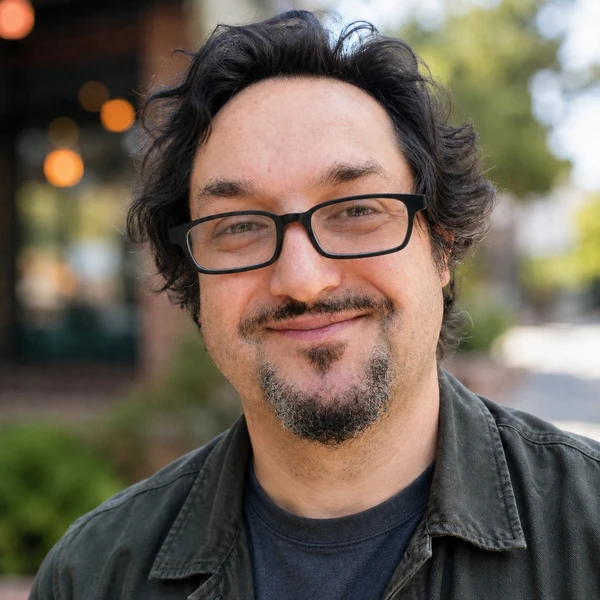
From Misfortune to Fortunate Opportunities to Make a Difference
In graduate school, I am pursuing a Master's in Health Informatics, focusing on health data analysis. My goal is to enhance the efficiency and effectiveness of health technology and research, making personalized, data-driven medicine universally accessible—irrespective of financial, social, or cultural barriers. Health insurance has changed drastically since I was a child, and with it, so has accessibility. Monthly rates (\$1,700+) and out-of-pocket maximums (\$18,500!) are amounts fewer and fewer people can afford. By increasing efficiency and accuracy in healthcare diagnosis and treatment, I hope we can drive those numbers down and make care available across the financial spectrum.
My journey has been shaped by overcoming significant challenges. As a younger student, I struggled due to learning disabilities and mental health issues I was unaware of, and persistent abuse, leading to severe PTSD. These obstacles made school nearly impossible. In high school, I maintained only a 2.35 GPA due to these challenges, though I achieved a 28 on the ACT, showcasing my potential. Thankfully, the University of California saw my potential via those scores, admitted me based on my ACT scores and essay alone.
Through perseverance, therapy, and other strategies, I have learned to navigate my disabilities—chronic pain, learning disabilities and PTSD anxiety, depression, hypervigilance, and flashbacks. Accommodations and determination enabled me to thrive academically. Today, I maintain a 3.89 GPA in graduate school, demonstrating my commitment and abilities.
My lived experiences fuel my passion for Health Informatics. I understand firsthand the barriers created by disabilities, but I also know what it takes to work with them. Initially, I dreamed of becoming a pediatrician, but my challenges made that goal unattainable at the time. Instead, I became a licensed Psychiatric Technician in my mid-to-late 20s, providing care to patients with mental health needs.
Years later, I returned to academia, graduating from the University of North Carolina at Chapel Hill with a bachelor's degree in Political Science and Entrepreneurship. Despite the odds—only 2-3% of students who drop out return to complete their degrees—I succeeded, earning a 3.3 GPA (EducationData, 2024). During this time, I launched a business in web development and design, which evolved into a career in the tech industry.
However, my experiences in tech revealed systemic challenges. Many employers failed to accommodate learning disabilities or ignored ADA requirements completely. Additionally, I realized that my work in tech lacked the meaningful impact I sought. Observing the industry's trajectory and my own aspirations, I decided to redirect my career toward healthcare—a field where I could merge my skills and passion for making a difference.
Now, I am combining my love for healthcare with my expertise in technology. Health Informatics represents the intersection of these passions, offering opportunities to address the inefficiencies in the U.S. healthcare system. Our country spends 2-4 times more per capita on healthcare than others, often with worse outcomes, such as ranking 39th (OECD, 2022) in infant mortality.
Predictive modeling, for example, is a true game-changer, as is personalized medicine. We are becoming able to link health issues together that never made sense before and can plan to give the best possible care much earlier, leading to better outcomes. Personalized care allows us to determine the best possible treatment for an individual based on their own histories and insights gleaned from massive datasets—something doctors 20 years ago could only dream of.
The incredible changes in technology and information analysis are making the massive troves of health data alone (estimated at over 1 petabyte—1,099,511,627,776 kb: 1+ trillion kb per day and growing) usable and understandable. This enables the medical and scientific fields to take medical diagnosis and treatment to truly 21st-century levels.
As a former worker in tech, I have been unemployed for well over a year now, and I know many other coworkers who are in a similar situation. That’s one of the reasons I decided to go back to school now—because I knew it was going to take time in this economy and because of the massive technical shifts already here and arriving more and more every day.
Inspired by some of my studies and internships, I’m developing a nonprofit to prevent the recruitment of young men into online hate groups, using data, design, and public health tools to intervene early and provide better paths forward. This work is personal, purposeful, and powered by everything I’ve fought through. This is one of my dream projects that I'm working on, and I will continue that while I pursue my career in Health Informatics.
In the mid-to-long term, I aspire to establish a consulting group providing health data and informatics services to clinicians and organizations that cannot afford full-time specialists. We would offer data management, analytics, and support for Electronic Health Records and systems. Additionally, I dream of creating a scholarship for individuals with invisible disabilities like myself, offering resources that could profoundly change lives.
Currently, there are few scholarships dedicated to students with invisible disabilities and even fewer available for graduate-level study. Similarly, resources for male survivors of abuse are almost nonexistent. While the scholarships available for women are crucial, men also need access to support for recovery and rebuilding—support that includes funding for education, therapy, and disability coaching.
That is why, if I were to receive the Pastor Thomas Rorie Jr. Furthering Education scholarship, it would help alleviate the financial strain of balancing graduate studies, part-time work, and parenting my toddler, Toby. This support would allow me to focus more fully on my studies, internships, and future career in Health Informatics—without having to spend a great deal of that focus on getting rent paid, daycare, and meals on the table.
Thank you very much for your time and consideration. I know you read and get many of these applications, and I hope you understand how grateful applicants like me are for these opportunities being available—and personally, to share my story and aspirations. While I may not receive this scholarship, as there are many other deserving applicants, I thank you who is reading this, and the scholarship trustees, for the possibility of being considered.
============
Sources
Hanson, Melanie. “College Dropout Rates,” August 16, 2024, [https://educationdata.org/college-dropout-rates#:\~:text=College%20Dropout%20Re%2DEnrollment%20Rates,than%20other%20types%20of%20institutions](https://educationdata.org/college-dropout-rates#:~:text=College%20Dropout%20Re%2DEnrollment%20Rates,than%20other%20types%20of%20institutions)
OECD, Data Explorer, 2022
[https://stats.oecd.org/Index.aspx?DataSetCode=HEALTH\_PROC](https://stats.oecd.org/Index.aspx?DataSetCode=HEALTH_PROC)