Hobbies and interests
Band
Art
Graphic Design
Origami
Teaching
Reading
Psychology
Christianity
Adult Fiction
I read books multiple times per week
Hope Chon
1x
Finalist
Hope Chon
1x
FinalistBio
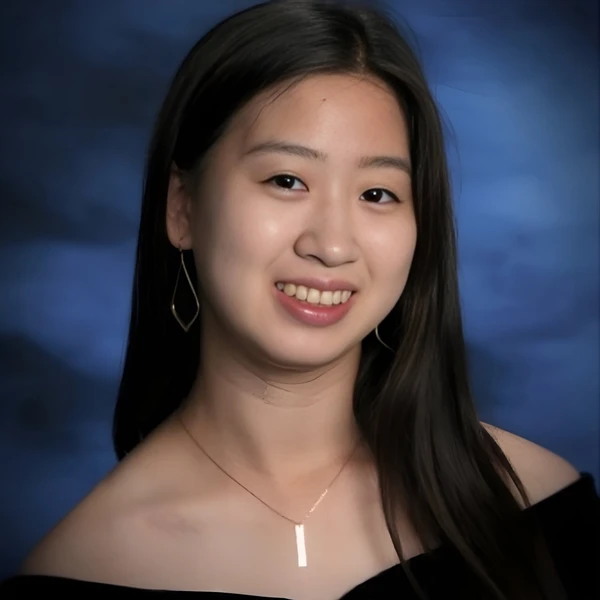
Hope Chon is a Digital Artist, Illustrator, and Graphic Designer, specializing in digital medias. Her art is based off her drive to create with purpose and intention. She has created designs that have turned into 10,000 prints across 19 countries, raising more than $50,000 for humanitarian aid. Not only does she create designs, but also turns vulnerabilities into connection through illustration. These illustrations have won in prestigious competitions, such as Scholastic National Art Awards and YoungArts Awards. As she continues her artistic journey, she wishes to continue using her creativity to help others. Visit me at hopechon.com
Education
Irvington High
High SchoolMiscellaneous
Desired degree level:
Bachelor's degree program
Majors of interest:
- Design and Applied Arts
Career
Dream career field:
Arts
Dream career goals:
Product Designer
Intern
River of Life Foundation2022 – Present4 years
Arts
Irvington High School
Music2022 – PresentIrvington High School
Music2022 – PresentRiver of Life Christian Church
DesignT-shirts2022 – PresentRiver of Life Foundation
DesignLogo design, Banner design, Flyer design, Product design, T-shirt design2022 – Present
Public services
Volunteering
Youth Group - ROLCC — Lifegroup Lead2021 – PresentVolunteering
River of Life Foundation — Student Lead2021 – 2023Volunteering
River of Life Foundation — Student Lead2021 – 2023
Future Interests
Advocacy
Volunteering
Williams Foundation Trailblazer Scholarship
One of the most meaningful self-initiated projects I have been involved in is co-founding the Study Buddy Program through the River of Life Foundation. The idea began with a simple observation. Each year, our organization hosted a laptop distribution event to provide devices to underserved families. While this addressed an important need, I noticed that many of the elementary school students receiving these laptops still struggled academically. Access to technology alone was not enough. Without guidance, structure, or support at home, the laptops often went underutilized as learning tools.
Recognizing this gap, I worked with two other student leaders to design and launch a free, weekly tutoring program aimed at supporting underserved K–5 students. Our goal was to “complete the circle” by pairing each child with a high school volunteer for one-on-one academic support. Within just a few weeks, the program grew to serve nearly 40 students, approximately 90% of whom came from Hispanic families. Many of these students faced overlapping challenges, including language barriers, limited internet access, and parents working long hours who were unable to provide consistent academic support.
As a student lead, I took on responsibilities that ranged from recruiting and coordinating volunteers to communicating with families and structuring weekly sessions. One of the biggest challenges we encountered was inconsistent attendance. Instead of viewing this as a lack of commitment, I wanted to understand the underlying causes. Through conversations with families, I learned that communication barriers and logistical challenges were the primary obstacles. In response, I helped implement several solutions: sending reminders in Spanish using translation tools, offering flexible scheduling, and assisting families with setting up Zoom and troubleshooting technical issues before sessions.
We also introduced a simple reward system to encourage consistency and engagement among younger students. Over time, attendance improved, and we began to see not only academic progress in areas such as reading and math, but also increased confidence and participation. For many students, this was their first experience receiving individualized academic attention, and for parents, it provided reassurance that their children had consistent support.
This project reshaped my understanding of innovation. I learned that innovation is not always about creating something entirely new, but about identifying overlooked needs and designing thoughtful, practical solutions. By recognizing the gap between access to technology and the ability to use it effectively, I was able to help create a program that directly addressed that disconnect.
More importantly, this experience reinforced my belief that meaningful impact begins with empathy. Listening to families, adapting to their needs, and continuously improving the program taught me how to approach problems with both compassion and intention. That mindset continues to guide my work today and shapes how I hope to design solutions in the future that are not only functional, but accessible and inclusive.
Resiliency Award
Pursuing higher education without relying on family or federal financial support has not been a sudden decision, but the result of understanding my family’s circumstances over time. Growing up, both of my parents have worked in the nonprofit sector, and my dad has served as a pastor for as long as I can remember. Their work has always been centered on serving others, often prioritizing the needs of the community over financial stability. In a high cost area like the Bay Area, supporting a family of six on nonprofit income has required constant sacrifice and careful planning.
As the oldest child, I became aware early on that college would not be something my family could easily fund. While my parents have always emphasized the importance of education, I understood that pursuing higher education would require me to take ownership of the financial responsibility. At the same time, our financial profile presents a challenge. Although our income is modest, factors such as assets on paper can limit eligibility for federal aid through FAFSA, creating a gap between what is expected and what is realistically available. This has led me to seek alternative ways to fund my education independently.
This reality has shaped my sense of responsibility in a very practical way. I have learned to think carefully about decisions, to plan ahead, and to take initiative rather than wait for circumstances to change. Whether it is applying for scholarships, seeking opportunities, or building experiences that align with my goals, I have approached each step with intention. I have also learned to be resourceful, making the most of what is available rather than focusing on what is not.
At the same time, this journey has strengthened my independence. I have had to advocate for myself, navigate complex systems like financial aid and scholarships, and make informed decisions about my future. It has not always been easy, but it has given me confidence in my ability to take ownership of my path.
Looking forward, this experience has also shaped my goals. I hope to pursue industrial design, focusing on creating solutions that are both practical and accessible. Having experienced financial limitations firsthand, I am especially motivated to design with affordability and accessibility in mind, ensuring that the solutions I create can reach those who need them most.
While the lack of traditional financial support presents challenges, it has also given me clarity. It has taught me resilience, discipline, and a strong sense of purpose. More importantly, it has reinforced my belief that education is not just an opportunity, but a responsibility, one that I am committed to pursuing with determination and intention.
Hines Scholarship
Going to college, to me, is not just about earning a degree. It is about stepping into a space where I can intentionally grow, challenge my thinking, and refine the way I understand the world and my role in it. It represents an opportunity to build on the experiences that have shaped me and to transform curiosity into meaningful impact.
Through my work with the River of Life Foundation, I have seen how access and opportunity can shape a person’s future. Whether I was helping distribute food at a pantry serving over 10,000 individuals each month or co-founding the Study Buddy Program to support underserved students, I learned that the difference between potential and opportunity often comes down to access. These experiences have grounded my desire to pursue a path where I can create solutions that are not only functional, but also deeply responsive to real human needs.
In college, I hope to study industrial design, where I can combine creativity with empathy to design solutions that improve everyday life. I am especially interested in human-centered design and how thoughtful design can address challenges that are often overlooked. My interest in psychology has taught me that people’s needs are complex and not always visible. I want to learn how to observe more carefully, ask better questions, and design with a deeper understanding of the people I am creating for.
College is also where I want to challenge myself through hands-on learning. I look forward to studio courses, collaborative projects, and opportunities to prototype and test ideas. I want to learn how to embrace failure as part of the creative process and to refine my ideas through iteration. Beyond the classroom, I hope to pursue internships and real-world experiences that allow me to apply what I learn in meaningful ways.
Equally important, I see college as a community. I want to be surrounded by people who think differently from me, who challenge my assumptions, and who inspire me to grow. I hope to continue serving through outreach or mentorship, using what I learn to give back to communities similar to the ones that have shaped me.
Ultimately, I am trying to become a designer who creates with intention. I want to design not just for efficiency or aesthetics, but for people, especially those whose needs are often overlooked. College is where I will develop the skills, perspective, and purpose to turn that goal into reality.
Michael Thomas Waples Memorial Scholarship
“Why do you look so depressed all the time? You should smile more.”
I heard this over and over growing up. I didn’t have the words to fight back, so I turned to the only voice I knew: a paper and pencil. Little did I know that this silent voice would carry me all the way to Carnegie Hall.
My drawing, titled “You’ll Look Prettier If…,” emerged from years of being told to look happier or change how I looked. I hesitated to show it because it revealed emotions I had long kept hidden. The piece depicts multiple hands applying makeup on a girl against her will. Silent yet defiant, I used art to resist the ideals that tried to define me.
When it came time to submit the piece to the Scholastic Art Awards, doubts crept in. My teacher gave it the lowest score in class, and my insecurities nearly convinced me not to submit it. Years of comparison made me believe my success would only be accidental. Impostor syndrome told me I did not belong among real artists.
Just as I was about to give up, my mom reminded me of why I created the piece. It was not for approval, but to tell a story that mattered to me. Her encouragement helped me silence my inner critic long enough to take the risk. I realized that art does not need permission to be meaningful. So I pressed submit. That small click started a butterfly effect.
That same piece went on to win a Scholastic National Gold Medal among more than 340,000 entries nationwide. I was honored at Carnegie Hall, a stage I never imagined my art would reach. When I first saw my name among national medalists, I refreshed the website three times in disbelief. That reaction revealed how much I had been undermining myself for years.
Winning did not just validate my work. It forced me to confront how little I believed in myself. For so long, I measured my art through others’ opinions, believing every critique was proof that I was not enough. But when strangers at exhibitions stopped to photograph my piece and share what it meant to them, I realized art is not about perfection. It is about impact. The same vulnerability that once felt like weakness became the bridge that connected me to others. People saw themselves in my work, and I began to see myself more clearly, too.
The experience helped me grow beyond technical skill. I learned to separate constructive criticism from self-doubt and recognized that mistakes do not diminish meaning. With every piece I created afterward, I became more willing to experiment and try again. Art became freeing. It freed me from the urge to please others and allowed me to embrace my work without questioning whether it was worthy.
Overcoming impostor syndrome did not happen overnight. Even after the award, there were days when I wondered if I truly deserved it. But gradually, I stopped needing proof. Confidence did not come from a medal or applause. It came from persistence in choosing to create.
Winning the National Gold Medal was not just an accomplishment. It was a turning point in how I saw myself. The award did not make me an artist. It simply revealed the one I had been all along.
My art was always enough. I just had to see it for myself.
Helping Hand Fund
“Success” used to look like proof. A medal. A title. A moment on stage. When my artwork was honored with a National Gold Medal, and I stood at Carnegie Hall, I thought I had finally arrived. But what stayed with me was not the applause. It was watching strangers stop in front of my piece, photograph it, and tell me, “I felt this too.”
That was when I realized success is not about recognition. It is about resonance.
For years, I measured myself through others’ opinions. A low classroom score nearly convinced me not to submit the artwork that had won the highest national honor. Impostor syndrome told me I did not belong among real artists. Pressing the "submit" button despite doubt changed me more than winning ever could. Success became less about being chosen and more about choosing to create anyway.
To me, success now means growth with purpose. It means turning vulnerability into connection. It means building something that improves someone else’s experience, even in small ways. When I co-founded a free tutoring program for elementary students from underserved communities, success was not in launching it. Success was staying when attendance dropped, adapting when language barriers arose, and watching students slowly gain confidence in reading and math. Success was consistency.
I carry that same definition into my future goals. I plan to pursue industrial design because it combines empathy with action. I am drawn to how thoughtful design can solve practical problems while honoring human needs. Whether adjusting equipment for different band members or transforming scrap materials into functional prototypes, I have learned that good design begins with listening. Success, for me, will be creating products and systems that make daily life better for people who may never know my name.
This scholarship would not simply fund my education. It would give me the freedom to focus more deeply on developing the skills that turn ideas into tested solutions. It would allow me to invest in research, prototyping, and hands-on studio experiences that strengthen my foundation. More importantly, it would affirm that the work I care about, thoughtful human-centered innovation, matters.
I do not define success as a final destination. I define it as a direction. It is waking up each day committed to learning, creating, and serving with integrity. It is continuing forward even when doubt lingers. It is using every opportunity to build something meaningful.
Standing at Carnegie Hall did not make me successful. Choosing to keep creating afterward did. If awarded this scholarship, I will carry that same mindset into my studies and career, pursuing impact over applause.
Isaac Yunhu Lee Memorial Arts Scholarship
“Why do you look so depressed all the time? You should smile more.”
I heard this over and over growing up. I didn’t have the words to fight back, so I turned to the only voice I knew: paper and pencil. Little did I know that this silent voice would carry me all the way to Carnegie Hall.
As a child with a speech development delay, I spent years in speech therapy, practicing sounds that others formed effortlessly. Speaking often felt slow and exposed. Drawing felt natural and direct. When I could not fully express how I felt, I could show it. Art became my first language.
My drawing titled “You’ll Look Prettier If…” emerged from years of being told to look happier or change how I looked. The piece depicts the imposition of beauty standards on teenage girls, with multiple hands applying makeup on a girl against her will. I hesitated to show this artwork because it revealed emotions I had kept hidden. Silent yet defiant, I used art to resist the ideals that tried to define me.
When it came time to submit the piece to the Scholastic Art Awards, doubts crept in. My teacher gave it the lowest score in the class, and my insecurities grew louder. Years of comparing myself to artists I believed were more talented convinced me that any success I had was accidental. Impostor syndrome told me my work did not belong in competitions and that I did not belong among real artists. I almost chose not to submit.
Just as I was about to give up, my mom reminded me why I created the piece. It was not for approval but to tell a story that mattered to me. She saw something in the work that I could not yet see in myself. Her encouragement helped me quiet my inner critic long enough to take the risk. I realized that art does not need permission to be meaningful. So I pressed submit.
That same piece went on to win a Scholastic National Gold Medal, the highest honor among more than 340,000 entries nationwide. I was honored at Carnegie Hall, a stage I never imagined my art would reach. When I first saw my name among the national medalists, I was in disbelief and refreshed the website three times. That reaction showed me how deeply I had been undermining myself.
Winning did more than validate my work. It forced me to confront how little I believed in myself. For years, I measured my art through other people’s opinions, from teachers to judges, treating every critique as proof that I was not enough. But when strangers at the California Center for the Arts and the Scholastic National Exhibition in New York stopped to photograph my piece and share what it meant to them, I understood that art was not about perfection. It was about impact. The vulnerability that once felt like weakness became the bridge that connected me to others.
Overcoming impostor syndrome did not happen overnight. Even after the award, there were days when I looked at the medal and wondered if I truly deserved it. But gradually, I stopped needing proof. Confidence grew from continuing to create even when doubts were still present.
Winning the National Gold Medal was not just an accomplishment. It was a turning point in how I saw myself. The award didn’t make me an artist; it simply revealed the one I had been all along.
My art was always enough. I just had to see it for myself.
Christal Carter Creative Arts Scholarship
I learned to draw before I learned to speak with confidence. As a child with a speech development delay, I spent years in speech therapy, practicing sounds and repeating words that others could say effortlessly. When my voice felt slow or stuck, my pencil moved freely. While I could not always explain what I felt, I could draw it. What began as a quiet substitute for speech grew into my strongest form of expression. Today, drawing and design are still the ways I think most clearly and contribute most meaningfully.
I work primarily in drawing and design, both digital and physical, because they let me turn observation and empathy into something tangible. I naturally notice small details in people and situations, such as tension in a posture or emotion behind a gesture. Creating allows me to translate those details into visual stories and useful solutions. Art is where feeling and problem solving meet. It is both expressive and functional, which is why it draws me toward design focused fields.
One of my most personal works explored the pressure on teenage girls to appear pleasant and acceptable at all times. The piece showed a girl surrounded by hands forcing makeup onto her face. I hesitated to share it because it revealed emotions I usually kept private. My teacher gave it the lowest score in the class, and for a moment I believed that confirmed my doubts. I almost chose not to submit it. Instead, I decided that honesty mattered more than approval. The piece later received national recognition and was exhibited in New York through the Scholastic Art and Writing Awards events connected with Carnegie Hall. What stayed with me most was not the award, but the viewers who said they felt seen through the work. My medium created connection where conversation alone might not have.
My art medium has also enhanced the lives of people around me through service. Through my nonprofit work, I grew from food pantry volunteer into a graphic design intern creating outreach and fundraising visuals. I designed a logo and campaign graphics that were printed on more than ten thousand shirts and tote bags, distributed across nineteen countries, and helped raise over fifty thousand dollars for charity programs. That experience reshaped how I see art. It is not only personal expression. It can be a shared banner that gathers people around a cause.
Design thinking also shaped how I helped launch a tutoring program for elementary students from under resourced backgrounds. I approached the program like a creative system. How can learning feel structured, welcoming, and consistent? We built a one on one tutoring model and clear materials so students could build skills and confidence. Watching the program grow showed me that thoughtful visuals and structure can make support more accessible.
At my core, I am a maker and a feeler. My medium gives those instincts direction. It allows me to turn empathy into form and ideas into action. Whether I am creating artwork that gives someone language for their feelings or design that supports a community program, I am using the same creative practice. That is why this medium matters to me. It is how I understand people and how I serve them.
Sunflowers of Hope Scholarship
Art became my voice long before I felt confident using my words. I had a significant speech development delay as a child and began speech therapy at age three. While other children spoke easily, I had to repeat sounds, practice mouth movements, and slow down each sentence. Communication felt like work. Even after years of progress, I still carried the feeling that expressing myself out loud required extra effort. Drawing, however, felt natural. With paper and pencil, I did not have to search for the right sounds. I could communicate fully, honestly, and without interruption.
Because speaking did not come easily, I learned to observe closely. I paid attention to facial expressions, posture, and small emotional shifts. Art gave me a way to process what I noticed and what I felt. When people told me to smile more or adjust how I presented myself, I rarely argued. Instead, I created. Sketching became both a coping tool and a thinking tool. It helped me translate frustration and confusion into something structured and visible. Art gave shape to emotions that were hard for me to explain out loud. In many ways, creating became my way of growing toward the light when words felt out of reach.
One of my most personal works grew out of this habit. I created a piece showing a girl surrounded by hands applying makeup against her will. It represented the pressure many teenage girls feel to appear pleasant and acceptable at all times. The drawing said what I struggled to say verbally. It expressed resistance, vulnerability, and quiet strength at the same time. Creating it felt relieving, but also risky. I was not sure I wanted others to see something so personal.
My uncertainty grew when my teacher gave the piece the lowest score in the class. That evaluation hit hard. It echoed a familiar fear that my voice and perspective were not strong enough. For a moment I considered not submitting it to competition at all. Art had always been my safe place, but now even that felt uncertain. Still, the act of creating had already helped me process my experience, and I realized the score did not erase the truth behind the work. I submitted it anyway.
That decision changed my trajectory. The piece later received national recognition and was exhibited in New York as part of the Scholastic Art and Writing Awards events connected with Carnegie Hall. More meaningful than the award itself were the conversations that followed. Viewers shared how the image reflected their own experiences and emotions. Some said it expressed something they had never been able to put into words. In those moments, I saw clearly that art was not only helping me cope. It was helping me connect.
Art continues to keep me motivated and engaged because it turns challenge into action. When something feels overwhelming, I make. I sketch, prototype, redesign, or build. The process gives me forward motion and focus. It reminds me that difficulty can become material for creation rather than a wall that stops progress. My name is Hope, and art is how I practice it. Like a sunflower that keeps turning toward the sun, I return to creating again and again, using it to orient myself toward growth, clarity, and purpose.
Sunshine Legall Scholarship
My academic and professional goals grow from one constant thread in my life: making things that serve people. I hope to study industrial design and related fields where creativity, empathy, and problem solving meet. I am drawn to design not just for how things look, but for how they work, how they feel in someone’s hands, and how they quietly improve daily life. Whether I am folding origami from scrap paper, repairing a broken strap with a keychain, or building a prototype, I am happiest when I am turning limitations into possibilities. In the future, I want to design products and systems that make learning, accessibility, and essential resources more reachable for overlooked communities.
My understanding of what meaningful impact looks like did not come from a classroom first. It came from serving through the River of Life Foundation. I began volunteering at the food pantry in middle school, sorting groceries and guiding families through distribution lines. Over time, my role expanded into graphic design work where I created outreach materials and campaign visuals. One of my designs was printed on more than ten thousand shirts and tote bags, distributed across nineteen countries, and helped raise over fifty thousand dollars for community charity and relief efforts. Through that experience, I saw how design can travel farther than I ever could on my own. A visual message can cross borders, mobilize support, and translate compassion into tangible resources. Creativity was no longer just personal expression. It became a tool for service.
One turning point came during planning for a laptop distribution event for low income students. A director asked if I could help tutor children who were facing housing instability. I agreed, and that small yes grew into helping launch the Study Buddy tutoring program. With two other student leaders, I helped build a weekly one on one tutoring system for elementary students. We paired each child with a high school mentor and focused on reading, math, and digital skills. Within weeks, dozens of students joined. We later grew into a stable program with structured curriculum, volunteer training, and family communication. Seeing students gain confidence and improve their reading levels showed me that access and guidance can change a child’s trajectory.
Leadership in this space was not easy for me. I am naturally quiet and often unsure of myself. I also serve as a long time student life group leader, guiding discussions and supporting younger students. Preparing lessons, listening to personal struggles, and leading conversations for large groups taught me that leadership is not about being the loudest voice. It is about being steady, prepared, and willing to care consistently. These roles stretched my communication skills and taught me how to design not just objects, but environments where people feel safe to grow.
My community work has shaped my goals by grounding them in real needs. I have seen how a well designed flyer can increase turnout for food distribution, how a thoughtfully structured tutoring session can rebuild a child’s confidence, and how a product level design can remove daily frustration. These experiences push me toward a career where design is not separate from service. I want to create solutions that are practical, affordable, and human centered.
I do not see my future work as separate from giving back. Service is not an activity I add on. It is the reason I design at all.
Al Luna Memorial Design Scholarship
“Why do you look so depressed all the time? You should smile more.” I heard this often growing up. I did not have the words to argue back, so I turned to the only voice I knew: paper and pencil. Drawing became my way to speak when I could not explain what I felt. I did not know then that this quiet form of expression would shape both who I am and what I hope to do with art.
One piece, titled “You’ll Look Prettier If…”, grew from years of being told to look happier or change how I appeared. The drawing shows multiple hands applying makeup to a girl against her will, capturing the pressure of beauty standards placed on teenage girls. I almost did not submit it to the Scholastic Art Awards. My teacher gave it the lowest score in class, and my self doubt was loud. I had convinced myself that my work did not belong beside that of “real” artists. When I was ready to give up, my mom reminded me that I created the piece to tell an honest story, not to earn approval. I submitted it anyway.
That decision changed me. The work received a National Gold Medal and was recognized at Carnegie Hall. Yet the award mattered less than what followed. At exhibitions, strangers stopped to photograph the piece and share what it meant to them. Some said they saw their own experiences in it. I realized then that art is not about perfection or praise. It is about connection. Vulnerability, which once felt like weakness, became the bridge between my work and others. I began to see myself not as someone trying to prove I was an artist, but as someone responsible for telling stories that matter.
Beyond competitions, I have used my creativity to serve real communities. Through an internship with the River of Life Foundation, I designed visual materials and products for fundraising and created the logo for a global Christmas gift program. My designs appeared on thousands of printed items that supported relief and education efforts. Seeing my work function in real settings showed me that art is not only expressive but practical. Visual storytelling can support causes, mobilize people, and deliver help. That experience strengthened my belief that creative work can produce tangible change.
As an artist, I am both a maker and an observer. I am drawn to emotions people tend to hide and systems people rarely question. I work across mediums because each medium reveals something different about a story. I intend to continue developing art that is expressive, interactive, and socially meaningful. I want to create work that invites reflection and emotional connection, whether through illustration, design, or digital media. I am especially interested in combining visual storytelling with human centered design so that my work communicates experiences that are often difficult to put into words.
Art first gave me a voice. Now I want to use it to amplify others. I am not creating to be seen as an artist. I am creating to make people feel seen.
Linda Kay Monroe Whelan Memorial Education Scholarship
My career goals are shaped by my service work with the River of Life Foundation, where I saw how thoughtful programs and practical tools can change a student’s trajectory. What began as volunteering in the food pantry in eighth grade grew into a graphic design internship and eventually into helping launch the Study Buddy tutoring program for underserved elementary students. Through these roles, I learned that meaningful impact does not come only from providing resources. It comes from designing systems of support that are accessible, adaptable, and centered on real people and real constraints.
While helping plan a laptop distribution event for low income students, I was asked whether I could also support students who needed academic help. That question led to the creation of the Study Buddy Program. With two other student leaders, I helped build a free weekly tutoring program that paired high school volunteers with elementary students for one on one support. Our goals were to strengthen academic skills, build digital confidence, and create consistent routines. As the program grew, I learned that building something useful requires constant adjustment, clear communication, and patience.
We quickly discovered barriers that were not obvious at the start. Some families faced language challenges, unstable internet access, and unpredictable schedules because parents worked long hours. Instead of assuming students were unmotivated, we adapted. We used translation tools to communicate with parents, sent reminders before each session, offered offline help when needed, and added simple reward systems to encourage consistency. Watching students improve through these adjustments showed me that thoughtful design decisions can directly affect outcomes. That experience strongly influenced the kind of work I want to pursue.
I plan to pursue a career in design that focuses on social impact, education access, and community centered solutions. My experience in both graphic design and program building showed me that design is not only about visuals. It is about structure, usability, and human behavior. Good design removes friction and opens doors. I am especially interested in industrial and product design that improves daily learning and living, particularly for students and families with limited resources.
My graphic design work for nonprofit outreach also shaped my goals. I created visual campaigns and materials used across large scale service efforts, and I saw how clear communication design helps people understand and access support. Creative skills are not separate from service. They amplify it. I want to continue developing design skills that make programs easier to use, information easier to understand, and support easier to reach.
Long term, I hope to work at the intersection of design, education, and nonprofit service. I want to build tools, products, and systems that are practical, dignified, and grounded in empathy. The Study Buddy Program taught me that real impact grows through listening, testing, and improving. My career goal is to design with that same mindset and create work that is not only creative and functional, but genuinely useful to the communities it serves.
Doan Foundation Arts Scholarship
“Why do you look so depressed all the time? You should smile more.”
I heard this over and over growing up. I didn’t have the words to push back, so I turned to the only voice I knew: paper and pencil. I never imagined that quiet voice would eventually carry my work to Carnegie Hall.
My drawing, titled “You’ll Look Prettier If…”, came from years of being told to look happier or change how I looked. I hesitated to show it because it revealed emotions I had kept hidden. The piece depicts beauty standards imposed on teenage girls, with multiple hands applying makeup on a girl against her will. Silent yet defiant, it was my way of resisting expectations that tried to define me. Art became the place where I could speak honestly without interruption.
When I prepared to submit the work to the Scholastic Art Awards, doubt nearly stopped me. My teacher gave it the lowest score in the class. Years of comparison convinced me that other artists were more talented and more deserving. I told myself that if I ever succeeded, it would only be by luck. Impostor syndrome was loud enough that I almost withdrew my submission entirely.
Just before I gave up, my mom reminded me why I created the piece. It was not for approval, but to tell a story that mattered to me. She believed the work had value even if I could not see it yet. Her encouragement helped me quiet my inner critic long enough to take the risk. I pressed submit, thinking it would likely lead nowhere. That small decision changed everything.
The piece went on to win a Scholastic National Gold Medal, selected from more than 340,000 entries nationwide. I was honored at Carnegie Hall, a stage I never imagined my art would reach. When I first saw my name on the winners list, I refreshed the page three times because I thought it had to be a mistake. That reaction showed me how deeply I had been undermining myself.
Recognition mattered, but the deeper impact came afterward. At exhibitions in California and New York, strangers stopped to photograph the piece and share their stories with me. Some described similar pressures about appearance and identity. I realized art is not about perfection. It is about impact and connection. The vulnerability I once tried to hide became the bridge that connected me to others. People saw themselves in my work, and that changed how I saw it too.
The experience grew me beyond technical skill. I learned to separate constructive criticism from self doubt and to see mistakes as part of meaning, not proof of failure. I became more willing to experiment and take creative risks. Art stopped feeling like a performance for approval and became a process of exploration. It felt freeing to create without constantly trying to prove my worth.
Overcoming impostor syndrome did not happen overnight. Even after the award, there were days I looked at the medal and wondered if I truly deserved it. But over time, I stopped needing constant proof. Confidence did not come from applause or titles. It came from continuing to create, even when uncertainty remained.
Winning the National Gold Medal was more than an achievement. It marked a turning point in how I understood myself. The award did not make me an artist. It revealed the artist I had already been becoming through persistence, honesty, and courage.
My art was always enough. I just had to learn to see it.
Palette & Purpose Scholarship
Someone who folds a thousand paper cranes does it not only for the wish but for the joy of creating. That is how I feel about art and design. I create because I am wired to make, test, and improve the world around me.
Growing up, I learned to solve problems with my hands. When my bag strap broke, I rebuilt it with a keychain. When I ran out of origami paper, I folded gum wrappers and receipts. Making taught me that design is not about perfect materials but about curiosity and intention. I enjoy the process of experimenting, adjusting, and trying again until something works better than before. That habit of building and rebuilding shapes how I approach both art and leadership.
That mindset later shaped my award winning artwork, including a piece confronting beauty standards that earned a Scholastic National Gold Medal and recognition at Carnegie Hall. The drawing came from years of being told to look happier or change how I appeared. Creating it felt vulnerable, but honest. More important than the award was what followed. Viewers told me they saw their own experiences reflected in the piece. That was when I understood art is not decoration. It is communication and connection.
My leadership grew from the same maker mindset. For six years I have served as a Lifegroup leader, guiding weekly discussions and mentoring younger students. I prepare lessons, lead conversations, and support students who are often quiet or overlooked. I learned that leadership is not about being the loudest voice but about building spaces where others feel safe to speak and grow. I also helped lead Study Buddy tutoring and food pantry service programs, where I coordinate volunteers and design outreach materials so families can access resources more easily.
As a graphic design intern for a nonprofit, I created visual campaigns and a logo printed on more than 10000 shirts and bags distributed across 19 countries. Seeing something I designed used in real communities showed me that creative work can travel, serve, and multiply impact far beyond a classroom or studio.
Books on design thinking and creative problem solving shaped my goals. They taught me that empathy comes before aesthetics and that the best solutions begin with listening and observation. Reading about designers who improve daily life, not just create beautiful objects, clarified my direction. I want to pursue industrial and social impact design that improves daily experiences for overlooked communities.
I want an arts career that serves, not just sells. Whether I design products, visuals, or community tools, I hope to create work that is accessible, dignified, and useful. I am, at my core, a maker and a feeler. My creativity is guided by observation and compassion, and I want to turn empathy into practical solutions through my work in the arts.
Julius Quentin Jackson Scholarship
“Why do you look so depressed all the time? You should smile more.”
I heard this often growing up. I didn’t have the words to push back, so I turned to paper and pencil. I never expected that quiet habit would carry my work to Carnegie Hall.
My drawing, “You’ll Look Prettier If…”, came from years of being told to look happier or change how I appeared. The piece shows multiple hands applying makeup to a girl against her will — a protest against imposed beauty standards. I almost didn’t share it because it revealed emotions I had kept hidden. Creating it felt risky, but honest. Through art, I found a way to speak when I couldn’t explain myself out loud.
When I prepared to submit the piece to the Scholastic Art Awards, my confidence collapsed. My teacher gave it the lowest score in the class. Years of comparison convinced me I didn’t belong among “real” artists. Impostor syndrome told me that if I succeeded, it would only be by accident. I nearly withdrew my submission.
My mom reminded me why I made the piece — not for approval, but to tell the truth. She believed in the work before I did. Trusting her encouragement, I submitted it. That small decision changed everything.
The artwork went on to win a Scholastic National Gold Medal, selected from over 340,000 entries nationwide, and I was honored at Carnegie Hall. When I saw my name on the winners list, I refreshed the page three times because I couldn’t believe it. The moment revealed how deeply I had underestimated myself.
At exhibitions in California and New York, strangers shared how the piece reflected their experiences. I realized art is not about perfection — it is about connection and impact. Vulnerability, which once felt like weakness, became a bridge between my story and others’.
The experience reshaped how I approach art and growth. I learned to separate critique from self-worth and keep creating even when doubt remains. Confidence is no longer tied to medals or praise, but to persistence and honesty in my work.
I hope to study design and art in college, but finances are a real challenge. My parents work in nonprofit service, and we are raising four children in the Bay Area, where costs are high. Paying for college, especially an art and design education with materials and studio fees, would place significant strain on my family.
This scholarship would make my education more attainable. It would ease financial pressure and allow me to focus on my studies and creative work. With this support, I can continue using art to advocate, encourage, and connect.