Age
18
Gender
Female
Ethnicity
Middle Eastern
Religion
Christian
Church
Baptist
LOW INCOME STUDENT
Yes
Hina Khan
1x
Finalist
Hina Khan
1x
FinalistBio
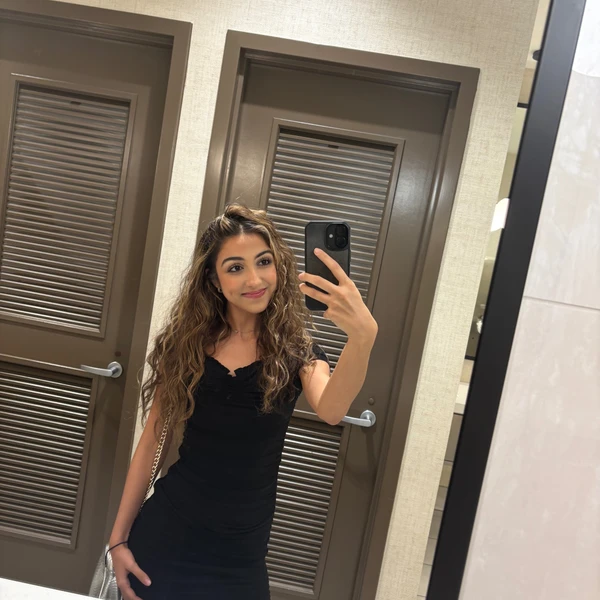
Hi! My name is Hina, and I will be attending Texas Tech University in the fall for Pre-Nursing. I have been enrolled in a dual credit college program throughout high school, paying my tuition independently, and will graduate high school as a college sophomore. I am committed to a future in healthcare and giving back to my community. My career goal is to be an ER nurse. Thank you for supporting my journey!
Education
Lone Star College System
Associate's degree programMinors:
- Biology, General
George Ranch High School
High SchoolMiscellaneous
Desired degree level:
Bachelor's degree program
Majors of interest:
- Registered Nursing, Nursing Administration, Nursing Research and Clinical Nursing
Test scores:
1310
SAT
Career
Dream career field:
Hospital & Health Care
Dream career goals:
My long-term career goal is to become a registered nurse, gain clinical experience, and work as a travel nurse. After building hands-on experience, I plan to return to school to become a nurse practitioner, allowing me to provide advanced, long-term care to patients.
Sports
Cross-Country Running
Junior Varsity2022 – 20231 year
God Hearted Girls Scholarship
If you met me a few years ago, you would have met a girl who didn’t know who she was. I cared more about being accepted than being real. I let people mispronounce my name, change my interests, and shape how I acted because I thought being liked meant being loved. Deep down, I felt lost, and no matter how much I tried to fit in, it never filled that emptiness.
I went through a lot growing up—constant moving, instability, and experiences that no child should have to carry. There were moments in my life where I felt fear in ways I couldn’t even explain, and for a long time, I didn’t understand why those things happened to me. I tried to ignore the pain, distract myself, and surround myself with the wrong people just to feel something different. Instead of healing, I was running.
But everything began to change when I hit a breaking point. I saw the disappointment in my dad’s eyes, and it forced me to look at myself honestly for the first time. I realized I was becoming someone I didn’t even recognize. That moment didn’t just hurt—it woke me up.
Around that time, I began to truly turn to Jesus, not just in words, but in my heart. I stopped seeing God as distant and started understanding that He had been with me the entire time—even in the moments I felt completely alone. The pain I went through didn’t disappear overnight, but my perspective changed. I began to see that my struggles were shaping me, not destroying me.
Choosing to get baptized was one of the most important decisions of my life. It wasn’t just a religious act—it was a commitment. It was me letting go of the person I used to be and stepping into the person God created me to become. In that moment, I felt peace in a way I never had before. It was like everything I had been carrying finally had somewhere to go. I knew God was with me, and I wasn’t fighting alone anymore.
Since then, my faith has become the foundation of my life. It helped me rebuild my discipline, raise my grades, and find purpose again. I went from losing myself to finally understanding who I am—not based on other people, but based on God’s truth. I am stronger, more grounded, and no longer afraid to stand in my identity.
As I continue my educational journey and pursue a career in medicine, I plan to carry my faith with me in everything I do. I want to be a source of comfort, especially for children and mothers who may feel scared or alone. I know what it feels like to need someone to show up for you, and I want to be that person for others. My faith will guide how I treat people—with compassion, patience, and genuine love.
My relationship with Jesus didn’t just change my faith—it changed my life. It showed me that even in my darkest moments, I was never abandoned. God was always with me, protecting me, guiding me, and preparing me for something greater. Now, I walk forward not in fear, but in purpose, knowing that everything I’ve been through has meaning—and that I am called to use my story to bring light into the lives of others.
Tebra Laney Hopson All Is Well Scholarship
At eighteen years old, I am pursuing a degree in nursing because helping people during the most vulnerable moments of their lives has always felt like my purpose. My goal is to become an emergency room nurse. I am drawn to the fast-paced, high-pressure environment of the ER because it requires quick thinking, resilience, and compassion. I work well under pressure, and when people are facing some of the hardest moments of their lives, I want to be someone who can help them through it.
My path to college has not been traditional or easy. I am financially independent and do not have parents supporting me. Since turning eighteen, I have been responsible for sustaining my own life—working, managing my responsibilities, and continuing my education at the same time. Those experiences have forced me to grow up quickly, but they have also made me stronger and more determined. When you learn how to survive on your own at a young age, you develop resilience that carries into every part of your life.
Because of the hardships I’ve faced, I have developed a deep sense of empathy for people who are struggling. I know what it feels like to be scared, uncertain, and overwhelmed. That perspective is exactly why I want to work in emergency medicine. Patients in the ER often arrive on the worst day of their lives—injured, frightened, or unsure what will happen next. In those moments, a nurse can be more than just a medical professional. They can be a steady presence, someone who stays calm, thinks clearly, and shows compassion when people need it most.
I am not easily overwhelmed by difficult situations. In fact, I tend to perform better in fast-paced environments where every decision matters. I am able to stay focused and composed while still caring deeply about the people I am helping. For me, nursing is not just a career choice—it is a commitment to standing beside people when they need help the most.
Although I was not personally a student of Tebra Laney Hopson, the values she represented as an educator resonate strongly with me. Her dedication to transforming lives through learning and her belief in the potential of every student reflect the kind of impact I hope to have in my own career. Just as she invested in her students and saw the best in them, I want to bring that same belief and compassion into healthcare. Every patient deserves to feel seen, respected, and cared for.
Pursuing a nursing degree will allow me to turn my resilience and compassion into meaningful action. I want to build a career where I can make a real difference—helping people survive medical emergencies, comforting families during moments of fear, and providing care when it matters most.
My experiences have taught me independence, strength, and empathy. Those qualities will guide me through nursing school and into the emergency room, where I hope to spend my career helping others in the moments they need it most.
Autumn Davis Memorial Scholarship
For as long as I can remember, my mind has never been quiet. I grew up struggling with obsessive-compulsive disorder, though for most of my childhood I didn’t have the words to describe what I was experiencing. What I did know was that my thoughts felt louder than everyone else’s. Simple things other people did without thinking—leaving the house, touching objects, trusting that something was “clean enough,” or that a thought could simply pass—were daily battles for me.
My parents never believed in medication or psychiatric care. Mental health in my household was something you were expected to ignore, suppress, or pray away. As a child, that left me feeling confused and alone with a condition I could not control. When my compulsions became overwhelming, I was often met with frustration or criticism rather than understanding. Over time, the verbal abuse I experienced at home made me believe that my struggles were somehow a personal failure rather than a medical condition.
At eighteen, I made the difficult decision to move out and support myself. It was not a dramatic moment of freedom—it was survival. Without health insurance and limited financial resources, seeking professional psychiatric care was still out of reach. Even today, I have never had the opportunity to receive consistent mental health treatment. I continue to navigate intrusive thoughts, anxiety, and the exhausting mental rituals that come with OCD largely on my own.
Yet, living with untreated mental illness has shaped me in ways that I believe will ultimately allow me to help others. Struggling so deeply has made me profoundly empathetic. I know what it feels like to wake up every day carrying something invisible that affects every decision you make. I know how isolating it can be when the people around you do not understand, or when access to care feels impossible.
These experiences are the reason I am pursuing a career in healthcare. I will be attending Texas Tech University in the fall of 2026, and I am admitted for pre-nursing. My official major is going to be biology, and I plan to become an emergency room nurse. My goal is not only to treat patients but to advocate for those who feel overlooked, misunderstood, or unable to access help. Too many people grow up in environments where mental illness is dismissed, stigmatized, or untreated simply because of financial barriers or cultural beliefs. I want to be the kind of professional who meets people where they are—without judgment and with genuine compassion.
Mental health care should never be a privilege reserved only for those who can afford it or whose families believe in it. My experiences have shown me how damaging that gap can be, but they have also given me a sense of purpose. I want to contribute to a future where young people struggling with conditions like OCD are believed, supported, and given the tools they need to heal.
My journey has not been easy, and in many ways, it is still unfolding. But the hardships I have faced have strengthened my resolve. They have taught me resilience, empathy, and the importance of advocating for others who feel unheard. Through a career in mental health and healthcare, I hope to transform the pain I have experienced into something meaningful: the ability to help others find understanding, support, and hope when they need it most.
Raise Me Up to DO GOOD Scholarship
Growing up, my childhood was defined by movement and contrast. I was born in Alabama, then moved to Kentucky, back to Alabama, then to Nebraska after my dad gained custody. Later we moved to North Carolina, and eventually I found my forever home in Texas. Each move meant starting over—new schools, new environments, and constantly trying to find stability. Over time, I learned how to adapt quickly, but the instability also shaped the way I saw family and security.
My parents’ divorce created two completely different worlds for me. My dad was wealthy, and because of that he was able to provide materially for our large family of six children. On the outside, it looked like a better situation. We had more financial stability and resources, and as a child, I believed that meant he was the better parent. When you are young, it’s easy to think that the person who can give you more things must also be the person who cares more.
My mom, on the other hand, didn’t have the same financial power. She was often portrayed to me as irresponsible or unstable during the custody battle, and for years I believed that narrative because it was the only version of the story I heard. But despite everything said about her, my mom meant the world to me. She loved me deeply and tried her best to stay connected to me even when circumstances made it difficult.
Because of the custody situation and the distance created by all the moves, I went years without seeing my mom in person. Most of our relationship existed through phone calls. Sometimes she would come visit me in Texas, but those visits were rare and incredibly meaningful. As I got older, I began to realize that love and effort are not measured by money. The person who had fewer resources was often the one who fought the hardest just to stay present in my life.
With age came perspective. When I became old enough to see legal paperwork and reflect on my experiences, I started recognizing patterns of manipulation and control that I had not understood as a child. The same tactics used during my parents’ divorce to discredit my mom were the same tactics that were later used on me. Realizing that was painful, but it allowed me to see the truth about my upbringing and the strength it took for my mom to endure everything she did.
When I turned 18, the situation at home became too difficult to continue living in, and I made the decision to move out and start building my own life. It was a challenging transition, but it also taught me independence and resilience. I learned how to take care of myself and push forward despite difficult circumstances.
These experiences shaped the person I am today and inspired my goal of becoming an emergency room nurse. The ER is a place where people arrive during some of the most vulnerable and frightening moments of their lives. Many patients come in scared, in pain, or feeling alone. Because of my own experiences with hardship and emotional struggle, I want to be someone who provides not just medical care but also empathy and understanding.
Growing up in a single-parent household and navigating two very different worlds taught me resilience, compassion, and strength. My past was not easy, but it gave me a deeper understanding of people and their struggles. In the future, I hope to use that understanding to help others and make a meaningful difference in the lives of patients who need support the most.