Hobbies and interests
Acting And Theater
Child Development
Youth Group
Crossfit
Church
Reading
Adult Fiction
Academic
I read books multiple times per week
Heather Cox
1x
FinalistHeather Cox
1x
FinalistBio
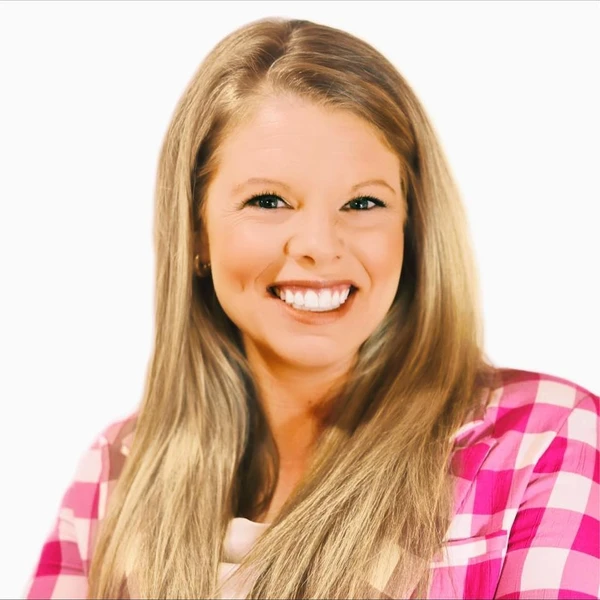
Heather M. Cox is a dedicated educator, community leader, and advocate for children and families. With over 16 years of experience in education—including roles as a teacher, administrator, and special education director—she brings a strong commitment to equity, leadership, and lifelong learning. Heather holds a Bachelor's in Speech Communications with minors in English and Physical Education, and a Master's in Education Administration. Outside of her professional work, she is actively involved in her church and community, volunteers with youth sports, and hosts a faith-based podcast titled In the Midst. Heather’s passion for making a difference is rooted in her faith, family, and calling to serve others with purpose and heart.
Education
Southern Arkansas University Main Campus
Master's degree programMajors:
- Educational Administration and Supervision
Southern Arkansas University Main Campus
Master's degree programMajors:
- Education, Other
Mississippi Valley State University
Master's degree programMajors:
- Special Education and Teaching
University of Arkansas at Monticello
Bachelor's degree programMajors:
- Communication, General
Career
Dream career field:
Education
Dream career goals:
Adminstration
Public School2020 – Present6 years
Sports
Tennis
Varsity2003 – 20074 years
Research
Education, General
Solution Tree, Southern Arkansas University — Student2017 – 2020
Arts
SMART - Southeast Arkansas Theatre
Theatre2017 – Present
Public services
Volunteering
The Call — The Call Mall Cordinator2024 – Present
Bill E. Wood Memorial Scholarship
Leading from the Middle: The Quiet Influence That Changed Everything
Some of the most profound influences in life don’t come from people in the spotlight, they come from those who faithfully serve without applause. For me, that person was my mother. Though she never wore a uniform or held an official title in civil service, she lived a life of ministry quietly, consistently, and with great love. She taught me that true leadership is not about position; it’s about purpose. And that purpose is always to serve others first.
Growing up, I watched my mom pour herself into people. Whether it was through church ministry, community service, or simply opening our home to someone in need, she modeled what it meant to show up, even when it was hard, even when no one asked. That same spirit of servant-leadership shaped my path into education, particularly special education. In many ways, I’ve never stopped following her example.
One of the most pivotal moments in my career happened when no one asked me to do anything, but everything in me knew I had to act. It was the year I met a sixth-grade student who had already been written off by many of his former teachers. “Good luck,” they said, “Worst year ever.” But I didn’t see a behavior problem. I saw a child who was sinking.
It didn’t take long to uncover the root, he couldn’t read. Not even basic sight words. But instead of waiting for the system to catch up, I stepped in. I stayed after school, gave up lunch breaks, and studied with him at home. When I lost a baby and had to undergo emergency surgery, my husband, Coach Cox, picked him up and brought him to our home so he wouldn’t fall behind. No one required that of me. No one even suggested it. But leadership doesn’t wait for an invitation, it answers a need.
By the end of the year, he had gained over three grade levels in reading. He was tested and qualified for special education services, finally receiving the support he had always needed. That wasn’t just academic growth. That was redemption. And it happened because someone stepped up without being asked.
Now, as a Special Education Director/LEA, I carry that same mindset into every meeting, every decision, and every training. Leadership for me isn’t about being the loudest voice in the room, it’s about making sure the quietest voice isn’t overlooked. It’s about pushing paperwork when no one’s watching, advocating for families who feel unheard, and saying “yes” to the hard things because it’s the right thing to do.
My mother’s life in ministry showed me that serving is leading, and that you don’t have to be asked to step up, you just have to care enough to act. Her legacy continues to echo through every student I fight for, every teacher I support, and every system I work to improve. And when I look back, I realize that my ambition was never to climb a ladder. It was, and always will be, to stand in the gap because someone once did that for me.
RonranGlee Special Needs Teacher Literary Scholarship
Seeing Their Own Light: Why I Am Passionate About Special Education
“I have learned that the purpose of teaching is to bring the student to his or her sense of his or her own presence.” — Professor Harold Bloom
To bring a student to their “sense of presence” is to guide them toward recognizing their value their unique light, voice, and identity in this world. It means helping them discover they are not defined by their diagnosis, their behaviors, or their struggles, but by their potential. This, to me, is the very heart of special education.
I’ve spent sixteen years in education, ten of those directly teaching special education across all grade levels. Today, I serve as a Special Education Director/LEA, but I will always be a teacher at heart. No matter my title, my mission is the same: to ensure that students with exceptionalities are not only supported, but seen. Their journey may look different, but their destination is just as worthy.
One student who changed my life forever was ZW. By the time he reached me in sixth grade, his reputation preceded him. Teachers from grades 3 through 5 warned me with a tired chuckle and a shrug: “Good luck. Worst year ever.” But I wasn’t interested in labels. I was interested in him. It didn’t take long to see that his behavior spiraled during reading and spelling. After a few weeks, I realized the truth, he couldn’t read. Not even sight words.
He wasn’t defiant. He was drowning. ZW became my kid. I didn’t see him as a case file or a problem, I saw him as a person. I stayed after school, worked with him at lunch, and even when I lost a baby and had to have emergency surgery, my husband, Coach Cox, would go pick ZW up to keep him on track with me at home. By the end of that year, he had gained over three grade levels in reading. We fought hard to get him properly evaluated and tested for special education services. Despite every delay and obstacle, I made sure he started seventh grade with the plan and support he had always deserved.
When ZW walked across the stage at his high school graduation this year, I wept. Because I remembered when everyone had counted him out and he made it anyway. He discovered not just the ability to read, but the ability to believe in himself. That is what Professor Bloom meant by a “sense of presence.”
I am passionate about special education because it’s where real transformation happens. We get to walk with students who often feel forgotten or misunderstood and help them reclaim their confidence. We build bridges over the gaps they didn’t create but are forced to cross. Our job is not to fix students, it’s to reveal the brilliance that’s already there and help them see it too.
My mission is to cultivate spaces where students feel safe to be themselves and empowered to grow. I train teams to look beyond behaviors and dig for root causes. I support parents who’ve spent years fighting to be heard. I build systems that prioritize compliance and compassion. And I make sure every student has someone who refuses to give up on them.
Because sometimes, that one person makes all the difference.
A (Brief) Fairy Tale: Mrs. Cox and the Missing Light
Once upon a time, in a busy kingdom filled with classrooms and commotion, lived a kind-hearted teacher named Mrs. Cox. She had a gift—not of magic, but of seeing children for who they really were, not who others said they were. Her greatest joy was helping those who had been overlooked find their light again.
One day, a boy named ZW arrived in her class. The scrolls from past teachers said, “Good luck. Worst year ever.” But Mrs. Cox wasn’t afraid. She listened, watched, and soon discovered his fear of reading was the dragon he fought daily.
Determined to help, she stayed after hours, brought him meals of words and encouragement, and enlisted the help of her brave husband, Coach Cox, to carry him through the hardest days. Even when a great sorrow struck their home, Mrs. Cox didn’t give up. She returned stronger, filled with purpose.
In time, ZW’s fear faded. His voice grew louder. He began to believe he was more than what the scrolls had said. When he crossed the stage years later, the kingdom roared with joy—for the boy who had found his light and the teacher who had never stopped believing he would.
And Mrs. Cox? She didn’t ride off into the sunset. She returned to the classroom, and then to leadership, to fight for more children just like ZW. Because she knew: once a student sees their presence, they never forget how to shine.
B.R.I.G.H.T (Be.Radiant.Ignite.Growth.Heroic.Teaching) Scholarship
Education isn’t just about lesson plans, assessments, and standards. For me, it has always been about the heart about seeing every child not for their labels, test scores, or reputations, but for who they really are. That belief was never more tested or more validated than the year I met ZW.
He was in sixth grade, and I had just taken on a new role. I asked his previous teachers what I needed to know to help close academic gaps for a few specific students. Their response? "Good luck. Worst year ever." They had already written him off. And I get it, teaching is exhausting, and when behaviors are loud, learning can get lost. But from the moment ZW walked into my classroom, I made a decision: whatever his story was, he would get a fresh slate with me.
ZW came in ready to live up to his reputation. He challenged everything. His behaviors flared daily, especially during phonics, spelling, and reading time. After three weeks of consistent patterns, it finally clicked: he couldn’t read. Not even sight words. My heart sank. How did a child make it to sixth grade without anyone noticing he couldn’t read?
From that point on, he became my kid. Not a project. Not a statistic. My kid. I carved out timeafter school, during lunch, anytime I could find to teach him what he had missed. My husband, Coach Cox, even picked him up to bring him to our house to study when I had to have emergency surgery and lost a baby. Through grief, chaos, and life, ZW became my mission. And by the end of the year, we had climbed 3.5 grade levels in reading. He was finally tested for special education and given a learning plan tailored to his needs.
That moment he walked across the stage at graduation this year? That was it. That was why I do this. I’ve had the honor of teaching many incredible students over my 16 years in education, but ZW is a reminder that one teacher, one relationship, one yes, even when the world has said no, can change a child’s entire trajectory.
When I think about what I would change in education, my answer is simple: the system needs to see kids again. We need to be more relational, more curious, and less quick to label. Far too often, students fall through the cracks because we get overwhelmed by behaviors and lose sight of the root. I’ve been there myself. But if we spent more time building trust, learning about a student’s home life, and figuring out why a student is acting out—rather than what they’re doing wrong, we’d find ourselves in classrooms full of kids who feel safe, seen, and valued. Learning will come. But it starts with belonging.
I would also change the rigidity in how we identify and serve students with disabilities. The hoops we make teachers and parents jump through to get a child the services they need are disheartening. When I was out for two months following surgery, I had to fight to catch up on documentation just to get ZW tested. I was told, “No summer testing.” But I knew the law, and I knew the child. So I made a plan with his parent and personally picked him up to get him to testing. He didn’t need another delay; he needed a diagnosis and a plan. And he got one because someone was willing to push past red tape and put the child first. That’s what education should look like. That’s the change I pray for.
When I reflect on who had the most profound impact on my decision to become an educator, it’s hands down my mom. She’s the reason I love Jesus, people, and the power of a good story. She taught me how to see people, really see them, and love them where they are. My mom gave her life to ministry and service, and I watched her pour herself into others with grace and grit. Her influence shaped me not just as an educator, but as a person.
I didn’t always know I’d be in education. I have a Bachelor’s degree in Speech Communications with minors in English and Physical Education, and I later earned a Master’s in Educational Administration. But as I began working with kids, especially those who were misunderstood or underestimated, I knew I was exactly where I was meant to be. My career has taken me from the classroom to administration, and most recently into a new role as a Special Education Director. Through every transition, my heart for students like ZW has remained the same.
Every child deserves a champion. Someone who refuses to give up, who challenges the system when needed, and who loves them enough to fight for their future. I don’t claim to be perfect but I do promise to always be that someone. Whether I’m leading a school, mentoring new teachers, or hosting my podcast “In the Midst,” my mission is clear: to love well, lead strong, and make sure no child goes unseen.
I’m honored to be considered for this scholarship, not just for the financial support, but because I believe the more we invest in leaders who see kids, the ones who go beyond the surface, the closer we get to transforming education for the better.
Reimagining Education Scholarship
The Heart of Humanity: A Class for Every Student, Every Year
If I could create one required class for every student in grades K-12, it would be called The Heart of Humanity. This course would focus on character development, emotional intelligence, leadership, and cultural awareness. It would be a class that teaches students how to be kind, confident, and resilient people because while academics matter, it’s who we become that shapes the world around us.
With 16 years of experience in education, ten as a classroom teacher and six in administration, I’ve seen firsthand that academic knowledge alone isn’t enough. I’ve watched brilliant students struggle socially and emotionally, and I’ve seen others thrive simply because they had the confidence, empathy, and support they needed to rise. The truth is, some of the most valuable lessons in life don’t come from a textbook. They come from learning how to communicate, manage emotions, handle conflict, and lead with integrity.
The Heart of Humanity would be designed to grow with students. In elementary grades, the class would focus on building self-awareness, kindness, teamwork, and celebrating differences. Students would learn how to identify emotions, communicate needs, and treat others with respect. In middle school, we would introduce lessons on empathy, leadership, responsible decision-making, and service to others. By high school, students would dive deeper into self-reflection, communication skills, advocacy, and real-world community impact projects. Every lesson would connect to both personal development and social responsibility.
This course would be rooted in action, not just conversation. Students would engage in journaling, role-playing, collaborative problem-solving, and service learning. They would be challenged to reflect on their beliefs, understand different perspectives, and take ownership of their behavior and impact. Through these practices, students would not only become more emotionally equipped, but also better prepared to lead and serve in their communities.
I believe the impact would be transformational. Students would be more prepared to navigate life’s challenges, build healthy relationships, and contribute meaningfully to the world around them. They would graduate with more than a diploma, they would carry a strong sense of identity, compassion, and purpose.
As an educator, mother, and community leader, I believe we have a responsibility to develop the whole child. In today’s world, we need more than sharp minds, we need kind hearts. The Heart of Humanity would be one step toward creating that balance in every school, for every child.
Thank you for considering my application and for supporting the future of education.