Hobbies and interests
3D Modeling
Aerospace
Walking
Astrophysics
Badminton
Cars and Automotive Engineering
Coding And Computer Science
Community Service And Volunteering
Driving
Engineering
Mathematics
Volunteering
Physics
Motorsports
Nails
Reading
Academic
Classics
Humor
Education
Cookbooks
How-To
Young Adult
I read books daily
FIRST GENERATION STUDENT
Yes
Haylen Phung
1x
FinalistHaylen Phung
1x
FinalistBio
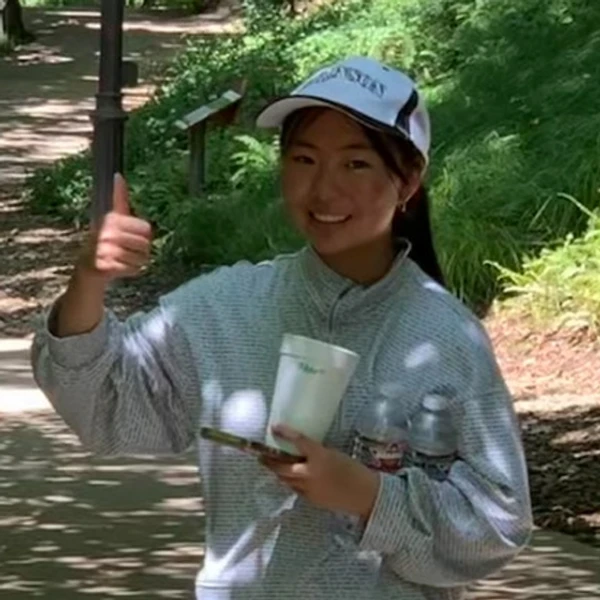
I am a proud Asian woman pursuing a Bachelor’s degree in Mechanical Engineering, passionate about vehicles, devices, and the mechanics that drive innovation. My goal is to take part in developing groundbreaking mechanical innovations that push technological boundaries, shape emerging industries, and set new standards across advanced engineering and high-impact technology sectors. With strong technical skills, hands-on experience, and a relentless curiosity, I am committed to solving real-world problems and advancing mechanical design for the future.
Education
Rose-Hulman Institute of Technology
Bachelor's degree programMajors:
- Mechanical Engineering
Minors:
- Aerospace, Aeronautical, and Astronautical/Space Engineering
Bentonville High School
High SchoolMiscellaneous
Desired degree level:
Bachelor's degree program
Graduate schools of interest:
Transfer schools of interest:
Majors of interest:
- Aerospace, Aeronautical, and Astronautical/Space Engineering
- Mechanical Engineering
Career
Dream career field:
Mechanical or Industrial Engineering
Dream career goals:
My long-term goal is to contribute to groundbreaking advancements in mechanical engineering, taking part in projects that push technological boundaries and shape emerging industries. I aim to apply my expertise to develop innovative systems and machinery that set new standards in performance, safety, and efficiency, while serving as a role model for women and underrepresented groups in STEM.
Nail Technician
T's Nail and Spa2023 – Present3 years
Research
Psychology, General
International Baccalaureate — Researcher2022 – 2024Philosophy
International Baccalaureate — Researcher2023 – 2024Religion/Religious Studies
International Baccalaureate — Researcher2023 – 2024Applied Mathematics
International Baccalaureate — Researcher2023 – 2024Psychology, General
International Baccalaureate — Researcher2023 – 2024Classics and Classical Languages, Literatures, and Linguistics, General
International Baccalaureate — Researcher2022 – 2023Physics
International Baccalaureate — Researcher2023 – 2024
Public services
Volunteering
Bentonville Animal Shelter — Teen Volunteer2021 – 2021Volunteering
Bentonville Public Library — Math Mentor2023 – 2024Volunteering
Bentonville Public Library — Teen Volunteer2018 – 2024Volunteering
Bentonville Public Library — Teen Advisory Board Leadership2022 – 2024
Future Interests
Advocacy
Volunteering
Philanthropy
No Essay Scholarship by Sallie
Bick First Generation Scholarship
Being a first-generation student means stepping into spaces my family has never entered and carrying their hopes with me. At home, no one explained FAFSA, or credit hours. I figured it out through trial and error. Sometimes, I stared at forms I didn’t understand or compared myself to classmates who seemed to know the “rules.” Over time, those experiences stopped feeling like barriers and became proof I could find my way forward. Being first means more than breaking ground for myself; it means showing my siblings these doors can open for us, too.
My first trimester of college was the hardest time of my life. Eight hours from home, I faced the toughest classes I’d ever taken. It wasn’t the subject — it was the pace, the independence, the pressure of being first. In lecture halls full of students who seemed to belong, I felt isolated, carrying the weight of figuring everything out in a world my family had never entered. Still, that struggle transformed me. It forced me to push through uncertainty, build discipline without guidance, and adapt when I felt out of place. It taught me that growth is never comfortable, but in discomfort, you find your strength, your worth, and the drive to become better each day. Setbacks stopped feeling like failures and became challenges to grow stronger, sharper, and more resilient. That mindset now drives my pursuit of mechanical engineering.
In high school, I pursued community-college calculus outside of a full AP and IB course load. In college, I advanced to Differential Equations as well as a Python programming elective. My program required its own physics sequence, so I completed Physics I-III, strengthening my foundation while applying concepts to engineering-based problem solving. For me, math, physics, and computer science are no longer just classes but languages I use to understand and shape the world.
What drives me is the belief that engineering should do more than solve equations; it should solve problems that matter to people. My dream is to design systems that not only optimize performance but also expand who can benefit from them, whether through affordability, adaptability, or creative application. As a first-generation student, I know what it feels like to stand on the outside looking in.
This scholarship would not just ease financial pressure; it would open doors. It would allow me to dedicate more time to research, design projects, and internships instead of work hours. Most importantly, it would give me the security to focus fully on my studies and pursue opportunities that prepare me to contribute meaningfully.
To me, being a first-generation student means courage, persistence, and hope. It means knowing that each challenge is not just an obstacle but an opportunity to discover more about who I am and who I can become. With the support of this scholarship, I will continue pursuing mechanical engineering with purpose, determined to use education not just to change my own life, but to open doors for others as well.
Qwik Card Scholarship
Building credit early is important to me because I’ve seen firsthand how a lack of credit history can limit opportunities. One of my closest friends wanted to move off campus to save money by renting an apartment with roommates, which would have cut her housing costs almost in half. She had a steady part-time job and a solid budget, but her application was denied because she didn’t have a high enough credit score. Watching her frustration taught me a valuable lesson: even when you’re financially responsible, without established credit, doors can remain closed. That moment made me realize that building credit isn’t just about numbers, it’s about independence, opportunity, and freedom. For me, starting to build credit now means ensuring that when opportunities come, I’m not held back by something I could have prepared for earlier. Credit can either delay your progress or accelerate it, and by being intentional now, I’m laying the foundation for long-term stability and confidence.
I’ve always been strict with money, sometimes to a fault. My parents are extremely frugal, and I picked up many of their habits. While this helped me avoid wasteful spending, it also meant I sometimes got caught “in the moment” and spent too much, or I went to the other extreme and avoided spending altogether, even on things that would genuinely help me. For a while, I thought saving every dollar was the only smart move, but I realized there’s no use in piling up money if I never allow myself to invest in myself or practice self-care. That realization pushed me to create a structured system that gives me both boundaries and flexibility. I built a budget with clear categories: essentials, long-term savings, an emergency fund, and a small allowance for “fun money.” But most importantly, I give myself permission to spend a set amount guilt-free on things that improve my well-being and growth. This approach taught me that financial discipline isn’t just about saying no, it’s about creating a plan that makes room for both security and balance.
As for who I am, I’m a first-generation college student, and that part of my identity has shaped how I see money and opportunity. My parents fled Vietnam as refugees, escaping war and starting over in a new country with almost nothing. Because of what they endured—poverty, uncertainty, and the constant fear of not having enough—money has always been a sensitive subject in my family. They saved every penny and avoided taking risks, not because they wanted to, but because survival left them no other choice. Credit, investments, or even the idea of “healthy spending” were foreign to them. For them, money was about protection and safety, not about growth.
Growing up in that environment deeply influenced me. As their daughter, I absorbed my parents’ habits of extreme frugality, often feeling guilty for spending on myself and believing that saving every dollar was the only responsible thing to do. At the same time, I saw how their lack of financial literacy limited their opportunities, misunderstanding credit made life harder than it needed to be. That contrast, between the discipline that kept them afloat and the missed chances that held them back, shaped my own financial mindset. I now see it as my responsibility to carry their sacrifices forward while doing things differently. Building credit, creating a balanced budget, and educating myself financially are ways I can honor their resilience while breaking free from the fear-based relationship with money I inherited. For me, financial freedom equals life freedom: the chance to pursue my passions, career, and future without being held back.
Anthony Belliamy Memorial Scholarship for Students in STEAM
For much of my life, I believed that silence was safer than speaking up. As the daughter of Vietnamese immigrants, I grew up in a culture that prized humility, respect, and sacrifice. These values shaped me, but they also made me hesitant to raise my voice in classrooms where few people looked like me. In my academic courses, I often held back, not because I lacked ideas, but because I feared being wrong, being judged, or confirming stereotypes about women in technical fields. The challenge was not only mastering the equations, but also confronting the internal barrier that told me my perspective didn’t belong.
That began to change the summer after my junior year, when I immersed myself in physics. I had just completed two of the most rigorous courses my school offered—and I was captivated by the way motion, energy, and forces explained the world around me. For the first time, I realized engineering was more than a subject; it was a way of thinking, a language I wanted to speak fluently. But if I wanted to pursue it, I had to find the courage to contribute, even in spaces where my voice felt out of place.
By then, some opportunities had already passed me by. I was too late to join the robotics team, the only established engineering outlet at my school. Instead of stepping aside, I created my own. I founded an applied physics club where students designed rockets, roller coasters, and boats, turning equations into something tangible. Leading that club forced me into the spotlight I had long avoided. I had to organize meetings, recruit peers, and present ideas with authority. It was uncomfortable at first, but I discovered something transformative: leadership is not about speaking the loudest. It is about creating opportunities where others feel empowered to contribute.
That same philosophy shaped my service at my local library, where I served on the Teen Advisory Board. There, I helped design and lead community outreach programs that brought people together across generations. We organized literacy initiatives for children, cultural events celebrating our neighborhood’s diversity, and programs that helped older community members feel more connected. I began to see that leadership, at its best, builds bridges. It takes humility, patience, and thoughtfulness, the very qualities I once saw as weaknesses, and turns them into strength.
Outside of school, I earned my nail technician license at sixteen and began working in my family’s salon. At first, it was simply a way to support my education. The money I earned paid for summer STEM courses at my local community college, where I advanced my math foundation for engineering. But I came to realize that nail work itself was its own form of discipline. Each design required artistic creativity, technical precision, and close attention to detail, the same skills I now apply to problem-solving in mechanical engineering. In balancing art with science, I discovered that creativity is not separate from engineering; it is what drives innovation forward.
Through these experiences, I learned that finding my voice was never about becoming loud or fearless. It was about speaking with purpose, even when my hands shook. It was about transforming hesitation into intention and building confidence step by step. My identity as an Asian woman in STEM, once something I saw as a limitation, has become the foundation of my strength. The small steps I took in courage built a deeper resilience and sense of purpose, reminding me that even trials can become cornerstones.
What I once thought of as a weakness has become the foundation of my strength. Mechanical engineering is my path not simply because I love solving problems, but because I see in it the chance to shape a world that is more inclusive, inventive, and humane. I carry with me the lessons of struggle, the strength of my community, and the conviction that my voice can now be a force for change. Engineering, for me, is more than equations and machines — it is a way to build bridges between imagination and reality, between opportunity and those who have been denied it. It is about using curiosity and skill to improve lives and open doors that were once closed. My goal is not only to innovate, but to ensure that innovation reaches beyond boundaries, creating meaningful impact in everyday lives. This is the future I am determined to design.
This Woman's Worth Inc. Scholarship
I have always believed that worth is not something given, it’s something proven, through persistence, passion, and an unwillingness to give up when the path ahead is difficult. My dreams of becoming a mechanical engineer were not born in an environment where they were easily nurtured. As the daughter of traditional Vietnamese immigrants who spoke little English and worked tirelessly to build a life in the United States, I grew up with a future already imagined for me, one that leaned toward stability, familiarity, and “safe” careers.
Engineering was not on that list. In my parents’ eyes, it was a “man’s career,” far removed from the healthcare and business paths they understood. My school district had limited engineering resources, and the few STEM role models I saw were men. For years, I didn’t even consider the possibility that I could belong in that space.
That changed the summer after my junior year, when I had just completed AP Physics 1 and IB Physics HL—two of the most challenging courses available. Physics fascinated me. I loved that a single equation could explain the movement of both a marble and a planet. I realized that the forces, motion, and energy I had been studying were the foundation of mechanical engineering. In that moment, my dream shifted, and I knew I had found the career I was meant to pursue.
I dove in headfirst. I enrolled in AP Physics 2 my senior year and completed IB Physics HL while also taking calculus courses at my local community college. When I discovered I was too late to join my school’s robotics team, I founded an applied physics club so other students could explore engineering through projects like rockets, roller coasters, and boats. I wanted to create the opportunities I wished I’d had earlier.
My leadership extended beyond my school. As a member of the Teen Advisory Board at my local library, I helped design and lead community programs, organized events for younger students, and created spaces where new ideas could thrive. This role taught me that leadership is about more than holding a position, it’s about taking initiative, amplifying voices, and building something that benefits others. The experience deepened my belief that women have a unique and necessary role in shaping the future, not just in STEM but in communities everywhere.
Outside of academics and volunteering, I earned my nail technician license at sixteen and began working in my family’s salon—a business common in Vietnamese immigrant households. The money I earned funded summer STEM courses and is now helping cover my tuition. Balancing work, rigorous academics, and leadership roles taught me time management, resilience, and the value of investing in myself.
My long-term goal is to design innovative mechanical systems that push the limits of technology while making a tangible difference in people’s lives. I want to break through the gender barriers in engineering and stand as proof that women from immigrant, working-class backgrounds can succeed in male-dominated fields, not just for myself, but for every young girl who thinks her dreams are “too big.”
I am worth my dreams because I have fought for them at every step—building my own opportunities when none existed, leading initiatives that uplift others, and proving that leadership and innovation can come from anywhere. I am ready to carry that same determination into my career, making change not just through the machines I build, but through the example I set.
Future Women In STEM Scholarship
As the daughter of traditional Vietnamese immigrants who spoke little English and had only high school diplomas from their home country, I grew up with a narrow view of what careers were “appropriate” for me. My parents, though supportive, imagined my future in healthcare, steady, respected, and familiar. Engineering, especially mechanical engineering, was viewed as a “man’s career,” something far removed from their experience. My school district offered limited resources for engineering, and the few STEM role models I saw were men.
For years, I accepted that my path would follow those expectations. That changed the summer after my junior year. I had spent my junior year taking both AP Physics 1 and IB Physics HL—two of the most challenging courses offered. Physics demanded precision, creativity, and problem-solving in ways I had never encountered before. I loved that a single principle could explain something as small as the motion of a marble or as vast as the orbit of a planet. When I researched careers that used these concepts, I realized mechanical engineering was exactly what I’d been looking for all along.
By senior year, I committed to AP Physics 2 and completing IB Physics HL. But I had already missed the chance to join my school’s robotics team, the only engineering-related extracurricular. Instead of giving up, I founded an applied physics club, where students built rockets, roller coasters, and boats from scratch. For many, it was their first time applying STEM principles to something tangible. For me, it was proof that leadership means creating the opportunities you wish you’d had.
Outside of school, I earned my nail technician license at sixteen and began working in my family’s salon, common in Vietnamese immigrant households. The income helped fund STEM summer courses and now supports my upcoming college tuition. Balancing work, rigorous academics, and a leadership role taught me discipline, perseverance, and the ability to advocate for myself in spaces where I’m underrepresented.
Being a woman in engineering means navigating environments where I am often the only female voice in the room. It means pushing past the weight of underestimation, sometimes from others, sometimes from myself. But I’ve learned that my perspective is an asset, not a liability. The lack of representation in STEM doesn’t just limit opportunities for individuals—it limits the innovations we can create as a society.
I’m pursuing mechanical engineering not only because I love solving problems, but because I believe the field needs voices like mine, voices shaped by different experiences, cultures, and ways of thinking. My long-term goal is to design mechanical systems that advance technology in ways that are both innovative and accessible, ensuring that progress benefits as many people as possible.
When I look at the world, I see engineering everywhere: in the bridges that hold steady against wind, in the engines that carry us forward, in the technologies that change our daily lives. I started as the girl who thought her future had to fit into a narrow mold. Now, I am the young woman determined to break that mold and design a future where every voice—especially those historically left out—has a seat at the table.
Lynch Engineering Scholarship
I come from a world where mechanical engineering wasn’t seen as a career for someone like me: female, low-income, the daughter of Vietnamese immigrants. But I’ve never been one to accept limits.
The first time I slid into the driver’s seat, my heart raced. My fingers gripped the steering wheel, palms damp, as the key turned and the engine came alive beneath me. The low rumble vibrated through my hands and into my chest, a hum of power and precision I’d never noticed before. For most people, it was just the sound of a car starting. For me, it was a spark, one that would eventually grow into a passion for mechanical engineering.
As the daughter of traditional Vietnamese immigrants who spoke little English and held only high school diplomas from their home country, my career path was expected to follow familiar territory, healthcare, business, or something “steady.” Mechanical engineering was seen as a “man’s career,” and not a field my parents could guide me through. My school district offered limited resources for engineering, and my community emphasized other fields. With no role models in this space, I didn’t initially imagine it for myself.
That changed the summer after my junior year. I had spent the previous year taking AP Physics 1 alongside IB Physics HL, two of the most rigorous courses my school offered. I loved the elegance of the equations, the logic within the chaos, and the way a single principle could explain both the flight of a bird and the path of a planet. While exploring careers, I realized those concepts were the foundation of mechanical engineering. Determined to deepen my knowledge, I committed to AP Physics 2 and completing IB Physics HL my senior year.
By the time I knew my path, I had already missed the chance to join my school’s robotics team. Instead, I founded an applied physics club to design rockets, roller coasters, and boats, making engineering hands-on for students who had no other outlet for it. Leading this club taught me that ambition isn’t only about advancing yourself, it’s about creating opportunities for others.
Since the age of sixteen, I’ve also worked in my family’s nail salon after earning my nail technician license. The money I earn funds my STEM summer courses and now goes toward college tuition. Balancing school, work, and leadership taught me discipline, time management, and a deep respect for persistence.
My long-term goal is to engineer innovative mechanical systems that push the boundaries of performance, safety, and reliability, impacting industries from transportation to advanced technology. But my vision extends beyond invention. As a woman from an immigrant, low-income background, I’ve navigated barriers that left me underrepresented in my field. My presence in mechanical engineering will be proof to others that where you start doesn’t limit where you can go.
The values driving me are simple but unshakable: persistence, curiosity, and the belief that knowledge should be used to create meaningful impact. Engineering blends all three, demanding not just technical skill but the drive to solve problems that matter. With this scholarship, I can focus fully on my education and research without being weighed down by financial strain, turning that spark I felt behind the wheel into a lifetime of innovation.
Eric W. Larson Memorial STEM Scholarship
The first time I slid into the driver’s seat, my heart raced. My fingers gripped the steering wheel, palms damp, as the key turned and the engine came alive beneath me. The low rumble vibrated through my hands and into my chest, a hum of power and precision I’d never noticed before. For most people, it was just the sound of a car starting. For me, it felt like the world opening. Beneath the hood was a hidden orchestra—pistons, gears, belts—working in perfect harmony. I didn’t have the language for it then, but I knew one thing: I wanted to understand it.
That desire, however, didn’t fit into the life I’d been told to imagine for myself. I am the daughter of traditional Vietnamese immigrants who came to the United States in search of opportunity but spoke very little English. They had both earned only high school diplomas in their home country, and their vision for my future was shaped by the paths they knew best. nursing, medicine, something steady and respected. Mechanical engineering was, in their eyes, a “man’s career,” and not a path they could guide me through.
I grew up navigating two worlds, acting as my parents’ interpreter, managing paperwork, and helping them navigate systems they didn’t fully understand, while also figuring out where I fit in my own education. My school district offered limited resources for engineering. In my community, mechanical engineering was overshadowed by computer science, healthcare, and business. Without role models or local programs in the field, I didn’t think to dream beyond the “typical” boxes I’d been given.
Everything changed the summer after my junior year. I had spent the previous year tackling both AP Physics 1 and IB Physics SL and HL, two of the most demanding programs my school offered, taken side by side. Physics challenged me in a way nothing else had. I loved the elegance of the equations, the logic hiding beneath the chaos, and the way a single principle could explain the flight of a bird or the movement of a planet. That summer, as I researched career paths, something clicked. I realized that the forces, motion, and energy I had been studying weren’t abstract concepts, they were the building blocks of mechanical engineering. It was as if someone had switched on a light in a room I’d been sitting in all along. Eager to go further, I committed to taking AP Physics 2 and completing my IB Physics HL coursework in my senior year, determined to deepen my understanding and fully immerse myself in the field I had finally found.
By the time I knew what I wanted, some opportunities had already passed me by. My school had a robotics program, but I discovered my passion too late to join. The rigid structure of the International Baccalaureate program left little room for engineering-specific electives. So, at the start of my senior year, I created my own opportunity: I founded an applied physics club where students could design and build projects like rockets, roller coasters, and boats. It became a space for students to explore engineering principles hands-on, without needing prior robotics experience. Leading that club taught me that engineering isn’t just about building machines, it’s about building spaces for curiosity to grow.
My journey toward responsibility started long before the club. At sixteen, I earned my nail technician license so I could work in my family’s salon, the business my parents had built after arriving in the U.S., one common among Vietnamese immigrants. Weekends and summers were spent buffing nails, greeting customers, and managing supplies. The work required patience, precision, and attention to detail, skills I now see reflected in engineering. The money I earned didn’t go toward luxuries; it funded summer STEM classes and is now helping cover my college tuition. Every hour I worked was an investment in both my family’s stability and my own future.
During my senior year, I pushed myself further. Alongside leading the club and working in the salon, I enrolled in calculus courses at my local community college while still attending high school full time. Mornings were filled with IB coursework, afternoons with college lectures, and evenings with work and homework that often stretched late into the night. The schedule was exhausting, but it gave me the mathematical foundation, time-management skills, and discipline I needed to prepare for a career in mechanical engineering.
Being a woman in engineering brought its own challenges. In technical spaces, I was often one of the only women in the room. That absence of representation can make belonging feel like an uphill battle. I had to build a belief in myself strong enough to withstand doubt, both from others and, at times, from myself. These moments solidified my resolve to prove that women, especially those from immigrant backgrounds, not only belong in engineering but are essential to it.
Mechanical engineering appeals to me because it blends creativity with precision, logic with imagination. My long-term goal is to contribute to groundbreaking mechanical systems that push technological boundaries, shape emerging industries, and set new standards across advanced engineering and high-impact technology sectors. Whether it’s improving vehicle safety, optimizing performance, or developing industrial innovations, I want my work to inspire the same thrill I felt the day I first turned that ignition key.
Diversity in STEM isn’t simply about fairness; it’s about designing better solutions by incorporating a wider range of voices and experiences. Now, I can’t look at the world without seeing engineering everywhere. Bridges whisper the calculations that hold them steady. Engines hum with the coordination of dozens of moving parts. New technologies spark questions in my mind: how could this be faster, safer, better? Every observation brings me back to the moment I realized that my curiosity wasn’t background noise but my direction. Now I’m determined to forge paths, shatter barriers, and design a future where there’s room for everyone who dares to imagine something bigger.