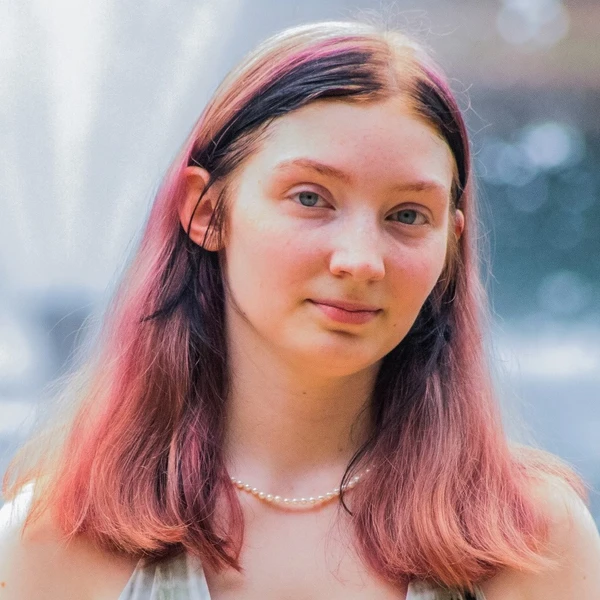
I was as young as four years old when I discovered the importance and beauty of teaching. I admired my teachers so much that I would pick flowers for them, make them friendship bracelets, and invite them to my birthday parties (always unsure why they would have teacher work days each time). I aspired to be like them. For my fifth-grade graduation project, we were asked to draw ourselves as a young adult, indicating the career we wanted. I drew myself as a teacher with purple hair. I was so sure I wanted to teach because of the support I received from my teachers. I struggled a lot in school, both academically and socially. At first, my teachers didn’t notice. They thought that I was only experiencing test anxiety, which I continue to suffer from. However, it was deeper than that. I didn’t learn how to read until I was in third grade. I often had friends leave me out of plans, and I only found true comfort in crafts. Because of my struggles and the constant negative mindset that my friends and family expressed to me while I went through middle and high school, I didn’t think that college was the place for me. I gave up my motivation to teach, and I decided that I would work a trade. It wasn’t until halfway through my senior year of high school that I was convinced to apply to college. The art teacher that I had in the previous years relentlessly tried to convince me. As a first-generation, low-income student, I think he saw a lot of himself within me. I never spoke to him about my former admiration for the educational field. Yet, he encouraged me to pursue an art teaching or illustrative career. The licensure program here at UNC Asheville really drew me in, and I am extremely motivated to follow my passion here. I strive to become a teacher much like my high school art teacher, making a classroom full of support.
As a classroom teacher, I have one strong goal: to provide a classroom environment that gives every student the opportunity to express their passions through a creative outlet in order to help them grow in both knowledge and communication. The main traits that I possess that make me a great educator are my ability to communicate in diverse ways, my ability to become flexible and negotiate in a respectful and inclusive way, and the respect that shows through honesty. One of my favorite art projects in high school was to paint a representation of an environmental challenge. With my passion for science and conservation, this project made me feel very motivated and satisfied in the end. I hope to give my future students something similar. A unique approach that I have to the visual arts curriculum is incorporating each subject, utilizing the skills needed within the different art media. I would communicate with core subject teachers per grade level to come up with engaging assignments.
I have two strong examples of my innovative assignment ideas. The first pertains to English and Literature. I would like students to take an excerpt from the poem or story that they are reading and create a visual representation of the scene utilizing acrylic, watercolor, and oil paints. This allows students to develop skills in texture, application, and imaginative expression. They can learn to use reference images to scale and compose their pieces. Another example would be in the subject of science. Utilizing found materials, students will create a sculpture that represents an organism and a challenge that they face due to their environment. This helps students manage perspective, form skills in assemblage, and encourages students to see everyday objects in an artistic light. Along with the assignments, I want to focus a lot on classroom management. Art courses are usually a default placement for students who struggle in school. This means there will be a diverse array of capabilities, interests, skills, and behavioral patterns. I will create low-stimulation and high-stimulation spaces within the room, something uncommon in art classrooms. I believe that would provide a space where all students can thrive. Along with that, I want to incorporate some group assignments and projects within the curriculum. Art is often individualized, but it can be a space for great collaboration. Some students are more social than others, so having a mix of independent assignments along with group projects should be helpful. I also plan to have an “exhibition” or gallery day. This is where each student will display some of their best work. This can improve a sense of belonging and identity. It also encourages students to develop work that makes them feel proud and satisfied. Trying their best and working to improve, rather than completing assignments just for a good grade.
With my personality traits, ambition, unique ideas, and care for students’ well being, I am passionate and motivated. This scholarship can help me become the amazing teacher that I know I can one day be.