Hobbies and interests
Alpine Skiing
Reading
History
I read books multiple times per month
Hayden Hughes
1x
FinalistHayden Hughes
1x
FinalistBio
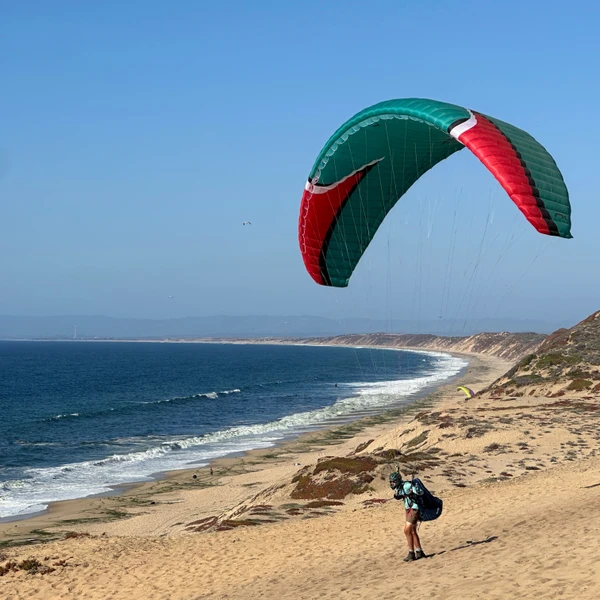
My life goals are to become a commercial pilot to support my young family. I’ve always had a fascination with aviation and that is why I served 7.5 years in the Air Force as an Air Transportation specialist. I’m also a P2 paraglider pilot working hard towards my P3. I really enjoy the skies and the unique aircraft that goes along with it. I’d make a great candidate because I work hard, help others along the way, and will have a great time along the way!
Education
Galena High School
High SchoolMiscellaneous
Desired degree level:
Associate's degree program
Graduate schools of interest:
Transfer schools of interest:
Majors of interest:
- Military Technologies and Applied Sciences, Other
Career
Dream career field:
Airlines/Aviation
Dream career goals:
Air transportation
USAF2017 – 20258 years
Sports
Lacrosse
Varsity2008 – 20124 years
Arts
Self
Music2007 – Present
Public services
Volunteering
USAF — To air drop supplies in the Micronesian islands to locals so they would have supplies and presents for Christmas.2018 – 2020
Bassed in PLUR Scholarship
My favorite EDM concert experience was attending a large outdoor festival for the first time, where the music, crowd, and environment combined into something far more meaningful than I expected. I went into the experience simply excited to hear artists I enjoyed, but I left with a deeper appreciation for community, presence, and the emotional power of music when it is shared collectively.
What stood out most was the sense of unity. Thousands of people from different backgrounds were brought together by rhythm and sound, all focused on the same moment. In everyday life, it is easy to feel divided or disconnected, but at the festival those boundaries dissolved. Strangers danced together, checked on one another, and shared genuine moments of joy without expectation. That atmosphere made the experience feel less like a concert and more like a temporary community built on mutual respect and openness.
The music itself also affected me in an unexpected way. EDM is often associated with high energy and spectacle, but what moved me most were the quieter, more melodic moments during a set—when the crowd would pause, sway, and collectively absorb the sound before the beat dropped again. Those moments taught me the value of contrast and patience, both in music and in life. The buildup mattered just as much as the release.
That experience shifted my outlook in several ways. First, it reminded me of the importance of being fully present. In a world filled with constant distraction, the festival demanded attention to the moment—listening, feeling, and reacting in real time. That mindset has stayed with me, influencing how I approach my goals and relationships. I’ve become more intentional about slowing down and appreciating experiences as they happen rather than rushing through them.
It also reinforced my belief in the importance of balance. EDM culture celebrates joy, creativity, and expression, but it also highlights responsibility—looking out for others, knowing your limits, and respecting shared spaces. That balance between freedom and accountability mirrors how I strive to live my life, especially as I pursue long-term goals that require both passion and discipline.
Finally, the experience inspired me creatively and personally. Seeing artists command an audience not through words, but through sound, timing, and emotion reminded me that communication takes many forms. It strengthened my appreciation for creativity as a way to connect people and shape meaningful experiences.
Overall, that EDM festival was more than entertainment. It broadened my perspective, reinforced my values, and reminded me that moments of shared energy and connection can have a lasting impact long after the music ends.
Sabrina Carpenter Superfan Scholarship
I am a fan of Sabrina Carpenter because her career reflects growth, resilience, and creative self-ownership. She entered the public eye at a young age, yet over time she has managed to redefine herself on her own terms, evolving from a former Disney actress into a confident, self-aware artist with a distinct voice. Watching that progression has been both impressive and relatable.
What draws me most to Sabrina Carpenter is her willingness to embrace change without apologizing for it. Each phase of her career feels intentional, marked by sharper songwriting and greater emotional honesty. Her more recent work blends vulnerability with wit, allowing her to explore themes of independence, self-respect, and personal agency without losing her sense of humor. That balance makes her music feel authentic rather than performative.
Her career has also demonstrated the importance of perseverance. Sabrina has faced public scrutiny, comparison, and industry pressure, yet she has continued to focus on her craft rather than letting external narratives define her. That quiet determination resonates with me, especially during periods of transition or uncertainty in my own life. Seeing someone steadily refine their voice while staying grounded reinforces the idea that success does not have to be immediate or loud to be meaningful.
On a personal level, her music has served as both motivation and reassurance. Songs that explore confidence, boundaries, and self-reflection remind me that growth often comes from learning when to speak up and when to walk away. Her ability to turn personal experience into thoughtful, polished art shows the power of creative expression as a tool for self-understanding.
Ultimately, I am a fan of Sabrina Carpenter not only for her talent, but for what her career represents. She embodies the idea that reinvention is possible, that setbacks do not define the future, and that staying true to oneself can be both empowering and impactful.
Wicked Fan Scholarship
I am a fan of Wicked because it tells a familiar story in an entirely unfamiliar and deeply human way. While it exists in the world of The Wizard of Oz, Wicked shifts the focus from heroes and villains to perspective, choice, and consequence. It asks the audience to question what it really means to be “good” or “wicked,” and that complexity is what has stayed with me long after the curtain falls.
At its core, Wicked is a story about identity. Elphaba’s journey resonates because she is judged before she ever has a chance to define herself. Her green skin becomes a symbol for anyone who has felt misunderstood, labeled, or pushed to the margins. Watching her wrestle with integrity, power, and isolation makes her transformation feel earned rather than tragic. Glinda’s arc is just as compelling; she begins with charm and privilege, but gradually learns the cost of popularity and the weight of moral compromise. Together, their friendship is messy, sincere, and deeply relatable.
Music is another reason Wicked has such lasting impact. Songs like “Defying Gravity” and “For Good” are emotionally powerful not because they are grand, but because they are honest. They capture moments of decision—when fear, love, and conviction collide. “Defying Gravity” is not just about flying; it is about choosing self-worth over acceptance. “For Good” reminds us that meaningful relationships change us permanently, even when they don’t last.
Ultimately, Wicked resonates with me because it recognizes that people are shaped by circumstance, intention, and courage—not simple labels. It encourages empathy, self-reflection, and the bravery to stand apart when doing the right thing comes at a cost. That message feels timeless, and it is why I remain such a strong fan of Wicked.
Taylor Swift Fan Scholarship
The Taylor Swift performance I find most moving is her 2019 American Music Awards “Artist of the Decade” medley. While Taylor has delivered countless technically impressive performances, this one stands apart because it felt like a living timeline of her career—both celebratory and quietly defiant.
What made the performance so powerful was its context. At the time, Taylor was navigating a very public dispute over ownership of her masters, which threatened to silence parts of her own musical history. Rather than shrinking under that pressure, she stepped onto the AMA stage and reclaimed her narrative in real time. Each song—from “Love Story” to “Blank Space” to “Shake It Off”—represented not just a different era, but a moment where she had reshaped pop music while growing up under constant scrutiny.
The visual symbolism amplified the emotion. Wearing a white button-down shirt embroidered with the titles of her past albums, Taylor quite literally carried her history on her back. It was subtle, intentional, and deeply personal. The performance didn’t feel like nostalgia for nostalgia’s sake; it felt like an assertion of identity—an artist refusing to let her past be rewritten by anyone else.
What moves me most is how the performance balanced vulnerability with strength. Taylor wasn’t just performing hits; she was standing up for creative ownership, perseverance, and self-definition. In the spirit of The Life of A Showgirl, this moment captured the cost and courage of a life spent in the spotlight—and the power of continuing to show up anyway.
Ethel Hayes Destigmatization of Mental Health Scholarship
My experiences with mental health have profoundly shaped the way I approach my goals, relationships, and my understanding of the world. Rather than being defined by a single moment or diagnosis, my mental health journey has been shaped by transition, responsibility, and the quiet challenges that come with high expectations and major life changes. These experiences have taught me resilience, empathy, and intentionality—qualities that now guide how I live and lead.
Serving 7.5 years in the United States Air Force instilled discipline, structure, and accountability in me at a young age. While those qualities were invaluable, military life also normalized high stress and emotional compartmentalization. During that time, I learned how to perform under pressure, but I also learned how easy it is to overlook mental well-being when the mission comes first. It wasn’t until I transitioned out of the military that I truly began to understand the importance of mental health as something that must be actively maintained, not assumed.
The transition to civilian life was both exciting and unsettling. Leaving a structured environment, returning to school in my thirties, relocating my family, and becoming a first-time father all happened within a short period of time. That convergence of responsibility forced me to confront stress, uncertainty, and self-doubt in ways I had not experienced before. Rather than seeing these challenges as setbacks, I began to view them as signals—indicators that growth requires awareness, adaptability, and support.
This shift has directly influenced my goals. I am pursuing a career in aviation not only because of my passion for flight, but because it demands emotional regulation, self-awareness, and sound judgment. Aviation has taught me that mental clarity is not optional; it is foundational. My experiences have made me more intentional about managing stress, maintaining balance, and building habits that support long-term performance rather than short-term endurance.
Mental health has also reshaped how I approach relationships. I am more present, communicative, and patient with my wife and son because I understand how stress and unspoken pressure can quietly erode connection. I have learned the value of listening without fixing, supporting without judging, and recognizing when others may be carrying invisible burdens. These lessons have strengthened my relationships and deepened my appreciation for vulnerability as a form of strength.
Finally, my experiences have broadened my understanding of the world. I no longer view success solely through achievement or productivity, but through sustainability and well-being. I recognize that many people are navigating challenges that are not immediately visible, and that compassion often matters more than assumptions. Mental health has taught me that growth is rarely linear, but it is always meaningful when approached with honesty and perseverance.
In embracing these lessons, I have become more grounded, more empathetic, and more intentional about the life I am building—for myself, my family, and the communities I hope to serve.
Kevin Howard Memorial Flying Scholarship
My passion for flying has been a constant thread throughout my life, shaping both who I am and who I aspire to become. From my earliest memories, flight represented freedom, curiosity, and possibility. Whether I was spending hours on a flight simulator as a child, attending the Reno Air Races with my father, or flying small remote-controlled airplanes, I was always drawn to the sky. Aviation never felt like a distant fascination—it felt personal, achievable, and deeply meaningful.
That passion matured as I grew older and began to understand aviation not just as a dream, but as a discipline. I served 7.5 years in the United States Air Force, where I spent much of my time working on the flight line. Being surrounded daily by aircraft such as the C-5, C-17, and C-130 gave me a profound respect for aviation at its highest professional level. I was constantly inspired by the engineering, teamwork, and responsibility required to safely operate these machines. Even after long days, I often found myself stopping simply to admire the craftsmanship and complexity of the aircraft. Those moments reinforced my desire to build a life centered around aviation.
Flying is not just something I admire—it is something I actively pursue. I am a P2-rated paraglider pilot currently working toward my P3 rating. Paragliding has given me a unique and intimate relationship with the air. Launching under my own wing requires patience, discipline, and a deep respect for weather and conditions. It has taught me situational awareness, risk management, and humility—skills that directly translate to powered aviation. There is nothing quite like quietly soaring on a thermal, fully present in the moment, relying on skill and judgment rather than machinery alone.
In addition to paragliding, I am fortunate to share my love of aviation with my father. I regularly fly with him in his RV-10, and those experiences have been incredibly meaningful. Flying together has strengthened our bond while giving me firsthand exposure to general aviation, cockpit decision-making, and real-world flying scenarios. Seeing aviation through both a personal and practical lens has only strengthened my desire to pursue it professionally.
My decision to leave the military and pursue flight training was not an easy one. Transitioning to civilian life and returning to school at 32 years old comes with uncertainty and self-doubt. However, my passion for flying gives me clarity and purpose during this transition. Aviation challenges me intellectually, demands discipline, and rewards dedication—qualities that align perfectly with who I am and how I want to serve my family and community.
Flying represents more than a career path to me; it represents lifelong learning, responsibility, and connection—to people, to machines, and to the world around us. My passion for aviation is not fleeting or theoretical. It has been built over a lifetime of experience, service, and hands-on flying, and it continues to grow with every step I take toward becoming a professional pilot.
Hector L. Villarreal Memorial Scholarship
My name is Hayden Hughes. I am 32 years old and currently pursuing an Associate of Applied Science in Professional Pilot, Fixed Wing Aviation at Central Oregon Community College. I am married to my wife, Taylor, and in January 2025 we welcomed our first son, Milo. I recently completed 7.5 years of service in the United States Air Force and am now transitioning from military service into the civilian sector. As I begin this new chapter, I am committed to building a meaningful and challenging career in aviation.
Aviation has been a lifelong passion of mine. From an early age, I was captivated by flight—whether it was spending hours on a flight simulator as a child, attending the Reno Air Races with my father each year, or flying remote-controlled aircraft in open fields. Those early experiences sparked a deep curiosity and admiration for aircraft and the engineering behind them. There is something truly remarkable about machines that can safely and reliably lift people into the sky, and that fascination has never faded.
During my time in the Air Force, I had the privilege of working on the flight line, where I was surrounded daily by some of the most impressive aircraft in the world. Observing and working alongside aircraft such as the C-5 Galaxy, C-17 Globemaster III, and C-130 Hercules gave me a profound appreciation for aviation on a professional level. Even after long shifts, I often found myself pausing simply to admire the craftsmanship, complexity, and purpose of these aircraft. That environment reinforced my desire to remain connected to aviation for the rest of my life.
I chose to leave the military because I believe life is too short to limit oneself to a single path. Becoming a professional pilot has long been a goal of mine, and I recognized that this moment in my life presented a rare opportunity to pursue it fully. Transitioning out of the military has not been easy. The shift to civilian life, combined with returning to school at age 32, has brought moments of doubt and uncertainty. However, I have learned to view those challenges as motivation rather than obstacles. The discipline, work ethic, and resilience I developed during my military service now serve as the foundation for my academic and professional goals.
This scholarship would play a critical role in helping my family and me succeed during this transition. We are relocating from our hometown of Reno, Nevada, to Bend, Oregon so I can begin my flight training and degree program. At the same time, we are caring for an infant, managing housing costs, and adjusting to a single-income household for much of the year. While I am grateful to have access to the GI Bill, many expenses associated with relocation, flight training, and family life add up quickly. My wife plans to work part-time as a massage therapist on weekends while I focus primarily on my studies and caring for our son. Any additional financial support directly contributes to our ability to stay focused, stable, and committed to completing this program successfully.
Thank you sincerely for considering my application. This scholarship would not only support my education but would also help my family as we work toward a future built on service, responsibility, and a lifelong passion for aviation.