Hobbies and interests
Theology and Religious Studies
Abu Hatem
1x
FinalistAbu Hatem
1x
FinalistBio
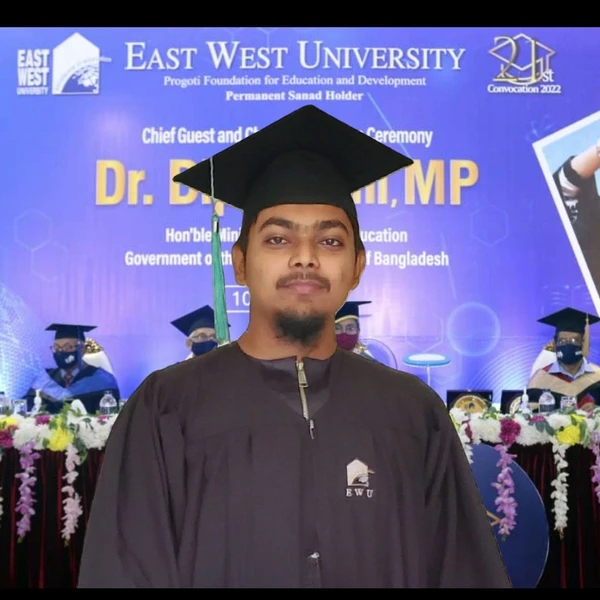
I am an MBA graduate in Business Analytics from Monroe University, New York, with a strong academic record and a passion for learning, leadership, and community development. I strive to apply my analytical skills to create positive social and educational impact while continuing my journey of personal and professional growth.
Education
Monroe College
Master's degree programMajors:
- Data Analytics
California State University-East Bay
Bachelor's degree programMajors:
- Business, Management, Marketing, and Related Support Services, Other
Academy of Art University
Master's degree programMajors:
- Religion/Religious Studies
Miscellaneous
Desired degree level:
Doctoral degree program (PhD, MD, JD, etc.)
Graduate schools of interest:
Transfer schools of interest:
Majors of interest:
Career
Dream career field:
Education
Dream career goals:
Sports
Bodybuilding
Junior Varsity2012 – 20142 years
Nabi Nicole Grant Memorial Scholarship
Faith as My Anchor Through Adversity
There was a time in my life when the weight of responsibilities felt almost unbearable. While pursuing my MBA, I found myself balancing long hours of study, part-time work, and the emotional demands of supporting my family back home. Every day was a race against time — rushing between lectures, deadlines, and financial obligations. There were nights when exhaustion silenced even my motivation, and I began to question whether I could keep going. It was in that period of uncertainty that my faith became my greatest source of strength.
Islam has always taught me that life’s challenges are not punishments, but divine tests meant to refine the soul. When everything around me felt uncertain, I turned inward — to prayer, to the Qur’an, and to the remembrance of Allah. One verse in particular echoed constantly in my heart:
> “Indeed, with hardship comes ease.” (Qur’an 94:6)
Those words reminded me that struggle and relief are not opposites; they coexist. The verse didn’t promise instant solutions, but it gave me hope that perseverance and patience would eventually lead me through. I started every morning with duʿā (supplication), asking for strength, guidance, and contentment with Allah’s plan. Over time, these spiritual routines became my anchor — quiet moments of connection that restored my focus when life felt overwhelming.
My faith also changed how I viewed my circumstances. Instead of seeing obstacles as barriers, I began to see them as opportunities to grow stronger and more disciplined. When financial stress mounted, I reminded myself that provision comes from Allah, and my duty was to continue striving with honesty and sincerity. When deadlines seemed impossible, I prayed for barakah — blessings in my time — and somehow always found enough to complete my work. My faith didn’t erase my struggles, but it gave me endurance and a sense of calm that no material solution could offer.
Through this journey, I learned that true reliance on faith means letting go of fear while still giving your best effort. It means accepting uncertainty with grace, knowing that Allah’s wisdom often lies beyond our immediate understanding. By trusting His plan, I was able to graduate not only with academic success but with a deeper spiritual maturity. I discovered that faith doesn’t just help you survive challenges — it transforms how you experience them.
Today, whenever I face new difficulties, I look back at that chapter as proof that faith is not merely a belief but a living force. It teaches resilience, patience, and gratitude — qualities that I now carry into every area of my life, from academics to relationships and future goals. Faith has taught me that no matter how heavy the storm, the one who trusts in Allah never truly walks alone.
Healing Self and Community Scholarship
My unique contribution to making mental health care affordable and accessible would be the creation of a tech-driven, community-based support network that bridges professional therapy with culturally sensitive peer guidance. Mental health struggles are universal, yet access to care remains limited by cost, stigma, and geography. My approach would integrate AI-assisted counseling platforms with trained community volunteers, allowing individuals to receive immediate emotional support and referrals to licensed professionals when necessary — all at minimal cost.
I envision a hybrid model where technology personalizes care while human empathy preserves connection. AI tools could help screen symptoms, provide multilingual cognitive behavioral therapy exercises, and monitor progress anonymously. Meanwhile, peer mentors — trained in mental health first aid — could offer local support through group sessions, religious institutions, and schools. This model not only reduces expenses but also removes cultural barriers that often prevent people from seeking help.
Ultimately, my mission is to make mental wellness as accessible as basic education — a right, not a privilege. By blending innovation, empathy, and community engagement, I hope to redefine mental health care as a shared social responsibility powered by both technology and compassion.
Reimagining Education Scholarship
If I could create a class that every student from kindergarten through twelfth grade was required to take, it would be called “Emotional Intelligence and Ethical Thinking.” In a world that constantly measures success through test scores and rankings, we often overlook the human skills that shape true character and connection. Students learn math, science, and history — all essential subjects — yet many graduate without understanding how to manage emotions, communicate respectfully, or make ethical choices in difficult moments. This class would close that gap by teaching the heart as much as the mind.
The course would begin with the foundation of self-awareness. Students would learn to identify and express emotions in healthy ways, recognizing that understanding one’s inner world is the first step toward understanding others. For younger children, this might include storytelling and guided reflections. For older students, lessons could involve mindfulness, journaling, and emotional regulation exercises. Learning to pause, breathe, and reflect before reacting is a lifelong skill that prevents conflict and builds empathy.
The second focus would be empathy and interpersonal communication. Through role-playing, group projects, and community service, students would practice active listening and compassionate dialogue. They would explore diversity not merely as a social topic but as a human experience. Teaching empathy would nurture classrooms where differences become opportunities for growth and understanding rather than barriers.
The third component would center on ethical reasoning. Students would examine real-life dilemmas — from historical events to current issues — and discuss not only what is right or wrong but why people make certain choices. By evaluating problems through multiple perspectives, they would develop critical thinking grounded in integrity. In a digital age where information moves faster than reflection, moral reasoning helps young people slow down and think before acting.
A vital part of the class would also explore digital and social ethics. As technology becomes inseparable from identity, students must understand the emotional and ethical impact of their online behavior. Lessons would address cyberbullying, misinformation, and the search for validation on social media. Rather than lecturing about what not to do, this class would invite students to reflect on how their digital actions affect others — and how kindness, even online, can be revolutionary.
This subject is deeply personal to me. Growing up, I saw how misunderstandings and unspoken emotions strained relationships among classmates, friends, and family. I learned that emotional awareness can heal what logic alone cannot. One act of empathy — listening before judging, helping a peer who felt left out — often changed the atmosphere of an entire classroom. That realization convinced me that education is not only about achievement but also about understanding, not only about competition but about compassion.
The long-term impact of this class would be profound. In the short term, classrooms would become more supportive, with students who feel seen, heard, and valued. In the long term, society would gain a generation of emotionally balanced, ethically grounded citizens who lead with both confidence and conscience. They would be better equipped to handle adversity, build meaningful relationships, and contribute positively to their communities.
Ultimately, education should prepare students not only to make a living but to live well. Emotional intelligence and ethical thinking are the keys to that balance. By teaching children to understand themselves and respect others, we would plant the seeds for a kinder, more reflective, and morally conscious generation. Academic success may open doors, but emotional and ethical intelligence determines how we walk through them — with integrity, empathy, and purpose.
Begin Again Foundation Scholarship
My name is Abu Jafor Hatem, and I am a graduate student who believes that knowledge and empathy can save lives. My journey with sepsis began not as a medical professional, but as a concerned family member who witnessed how quickly this silent condition can change everything. It taught me that awareness is just as vital as treatment, and that no one should lose a life simply because they didn’t recognize the signs in time.
A few years ago, a relative of mine developed a severe infection that escalated unexpectedly. At first, we thought it was a common fever — until confusion, rapid heartbeat, and weakness appeared almost overnight. By the time we reached the hospital, doctors diagnosed sepsis, a word I had barely heard before. Seeing how swiftly the infection spread, how his body struggled, and how fragile human life can become left a deep imprint on me. Although he eventually recovered, that experience opened my eyes to the importance of early detection, communication, and education around sepsis — something far too many families still lack.
Since then, I have made it a personal mission to advocate for better awareness. During my studies in Business Analytics, I began exploring how data could be used in healthcare — not just for efficiency, but for prevention. I became fascinated by how predictive modeling could identify early signs of infections that lead to sepsis, helping clinicians act faster. I hope to one day collaborate with healthcare professionals and nonprofits to build community-based data systems that alert hospitals and families before it’s too late.
But beyond technology, this experience changed how I see compassion. When someone you love is lying in an ICU bed, surrounded by machines, you realize that humanity and healing are intertwined. Nurses who spoke gently, doctors who explained patiently — they gave us hope in a moment of fear. That taught me that caring for others doesn’t always require a title; sometimes it simply requires presence and understanding.
Today, I am continuing my education with a purpose: to merge analytics with advocacy — to use information to protect people. My goal is to create tools and educational outreach programs that empower families to recognize symptoms like high fever, confusion, and rapid breathing before sepsis becomes life-threatening.
Sepsis may begin invisibly, but its impact is immense. My experience turned awareness into action and fear into focus. It reminded me that saving lives begins with caring enough to notice. That is the lesson I carry forward — one heartbeat, one dataset, one life at a time.
TOMORROW X TOGETHER (TXT) MOA Scholarship
My name is Abu Jafor Hatem, and I’m an MBA graduate in Business Analytics from Monroe University, New York. As a first-generation student and immigrant, my academic path has never been simple, but it has always been meaningful. I’ve learned to embrace both numbers and narratives — the logic of data and the rhythm of humanity. My ultimate goal is to use analytics and education to improve lives, particularly for those who often go unheard — children with special needs, struggling students, or families who feel forgotten. I want to serve not only as a professional but as a mentor and advocate who turns compassion into measurable change.
To fund my education, I’ve worked part-time, saved diligently, and applied for scholarships like this one. Every contribution I’ve received has been more than financial help — it’s been a reminder that kindness and community are what keep dreams alive. I’ve often thought that this same message lives inside the music of TOMORROW X TOGETHER, the group that has inspired me more deeply than I ever expected.
I became a MOA during a period of quiet loneliness in graduate school. Adjusting to a new country, culture, and academic pressure often made me feel invisible. One evening, I stumbled upon TXT’s “Blue Hour.” The first thing that struck me wasn’t just the melody — it was the sincerity in their voices. They sang of confusion, self-doubt, and hope in a world spinning too fast. For the first time in months, I felt seen. That song became a window to healing.
Since then, TXT has become more than just an idol group to me — they represent emotional honesty in a generation that often hides behind filters. Their music isn’t about perfection; it’s about growth. Beomgyu’s nostalgia, Taehyun’s sharp insight, Yeonjun’s passion, Soobin’s gentle leadership, and Hueningkai’s light-hearted optimism each reflect different parts of what it means to be human. If I had to choose one who inspires me most, it would be Soobin, because of his humility and empathy. Despite being the leader, he listens before he speaks — a quality I strive to carry in my academic and personal life.
My favorite TXT song is “Love Song (I Know I Love You)” — not only for its haunting beauty but because it captures what it means to find meaning in connection. The line “I know it’s real, I’m all in love” reminds me that love, whether for people or for purpose, gives our existence shape. It made me realize that passion for music, learning, or humanity should never be suppressed out of fear of failure.
TXT’s journey has influenced my career goals by teaching me that vulnerability can be powerful. I aspire to use my education to bring empathy into systems that often feel cold and mechanical. Whether I’m analyzing data or teaching, I want to make others feel seen — just as TXT’s music made me feel seen. Their openness about growth, fear, and belonging has shaped my belief that emotional intelligence is the foundation of real change.
To me, being a MOA is not about idolizing success but celebrating sincerity. TXT’s art reminds me that we can all create light — no matter where we come from, no matter how dark our beginnings. That is the spirit I want to carry into my work, my community, and the world: to help others shine, even if they’ve forgotten how bright they truly are.
RonranGlee Special Needs Teacher Literary Scholarship
Professor Harold Bloom once said, “The purpose of teaching is to bring the student to his or her sense of his or her own presence.” To me, this means helping students recognize the sacred spark within themselves—the awareness that they matter, that they are seen, and that their voice holds value in the world. Teaching is not simply about transferring knowledge; it is about awakening the dignity, confidence, and self-awareness already planted inside every learner. For students with special needs, this sense of “presence” becomes even more vital—it can be the difference between merely existing and truly belonging.
My passion for special education began when I first volunteered at a community learning center, where I met children who experienced the world in unique, deeply human ways. Some expressed emotions through art instead of words; others found rhythm in numbers or patterns that most adults overlooked. I learned quickly that teaching special needs students is not about “fixing” them—it is about understanding them. It is about creating a space where their individuality is not an obstacle, but a gift.
To guide my students toward their own presence, I would first create an environment that celebrates small victories. Every new word spoken, every task completed, every brave attempt to express a feeling is a moment of triumph. I would teach not from authority, but from empathy—by listening first and teaching second. Many students with special needs struggle not because of their abilities, but because they have been misunderstood or underestimated. My mission as a special education teacher is to change that—to show them that learning is not a competition, but a conversation where every voice matters.
My approach would blend patience with creativity. I believe in adaptive teaching—using music, color, stories, and play to connect abstract concepts to real emotions. When a child realizes they can express what they feel, they begin to see themselves. That recognition is what Bloom called the “sense of presence”—the moment when a learner becomes aware that their existence holds meaning.
Spiritually, I see teaching as an act of compassion—a reflection of divine mercy in action. Every child is a verse in the human story, and it is our duty as educators to help them find their rhythm. I would remind my students daily that they are capable, that mistakes are not failures but footprints toward understanding, and that they have a light uniquely their own.
A Brief Fairy Tale: “The Garden of Hidden Stars”
Once upon a time, in a quiet village beneath silver clouds, there lived a teacher named Hatem. Every evening, he walked through a dark forest filled with stars that had fallen from the sky. Each star was dim, whispering, “I don’t shine anymore.”
Hatem gently picked them up, one by one, placing them in his lantern. He whispered to each, “You were never meant to shine like the others—you were meant to glow in your own way.” Every night, he taught the stars their names, their colors, their songs. Slowly, they began to twinkle again—different, but beautiful.
One morning, the villagers awoke to see the forest glowing. The stars had risen, brighter than ever, and among them was Hatem’s lantern—empty but radiant—because the teacher’s light was now living in each of his students.
Teaching special education, for me, is that journey through the forest: patient, purposeful, and filled with faith. My mission is to help every child discover the light of their own presence—so that one day, they no longer need my lantern to shine.
STEAM Generator Scholarship
When I first entered higher education in the United States, I felt like an outsider in every possible way. The culture, the expectations, even the classroom discussions—everything seemed to speak a language I hadn’t yet learned. As a first-generation immigrant, I often found myself standing between two worlds: one rooted in the values of sacrifice and simplicity, and another driven by ambition and opportunity. It was overwhelming at first, but in that space of uncertainty, I began to find strength.
Coming from a humble background, my path to education was never straightforward. My parents didn’t have degrees or connections to guide me through applications, essays, or financial aid. What they did have, however, was faith—faith that education could transform a life. They taught me that every hardship is temporary if met with patience, and that knowledge is one form of gratitude to the Creator. That belief became my anchor when I felt unseen or misunderstood in the system.
In my early semesters at Monroe University, I struggled to adjust to the fast pace and unfamiliar expectations. I remember sitting quietly in class, hesitant to speak up because I feared my accent or cultural references would make me sound different. But over time, I realized that my “difference” was not a weakness—it was my story. My immigrant experience taught me resilience, adaptability, and perspective. I learned to work harder, not just to prove myself, but to honor the dreams of those who made sacrifices so I could sit in that classroom.
Being an outsider helped me see education not as a privilege, but as a responsibility. I became more intentional with my learning—wanting to connect business analytics not just to numbers, but to people and communities. My perspective as an immigrant made me deeply aware of the struggles faced by others who feel marginalized or invisible. It shaped my goal to use data and insight to improve access, fairness, and opportunity for underrepresented voices.
Now, as I continue my academic journey, my greatest hope is to turn my story into a bridge for others—to help future immigrants and first-generation students navigate the very system that once felt foreign to me. My concern is not that I will fail, but that too many others will never have the chance to try. That is why I aspire to create initiatives that connect education to empowerment—so that being an outsider no longer means being left behind.
My journey as an immigrant taught me that courage is not the absence of fear, but the decision to move forward despite it. I entered higher education as an outsider, but I no longer see myself as one. I am part of a larger story—a story of people who dared to dream beyond borders. And in that story, I have found not just a place, but a purpose.
Bick First Generation Scholarship
Being a first-generation student means carrying both the hope of my family and the weight of their sacrifices. It means walking a path that no one in my family walked before — without a map, but with faith as my compass. For me, this journey began with a simple dream: to build a life where knowledge becomes a bridge between struggle and success, and where education becomes not just a personal victory, but a gift I can return to others.
Coming from a modest background, my parents could not give me material wealth, but they gave me something far greater — discipline, faith, and the belief that hard work never goes unnoticed by God. When I left my home country to pursue higher education in the United States, I brought with me a suitcase, a few savings, and endless determination. The first months were the hardest — balancing multiple part-time jobs, studying late at night, and often feeling like I had to figure everything out alone. But I learned that growth is born from discomfort, and that patience is not just waiting, but working with hope.
Through my studies at Monroe University, I discovered that being first-generation isn’t a limitation — it’s a legacy of resilience. It taught me to find solutions when others saw barriers, and to stand up after every setback. Earning my MBA in Business Analytics wasn’t just an academic achievement; it was proof that every sacrifice my family made was worth it. Yet, I know my journey doesn’t end here — it is only the beginning.
This scholarship would not just relieve financial pressure; it would represent belief — belief that my story matters, that effort counts, and that dreams are meant to be shared. It would allow me to continue growing, learning, and giving back — to mentor other first-generation students, to use data and analytics to empower underrepresented communities, and to show that determination, guided by faith, can light even the darkest path.
My dream is to blend knowledge with compassion — to use my skills in business analytics not only for success, but for service. What drives me is the desire to make my education meaningful beyond myself — to lift others the way mentors and strangers once lifted me.
To me, being a first-generation student means being the first, but not the last — to break barriers so others can walk through open doors. And with this scholarship, I hope to continue that mission — with gratitude in my heart, purpose in my steps, and faith as my guide.
American Dream Scholarship
For me, the American Dream is more than the pursuit of wealth or comfort—it is the sacred right to seek purpose and dignity through hard work, faith, and service. It is the belief that one can rise above circumstances not only by personal effort, but by trusting that with patience and sincerity, every step is guided by divine wisdom. As a Muslim immigrant, I see the American Dream as a balance between striving for success in this world and remaining grateful to the One who gives us the ability to strive.
When I first arrived in the United States, I felt both awe and uncertainty. The language, the culture, the pace—everything seemed overwhelming. But beneath the surface of challenge, I saw a land that valued determination over background, and integrity over privilege. That realization shaped my journey. I understood that the American Dream is not a prize handed to the fortunate—it is a path earned by the steadfast.
While pursuing my MBA in Business Analytics at Monroe University, I often studied late into the night, working between classes to afford tuition. There were moments of exhaustion and doubt, yet I never felt alone. My faith reminded me that perseverance is a form of worship, and that every struggle, when faced with patience, carries unseen blessings. Each achievement, no matter how small, became a reflection of a larger truth—that success is not measured by status, but by sincerity and effort.
To me, the American Dream is not about becoming someone else; it is about becoming the best version of myself, without losing the values that define me. Islam teaches that “the most honored among you in the sight of God is the most righteous of you.” That verse (Qur’an 49:13) inspires me to see the American Dream not as competition, but as contribution—to live a life that uplifts others, not just myself.
My vision of the American Dream is one that bridges cultures and hearts. I want to use my education and experience to serve both the business world and my community—by creating opportunities for those who feel unseen or left behind. In a society that celebrates innovation, I wish to bring empathy alongside progress, and remind others that success is sweetest when shared.
In essence, my American Dream is rooted in gratitude—to this country for its opportunities, and to my Creator for granting me the strength to pursue them. It is the freedom to learn, to give, to believe, and to build a life that honors both faith and humanity. I dream of becoming a bridge between worlds—between tradition and modernity, between ambition and humility, between individual dreams and collective good.
That, to me, is the true American Dream: to rise with purpose, to serve with compassion, and to live with faith.