user profile avatar

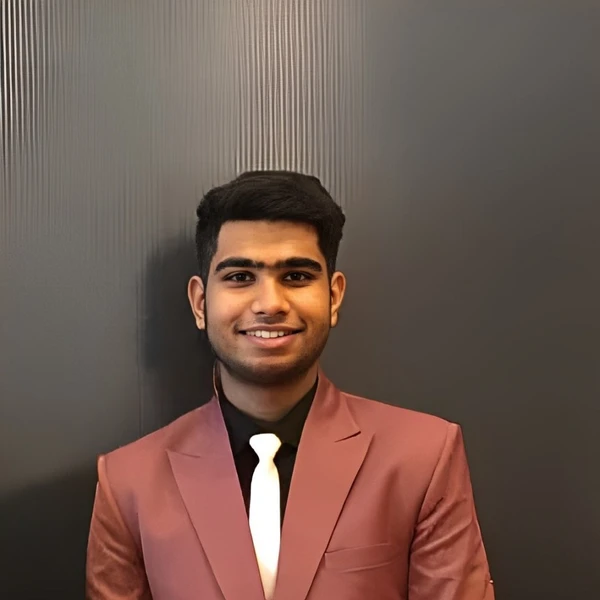
Harsh Bhati

1x

Finalist

General information

Hobbies & Interests

  • Photography and Photo Editing

Bio

I grew up in Rajasthan, India, where my family runs a small dairy business in Jodhpur. I was one of 25 students picked from 20,000 applicants for the Sitare Foundation scholarship, which is the only reason I made it to the US for college. Now I'm a senior at the University of Maryland studying Computer Science with a Business minor, holding a 3.96 GPA. I spend my days building backend and data systems. This summer I'm interning at an AI startup in Menlo Park, working on payments infrastructure and analytics pipelines. Before that, I built ShopFi, a tool that helped 550+ local shop owners in India digitize their businesses. That project taught me more than any classroom did: talk to real people, solve real problems, ship fast. My long-term goal is to work on large-scale distributed systems, the kind of infrastructure that powers search and AI. My mentor built Google Search, and watching what great engineering can do for billions of people is what pulls me forward. Someday I want to give back the way my scholarship gave to me, by funding and teaching students who start with less. Right now, though, I'm a student financing my education through loans, so every bit of support goes directly toward finishing my degree this December.

Education

University of Maryland-College Park

Bachelor's degree program

2023 – 2027

Majors:
  • Computer Science

Miscellaneous

Desired degree level:
Master's degree program
Desired degree modality:
Full-Time
Medical school interest:
No

Career

  • Software Engineering Intern

    Computer Software · TwinMind

    Jan 2025 – Present

Miscellaneous

Dream career field:
Computer Software
Work experience:
2 years
Has nursing license:
No
Chris Jackson Computer Science Education Scholarship
I did not grow up with a computer. I grew up with a dairy shop in Jodhpur, Rajasthan, where I watched my father do mental math over a paper ledger every evening. The first time I touched real code was on a secondhand laptop as a teenager, and the first program I ever finished was a digital ledger for that shop. When my father pulled up a customer's balance in two seconds instead of two minutes, I felt something click. A kid from a dairy family had just changed how his family worked, with nothing but logic and a keyboard. I never wanted to do anything else after that. That ledger grew into ShopFi, a tool that eventually helped over 550 small shop owners in India run their businesses digitally, and it earned me the Sitare Foundation scholarship, one of 25 chosen from 20,000 applicants in Rajasthan. That scholarship carried me from Jodhpur to the University of Maryland, where I'm now a senior in Computer Science with a 3.96 GPA. My dream job is specific: I want to build large-scale distributed systems, the storage and retrieval infrastructure behind search engines and AI. My mentor spent his career building Google Search, and he showed me that the most meaningful engineering is often invisible. Billions of people use it daily without knowing anyone built it. This summer I'm interning at an AI startup in Menlo Park doing exactly this kind of work: payments infrastructure, data pipelines, systems that have to be correct and fast at the same time. One of my proudest moments was redesigning our analytics pipeline to save $70,000 a month. My eventual goal is to become the kind of engineer others learn distributed systems from, and to return to India to fund and teach students who are starting where I started. I connect with Chris's story in a way I wish I didn't have to. I know exactly what it means to struggle to afford a degree. My education is financed through loans that compound at 4.5% every year, and I think about that number more often than any exam. There were semesters where the question was not "what grade will I get" but "can I stay enrolled." I kept a 3.96 anyway, because the degree Chris fought for gave him a life of impact, and I believe mine will too. What moves me most about Chris is that he gave people his full attention and asked how he could help. I try to live that. I mentor junior CS students at Maryland, sit with them through 2 AM debugging sessions, and answer every question from students back home who message me about studying abroad. Someone once made time for a shopkeeper's son with a secondhand laptop. Everything I have came from that. This scholarship would help me finish what that generosity started, and I intend to spend my career passing it forward.
Chadwick D. McNab Memorial Scholarship
The project I'm most proud of started with a paper ledger in my father's dairy shop in Jodhpur, Rajasthan. Every shop on our street ran on those ledgers. Handwritten balances, mental math, and the occasional lost page that meant lost money. Nobody around me saw this as a technology problem. I did, and I couldn't let it go. I taught myself to code on a secondhand laptop and built my father a simple digital ledger: customers, balances, payment history. Watching him retrieve a customer's full account in seconds instead of flipping through pages was the moment I understood what software is actually for. Not apps for people who already have everything, but tools for people the tech industry forgot. That tool became ShopFi. I grew it feature by feature, and the process taught me more than any classroom. I learned that requirements don't come from your imagination, they come from sitting in a shop for an afternoon watching how the owner actually works. I learned that if a 60-year-old shopkeeper gets confused by your interface, the interface is wrong, not the shopkeeper. Many of my users could not comfortably read English menus, so I redesigned everything around icons and numbers. I learned to handle unreliable internet, cheap Android phones, and users who had never trusted a computer with their money. Every constraint made me a better engineer. ShopFi eventually reached more than 550 shop owners. But the number I care about most is one: the first time a shopkeeper showed his son the day's tally on a screen instead of a ledger, proud of himself for going digital. That pride was something my code created. The project changed my trajectory completely. It helped me earn the Sitare Foundation scholarship, one of 25 selected from 20,000 applicants in Rajasthan, which brought me from Jodhpur to the University of Maryland. I'm now a senior in Computer Science with a 3.96 GPA, and the same instinct that built ShopFi keeps pulling me deeper into the field. This summer, interning at an AI startup in Menlo Park, I noticed our analytics pipeline was quietly burning cash. I dug in, redesigned it, and cut costs by $70,000 a month. Different scale, same feeling: find the broken system, fix it, watch it help people do their work. Technology inspires me because it's the only field I know where one person with curiosity and a laptop can compound into something that touches hundreds or millions of lives. My mentor helped build Google Search, a system billions of people rely on daily, and he started as a student not so different from me. That lineage is what I want to join. My goal is to work on large-scale distributed systems and the data infrastructure behind AI, the invisible machinery that makes modern tools possible. It's the natural continuation of that first ledger: storing information reliably, retrieving it instantly, and making it useful to people. Chadwick McNab championed growth and helping others reach their potential. That resonates with me because someone's generosity is the only reason I'm here. I mentor junior students at Maryland the way others once helped me, and someday I plan to fund and teach students back home who are starting where I started. The best engineers I know build two things at once: great software and other engineers. I intend to be one of them.
Kyle Lam Hacker Scholarship
The first user of anything I ever built was my father. He runs a dairy shop in Jodhpur, Rajasthan, and for years he tracked customer accounts the same way every shop owner around us did: a fat paper ledger, handwriting only he could read, and a memory that occasionally failed him. When it failed, he lost money. Nobody in our neighborhood thought of this as a problem to solve. It was just how things were. I thought it was a problem to solve. I was a teenager with a secondhand laptop and an internet connection that worked on good days. I taught myself to code and built him a simple digital ledger. Nothing fancy. Customers, balances, payment history. The first time he pulled up a customer's full account in two seconds instead of flipping through pages, he laughed out loud. Then he called the neighboring shop owner over to watch him do it again. That moment did something to me. I had made my father feel like the most modern shopkeeper on the street, and all it took was code. That small tool grew into ShopFi. I kept adding what shop owners actually asked for, not what I imagined they needed. I sat in their shops, watched how they worked, and rebuilt features when they got confused. Word spread the way it does in small-town India, one chai conversation at a time. Eventually more than 550 shop owners were using it. Most of them had never used business software before. Some could barely read English menus, so I designed around icons and numbers. Watching a 60-year-old shopkeeper who distrusted computers proudly show his son the day's tally on a screen, that is the kind of delight I chase. ShopFi changed my life too. I won a Sitare Foundation scholarship, one of 25 selected from 20,000 applicants in Rajasthan, and it carried me from Jodhpur to the University of Maryland, where I'm now a senior in Computer Science with a 3.96 GPA. The tinkering never stopped. This summer I'm interning at an AI startup in Menlo Park, and the same instinct keeps showing up. I noticed our analytics pipeline was burning money, dug into it uninvited, and rearchitected it to save $70,000 a month. Nobody asked me to. I just couldn't look at an inefficient system and leave it alone. My teammates' reaction reminded me of my father's laugh. Reading about Kyle, I recognized something familiar. The refusal to accept "that's just how it works." The joy of showing someone a thing they didn't know was possible. The belief that the point of skill is to share it. I mentor juniors at my university the way seniors once helped me debug at 2 AM, because generosity is how the hacker spirit reproduces itself. I'm paying for my education through loans, and this scholarship would ease a real burden. But more than that, it would connect my story to Kyle's. He built experiences that delighted people and stayed humble doing it. That is exactly the engineer I am trying to become: someone whose curiosity makes life better for the people around him, starting with a dairy shop in Jodhpur and going as far as I can take it.
Harsh Bhati Student Profile | Bold.org