Hobbies and interests
Speech and Debate
Accounting
African American Studies
Advocacy And Activism
Arabic
Community Service And Volunteering
Ethnic Studies
Fashion
Finance
Fitness
Government
Greek
History
International Relations
Journaling
Economics
Law
Music
Politics and Political Science
Public Policy
Public Relations
Research
Public Speaking
Reading
Action
Adult Fiction
Adventure
Art
Business
Economics
History
Historical
Literature
Law
Leadership
Philosophy
Politics
Social Issues
I read books multiple times per week
US CITIZENSHIP
US Citizen
haroon Adam
2x
Finalistharoon Adam
2x
FinalistBio
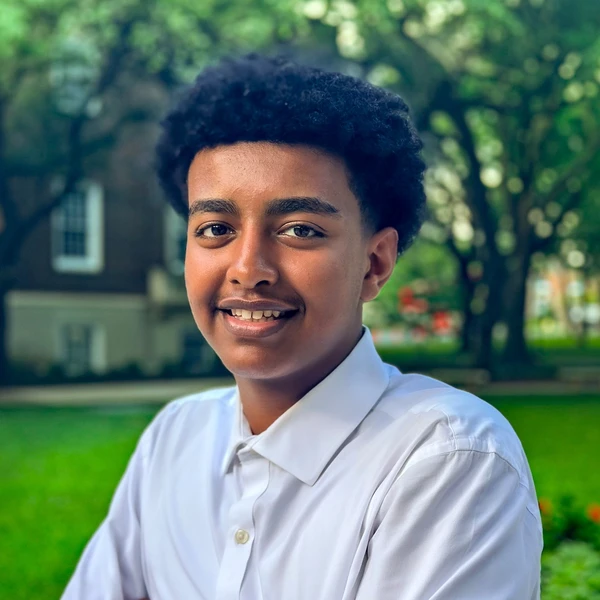
I am a high school senior with a keen interest in Law. As a first-generation student, I want the opportunity to help people who can't speak for themselves. I am a Speech and Debate Captain and am ranked 77th out of 19,000 competitors nationwide. Outside of school, I am deeply involved in law. I am an SMU Rising Scholar Fellow, Chapter lead in High School Democrats of America, and a researcher for Dr. John Ishiyama in Ethnic Identity and Afrobarometer research in Ethiopia. I want to have the opportunity to be able to graduate from college debt-free and not have to worry about financial stress.
Education
Wylie High School
High SchoolMiscellaneous
Desired degree level:
Doctoral degree program (PhD, MD, JD, etc.)
Majors of interest:
- Political Science and Government
Career
Dream career field:
Law Practice
Dream career goals:
Venture Analyst Intern
HP Tech Venture2025 – 2025Door knocker & Worker
Glass and Windows2024 – 2024
Research
Law
SMU — Researcher2025 – 2025Public Policy Analysis
Dr. John Ishiyama — Researcher2025 – PresentLaw
private attorney — intern2024 – Present
Public services
Advocacy
Empower Debate — Executive Director2024 – PresentPublic Service (Politics)
TurnUp Activism — intern2025 – PresentVolunteering
bilal community center — assistant2014 – 2020
Future Interests
Advocacy
Politics
Volunteering
Philanthropy
Aserina Hill Memorial Scholarship
People say that debate teaches you how to argue. Well, debate taught me how to live. Before any debate round, I spent years in the classroom with my head down, in the back of the room, hoping I would not get called on. I attribute every aspect of my development to the individuals who decided to invest in me before I was able to invest in myself.
Currently, I attend Wylie High School, which was a challenging environment that pushed me intellectually and as a person. My passion lies in debate, public service, and helping students identify their capabilities. Debate was the inspiration behind everything that I do. It gave me direction, purpose, and the skill of communicating ideas that I once kept bottled up inside. My mentors presented me with expectations that I never thought were within reach. They were the first individuals in authority who saw me, not as who I was, but as someone with more to offer.
These experiences led me to pursue careers in working with communities. I work as the Director of Rural Recruitment for Empower Debate, a project that provides greater debate opportunities for resource strapped schools. I empower students with leadership skills, which helps them shape their own destinies. After high school, I will pursue law and economics. I would like to serve communities that usually remain unseen, as was my own experience.
The person who impacted me most was a student named Hamza. He entered our program late. He carried a notebook that was not personalized with his name, and he talked softly enough that I had to lean in to hear him. His quiet did not appear peaceful. It seemed like a lifetime of being overlooked. When I asked him why he wanted to begin debate, he said, “I just want to be good at something.”
We began working together. At first, he was not able to get through the constructive speech. His hands shook as he attempted to read. His voice broke every few words. However, he kept coming. Each week, we focused on structure, presentation, rhythm, and conviction. Gradually, he improved. His voice was more consistent. His confidence grew. He began volunteering more. During our end of the season scrimmage, he won his match with the best speech he had ever prepared. He was thrilled. “I did not know I could do this,” he said.
I told him that I always knew he could.
Instances such as this shaped the way I understand giving back. People supported me even when I did not believe in myself. Honoring what I received means passing it on to students who deserve the same chance.
If I were starting a charity, I would begin one called Voice Forward. The purpose would be to help students who feel invisible find strength in their own voice. Voice Forward would serve youth in rural and low income communities. Volunteers would provide debate classes, help with writing speeches, and teach students the tools of effective communication. The mission would be to lead students down a path of discovery, just as others led me.
I would not be who I am without the people who gave to me. Voice Forward would be my way of giving that gift to someone else.
Summer Chester Memorial Scholarship
People think that debate teaches one how to argue. Well, I learned how to live through debate. Before I was ever in a debate, I spent years in school with my eyes cast down, sitting in the back of the room, hoping I would not be called on. Wylie High was the first school that challenged me, as opposed to letting me slide. It’s because of this that I choose to pursue further education.
I did not become confident overnight. My high school was challenging in ways that I did not see coming. Administrators and instructors pushed me. Coaches forced me to think deeper. Debate, the thing that gave me terror initially, was the thing that helped rebuild me. It forced me to speak with a shaking voice. It forced me to address the fear that I had been holding for years. Each round, every practice, every call that was well past midnight with my debate partner was something that helped fortify something within me that I once believed was weak.
After I began growing, though, I realized something important. The confidence that I was able to gain was not mine alone. It was a gift from a group of people who were prepared to invest in me. Once I realized this, I realized that I also had a responsibility.
It is for this reason that I began working with Empower Debate, which aims to increase debate accessibility in under-resourced schools. Currently, I hold the position of Director of Rural Recruitment. These students remind me of who I once was. They are shy, uncertain, and unnoticed. But they hold greatness within them, they simply haven't been exposed to the strength of their own voice.
Among the students that I will always remember is Hamza. He entered our program relatively late. He had a notebook with no one’s name on it, and he barely talked above a whisper. His quiet didn't seem calm. It was like a lifetime of being underestimated. When I asked him the reason for wanting to learn debate, he explained, "I just want to be good at something." I knew exactly what he was getting at.
But we began working together. At first, he was not able to finish his constructive argument without stopping. His hands shook as he attempted to read. His confidence was barely there. But he kept coming back. Each week, he challenged himself. We practiced structure, presentation skills, and the understanding that he deserved his voice to be heard. And with time, he gained more control over his voice. He volunteered more often. He was able to maintain eye contact as he argued.
Incidents such as that are exactly what fuel my passion for education. Wylie High School inspired me to seek higher education, but more importantly, I realized that education can be the difference that changes one’s course in life. Debate gave me a different perspective on myself. Empower Debate gave me a different perspective on others. Serving students in rural areas taught me that sometimes, all it takes is one person’s faith in you in order to unlock your entire future.
Wylie High School gave me a voice. Empower Debate taught me how to use that voice. College will allow me to enhance that voice so that I may further inspire individuals such as Hamza, individuals who merely require one person in their corner until they can believe in themselves.
Mrs. Yvonne L. Moss Scholarship
People think that debate teaches one how to argue. Well, I learned how to live through debate. Before I was ever in a debate, I spent years in school with my eyes cast down, sitting in the back of the room, hoping I would not be called on. Wylie High was the first school that challenged me, as opposed to letting me slide. It’s because of this that I choose to pursue further education.
I did not become confident overnight. My high school was challenging in ways that I did not see coming. Administrators and instructors pushed me. Coaches forced me to think deeper. Debate, the thing that gave me terror initially, was the thing that helped rebuild me. It forced me to speak with a shaking voice. It forced me to address the fear that I had been holding for years. Each round, every practice, every call that was well past midnight with my debate partner was something that helped fortify something within me that I once believed was weak.
After I began growing, though, I realized something important. The confidence that I was able to gain was not mine alone. It was a gift from a group of people who were prepared to invest in me. Once I realized this, I realized that I also had a responsibility.
That is the reason I began working with Empower Debate, which aims to increase debate accessibility in under-resourced schools. Currently, I hold the position of Executive Director of Rural Recruitment. These students remind me of who I once was. They are shy, uncertain, and unnoticed. But they hold greatness within them, they simply haven't been exposed to the strength of their own voice.
Among the students that I will always remember is Hamza. He entered our program relatively late. He had a notebook with no one’s name on it, and he barely talked above a whisper. His quiet didn't seem calm. It was like a lifetime of being underestimated. When I asked him the reason for wanting to learn debate, he explained, "I just want to be good at something." I knew exactly what he was getting at.
But we began working together. At first, he was not able to finish his constructive argument without stopping. His hands shook as he attempted to read. His confidence was barely there. But he kept coming back. Each week, he challenged himself. We practiced structure, presentation skills, and the understanding that he deserved his voice to be heard. And with time, he gained more control over his voice. He volunteered more often. He was able to maintain eye contact as he argued.
Incidents such as that are exactly what fuel my passion for education. Wylie High School inspired me to seek higher education, but more importantly, I realized that education can be the difference that changes one’s course in life. Debate gave me a different perspective on myself. Empower Debate gave me a different perspective on others. Serving students in rural areas taught me that sometimes, all it takes is one person’s faith in you in order to unlock your entire future.
Wylie High School gave me a voice. Empower Debate taught me how to use that voice. College will allow me to enhance that voice so that I may further inspire individuals such as Hamza, individuals who merely require one person in their corner until they can believe in themselves.
Healing Self and Community Scholarship
My dad always told me: “When your body fails you, never fail your spirit.” When ALS stole his voice, his words became my lifeline to this moment. Today, I realize that “strength is not just surviving pain but surviving pain when you have no control over it.”
It broke me in ways that I did not realize at the time but have come to realize now: Watching my dad lose his strength and his speech broke me. It hit me just how much illness affects not just our bodies but also our minds. My family had just this thing to deal with every single day. And seeking therapy was never an option because it was too costly and just too stigmatized within my community.
This experience has solidified my passion for providing care for one's mind as accessible as conversation itself. My goal is to establish a series of programs initiated by students to place counselors, listeners, and art therapists directly within schools-even those schools starting off with limited resources to begin with. No one should have to choose between buying groceries or therapy or between silence and shame.
My dad's illness opened my eyes to the reality that at some point, the most vocal pain is also the unspoken pain because it is this realization that makes me want to be the one speaking for unspoken pain.
Public Service Scholarship of the Law Office of Shane Kadlec
My dad would always say to my brother, "You've got what it takes to be a lawyer." However, when he looked at me, he smiled and said, "You'll be fine doing something else." I tried to smile, but deep down, I’d always felt connected to law, even if my dad didn't see it. I was the son who never spoke at the dinner table, while my brother was the star with everyone's attention.
I remember walking into Wylie High School alone, holding onto my schedule tightly, afraid that someone would notice how nervous I was. My hands shook as I searched for my first class, and my eyes stayed glued to the floor so that I wouldn't have to make eye contact with anyone else.
I was tired of not being able to voice my thoughts. I decided to join debate, something that would change absolutely everything about how I viewed myself. At first, the thought of standing in front of a crowd and debating scared me. But I wasn't going to let fear get to me this time. I joined debate to convince myself that I was capable of speaking up, even if my voice did shake.
At the beginning, I would go into each round with sweaty palms and words dropping mid-sentence. I lost all four practice rounds before my first tournament. It was humiliating, but I took the criticism as a challenge, practicing on my own. Eventually, my tears, time, and sweat all paid off when I started winning local tournaments and even qualifying for nationals in just my first year. After spending seven days a week reading and drilling in isolation, I began to believe my voice actually mattered.
As a senior, I can look back and understand just how far I've come. The freshman who started high school in fear of being noticed would never have thought that one day he would be captain of a team. I still ask myself to this day who I would be without joining debate. Joining debate didn't just make me a better speaker but also made me understand who I am as a person. I mentor underclassmen in debate, guiding them through the anxieties and obstacles I once faced. Every single time I doubted myself, it became a learning experience in patience and growth. Debate did not teach me to debate; it taught me how to have faith in myself, speak with purpose, and listen to my own voice.
The SMU Law Program furthered my passion by allowing me to engage with actual legal reasoning and courtroom preparation. It reaffirmed for me that my calling is not just to speak but to use my voice in the service of justice. For me, law is the most direct means to translate conviction into impact, to turn empathy into action.
At the end of the day, debate was never the destination. It was the training ground that proved to my father and me that I was capable all along. It gave me the courage to imagine myself as a lawyer, the ability to argue effectively, and the confidence to fight for those who cannot fight for themselves. The question I ask myself every day is how I will transfer the skills I have learned in debate into being a lawyer who truly helps people. And although I haven't found all the answers yet, this much I do know: if debate can transform the shy, hesitant student I once was into the speaker that I am today, then the courtroom is no longer a dream but a possibility for me.
Heather Lynn Scott McDaniel Memorial Scholarship
Some mornings, I still wait to hear my dad call my name. Before ALS took his voice, not a day went by without him greeting me with a joke or question about school. When the jokes stopped, the house grew quiet, and life changed in ways I never expected.
My dad's diagnosis forced my family to rebuild from the ground up: Mom became a full-time caretaker for him, and hospital bills took the place of comfort in the form of savings. We learned to measure time in appointments and small victories. I learned what it means to watch someone strong become fragile, and what it means when the ground beneath your feet feels unsteady - to stand still.
At first, I just couldn't handle it. Grades slipped, motivation disappeared, and each day felt like walking through fog. I would come home and see my dad's wheelchair as a constant reminder of just how unfair life can be. I was angry, but even more than anger, I felt helpless. Depression followed me everywhere, convincing me that everything I did mattered little.
Then one evening my mom said to me, "You cannot let this disease take both of you." And somehow, those words stuck. I began to see that while I could not control what was happening to my dad, I could control how I reacted to it. I started studying again, trying to rebuild a sense of purpose. Each exam passed became a minor triumph, an act of defiance against despair.
Money became another battle. My mom had to leave her job, and we came dangerously close to losing our home. I learned how to stretch every dollar, to live with "no" as a normal answer, and to find gratitude in what we still had. Some days, I went without lunch so there would be enough for groceries. Yet I refused to let our situation decide my future. Education became more than a goal; it became proof that struggle does not have to end in surrender.
Through all of this, I found strength in places I never thought to look. I learned to help my dad communicate when words failed him. I learned patience, empathy, and persistence. I learned that resilience is not the absence of pain but the decision to keep going in spite of it.
This scholarship would lighten a burden my family has carried for years. It would allow me to focus fully on my classes without watching my mom choose between bills and books. It would mean security, relief, and the opportunity to continue building the life ALS tried to take from us.
My dad cannot speak anymore, but his eyes tell me everything. Every time I talk to him about my classes and plans, he smiles. That is all it takes for me to be reminded why I get up and keep going forward. I will never be able to go back in time and somehow magically heal him, but I will live a life that honors him.
Education gave me direction when life tried to take it away. With this opportunity, I can continue to grow, give back, and most importantly, live out the lesson my dad's illness taught me: strength is found not in what life spares us from but in how we rise after it changes us.
FIAH Scholarship
As a child, my comfort zone was silence. I was the child who was silent in all classes, the one teachers didn't call on, the one who never raised a hand. I assumed that being quiet made me invisible. There were things I wished to say, and the words never appeared to come out.
All this was changed on the day that I joined debate.
My first tournament found me shaking, as I could barely stand. My voice failed, my arguments disintegrated, and my thoughts told me that I had already failed by even beginning. I sat alone in the hall after my first round, looking at the floor, questioning if it would be worth it at the end. There was a coach beside me, and he told me something that I will never forget. One does not have to be the loudest to be heard.
That was my turning point.
My perception of debate changed to more than a contest. It was one of the classes where I was taught to be courageous in my own manner. I learned not only facts and reasoning but humans. I heard the way other people talked, how they stopped or how they employed silence to create meaning. Slowly, I found my rhythm. I would get into a debate as my means of showing that silent people do not lack power. And our power is patience, thought, and words, which do matter.
I spoke more and more, understanding that there was no winning-round debate. It was concerning the use of words to represent something. I started to mentor new students, most of them no less nervous than I used to be. That was what my coach had said to me; I saw them develop. Confidence was given to me by debate. It gave me purpose.
It was that object that directed me toward the law.
I do not want to be the winning lawyer of a case, but rather an attorney for justice on behalf of the helpless. I would like to defend, explain, and let people's voices be heard through my voice. Another kind of debate round is found in the courtroom, which involves real-life consequences. I would like to be that kind of lawyer who would listen first and speak second-that would fight with his mind and feelings.
I have already started planting those seeds of change in my community. I now help organize workshops, which give students from smaller schools an opportunity to debate for the first time. We were able to get 3 thousand students in our first year. I was able to see freshmen with all their shyness give a first speech, and I saw the spark that once rescued me. That is why I can tell this is the right path. Debate not only made me a speaker; it made me one who believes in voices, all voices.
It is one such belief that I will bring into my career. I would like to make legal materials and advocacy available to people who seem lost, who are most intimidated by the system. I'd like to be able to show that power and compassion can be used in the same sentence.
I may have been the quiet kid, but I understand: even the quietest voice could be a change maker when it has something to say that's the right thing. I'm not trying to be the most vocal, but I want to be the one who will see others have an opportunity to speak too.
Nabi Nicole Grant Memorial Scholarship
“You have 24 hours left.”
And those were the words I heard first when I opened my eyes. The physician made it flat, as it was merely one more sentence of his time. But to me it seemed that the air had cleared out of the room. My mother was crying. Her hands were shaking. I could see how her fingers grasped mine as she was attempting not to allow me to slip away. The machines continued to beep, the lights continued to hum, but time no longer existed.
Twenty-four hours. That's what I was worth now. A number. A deadline. I did not even realize what was wrong on my part. I only felt that my body was heavy, my chest was sore and my head was noisy. I wasn't ready. I hadn't prayed enough. I hadn't said sorry enough. I hadn't lived enough.
At first, I was angry. Furious with the world, furious with Allah, furious with myself. Why me? Why now? I would like to inquire, but I was too weak to speak. I shut my eyes and made an attempt to breathe. And then, as I heard her cry, my mother told me something I will never forget to this day. Nothing loads a soul more than God can. (Qur'an 2:286).
I had heard that verse before. It was what my granny used to recite when life was too heavy. However, on this night it seemed to be written to me. I said it again and again in my head, and each word crowded in the places that had been occupied by fear. As Allah does not overburden a soul without its capacities.
It didn't erase the pain. It didn't promise I would live. But it brought me such as I had never had before, peace. I knew faith did not work to remove the storm. The fact that Allah controls the rain and the rainbow was supposed to remind me.
I went to sleep saying that verse like breathing. As I awoke, something had happened. The physicians were speechless in amazement. My numbers were improving. My heart rate steadied. They said it didn't make sense. I didn't need it to.
That verse saved me. It still does. Whenever I believe I am breaking, I repeat it. I go back to it when I am tired, when I fail, when I lose hope. It makes me remember that all the sorrows are weighed, all the trials administered with a purpose, and that I exist now only under a kind of usury of the breath I draw.
Prior to that evening, I had faith in Allah due to my upbringing. I thought because I felt him after the night. I do not know why He gave me a second opportunity. Perhaps to remind me that life is not a given but gratitude is. Perhaps to demonstrate to me that faith is not something you learn by recitation, but an experience.
I continue to say that verse day by day. Here and there, here and there, here and there: sometimes under my breath, sometimes in the middle of the night, sometimes when I am alone. It reminds me that Allah sent me to bear some burden because He knew that I could do it. And when He had confided to me that, I can confide to him all the rest.