user profile avatar

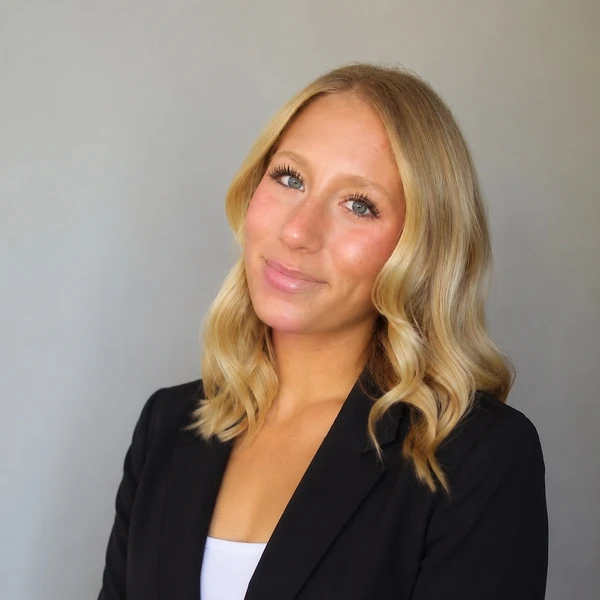
Hana Phelps

1x

Finalist

Bio

By the time Hana Phelps decided to pursue nursing, she had already spent years in roles that asked her to stay calm when things got hard. She guarded lives at a summer camp. She managed emergencies in private childcare. She showed up to 5am rowing practice in the dark and competed at regattas that demanded everything she had. What she kept noticing was that the moments requiring the most of her were the ones she found most meaningful. Now a first-year nursing student at ETSU, Hana brings that clarity of purpose to her studies alongside real credentials: a dual associate's and high school diploma earned simultaneously, a CNA certificate already in hand, and years of hands-on experience in health monitoring, emergency response, and caregiving. She's not figuring out if nursing is right for her. She already knows.

Education

The University of Tennessee-Chattanooga

Trade School
2026 - 2026
  • Majors:
    • Medicine

East Tennessee State University

Bachelor's degree program
2026 - 2030
  • Majors:
    • Alternative and Complementary Medicine and Medical Systems, General
    • Registered Nursing, Nursing Administration, Nursing Research and Clinical Nursing

Chattanooga State Community College

Associate's degree program
2024 - 2026
  • Majors:
    • Liberal Arts and Sciences, General Studies and Humanities

Miscellaneous

  • Desired degree level:

    Doctoral degree program (PhD, MD, JD, etc.)

  • Graduate schools of interest:

  • Transfer schools of interest:

  • Majors of interest:

  • Not planning to go to medical school
  • Career

    • Dream career field:

      • Medical Practice
    • Dream career goals:

      Nurse Practitioner

      Sports

      Rowing

      Club
      2021 – 20254 years
      Wieland Nurse Appreciation Scholarship
      Nursing wasn't a decision I made sitting in a guidance counselor's office circling career options. It was something I recognized about myself slowly, through years of experience that kept pointing in the same direction. When I was twelve, COVID shut everything down and the world got very small very fast. While most kids my age were on TikTok, I was watching surgeries online. The precision of it, the stakes, the way a team of people could work together in silence and save a life, it fascinated me in a way I hadn't felt about anything before. Something about seeing the inside of the human body didn't scare me. It made me curious in a way that felt important. That curiosity followed me into high school, though the path wasn't perfectly straight. When I took Biology through my dual enrollment program, I failed it the first time. I was juggling rowing practice, part-time work, a full course load, and a single parent household, and something had to give. Biology gave first. But I retook it, and the second time I got a teacher who taught genetics and the human body in a way that made everything click. I didn't just pass the class. I fell in love with the subject. The way our genes carry information, the way family history lives inside us at a cellular level, the way biology can explain so much of what we experience. I was hooked, and I haven't looked back since. From there I built a life that kept pointing toward healthcare. I became a certified lifeguard and camp counselor, monitoring wellness and responding to injuries for groups of up to twenty kids. I provided childcare for multiple families for five years, administering first aid and staying calm when emergencies came up. I completed my CNA certification alongside a dual enrollment program that earned me both my high school diploma and an Associate of Arts degree simultaneously. Every one of those experiences put me in a position of responsibility for someone else's wellbeing, and every time, I wanted more of it. What cemented nursing specifically was the CNA work. Being in clinical settings showed me what patient care actually looks like up close. I watched nurses manage the medical while also holding the human. They adjusted a pillow and asked about a patient's grandchildren in the same breath. They noticed the family member in the corner who hadn't eaten. They understood that healing happens in the whole environment, not just in the chart. That's the kind of nurse I am working to become. I think about the Wieland mission in exactly those terms. The idea that a recliner or a sleep sofa is part of the healing process isn't a stretch to me. Comfort is clinical. Environment is care. The nurses I admire most understand that instinctively. I'm currently a first-year nursing student at East Tennessee State University on a path toward becoming a Nurse Practitioner, focused on underserved communities where whole-person care is most needed and least available. I found out about this scholarship through Bold.org. I signed up knowing my inbox would never be the same, but when loans only go so far and the gap between where you are and where you're trying to go is real, you do what it takes. This scholarship would help me do exactly that.
      Ethel Hayes Destigmatization of Mental Health Scholarship
      Mental health wasn't something we talked about growing up. It was just something we lived around. My dad left when I was ten. That alone would have been hard enough. But the harder part was what came after, which wasn't absence exactly, it was inconsistency. When he did show up, I never knew which version of him was walking through the door. Sometimes he was warm and present. Sometimes he was completely checked out. Sometimes he was angry in ways that didn't make sense until I got older and understood that he has bipolar disorder, unmedicated, and has for most of his life. My grandmother and uncle carry the same diagnosis. So mental illness isn't an abstract concept to me. It has faces I love attached to it. Growing up in that environment taught me things no classroom could. I learned how to read a room before I learned long division. I learned that someone can love you and still not be able to show up for you, and that those two things can exist at the same time without either one canceling the other out. I learned that silence around hard things doesn't make them smaller. It just makes them lonelier. What I didn't have language for until recently was how much that upbringing shaped my own relationship with my mental health. Because bipolar disorder runs deep in my family, I've had to become intentional about watching myself in ways most 19 year olds probably don't think about. I check in with how I'm sleeping. I notice when I'm withdrawing. I pay attention to my mood in ways that feel less like self-care and more like self-monitoring, because I know what it looks like when someone doesn't. I've watched it play out in real time with people I love, and I refuse to let that be my story by default. That vigilance is part of what drew me to nursing, specifically the genetics of it. Knowing that bipolar disorder runs through three generations of my family means I can't afford to be passive about my own mental health. But it also sparked something bigger in me, a genuine curiosity about how biology and mental health intersect, and how that knowledge can change outcomes when someone actually uses it. I want to be a Nurse Practitioner who understands that a patient's family history isn't just a checkbox on an intake form. It's a map. And for a lot of people, nobody has ever helped them read it. I think about the patients who will sit across from me someday, people who maybe grew up like I did, in households where mental health was the elephant in every room, where getting help felt like admitting weakness, where the people who needed the most support were the least likely to ask for it. I want to be the person in the room who already understands that without them having to explain it. I don't think my story is unique. I think it's common and underreported. Kids who grow up with a mentally ill parent often become hyperaware, hyperresponsible little adults. We learn to manage everyone else's emotional weather while quietly ignoring our own. The scholarship this essay is written for exists because that silence has a cost, and I've seen that cost up close. I'm applying because I believe that people who have lived inside mental illness, not as a patient but as a witness, have something important to contribute to the conversation. And I believe the best thing I can do with what I've survived is to make sure I stay healthy enough to help someone else.
      Hana Phelps Student Profile | Bold.org