user profile avatar

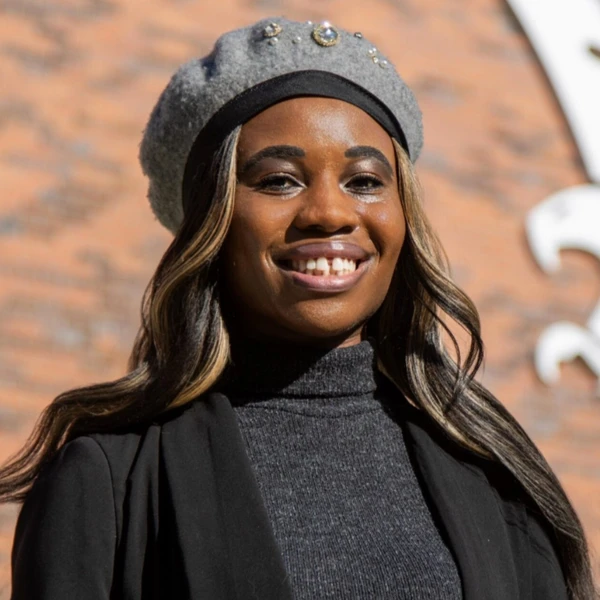
Hawa Eliason

1x

Finalist

Bio

My name is Hawa “Halla” Eliason. I am currently a pre-medical student, and I have dedicated my life to becoming a pediatric neurologist. I believe that using my love for learning to treat sick and vulnerable populations is the most honorable cause to which I could dedicate my life. In the past, I worked with children at a crisis nursery, and that occupation solidified my desire to become a pediatric neurologist. I gained direct exposure to healthcare by working at a cancer clinic and as a caregiver in memory care. I have also conducted bacterial, cellular, and histopathology research at my university. Apart from research, I enjoy shadowing neurologists and a neuropsychologist. In addition to shadowing and research, I find purpose in volunteering at my university’s food pantry and participating in STEM events to teach children about science. Previously, I served as the Senator for the College of STEM at my university and became a member of the STEM Student Senate. In the upcoming months, I am planning to volunteer at a local hospital to spend time with patients who have suffered traumatic brain injuries. I am grateful for the opportunity because I have found the best part of medicine to be the human aspect of it.

Education

Spokane Community College

Associate's degree program
2023 - 2027
  • Majors:
    • Physics

Eastern Washington University

Bachelor's degree program
2023 - 2026
  • Majors:
    • Biological and Biomedical Sciences, Other

Spokane Falls Community College

Associate's degree program
2016 - 2025
  • Majors:
    • Biological and Biomedical Sciences, Other

Miscellaneous

  • Desired degree level:

    Doctoral degree program (PhD, MD, JD, etc.)

  • Graduate schools of interest:

    • Pacific Northwest University of Health Sciences
    • Washington State University
  • Transfer schools of interest:

  • Majors of interest:

    • Neurobiology and Neurosciences
    • Medicine
    • Health Professions and Related Clinical Sciences, Other
  • Planning to go to medical school
  • Career

    • Dream career field:

      • Medicine
    • Dream career goals:

    • Caregiver

      Columbia Landing
      2023 – 2023
    • Medical Scribe

      Cancer Care Northwest
      2023 – 2023

    Research

    • Neurobiology and Neurosciences

      Eastern Washington University — Laboratory Student
      2025 – 2025
    • Biochemistry, Biophysics and Molecular Biology

      Eastern Washington University — Laboratory Assistant
      2025 – 2025
    • Cell/Cellular Biology and Anatomical Sciences

      Eastern Washington University — Laboratory Student
      2025 – 2026

    Public services

    • Volunteering

      Eastern Washington University — Volunteer
      2024 – 2025
    • Volunteering

      Eastern Washington University — Food Pantry Volunteer
      2024 – 2025
    • Advocacy

      ASEWU — Senator for the College of Science, Technology, Engineering, and Mathematics
      2025 – 2025

    Future Interests

    Advocacy

    Volunteering

    Philanthropy

    Cyrilla Olapeju Sanni Scholarship Fund
    "Once you are an immigrant, you never forget that you are one." — Jorge Ramos I shifted around in my chair, attempting to avoid my teacher's gaze. Even then, I could still feel her eyes on me. I hated parent-teacher day. I dreaded it all throughout middle and grade school. It was the day that my secret was exposed to all of my peers—the secret that I did not have a mom or dad who looked like me. This observation produced a slew of questions, which ultimately revealed that I was adopted from Africa. The inquiries from my peers often ranged from why my skin was so dark to whether I ever saw lions in Africa. I often laughed at the absurdity of their questions, but I had no recollection of my life in Africa. My brother and I had been adopted by American parents when I was three and my brother was one. It was not until I was nine years old that my adoptive parents also brought my older sisters to America. My childhood amnesia has robbed me of my earliest memories of immigration, but I have yet to forget the adversities that I faced when attempting to adapt to a country that deemed me to be an outsider. Reminders of my African heritage were the most frequent at home. "Don't carry your laundry basket on your head," said my adoptive dad. "It makes you look African." "I am African," I replied. I remember how he stared at me—as if he knew that I was right, but he still expected me to comply with his demand. It was a demand that seemed not only as superficial as removing the laundry basket from the top of my head but as visceral as renouncing my African roots. On one occasion, my father declared that "if it wasn't for him, I would be dead in Africa." He also insisted that Africans and Black people in general were unintelligent. As for my older sisters, our adoptive parents believed that because they had left Africa at an older age, they were incapable of finding jobs and leading independent lives. "They are going to live in the basement for the rest of their lives," said my adoptive mom. Like helpless dependents, she never envisioned a fate greater for them than that. My siblings and I did not experience challenges that many immigrants face, such as financial and language barriers. Even the war and poverty that led to my adoption are far beyond what I can recall. Instead, we faced prejudice related to our African heritage. Rather than internalizing the limitations that were set for us, my sisters became Certified Nursing Assistants and mothers. My brother also fulfilled his dream of becoming a father. As for me, I just graduated as a pre-medical student with a Bachelor of Science. Next, with the blessing of a scholarship, I hope to complete the remaining physics classes that I need to apply to medical school. It was not too long ago that I was speaking to my niece on the phone when she asked me what I was going to school for. I explained that I was studying to become a pediatric neurologist and that I primarily learned about biology and chemistry. She gasped and told me that she had just done a chemistry experiment. I smiled. Maybe she will become a scientist one day. Maybe she will become a teacher, a lawyer, or an astronaut. Whatever she wants to be, I only hope that she knows that she can.
    Byte into STEM Scholarship
    “If you only do what you can do, you will never be more than you are now.” — Kung Fu Panda I often felt like the Kung Fu Panda of pre-medical students. Throughout my education, I doubted my competence and intellect among my pre-medical peers. Similarly, Po, the chosen Dragon Warrior, doubted his place among the gifted Kung Fu warriors known as the Furious Five. At first glance, Po’s self-doubt appears grounded in self-awareness because, on the surface, he is not a conventional Dragon Warrior. He is a large panda who struggles to climb the stairs while his peers race effortlessly past him. Furthermore, he internalizes the external voices that reinforce his insecurities. I did the same. As a young Black girl, my adoptive Caucasian father told me that Black people were unintelligent and that African Americans were followers rather than leaders. His words shaped how I perceived myself and limited what I believed I was capable of becoming. I often wondered why my mind felt too fractured to keep up with my classmates. My peers seemed to perform calculations effortlessly, while I often felt lost and helpless. I imagine this is how Po felt when the Furious Five leaped gracefully through their training while he struggled to catch his breath. It was not until college that I was diagnosed with dyscalculia, a learning disability that primarily affects mathematical comprehension. However, dyscalculia also impacts pattern recognition, graphical interpretation, and the application of formulas. My diagnosis often made medicine feel unattainable. I knew I would need to complete remedial math courses, pre-calculus, and upper-division chemistry classes to become eligible for medical school. Psychologically, my reaction mirrored Po’s response when he learned he would have to defeat Tai Lung, a formidable warrior who had recently escaped from prison. Initially, Po responds with panic and runs away. Like Po, I was filled with trepidation when confronted with becoming more than I believed I could be. Yet despite the self-doubt that weighed heavily on me, I chose to pursue my aspirations in medicine. That decision led me to shadow neurologists and a neuropsychologist, serve as the elected Senator for STEM at my university, complete upper-division biology and organic chemistry courses, volunteer at my university’s food pantry, care for children at a crisis nursery, conduct bacterial and oncology research, work as a caregiver for elderly individuals living with dementia, and gain experience as a medical scribe at a cancer clinic. Each of these experiences has challenged me to grow both professionally and personally. More importantly, they have instilled in me the values of service, advocacy, resilience, and intellectual curiosity. Po may not be the conventional Dragon Warrior, and I may not be the conventional pre-medical student. However, just as Po discovered that the best way to use his love for Kung Fu was to protect those who could not protect themselves, I have discovered that applying my curiosity and dedication to science toward caring for sick individuals is the most meaningful purpose to which I can dedicate my life. I am deeply grateful that I chose a path that challenged me to do what I once believed I could not do and to use my education to help alleviate suffering. I look forward to continuing to grow through medicine, and I am grateful to be considered for a scholarship that would help make that journey possible.
    GD Sandeford Memorial Scholarship
    “People may not remember what you said, but they will remember how you made them feel.” — Maya Angelou When I first began working in memory care, I was frequently told that the elderly residents would not remember anything. Many of them suffered from dementia and would ask me who I was upon seeing me for the fourth or fifth time. Nonetheless, I never minded repeating my name, and I generally treated each daily encounter as though it were the first time. There was one resident in particular who demanded that I leave her room shortly after I became acquainted with her. She did not take kindly to unfamiliar faces, and I remained cautious when approaching her. Following gradual encounters, she began to initiate conversations with me. She loved to talk about football and riding horses. I began assisting her with her bedtime routines, and she started to refer to me as her nurse. One night, after changing her clothes and helping her into bed, I began walking toward the door. Yet, as I reached for the handle, I paused at the sound of her voice. “You know,” she said, “I miss you when you’re gone.” I turned to face her and said that I missed her too. Her sentiment reminded me of the words that the late Maya Angelou once said: “People will forget what you said, people will forget what you did, but people will never forget how you made them feel.” I have since kept that sentiment in mind while continuing my education to become a pediatric neurologist. When shadowing neurologists and neuropsychologists at the hospital, I am always reminded of the human aspect of medicine. Hearing the stories of patients and witnessing their battles with mortality solidifies my desire to become a physician. I have always found the brain to be the most fascinating organ, and I believe that applying my fascination with neuroscience to treating sick individuals is the most honorable way that I could utilize my degree and interests. Following the completion of my degree, I am eager to begin volunteering at the hospital to spend time with patients who have suffered traumatic brain injuries. Furthermore, I plan to work with neurodivergent children, just as I have previously done in healthcare. Working to earn my bachelor’s degree has been an arduous journey for me. Struggling with a learning disability, as well as food and housing insecurity, often made medicine seem far beyond my grasp. At times, I worried that I would be unable to complete my degree. Yet, when I thought about the patients whom I have met and hope to one day meet, I remained determined to overcome every adversity that I encountered. Now, I am a senior, and I have nearly completed my pre-medical studies before applying to medical school. I am grateful to be considered for a scholarship that would make it possible for me to one day treat vulnerable populations in my community.