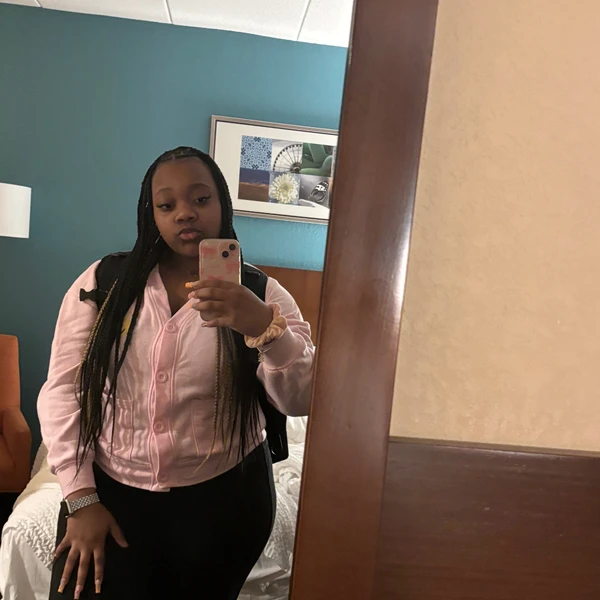
Hobbies and interests
Dance
Gymnastics
Art History
Reading
Young Adult
I read books multiple times per week
Hailee Hedgespeth
1x
FinalistHailee Hedgespeth
1x
FinalistBio
My goal is to blend academic excellence, community service, and artistic passion to make a meaningful impact. As a Full IB student with a 3.5 unweighted GPA and 4.1 weighted GPA, I thrive in rigorous coursework while leading four community service clubs, showing my dedication to helping others. Dance and gymnastics have shaped my resilience, discipline, and creativity, pushing me to overcome challenges. I am a strong candidate for this scholarship because I embrace opportunities with a growth mindset, balancing my studies with leadership, service, and artistic expression, all while striving to contribute positively to society.
Education
Cass Technical High School
High SchoolMiscellaneous
Desired degree level:
Bachelor's degree program
Majors of interest:
- Geography and Environmental Studies
- Geological and Earth Sciences/Geosciences
- Geography and Cartography
Career
Dream career field:
geography
Dream career goals:
Assistant manager
Tina Marie Shop2024 – Present2 years
Sports
Cheerleading
Varsity2020 – 20222 years
Awards
- yes
Dancing
Varsity2012 – Present14 years
Awards
- yes
Artistic Gymnastics
Intramural2021 – Present5 years
Research
Biology, General
School — Main2024 – 2025
Arts
Teen hype & Cass Technical High School
Actingno2023 – 2024
Public services
Volunteering
Teen hype — Board member2022 – 2024Volunteering
For girls only — General2024 – PresentVolunteering
Great Girls — General2024 – PresentVolunteering
Z-Club — Secretary2021 – 2022Volunteering
Red Cross Club — General2024 – Present
Valerie Rabb Academic Scholarship
I chose geography as my major because maps have always been one of the few things that just click in my brain without effort. I do not even remember when it started. I just know that whenever I look at a map, everything lines up in my head like it has been there forever. If I visit a place one time, that is all I need. I can picture the streets and the turns and the buildings like I have been there every weekend. It is not something I try hard to do. It just happens. Some people memorize songs. Some people remember faces. My brain decided its whole personality would be remembering places.
Whenever I get an actual map in my hands, it feels like everything slows down and becomes easy. I know most people need their phone to get anywhere and the minute their GPS glitches they act like they are stranded in the wilderness. But for me a simple paper map is enough. I can look at the routes and landmarks and it all comes together fast. It feels calm and satisfying the same way some people feel when they draw or work on puzzles. Except I am not drawing or coloring. I am literally just reading the world.
That is a big part of why geography makes sense for me. It is not just that I like maps. It is that maps help me understand everything around me. When you look at one you can see patterns that you never notice in real life. You can see how neighborhoods grow and how people move from place to place. You can see the way land and water shape our lives without anyone even talking about it. A map says so much without using words. And I guess I am the person who can look at one and instantly understand the story behind it.
Studying geography lets me take something I am already good at and learn the deeper side of it. I get to learn why things are shaped the way they are and why certain areas look or function the way they do. It feels real and connected to the world instead of something random that I will forget the second the test ends. It helps me see the world in a clearer way. I like when things make sense, and geography is one of the few subjects where the more I learn, the more everything comes together.
Another reason I chose it is because I can actually see a future with it. A lot of majors leave you confused about what happens next, but geography gives you options. You can work with cities. You can study the environment. You can make maps. You can help design better places for people to live. You can travel. You can protect natural spaces. There is no one path you are stuck in. And that kind of flexibility makes me feel like I am choosing something that will grow with me instead of limit me.
But the biggest reason is that geography feels like the most honest choice for me. It matches what I am good at. It matches the way my brain works. It matches what I actually enjoy instead of something I pretend to like. When I think about my future I want to study something that fits me. I do not want to force myself into a major that drains me or makes me feel lost. Geography feels right. It feels like me choosing something I actually understand and want to build on.
Chris Ford Scholarship
I chose geography as my major because maps have always been one of the few things that just click in my brain without effort. I do not even remember when it started. I just know that whenever I look at a map, everything lines up in my head like it has been there forever. If I visit a place one time, that is all I need. I can picture the streets and the turns and the buildings like I have been there every weekend. It is not something I try hard to do. It just happens. Some people memorize songs. Some people remember faces. My brain decided its whole personality would be remembering places.
Whenever I get an actual map in my hands, it feels like everything slows down and becomes easy. I know most people need their phone to get anywhere and the minute their GPS glitches they act like they are stranded in the wilderness. But for me a simple paper map is enough. I can look at the routes and landmarks and it all comes together fast. It feels calm and satisfying the same way some people feel when they draw or work on puzzles. Except I am not drawing or coloring. I am literally just reading the world.
That is a big part of why geography makes sense for me. It is not just that I like maps. It is that maps help me understand everything around me. When you look at one you can see patterns that you never notice in real life. You can see how neighborhoods grow and how people move from place to place. You can see the way land and water shape our lives without anyone even talking about it. A map says so much without using words. And I guess I am the person who can look at one and instantly understand the story behind it.
Studying geography lets me take something I am already good at and learn the deeper side of it. I get to learn why things are shaped the way they are and why certain areas look or function the way they do. It feels real and connected to the world instead of something random that I will forget the second the test ends. It helps me see the world in a clearer way. I like when things make sense, and geography is one of the few subjects where the more I learn, the more everything comes together.
Another reason I chose it is because I can actually see a future with it. A lot of majors leave you confused about what happens next, but geography gives you options. You can work with cities. You can study the environment. You can make maps. You can help design better places for people to live. You can travel. You can protect natural spaces. There is no one path you are stuck in. And that kind of flexibility makes me feel like I am choosing something that will grow with me instead of limit me.
But the biggest reason is that geography feels like the most honest choice for me. It matches what I am good at. It matches the way my brain works. It matches what I actually enjoy instead of something I pretend to like. When I think about my future I want to study something that fits me. I do not want to force myself into a major that drains me or makes me feel lost. Geography feels right. It feels like me choosing something I actually understand and want to build on.
Hester Richardson Powell Memorial Service Scholarship
The closer I got to God, the louder the devil became.”
On New Year’s Eve, surrounded by the fizz of sparklers and hopeful resolutions, I made one for my soul: truly draw nearer to God. As the preacher’s daughter, I’d long followed scripture out of routine. This time, I wanted a real connection, not just Sunday morning familiarity.
Four days later, the knee I’d hurt in gymnastics refused to heal. After weeks of swelling and second opinions insisting it was an MCL sprain, I got to the hospital midday and was in the hallway. I didn’t have a room or anything because the staff there also thought it was just a knee injury. There were people there throwing up and bleeding their priority. But then they ran some more tests and found out it was more than a knee injury. They got me into a room immediately. They explained the situation to my mother, and by noon the next day, doctors confirmed the truth: two blood clots lodged dangerously in my leg. In that moment, my faith resolution transformed into my lifeline.
Hospital days blurred into one another IV lines, blood thinner jitters, and the endless tick of monitors. Coincidentally, my mom had gotten me a Bible for Christmas. It had been on backorder, and I ended up receiving it while I was in the hospital. I wasn’t expecting it, but I knew that was God saying He was here for me and that there was no time to give up. I devoured Psalms until they echoed in my mind, prayed through trembling lips, and let gospel hymns carry me above sterile walls. My mother’s morning calls, hymnal on speakerphone, became daily anchor points.
Returning to school meant juggling fractured confidence with looming finals. Some teachers granted extensions, while others pressed me to prove my readiness before I’d reopened a textbook. My GPA trembled, but I refused to be sidelined. I arranged meetings with counselors, negotiated deadlines, and refused to apologize for the accommodations my recovery demanded. While classmates leapt across the dance room, I sat out but I was never out of the fight.
Three months later, my hematologist announced the clots had dissolved. With cautious optimism, I slipped back into dance class brace on my knee, heart set on every step. At majorette tryouts, I danced as if every movement was a declaration.
As I look toward college, I carry more than grades and activities. I carry the memory of hospital corridors resonating with my prayers, the challenge of finals makeups, and the joy of rejoining my dance family. Fear may still whisper during late-night essays and new challenges, but faith has taught me to answer with courage. In every obstacle ahead, I won’t just endure I’ll rise above.
Isaiah 41:10 – “So do not fear, for I am with you; do not be dismayed, for I am your God.”
Go Blue Crew Scholarship
I chose geography as my major because maps have always been one of the few things that just click in my brain without effort. I do not even remember when it started. I just know that whenever I look at a map, everything lines up in my head like it has been there forever. If I visit a place one time, that is all I need. I can picture the streets and the turns and the buildings like I have been there every weekend. It is not something I try hard to do. It just happens. Some people memorize songs. Some people remember faces. My brain decided its whole personality would be remembering places.
Whenever I get an actual map in my hands, it feels like everything slows down and becomes easy. I know most people need their phone to get anywhere and the minute their GPS glitches they act like they are stranded in the wilderness. But for me a simple paper map is enough. I can look at the routes and landmarks and it all comes together fast. It feels calm and satisfying the same way some people feel when they draw or work on puzzles. Except I am not drawing or coloring. I am literally just reading the world.
That is a big part of why geography makes sense for me. It is not just that I like maps. It is that maps help me understand everything around me. When you look at one you can see patterns that you never notice in real life. You can see how neighborhoods grow and how people move from place to place. You can see the way land and water shape our lives without anyone even talking about it. A map says so much without using words. And I guess I am the person who can look at one and instantly understand the story behind it.
Studying geography lets me take something I am already good at and learn the deeper side of it. I get to learn why things are shaped the way they are and why certain areas look or function the way they do. It feels real and connected to the world instead of something random that I will forget the second the test ends. It helps me see the world in a clearer way. I like when things make sense, and geography is one of the few subjects where the more I learn, the more everything comes together.
Stewart Family Legacy Scholarship
Leadership and science together are literally shaping the future we are about to live in. Science gives us the knowledge and discoveries, but leadership decides what we do with them. One without the other is lowkey useless. You can have the smartest scientists in the world, but without strong leaders guiding decisions, progress can stall or even go wrong. When leadership and science work together, the future becomes safer, smarter, and more fair for everyone.
Science shapes our future by answering big questions and solving real problems. It helps us understand diseases, climate change, technology, and even how our brains work. Scientific research leads to medical breakthroughs, cleaner energy, and new ways to communicate and learn. For example, science helped create vaccines that saved millions of lives and technology that lets us connect instantly across the world. Science pushes society forward by showing us what is possible and what needs to change. It gives us facts instead of guesses and evidence instead of opinions.
Leadership is what turns those scientific discoveries into action. Leaders decide where funding goes, what policies are created, and whose voices are heard. Good leaders listen to scientists and use evidence to make choices that benefit people long term, not just in the moment. Strong leadership can make science accessible to everyone, not just a few privileged groups. When leaders ignore science, the future can become risky, especially with issues like climate change or public health. Leadership shapes how responsibly science is used and who it helps.
When leadership and science come together, real change happens. Science provides solutions and leadership provides direction. Together, they can address global problems like environmental damage, health inequality, and technological ethics. Future leaders who understand science will be better prepared to make informed decisions and protect future generations. At the same time, scientists who show leadership can advocate for truth and responsibility.
Our future depends on people who can lead with empathy and think scientifically. Leadership and science are not separate paths. They are connected forces shaping the world we are stepping into. If we want a future that is innovative, fair, and sustainable, we need leaders who trust science and scientists who care about people. That combo is powerful and honestly kind of iconic.
Ryan T. Herich Memorial Scholarship
When I think about how I want to contribute to my community after graduation, both in my career and in my personal life, it always comes back to the idea of helping people feel safer, supported, and seen. Growing up in Michigan taught me a lot about how the environment around you shapes everything. Some neighborhoods have resources and opportunities. Others do not. Some areas are easy to navigate and feel welcoming. Others feel forgotten. Geography showed me that location is not random. It affects your chances, your health, your future. And I want to use my skills to help fix that.
My goal is to build a career in geography that lets me give back directly. I want to work on urban planning or environmental projects that actually matter to people. I want to help design communities that are cleaner, safer, and easier to live in. That might look like improving maps, helping cities plan bus routes that make sense, identifying areas that need safer roads, or making parks more accessible. It might also look like studying environmental problems and helping find solutions that keep families safe. I like the idea of using something I am naturally good at to improve the world around me.
I also want to use my career to advocate for fairness. Some communities get ignored. Some families deal with water issues, pollution, or unsafe living conditions that nobody pays attention to. That has always frustrated me. I want to be the person who does pay attention. I want to make sure that everyone has access to clean spaces, safe environments, and equal opportunities. Geography is not just maps. It is the study of why places look the way they do, who is affected by it, and how we can fix it. I want to be someone who helps create real change.
Outside of work, I want to keep giving back through service. Being president of my school’s Red Cross Club showed me how powerful volunteering can be. I learned that small acts stack up and make a real difference. When you help people, even in simple ways, you create a ripple effect. I want to keep doing that. I want to volunteer with local organizations, organize drives, support young people who feel lost or overlooked, and stay involved in community work. I do not want service to be something I only did in high school. I want it to be something I carry with me throughout my life.
In my personal life, I want to be someone who lifts up the people around me. I want to give back by being present in friendships, showing up for family, mentoring younger students if I can, and using my voice to speak up for people who feel unseen. Giving back is not only about big actions. It is the way you treat people every day. It is how you show care, how you listen, and how you make others feel valued.
Overall, I want my future to be a mix of impact and compassion. I want to use my geography degree to improve real places and real lives. I want to volunteer and stay active in my community. And I want to keep being someone who uplifts others. To me, giving back is not just something you do. It is part of who you are. That is what I plan to carry forward.
Evangelist Nellie Delores Blount Boyce Scholarship
I chose geography as my major because maps have always been one of the few things that just click in my brain without effort. I do not even remember when it started. I just know that whenever I look at a map, everything lines up in my head like it has been there forever. If I visit a place one time, that is all I need. I can picture the streets and the turns and the buildings like I have been there every weekend. It is not something I try hard to do. It just happens. Some people memorize songs. Some people remember faces. My brain decided its whole personality would be remembering places.
Whenever I get an actual map in my hands, it feels like everything slows down and becomes easy. I know most people need their phone to get anywhere and the minute their GPS glitches they act like they are stranded in the wilderness. But for me a simple paper map is enough. I can look at the routes and landmarks and it all comes together fast. It feels calm and satisfying the same way some people feel when they draw or work on puzzles. Except I am not drawing or coloring. I am literally just reading the world.
That is a big part of why geography makes sense for me. It is not just that I like maps. It is that maps help me understand everything around me. When you look at one you can see patterns that you never notice in real life. You can see how neighborhoods grow and how people move from place to place. You can see the way land and water shape our lives without anyone even talking about it. A map says so much without using words. And I guess I am the person who can look at one and instantly understand the story behind it.
Studying geography lets me take something I am already good at and learn the deeper side of it. I get to learn why things are shaped the way they are and why certain areas look or function the way they do. It feels real and connected to the world instead of something random that I will forget the second the test ends. It helps me see the world in a clearer way. I like when things make sense, and geography is one of the few subjects where the more I learn, the more everything comes together.
Another reason I chose it is because I can actually see a future with it. A lot of majors leave you confused about what happens next, but geography gives you options. You can work with cities. You can study the environment. You can make maps. You can help design better places for people to live. You can travel. You can protect natural spaces. There is no one path you are stuck in. And that kind of flexibility makes me feel like I am choosing something that will grow with me instead of limit me.
But the biggest reason is that geography feels like the most honest choice for me. It matches what I am good at. It matches the way my brain works. It matches what I actually enjoy instead of something I pretend to like. When I think about my future I want to study something that fits me. I do not want to force myself into a major that drains me or makes me feel lost. Geography feels right. It feels like me choosing something I actually understand and want to build on.
No Essay Scholarship by Sallie
Boddu/Nekkanti Dance Scholarship Fund
Dance is not just an activity to me. It is how I live, breathe, and communicate. My parents put me in dance when I was four years old, and back then I had no idea something so small would become something so sacred. It started with routines, pink tights, and mirrors taller than me. As I got older, dance stopped being just an after school activity. It became my safe space, my therapy, and my language when words were not enough.
There are moments when I feel everything all at once, and trying to explain it out loud feels impossible. That is when I turn to dance. Movement becomes my voice. I pour anger, sadness, joy, and love into each step. Dance lets me express emotions I do not always understand myself. When life feels loud or overwhelming, the studio is where I find peace. It calms my mind and reminds me who I am. It gives me confidence when the world makes me question myself. On stage or in the studio, I do not feel small. I feel powerful. I feel seen.
In middle school, my dance teacher requested me for her class multiple times, but I was never placed in one. That always hurt because I knew I had the passion, and so did she. Still, I never let that stop me. I continued dancing outside of school, growing and learning on my own. When high school came, I finally chose dance as part of my schedule. That decision came with pressure. Dancing every day in front of new people, teachers, and talented dancers was intimidating. But my high school dance teacher made me feel like I belonged. She validated my training and reminded me that I deserved to be there. Hearing that from someone in authority changed how I saw myself.
Like many dancers, I have dealt with injuries more times than I can count. I have danced through soreness, pain, and exhaustion. Yet I never stopped, not because I felt forced, but because I genuinely love it. Dance is something I never want to miss out on. Even when it hurts, I choose it. Every chance to perform, rehearse, or simply be in that space reminds me why I started and why I keep showing up.
Through dance, I have also had opportunities to travel and form meaningful connections. My first convention was Tapology. Tap is not my main focus, but people often tell me it comes naturally to me. The teachers noticed how I moved and frequently brought me to the front, even when I tried to stand in the back. I ended up enjoying the experience far more than I expected.
Another defining moment was performing for the Detroit Pistons. I have danced for them before, but this time was different because I was a company member instead of a workshop dancer. Company dancers are the most advanced at my studio, so the expectations were higher. I had to stay focused and lead by example for the younger dancers. Our Black History Month show, S.H.I.N.E., was also powerful. Being in company meant more responsibility, more dances, new roles that challenged me and helped me grow.
I know I will never stop dancing. It has taught me patience, discipline, and perseverance. Dance shaped how I handle challenges in school, leadership, and life. Every bruise and sore muscle has only deepened my love for it. Dance gave me confidence when I could not find the words, peace when my mind felt heavy, and a reminder that what I have inside is strong, expressive, and worth sharing.
Appily No-Essay Scholarship
Brenda Baker Legacy Scholarship
Black history has never felt distant to me. It has always felt personal, like something I carry with me into classrooms, rehearsals, leadership spaces, and conversations where I have to prove that I belong. Learning Black history did more than teach me facts. It gave me language, pride, and resilience. It reminded me that my presence in academic spaces is not accidental but earned through generations of strength, resistance, and brilliance.
Growing up, I often noticed that Black history was reduced to a few names and a single month. But when I took the time to learn beyond the surface, I discovered stories of people who looked like me and still dared to dream big in a world that told them not to. Figures like Harriet Tubman, who trusted her instincts and risked everything for freedom, and Maya Angelou, who used words as a form of survival and power, taught me that resilience is not just about enduring pain. It is about transforming it into purpose. Seeing how Black women especially navigated oppression while still creating art, movements, and communities made me feel seen and capable.
Black history has supported me academically by reminding me that excellence has always existed within our community, even when it was ignored or erased. When I feel overwhelmed in rigorous classes or leadership roles, I think about students during segregation who learned under far worse conditions but still pushed forward. Their determination motivates me to take my education seriously, not just for myself, but as a continuation of their fight for access and opportunity. Knowing that I stand on their shoulders makes quitting feel impossible.
One moment that truly shaped me was learning about the Civil Rights Movement beyond the highlight reel. Understanding the sacrifices of young activists like the Little Rock Nine and SNCC members made me reflect on my own responsibility as a student leader. Their courage showed me that change often starts with young people who are willing to be uncomfortable for something greater than themselves. That lesson influences how I show up in my school and community today. I try to lead with intention, empathy, and confidence, knowing that leadership has always been a tool for Black empowerment.
As I prepare for college, Black history continues to shape my goals. I want to enter higher education not just to succeed individually, but to contribute meaningfully to spaces that were not always built with us in mind. Historically Black scholars, artists, and activists proved that knowledge is power, especially when used to uplift others. In college, I hope to engage in organizations that center community service, advocacy, and representation. I also want to pursue leadership roles that allow me to amplify voices that are often overlooked, just as so many Black leaders before me did.
Black history also reminds me that my future does not have to fit into a narrow box. From scientists to dancers to politicians, Black excellence exists in every field. This gives me the freedom to dream boldly without fear of being the first or the only. It reassures me that I belong in academic spaces and that my success is not an exception but part of a long tradition of perseverance.
Ultimately, Black history empowers me by grounding me in pride and possibility. It teaches me that resilience is inherited, that empowerment is collective, and that my education is a powerful tool for change. As a Black student entering college, I carry these lessons with gratitude and responsibility. I am not just chasing a degree. I am honoring a legacy and building a future shaped by strength, purpose, and hope.
This scholarship would directly support my college journey by helping cover essential expenses such as tuition, books, housing, and academic materials. Receiving this support would ease the financial pressure on my family and allow me to focus fully on my studies, leadership involvement, and community engagement. With this assistance, I can dedicate my energy to succeeding academically and making the most of every opportunity college has to offer.