user profile avatar

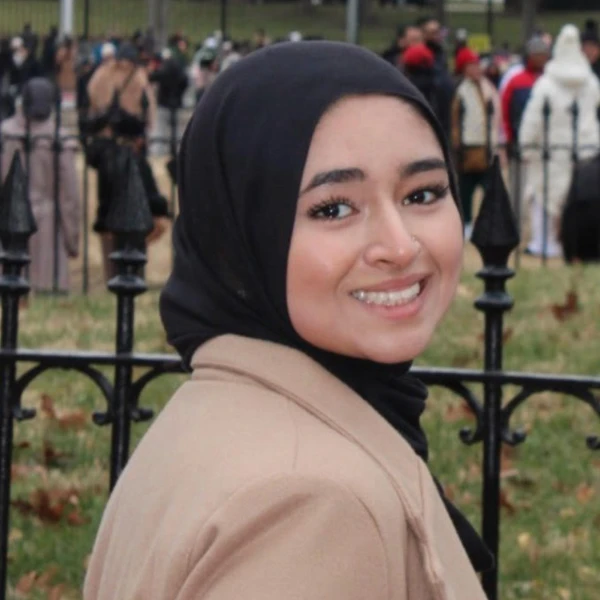
Hafsah Raja

1x

Finalist

1x

Winner

General information

Hobbies & Interests

  • Henna
  • Astronomy
  • Badminton

Bio

Hi! I am a Biomedical and Pharmaceutical Science Pre- Medical student at the University of Rhode Island! I am also the first in my family to attend an institution for higher education!

Education

University of Rhode Island

Bachelor's degree program

2025 – 2029

Majors:
  • Pharmacy, Pharmaceutical Sciences, and Administration
  • Biological and Biomedical Sciences, Other
Miscellaneous

Desired degree level:
Doctoral degree program (PhD, MD, JD, etc.)
Graduate schools of interest:
Brown University
Desired degree modality:
In-Person
Medical school interest:
No

Career

Miscellaneous

Dream career field:
Alternative Medicine
Work experience:
1 year
Has nursing license:
No

Future Interests

  • Advocacy
  • Volunteering
  • Philanthropy
  • Entrepreneurship
Learner Calculus Scholarship
I think one of the most important aspects of STEM is learning how to understand not only what is happening, but why it is happening and how it might change over time. Calculus provides a way to do exactly that. While it is often introduced as a branch of mathematics focused on derivatives and integrals, its applications extend far beyond the classroom. It allows us to study change, understand relationships between variables, and make predictions about complex systems. In fields like medicine, biology, chemistry, and engineering, these abilities are essential. As a Biomedical and Pharmaceutical Sciences student, I have become particularly interested in how calculus connects to the development of medical treatments. For example, when a patient takes a medication, the drug does not simply enter the body and remain at a constant concentration. It is absorbed, distributed, metabolized, and eventually eliminated. These processes change over time, and calculus helps researchers model and understand those changes. This is important when determining appropriate dosages, predicting how long a medication remains effective, and minimizing the risk of harmful side effects. In other words, mathematical concepts can directly influence decisions that affect patient health. I have also begun to appreciate the importance of mathematical modeling through my undergraduate research. In my pharmaceutical sciences lab, I work on optimizing cryogel preparation protocols and studying their physical properties, with the eventual goal of exploring biomedical applications. Materials like hydrogels and cryogels can be designed to interact with their surrounding environments in specific ways. Understanding properties such as swelling, degradation, and drug release requires studying how physical and chemical processes change over time. Calculus provides tools to describe these relationships and better predict how a material might behave under different conditions. Beyond its direct applications, I think calculus is important because it teaches a way of approaching problems. It encourages us to break complicated systems into smaller relationships, recognize patterns, and think critically about how one variable influences another. These skills are valuable even when we are not directly solving equations. I believe STEM depends on the collaboration of different disciplines. A medical researcher may rely on chemistry to develop a treatment, biology to understand its effects, engineering to design a delivery system, and mathematics to predict its behavior. Calculus helps connect these fields by providing a common language for describing the world around us. Ultimately, I think calculus is important because it allows us to move beyond observing scientific phenomena toward understanding, predicting, and improving them. Whether it is developing a more effective cancer treatment or designing a material that delivers medication more precisely, the ability to understand change is fundamental to scientific progress.
Maxwell Tuan Nguyen Memorial Scholarship
My interest in medicine has grown from two things that have consistently shaped my life: an appreciation for science and an understanding of how much access to healthcare can influence someone's future. As the daughter of immigrants and a first-generation college student, I grew up understanding that access to opportunities is not always equal. My parents made significant sacrifices to give me an education they never had the opportunity to pursue. My father, who once had a passion for science himself, had to put his education aside to support his family. When I began sharing what I was learning in my university research lab, I remember watching him become emotional. It made me realize that pursuing medicine was not simply about achieving something for myself. It was an opportunity to use an education that my family had worked so hard to make possible. My experiences since starting college have helped me understand what I want that future to look like. I initially entered university interested in biological sciences, but after joining a pharmaceutical sciences research lab, I discovered a deeper interest in the science behind medicine. I now work on optimizing cryogels for potential biomedical applications, and I hope to eventually contribute to research involving cancer therapeutics and drug delivery. Research has taught me to appreciate the complexity of disease and the importance of developing treatments that are both effective and accessible. However, my interest in medicine extends beyond the laboratory. Working in community pharmacy has given me the opportunity to see healthcare from the patient's perspective. I have come to appreciate how important it is to have someone who is willing to answer questions, explain medications, and make patients feel comfortable seeking help. It has shown me that even when scientific advancements are available, they mean very little if patients cannot access them, understand them, or afford them. I hope to pursue a career as a physician, with a particular interest in oncology. Cancer research is an area where I see the intersection of my interests in pharmaceutical sciences, biomedical research, and patient care. I want to be involved in a field where I can contribute to advancing treatment while also building meaningful relationships with patients navigating some of the most difficult moments of their lives. Beyond treating individual patients, I hope to address the barriers that prevent underserved communities from receiving quality healthcare. Growing up in an under-resourced community has made me particularly aware of how socioeconomic circumstances can shape someone's health long before they enter a doctor's office. I want to advocate for better patient education, more accessible treatment options, and healthcare systems that recognize the needs of the communities they serve. Ultimately, I do not want to measure my success in medicine solely by the treatments I help develop or the patients I care for. I want to measure it by the difference I make in people's ability to understand their health, access care, and feel that someone is genuinely invested in their well-being. Science may be what first drew me toward medicine, but the people it has the potential to help are what make me want to stay.
Chi Changemaker Scholarship
One issue I have always felt strongly about is the disconnect between food waste and food insecurity in our communities. Growing up, I became increasingly aware that while perfectly good food was often thrown away, many families struggled to consistently put meals on the table. I found it difficult to accept that these two problems could exist simultaneously, especially when there were opportunities to address both. I took initiative to help address this issue through a food-repurposing project that collected untouched cafeteria meals and redirected them toward families experiencing food insecurity. Rather than allowing usable meals to go to waste, we worked to safely package and vacuum-seal them for donation. Through this effort, we were able to provide several hundred meals to families in need. I also became involved in sustainability initiatives, including a composting project that diverted over 4,000 pounds of waste from landfills. What motivated me most was realizing that addressing community issues does not always require creating something entirely new. Sometimes, it means recognizing resources that are already available and finding better ways to distribute them. These experiences taught me that meaningful change often begins with identifying a problem that others have become accustomed to overlooking. Moving forward, I would like to expand these efforts by building stronger partnerships between schools, local food banks, and community organizations. I would also like to encourage more student involvement by making food recovery and sustainability projects accessible to younger students. Ultimately, I hope to help create more consistent systems that reduce unnecessary waste while addressing the needs of underserved families.
Powering The Future - Whiddon Memorial Scholarship
Growing up in an underserved school community in my small hometown of Northern Rhode Island, I never had access to a well-funded science lab. It wasn’t until my senior year of high school, when our school’s only science classroom was finally renovated to include lab benches and a fume hood, that I experienced a true lab setting. I was overjoyed to be among the first students in my district to learn in that environment. While exciting, it also made me realize how many educational opportunities I had gone without. I had spent years interested in science without having the resources to fully explore that interest. As a first-generation college student and the daughter of immigrants, navigating higher education has also come with challenges. My family has always emphasized the importance of education, but pursuing a college degree, especially in STEM, comes with financial responsibilities that are not always easy to manage. I have had to balance my academic responsibilities, work, and extracurricular commitments while making the most of the resources available to me. Research has been particularly meaningful to my education, but gaining laboratory experience has also meant dedicating significant hours to unpaid work and training. Financial limitations can make it difficult to pursue opportunities that are essential to building a future in STEM. Now, as a student at the University of Rhode Island, I am constantly struck by the abundance of equipment and opportunities available to me. What once felt out of reach is now part of my everyday life. My passion for STEM has deepened through my work in a pharmaceutical sciences research lab. There, I have been introduced to concepts in organic chemistry, hydrogels, and cancer therapeutics. I am currently working on optimizing a cryogel preparation protocol and studying its physical properties, with the goal of eventually advancing toward more complex biomedical applications. When I shared what I was learning with my father, he became emotional. He had once developed a passion for science at my age but was forced to abandon his education to support his immigrant family. For him, higher education, and especially a future in science, felt inaccessible. His reaction reminded me that my presence in STEM is not just personal; it represents an opportunity that many people like him never had. It has also made me more determined to make the most of the education I have worked toward. I am pursuing a degree in Biomedical and Pharmaceutical Sciences, with the goal of contributing to biomedical research, particularly in areas such as cancer therapeutics and drug delivery. I hope to better understand how scientific discoveries can translate into meaningful improvements in patient care. Beyond my own research contributions, I want to use my education to expand access to STEM learning through mentoring, sharing knowledge within my community, and advocating for better resources in underfunded schools like the one I attended. Receiving this scholarship would help relieve some of the financial pressure that comes with pursuing higher education and allow me to dedicate more time and energy to my academic and research goals. It would help me pursue opportunities that may otherwise be difficult to access financially. My guiding principle is simple: anything I learn, I can share. From explaining new concepts to my father to presenting my work in lab meetings, I have seen how knowledge can connect people and open doors. I hope to continue building those connections through my work in science and my efforts to make STEM education more accessible.
Healing Self and Community Scholarship
I would contribute by helping bridge the gap between healthcare and the communities that are often overlooked. Growing up in an immigrant family, I have seen how financial barriers, cultural differences, and a lack of awareness can make it difficult for people to seek the support they need. I believe mental health care should not be something someone has to choose between affording and receiving. As a Biomedical and Pharmaceutical Sciences student on the pre-medical track, I hope to pursue a career in medicine that combines patient care with advocacy. I want to help create spaces where people feel comfortable discussing their mental health without fear of judgment, regardless of their background or financial situation. I also hope to use my education and involvement in community organizations to promote mental health awareness and connect people with affordable resources. My unique contribution would be bringing both a scientific understanding of healthcare and a commitment to serving diverse communities. I want to be part of changing the way we approach mental health by making support more accessible, culturally understanding, and affordable. Ultimately, I believe access to mental health care should be treated as a necessity, not a privilege.
STEAM Generator Scholarship
When I began applying to college, I realized I was entering a world my family had never experienced. My parents had crossed an ocean to give me opportunities they never had, but they could not explain financial aid, scholarships, or college admissions because they had never navigated them themselves. As a first-generation college student and the daughter of immigrants, I entered higher education with two competing emotions: hope for everything it could make possible and fear of stepping into a system without a roadmap. I was born in the region of Azad Kashmir, Pakistan. The word Azad means freedom, but Kashmir is all but that. I immigrated to the United States before my second birthday and have returned a few times since. Yet whenever someone asks me where I am from, without hesitation, I answer, "Azad Kashmir." Every visit back has reminded me why education is such a privilege. I have seen children my own age harvesting grain, carrying water through mountain villages, making bricks with their families, and selling food from roadside carts instead of sitting in classrooms. They were no less intelligent or capable than I was; they simply never had the opportunities that I did. My family's story reflects that reality. My parents were fortunate enough to receive a religious education through a free madrasa. Rather than accepting the limited educational opportunities around them, my grandfather opened a girls' madrasa inside his home. He taught every student himself. Through determination and community support, that classroom eventually became a staffed school where hundreds of girls now receive a free education. His belief that every child deserved an education became the foundation of my family's values. My parents carried that same belief with them when they immigrated to the United States. They left behind everything familiar, learned a new language, and built a life from almost nothing because they believed education could change the trajectory of our family for generations to come. That sacrifice has shaped every step of my educational journey. Without family members who had experienced college, I learned to navigate the process independently. I searched for scholarships, taught myself how financial aid worked, sought mentors, and learned not to be afraid of asking questions. Financial uncertainty made every scholarship application feel like another opportunity I could not afford to lose, but it also strengthened my determination to succeed. Instead of allowing those obstacles to define me, they motivated me. I graduated as the valedictorian of my high school and now study Biomedical and Pharmaceutical Sciences at the University of Rhode Island, where I conduct undergraduate cancer research focused on developing more targeted treatments for melanoma. Every milestone I reach is a reminder that my family's sacrifices created opportunities they never had themselves. My experiences have shaped the future I hope to create. I hope to develop innovative cancer treatments while providing compassionate care to underserved communities. I also want to mentor first-generation and immigrant students who may feel intimidated by higher education, just as I once did. I want them to know that being the first in your family to pursue a degree is not a disadvantage—it is the beginning of a new legacy. My parents crossed an ocean without knowing what opportunities awaited them. My grandfather opened the doors of his home so girls could learn when no one else would. Because of them, I have the opportunity to pursue an education they could only dream of. My hope is that my degree will become more than a personal achievement; it will honor their sacrifices and create opportunities for those who come after me
Nadia Ansari Design Award
I refuse to accept that cancer treatment has to be as devastating as the disease itself. Growing up, I spent countless hours sitting beside my grandmother in hospital rooms as she battled cancer. I watched her endure exhausting treatments that seemed to harm every part of her body, not just the cancer. The hospital became a place of waiting: waiting for test results, waiting for doctors, waiting to see if the next treatment would help or simply make her sicker. Even as a child, I could not understand why medicine powerful enough to save someone could also take so much from them. After she passed away, I carried that question with me. Years later, I found myself shadowing an oncologist, where I saw those same struggles through a different lens. Every patient had a unique story, but many shared the same difficult reality: effective treatments often came with debilitating side effects because they could not distinguish healthy cells from cancerous ones. It became clear that behind every statistic was a person trying to hold on to their quality of life while fighting for survival. Instead of accepting this as an unavoidable reality, I wanted to become part of the effort to change it. Today, as a Biomedical and Pharmaceutical Sciences student, I conduct cancer research focused on developing a smarter drug delivery system for melanoma treatment. My project explores using enzyme-responsive biomaterials to deliver the photosensitizer Rose Bengal directly to tumors. Rather than releasing medication throughout the body, our system is designed to respond to enzymes that are overexpressed in the tumor microenvironment, allowing treatment to remain localized until it reaches its target. In theory, this means more effective destruction of cancer cells while reducing damage to healthy tissue. This work has challenged me in ways I never expected. Research is filled with setbacks, failed reactions, unexpected data, and countless hours troubleshooting experiments. Progress is measured in tiny steps rather than dramatic breakthroughs. Yet every successful synthesis, every confirmed result, and every lesson learned reminds me why perseverance matters. Scientific innovation is rarely the product of one defining moment; it is built through patience, curiosity, and the willingness to keep asking difficult questions. My experiences in the hospital, the clinic, and the laboratory have shown me that improving patient care requires more than compassion alone. It requires translating empathy into innovation. The questions I asked while watching my grandmother receive treatment now guide the questions I ask in the lab: How can we make therapies more precise? How can we reduce unnecessary suffering? How can we give patients not only more years of life, but better years? The future I hope to create is one where patients no longer have to choose between fighting their disease and preserving their quality of life. As a physician-scientist, I hope to bridge research and medicine, transforming discoveries at the bench into treatments that reach patients at the bedside. If one day someone else's granddaughter can sit beside her loved one with more hope and less fear because of therapies I helped develop, then every hour I have spent in the laboratory will have been worthwhile.
Neetu Watumull Scholarship Program Managed by Rupa Shah
My family's heritage has profoundly shaped both my identity and my educational journey. I was born in Azad Kashmir and immigrated to the United States with my family before my second birthday. Growing up, my parents instilled in me the values of perseverance, humility, and service to others. Although we built a new life in Rhode Island, our home remained deeply connected to our South Asian roots through our language, traditions, faith, and close-knit family. Education was always viewed as an opportunity that should never be taken for granted. My father developed a passion for science when he was young, but financial circumstances forced him to leave school and work to support his immigrant family. He often shared with me how different his life might have been if he had been able to continue his education. His experiences taught me that education is more than a personal achievement—it is a pathway to expanding opportunities for future generations. Growing up in an underserved school district, I also witnessed how unequal access to educational resources could shape students' futures. My high school did not have a true laboratory until my senior year, when our only science classroom was finally renovated. That experience strengthened my determination to pursue STEM and reinforced my belief that talent exists everywhere, but opportunity does not. Today, I am studying Biomedical and Pharmaceutical Sciences at the University of Rhode Island, where I conduct research exploring biomedical applications with the long-term goal of contributing to improved cancer therapies. I hope to use both research and mentorship to expand access to STEM education for students from underrepresented communities. My family has always worked hard to provide for us, but financing a college education remains a significant challenge. As the oldest of four children, I understand the financial responsibilities my parents carry while supporting our household and planning for my siblings' futures. Although I have received financial aid, it does not fully cover the cost of tuition, housing, textbooks, transportation, research expenses, and other educational costs. Receiving this scholarship would reduce that financial burden and allow me to devote more time to my studies, research, and community service rather than worrying about how to bridge the remaining gap. This scholarship would represent more than financial assistance. It would allow me to continue pursuing the opportunities that my parents worked so hard to make possible and move closer to a career dedicated to improving lives through scientific research. I hope to honor their sacrifices by using my education to serve others, advance healthcare, and inspire future students from backgrounds like my own to believe that they belong in STEM.
Legacy of Learning Scholarship
Education has transformed what I believed was possible for my future. Growing up in an underserved school community in northern Rhode Island, I never had access to a well-funded science lab. It was not until my senior year of high school, when our school's only science classroom was renovated with lab benches and a fume hood, that I experienced a real laboratory for the first time. I was thrilled to be among the first students in my district to learn in that space. That experience sparked a passion that has continued to grow and showed me that my future could extend far beyond the opportunities I had growing up. Today, I am pursuing a degree in Biomedical and Pharmaceutical Sciences with a minor in Political Science at the University of Rhode Island. Working in a research laboratory has exposed me to areas of chemistry and biomedical science that once felt completely out of reach. Through my research, I have been introduced to topics including hydrogels and targeted cancer therapeutics, experiences that have strengthened my desire to pursue a career developing innovative treatments for diseases such as cancer. STEM excites me because it combines curiosity with the opportunity to improve lives, and I hope to contribute to discoveries that make healthcare more effective and accessible. My passion for science is deeply personal. When I shared what I was learning with my father, he became emotional. He had developed a love for science at my age but was forced to leave school to support his immigrant family. Watching him realize that I was pursuing the opportunities he never had reminded me that education is a privilege capable of changing not only one person's future, but an entire family's. His story motivates me to make the most of every opportunity I have been given. Beyond the laboratory, I have always believed that education should be used to strengthen communities. Throughout high school, I dedicated hundreds of hours to community service and, as Student Council President, led efforts to reduce food waste while addressing food insecurity in my district. By collaborating with teachers and school administrators, we established a food repurposing program that has provided meals to hundreds of local families and helped secure a $10,000 annual sustainability grant for our school. That experience taught me that meaningful change begins when people are willing to take initiative. Although I have faced financial challenges and came from a school district with limited academic resources, those obstacles have strengthened my determination rather than discouraged it. My experiences have shown me the importance of mentorship, access, and persistence, and I hope to provide those opportunities for others throughout my career. Whether through mentoring future STEM students, advocating for stronger science education in underserved communities, or conducting research that improves patient outcomes, I want my education to create opportunities that extend beyond myself. Receiving this scholarship would ease the financial burden of pursuing higher education and allow me to devote more time to research, service, and academic growth. More importantly, it would be an investment in my goal of using science to improve lives while helping ensure that future students have access to opportunities that once seemed impossible to me.
Kim Brock Memorial Scholarship for Women in Chem
Growing up in an underserved school community in my small hometown of Northern Rhode Island, I never had access to a well-funded science lab. It wasn’t until my senior year of high school, when our school’s only science classroom was finally renovated to include lab benches and a fume hood, that I experienced a true lab setting. I was overjoyed to be among the first students in my district to learn in that environment. That moment solidified something for me: I didn’t just enjoy science—I was eager to fully step into it. Now, as a student at a research institution, I am constantly struck by the abundance of equipment and opportunity available to me. What once felt out of reach is now part of my everyday life. My passion for STEM has only deepened as I’ve moved into more advanced environments, especially through my work in a lab this past semester. There, my mentor has introduced me to concepts in organic chemistry related to hydrogels and cancer immunotherapy, areas that I hope to continue exploring in my academic career. When I shared what I was learning with my father, he became emotional. He had once developed a passion for science at my age, but was forced to abandon his education to support his immigrant family. For him, higher education—and especially a future in science—felt inaccessible. His reaction reminded me that my presence in STEM is not just personal; it reflects an opportunity that many people like him never had. Through my lab experiences, I’ve learned that science is an iterative process—progress depends on persistence, repetition, and learning from failure. More importantly, I’ve realized that success in STEM is not reserved for a select few; with time, mentorship, and access, many more people could contribute meaningfully to the field. That belief drives my passion. I plan to pursue a field of study in chemistry, with a focus on applications in biomedical research such as cancer therapeutics. Beyond my own research contributions, I hope to use my education to expand access to STEM learning. Whether that means mentoring students, sharing knowledge within my community, or advocating for better resources in underfunded schools like the ones I attended, I want to help create pathways for others who might otherwise be left out. My guiding principle is simple: anything I learn, I can share. From explaining new concepts to my father, to presenting my work in lab meetings, I’ve seen how knowledge can connect people and open doors. I hope to continue building those connections—both through my work in science and through efforts to make STEM education more accessible to those who are still waiting for their opportunity.
LeadHer Learning Scholarship
Winner
I was born in a beautiful mountainous region of Pakistan called Azad Kashmir. The word Azad means freedom, but Kashmir is all but that. I immigrated to the United States when I was just under two years old and have only visited my home country a handful of times since then. Still, whenever someone asks me where I am from, without hesitation, the words Azad Kashmir slip from my tongue. Growing up, I never really understood why I answered that question so confidently. The older I get, the more I realize that Kashmir is what gives me my ambitions, my purpose, and my dreams. Every time I have gone back to visit, I have seen children my age working instead of learning. I have watched them harvesting grain in the fields, running tiny mud shops along village roads, carrying water from mountain streams to sell, making bricks with their families, or preparing food to sell from street carts. They were not any less capable than I was. They simply never had the opportunity to sit in a classroom. Those visits taught me something I have never forgotten: education is not equally accessible, even though it should be. My family's story reflects that reality. My parents were fortunate enough to receive a religious education through a free madrasa. Even that was uncommon for girls. In many parts of Kashmir, schools were built for boys, leaving girls with few opportunities to learn. Instead of accepting that reality, my grandfather, who had six daughters of his own, opened a girls' madrasa inside his home. He taught every student himself. With time, determination, and the support of donations, that small classroom became a fully staffed school where hundreds of girls from nearby villages now receive a free education every day. He believed that every girl deserved the chance to learn. When my parents were the same age I am now, they left everything behind to give me opportunities they never had. They moved to a country where they did not know the language and arrived with almost nothing. They sacrificed the familiarity of home because they believed education could change the course of our family's future. As a first-generation college student, I carry that sacrifice with me every day. Because of them, I graduated as the valedictorian of my high school and am now pursuing a degree in Biomedical and Pharmaceutical Sciences on the pre-med track. Outside the classroom, I volunteer in my community, mentor younger students, and conduct undergraduate cancer research. Every accomplishment I celebrate belongs just as much to the people who made it possible. To me, education is so much more than earning a degree. It is hope. It is opportunity. It is freedom. My grandfather gave girls in Kashmir a place to learn. My parents crossed an ocean so I could continue that journey. Now, it is my turn to use my education to serve others. As a future physician, I hope to improve healthcare for underserved communities while encouraging more young women to pursue careers in STEM. If I can become the kind of mentor for someone else that my family has been for me, then every sacrifice they made will have been worth it. Education is the greatest gift I have ever been given. The best way I know how to honor that gift is to make sure it reaches someone else.
Kindness in Action Scholarship
Growing up in an environment where the vast majority of my peers and neighbors come from underprivileged backgrounds, I have learned early on that service is not optional—it is essential. I take pride in supporting my community, and throughout my high school journey I have dedicated hundreds of hours to serving my city, my mosque, and my school. These experiences have shaped not only my values, but also my understanding of how small, intentional actions can create meaningful change. Two years ago, as a highschool junior, I began to notice something that others had overlooked: the high levels of food waste in my school lunchroom. Perfectly usable food—especially uncooked ingredients—was being thrown away daily. At the same time, many of my classmates come from food-insecure households. The contrast was impossible to ignore. I brought this concern to my culinary instructor, Chef Stoloski, and together we began discussing ways to address the issue. What started as a simple conversation quickly evolved into a shared mission. We brought our concerns to the broader Beacon Charter School community, and the response was immediate. Students connected with the issue because it directly impacted people they knew—including themselves. With growing support, we began developing a plan. Chef Stoloski went the extra step of earning a ServSafe Food Safety Certification to ensure that any food we handled and redistributed met proper safety standards. That commitment gave our initiative credibility and allowed us to move forward responsibly. From there, we launched our food repurposing program, which has been running from 2023 to the present. Instead of allowing surplus food to go to waste, we collect unused ingredients and incorporate them into our culinary program. Students prepare meals using these items, turning what would have been discarded into something valuable. The most important part of this effort is the outcome: we distribute the prepared food to individuals and families in need throughout the Woonsocket area. With the support of my teachers and fellow Beacon students, we have already repurposed hundreds of meals. Beyond the numbers, what stands out most to me is the sense of unity this initiative has created. It has strengthened our school spirit and deepened our connection to the surrounding community. Seeing the direct impact of something I helped start is incredibly meaningful. It has shown me that leadership is not about titles, but about recognizing a problem and taking responsibility for solving it. This experience has motivated me to continue serving others and to seek out opportunities where I can make a difference. When I see how something so simple can transform lives, it pushes me to do more. I plan to carry this mindset forward, using my education and experiences to continue addressing issues like food insecurity and resource waste. Service has become a defining part of who I am, and I am committed to expanding that impact wherever I go.
Harry B. Anderson Scholarship
Growing up in an underserved school community in my small hometown of Northern Rhode Island, I never had access to a well-funded science lab. It wasn’t until my senior year of high school, when our school’s only science classroom was finally renovated to include lab benches and a fume hood, that I experienced a true lab setting. I was overjoyed to be among the first students in my district to learn in that environment. That moment solidified something for me: I didn’t just enjoy science—I was eager to fully step into it. Now, as a student at a research institution, I am constantly struck by the abundance of equipment and opportunity available to me. What once felt out of reach is now part of my everyday life. My passion for STEM has only deepened as I’ve moved into more advanced environments, especially through my work in a lab this past semester. There, my mentor has introduced me to concepts in organic chemistry related to hydrogels and cancer immunotherapy, areas that I hope to continue exploring in my academic career. When I shared what I was learning with my father, he became emotional. He had once developed a passion for science at my age, but was forced to abandon his education to support his immigrant family. For him, higher education—and especially a future in science—felt inaccessible. His reaction reminded me that my presence in STEM is not just personal; it reflects an opportunity that many people like him never had. Through my lab experiences, I’ve learned that science is an iterative process—progress depends on persistence, repetition, and learning from failure. More importantly, I’ve realized that success in STEM is not reserved for a select few; with time, mentorship, and access, many more people could contribute meaningfully to the field. That belief drives my passion. I plan to pursue a field of study in chemistry, with a focus on applications in biomedical research such as cancer therapeutics. Beyond my own research contributions, I hope to use my education to expand access to STEM learning. Whether that means mentoring students, sharing knowledge within my community, or advocating for better resources in underfunded schools like the ones I attended, I want to help create pathways for others who might otherwise be left out. My guiding principle is simple: anything I learn, I can share. From explaining new concepts to my father, to presenting my work in lab meetings, I’ve seen how knowledge can connect people and open doors. I hope to continue building those connections—both through my work in science and through efforts to make STEM education more accessible to those who are still waiting for their opportunity.
Hafsah Raja Student Profile | Bold.org