Hobbies and interests
Acting And Theater
Animation
Art
German
Game Design and Development
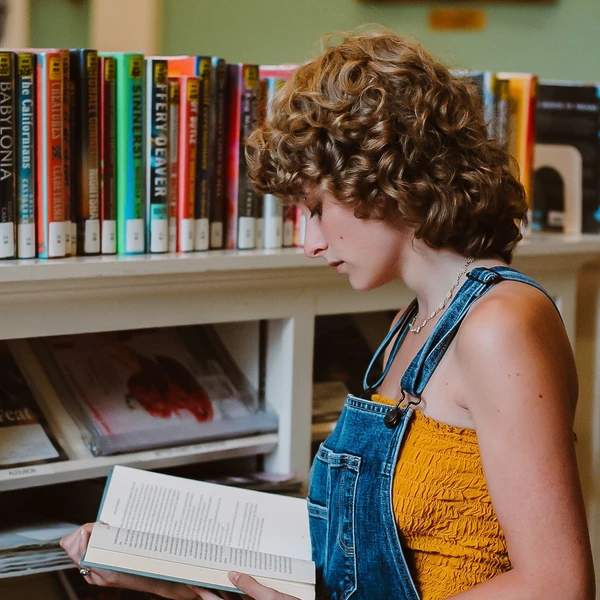
Reading
Photography and Photo Editing
Archaeology
Human Rights
Advocacy And Activism
Reading
Classics
Action
Horror
Romance
Young Adult
Tragedy
I read books daily
Grace Murdock
1x
Finalist
Grace Murdock
1x
FinalistBio
I'm a 17-year-old nonbinary artist focused on game development, digital art, animation, and photography. I create because I want to build things that mean something — not just for me, but for others too. Games and art give me a way to share ideas, stories, and perspectives that don't always get heard. Outside of my creative work, I spend a lot of time reading and hanging out with my cat. I'm done hiding who I am because of prejudiced people; look out, world, here I come.
Education
Mount View High School
High SchoolMiscellaneous
Desired degree level:
Bachelor's degree program
Majors of interest:
- Film/Video and Photographic Arts
- Design and Applied Arts
- Arts, Entertainment, and Media Management
- Fine and Studio Arts
Career
Dream career field:
Animation
Dream career goals:
I want to succeed to make money off my art and animation, run a photography business, and develop games to share with the world
I was a dishwasher
Hidden Valley Camp2022 – 2022Floor worker.
Renys2024 – Present2 yearsI inspected boats for invasive plants such as Milfoil
CALL2023 – Present3 yearsI was hired for multiple photo sessions, senior and non senior.
My own2023 – Present3 years
Sports
Track & Field
Varsity2020 – 20233 years
Awards
- no
Research
Germanic Languages, Literatures, and Linguistics, General
MVHS and GAPP — I have been learning the language for 6 years and even went to Germany.2019 – Present
Arts
Freelance, Instagram
DrawingYes2024 – PresentFreelance
PhotographyYes2023 – PresentFreelance
Jewelry2019 – 2023Freelance
AnimationYes2024 – PresentMVHS
CeramicsYes2024 – 2025
Public services
Volunteering
MVHS Library Club — I fixed books, put plastic covers on books, worked the front desk, cleaned, and shelved books.2021 – 2023Volunteering
Belfast Soup Kitchen — I completed chores and served people.2022 – 2022Volunteering
MOFGA — Many things, from terracing hills to planting trees.2023 – 2023
Future Interests
Entrepreneurship
KC R. Sandidge Photography Scholarship
Nobody handed me a camera and told me what to do with it. I found photography to be the way the best discoveries happen: accidentally, then obsessively. I picked up a camera out of curiosity and quickly realized that looking through a viewfinder changed the way I saw everything. It slowed me down. It made me ask why one moment was worth preserving, and another was not.
Every photo in this portfolio has a person in it. Some are fully visible, some are just a hand or a silhouette, but there is always a human presence. As an extrovert, I am drawn to other people, and I can bring that into my photography by the way a body can tell a story, even when you cannot see a face. The ghost photo is funny, but it is still fundamentally about two people and the energy between them. The portrait is about one person's intensity. The beach shot is about solitude. The meadow and the wildflower hand are about stillness and presence. People are always the subject.
I taught myself through trial and error, watching tutorials, going outside, messing with ISO and aperture, and shooting until something worked. Over time, I stopped trying to copy what I had seen and started figuring out what I actually wanted to shoot. What I kept landing on was that I love documenting humans, the way they move through the world and occupy a moment.
I plan to study photography in college and make a career out of it, which I already have. I have a freelance photography business that is doing very well. I want to keep shooting people, get better at it, and eventually do it professionally, whether that is portraits, editorial, documentary, or something I have not tried yet.
Isaac Yunhu Lee Memorial Arts Scholarship
This piece is based on a small, unremarkable moment that ended up meaning more to me than I expected. I was riding home after a Dungeons & Dragons session with my best friend and her younger sister. We stopped at a gas station, and I bought a full tub of mint-chip ice cream. I started eating it in the car without really thinking about it. At some point, my friend’s sister took a flash photo of me, because it was funny and rather ridiculous. That photo later became the reference for this drawing.
I struggle with depression, and one of the hardest parts of it is how it affects my memory. When I am in a depressive episode, it feels like happiness has never existed for me, or that if it did, it did not matter. Good days feel fake or distant, like something that happened to someone else. Over time, I realized that I needed a way to preserve those moments before my brain erased or distorted them.
Drawing became that method. When I have a genuinely good day, I draw it. By turning a random moment into something physical, I give it weight. It becomes harder to dismiss or rewrite later. This drawing is not just an image; it is evidence. It exists so that when my memory tells me I have always felt sad and hopeless, I have something concrete that says otherwise.
This particular moment mattered because nothing was really meaningful. I was not performing, coping, or trying to feel better. I was just comfortable. I was with people I trusted, doing something stupid, laughing, and not thinking about myself too much. That kind of ease is rare for me, and it often goes unnoticed until it is gone. Capturing it was necessary.
The harsh lighting, the unflattering angle, and the casual setting are perfect; even though photos like that typically aren't considered so. I did not want to clean the moment up or make it more poetic than it was. Depression does not erase only beautiful moments; it erases ordinary ones. By drawing parts from days that made me feel happy and normal, I am reminding myself that those moments count too.
This piece is part of a larger collection of drawings I use to remember myself more accurately. It exists so that when things feel heavy, I can look back and see proof that I have felt safe, relaxed, and happy before. This drawing does not promise that things will always get better. It only proves that they have been better, and that matters.
Christal Carter Creative Arts Scholarship
I have been drawing for as long as I can remember. Before I could spell my name correctly, I was filling pages with scribbles, shapes, and coming up with stories. Drawing was never something I had to discover later in life; it has always been there, growing alongside me. As I got older, that simple habit turned into a passion for digital art, animation, and sketching, and it became one of the most important ways I understand myself and connect with others.
I am passionate about my art medium of digital art because it allows me to express emotions that are difficult to say out loud. For instance, I like to draw moments that make me happy, yet melancholic, because I know they're all fleeting. Through illustration and sketching, I can draw how I feel, and it lets me "get it all out". Art validates my emotions and my sense of self. When I create, I feel seen, even if I’m the only one looking at the piece. Art has also helped me explore who I am, especially as a queer person. On my art account, I connected with other queer artists who related to my work and supported me. That validation made me feel less alone and helped me become more confident in myself, it even gave me the courage to come out to friends and family.
Digital art and animation also give me the freedom to bring my imagination to life. I love that my ideas don’t have to stay in my head; they can become illustrations, animations, comics, or even concepts for games! Art lets me turn stories into something shareable. Sketching in my sketchbook helps me brainstorm and experiment, while digital tools let me refine those ideas. Both mediums work together to help me create without limits.
Art has enhanced my life by encouraging me to explore many different forms of creativity. I’ve experimented with photography, videography, ceramics, animation, digital and traditional art, watercolor, photo editing, graphic design, and illustration. Each medium taught me new skills and ways of thinking about art. Exploring different art forms made me more adaptable and learned, and it deepened my appreciation for creativity as a whole.
Art has also connected me to real opportunities and people. I’ve built relationships with other artists who inspire me, and I’ve been able to earn money through art commissions and (senior) photo sessions. Being paid for my creativity showed me that my skills have value and that art can be both meaningful and practical.
In the future, I aspire to run my photography business and take on commissions while working in a game studio (whether indie or not) as my main job. Art is not just a hobby for me, it is a lifelong passion that I intend to hold onto with an iron grip for the rest of my life.
Scorenavigator Financial Literacy Scholarship
Money has never been a quiet topic in my house. Some of my earliest memories are of sitting in my room, trying to calm down my younger brother while my parents shouted in the other room about bills, rent, spending habits, or groceries. Even when I was too young to understand the numbers, I understood the stress. Financial insecurity has been a constant presence in my life, shaping how I think, worry, and plan for the future.
Growing up, I watched my parents struggle to stay afloat, especially as my mom’s spending habits made things harder instead of easier. Even though I couldn’t fix anything, I carried the stress anyway. I still do. I worry about whether my family will be okay, whether the lights will stay on, and whether I will even be able to afford college. To help, I work four hours every day after school and seven hours on Sundays. On top of saving for my education, I also contribute to household bills and groceries every so often because my parents can’t cover everything on their own. Balancing school, work, and financial stress has been exhausting, but it has also forced me to mature quickly and take responsibility earlier than most people my age.
Because of these experiences, financial education is very important to me because it is so much more than numbers. It is survival. I’ve seen what happens when money isn’t managed carefully, and I don’t want to repeat that cycle. I want to learn how to budget, save, invest, and plan for the future so that money becomes a tool instead of a constant source of fear. I want to be able to support myself without panic, and eventually help my family without putting myself at risk. Because of this, I take any finance elective I can, and I am currently taking a Business Math class.
In the future, I plan to use what I learn about finances to build stability and independence. I want to graduate college without drowning in debt, make well-informed decisions about spending, and live a life where financial conversations don’t turn into screaming matches or stress-filled nights. This scholarship would not only help me afford college, but it would give me the opportunity to break a cycle that has affected my family for my entire life and create a more secure future for myself and those I care about.
Diane Amendt Memorial Scholarship for the Arts
Art has always been more than just a passion for me; it’s been my lifeline. Growing up, I often felt like I didn’t belong. My struggle with my gender identity and the expectations placed on me by my conservative Christian upbringing left me feeling isolated and uncertain about who I was. Art was the one constant that gave me a sense of freedom when I couldn’t express myself in words. Every weird little drawing I created helped me process emotions I didn’t yet understand and gave me a way to turn pain into something meaningful.
My journey in arts education began when I was a child. I created worlds and languages, drew maps and characters, and spent all my time with a pencil and paper. Sadly, I stopped doing art very often in late elementary and middle school, but finally picked it back up in high school. I started with photography, then moved to sketching, digital art, animation, pottery, 3d modeling, and finally video game design. I made an art account that grew to over 18 thousand followers (if you require proof, my handle is @hazysdoodles), and started a successful photography business doing senior photos.
One of my biggest inspirations has been my online art community. I never expected anyone to care about my work, but seeing people connect with my drawings and photography gave me a new kind of motivation. Their support inspired me to keep creating, even on days when my depression made it hard to pick up a pencil or camera. What can I say, I live for the applause.
Another person who deeply inspired me is my sister, who focused more on realistic paintings and sketches. Her beautifully realistic artworks encouraged me to experiment with different digital mediums and express my identity through my projects. Thanks to her, I learned more art skills that helped me become better at my work, and I am still improving as each day passes by.
Art has taught me resilience, patience, and empathy. It’s given me a sense of purpose and the courage to be authentic, both in my craft and in my life. My ambition now is to pursue a career in digital art and animation where I can continue to tell stories that inspire understanding and acceptance. Art education didn’t just shape my talent—it shaped my identity and gave me the drive to turn my struggles into strength.
Marcia Bick Scholarship
Many young people face obstacles that challenge their dreams, and I am no exception. Growing up in a conservative Christian family, I often felt out of place and misunderstood. From a young age, I struggled to understand my gender identity, feeling uncomfortable with the labels assigned to me. When I realized I was nonbinary, I finally found a word that fit—but that realization brought new struggles: fear, confusion, and a growing sense of isolation. For years, I hid who I was, feeling torn between authenticity and acceptance. That inner conflict led to a deep depression that affected nearly every part of my life.
Depression is like a weed: when you dig it up it only grows back, but I’ve learned how to live with it and keep it from overtaking me. My path to healing began through art. As a child, drawing was something I loved, but as I got older, it became much more than a hobby. Art became my voice when words failed me, a safe place where I could explore my identity and emotions. I created an online art account, where I shared my drawings and photographs under a name that reflected who I truly was. I found a community of people who understood and supported me, and over time, my account grew to eighteen thousand followers. My art even won several photography contests—something I never thought possible when I first started.
Creating and sharing art gave me a sense of purpose and confidence that extended into other areas of my life. Eventually, I found the courage to come out to my family. To my surprise, they accepted me with love and compassion. Their support changed everything. With their acceptance, I finally felt free to live authentically and to channel my experiences into something meaningful. Today, I continue to use my art to tell stories that resonate with others who may be struggling with identity, mental health, or belonging.
Despite the progress I’ve made, financial hardship still poses a challenge. As someone pursuing higher education in digital art and animation, I face significant costs—software, equipment, and tuition—that are difficult to afford. A grant like this one would relieve that financial strain and allow me to focus on refining my skills and building a portfolio that reflects both my technical ability and my personal growth.
I have worked hard to turn my struggles into strengths, using creativity and perseverance to overcome obstacles that once felt impossible. This grant would not only support my education but also help me continue using art as a platform to uplift others. I want to show that even when life feels unbearable, it’s possible to create something beautiful out of pain. My journey as a nonbinary artist living with depression has taught me resilience, empathy, and the power of self-expression—and I’m determined to use those lessons to make a difference.
Rainbow Futures Scholarship
Depression is a mental illness that affects millions of people worldwide. It is fluid, manifesting in different forms and triggered by different things. For me, my depression was tied tightly to my nonbinary gender identity, and it had, and still has, a significant impact on my life. However, the longer I lived with my depression, the more I realized something: depression is a weed. And like a weed, it just grows back when you dig it up. By expressing myself and sharing the stories in my head through art, I began to learn to live with my depression instead of trying to make it go away.
When I was a child, I often felt as if I did not fit into the gender roles assigned to me. I didn’t feel comfortable being labeled as a girl, and often would tell my parents and siblings that I wanted to be a boy, even though I also didn’t feel like a boy. It wasn’t until I discovered the term “nonbinary” that I finally found a fit. However, that discovery also brought about a sense of confusion and anxiety.
I struggled for three years to accept myself and my secret nonbinary identity. I constantly felt like I had to choose between being true to myself or conforming to what was considered "normal." This internal battle took a serious toll on my mental health, and I soon found myself sinking into a deep depression.
Amidst all the chaos, I returned to a childhood passion: art. I created an account on Instagram where I could identify how I wanted and share my art with others who resonate with it. I watched in awe as my art account grew to eighteen thousand followers, and my photographs won multiple contests. All the love I was receiving spurred me forward, and I dedicated more time to refining my skills to expand my digital art into animation and get my photography to reach more people. With my artwork, I was able to explore my gender identity and express myself through original characters and their stories. My art account became my safe space, a place where I could be unapologetically myself and advocate for my rights as well as those of fellow LGBTQIA+ members.
Despite the progress I was making in my personal journey, I was still afraid to tell my family about my nonbinary identity. I was terrified of their reaction and worried that they wouldn't accept me. But eventually, I mustered the courage to tell my sister, mother, brother, and father. To my surprise, they were accepting and supportive. Their acceptance was a turning point for me. It gave me the confidence to embrace my “enby” identity fully and to be open about it with others. Realizing I was with people who accepted and celebrated me for who I am made all the difference in my mental health.
Today, I am proud to say that I am a nonbinary individual, and my struggles with depression have significantly improved. Of course, I still have bad days and people don’t always respect and accept me, but now I have a support system and am surrounded by people who mean more to me than any bigot. I will continue to express myself and inspire others to do the same, hopefully with the help of this scholarship. My journey with depression and nonbinary gender identity has been a challenging one, but I am grateful for the struggles I have faced because they have led me to where I am today—a happy, proud, and authentic individual.
Elijah's Helping Hand Scholarship Award
Depression is a mental illness that affects millions of people worldwide. It is fluid, manifesting in different forms and triggered by different things. For me, my depression was tied tightly to my nonbinary gender identity, and it had, and still has, a significant impact on my life. However, the longer I lived with my depression, the more I realized something: depression is a weed. And like a weed, it just grows back when you dig it up. By expressing myself and sharing the stories in my head through art, I began to learn to live with my depression instead of trying to make it go away.
When I was a child, I often felt as if I didn’t fit into the gender roles assigned to me. I didn’t feel comfortable being labeled as a girl and often told my parents and siblings that I wanted to be a boy, even though I also didn’t feel like a boy. Of course, my Christian family did not take kindly to that and said that to reject our given bodies was to reject God. It wasn’t until I discovered the term “nonbinary” that I finally found a fit. However, that discovery also brought about a sense of confusion and anxiety.
I struggled for three years to accept myself and my secret nonbinary identity—which I often wished was a secret to even myself. I constantly felt like I had to choose between being true to myself or conforming to what was considered “normal.” This internal battle took a serious toll on my mental health, and I soon found myself sinking into a deep depression.
Daily tasks became overwhelming. Simple tasks that I used to complete with ease took great effort; just getting out of bed was a struggle. I slept through classes, my grades suffered, but I didn’t care. That year, I made two attempts on my life.
Amidst all the chaos, I returned to a childhood passion: art. I created an account on Instagram where I could identify how I wanted and share my art with others who resonated with it. I watched in awe as my account grew to eighteen thousand followers, and my photographs won multiple contests. The love and recognition I was receiving sparked a realization in me—I live for the applause.
I now have a clear goal: to become a famous artist, photographer, and animator. I want my work to reach people across the globe and make them feel seen, just as art does for me. Every day, I work toward that goal, and every day I get closer and closer to achieving it. I’ve taken on freelance commissions (in both art and photography), collaborated with other creators, and started animating short videos with my original characters.
Eventually, I found the courage to come out to my mom. To my surprise, she was incredibly accepting and supportive. Her acceptance was a turning point for me. It gave me the confidence to fully embrace my “enby” identity and be open about it with others. My father—sadly—told me he would never respect my identity, but I am done dwelling on the opinions of dogmatic individuals.
Today, I’m proud of who I am. I still have rough days, and I still face people who won’t accept me, but I also have a support system, a growing career in art, and a vision I believe in. I will keep creating, keep sharing, and keep growing—because I know who I am, and I know where I’m going. Art has become my voice, and it’s one I plan to keep using loudly.