user profile avatar

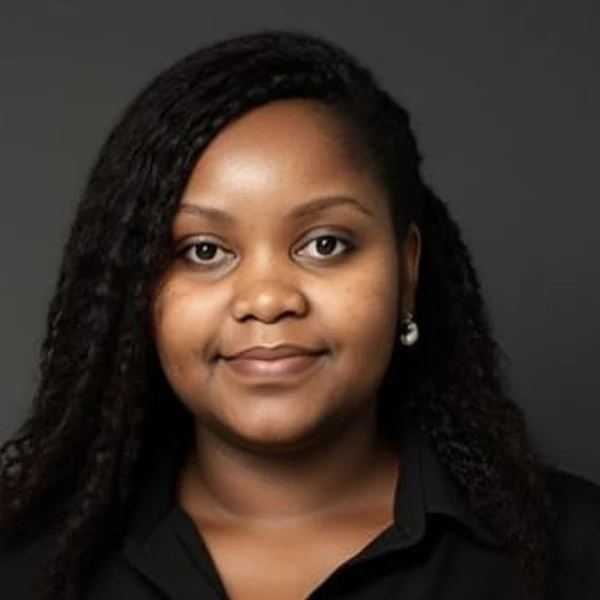
Grace Irungu

1x

Finalist

Bio

Grace Wanjiru Irungu is a Kenyan engineer and researcher pursuing an MS in Telecommunication Networks at Northeastern University, Boston. She spent seven years deploying submarine fiber infrastructure across East and Central Africa before pivoting into photonics research. She is the creator of Whisper Protocols, an original underwater laser communication framework, and serves as VP of Husky Sisters Code, a 650-member women in tech community. She builds at the intersection of deep-sea infrastructure, light, and what has never been done before.

Education

Northeastern University

Master's degree program
2025 - 2027
  • Majors:
    • Computer Systems Networking and Telecommunications
Northeastern University

Bachelor's degree program
2012 - 2017
  • Majors:
    • Computer Systems Networking and Telecommunications

Miscellaneous

  • Desired degree level:

    Doctoral degree program (PhD, MD, JD, etc.)

  • Graduate schools of interest:

  • Transfer schools of interest:

  • Majors of interest:

  • Not planning to go to medical school
  • Career

    • Dream career field:

      • Telecommunications
    • Dream career goals:

      Sports

      Swimming

      Varsity
      2012 – 20175 years

      Research

      • Telecommunications Management

        Bandwidth and cloud services — Research- program manager2
        2019 – 2025

      Public services

      • Volunteering

        Uniliver — Volonteer
        2017 – 2018

      Future Interests

      Advocacy

      Volunteering

      Philanthropy

      Entrepreneurship

      Lotus Scholarship
      My mother raised me understanding that resources were finite and that every opportunity had to be earned. She was a teacher, a profession that asks everything of you and pays back in something other than money. She managed everything on her own and made sure I never felt the weight of what she was carrying, even when I could see it clearly. That is the particular burden of a child who grows up watching a parent stretch what little they have: you learn very early that you cannot afford to fail, because failure does not only cost you. I carried that lesson across an ocean. I spent seven years working as a program manager deploying telecommunications infrastructure across East and Central Africa before leaving everything to pursue a graduate degree at Northeastern University. I left because I believed in what I was building. I believed in the research. I had a plan. Then the plan collapsed. A lender I had been pre-approved with removed Kenya from their eligibility list overnight due to geopolitical factors. The funding I had built my second year around was gone. And the first thought I had — before the panic, before the problem-solving, was that I could not call my mother and make this her problem. She had already given everything she had. This was mine to carry. So I carried it. I applied for every scholarship I could find. I reached out to every office at my university. I kept my 3.7 GPA. I kept doing research. I kept showing up. I am pursuing graduate work in optical communication because I believe the places I come from — the communities that are last to be connected, last to be seen — deserve better technology and better advocates. I intend to be one of them.
      TOMORROW X TOGETHER (TXT) MOA Scholarship
      1. Pre-debut. I was there when BigHit dropped those first trailers and everyone became an FBI agent zooming into Choi Yeonjun's face asking WHO IS THIS BOY. Crown dropped March 4, 2019 and I was not prepared. I have been here since the beginning and I am not leaving. 2. Showing up even when life is hard. MOAs are not fair weather fans. We stick around through the concepts, the lore that makes no sense at 2am, the emotional damage, all of it. I think the most important thing about being a MOA is that you show up consistently. 3. Yeonjun. It is not shallow. It is that this man understands performance like it is oxygen. He moves like the music lives inside him. I watched one fancam and understood immediately that some people are just built different. 4. G-Dragon. I know. I know. But his influence is insane, his artistry is timeless, and he genuinely changed what an idol is allowed to be. TXT owns my heart in fourth gen but G-Dragon is foundation level. He built the floor a lot of artists are standing on. 5. 0X1=LOVESONG. I was not okay when this came out and I remain not okay. It sounds like screaming into the void but make it beautiful. TXT took feelings I did not have words for and turned them into something I could actually hear. That is rare. That is the whole reason music exists. 6. Not yet. This is my pain. I have watched every concert I could find digitally, the fancams, the award stages, the behind the scenes. But I have not been in that room yet. I know that when I finally am, I will not be the same person walking out. I am holding onto that. 7. Temptation era. Sugar Rush Ride stepped into something darker and more unsettling and I loved every second of it. The storytelling felt like walking into a forbidden world where the rules had changed and nobody told you. It was seductive and strange and genuinely unsettling in the best way. I will always respect Crown and Blue Hour because that is where the magic started, but Temptation era! 8. I am an international student from Kenya in my second year of a master's degree in telecommunications networks at Northeastern University. This year my institutional funding fell through. I am currently surviving on personal savings, aggressively applying to scholarships, and pursuing a research assistantship conversion with my faculty advisors. There is no safety net. There is just the work and the determination to finish. 9. It will buy me time. Time to focus on my research instead of the financial math I am doing in my head every month. I am building an underwater laser communication framework, and I need to be in the lab, not calculating whether I can afford next semester. This scholarship fills the gap between where I am and where I need to be to finish what I started. 10. TXT makes music about not fully understanding yourself yet but moving forward anyway. That is my life right now. I left a seven year career, crossed an ocean, started over in a field I love, and hit walls I did not expect. Every time I felt like the narrative was too hard or too strange or too much, there was a TXT song that said yes but keep going anyway. Crown literally opens with horns growing out of someone's head as a metaphor for becoming something you do not fully understand yet. I understood that personally. 11. I am going back to the sea. I spent years deploying submarine fiber cable across East and Central Africa and I want to keep building the infrastructure that connects the continent. My research in underwater laser communication is about pushing light further through the ocean than anyone has proven possible. Better underwater communication means better ocean monitoring, better connectivity for coastal communities, better infrastructure for countries that have historically been last in line for it. I come from Kenya. I know what it means when the signal finally reaches you. I want to be the person who builds that signal for someone else.
      Ruthie Brown Scholarship
      I did not go back to school the traditional way. I left Kenya in my early thirties, seven years into a career deploying submarine fiber cable across East and Central Africa, to start a master's degree in telecommunications networks at Northeastern University in Boston. I was not a fresh graduate figuring out what came next. I was a senior program manager who had led a $102 million infrastructure project and Africa's first deep-lake bathymetric survey, sitting in classrooms next to twenty-year-olds who had never held a full-time job, relearning mathematics I had last touched a decade ago. That is a particular kind of humbling. The students around me had grown up with the tools I was now being introduced to in research contexts. They moved faster through certain things. I moved differently, with the weight of real-world context, with the patience of someone who had already learned that most things take longer than you expect and that showing up anyway is the work. We were in the same room learning the same material and we were having completely different experiences of it. I do not say this as a complaint. I say it because it matters for understanding what this degree costs me, not just financially but in every sense. I left a salary. I left a career. I left a continent. I crossed an ocean to relearn my own field at the frontier level, because I believed that what I was building, a photonics research framework called Whisper Protocols targeting beyond the current world record in underwater laser communication, was worth the cost of starting over. Then this year, my second year funding fell through. There is a specific kind of panic that comes with that as an international student and non-traditional learner. There is no parental safety net built for this moment. There is no easy pivot. There is a visa status tied to enrollment, a research timeline that does not pause, and a financial margin for error that is essentially zero. I sat with that reality and I made a decision: I was not going to let it stop me. My plan for addressing student debt is layered and active. I am applying aggressively to scholarships, this one included, targeting awards that recognize non-traditional students, BIPOC women in STEM, and international researchers. I am pursuing a research assistantship conversion with my faculty advisors, which would convert my current unpaid research role into a funded position. I am in active conversations with my department about fellowship opportunities tied to my Whisper Protocols work. I am also building toward co-op and internship placements in photonics and semiconductor companies that would allow me to earn while remaining enrolled. I am not waiting for one solution. I am building several simultaneously, the way you build anything under pressure, by refusing to let the absence of a clear answer become a reason to stop moving. I am a Black woman from Kenya, a non-traditional student returning to education after nearly a decade in industry, sitting in classrooms full of students half my age, building research that no one has built before, in a country that is not mine, with funding that disappeared mid-degree. The debt I am carrying is financial but it is also the weight of proving that this was worth it, to myself, to my family, to every person who watched me leave and wondered if I would make it back whole. I will. I am not finished. I am just in the part of the lap where it gets hard.
      Tawkify Meaningful Connections Scholarship
      Option 2 Nobody tells you about the silence. You prepare for the distance. You download the apps, you set the time zones in your phone, you promise everyone you will call. What nobody tells you is that the silence between calls is where you feel it most. The moment something happens, good or bad, and the first thing you want to do is turn to someone who is not there. The moment you realize that the people who know you best are asleep on the other side of the world and you are alone in a city that does not know your name yet. I am an international student at Northeastern University in Boston, originally from Kenya, and I have missed things I cannot get back. Funerals. Birthdays. The ordinary Sundays that nobody photographs but everyone remembers. I have watched my family age in rectangles on a screen. I have heard news I should have heard in person through a phone pressed against my ear in a university hallway, trying not to cry loudly enough for strangers to notice. Technology gave me my family's faces. It did not give me the chair next to them at the table. And yet I have chosen to dedicate my career to the infrastructure that makes those faces possible. I am a telecommunications engineer building Whisper Protocols, an underwater laser communication research framework designed to push signals further through the ocean than anyone has proven possible. I think about connectivity at the level of photons and fiber and signal propagation. I know better than most people what it takes to get information from one place to another. And I know better than most people that it is not enough. Because bandwidth is not belonging. A perfect signal does not fix the feeling of missing someone. A video call with no lag still has the lag of everything unsaid, everything that requires proximity to communicate, a hand on a shoulder, a shared meal, the way someone laughs differently when they are really laughing. The future of human connection is not a technical problem. It is an intentional one. What I have learned from years of calling home across twelve time zones is that connection does not happen automatically, even with every tool available. It requires a choice. The choice to call when you are tired. The choice to send a voice note instead of a text because your mother needs to hear your voice. The choice to be present inside the medium instead of hiding behind it. Technology is the infrastructure. The humanity has to come from us, deliberately, repeatedly, against the friction of distance and time and the very real exhaustion of trying to exist in two worlds at once. I am miles ahead of where I started. I am also, constantly, catching up. On the milestones I missed. On the relationships that thinned under the weight of distance. On the version of myself that only exists in the memory of the people at home who last saw me before I left. That tension does not resolve. But it has taught me something I could not have learned any other way. Connection is not a default state. It is not something technology delivers. It is something you build, the way you build anything that matters, slowly, imperfectly, with more effort than you expected, and with the stubborn refusal to let distance be the final word. The tools we build should reflect that. Not just faster. Deeper. Not just more data. More meaning in the signal. That is what I am working toward in my research. That is what I am working toward every time I pick up the phone and call home even when I do not have anything specific to say. Sometimes just showing up is the whole point.
      Sharra Rainbolt Memorial Scholarship
      My grandfather walked into our house one day with the biggest mobile phone any of us had ever seen. My mother looked at it and said it was a waste of money. He did not care. He never cared what people thought about what he loved. He was that kind of man. Brilliant, loud about the things that excited him, childlike in the best possible way. He had read the Bible cover to cover more than three times and if you made the mistake of asking him about coffee, you were not leaving that conversation for a while. He carried a bag one stuffed with articles and stories and clippings, His proof that he believed the world was worth paying attention to. When the Nokia 3210 came out, he was the first in the door with one. And I was watching. A little girl in Kenya watching her grandfather fall in love with technology over and over again, every new device a doorway, every new invention proof that the world was getting more interesting. I did not know that his excitement would one day become mine, that I would follow his curiosity straight into a telecommunications engineering degree, that I would spend seven years deploying submarine fiber cable across East and Central Africa because somewhere in me was a little girl who remembered the way her grandfather held a mobile phone like it was a miracle. He was so proud when I enrolled. He talked about it to everyone. His granddaughter, the engineer. I never fully saw myself that way, but I loved the way he saw me. He engaged with me like I already knew things, like I was already the person I was still becoming. Cancer did not give him time to see me become her. It started earlier in our family. In 2013, my uncle was lost to colon cancer. In 2015, my grandmother, her heart couldn't handle it and in 2017, my final year of university, the one I thought was the strongest person I knew fell ill, Cancer!!. My grandfather, who had never stopped moving, never stopped reading, never stopped dragging new technology into our lives with the enthusiasm of someone who had just discovered the world was alive, was gone by July. He never attended my graduation. He never saw me become a telecommunications engineer. I was angry. Really angry. The kind that sits in your chest and becomes hard to breathe. I shelved my dream of pursuing higher education. The person I was doing it for was gone. It took years. It took grief doing what grief does, which is move slowly and without your permission. And then in 2025 I made a decision. I decided that the best thing I could do with all of it, was to become the person he always said I already was. I applied to Northeastern University in Boston. I am now in my second year of a master's degree in telecommunications networks. This year my funding nearly fell through. I sat with that the way you sit with anything that threatens to take something from you, and I thought about my grandfather and his bag full of articles and his enormous phone and the way he never once let anyone convince him that what he loved was not worth loving. I am still here. Still building. Still following the line he drew for me before he knew he was drawing it. Cancer took him before he could see this. But I see it. And I am finishing the lap.
      Speed League Swimming: Rising Stars Scholarship
      I want to tell you about the first time I got into a pool. I was twenty-something, a telecommunications engineering student at Kenyatta University in Nairobi, and I had absolutely no business being there. I could not swim. The water was loud and smelled of chlorine and everyone else seemed to know something I did not. The Piranaz, that was the name of the team, were already in lanes, already moving, already looking like they belonged to a world I was just knocking on the door of. I stood at the edge and thought, very clearly: this was a mistake. I got in anyway. Not gracefully. Not with any kind of form. I got in the way you get into anything terrifying, which is to say badly and all at once, because thinking about it longer was not going to help. The water closed over me and I panicked and I surfaced and I kept going. Something shifted that day that I have never been able to fully explain. Not confidence exactly. More like a renegotiation of what I was willing to endure in order to get somewhere. The Piranaz taught me one thing I have never found a better classroom for: you cannot stop in the middle. The water is not interested in your excuses. You finish the lap or you don't. It sounds simple. It is not simple. It takes repetition and swallowed water and mornings you do not want to get out of bed to become something you believe in your body and not just your head. I believed it in my body when I was chosen to lead Africa's first deep-lake bathymetric survey at Lake Tanganyika. 1,400 meters depth. Conditions that made engineers with far more experience than me pause. Some of them were afraid of the water. I was not. Not because I was fearless, but because the Piranaz had already introduced me to fear and shown me it was survivable. I finished that survey. We mapped what had never been mapped. I did not stop. That has been my pattern. Get in. Keep going. Finish the lap. Then this year, my funding for my second year of graduate school fell through. I am at Northeastern University in Boston, building a photonics research framework called Whisper Protocols, an underwater laser communication system targeting beyond the current world record of 108 meters, as an international student with no financial margin for error. When the funding collapsed, I did not have a backup. I had a vision and a research advisor and a thesis and no clear way to pay for any of it. It felt like drowning. Not the dramatic kind. The quiet kind, where you are still technically above the surface but your arms are going and the wall keeps not getting closer and you are doing the math on how many strokes you have left. But here is what swimming actually teaches you, the thing beneath the thing about finishing the lap: it teaches you how to breathe. You learn that panic is a choice. That the moment you stop fighting the water and start moving with it, everything changes. You take the breath you can get. You take the next stroke. You do not look at the wall. You look at the line on the bottom of the pool and you follow it. I am still following the line. I am applying to every scholarship I can find. I am building the research. I am not finished. I still swim, by the way. Not competitively. Just me and whatever pool I can find in Boston and whatever problem I am trying to think through. More than ten years after the Piranaz and the water is still the most honest place I know. It is where I worked out the Lake Tanganyika logistics. It is where I first sketched Whisper Protocols in my head. It is where I went when the funding fell through and I needed to remember what I actually knew how to do. This is why I am the kind of athlete Speed League Swimming was built for. Not because my times are extraordinary. But because I understand what swimming actually does to a person. It builds someone relentless. Quietly ferocious. Capable of their best work when no one is watching, when it is just them and the water and the discipline they have been showing up for since before it paid off. That person is the majority of serious swimmers. And that person is chronically failed by the current system, asked to train like professionals and compensated like amateurs, given a narrow peak window and thin sponsorship and almost no power over the sport their bodies built. Speed League Swimming is the structural answer to a structural problem. It is overdue. And my role, if I earn it, is not only to compete but to build. I am an engineer. I know what infrastructure that lasts looks like and what it costs to get it wrong. My competitive days are behind me, but the skills swimming gave me are not. I work at the bottom of the sea. I need the calm that water teaches, the comfort in low visibility, the refusal to stop in the middle, every single day. I spent seven years deploying submarine fiber cable across East and Central Africa. I led a survey at 1,400 meters at Lake Tanganyika. Now I am building a system to push light through the ocean further than anyone has proven possible. Swimming gave me that. The sea gave me the problem. The lab is where I am solving it. I have not stopped yet. I do not intend to start.