user profile avatar

Grace Draper

1x

Finalist

Bio

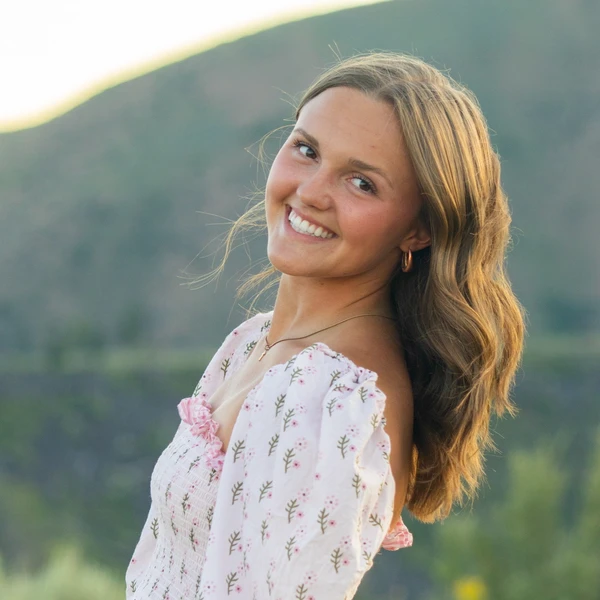
Hi! I am currently a high school senior, looking to expand my opportunities through a college education! I love skiing, surfing, and athletics. I'm looking to major in Business Agriculture, and I hope to one day own my own ranch and distribute to local and national markets! I grew up in a broken household that turned out to be a very lucky family situation. Bold.org is giving me opportunities to pursue the college education I need to achieve my biggest goals in life!

Education

Boise High School

High School
2023 - 2026

Miscellaneous

  • Desired degree level:

    Bachelor's degree program

  • Majors of interest:

    • Agricultural Business and Management
  • Not planning to go to medical school
  • Career

    • Dream career field:

      Ranching

    • Dream career goals:

      My dream is to own a Ranch, and be able to distribute to local markets and families!

    • I was on the sales floor, selling ski gear to locals

      McU Sports
      2022 – 20242 years
    • Sandwich maker

      Jersey Mikes Subs
      2024 – Present2 years

    Sports

    Alpine Skiing

    Club
    2013 – 20207 years

    Lacrosse

    Varsity
    2025 – Present1 year

    Volleyball

    Varsity
    2021 – 20254 years

    Awards

    • heart of the brave

    Public services

    • Volunteering

      BBSEF Ski Swap — Set up, Help function, and take down
      2014 – 2025
    • Volunteering

      Rake Up Boise — Home Raker
      2016 – 2024

    Future Interests

    Advocacy

    Volunteering

    Entrepreneurship

    Big Picture Scholarship
    One movie that has had the greatest impact on my life is The Pursuit of Happyness, starring Will Smith. I first watched it thinking it would just be another inspirational story about someone becoming successful. Instead, it left me thinking deeply about perseverance, responsibility, and what it really means to pursue happiness. What makes the film so powerful is how honest Chris Gardner’s journey is. He is not someone who suddenly becomes successful overnight. Instead, the audience watches him face setback after setback—losing money, struggling to find stable work, and even becoming homeless while trying to raise his young son. Yet through all of this, he refuses to give up. That determination is what stood out to me the most. It showed me that success rarely comes easily, and that the difference between people who succeed and people who give up is often the willingness to keep going when things feel impossible. One of the most meaningful parts of the movie is Chris Gardner’s relationship with his son. Even when they are sleeping in shelters or facing uncertainty about the next day, he still tries to be a good father. He encourages his son, protects him from fear, and reminds him that they are going to be okay. Those moments show that success is not just about achieving career goals or financial stability. It is also about the kind of person you choose to be for the people who depend on you. Watching those scenes made me realize how important it is to stay grounded in your values, even when life becomes difficult. The movie also changed the way I think about the phrase “pursuit of happiness.” In the United States Declaration of Independence, Americans are promised the right to pursue happiness, but the film shows that the pursuit itself is often the hardest part. Happiness does not simply appear once someone reaches a certain level of success. Instead, it comes through perseverance, growth, and the courage to keep trying when things do not go as planned. As I prepare for college and think about my future, this message has stuck with me. There are many unknowns ahead, and it can sometimes feel overwhelming to think about all the challenges that may come. But Chris Gardner’s story reminds me that difficult seasons are part of the journey. What matters most is continuing to work hard, staying focused on long-term goals, and trusting that perseverance will eventually pay off. Ultimately, The Pursuit of Happyness impacted me because it presents success in a way that feels real. It does not promise that life will be easy or fair. Instead, it shows that resilience, faith, and determination can carry someone through even the most difficult circumstances. Whenever I face obstacles or feel discouraged, I think back to the message of the film: keep going, keep believing, and never stop pursuing the life you hope to build.
    Chi Changemaker Scholarship
    About a year and a half ago, my community lost someone incredibly important to me—my best friend. Losing her changed the way I see the people around me and the struggles that many carry quietly every day. From the outside, our school looks like a place where everyone is connected and doing well, but I’ve learned that many people are hurting in ways that others never see. Because of that experience, suicide prevention has become something very close to my heart. My best friend used to say something simple that has stayed with me ever since: “Smile when you pass by.” To her, it meant that even the smallest acts of kindness could make a difference. A smile, a quick hello, or taking the time to ask someone how they’re doing might seem small, but to someone who feels invisible, it can mean everything. After losing her, I made a conscious decision to live out that message. I started being more intentional with the people around me—checking in on friends, starting conversations with people who seemed alone, and making the effort to truly listen when someone needed to talk. While these actions may seem small, they create space for people to feel seen and valued, which can make a bigger difference than we realize. What started as a personal commitment has begun to grow into something bigger. I am currently working on creating a nonprofit organization focused on suicide prevention and encouraging connection within communities. My goal is to remind people that they matter and that reaching out—even in simple ways—can change someone’s day or even their life. In the future, I hope to expand these efforts by partnering with schools and community groups to promote kindness, awareness, and peer support. I want to help create environments where people feel comfortable checking in on one another and where no one feels like they have to struggle alone. Losing my best friend will always shape my life, but it has also given me purpose. Her words—“smile when you pass by”—continue to guide me every day. If I can help even one person feel less alone because someone chose to care, then her message will continue making a difference.
    Katherine Vogan Springer Memorial Scholarship
    Being part of speech and debate at a school where conversations about politics, identity, and religion are often labeled as “woke” has stretched me in ways I didn’t expect. In an environment where students are deeply opinionated and sometimes divided—especially along religious lines—I quickly realized that if I wanted to share my Christian faith in a meaningful way, I would need more than passion. I would need preparation, humility, and the ability to truly listen. Speech and debate gave me exactly that. First, debate taught me how to engage ideas without attacking people. In rounds, I’ve had to argue positions I personally disagreed with, which forced me to understand perspectives different from my own. That discipline helped me separate disagreement from disrespect. When conversations about faith arise at school, I don’t approach them as battles to win. Instead, I see them as opportunities to understand where someone is coming from. Debate trained me to ask clarifying questions, define terms, and respond to arguments thoughtfully rather than emotionally. That has been crucial when discussing sensitive topics like morality, truth, or the role of religion in society. Second, speech events strengthened my ability to communicate clearly and confidently. Whether delivering an original or competing in extemporaneous speaking, I learned how to structure ideas logically and support them with evidence. Sharing my faith requires clarity—explaining what I believe and why in a way that makes sense to someone who may not share my background. Speech taught me to organize my thoughts, anticipate counterarguments, and speak in a way that invites engagement rather than shuts it down. Just as important, speech and debate cultivated resilience. Competing in rounds where judges critique every word can be intimidating. I’ve learned how to receive feedback without becoming defensive and how to stand firm in my convictions while remaining respectful. At a school where Christian beliefs are sometimes misunderstood or challenged, that resilience matters. Instead of shrinking back, I feel equipped to participate in conversations with confidence and grace. Most importantly, speech and debate shaped my character. The best competitors aren’t just persuasive—they are ethical. They represent their sources honestly and treat opponents with dignity. That aligns deeply with my faith. Sharing Christianity is not about winning arguments; it’s about reflecting Christ’s love. Through debate, I’ve learned that tone, posture, and attitude often speak louder than words. If I claim to believe in grace, compassion, and truth, my conduct must reflect that. In a divided environment, speech and debate has prepared me to be both bold and gentle—to articulate my beliefs clearly while honoring the humanity of those who disagree. It has shown me that sharing my faith is not about overpowering others with rhetoric, but about engaging thoughtfully, listening carefully, and speaking with conviction rooted in respect.
    Forever90 Scholarship
    A life of service, to me, means consistently choosing to invest in others, and not just when it's convenient- as a way of living. I try to embody that through leadership, my faith, and responsibility in the communities I am apart of! Every Sunday, I serve in my Church leading Sunday school and sometimes even preaching the word! Preparing lessons, facilitating discussions, and being able to walk along side middle school students has taught me that service is not always about having answers, but about showing up with humility and consistency. I want the students to feel seen, and valued. Teaching them scripture and how to live like Jesus, continues to push me to practice what I preach. It pushes me to be patient, intentional, and compassionate. Service in the church has shaped my character by teaching me that influence is not about authority but by example. This past summer I had the privilege to serve as a Wyld Life leader through the Young Life's middle school ministry. Building relationships with middle schoolers requires energy, but it comes easy when you get the gift of sharing the love of Jesus with them! Many of them are navigating insecurity, peer pressure, and struggling with identity for the first time in their life. Just to be there for them and be a steady positive presence is a blessing. Service in this space has taught me how powerful simple consistency can be. Especially since I was once in their shoes! Beyond Ministry I am very passionate about serving through agriculture. Growing up around ranching has shown me both the beauty and the responsibility of food production. Food is foundational. It fuels families, shapes health, and builds community. Yet many communities lack access to high-quality, nutrients, and protein and instead people rely on processed foods because they are cheaper and more accessible. This upsetting reality motivates me. I plan to pursue an education in ranch systems and agricultural sciences so I can contribute to a more sustainable and accessible food system. My goal is not to simply produce beef, but to produce it responsibly- prioritizing animal health, land stewardship, and nutritional integrity. Education will equip me with the scientific standards. Understanding soil health, grazing systems, supply chains, and market structures will allow me to think beyond a single ranch and award broader food accessibility solutions. I want to use my education to help bridge the gap between producers and underserved communities. Whether through partnerships with local food banks, cooperative models, or innovative distribution systems. In hope of doing this I would hope to increase access to clean, responsibly raised beef. Service through agriculture means recognizing that ranching is not just a business, it's a service, which puts food on peoples plates daily. Ultimately, I want to embody a life of service by investing in people spiritually, relationally, and physically. Through discipleship, and agriculture I can serve all kinds of people. My education will not simply be a pathway to my career but a tool to create impact on my community, living out my calling to serve others with integrity and purpose.
    Aserina Hill Memorial Scholarship
    "Kindness in Action" One of the most meaningful ways I practice kindness is through consistency, showing up even when it's uncomfortable or unnoticed. After losing my best friend to suicide, I became more aware of how easy it is to miss what someone may be carrying deep down. That awareness changed how I interact with people every day. I began making small but intentional efforts, checking in on friends who aren't very open with their emotions, choosing empathy over assumption, and really being a space where people can feel heard. One moment that stands out was when my friend was going through a hard family situation, and I was able to just write her a letter and drop off some of her favorite candy. I simply let her know I was there for her. Later, she told me that being noticed and loved mattered more than advice. Kindness doesn't have to be grand to have an impact. Sometimes, it's the simple act of being present that makes someone feel valued. It was important because it taught me that compassion is a choice that we can make daily, and the power of choosing to approach with kindness can truly change someone's day. "Boldly, Unapologetically Me" For a long time, I believed success meant following the path others expected of me. I felt pressure to chase popularity in my middle school years and to pursue things simply because my parents would be proud of me. I did all these things even when they no longer aligned with who I was becoming. Choosing to step away from paths that were not mine to pursue took a lot of honesty and courage. For me, it looked like accepting disappointment from others and instead forming certainty for myself. Instead of continuing something for sole recognition, I chose to prioritize growth. That decision reshaped how I define success, and I learned that being true to myself doesn't always look bold in the moment, but it builds confidence and clarity over time. I discovered the value of self-trust. I no longer measure my worth by external validation, but by whether my choices reflect my values. That lesson continues to reshape how I approach my leadership, integrity, and confidence to stand by who I am. "Creating Connection" Creating connections has become a priority in how I move through the world. After experiencing loss, I became more aware of how easily people can feel unseen. That awareness changed how I interact with others and how I contribute to my community. For me, that looks like making a conscious effort to be welcoming with platforms like student council, my lacrosse and volleyball team, and preaching at Sunday school. I am able to actively invite people into conversations, check in on a multitude of people, and create space where people feel valued, seen, and worthy. Focusing on listening first, knowing that belonging often begins with feeling heard. I've helped foster environments where people feel supported rather than judged. I've learned that connection doesn't require glamour and glory, but simply presence. These efforts may be quiet, but they matter. Through them, I work to build communities rooted in kindness and genuine human connection.
    Ava Wood Stupendous Love Scholarship
    "Kindness in Action" One of the most meaningful ways I practice kindness is through consistency, showing up even when it's uncomfortable or unnoticed. After losing my best friend to suicide, I became more aware of how easy it is to miss what someone may be carrying deep down. That awareness changed how I interact with people every day. I began making small but intentional efforts, checking in on friends who aren't very open with their emotions, choosing empathy over assumption, and really being a space where people can feel heard. One moment that stands out was when my friend was going through a hard family situation, and I was able to just write her a letter and drop off some of her favorite candy. I simply let her know I was there for her. Later, she told me that being noticed and loved mattered more than advice. Kindness doesn't have to be grand to have an impact. Sometimes, it's the simple act of being present that makes someone feel valued. It was important because it taught me that compassion is a choice that we can make daily, and the power of choosing to approach with kindness can truly change someone's day. "Boldly, Unapologetically Me" For a long time, I believed success meant following the path others expected of me. I felt pressure to chase popularity in my middle school years and to pursue things simply because my parents would be proud of me. I did all these things even when they no longer aligned with who I was becoming. Choosing to step away from paths that were not mine to pursue took a lot of honesty and courage. For me, it looked like accepting disappointment from others and instead forming certainty for myself. Instead of continuing something for sole recognition, I chose to prioritize growth. That decision reshaped how I define success, and I learned that being true to myself doesn't always look bold in the moment, but it builds confidence and clarity over time. I discovered the value of self-trust. I no longer measure my worth by external validation, but by whether my choices reflect my values. That lesson continues to reshape how I approach my leadership, integrity, and confidence to stand by who I am. "Creating Connection" Creating connections has become a priority in how I move through the world. After experiencing loss, I became more aware of how easily people can feel unseen. That awareness changed how I interact with others and how I contribute to my community. For me, that looks like making a conscious effort to be welcoming with platforms like student council, my lacrosse and volleyball team, and preaching at Sunday school. I am able to actively invite people into conversations, check in on a multitude of people, and create space where people feel valued, seen, and worthy. Focusing on listening first, knowing that belonging often begins with feeling heard. I've helped foster environments where people feel supported rather than judged. I've learned that connection doesn't require glamour and glory, but simply presence. These efforts may be quiet, but they matter. Through them, I work to build communities rooted in kindness and genuine human connection.
    J. L. Lund Memorial Scholarship
    Some of the most important lessons in my life began on a pair of skis. I started skiing at the age of 1.5, and by the time I was 5, the mountain already felt like home. Skiing became my "first love"; it taught me joy, before it taught me skill, and passion before pressure. Every Christmas, I would ask to become a ski racer, dreaming of the future I thought success was supposed to look like. When I finally joined my local ski team, BBSEF, skiing quickly became my identity. I would compete regionally at high levels, and I even found my closest friends through the sport. Racing taught me discipline, goal setting, and how to perform under pressure. Skills that directly translate to leadership. However, as racing became my priority, I began to feel drained. What once fueled me started to consume me. Walking away felt like failure, but it ultimately reshaped how I define success. I learned that long-term growth- whether it was sports, school, or work.- cannot be built on burnout. After I quit ski racing in my early teens, I rediscovered my love for skiing—specifically, free skiing—where passion again replaced pressure. Imagining myself years into the future, I saw myself taking my future children up the mountain, sharing something meaningful rather than chasing outcomes. That shift brought unexpected growth to 14-year-old me, including a soft sponsorship from a ski Haus in Spokane. I learned that sustainable success comes from balance, adaptability, and knowing when to pivot—all of which are principles in my future field of business agriculture, where long-term viability matters more than short-term gain. This perspective deepens after the loss of my best friend and teammate, Faith. Though distance separated us, she continued to pursue her ski racing career in Sun Valley, Idaho. Her passing changed how I view ambition and responsibility. It reminded me that behind every achievement, operation, or involvement, decisions involve people. People who all come from different walks of life, who have their own mental and physical struggles. Since Faith's passing a year ago, I have made it my goal to lead with compassion, awareness, and truth. These experiences and changes have motivated my pursuit of making a change in the food industry and going into the agricultural business. Agriculture requires resilience, ethical decision-making, and a deep respect for people and resources. I want to build a career focused on sustainable and healthy systems that support both communities and individuals. Like skiing, the strongest paths forward aren't always the fastest; they are the ones built to last.
    Daniel R. Torres "Complete Your Dream” Memorial Scholarship
    “What’s your biggest goal in life?” My mom asks me this question constantly. For a while, my answers changed—from teacher to dentist—because I picked goals that sounded practical instead of meaningful. Now, I know my true goal is to pursue a life and career in agriculture that genuinely matters to me. Everything shifted when I realized that I had stopped letting myself dream the way I did as a kid. In the book What Are You Waiting For, Josh Branham talks about getting back to a “child-like imagination.” When we were little, adults told us to dream big. But once we actually got older, those same people suddenly told us to be realistic. Somewhere in there, I let practicality shrink what I thought I was capable of. That was the moment I decided my goals needed to come from who I am—not from what sounded safe. I grew up around the idea that goals matter. My family always taught me that your biggest dream is important, but the small goals in between are what get you there. And it’s true: when people don’t reach their goals fast enough, they’re quick to tear themselves down. But small goals create small wins—and those add up. They keep you moving, even on days when everything feels impossible. Right now, my next step toward my goal is figuring out how to pay for college. Getting into every school I applied to was a huge milestone. It made me feel like my hard work counted and gave me the chance to shape my future. But being accepted only matters if I can afford to go. My dream school is Montana State University, key to building my future in agriculture. Now, I am determined to find a way to make it happen. My big dream is to earn a degree in Agricultural Economics with a business emphasis, start a career in agriculture, and eventually buy my own ranch. And one day, I hope to end up in Sun Valley. It’s a place that feels like home to me—somewhere I want to eventually raise a family and give back to the community. That’s the long-term dream, but there are a lot of steps in between. The first step is getting to MSU. Not just because it has a great agriculture program, but because I know I’ll grow there. While I’m in school, I plan to work on a family ranch to keep building my skills. Ranch work teaches you things school can’t—how to work hard, be patient, take responsibility, and respect the land. None of it is glamorous, but all of it is important. During summers, I want to go back to Boise and intern with Simplot. I admire their role in agriculture, and I want to learn from people who are already making an impact on the industry. Internships, classes, early mornings feeding livestock, late nights fixing fences—each of those things is another step toward the life I want. After college, I plan to work for an agricultural company where I can build experience and save money. Eventually, I want to buy land and start building my own ranch from the ground up. I know that sounds huge. But every person who built something meaningful started with something small—a job, a skill, a chance, a dream they weren’t willing to let go of. And honestly, my dream isn’t just about me. Agriculture is built on community and connection. If I’m able to reach my goals, I’ll be able to contribute to a system that literally keeps people fed. Owning a ranch means supporting local jobs, helping the economy, taking care of the land, and keeping agriculture alive for future generations. Sun Valley shaped me, and one day, I want to give back by investing in the land and people there. Daniel’s saying, “Complete Your Dream,” means something real to me. Not because dreams are easy, but because completing a dream means refusing to let fear or practicality put a limit on you. It means taking each step—even the tiny ones—and trusting they’re leading somewhere bigger. My dream is to build a life in agriculture. I want to work hard, learn as much as I can, and eventually own a ranch that becomes something meaningful not just for me, but for others too. This scholarship would be a step toward making that dream possible. And someday, when I’m in a place to help someone else who’s just starting out, I hope I can return the favor and encourage them to chase their own dream the same way people encouraged me.
    Dream BIG, Rise HIGHER Scholarship
    Education has always been important to me, but I didn’t fully understand the power it could have—both in shaping my future and helping me grow as a person—until I faced one of the hardest experiences of my life. During the second semester of my junior year, my best friend passed away. Losing someone who had been such a steady part of my life left me struggling emotionally and academically. I went from being someone who was always organized and motivated to someone who felt disconnected from everything, including school. Assignments that I used to complete easily suddenly felt impossible, and it was hard to care about grades or goals when I was still trying to understand my own grief. For a while, I felt like I was drifting without direction. But slowly, education became the thing that grounded me again. It wasn’t an overnight change—nothing about grief works like that. Instead, it was a process of showing up on days when it would have been easier to stay home, completing one assignment even if I didn’t have the energy for more, and allowing myself to relearn what motivation felt like. In a way, school became a place where I could rebuild my sense of normalcy. It gave me structure when my life felt unpredictable, and it reminded me that I still had goals worth working toward. One thing that helped anchor me was my interest in agriculture and business. I’ve always been fascinated by how food systems work and how much impact agriculture has on rural communities, local economies, and everyday life. That realization became an important turning point. It helped me shift from just trying to get through each day to looking forward to what I could build for my future. The challenge I faced during junior year didn’t just test my perseverance—it reshaped how I understand it. Before, I thought perseverance was about being tough and powering through obstacles. Now I know that sometimes it looks quieter: getting out of bed on difficult days, asking for help when you need it, and slowly rebuilding your confidence after it breaks down. Working through that period taught me how to be patient with myself and how to keep going even when progress is slow. It also taught me that setbacks don’t mean I’m incapable of succeeding. Instead, they can be opportunities to learn more about what I value and what I want for my life. Education has also given me a sense of direction. It has shown me that I want to pursue a future rooted in agricultural economics, particularly with an emphasis on business. I’m drawn to the balance between analytical thinking and real-world application—using data to solve problems that directly affect farms, ranches, small businesses, and rural communities. The more I learn, the more I see how essential this field is. Agriculture is constantly changing, and communities depend on people who understand both economic trends and the human side of the industry. In college, I hope to deepen my understanding of these issues and gain the tools to make a positive impact. Whether it’s helping agricultural producers manage financial challenges, improving local food distribution systems, or contributing to sustainable economic development, I want my education to be something I use for more than just personal success. I want it to help me support the communities that raised me and the people who work hard to provide for others. I also want to take my experiences and use them to help others who might be facing their own challenges. Going through such a difficult time showed me how important compassion, encouragement, and support can be. I learned firsthand that people don’t always talk about what they’re going through, even when they need help. Because of that, I want to be someone who listens, who shows understanding, and who recognizes that success looks different for everyone. As I continue my education, I hope to grow into a leader who uses empathy just as much as knowledge. Looking back, I can see how much my experiences—both academic and personal—have shaped the person I am becoming. Education gave me direction when I felt lost. It reminded me that my goals still mattered, even when motivation felt out of reach. And it helped me discover strengths I didn’t know I had: resilience, patience, and the ability to keep moving forward even when the path isn’t easy. As I pursue my degree, my hope is not only to build a stable future for myself but to use what I learn to strengthen the agricultural world and the communities that depend on it. I want to contribute to solutions that make agriculture more sustainable, more resilient, and more accessible. Most of all, I want my education to be something that helps others—not just in theory, but in real, meaningful ways. My journey hasn’t been simple, but it has given me a clear sense of direction. I know what I want to work toward, and I know why it matters. Education has been the bridge between where I’ve been and where I hope to go, and I’m ready to keep moving forward with purpose.