
Hobbies and interests
Painting and Studio Art
Drawing And Illustration
Singing
Writing
Crafting
Reading
Academic
Art
Biography
Fantasy
Adult Fiction
Historical
Humanities
Magical Realism
Novels
Suspense
Travel
Education
Tragedy
Women's Fiction
I read books daily
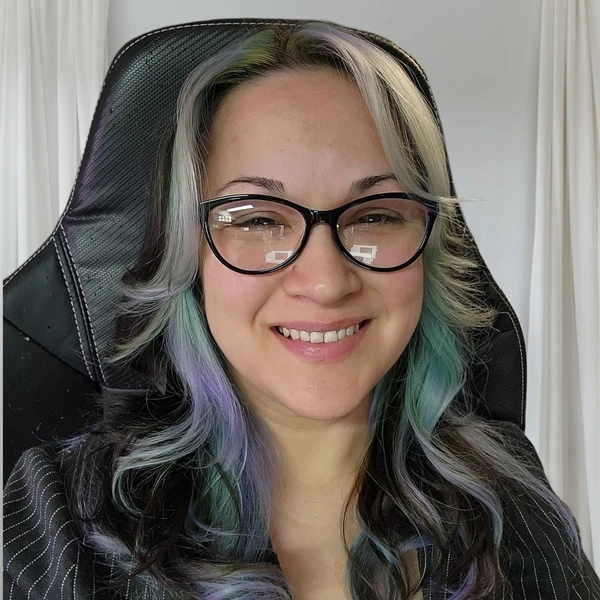
Gloria Jennings
1x
Finalist
Gloria Jennings
1x
FinalistBio
I am a Latina mother of three, a nonprofit operations professional, a Google Cloud certified technologist, a medical advocate, and a returning student at Arizona State University. My academic path was interrupted, as life sometimes insists. But interruption is not failure, and returning to finish what I started is one of the most deliberate decisions I have ever made.
I have spent years working at the intersection of people, systems, and mission-driven organizations, advocating for survivors, supporting youth, and building operational infrastructure for nonprofits running on passion. That work deepened my belief that science, compassion, and community are not separate pursuits. They are the same pursuit.
I am not asking for help because I lack the ability to succeed. I am asking because the right support at the right moment changes trajectories, and I intend to be the kind of person who remembers that, long after the, funding runs out.
Education
Arizona State University-Tempe
Bachelor's degree programMajors:
- Neurobiology and Neurosciences
Minors:
- Data Science
Roosevely University
Bachelor's degree programMajors:
- Psychology
- Neuroscience
Minors:
- Psychology
Prairie State College
Associate's degree programMajors:
- Psychology, General
Miscellaneous
Desired degree level:
Doctoral degree program (PhD, MD, JD, etc.)
Graduate schools of interest:
Transfer schools of interest:
Majors of interest:
- Neurobiology and Neurosciences
Career
Dream career field:
Research
Dream career goals:
Lead researcher
Operations and Communications Management
Amped Kids Foundation2023 – 20263 yearsVirtual Assistant
Upwork2023 – Present3 yearsMedical Advocate
Young Women's Christian Association2019 – 20201 yearEmergency Medical Technician
Medical And Safety Engineering2019 – 20201 yearMachine Operator (Snow Plow Driver)
Midwest SnowTech2019 – 20201 yearClerical Work
Prairie State College Trio Office2018 – 20191 yearSnow Plow Driver (Skid Steer Loader)
Midwest Snow Tech2017 – 20181 yearBartender/waitress
Pranksters Bar and Grill2005 – 20072 years
Sports
Boxing
Junior Varsity1999 – 20012 years
Research
Behavioral Sciences
Roosevelt University — Data collection and Statistics2019 – 2020
Arts
Prairie State College
Painting2017 – 2018
Public services
Advocacy
Young Women's Christian Association — Medical Advocate2019 – PresentPublic Service (Politics)
Medical and Safety Engineering (M.A.S.E.) — Emergency Medical Response for Basic Life Support2019 – Present
Future Interests
Advocacy
Politics
Volunteering
Philanthropy
Entrepreneurship
Dinakara Rao Memorial Scholarship
Nobody in my family had ever gone to college. Not my Cuban grandmother, who came to this country and built a life from almost nothing. Not my grandfather, an Ohio farm boy who worked with his hands his entire life. Not my parents. The educational ceiling in my family was never spoken aloud; it was simply the water we swam in, the unspoken assumption that certain things were for other people. I am forty-two years old, and I am the one breaking that assumption. Not because the path was easy, but because I eventually understood that waiting for easy was just another way of waiting forever.
My journey to this point has not been linear. I earned an Associate of Arts in Psychology from Prairie State College, and then life intervened, as life often does for first-generation students who don't have a safety net. Loss, financial hardship, the demands of raising children, the weight of rebuilding after trauma. I stepped away from school because I had to. I am returning because I refuse to let that be the end of the story. I am now pursuing a B.S. in Cognitive Neuroscience and Data Science at Arizona State University, working toward an MD/PhD, and building toward a research career that I have wanted for longer than I have had the words to describe it.
The motivation behind my chosen path is not abstract. I have worked as a medical advocate for survivors of violence at the YWCA. I have coordinated operations at Amped Kids Foundation, a nonprofit serving foster and at-risk youth. I have sat with people in the worst moments of their lives and understood, in a way that no textbook can fully teach, that the gap between suffering and healing is often a gap in knowledge. The knowledge about how trauma rewires the brain, how resilience is built, and how the nervous system can be helped to recover. I want to be on the research side of that gap. I want to produce the science that changes outcomes for people who have been underserved by the systems meant to protect them.
What Dinakara Rao understood is that education is the key, and that you pursue it even when the world does not make it easy for you. This is something I understand in my bones. The systemic obstacles for first-generation BIPOC students are real and layered. Financial barriers make every semester a negotiation. The absence of a roadmap. The particular exhaustion of navigating institutions that were not designed with people like you in mind. I have faced all of it. I am still here.
I am here because my sister never got the chance to be. Because my grandmother crossed an ocean and deserved to see her bloodline flourish. Because my children are watching me, and what they see me do now is what they will believe is possible for themselves. I am not just pursuing a degree. I am changing the story my family tells about what we are capable of, and then I am taking that change back to every community that needs to see it happen.
First Generation Scholarship For Underprivileged Students
My grandmother came from Cuba with very little and built a life that became the foundation for everything that followed. She raised five children, filled a home with music and food and love, and never had the opportunity to pursue a college degree. Neither did my grandfather. Neither did my parents. At forty-two years old, I am the first in my family to reach for a degree, and I carry every one of them with me.
Nobody handed me a roadmap. I did not have a parent who had navigated FAFSA or chosen a major, or figured out how to talk to an academic advisor. I learned those things the hard way, through trial and error and asking questions I was sometimes embarrassed not to already know the answers to. My path has been nonlinear, and often interrupted by loss, financial hardship, and the very real demands of raising children while rebuilding a life. I am returning to complete my B.S. in Cognitive Neuroscience and Data Science at Arizona State University, not because the path was clean, but because I refused to let it stay unfinished.
What I have learned through that experience is something no orientation packet teaches: that the hardest part of being first-generation is not the coursework. It is the silence. The not knowing what you do not know. The way imposter syndrome creeps in when you walk into a room full of people whose parents went to college and whose families know how this works. I have sat in that silence. I know what it costs.
That is exactly why I intend to go back. Not just to finish my degree, but to become someone who makes the path visible for the students coming behind me. I work with foster and at-risk youth at Amped Kids Foundation, and I see first-generation potential every single day in kids who have no idea what they are capable of because no one in their world has shown them yet. My long-term goal is a doctoral degree and a research career, but the through line of all of it is the same. I want to understand the science of human resilience and take that understanding back to communities that have been underserved by the institutions meant to help them.
The most powerful thing a first-generation student can do, once they find their footing, is turn around and reach back. I plan to do that through mentorship, through research that centers on underserved populations, and through simply being visible. I am a forty-two year old Latina woman in a neuroscience program, proof that the timeline does not disqualify you and the background does not define your ceiling.
My grandmother never got to go to college. My sister never got to chase her dreams. I am going to do it for all of us, and for every first-generation student who needs to see someone who looks like their story make it all the way through. This scholarship would help me get there, and everything I build from here I intend to hand back.
Patricia Lindsey Jackson Foundation - Eva Mae Jackson Scholarship of Education
I did not grow up in a church, but I grew up understanding what devotion looks like in practice. I watched my grandfather love my grandmother so completely that he spent twenty years faithful to her memory after she was gone. I watched neighbors show up for each other in the quiet, unglamorous ways that never make the news but hold communities together anyway. I absorbed, early and without being taught the word for it, that faith is not only something you profess, but something you demonstrate, daily, in how you treat the people around you.
That understanding is the foundation of everything I am building.
My faith lives in community. It lives in the belief that every person I encounter carries inherent worth that deserves to be honored, and that showing up for others is not optional; it is the whole point. This belief has shaped my academic goals as directly as any course I have taken. I am pursuing a B.S. in Cognitive Neuroscience and Data Science at Arizona State University because I want to understand the science of human suffering and resilience. I want to take that understanding back to the communities that need it most. The research I intend to pursue is not abstract. It is for the foster youth I serve at Amped Kids Foundation, for the survivors I sat with as a medical advocate at the YWCA, and for every person who has been told, implicitly or explicitly, that their healing is not a priority.
As for who has pushed me, the list is short and permanent. My grandfather, a tough Ohio farm boy who loved my Cuban grandmother with his whole life and told me, more than once, not to settle for anything less than a life fully lived. My sister Teresa, who shared my birth month, my childhood, and dreams she never got to chase. She wanted to go to school. She wanted to travel. She was gone at twenty-four, and I carry her with me into every room I walk into. And of course, my children. They watch me study and work and rebuild, and they deserve to grow up knowing that this family pursues its potential, no matter how long it takes or how hard the road gets.
Faith, for me, means refusing to let their sacrifices and their love be wasted. It means walking into spaces where people have been failed by systems and saying, with my presence, my work, and eventually my research, that they matter. It means leading with integrity even when no one is watching, and investing in others not because it is required but because it is right.
Patricia Lindsey Jackson and Eva Mae Jackson understood that uplifting others and pursuing excellence are not separate callings. They are the same calling, expressed in different rooms. I am finding my expression in neuroscience, in nonprofit work, in the quiet hours after my kids are asleep when I am still building toward something bigger than myself. This scholarship would support a student who believes, at her core, that her education is not just for herself, but for everyone she will carry it back to.
Hazel Joy Memorial Scholarship
The last phone call my sister Teresa ever made was to me. She told me she looked up to me. She pointed out that I was traveling, going to school, building a life. I told her she had it backwards. I told her she was the bravest person I had ever known, and even though I never really told her before, I always looked up to her. She went quiet, like she was sitting with that for the first time. She told me she loved me and hung up. Eighteen hours later, she was gone.
Teresa was two years older than I was. We shared a birth month — March — and a childhood that no child should have survived. We came from a home filled with violence and pain, and I watched her absorb things that should have broken her. She never let them. She was loud and funny and ferociously alive, even when she was hurting the most. When the pain finally became too heavy, it drove her to drugs. On March 20th, 2007, five days before her twenty-fifth birthday, she was gone. I was twenty-three at the time, and we had just lost our mother 4 month prior.
I will not tell you that I handled what came next with grace. I didn't. I drank. I danced through my grief like I was performing being alive. I lost a relationship, two jobs, and an apartment. For a long time, I was drowning, and the noise I made was just a way to cover the silence she left behind. What pulled me back wasn't a single moment of clarity. It was the realization that Teresa's children still needed someone present. That my own daughter deserved a mother who had chosen to heal. That Teresa had dreams she never got to chase. She wanted to go to school, travel, a bigger life. So I chose to move forward. Not away from her. Forward, with her.
That choice has shaped everything since. I am now pursuing a B.S. in Cognitive Neuroscience and Data Science at Arizona State University, working toward an MD/PhD and a career in neuroscience research. I work as an operations coordinator for a nonprofit serving foster and at-risk youth. I write. I build. I chase things that once felt impossible. I do it because Teresa never got the chance to, and I refuse to waste the life she didn't get to finish.
Losing a sibling does something specific to your understanding of time. It makes you acutely aware that none of it is guaranteed, and that dedication is not optional, but the only responsible response to still being here. Teresa taught me to never shrink. To get louder when the world tells you to be quiet. To take up space without apology.
I take up space for both of us now. I celebrate her birthday every year. I carry her name into every room I walk into. And every time I almost stop, when the financial pressure or the exhaustion or the doubt creeps in, I remember the last thing she ever said to me, and I keep going. This scholarship would help me keep going a little further. For her, and for everyone who lost someone they didn't get enough time with.
STEAM Generator Scholarship
My grandmother came from Cuba with fire in her eyes and very little else. She built a life, raised five children, and filled a home with music, food, and a love so complete that my grandfather spent twenty years faithful to her memory after she was gone. She never had the opportunity to pursue higher education. Neither did my parents. At forty-two years old, I am the first in my family to reach for it, and I carry every one of them with me when I do.
Growing up second-generation, the educational system was not designed with me in mind. There was no family roadmap, no one who had navigated FAFSA or college applications or academic advisors before me. The system assumed a baseline of knowledge I simply didn't have, and figuring it out alone while managing the weight of everything else life handed me meant that my educational journey has been nonlinear, interrupted, and hard-won. I am returning to complete my B.S. in Cognitive Neuroscience and Data Science at Arizona State University, not because the path was easy, but because I refused to let it stay unfinished.
My hopes are as big as my fears. I eventually want to earn an MD/PhD and contribute to neuroscience research that changes outcomes for underserved communities. The same communities I have spent my career serving as a nonprofit operations coordinator and medical advocate. I hope to be the blueprint my children and their children can follow, proof that this is something our family can do.
I am a forty-two year old Hispanic woman entering a medical field that does not always welcome either of those things. Ageism in medicine is documented and pervasive. The higher I climb, the more I am aware that I will walk into rooms where people will do the math on my age and question whether the investment is worth it. I am aware that being a woman of color in research spaces still means proving yourself twice for half the recognition. These are not paranoid fears; these are patterns with data behind them, and I study data.
What my Cuban grandmother gave me, without ever setting foot in a classroom on my behalf, was the understanding that resilience is not the absence of obstacles, but the refusal to let them be the final word. She danced with castanets when she won games. She loved without reservation. She built something from nothing in a country that was not her own. I intend to do the same thing inside institutions that were not built for me.
I am not entering higher education despite my background. I am entering it because of it. I am entering because someone has to go first, and I have never been afraid of being first. This scholarship would help ensure that the barriers that slow me down are financial ones I can overcome, not permanent ones that stop me. My grandmother didn't come this far for me to stop here.
Simon Strong Scholarship
The darkness never announces itself. It creeps in slowly and quietly, as it always has. This year, after a car accident, a job loss, and the kind of compounding grief that makes the floor feel unsteady, I found myself sitting on the edge of my bed with nothing for dinner and a familiar weight settling over me. I had been here many times before. Survival mode has a way of making itself at home, influencing every decision you make.
This time, something shifted. I was tired of crying, tired of spiraling. I dried my eyes, stood up, and made a different choice: one application, one scholarship form, one email. I chose to move forward instead of allowing survival mode to keep me in place.
I am a BIPOC student returning to finish my Bachelor of Science in Cognitive Neuroscience and Data Science at Arizona State University. My path has never been linear. Like many students from underserved communities, my education was interrupted not by lack of desire but by the weight of survival. When every day demands everything you have just to get through, it makes it impossible to imagine a future.
What I have learned is that rewiring the brain is not a single, dramatic moment; it is a daily, conscious decision. Every time the darkness threatened to pull me under, I caught myself and breathed. Every day, I made one decision that moved me closer to my goal. Slowly, that darkness stopped gripping me and became something else entirely: a problem to solve rather than a weight to carry. Survival is steadily being replaced by intention.
I chose Cognitive Neuroscience because I lived the science before I ever studied it. I want to understand and document what happens in the brain when people make the conscious choice to break cycles that have held them hostage, without them even knowing it. I want to hand that map to others. To the foster youth I have served through nonprofit work. To anyone who has ever sat on the edge of a bed, wondering if forward is still possible.
My advice to anyone facing similar circumstances is this: be both tough and gentle with yourself. Negative self-talk will undo every step forward you take. Some days will be harder than others, but that is not failure; that is becoming. It is not about how hard you push; it is about showing up consistently for yourself. If you are tired, rest. If you are struggling, breathe, reset, and then move forward with intention.
You are not broken. You are merely polishing the stone - a process that takes time and different grains of sand to achieve its shine.
Goths Belong in STEM Scholarship
I was the kid who read about the occult and listened to My Chemical Romance while everyone else was doing something more conventional. I was also the kid who couldn't stop asking why. Why do people dream? Why does trauma live in the body? Why do mystics and scientists keep arriving at the same edge of the same unknown and turning away from each other instead of comparing notes? I never stopped asking. I just eventually found a field of study willing to take the questions seriously: neuroscience.
I am pursuing a B.S. in Cognitive Neuroscience and Data Science at Arizona State University, and my alternative identity is not incidental to that path. It is foundational to it. Growing up immersed in punk, metal, emo, and occult subcultures taught me to distrust systems that dismiss things without understanding them. It taught me that the mainstream consensus is not always right, that the people on the margins often see things the center can't, and that the most interesting questions live exactly where respectable discourse gets uncomfortable.
Those instincts led me to a thesis I am actively developing. What science has historically dismissed as supernatural, shamanic ritual, witchcraft, mystical states, may in fact be reproducible, neurologically-mediated experiences with measurable biological mechanisms. Researcher Rick Strassman's clinical DMT work and Stanislav Grof's holotropic breathwork studies both point toward the same frontier. My alternative worldview didn't lead me away from science. It led me straight into the middle of one of its most fascinating unanswered questions.
The challenges have been real. I am a mother, a nonprofit worker, a contractor, and an artist navigating financial barriers that make every semester an act of determination. I have rebuilt my life after trauma. I have been underestimated in professional spaces because I don't look like the expected version of a researcher , colored hair, piercings, and entirely unapologetic about the music I use to think and the spirituality I use to live. I have been told, in various ways, that people like me don't belong in rooms like this.
I belong in every room I walk into. And I walk in anyway.
The future of STEM needs people who have lived outside the center. It needs researchers who understand that the communities most impacted by gaps in neuroscience, mental health research, and trauma science are often the same communities that have been dismissed by those fields historically. My alternative identity is not a liability I overcame. It is the lens that makes me a better thinker, a more empathetic researcher, and a scientist who will never stop asking the uncomfortable questions, because I never learned how to ask any other kind.
Goths, punks, witches, and weirdos have always known that the world is more strange and far more layered than it appears. Science is finally starting to catch up. I intend to be in the room when it does.
Sharra Rainbolt Memorial Scholarship
He kept a picture of her on the table beside his chair. Even twenty years after she was gone, my grandfather, my Papa, would look at that photograph and tell me about the moment he laid eyes on her, a Cuban woman with fire in her eyes, and he knew immediately that she was his everything. He told me about the Elvis concerts, shared her recipes, and the way she would dance with castanets the moment she finally beat him at a game of Yahtzee. He didn't speak about her as someone lost. He spoke about her as if she were waiting for him.
Papa was an Ohio farm boy, tough, quietly strong, the kind of man who showed love through consistency rather than declaration. In a childhood where the man who should have been my protector was instead my source of harm, Papa was the counterweight. He was my evidence that men could be gentle. That love could be steady. That it was possible to weather devastating loss and still choose to show up for the people who needed you. I measured every relationship in my life against the standard he set without ever trying to set one. "Do not settle," he told me more than once, and coming from a man who had loved one woman so completely that he spent two decades faithful to her memory, that advice carried the full weight of a life lived with intention.
When the doctors found pancreatic cancer, I wanted him to fight. I wanted treatments, time, more puzzles, more stories. But when I sat beside him, and he looked at me, calm, unhurried, that photograph of my Nana in his peripheral vision, and said, "If this is how I go, then this is how I go," I understood something I wasn't ready to understand. He wasn't giving up. He was at peace. At eighty-eight years old, he had loved completely, grieved faithfully, and lived fully. He faced the end the same way he faced everything else: head-on, without complaint, on his own terms. The last time I saw him, he gave my kids ice cream and told them stories, the same stories I had heard dozens of times. Even then, all fire, he was still making sure the people he loved walked away with something good. He kept doing things himself until the day he simply couldn't. And then one night, he closed his eyes and didn't open them again.
Cancer doesn't just take a person. It dismantles them slowly in front of you, and then asks you to keep living. What Papa gave me, in the way he faced his diagnosis, was a final lesson in resilience. It was the same lesson he had been teaching me my whole life without naming it. You do not have to rage against what you cannot control. You can meet it with grace, tend to the people you love, and trust that how you lived matters more than how you leave.
That lesson is the reason I am pursuing a B.S. in Cognitive Neuroscience and Data Science. I want to understand what happens in the human mind under conditions of grief, trauma, and profound loss, and I want to use that understanding to help people heal. Papa taught me that resilience is not the absence of pain. It is the decision to remain fully human inside of it. I intend to spend my career building on that truth. This scholarship would bring me one step closer to doing that work, and to honoring the man who first showed me it was possible.
Jim Maxwell Memorial Scholarship
There was a time in my life when I could not see a future. Not because the future wasn't there, but because trauma had quietly dismantled the part of me that believed I deserved one.
Complex PTSD doesn't announce itself; it erodes. It erodes your sense of safety, your trust in your own instincts, and eventually your belief that you are someone worth fighting for. What pulled me back was not a single moment of revelation. It was something quieter and more persistent. It was a deep, unshakeable sense that I was still here for a reason, and that something larger than my pain was holding me accountable to find out what that reason was.
That is what faith has always meant to me. Not a doctrine or a building, but a living, breathing trust, in the universe, in the wisdom of the natural world, in the still small voice of my own intuition when everything else has gone dark. My spirituality is woven into the way I move through life. It is present when I sit with a difficult problem and wait for clarity instead of forcing an answer. It is present when I look at my children and understand that my healing is also their inheritance. It is present in my commitment to education, which I pursue not as a transaction but as an act of becoming. An act of honoring the life I fought to keep.
Rebuilding after trauma is not linear, and it is not a quiet process. It required me to dismantle beliefs I had carried since childhood and replace them, carefully, one by one, with beliefs that were actually true. That process demanded a kind of faith I had never practiced before, faith in my own capacity to change, faith that the work would matter even when I couldn't see the results, and faith that the universe does not bring a person through fire only to abandon them on the other side. I held onto that belief on the hardest days. It is the reason I am here.
Today, I am a mother, an artist, a nonprofit operations coordinator, and a student pursuing a B.S. in Cognitive Neuroscience and Data Science at Arizona State University. I also own a small handmade goods business and am actively pursuing Google Cloud certification to expand my professional capabilities. None of these things happened by accident. Each one is the result of intentional, faith-guided movement, the decision made over and over again, to keep building even when the foundation felt uncertain.
This opportunity is meaningful to me because Jim Maxwell understood something that I have learned the hard way. I learned that potential does not expire, and that the right support at the right moment can change the entire trajectory of a life. Financial barriers have made every semester of my education a negotiation. This scholarship would remove one of those barriers and allow me to move forward with the full force of my attention on what matters: the work, the learning, and the service I intend to give back. Faith brought me this far, and I intend to spend the rest of my life proving it was right about me.
Irving S. Berman Scholarship
My alarm goes off before the sun rises. By the time most people sit down to their morning coffee, I have already reviewed lecture notes on neuroplasticity, answered emails for a nonprofit serving foster youth, and started a load of laundry so my kids have clean clothes for school. I don't say this to boast, but I say it because it has taken me years to understand that the way I move through the world is not despite hardship, but because of it. I learned early that no one was coming to save me. So I became someone worth saving, and then I became someone who saves others.
I am a mother, a student pursuing a B.S. in Cognitive Neuroscience and Data Science, a working artist, and an Operations and Communications Coordinator at Amped Kids Foundation, a nonprofit dedicated to foster, adopted, and at-risk youth. On paper, those things look like a balancing act. In practice, they are one continuous act of belief in the value of education, in the dignity of every child, and in the idea that the natural world, in all its forms, is worth protecting.
My passion is deeply rooted in this belief. While conservation efforts often focus on forests and oceans, I see a parallel in the protection of children, particularly foster youth. They are an ecosystem under threat, uprooted from their origins, replanted in new environments, and still expected to thrive. Through my work at Amped Kids, I have witnessed the transformative power of intentional nurturing. Music serves as a vital link, connecting a child to their inherent self-worth. A scholarship application becomes tangible proof that someone believes in their future. Every communication I draft, every spreadsheet I manage, and every sponsor I engage is designed to safeguard something irreplaceable: the full human potential of a young person who has already demonstrated incredible resilience.
I work hard because I know what it costs not to. I learn deeply because curiosity has been my most faithful companion through every difficult chapter of my life; it was there when support wasn't. And I lead courageously because the people around me, my children, my students, the youth we serve, deserve someone who doesn't flinch. Irv Berman woke up every day determined. I understand that determination. It is not the absence of exhaustion. It is the decision to show up anyway, because the work matters, and because you are the person standing in front of it.
This scholarship would allow me to continue showing up. It would ease the financial pressure that makes every semester a negotiation between ambition and reality, and it would bring me one step closer to the research I intend to spend my career on, understanding the architecture of the human mind, so we can build better systems for healing it. I am not just studying neuroscience. I am studying it to go back. Back to communities like the ones Amped Kids serves. Back to the children who were written off. Armed with knowledge and unwilling to write anyone off ever again.
Jackanow Suicide Awareness Scholarship
The last phone call my sister Teresa ever made was to me.
She told me she looked up to me, that I was traveling, going to school, building a life. I told her she had it backwards. I told her she was the bravest person I had ever known, that I had always looked up to her. She went quiet, like she was sitting with that for the first time. She told me she loved me and hung up. Eighteen hours later, she was gone.
Teresa was two years older than me. We shared a birth month, March, and a childhood that no child should ever have to survive. We both came from a home filled with violence and pain. I watched her get beaten by the adults who were supposed to protect us. She never backed down. She never gave them the satisfaction of seeing her broken. She was loud and funny and ferociously alive, even when she was hurting. The pain she carried, though, eventually drove her to drug use. On March 19th, 2007, she made a choice that took her from me.
I was 23 years old. I had just celebrated my birthday weeks before and lost my mother only four months prior. A pain I had not even begun to accept. Now I was standing in an ICU listening to the hum of machines and the quiet rhythm of beepers and respirators, whispering to my sister not to leave me. Thirteen hours by her side, and pacing the waiting room. The doctors told me her body wasn't responding, that it would be a mercy to let her go. I was 23 years old, freshly grieving my mother, and I was being asked to make the hardest decision of my life. I had to step outside for air. The sun felt warm, almost like a comforting embrace. For a brief moment I felt peace. Then my phone rang and I already knew. I ran back to the fourth floor as fast as my feet could carry me, to find the nurses performing CPR. Before I understood what was happening I heard my own voice cut through the room, first as a whisper, then louder: Stop! Every nurse, every doctor turned and looked at me, moving slowly. I could feel all of their eyes on me while I stood there, lost in the emptiness. The room went silent. The world went silent. Teresa passed on March 20th, five days before her 25th birthday. And I felt nothing.
Not peace. Not relief. Nothing.
I will not tell you that I handled what came next with grace. I didn't. I drank heavily. I danced through my grief like I was performing being alive. I lost a relationship, two jobs, and my apartment. For a long time I was drowning, pretending the noise could drown out the hollowness inside me. What pulled me back wasn't a single moment of clarity, it was two things. I found out I was pregnant. I looked at a photo of Teresa's two young children who were one and three, with no mother and understood that they needed me present. They were all I had left of her. My daughter would be a part of that legacy. So I chose to face the pain instead of outrun it. I chose to heal instead of hurt.
That choice has shaped every decision I have made since.
I am now living in Chicago, a city I once only dreamed about. I have a loving, supportive husband. I am pursuing a Bachelor of Science in Cognitive Neuroscience and Data Science at Arizona State University online. I write. I create. I build. I chase things that once felt impossible. And I do all of it knowing that Teresa never got the chance. She wanted to go to school. She wanted to travel. She had dreams she never got to chase. So I take her with me. I celebrate her birthday every year. I carry her name into every room I walk into.
She taught me to never shrink. To get louder when the world tells you to be quiet. To take up space without apology.
I take up space for both of us now. I carry her flame forward.