Hobbies and interests
Choir
Running
Gianna Cazares
1x
Finalist
Gianna Cazares
1x
FinalistBio
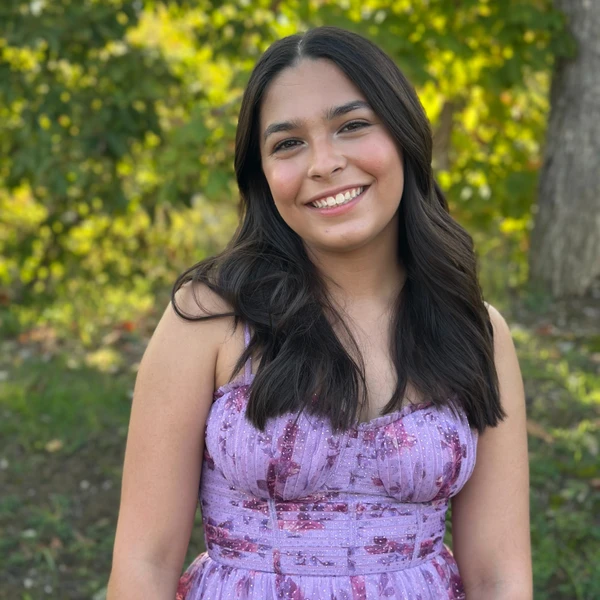
When I was a baby, I got diagnosed with asthma. When I was two, I had my first allergic reaction. At this same time, I had my first seizure and got diagnosed with epilepsy. Despite the challenge and anxiety this has brought I have leaned on God and my family to help me live an authentic normal life! I am happy, healthy, and I enjoy many things outside of school like running and choir. I plan on studying psychology when I go to college. I want to help people overcome their struggles, just like God, my family, and doctors helped me overcome mine.
Education
Jonathan Alder High School
High SchoolMiscellaneous
Desired degree level:
Master's degree program
Majors of interest:
- Clinical, Counseling and Applied Psychology
Career
Dream career field:
psychology/counseling
Dream career goals:
Sports
Cross-Country Running
Junior Varsity2021 – Present5 years
Arlin Diaz Memorial Scholarship
“What do you want to be when you grow up?” my neurologist asks warmly.
“Oh, I don’t really know,” I reply, feeling uncomfortable.
“You could study the brain like me,” he smiles encouragingly.
I hold back an eye roll because I do not want to be a doctor.
The rest of that neurology appointment was very routine. He checked my eyes, my walking, and my response to stimuli. All the regular things I had experienced since I was two years old. But a seed was planted.
When people ask me how I feel about my epilepsy, I always say, “I have never known anything different.” That’s the truth. My seizures don’t scare me. When I have one it feels like my body is glitching. My eyelids flutter, my body goes still, and my brain feels staticky. I know they are dangerous, but when I was a kid I didn’t understand why. I figured the worst thing that could happen was a seizure while climbing the monkey bars. I wasn’t strong enough to climb them anyway, so this wasn’t a problem for me. I thought it was normal to have to wear a neon swimsuit in the pool, or to not be allowed to ride your bike around the block. I cared, of course, but because I thought my parents were overprotective and never wanted me to have fun like every other 12-year-old.
In junior high, a close friend of mine broke down at lunch. He exclaimed, “I just want to be with Jesus!” and through many tears he sniffled, “I just want to go to heaven.” Those words marked a pivot point in my young life. How could someone be so capable, but feel so hopeless? I mean, I have epilepsy, and I always felt like I could conquer the world!
After that, I started researching. I learned about anxiety and depression. I became obsessed. Any mental health topic, you name it, I studied it. If I couldn’t fix my friend, surely, I could help someone else someday. I decided that I was going to make the most of my life. If I had the capability to live normally, I was going to use it to help others. I decided then I was going to study the brain, just like my neurologist suggested.
A few years later, I got my learner’s permit. My medication was working and my neurologist cleared me to drive! It took a while for me to warm up to it. The first time I drove, the seat and steering wheel were soaked with sweat. I think my dad might be the only parent who has advised his kid to “relax” while driving. This was the first time in my life that I understood what it meant to be “disabled”. I felt stuck, afraid, and incapable. I kept replaying the phrase “What if I have a seizure?” over and over again in my head. My fears about hurting myself, or even worse, someone else, made it really difficult to drive. My anxiety confused my peers. According to them, I had “no motivation to get my license”. I tried to explain why this was hurtful, but they didn’t understand. I felt alone and misunderstood, just like my friend in junior high.
With this scholarship, I would invest in my bachelor’s degree in psychology. From there I plan to earn my master’s in counseling so I can work with people who are struggling with their mental health, just like my friend. I want to study the brain, maybe not as a neurologist, but as someone who can work with people who are battling their minds. I hope to eventually say to someone, “You can study the mind like me!” and watch them roll their eyes–while I smile knowing a seed has been planted.