
Hobbies and interests
Advertising
History
Architecture
Fashion
Giana Dajer
1x
Finalist
Giana Dajer
1x
FinalistBio
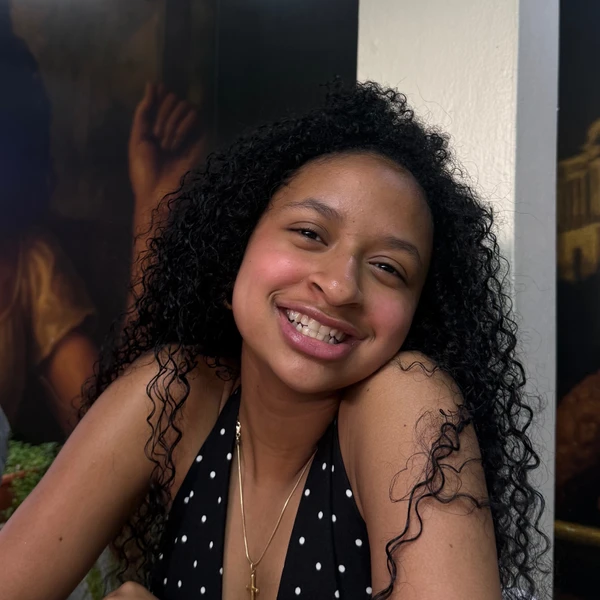
Hi! My name is Giana Dajer, and I am an architecture student at Syracuse University with a passion for designing spaces that bring people together. Growing up in Washington Heights as a proud Dominican-American, I learned how important community spaces are in shaping people’s experiences and creating a sense of belonging.
My interest in architecture began in an unexpected place: movie theaters. I was fascinated by how a thoughtfully designed space could bring hundreds of strangers together to laugh, cry, and share the same story for a few hours. That realization inspired my dream of becoming an architect who creates meaningful spaces that foster connection and community.
My journey has not been without challenges. During my academic career, I was diagnosed with Graves’ disease, an autoimmune condition that affects the thyroid. Navigating symptoms, medical appointments, and uncertainty while maintaining my education taught me resilience, adaptability, and perseverance. Rather than allowing this diagnosis to define my future, it strengthened my determination to pursue my goals and make the most of every opportunity available to me.
Throughout high school and college, I have remained committed to leadership and service. I served as Secretary of the Black Student Union, participated in Student Government, Yale Women in Economics, Girls Who Code, and Seeds of Fortune, and volunteered in my community. These experiences have helped me grow as a leader and reinforced my commitment to creating positive change As a future architect, i hope too improve people’s daily lives.
Education
Syracuse University
Bachelor's degree programMajors:
- Architecture and Related Services, Other
Minors:
- Landscape Architecture
Frank McCourt High School
High SchoolMiscellaneous
Desired degree level:
Bachelor's degree program
Graduate schools of interest:
Transfer schools of interest:
Majors of interest:
- Architecture and Related Services, Other
- Pre-Architecture Studies
Career
Dream career field:
- Architecture & Planning
Dream career goals:
Research
Economics
Seeds of Fortune - Yale Women in Economics — Member2023 – 2025
Public services
Volunteering
New York Common Pantry — Volunteer2023 – Present
Future Interests
Volunteering
Philanthropy
Entrepreneurship
Bick New York Scholarship
My educational journey has been shaped by movement, resilience, and learning how to keep going even when life feels unpredictable.
I began school in the United States still learning English, which meant I had to adjust quickly not just to a new language, but to a new academic system and a new way of expressing myself. At home, I spoke Spanish and stayed grounded in my Dominican roots, while at school I was constantly translating my thoughts into a language I was still growing into. In those early years, I was quiet, not because I lacked ideas, but because I was still building the confidence to express them fully.
One of the most defining challenges in my life has been being diagnosed with Graves’ disease. It affected my energy, focus, and day to day consistency in ways I didn’t expect. There were moments when fatigue, appointments, and symptoms made school feel heavier than it should be. I had to learn how to advocate for myself, pace myself differently, and redefine what “doing well” looks like. Instead of measuring success by perfection, I learned to measure it by persistence—showing up, even on difficult days, and continuing forward even when my body and mind didn’t feel fully aligned.
Living with Graves’ disease also changed how I see my future in architecture. Architecture is about structure, balance, and intention how spaces hold people, support them, and shape how they move through the world. In many ways, it mirrors what I’ve had to learn personally how to create stability within change, and how to design a life that still holds meaning even when conditions aren’t always perfect. That perspective makes me more thoughtful about how I want to design spaces that are accessible, calming, and human centered.
Despite challenges, I found leadership and purpose in school through Student Government and the Black Student Union. These roles helped me grow into someone who speaks up, organizes, and advocates for others. They taught me that leadership is not about having everything under control it’s about responsibility, empathy, and creating spaces where others feel seen and supported.
What motivates me most is the connection between my experiences and my goals. Managing Graves’ disease has taught me patience and resilience, while architecture gives me a way to turn that lived experience into something tangible and impactful. I want to design spaces that reflect care, structure, and belonging spaces that people can rely on, even when life feels uncertain.
This scholarship would ease the financial pressure of pursuing an architecture degree, allowing me to focus more fully on my studies and creative development. More importantly, it would support someone who has learned how to adapt, persist, and build forward despite challenges. My journey is still unfolding, but I know I want to turn everything I’ve lived through into something that creates stability and possibility for others.
Stephan L. Daniels Lift As We Climb Scholarship
Why STEM?
I want to pursue a career in STEM, specifically architecture, because I am drawn to the way design shapes human experience, opportunity, and belonging. STEM allows me to combine creativity with problem-solving in a way that has a direct, lasting impact on communities. For me, architecture is not only about constructing buildings, but about designing environments that influence how people feel, interact, and see themselves within a space.
My interest in this field comes from recognizing how unevenly resources and thoughtfully designed spaces are distributed. Growing up in a diverse urban community, I saw both the strength of my environment and the ways in which certain neighborhoods especially Black and other historically marginalized communities are often underserved when it comes to infrastructure, public spaces, and long-term investment. These disparities made me more aware of how design and planning decisions can either uplift or overlook communities.
Through my STEM education, I want to gain the technical skills necessary to address these gaps in meaningful ways. Architecture gives me the tools to think critically about accessibility, sustainability, and functionality, while also centering the lived experiences of the people who use these spaces. I am especially interested in how design can support mental well-being, community connection, and cultural identity.
I plan to use my degree to help uplift communities by contributing to projects that prioritize equity in design. This includes advocating for inclusive housing, accessible public spaces, and community-centered development that reflects the needs and history of the people who live there. I also want to ensure that Black communities are represented not only as residents of these spaces but as active voices in the design process. Too often, decisions are made without meaningful input from the people most affected, and I hope to help change that dynamic through intentional, community-focused work.
Beyond design itself, I want to use my career to create pathways for representation in STEM fields. As a Black and Dominican woman in architecture, I understand how important it is to see people who reflect your background in professional spaces. I hope to mentor and support future students who may not always see themselves represented in STEM, showing them that their perspectives are valuable and needed.
Ultimately, I want my work in STEM to bridge creativity and equity. I am pursuing this path not only to build structures, but to help build stronger, more inclusive communities where people feel seen, supported, and empowered.
7023 Minority Scholarship
Got it — here’s a cleaner version that clearly answers both parts of the prompt (about you + how you’ll make a difference + response to a prompt), in a more direct scholarship format:
⸻
I am a Dominican-American architecture student at Syracuse University, shaped by my upbringing in Washington Heights and my experiences navigating different cultural and academic environments. Growing up in a community where identity, family, and shared space were central to daily life taught me that environments are never just physical—they shape how people feel, connect, and see themselves. That belief is what led me to architecture.
My path has also been shaped by personal challenges. Living with Graves’ disease has had a significant impact on my mental health, especially during periods when physical symptoms affected my appearance. There were times when I struggled with confidence and felt disconnected from myself. However, over time, I learned that my identity is not defined by how I look, but by how I respond to challenges and continue moving forward. This experience deepened my resilience and gave me a stronger sense of empathy for others who may be struggling in ways that are not visible.
My hero is my mother when thinking of this prompt I thought I should think of someone more exciting or out of the box but in all reality. I am trying to create a built environment in the field of architecture and my mother had built the environment around me with out her I am lost. She has shaped my understanding of strength through her consistency, sacrifice, and care for our family. Watching her work through challenges while prioritizing others taught me that leadership is not always loud or visible it is often shown through daily perseverance and responsibility. She has influenced the way I approach my goals and the kind of impact I want to have on others.
These experiences together have shaped how I plan to make a difference in the world. I want to use architecture as a tool to create spaces that are inclusive, supportive, and reflective of the communities they serve. I am especially interested in how design can influence mental health and wellbeing, and how spaces can either isolate or bring people together. My goal is to design environments where people feel safe, valued, and seen.
I also want to make a difference through leadership and service. My involvement in student organizations such as Student Government and cultural groups has shown me the importance of representation and advocacy. I plan to continue creating space for diverse voices in both academic and professional settings, ensuring that design and decision-making include the perspectives of the communities they impact.
Ultimately, I want my work to reflect both my personal journey and my values. My experiences have taught me that difference should not be hidden or minimized it should be designed for, respected, and included. Through architecture, leadership, and service, I hope to contribute to a world where people feel a stronger sense of belonging in the spaces they inhabit.
Rose Ifebigh Memorial Scholarship
One of the most meaningful aspects of my education has been learning to navigate spaces where my cultural background is not always the majority experience. Growing up as a Dominican-American from Washington Heights and entering academic environments that are often very different from my home community has taught me how to move between identities, perspectives, and expectations while still staying grounded in who I am.
At home, my identity is shaped by a strong sense of community, language, and shared cultural understanding. There is an ease in communication and belonging that comes from being surrounded by people who understand your references, your humor, and your lived experiences without explanation. However, in educational environments that are less culturally familiar, I have often had to become more intentional in how I express myself and how I advocate for my perspective to be understood. At times, this has meant translating not just language, but context
explaining where I come from, how I think, and why my perspective might differ.
This experience has helped me grow in confidence and adaptability. I have learned that my voice does not need to change to fit into different spaces; rather, it needs to be expressed with clarity and purpose so it can be understood across different environments. Initially, I was more hesitant to participate in discussions where I felt like my perspective might not align with the dominant viewpoint. Over time, however, I realized that my background is not a limitation it is a lens that adds value to conversations, especially in collaborative and creative fields like architecture.
Another important aspect of this experience has been learning how to listen more deeply to others. Being in environments shaped by different cultural norms and academic expectations has shown me that there are multiple valid ways of thinking, problem-solving, and expressing ideas. This has made me more open-minded and less quick to assume that my way of understanding something is the only way. Instead, I now approach differences as opportunities to learn rather than barriers to overcome.
My experience has also strengthened my sense of resilience. There were moments when I felt like I had to work harder to be understood or taken seriously, especially in spaces where fewer people shared my background. However, instead of discouraging me, these experiences pushed me to develop stronger communication skills, greater self-awareness, and a deeper commitment to my goals. I learned how to advocate for myself without losing the parts of my identity that make me who I am.
As an aspiring architect, these experiences are especially meaningful. Architecture is not just about designing buildings it is about designing spaces for people with different backgrounds, needs, and experiences. My ability to move between cultural contexts has helped me understand how important it is for spaces to feel inclusive and accessible to everyone, not just a select group. I want to carry this perspective into my work by creating environments that reflect and respect the diversity of the people who use them.
Overall, studying in environments different from my own has taught me that identity is not something you leave behind to succeed it is something you bring with you. My background continues to shape how I think, how I lead, and how I envision my future. Rather than feeling caught between two worlds, I have learned to see myself as someone who can connect them.
RonranGlee Literary Scholarship
(Homer, Iliad, Book 24)
“I have endured what no one on earth has ever done before: I have kissed the hands of the man who killed my son.”
Iliad ultimately dismantles the heroic code Homer’s depiction of Priam kissing Achilles’ hands shows thar it initially glorifies; in this moment, glory and revenge are stripped of their meaning, and what
remains is a more fundamental human truth: suffering collapses identity boundaries and forces recognition of shared vulnerability, exposing grief as more powerful than honor or victory.
At the surface level, this passage presents an impossible reversal of roles. Priam, the king of Troy, performs an act of submission before Achilles, the man who killed his son Hector. Within the traditional heroic framework of the Iliad, this moment should be unthinkable. The world of the epic is built upon rigid structures of honor, vengeance, and status, where enemies are defined by absolute opposition. Yet Homer deliberately constructs a scene in which those boundaries dissolve. Priam’s act of kissing Achilles’ hands is not simply an expression of humility; it is a symbolic collapse of the entire value system that has governed the violence of the epic up to this point.
The significance of this moment lies not only in the action itself but in the emotional condition that makes it possible. Priam is not acting out of political strategy or survival instinct. He is acting out of grief so intense that it overrides every cultural and ideological structure that previously defined him as a king. In this sense, Homer suggests that grief is a force stronger than identity. Kingship, honor, and revenge are shown to be constructed roles that dissolve under the pressure of personal loss. Priam does not cease to be a king in a political sense, but in this moment, that identity becomes irrelevant. What remains is a father confronting the body and death of his son.
This shift is crucial because it reveals that the heroic code is not absolute, but conditional. The Iliad is often read as a celebration of martial honor, where glory is achieved through battle and remembered through legacy. However, this passage exposes the fragility of that system. Achilles, the greatest warrior, is also the source of unimaginable grief. Priam’s recognition of this fact does not negate Achilles’ power, but it recontextualizes it. Power is no longer meaningful in terms of dominance or conquest; instead, it becomes inseparable from suffering. The man who kills and the man who mourns are bound together by the consequences of violence.
The act of kissing Achilles’ hands is especially significant because it reverses the expected relationship between human beings in war. Hands are symbolic of action they are the instruments of both killing and creation. By kissing Achilles’ hands, Priam is not only acknowledging Achilles’ power but also confronting the physical reality of Hector’s death. This is not an abstract reconciliation; it is an intimate encounter with the material consequence of violence. Homer forces the reader to confront the fact that war is not a distant or heroic abstraction, but a series of irreversible human losses embodied in flesh and touch.
This moment also reveals a profound transformation in Achilles himself. While the passage focuses on Priam’s action, its meaning cannot be separated from Achilles’ response. Earlier in the epic, Achilles is defined by rage and pride his withdrawal from battle and his desire for vengeance following Patroclus’ death demonstrate a character consumed by personal grievance. Yet in this encounter, Achilles is confronted with a mirror of his own suffering. Priam is not simply an enemy; he is another father who has lost a son. This recognition destabilizes Achilles’ understanding of enmity. If both sides are capable of the same grief, then the moral clarity of war begins to collapse.
Homer’s underlying meaning here is not that war becomes meaningless in a simplistic sense, but that its meaning is revealed to be internally contradictory. War promises honor, immortality, and distinction, yet it produces identical suffering on all sides. Priam and Achilles occupy opposite ends of the conflict, but they are united by grief. The passage suggests that human experience ultimately overrides political or heroic categorization. The emotional reality of loss cannot be contained by the structures that justify violence.
The physical act of kissing hands also introduces a reversal of expected dignity. In most heroic traditions, dignity is maintained through control, distance, and dominance. Priam’s gesture is one of absolute vulnerability. He places himself in the position of someone who has no leverage, no protection, and no remaining claim to authority over the man before him. Yet Homer does not frame this vulnerability as humiliation. Instead, it is presented as the highest expression of human truth within the epic. In abandoning the need to preserve status, Priam reaches a form of clarity that is inaccessible through power.
This suggests that Homer is redefining what it means to be “great.” Greatness in the heroic sense is typically associated with strength, victory, and reputation. However, this passage proposes an alternative form of greatness rooted in emotional honesty. Priam’s willingness to confront Achilles not as an enemy but as a human being capable of suffering indicates a deeper form of courage than battlefield prowess. It requires the abandonment of pride, which is often the core mechanism sustaining the cycle of violence.
The emotional weight of the passage also highlights the limits of revenge. The entire structure of the Iliad is driven by retaliatory violence Achilles’ rage leads to Hector’s death, which in turn deepens Priam’s grief. Yet in this moment, revenge reaches its endpoint. Priam does not arrive to punish Achilles or restore balance through violence. Instead, he arrives to reclaim Hector’s body. This shift from vengeance to mourning marks a critical philosophical turning point. Homer suggests that grief, unlike rage, does not perpetuate itself through action; it seeks closure, even in the absence of justice.
At a deeper level, the passage reveals that human beings are capable of recognizing themselves in their enemies when stripped of ideological framing. Priam and Achilles are not reconciled through agreement or forgiveness in a formal sense, but through shared suffering. This recognition does not erase the violence that has occurred, but it transforms its meaning. The enemy is no longer a purely external figure but a reflection of one’s own capacity for loss. In this sense, Homer is not offering resolution, but a momentary suspension of enmity grounded in emotional truth.
Ultimately, this passage reveals that the Iliad is not solely an epic of war, but also an exploration of what remains after the structures of war collapse. When honor, rank, and vengeance are stripped away, what emerges is not triumph, but grief. Priam’s act of kissing Achilles’ hands is therefore not simply an act of submission—it is an acknowledgment that suffering is the most universal form of human experience. Homer’s insight is that while war divides people into enemies, grief reunites them as human beings.
Ethel Hayes Destigmatization of Mental Health Scholarship
Living with Graves’ disease has deeply shaped my mental health, my relationships, my goals, and the way I understand the world. Before my diagnosis, I had a very different relationship with my body and my identity. I was confident in ways that felt natural and unforced. But as my symptoms progressed, especially the physical changes that came with thyroid eye disease, I experienced a shift that I was not emotionally prepared for.
One of the most difficult aspects was the change in my appearance. As my eye began to bulge, I became increasingly aware of how different I looked compared to how I remembered myself. It was not just physical it became something that affected every part of how I moved through the world. I started avoiding mirrors because seeing my reflection. I would catch glimpses of myself and feel disconnected, as if the person looking back at me was not fully me anymore.
That disconnection slowly grew into anxiety. I became hyper-aware of how others might perceive me. Simple things that once felt effortless, like walking into a room, taking photos, or meeting someone’s gaze, started to feel overwhelming. I worried that people were noticing my appearance before anything else about me. Over time, I began to withdraw emotionally and socially in ways I didn’t fully understand at first.
There were moments when I struggled with my self-worth in a very deep way. I remember looking in the mirror and feeling like I didn’t deserve to take up space. That thought was painful, but it felt real in those moments of insecurity and fear. I began to associate my appearance with my value, and when my appearance changed in ways I could not control, my confidence collapsed. I wasn’t just grieving how I looked I was grieving the version of myself I felt I had lost.
This experience also affected how I related to others. I became more guarded, afraid of being perceived or judged. I worried that people would treat me differently, even if they didn’t say anything directly. At times, I isolated myself because it felt easier than explaining something I was still trying to understand myself. Even in close relationships, I found it difficult to express how deeply I was struggling. On the outside, I often appeared fine, but internally I was navigating a constant cycle of self-doubt and anxiety.
However, over time, this experience also became a source of growth. Living with a visible chronic illness forced me to confront ideas about identity, worth, and appearance that I had never questioned before. Slowly, I began to understand that my value could not be defined by how closely I matched my previous reflection. I had to learn how to separate who I am from what I look like, even though that process was not immediate or easy.
One of the most important things I learned was compassion for myself. At first, I resisted that idea because it felt unnatural. But I eventually realized that I could not heal emotionally while constantly criticizing myself. I began practicing patience with my own process, allowing myself to have difficult days without letting those days define my entire sense of self. This shift did not erase the insecurity, but it helped me build a more stable foundation underneath it.
My relationships also changed in meaningful ways. I learned that vulnerability is not a weakness, even though it often felt like one. Opening up to people about what I was experiencing helped me realize that I was not as alone as I thought. The people who truly cared about me were not focused on my appearance they were focused on my well-being. That realization slowly rebuilt my trust in others and helped me reconnect with people I had pulled away from.
At the same time, I became more empathetic toward others. I began to understand that everyone carries struggles that are not always visible. Just as people may not have seen what I was going through internally, I also realized how often I might overlook what others are carrying.
environments can influence emotional wellbeing, confidence, and a sense of belonging. When I think about design, I don’t just think about structure or aesthetics I think about how spaces make people feel within themselves.
I want to create environments where people feel safe, welcomed, and seen. My experience has made me especially aware of how important it is for spaces to support mental and emotional wellbeing, not just physical function. I think about accessibility, comfort, light, flow, and atmosphere in a more intentional way because I understand how deeply our surroundings can affect our inner world.
Most importantly, living with Graves’ disease has changed my understanding of resilience. I used to think resilience meant being unaffected by hardship. Now I understand it differently. Resilience is not the absence of struggle it is the decision to keep moving forward even when you feel changed, uncertain, or vulnerable. It is learning how to rebuild your sense of self piece by piece, even when it feels like it has been disrupted.
I still have difficult days. There are still moments when I feel self conscious or frustrated with my condition. But I no longer define myself by those moments. I define myself by my ability to continue growing, learning, and pursuing my goals despite them.
This experience has shaped not only how I see myself, but how I see others and the world around me. It has taught me that worth is not something that can be seen in a mirror. It is something built through experience, empathy, and perseverance. And it is that understanding that continues to guide me as I move forward in both my personal life and my future career.