
Hobbies and interests
Camping
Reading
True Story
I read books multiple times per week
Glendy Brito
1x
Finalist
Glendy Brito
1x
FinalistBio
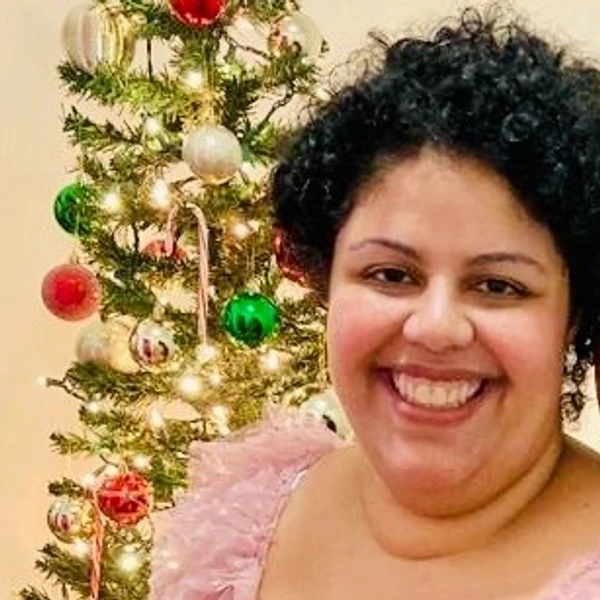
Glendy Brito is a dynamic force of nature—a proud Dominican Latina, mother to two remarkable boys, Jair (9) and Stefano (1), and a tenacious road-warrior often found scaling ladders, swinging hammers, and remodeling her home like a one-woman construction crew. Born in the boogie-down South Bronx, she now lives and thrives in the Finger Lakes region of New York.
A woman of many talents, Glendy has engaged in numerous literary and cultural pursuits. Her work has earned recognition within the Liberal Arts and Humanities, with publications in Elysian Magazine, including “He Comes, Seeking Veni Vidi Vici,” “Sensualidad,” “Unlock Something,” and “Wounded.” During the pandemic—while others perfected banana bread—she became a stage actor, portraying President in Sonnets for an Old Century in 2021.
Professionally, Glendy is trained in Forensic Psychology and Clinical Social Work with specialties in Domestic Violence, Healthcare, Dementia/Alzheimer’s, and Administrative Leadership. She is a Ronald E. McNair Scholar, AmeriCorps VISTA member, Young Marines volunteer, and part-time Dominican Joanna Gaines.
Guided by her motto, “I serve you so you can serve others,” Glendy is committed to expanding access and opportunity for people of color, first-generation learners, and underserved youth.
She is now pursuing the Accelerated Bachelor of Science in Nursing at the University of Rochester. Although financially falling short, even a small seed of support can help her secure her place in healthcare and continue uplifting marginalized communities.
Education
University of Rochester
Bachelor's degree programMajors:
- Registered Nursing, Nursing Administration, Nursing Research and Clinical Nursing
Aurora University
Master's degree programMajors:
- Social Work
Walden University
Master's degree programMajors:
- Psychology, General
CUNY John Jay College of Criminal Justice
Bachelor's degree programMajors:
- Psychology, Other
Miscellaneous
Desired degree level:
Doctoral degree program (PhD, MD, JD, etc.)
Graduate schools of interest:
Transfer schools of interest:
Majors of interest:
- Registered Nursing, Nursing Administration, Nursing Research and Clinical Nursing
Career
Dream career field:
Hospital & Health Care
Dream career goals:
Maternal RN
Clinical Social Worker
CHP2023 – Present3 yearsBilingual Care Consultant
Alzheimer's Association2021 – Present5 years
Sports
Basketball
Junior Varsity2007 – 20114 years
Research
Criminology
Ronald E. McNair Scholar — Principal Researcher2008 – 2010
Arts
Aurora University
Theatre2020 – 2021
Public services
Volunteering
Young Marines — Marketing, Teaching, Community Service2025 – Present
Future Interests
Advocacy
Volunteering
Philanthropy
Entrepreneurship
Losinger Nursing Scholarship
My inspiration for pursuing a career in nursing is rooted in a lifetime of service, resilience, and deep personal experience with the fragility and strength of the human condition. As a first-generation Dominican Latina and the daughter of immigrant parents who fled a dictatorship, I learned early the value of perseverance, compassion, and community. These lessons followed me into adulthood as I became the head of household for my two young children, navigating the demands of parenting, work, and healing after the devastating stillbirth of my son, Thiago. This loss profoundly reshaped my understanding of care—what it means to be held, supported, and guided during one’s most vulnerable moments.
My professional journey as a Clinical Social Worker and Dementia/Alzheimer’s Care Consultant further deepened my calling. I have spent years listening to families in crisis, supporting caregivers, and advocating for those who often cannot speak for themselves. While I have loved serving through social work, I found myself yearning for a more hands-on role in healing—one that directly integrates compassion with clinical expertise.
Nursing represents the intersection of everything I value: service, advocacy, science, and human connection. It offers the opportunity not only to comfort and support but also to intervene, treat, educate, and empower. My goal is to become a culturally competent, trauma-informed, compassionate nurse who brings both professional skill and lived understanding into every interaction.
Pursuing the Accelerated Bachelor of Science in Nursing at the University of Rochester is the next step in honoring my past, uplifting my family, and continuing my lifelong commitment to serving others with integrity, empathy, and purpose.
To me, the phrase “human touch” represents far more than physical contact; it symbolizes presence, empathy, connection, and the profound ability to recognize humanity in another person. Human touch is the reassurance offered through a steady hand, the comfort in a warm smile, and the understanding conveyed through compassionate listening. It is the way we silently tell someone, “You are not alone,” even when words fail.
In healthcare, human touch is transformative. Patients often enter medical settings feeling vulnerable, frightened, or disconnected from their sense of self. Illness can strip away control, independence, and dignity. Yet a nurse’s human touch, the simple acts of adjusting a pillow, holding a hand during a difficult moment, or pausing to truly listen—can restore a patient’s sense of worth and belonging. It creates a space where healing is not only physical but also emotional and spiritual.
Human touch also bridges cultural, linguistic, and socioeconomic gaps. As a bilingual clinical social worker, I have witnessed how connection can transcend differences and build trust in moments of uncertainty. Many of the individuals I have served, particularly those from marginalized communities, carry histories of medical distrust or trauma. Kind, intentional human interaction can begin to repair those wounds, making space for collaborative, empowered care.
In dementia and Alzheimer’s care, human touch is essential. Patients may lose memories, words, or orientation, but they never lose the ability to feel comfort. A gentle touch can ease agitation, calm fear, and communicate safety without a single sentence spoken. It reminds them of their dignity and reinforces their identity beyond the disease.
Human touch is not a task, it is a philosophy. It requires presence, patience, humility, and authenticity. It transforms routines into relationships and procedures into moments of meaning. As a future nurse, I hope to embody this principle fully, ensuring that every patient feels seen, valued, and cared for at the deepest human level.