Hobbies and interests
3D Modeling
African American Studies
Anatomy
Anime
Biology
Golf
Gavin Walker
1x
Finalist
Gavin Walker
1x
FinalistBio
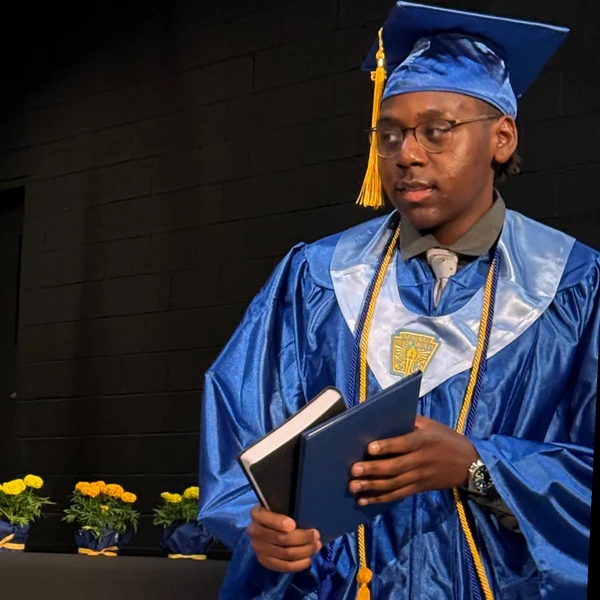
Today, I am a first-year undergraduate student at Howard University, pursuing my passion for science with the goal of becoming a cardiologist, potentially specializing in pediatrics. Howard’s mission of leadership and service resonates deeply with me because my journey has taught me that access to knowledgeable and compassionate care can change lives. I want to be the physician who listens when something does not feel right, the one who advocates for children when their voices are too small to be heard.
My experience as a Kawasaki disease patient gives me a perspective that textbooks alone cannot teach. I know what it feels like to be a frightened child in a hospital bed and what it means for a family to rely completely on the judgment of healthcare professionals. I aspire to become a pediatric cardiologist who not only treats the heart, but also understands the emotional weight carried by patients and their families.
Looking ahead, I plan to immerse myself fully in my academic studies, pursue opportunities in cardiovascular research, and continue serving my community. My ultimate goal is to transform a painful chapter of my childhood into a lifelong commitment to healing others. Kawasaki disease once threatened my future, but it also revealed my purpose.
What began as fear has grown into determination. What once weakened me now strengthens my resolve. I carry my experience with me not as a limitation, but as a calling—to protect young hearts, to advocate for early and accurate diagnosis, and to offer hope in moments when families need it most.
Education
Howard University
Bachelor's degree programMajors:
- Human Biology
Miscellaneous
Desired degree level:
Doctoral degree program (PhD, MD, JD, etc.)
Graduate schools of interest:
Transfer schools of interest:
Majors of interest:
Career
Dream career field:
physician
Dream career goals:
Nadia Ansari Design Award
On January 2015, after days of uncertainty, I was diagnosed with Kawasaki disease. At eight years old, these words really didn't make sense, but I could feel its weight and what may have been to come. I saw it in my mother’s eyes, heard it in the hushed conversations among doctors, and sensed it in the constant monitoring of my heart. Kawasaki disease is a rare inflammatory illness that has the potential to cause lasting damage to the coronary arteries if not treated promptly. Learning later just how close I had come to severe complications truly reshaped how I understood my childhood and the strength of the people who fought for me when I couldn’t. Since that diagnosis, cardiology appointments were basically my everyday, going to them felt like going to school. While other children feared doctor visits, I gradually began to grow curious. I wondered how the heart could be both so resilient yet so vulnerable. I listened to some of the things the cardiologists said. They explained scans and measurements, and I watched how their reassurance eased my family’s anxiety. Over time, those appointments transformed from reminders of fear into sources of inspiration. They showed me what it means to combine knowledge, precision, and compassion where it truly matters.
Since that diagnosis, cardiology appointments were basically my everyday, going to them felt like going to school. While other children feared doctor visits, I gradually began to grow curious. I wondered how the heart could be both so resilient yet so vulnerable. I listened to some of the things the cardiologists said. They explained scans and measurements, and I watched how their reassurance eased my family’s anxiety. Over time, those appointments transformed from reminders of fear into sources of inspiration. They showed me what it means to combine knowledge, precision, and compassion where it truly matters.
My experience as a Kawasaki disease patient gives me a perspective that textbooks alone cannot teach. I know what it feels like to be a frightened child in a hospital bed and what it means for a family to rely completely on the judgment of healthcare professionals. I aspire to become a pediatric cardiologist who not only treats the heart, but also understands the emotional weight carried by patients and their families.
Looking ahead, I plan to immerse myself fully in my academic studies, pursue opportunities in cardiovascular research, and continue serving my community. My ultimate goal is to transform a painful chapter of my childhood into a lifelong commitment to healing others. Kawasaki disease once threatened my future, but it also revealed my purpose.
Sloane Stephens Doc & Glo Scholarship
Not too soon after my eighth birthday, The sense of safety you usually get from being a child began to unravel just after. I began to develop a high fever that just wouldn't break, no matter how much Motrin, Advil, or Tylenol she fed me. Each wave of heat left my mom more and more anxious, and eventually she packed me up and drove me to the emergency room, desperate for answers. The doctor chalked it up to strep throat, prescribed me antibiotics, and sent us home. Just like that. We trusted that diagnosis, believing I’d get better soon after.
However, my relief never came.
Hours later, my fever was still raging, and I started to vomit uncontrollably. My mother, guided by an unshakable hunch, took me to another emergency room in a nearby town. Once again, we were told it was strep. And once again, we were sent home. As the New Year arrived, so did new symptoms. I was weak and lethargic, barely responsive, and I couldn't stomach any food. When my grandma saw me, she said I looked like a zombie out of “The Walking Dead." Her words, though blunt, truly captured the reality of how far my condition had worsened.
Still looking for answers, my mother took me to my pediatrician. The moment she had examined me, her demeanor completely changed. Without hesitation, she sent me to Bristol-Myers Squibb Pediatric Hospital, prudently claiming that I needed immediate care. Without that claim, I probably would not be here today.
Back in the emergency room, I was surrounded by so many machines, IV lines, and unfamiliar faces. I was exhausted, frightened, and confused. I felt like a hunted deer waiting to meet my fate.
On January 2015, after days of uncertainty, I was diagnosed with Kawasaki disease.
Since that diagnosis, cardiology appointments were basically my everyday, going to them felt like going to school. While other children feared doctor visits, I gradually began to grow curious. I wondered how the heart could be both so resilient yet so vulnerable. I listened to some of the things the cardiologists said. They explained scans and measurements, and I watched how their reassurance eased my family’s anxiety. Over time, those appointments transformed from reminders of fear into sources of inspiration. They showed me what it means to combine knowledge, precision, and compassion where it truly matters.
Today, I am a first-year undergraduate student at Howard University, pursuing my passion for science with the goal of becoming a cardiologist, potentially specializing in pediatrics. I want to be the physician who listens when something does not feel right, the one who advocates for children when their voices are too small to be heard. I know what it feels like to be a frightened child in a hospital bed and what it means for a family to rely completely on the judgment of healthcare professionals. I aspire to become a pediatric cardiologist who not only treats the heart, but also understands the emotional weight carried by patients and their families.
Looking ahead, I plan to immerse myself fully in my academic studies, pursue opportunities in cardiovascular research, and continue serving my community. My ultimate goal is to transform a painful chapter of my childhood into a lifelong commitment to healing others.
What began as fear has grown into determination. What once weakened me now strengthens my resolve. I carry my experience with me not as a limitation, but as a calling to protect young hearts, to advocate for early and accurate diagnosis, and to offer hope in moments when families need it most.
SigaLa Education Scholarship
My experience with Kawasaki disease also awakened a deep sense of empathy within me. I had come to know, even at a young age, what it felt like to be scared, misunderstood, and physically weak. That understanding shaped my commitment to serving others. During my senior year of high school, I volunteered with Handfuls of Hope, working with orphanages and hospitals. There, I saw children facing uncertainty and hardship daily. Offering my time, attention, and care felt personal—it was a way of giving back to the kind of support that once held me up. Here, they were suffering from diseases and deformities worse than I had suffered or I could even imagine. However, they were receiving maybe a fraction of the care I had gotten.
Through my involvement in the New Brunswick Kappa League, I participated in community service initiatives including holiday gift-giving programs, volunteering at soup kitchens, and supporting families in need. These experiences would continue to reinforce the idea that service is not always about grand gestures; sometimes it is about showing up consistently and offering dignity and kindness. Each act of service reminded me that community care and healthcare share the same foundation: compassion.
Today, I am a first-year undergraduate student at Howard University, pursuing my passion for science with the goal of becoming a cardiologist, potentially specializing in pediatrics. Howard’s mission of leadership and service resonates deeply with me because my journey has taught me that access to knowledgeable and compassionate care can change lives. I want to be the physician who listens when something does not feel right, the one who advocates for children when their voices are too small to be heard.
My experience as a Kawasaki disease patient gives me a perspective that textbooks alone cannot teach. I know what it feels like to be a frightened child in a hospital bed and what it means for a family to rely completely on the judgment of healthcare professionals. I aspire to become a pediatric cardiologist who not only treats the heart, but also understands the emotional weight carried by patients and their families.
Looking ahead, I plan to immerse myself fully in my academic studies, pursue opportunities in cardiovascular research, and continue serving my community. My ultimate goal is to transform a painful chapter of my childhood into a lifelong commitment to healing others. Kawasaki disease once threatened my future, but it also revealed my purpose.
What began as fear has grown into determination. What once weakened me now strengthens my resolve. I carry my experience with me not as a limitation, but as a calling—to protect young hearts, to advocate for early and accurate diagnosis, and to offer hope in moments when families need it most.
William A. Lewis Scholarship
Since that diagnosis, cardiology appointments were basically my everyday, going to them felt like going to school. While other children feared doctor visits, I gradually began to grow curious. I wondered how the heart could be both so resilient yet so vulnerable. I listened to some of the things the cardiologists said. They explained scans and measurements, and I watched how their reassurance eased my family’s anxiety. Over time, those appointments transformed from reminders of fear into sources of inspiration. They showed me what it means to combine knowledge, precision, and compassion where it truly matters.
My experience with Kawasaki disease also awakened a deep sense of empathy within me. I had come to know, even at a young age, what it felt like to be scared, misunderstood, and physically weak. That understanding shaped my commitment to serving others. During my senior year of high school, I volunteered with Handfuls of Hope, working with orphanages and hospitals. There, I saw children facing uncertainty and hardship daily. Offering my time, attention, and care felt personal—it was a way of giving back to the kind of support that once held me up. Here, they were suffering from diseases and deformities worse than I had suffered or I could even imagine. However, they were receiving maybe a fraction of the care I had gotten.
Through my involvement in the New Brunswick Kappa League, I participated in community service initiatives including holiday gift-giving programs, volunteering at soup kitchens, and supporting families in need. These experiences would continue to reinforce the idea that service is not always about grand gestures; sometimes it is about showing up consistently and offering dignity and kindness. Each act of service reminded me that community care and healthcare share the same foundation: compassion.
Today, I am a first-year undergraduate student at Howard University, pursuing my passion for science with the goal of becoming a cardiologist, potentially specializing in pediatrics. Howard’s mission of leadership and service resonates deeply with me because my journey has taught me that access to knowledgeable and compassionate care can change lives. I want to be the physician who listens when something does not feel right, the one who advocates for children when their voices are too small to be heard.
My experience as a Kawasaki disease patient gives me a perspective that textbooks alone cannot teach. I know what it feels like to be a frightened child in a hospital bed and what it means for a family to rely completely on the judgment of healthcare professionals. I aspire to become a pediatric cardiologist who not only treats the heart, but also understands the emotional weight carried by patients and their families.
Looking ahead, I plan to immerse myself fully in my academic studies, pursue opportunities in cardiovascular research, and continue serving my community. My ultimate goal is to transform a painful chapter of my childhood into a lifelong commitment to healing others. Kawasaki disease once threatened my future, but it also revealed my purpose.
What began as fear has grown into determination. What once weakened me now strengthens my resolve. I carry my experience with me not as a limitation, but as a calling—to protect young hearts, to advocate for early and accurate diagnosis, and to offer hope in moments when families need it most.
Hines Scholarship
Since that diagnosis, cardiology appointments were basically my everyday, going to them felt like going to school. While other children feared doctor visits, I gradually began to grow curious. I wondered how the heart could be both so resilient yet so vulnerable. I listened to some of the things the cardiologists said. They explained scans and measurements, and I watched how their reassurance eased my family’s anxiety. Over time, those appointments transformed from reminders of fear into sources of inspiration. They showed me what it means to combine knowledge, precision, and compassion where it truly matters.
My experience with Kawasaki disease also awakened a deep sense of empathy within me. I had come to know, even at a young age, what it felt like to be scared, misunderstood, and physically weak. That understanding shaped my commitment to serving others. During my senior year of high school, I volunteered with Handfuls of Hope, working with orphanages and hospitals. There, I saw children facing uncertainty and hardship daily. Offering my time, attention, and care felt personal—it was a way of giving back to the kind of support that once held me up. Here, they were suffering from diseases and deformities worse than I had suffered or I could even imagine. However, they were receiving maybe a fraction of the care I had gotten.
Through my involvement in the New Brunswick Kappa League, I participated in community service initiatives including holiday gift-giving programs, volunteering at soup kitchens, and supporting families in need. These experiences would continue to reinforce the idea that service is not always about grand gestures; sometimes it is about showing up consistently and offering dignity and kindness. Each act of service reminded me that community care and healthcare share the same foundation: compassion.
Today, I am a first-year undergraduate student at Howard University, pursuing my passion for science with the goal of becoming a cardiologist, potentially specializing in pediatrics. Howard’s mission of leadership and service resonates deeply with me because my journey has taught me that access to knowledgeable and compassionate care can change lives. I want to be the physician who listens when something does not feel right, the one who advocates for children when their voices are too small to be heard.
My experience as a Kawasaki disease patient gives me a perspective that textbooks alone cannot teach. I know what it feels like to be a frightened child in a hospital bed and what it means for a family to rely completely on the judgment of healthcare professionals. I aspire to become a pediatric cardiologist who not only treats the heart, but also understands the emotional weight carried by patients and their families.
Looking ahead, I plan to immerse myself fully in my academic studies, pursue opportunities in cardiovascular research, and continue serving my community. My ultimate goal is to transform a painful chapter of my childhood into a lifelong commitment to healing others. Kawasaki disease once threatened my future, but it also revealed my purpose.
What began as fear has grown into determination. What once weakened me now strengthens my resolve. I carry my experience with me not as a limitation, but as a calling—to protect young hearts, to advocate for early and accurate diagnosis, and to offer hope in moments when families need it most.
Junie Project Scholarship
Since that diagnosis, cardiology appointments were basically my everyday, going to them felt like going to school. While other children feared doctor visits, I gradually began to grow curious. I wondered how the heart could be both so resilient yet so vulnerable. I listened to some of the things the cardiologists said. They explained scans and measurements, and I watched how their reassurance eased my family’s anxiety. Over time, those appointments transformed from reminders of fear into sources of inspiration. They showed me what it means to combine knowledge, precision, and compassion where it truly matters.
My experience with Kawasaki disease also awakened a deep sense of empathy within me. I had come to know, even at a young age, what it felt like to be scared, misunderstood, and physically weak. That understanding shaped my commitment to serving others. During my senior year of high school, I volunteered with Handfuls of Hope, working with orphanages and hospitals. There, I saw children facing uncertainty and hardship daily. Offering my time, attention, and care felt personal—it was a way of giving back to the kind of support that once held me up. Here, they were suffering from diseases and deformities worse than I had suffered or I could even imagine. However, they were receiving maybe a fraction of the care I had gotten.
Today, I am a first-year undergraduate student at Howard University, pursuing my passion for science with the goal of becoming a cardiologist, potentially specializing in pediatrics. Howard’s mission of leadership and service resonates deeply with me because my journey has taught me that access to knowledgeable and compassionate care can change lives. I want to be the physician who listens when something does not feel right, the one who advocates for children when their voices are too small to be heard.
My experience as a Kawasaki disease patient gives me a perspective that textbooks alone cannot teach. I know what it feels like to be a frightened child in a hospital bed and what it means for a family to rely completely on the judgment of healthcare professionals. I aspire to become a pediatric cardiologist who not only treats the heart, but also understands the emotional weight carried by patients and their families.
Looking ahead, I plan to immerse myself fully in my academic studies, pursue opportunities in cardiovascular research, and continue serving my community. My ultimate goal is to transform a painful chapter of my childhood into a lifelong commitment to healing others. Kawasaki disease once threatened my future, but it also revealed my purpose.
What began as fear has grown into determination. What once weakened me now strengthens my resolve. I carry my experience with me not as a limitation, but as a calling. I want to protect young hearts, to advocate for early and accurate diagnosis, and to offer hope in moments when families need it most.